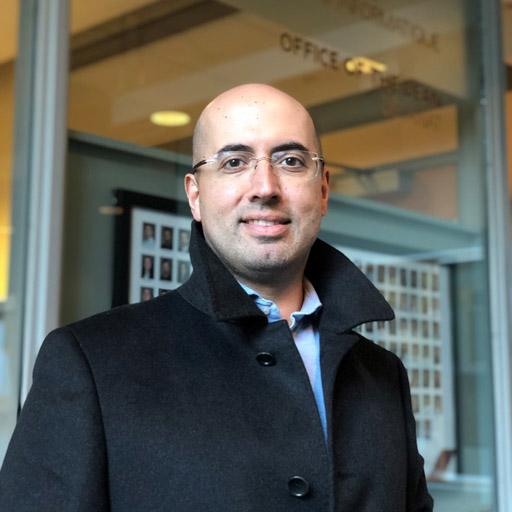
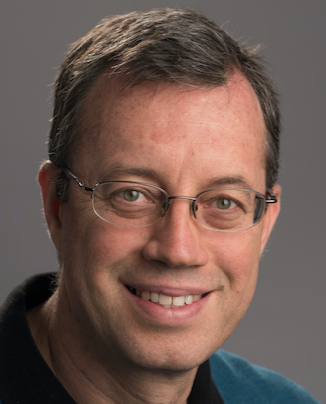
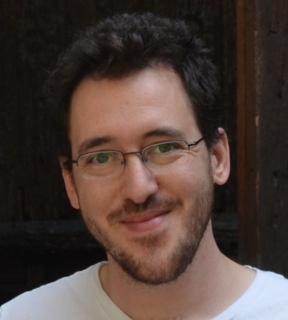
Rajendra Acharya is a Professor (Artificial Intelligence in Health) at the University of Southern Queensland's School of Mathematics, Physics and Computing. He holds qualifications including BEng, MTech, two PhDs, and a DSc. His research focuses on AI applications in healthcare, pattern recognition, and medical diagnostics, with notable contributions to EEG analysis, deep learning, and disease detection. Awards include multiple Research.com Leader Awards in Computer Science for Australia and Singapore (2022–2025). His work spans over 650 publications, with high-impact studies on automated disease diagnosis via AI, including COVID-19 detection using X-rays and EEG-based seizure detection. His research interests integrate machine learning, signal processing, and healthcare technologies. He collaborates internationally and advises on AI-driven health solutions. No student list provided; however, his extensive supervision is implied through his research output.
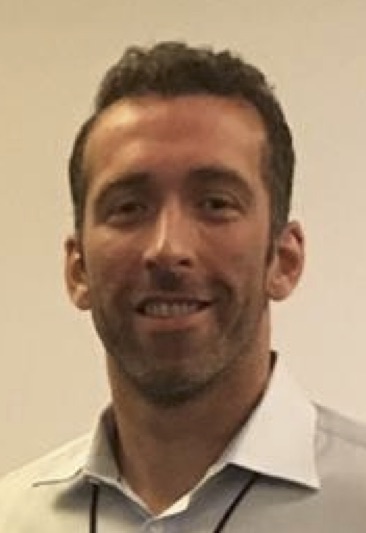
Mahdi S. Hosseini is an Assistant Professor in the Department of Computer Science and Software Engineering at Concordia University and a faculty member of the Applied AI Institute. He holds a PhD from the University of Toronto (2016) and completed a postdoctoral fellowship at UofT, supported by MITACS-Elevate and NSERC fellowships. His research focuses on advancing deep learning and computer vision for computational pathology and healthcare technologies, aiming to develop AI tools for clinical diagnosis. He currently supervises graduate students and has published over 30 papers and two patents. Education: PhD in Electrical and Computer Engineering from the University of Toronto (2016), postdoctoral training at UofT collaborating with Huron Digital Pathology Inc. (Waterloo, Ontario). Research interests include deep learning, computer vision, computational pathology, medical imaging, and AI ethics (P4AI project). His work emphasizes developing explainable AI systems for clinical pathology, biomarker discovery, and efficient learning algorithms. Professional service includes serving as Area Chair for NeurIPS 2023, CVPR 2023-2024, and ECCV 2024. He reviews grants for CIHR, NSERC, and serves on program committees for key conferences (ICCV, CVPR, NeurIPS). Teaching includes courses on applied AI, machine learning, and deep learning for computational pathology at both graduate and undergraduate levels. Awards: MITACS-Elevate Fellowship (postdoc), NSERC Research Funding (2016-2017). His work has led to patents in diagnostic systems and has collaborated with hospitals and pathologists to advance clinical applications. Labs/Teams: Active collaborations with the Applied AI Institute at Concordia, Huron Digital Pathology, and healthcare institutions. Research emphasizes interdisciplinary approaches between computer science and clinical medicine.
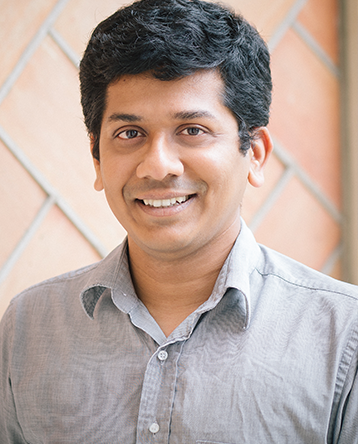
Suining He is an Assistant Professor at the University of Connecticut (UConn)'s School of Computing, leading the Ubiquitous and Urban Computing Lab since 2019. Previously, he was a postdoctoral research fellow at the University of Michigan's Real-Time Computing Lab (2016–2019). He holds a Ph.D. in Computer Science from the Hong Kong University of Science and Technology (2016) and a B.Eng. in Mechanical Design from Huazhong University of Science and Technology (2012). His research focuses on Cyber-Physical Systems (CPS), Smart & Connected Communities, Human-Centered Computing, and Urban Computing Cyberinfrastructure, with emphasis on mobility, equity, and AI-driven solutions. He has received prestigious awards including the NSF CAREER Award (2023), Google Research Scholar Program Award (2021), and recognition as a Stanford Top 2% Scientist (2020–2024). His work spans interdisciplinary grants from NSF, USDA, Google, NVIDIA, and industry partners. Recent publications explore autonomous driving simulation, equity-aware mobility prediction, and urban crowd activity modeling. Teaching excellence is reflected in his 2020 UConn Provost Award. He advises on reinforcement learning, CPS, and mobile computing, with openings for 2025/2026 PhD students. His lab collaborates on socially-conscious AI, privacy-preserving learning, and location-based services with industrial impact.
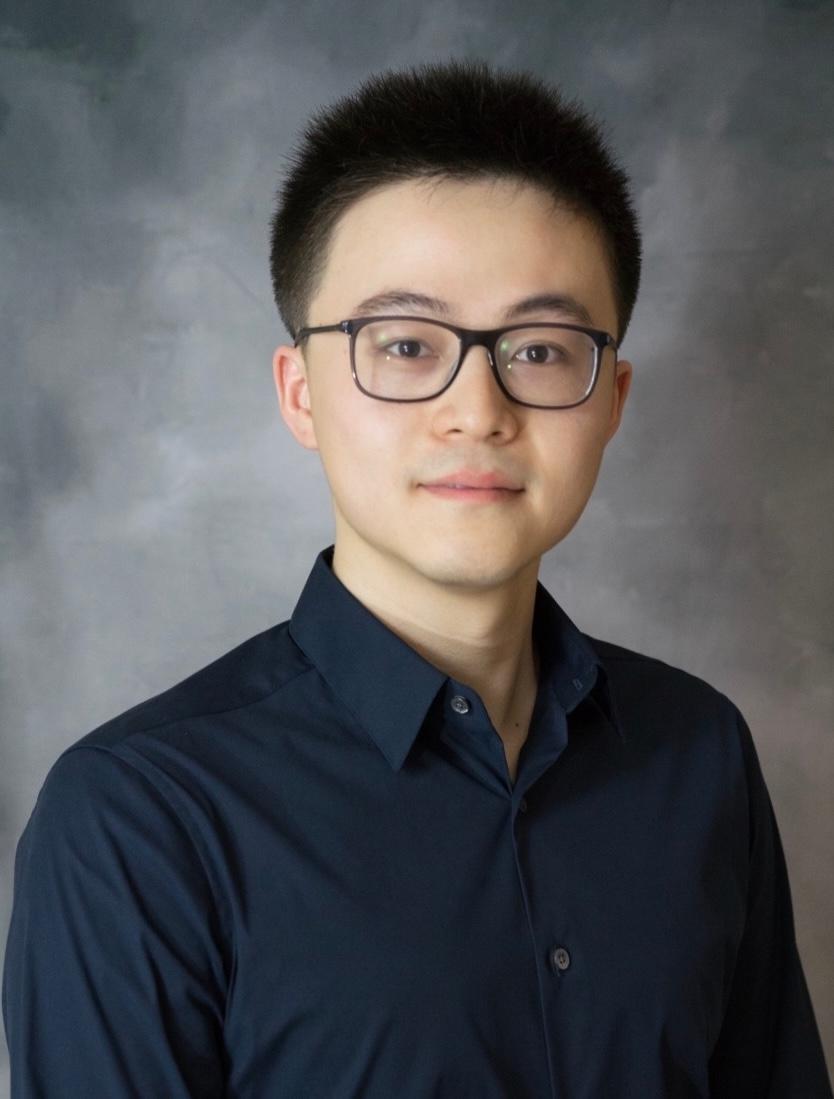
Somil Bansal is an Assistant Professor in the Department of Aeronautics and Astronautics at Stanford University, part of the School of Engineering. Previously, he served as an Assistant Professor in the Electrical and Computer Engineering (ECE) department at the University of Southern California. He holds a B.Tech. from IIT Kanpur, an MS, and a Ph.D. from UC Berkeley’s EECS department. Research Focus: Development of mathematical tools and algorithms for safety-critical autonomous systems, emphasizing learning-enabled systems’ safety. Key Collaborations: Waymo, Skydio, Google, Boeing, NASA AMES/JPL. Awards: NSF CAREER Award, Eli Jury Award, RSS Pioneer Award, and Outstanding Graduate Instructor Award. His research integrates control theory and machine learning to ensure safety in autonomous systems, focusing on safe learning frameworks, anomaly detection, and real-time safety guarantees. He leads the Safe and Intelligent Autonomy (SIA) Lab, which explores applications in robotics, autonomous driving, and aerospace systems. Teaching: Courses include Introduction to Control Design Techniques and Principles of Safety-Critical Autonomy. He advises doctoral students and supervises research projects in his lab.
Xiaolei Fang is Associate Professor in the Edward P. Fitts Department of Industrial and Systems Engineering at North Carolina State University. His research develops advanced statistical learning, deep learning, and optimization methods for industrial applications involving high-dimensional data, with particular focus on condition monitoring, failure prognostics, and system performance optimization. He holds a PhD in Industrial Engineering and MS in Statistics from Georgia Tech. Professor Fang's research integrates machine learning with industrial engineering to solve complex problems in predictive maintenance, quality control, and energy systems. His methodological innovations include federated learning approaches for privacy-preserving prognostics, distributionally robust machine learning models, and tensor-based statistical methods for manufacturing quality diagnostics. He has received multiple prestigious awards including the ISE Outstanding Research Award (2024), Sigma Xi Best PhD Thesis Award (2019), and SAS Data Mining Best Paper Award (2016). His research has been funded by NSF, Cisco Systems, and the US Department of Energy. Professor Fang teaches courses in Quality Design & Control, Statistical Models for Systems Analytics, High-Dimensional Data Analytics, and Optimization Models. He has supervised 9 PhD students to completion and currently advises 7 graduate students working on projects spanning federated learning for prognostics, tensor-based quality control, and machine learning applications in manufacturing and energy systems.
Adam Jatowt is a Professor and Head of the Data Science group at the Department of Computer Science, University of Innsbruck. He also serves as Deputy Head of the Digital Science Center and Research Center for Digital Humanities. His academic career spans roles at Kyoto University (2010-2020), National Institute of Advanced Industrial Science and Technology (AIST), and visiting positions at Karlsruhe Institute of Technology, University of La Rochelle, and University of California Berkeley. Research interests focus on temporal aspects of NLP/IR, computational history, large language models, and future forecasting. He leads projects combining digital humanities with advanced AI techniques, including temporal validity assessment and hint generation systems. Recent publications (2025) emphasize LLM applications in temporal analysis, QA systems, and energy sector digitalization. His work has been recognized through awards like the Friedrich Wilhelm Bessel Research Award (2024) and top-cited paper distinction in Information Sciences. He actively organizes conferences like ECIR 2026 and Text2Story workshops. Key contributions include developing WikiHint dataset, PlausibleQA framework, and tools like Rankify. His research also addresses societal challenges through ESG rating prediction and medical LLM applications.
Nikolai Matni is an Assistant Professor in the Department of Electrical and Systems Engineering at the University of Pennsylvania. He holds a secondary appointment in the Department of Computer and Information Science and is a member of the Applied Mathematics and Computational Sciences (AMCS) graduate group. His research focuses on integrating learning, optimization, and control for safety-critical and data-driven cyber-physical systems, with applications in robotics, autonomy, and distributed control. Secondary Appointment: Computer and Information Science (University of Pennsylvania) Labs/Centers: GRASP Lab, PRECISE Center His research bridges machine learning, robust control, and autonomous systems, particularly in developing guaranteed-safe strategies for cyber-physical systems. He emphasizes the importance of reliability and robustness in learning-based control for applications like self-driving vehicles and agile robots, where failures could be catastrophic. Recent publications highlight advancements in vision-based robotic control, neural ODEs for motion planning, adversarial exploration strategies, and stability-constrained learning. These works span conferences such as ICRA, CoRL, WACV, IROS, and L4DC, with a focus on safety-critical applications. Notable scientific awards include the NSF CAREER Award, George S Axelby Award (for his work on System Level Synthesis), AFOSR YIP award, and Google Research Scholar Award. He was also elevated to IEEE Senior Member. Matni advises Ph.D. students in Computer and Information Science (CIS), Electrical and Systems Engineering (ESE), and Applied Mathematics and Computational Sciences (AMCS). His teaching includes courses like ESE 2030 (Linear Algebra with Engineering/AI applications) and others focused on control theory and robotics.
Andrzej Majkowski is an Associate Professor at the Institute of the Theory of Electrical Engineering, Measurement and Information Systems, Faculty of Electrical Engineering, Warsaw University of Technology. His career spans over two decades of research in biomedical engineering, focusing on brain-computer interfaces, signal processing, and emotion recognition. Active in both teaching and research, he contributes to advancing methodologies in electrophysiological signal analysis. Warsaw University of Technology Institute of the Theory of Electrical Engineering, Measurement and Information Systems Faculty of Electrical Engineering Specializing in biomedical engineering , Majkowski's research bridges control systems and information technologies with neuroscience applications. His work explores brain-computer interfaces , EEG/EMG signal processing , and emotion recognition using multimodal physiological data. Recent studies focus on deep learning architectures for artifact removal and classification tasks. Recent publications highlight trends in CNN-LSTM hybrid models for signal denoising, convolutional networks for seizure detection, and machine learning applications in visual evoked potential analysis. His work spans both clinical applications (epilepsy monitoring) and human-computer interaction (emotion recognition, sign language detection). With over 98 documented publications and significant bibliometric indicators (h-index 13 in Scopus), Majkowski has supervised 95 promoted theses. His research includes one funded project and collaborations in biomedical instrumentation, though specific award details remain unspecified in available records.
James J. Clark is a Professor in the Department of Electrical and Computer Engineering at McGill University . He serves as Co-Director of the McGill Retail Innovation Lab and holds affiliations with the McGill Centre for Intelligent Machines (CIM) , REPARTI , MILA , and the CIRMMT interdisciplinary research center. His work spans Computer Vision , Machine Learning , and Human/Animal Vision Systems , with a focus on computational models and imaging technologies. Scientific contributions include: EMEA Lumiere Award (2017) CIPPRS/ACTIRF Research Excellence (2014) Multiple best poster awards (2002-2006) IEEE Transactions Paper Prize (1987) He has advised prominent researchers such as Jonathan Bouchard (2017 awards), Amin Haji-Abolhassani , and Tina Ehtiati . His career includes sabbaticals at institutions like University of British Columbia and California Institute of Technology .
Aswin Sankaranarayanan is a Professor in the Department of Electrical and Computer Engineering at Carnegie Mellon University (CMU) , where he leads the Image Science Lab . His research focuses on computational photography , 3D shape estimation , and novel imaging system design . He earned his Ph.D. in Electrical and Computer Engineering (2009) from the University of Maryland and completed a postdoctoral fellowship at Rice University (2012) . Research Themes: Developing imaging systems that exploit low-dimensional signal models to overcome traditional sensing limitations Co-design of optics and processing algorithms for efficient sensing Application of non-linear signal models to high-dimensional data Advancing compressed sensing and big data processing techniques Scientific Recognition: SIGGRAPH 2023 Best Paper Award (Split-Lohmann Multifocal Displays) CVPR 2019 Best Paper Award (Fermat Paths for NLOS Reconstruction) NSF CAREER Award (2017) Dean’s Early Career Fellowship (2018-2021) Herschel Rich Invention Award (2016) Technical Contributions: His recent publications reveal expertise in non-line-of-sight shape reconstruction , VR/AR display systems , and biomedical imaging . Collaborations span institutions like University College London and University of Toronto.
M. Tamer Özsu is a University Professor of Computer Science at the David R. Cheriton School of Computer Science, University of Waterloo, where he holds a Cheriton Faculty Fellowship. He also serves as a Distinguished Visiting Professor at Tsinghua University and is the Founding Director of Waterloo-Huawei Joint Innovation Laboratory since 2018. His extensive contributions to computing have earned him numerous prestigious awards including the 2024 ACM Presidential Award for long-standing and significant contributions to the computing field. Professor Özsu's research focuses on data engineering aspects of data science, particularly addressing data management issues with two main foci: management of non-traditional data and large-scale distributed data management. He is renowned for his seminal book "Principles of Distributed Database Systems" (co-authored with Patrick Valduriez), now in its fourth edition, and the "Encyclopedia of Database Systems" (co-edited with Ling Liu), in its second edition. His work bridges theoretical foundations with practical system implementations, targeting grand societal challenges through computational approaches. His recent publications reveal a strong trend toward graph analytics, streaming data processing, and the integration of large language models with vector data management. The research shows increasing focus on GPU-accelerated graph processing, RDF query optimization, and multimodal data analysis, reflecting the evolution of data management challenges in the era of big data and AI. His work continues to address fundamental challenges in distributed data systems while adapting to emerging technologies and application domains. Scientific Awards and Fellowships ACM Presidential Award (2024) IEEE TCDE Education Award (2024) IEEE Innovation in Societal Infrastructure Award (2022) CS Can | Info Can Lifetime Achievement Award (2018/2019) ACM SIGMOD Test-of-Time Award (2015) ACM SIGMOD Contributions Award (2006) The Ohio State University College of Engineering Distinguished Alumnus Award (2008) Fellow of the Royal Society of Canada Fellow of the American Association for the Advancement of Science (AAAS) Life Fellow of the Association for Computing Machinery (ACM) Life Fellow of the Institute of Electrical and Electronics Engineers (IEEE) Fellow of the Asia-Pacific Artificial Intelligence Association (AAIA) Elected member of the Science Academy, Türkiye Professor Özsu has been deeply involved in academic leadership and community building. As Founding Editor-in-Chief of ACM Books (2013-2019), he launched a series that by 2019 had published 28 major books with another 30 under contract. His service to ACM, particularly through SIGMOD, has been exemplary and widely recognized. He directs the Waterloo-Huawei Joint Innovation Laboratory, which focuses on cutting-edge research in data management and distributed systems, fostering strong industry-academia collaboration.
Ruohan Gao is an Assistant Professor in the Department of Computer Science at the University of Maryland, College Park , with affiliate appointments at the University of Maryland Institute for Advanced Computer Studies (UMIACS) , Maryland Robotics Center (MRC) , and Artificial Intelligence Interdisciplinary Institute at Maryland (AIM) . His research focuses on Computer Vision and Machine Learning , emphasizing Multisensory Machine Intelligence that integrates sight, sound, and touch . He aims to enable machines to perceive, understand, and interact with the world as humans do, with applications in robotic manipulation , audio-visual localization , and differentiable rendering . Article Trends : Span 2018–2025 , centering on audio-visual perception , multisensory datasets , and robotics . Recurring themes include object-centric learning , sound synthesis , and cross-modal consistency . Scientific Awards : Michael H. Granof Award (UT Austin’s Top 1 Doctoral Dissertation, 2021) Best Paper Award Runner-Up (BMVC 2021) Best Paper Award Finalist (CVPR 2019) Highlight Paper (CVPR 2023) He leads the UMD Multisensory Machine Intelligence Lab and collaborates with institutions like Stanford and The University of Texas at Austin . Contact: rhgao@umd.edu .
Ion Stoica is a Professor in the Electrical Engineering and Computer Sciences Department at the University of California, Berkeley, where he holds the Xu Bao Chancellor Chair. He serves as Director of the Sky Computing Lab and is Executive Chairman of both Databricks and Anyscale. His research spans distributed systems, cloud computing, and AI systems, with significant contributions to large-scale data processing frameworks. Stoica's research interests focus on the intersection of AI and systems, with emphasis on developing practical implementations that bridge theoretical foundations with real-world deployability. His work addresses fundamental challenges in distributed computing, resource management, and large-scale machine learning systems. Current projects include Ray (a distributed execution framework), vLLM (a high-throughput inference engine for LLMs), Chatbot Arena (an open platform for human preference evaluations), and SkyPilot (a framework for running AI workloads across clouds). His research output demonstrates a consistent trajectory toward more efficient, scalable systems for modern AI workloads, particularly focusing on optimizing inference performance, resource utilization, and cross-cloud deployment. Recent publications reflect growing interest in large language model serving, video generation optimization, and agent-based systems. ACM Fellow SIGOPS Hall of Fame Award (2015) SIGCOMM Test of Time Award (2011) ACM Doctoral Dissertation Award (2001) Member of National Academy of Engineering Honorary Member of the Romanian Academy Stoica has advised an extensive number of doctoral students who have gone on to prominent positions in academia and industry, including assistant professorships at Stanford, MIT, Carnegie Mellon, and other top institutions. He has received significant research funding through his lab activities and startup ventures. His research group has been particularly successful in translating academic research into widely adopted open-source technologies and commercial products. Stoica leads the Sky Computing Lab at UC Berkeley, which focuses on developing systems for AI workloads across multiple clouds. His research group has produced numerous influential open-source projects including Apache Spark, Apache Mesos, and Alluxio, which have become industry standards for large-scale data processing. The lab maintains strong industry partnerships while pursuing fundamental research in distributed systems and AI infrastructure.
Yevgeni Berzak is an Assistant Professor at the Technion and a Research Affiliate at Mit BCS . He directs the Technion Language, Computation and Cognition (LaCC) Lab and leads the Cognitive Science Track in the Data Science and Engineering degree at the Technion. His academic background includes: PhD in Computer Science at Infolab, MIT CSAIL Postdoctoral research with Roger Levy at MIT CPL Lab Masters in Computational Linguistics at Universities of Saarland and Nancy Bachelors in Cognitive Science and Amirim Honors Program at Hebrew University of Jerusalem His research focuses on the intersection of Cognitive Science and Natural Language Processing (NLP) , studying human language acquisition and processing through computational modeling, linguistic theory, and neuroimaging. He develops datasets like OneStopQA and CELER , and explores how human gaze patterns can improve machine language understanding. Recent publications address topics such as: Eyetracking for language proficiency assessment Repetition effects in reading behavior Readability prediction via scrolling interactions Structured annotation schemes for reading comprehension The LaCC Lab under his leadership combines theoretical linguistics with machine learning to bridge human and artificial language processing.
Franziska Boenisch is a tenure-track faculty member at the CISPA Helmholtz Center for Information Security , where she co-leads the SprintML lab for Secure, Private, Robust, Interpretable, and Trustworthy Machine Learning. Her research lies at the intersection of privacy-preserving machine learning and trustworthy ML , with a focus on differential privacy , model inversion attacks , and privacy risks in federated learning . She completed her PhD at Freie Universität Berlin and was a postdoctoral fellow at the Vector Institute for Artificial Intelligence under Prof. Nicolas Papernot. Her work has been recognized with awards such as the Academics Rising Start Award (3rd Prize) and the GI Junior-Fellow honor. Her research spans a wide range of topics including memorization in diffusion models , watermarking generative models , membership inference attacks , and privacy-preserving federated learning . She has published extensively in top-tier venues like ICML , NeurIPS , ICLR , and CVPR . She is actively involved in the academic community, serving as an Area Chair for NeurIPS , Track Chair for ACM AsiaCCS , and co-organizing workshops at ICML . She is currently hiring PhDs, postdocs, and research interns for her group.