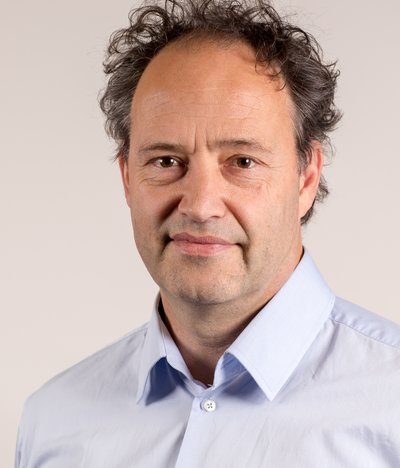
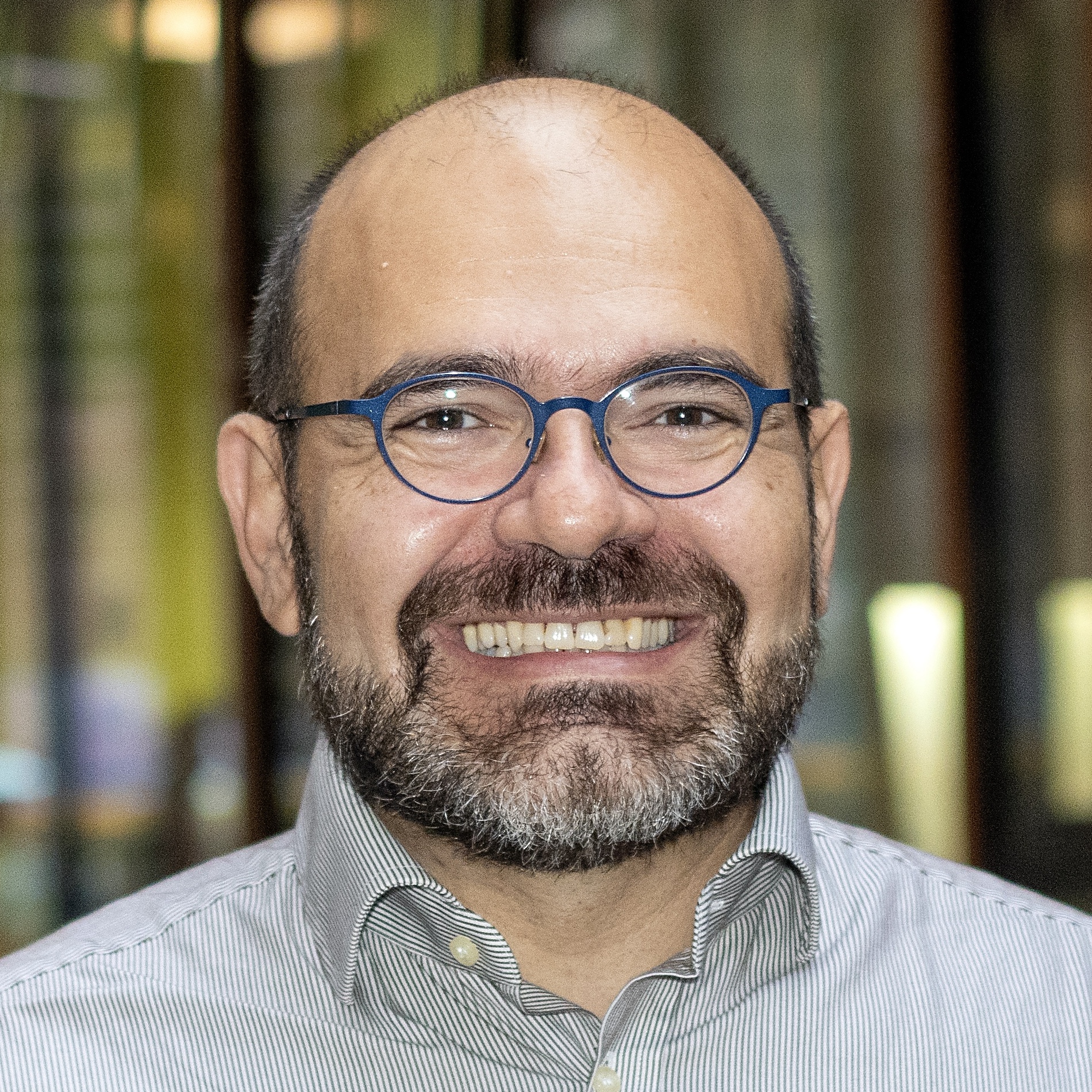
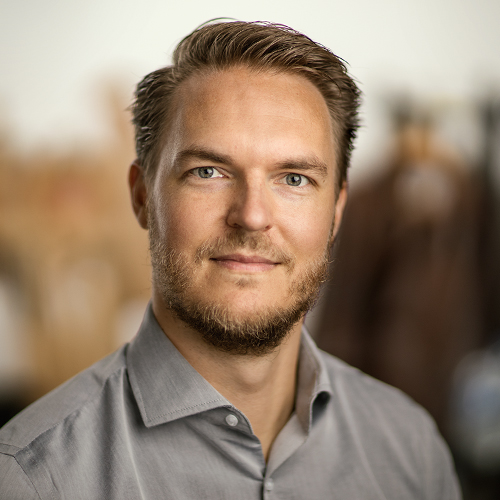
Dr. Peter J.F. Lucas is a Full Professor specializing in Datamanagement & Biometrics with over 35 years of experience in artificial intelligence, probabilistic graphical models, and clinical decision support systems. His research spans intelligent systems, machine learning, and eHealth, with a focus on applying Bayesian networks and probabilistic logic to medical and non-medical domains.
Qian Tao is an Assistant Professor at the Department of Imaging Physics , Faculty of Applied Sciences , Delft University of Technology . She previously worked at the Division of Image Processing, Department of Radiology, Leiden University Medical Center from 2009 to 2020. Academic Background: BSc in Electrical Engineering (Fudan University), MSc in Biomedical Engineering (Fudan University), PhD in Biometric Authentication (University of Twente) Research Interests: Focus on trustworthy AI methodologies for critical healthcare applications, including medical imaging for patient diagnosis and clinical intervention. Specializes in cardiac MRI analysis, image-guided interventions for cardiac arrhythmias, and AI in Radiology. Publication Trends: Recent work emphasizes motion correction in cardiac MRI, deep learning for image registration, and novel techniques like TRAFF2 mapping. Keywords include Medical Imaging , Machine Learning , Cardiac MRI , and Quantitative Analysis . Contact: Email: Q.Tao@tudelft.nl
Hailong Jiao is an Assistant Professor in the Department of Electrical Engineering at Eindhoven University of Technology (TU/e) and an Associate Professor at Peking University Shenzhen Graduate School's School of Electronic and Computer Engineering. He is also a Visiting Assistant Professor with TU/e's Electronic Systems group. His research focuses on low-power and variations-resilient VLSI circuit and system design , including error-resilient systems, approximate computing, machine learning in VLSI, ultra-low voltage circuits, and emerging devices like 3D integration and carbon electronics. Education : BSc (highest honor, 2004, Shandong University), MSc (2008, Institute of Microelectronics, Chinese Academy of Sciences), PhD (2012, HKUST). Collaborations : BrainWave project (TU/e and Radboud University Nijmegen) developing wearable brainwave processing for epilepsy/Parkinson's healthcare. Editorial Roles : Associate Editor for Elsevier Microelectronics Journal and World Scientific Journal of Circuits, Systems, and Computers. Committee Memberships : HiPEAC, MemoCiS, ACM/SIGDA, and six IEEE committees. Research Trends : Recent articles emphasize energy-efficient IoT networks , voltage stacking , sensitivity control , and scan flip-flop design , aligning with UN SDGs for energy engineering and healthcare innovation. Scientific awards include highest honor at BSc .
Thomas Bäck is a Professor at the Leiden Institute of Advanced Computer Science (LIACS) , Leiden University , Netherlands, and a member of the interdisciplinary programme Society, Artificial Intelligence and Life Sciences (SAILS) . His academic career spans roles at Leiden University (1996–present) and leadership positions at the Center for Applied Systems Analysis in Dortmund (1994–2000). Education : Diplom-Informatiker (Computer Science), Technische Universität Dortmund (1990) Dr. rer. nat. (Computer Science), Technische Universität Dortmund (1994) Research Interests : Dr. Bäck specializes in evolutionary computation , machine learning , and their applications in sustainable smart industry and healthcare . Recent work focuses on integrating large language models (LLMs) and quantum computing into optimization frameworks, with projects like CIMPLO (predictive maintenance), ECOLE (experience-based optimization), and SAPPAO (airline operations optimization). Scientific Contributions : His 526+ publications cover evolutionary algorithms, quantum optimization, and LLM-driven design, with recent trends including: Quantum computing (e.g., quantum approximate optimization, quantum advantage challenges) LLM integration (e.g., hyperparameter tuning, mutation control, code evolution graphs) Healthcare and industry (e.g., predictive maintenance, anomaly detection, melt quality prediction) Algorithm benchmarking (e.g., IOHprofiler, MA-BBOB, explainable benchmarking) Scientific Awards : IEEE Fellow (2022) Royal Netherlands Academy of Arts and Sciences (KNAW) member (2021) Academia Europaea member (2022) IEEE Computational Intelligence Society Evolutionary Computation Pioneer Award (2015) Fellow, International Society of Genetic and Evolutionary Computation (2003) Best Ph.D. thesis award, German Society of Computer Science (GI) (1995) Advising and Grants : He supervises Ph.D. candidates in evolutionary computation and machine learning and has secured 7 major grants from organizations like the Dutch Research Council , European Commission , and The Research Council of Norway . His editorial roles include Editor-in-Chief of the Evolutionary Computation Journal and associate editorships in leading AI journals.
Ibo van de Poel is a Full Professor at Delft University of Technology , within the Faculty of Technology, Policy and Management , specifically in the Section Philosophy . He holds the prestigious Antoni van Leeuwenhoek professorship , awarded to excellent young researchers, and is a leading figure in Design for Values , engineering ethics , and technology as social experimentation . Education: Van de Poel studied Philosophy of Science, Technology and Society at the University of Twente , with a propaedeutic exam in Mechanical Engineering . He earned his PhD in Science and Technology Studies (STS) in 1998 from the University of Twente , under the supervision of Prof. Dr. A. Rip. Research Interests: His research spans three major themes: Design for Values : Investigating how moral values can be integrated into engineering design, including empirical studies on how engineers handle value conflicts. Moral Responsibility in R&D Networks : Exploring the "problem of many hands" in large-scale research and development projects, developing formalizations and empirical methods. Ethics of Emerging Technologies : Examining ethical issues in new technologies like nanotechnology and synthetic biology , with a focus on technology as social experimentation . Publications and Impact: Van de Poel has authored over 25 international peer-reviewed articles and 15 book contributions . He is co-editor of major works including the Handbook of Philosophy of Technology and the Engineering Sciences (Elsevier, 2009), Philosophy and Engineering (Springer, 2010), and Ethics, Engineering and Technology (Wiley-Blackwell, 2011). His recent work includes leading the VICI project "New Technologies as Social Experiments" , funded by NWO. Scientific Awards: Antoni van Leeuwenhoek Professorship (TU Delft) VICI Grant for "New Technologies as Social Experiments: Conditions for Morally Responsible Experimentation" Advising and Grants: Van de Poel has led and contributed to multiple high-impact projects, including: NWO Project on "Moral Responsibility in R&D Networks" (2007–2012) EU Project on ethical issues in synthetic biology (2009–2011) VICI Project on "New Technologies as Social Experiments" (ongoing) He has also supervised PhD students and contributed to educational innovations, including the development of the AGORA web-based program and the first Dutch textbook on ethics and technology . Labs and Teams: Van de Poel is an active member of 4TU.Ethics & Technology , a federation of Dutch technical universities focused on ethics and technology. He contributes to the Simon Stevin Series in the Ethics of Technology and participates in various reading groups and PhD communities within the network.
Prof. Dr. Dennis Herhausen is a Full Professor of Marketing and Head of the Marketing Department at Vrije Universiteit Amsterdam’s School of Business and Economics. Previously, he held positions as Associate Professor at KEDGE Business School, Visiting Professor at the University of St. Gallen, and Assistant Professor at the University of St. Gallen. His research focuses on digital communication, customer journeys, multichannel management, and social media strategies, with publications in top-tier journals like the Journal of Marketing and Journal of Marketing Research. His work addresses critical issues such as online firestorm mitigation, complaint de-escalation, and gig economy communication. He has been awarded multiple prestigious prizes, including the 2021 CBSIG Consumer Research Award and the 2019 William R. Davidson Award. Education: PhD in Marketing from University of St. Gallen (2011) Teaching: Courses on Customer Experience Management, Survey Research Methods, and Thesis Guidance Research Interests: His work explores digital marketing strategies, customer-centric innovations, and the dynamics of online platforms. Recent studies address topics like business-to-investor marketing signals, privacy orientation measurement, and machine learning biases in marketing. He actively contributes to editorial boards of journals including Journal of Marketing and Journal of Interactive Marketing. Awards: 2021 CBSIG Consumer Research in Practice Award 2021 Retail & Pricing SIG Best Paper Award 2021 SERVSIG Best Services Article Award 2020 William R. Davidson Award Grants & Editorial Work: His research has been funded by national/international grants, and he serves on multiple editorial boards. Notable datasets include studies on online retailer strategies and virtual brand sabotage responses.
Prof. Willemijn van Dolen is a Professor in the Section of Marketing at the Faculty of Economics and Business, University of Amsterdam. Her research focuses on consumer behavior, marketing strategies in digital environments, and the psychological impacts of communication in service encounters. She has extensively studied topics such as visual influence in consumer decisions, corporate greenwashing detection, and the role of humor in service interactions. Her academic career includes notable contributions to understanding online consumer behavior through multimodal datasets and AI frameworks. She has published widely on social media analytics, CSR communication, and child helpline effectiveness, bridging psychological insights with practical marketing applications. Prof. van Dolen’s work emphasizes empirical investigations into customer engagement, ethical consumption, and the interplay between digital platforms and human decision-making. Her research demonstrates a consistent focus on real-world applications, from optimizing brand posts on Instagram to analyzing CEO communication during global crises. Her studies often employ interdisciplinary methods, combining marketing theory with data science and behavioral economics. Despite her prolific output (over 50+ publications), no specific scientific awards are highlighted in the provided texts.
Mathias Funk is an Associate Professor in the Industrial Design department at Eindhoven University of Technology (TU/e), leading the Things Ecology lab. His research focuses on designing with data and systems behavior, particularly in IoT and medical technology contexts. He co-founded UXsuite GmbH and developed the OOCSI communication framework. With a PhD in Electrical Engineering from TU/e (2011), Funk has held academic roles since 2013, including postdoctoral positions in Electrical Engineering and Industrial Design. He teaches courses like 'Data-enabled design' and supervises projects on AI, data foundry, and OOCSI applications. His work bridges engineering and design, addressing sustainability and human values through systemic design approaches. Education: PhD in Electrical Engineering, TU/e (2011) Computer Science background from RWTH Aachen Postdoc at TU/e's Electrical Engineering and Industrial Design departments Research Interests: Data-driven design methodologies, IoT systems, medical technology innovation, sustainable design practices, and interactive systems for musical expression. Recent work emphasizes telemonitoring efficacy in heart failure care and federated learning applications. Awards: Best Paper Award (2014) Honorable Mention (2021) Grants/Projects: Leading initiatives like MEDICAID (medtech solutions), ACACIA (interpretable AI), and Data-Driven Servitizing in Professional Printing. Active in clinical workflow prototyping and cardiovascular disease detection projects. Lab Activities: Manages the Things Ecology lab, focusing on systemic design challenges in smart ecosystems. Collaborates internationally through spin-offs and visiting lectureships.
Bart Somers is an Associate Professor at Eindhoven University of Technology , affiliated with the Department of Mechanical Engineering . His primary affiliations include the Power & Flow Group and his own research group, Group Somers , alongside cross-cutting roles in EAISI (Eindhoven Artificial Intelligence Systems Institute) and EIRES (Eindhoven Research on Innovation and Sustainability in Energy Systems). He focuses on advancing combustion science , sustainable fuels , and engine efficiency , leveraging computational fluid dynamics (CFD) and experimental methods. His research interests span alternative fuels (hydrogen, bio-oils, biofuels), high-pressure spray combustion , and low-emission engine design . He investigates combustion optimization through CFD tools like large-eddy simulation (LES) and flamelet-generated manifolds (FGM), emphasizing fuel stratification , ignition dynamics , and emission control . His work bridges experimental diagnostics (e.g., spray visualization, OH* chemiluminescence) and numerical modeling. Academically, he teaches courses such as Thermodynamics , Clean Engines and Future Fuels , and Sustainable Vehicles , integrating practical projects into curricula. His educational activities emphasize interdisciplinary sustainability and innovation, including honors programs focused on professional development. Recent publications highlight his contributions to hydrogen injection strategies, biofuel applications in genset engines, and optimization of diesel-biofuel blends. His work aligns with global sustainability goals, addressing energy transition challenges through advanced combustion technologies.
Ioannis Athanasiadis is a Full Professor and Chair of Artificial Intelligence at Wageningen University & Research (The Netherlands). He leads the Artificial Intelligence (AIN) group, focusing on advancing AI methods for global challenges in agriculture, ecology, and sustainability. Previously, he was faculty at the Dalle Molle Institute for Artificial Intelligence (IDSIA, Switzerland) and the Democritus University of Thrace (Greece). He holds a PhD (2005, cum laude) in Electrical and Computer Engineering from Aristotle University of Thessaloniki. His research integrates machine learning, knowledge engineering, and environmental modeling to address food security, climate adaptation, and ecosystem services. He leads initiatives like AgML (AgMIP's machine learning benchmarking effort) and coordinates European grants such as LTER-LIFE and CYBELE . Prof. Athanasiadis has supervised over 40 PhD/postdoc researchers and serves as Editor of Environmental Modelling and Software . He collaborates internationally on projects involving AI for crop modeling, digital twins, and sustainable agriculture. His team develops frameworks like Crop2ML and PyCrop2ML to enhance interoperability between process-based models and machine learning systems.
Pascal Mettes is a tenured Assistant Professor at the University of Amsterdam within the Informatics Institute, specializing in Artificial Intelligence. He leads groundbreaking research in hyperbolic deep learning, a field he has significantly advanced through theoretical developments and practical applications in computer vision and multimodal learning. His research focuses on three primary domains: hyperbolic vision-language models that address the hierarchical nature of language-vision relationships; hierarchical deep learning using hyperbolic embeddings that naturally accommodate exponential growth patterns; and robust deep learning in hyperbolic space that improves out-of-distribution detection and network resilience. Mettes has established himself as a leading figure in this emerging field through numerous publications at top-tier conferences including CVPR, ICCV, ICML, NeurIPS, and ICLR. His recent work demonstrates how hyperbolic geometry provides natural solutions to fundamental limitations in modern deep learning, particularly regarding hierarchical data structures that cannot be adequately represented in Euclidean space. The publication trends show increasing impact and recognition in the computer vision and machine learning communities, with multiple papers receiving oral presentations and best paper nominations. Best paper nomination ESWC25 for 'Designing Hierarchies for Optimal Hyperbolic Embedding' Finalist MM 2023 Best Open-Source Software Competition (for HypLL) Multiple reviewer awards across major conferences including CVPR, ICLR, ECCV, ICML, and NeurIPS MM 2016 Best Doctoral Student Award TRECVID 2015 Winner Multimedia Event Detection Benchmark Mettes actively mentors eight PhD students working on hyperbolic learning and related topics, while also securing significant research funding including ELLIs PhD Award, NWO ClickNL, Google Perception Academic Funding, and Data Science Centre PhD Grants. He serves in prominent academic roles as Program Chair for International Conference on Multimedia Retrieval 2026 and has organized multiple workshops on hyperbolic learning at major conferences. His leadership in establishing hyperbolic deep learning as a recognized research direction is evident through his survey paper in IJCV 2024 and the development of the HypLL library for hyperbolic learning.
Hyosang Lee is an Assistant Professor in the Robotics Section of the Mechanical Engineering Department at Eindhoven University of Technology (TU/e). He holds a PhD from KAIST and has held research positions at the Max Planck Institute and University of Stuttgart. His work focuses on tactile sensing technologies, including artificial skin development, soft robotics, and integration of sensory systems with AI. Bachelor's: Mechanical Engineering, Korea University Master's: Robotics and Mechanical Engineering (double major) PhD: Mechanical Engineering, KAIST (2017) Research interests span tactile sensor design, electrical impedance tomography (EIT), and human-robot interaction. His group emphasizes creating scalable, flexible tactile systems for robots. Recent work includes air pressure sensing for force estimation and biomimetic skin materials. Publications highlight innovations in multi-directional force sensing, soft component technologies, and haptic interfaces for autism therapy. He teaches 'Dynamics and Control of Robotic Systems' and serves on the editorial board of npj Robotics . No formal student advisees are listed, though his lab, the Tactile Sensing and Robotic Skin Group , likely involves graduate researchers. His research contributes to UN Sustainable Development Goals related to health and technology.
Magnus Bakke Botnan is an Assistant Professor at the Department of Mathematics, Vrije Universiteit Amsterdam, holding a VIDI career grant (€850,000) since 2018. His research bridges pure and applied mathematics within topological data analysis (TDA), focusing on multiparameter persistence, computational topology, and applications to sciences. PhD in Mathematics, Norwegian University of Science and Technology (NTNU), 2015 Postdoc at TU Munich, 2016-2018 His research group includes postdocs Hannah Rocio Santa Cruz Baur and Rui Dong, and PhD student Enes Devecioğlu. Recent work involves signed barcodes, rank decompositions, and stability of persistence modules. He co-authored the first comprehensive tutorial on multiparameter persistence with Mike Lesnick. Notable contributions include proving the NP-hardness of computing interleaving distance, establishing universality of bottleneck distance for extended persistence diagrams, and developing computational methods for non-branching complexes. Publications span journals like Foundations of Computational Mathematics , Discrete & Computational Geometry , and conferences SoCG, NeurIPS, and ICRA. Scientific Awards: VIDI Career Grant (€850,000) He has taught courses including Complex Analysis, Calculus, Topological Data Analysis, and seminars on analysis and dynamical systems. Actively organizes Applied Topology Days and collaborates on projects integrating TDA with physics, computer science, and statistics.
Dr. David Goretzko is an Assistant Professor in the Department of Methodology and Statistics at Utrecht University's Faculty of Social and Behavioural Sciences. He leads the Measurement and Machine Learning Lab and specializes in the integration of data science techniques with psychometric theory. His academic journey includes: Ph.D. in Psychological Methods from LMU Munich (2020) M.Sc. in Statistics from LMU Munich (2018) M.Sc. in Psychology from LMU Munich (2016) B.Sc. in Physics from LMU Munich (2015) B.Sc. in Psychology from LMU Munich (2014) Dr. Goretzko's research primarily focuses on the intersection of machine learning and psychometrics. His work addresses critical challenges in factor analysis, measurement invariance, and model fit assessment. He develops innovative methods that combine traditional psychometric approaches with modern data science techniques, particularly in the areas of exploratory factor analysis trees, regularized factor analysis, and cost-sensitive machine learning applications in psychological assessment. His research has significant implications for improving the validity and reliability of psychological measurements across diverse populations. His recent publications reveal a strong trend toward integrating machine learning methodologies with traditional psychometric approaches. A significant portion of his work focuses on factor analysis techniques, particularly addressing the challenge of determining the appropriate number of factors. His research also extensively covers measurement invariance testing across multiple covariates using tree-based approaches, and he has made notable contributions to evaluating model fit in confirmatory factor analysis. The interdisciplinary nature of his work spans psychology, statistics, and computer science. Dr. Goretzko serves as an Associate Editor for the European Journal of Psychological Assessment and is an active reviewer for numerous prestigious journals including Psychological Methods, Behavior Research Methods, and Structural Equation Modeling. He also reviews grant proposals for major funding agencies such as the German Research Foundation (DFG), National Science Foundation (NSF), and Dutch Research Council (NWO). He currently holds a Project Grant from the German Research Foundation (DFG GO 3499/1-1) since 2021. His research program focuses on developing and validating new methodologies for psychological assessment that incorporate machine learning techniques while maintaining psychometric rigor. His work has practical applications in educational measurement, clinical psychology, and organizational assessment. Dr. Goretzko leads the Measurement and Machine Learning Lab at Utrecht University, which focuses on developing innovative methodologies that bridge the gap between traditional psychometrics and modern data science. The lab's research has particular relevance for improving measurement practices in cross-cultural research, educational assessment, and clinical psychology settings where measurement invariance and factor structure validation are critical concerns.
National Research Institute for Mathematics and Computer ScienceNetherlands
Kate Crawford is a Research Professor at the Annenberg School for Communication and Journalism, University of Southern California; Senior Principal Researcher at Microsoft Research New York City; and Honorary Professor at the University of Sydney. She serves as the inaugural Visiting Chair for AI and Justice at École Normale Supérieure in Paris, co-leading the international working group on Foundations of Machine Learning. Her research examines artificial intelligence through interdisciplinary lenses including politics, labor, environmental impact, and historical context. She investigates how large-scale data systems shape societal structures while emphasizing ethical implications and power dynamics in algorithmic systems. Her work bridges technical AI development with critical social theory. Dr. Crawford co-founded three major research initiatives: FATE (Fairness, Accountability, Transparency, Ethics) at Microsoft Research; AI Now Institute at New York University; and Knowing Machines at USC. She has advised policy bodies including the United Nations, Federal Trade Commission, European Parliament, Australian Human Rights Commission, and White House on AI governance. Her scientific recognition includes: Miegunyah Distinguished Visiting Fellowship (University of Melbourne, 2021)