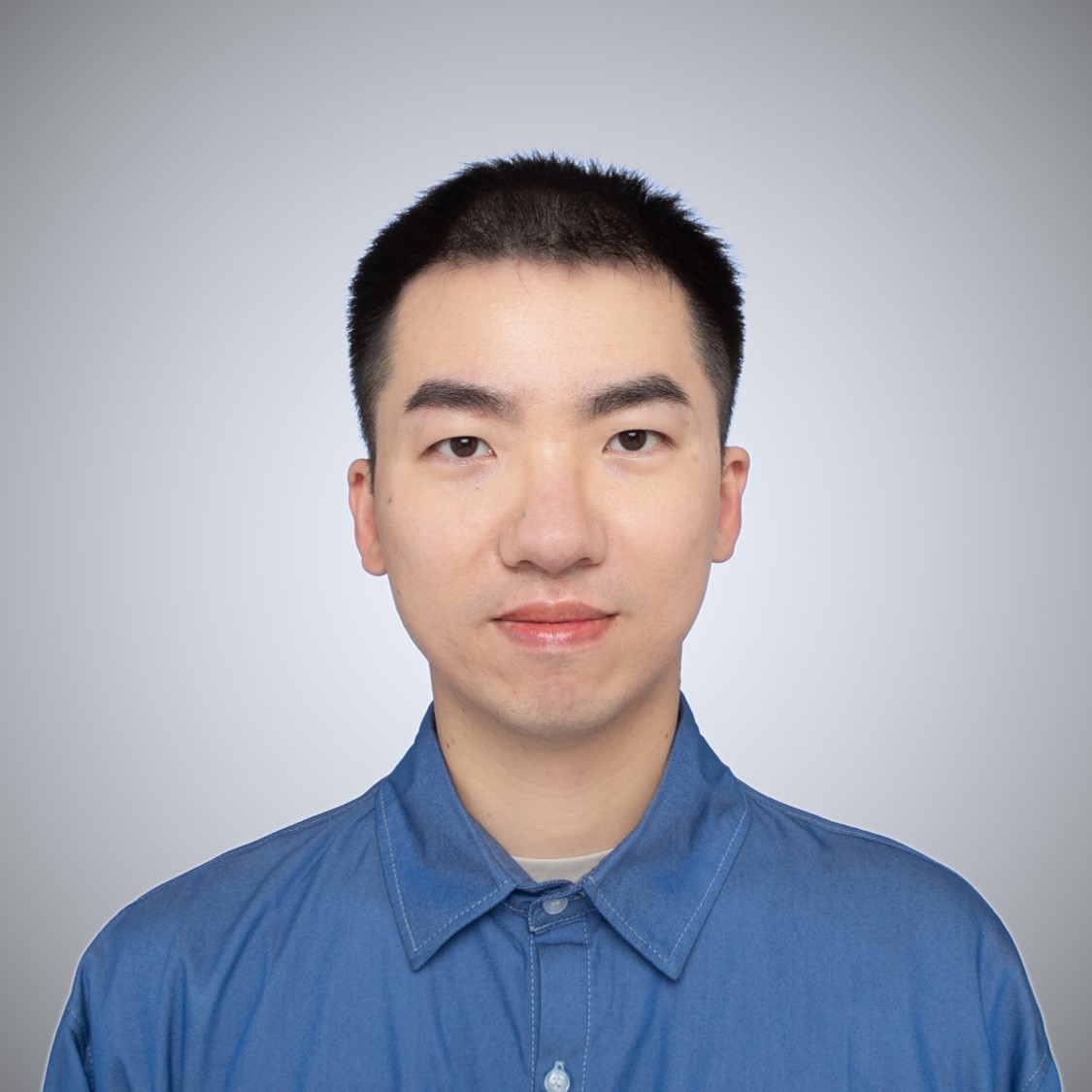
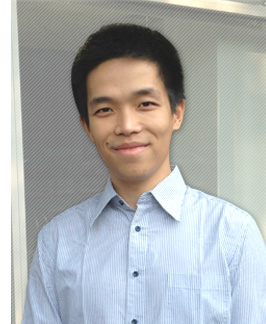
Dr. Wan Renjie is an Assistant Professor in the Department of Computer Science at the Faculty of Science, Hong Kong Baptist University (HKBU). He holds a BEng in Network Engineering from the University of Electronic Science and Technology of China and a PhD from Nanyang Technological University (NTU), Singapore. Prior to joining HKBU, he was a Wallenberg-NTU Presidential Postdoctoral Fellow (2020–2022) and a guest researcher at Peking University (2019–2020). His research focuses on computational photography, 3D vision, AI security, digital watermarking, and neural representations . He explores robustness and security in vision models, especially concerning NeRFs and 3D Gaussian Splatting, and develops methods for low-light enhancement, reflection removal, and domain adaptation. Dr. Wan has published in top-tier venues including TPAMI, IJCV, CVPR, ICCV, NeurIPS, AAAI, and ECCV . His recent work emphasizes copyright protection for neural 3D models , adversarial attacks in multimodal and event-based systems, and medical image reconstruction. He is actively mentoring PhD students and research assistants. VCIP 2020 Best Paper Award Outstanding Reviewer, ICCV 2019 He teaches courses such as Introduction to AI and ML (COMP3057) , AI Application Development (COMP3065) , and Python for Data Analysis and Machine Intelligence (COMP7035) . Dr. Wan leads a dynamic research group with ongoing projects on watermarking, 3D reconstruction, and AI security, and he is currently recruiting new PhD students and research assistants.
Prof. ZHUANG Yizhou is an Assistant Professor in the Department of Geography at Hong Kong Baptist University. His research focuses on weather and climate extremes, climate change attribution, and land-atmosphere coupling. With a Ph.D. in Meteorology from Peking University and extensive postdoctoral experience at UCLA, he brings significant expertise in atmospheric sciences to his academic role. Dr. Zhuang's educational background includes: 2019-2024: Postdoctoral Scholar, University of California, Los Angeles (UCLA), USA 2017: Visiting Graduate Researcher, University of California, Los Angeles (UCLA), USA 2015-2017: Visiting Research Scholar, University of Texas at Austin, USA 2013-2019: Ph.D., Meteorology, Peking University, China 2009-2013: B.S., Atmospheric Sciences (Remote Sensing Focus), Nanjing University of Information Science and Technology, China Dr. Zhuang's research spans multiple critical areas in climate science. His work on weather and climate extremes examines phenomena like wildfires, droughts, and floods. In climate change attribution , he investigates the human influence on extreme weather events, with several publications in PNAS demonstrating how anthropogenic warming has altered drought mechanisms and fire risks. His research on land-atmosphere coupling explores the complex feedback mechanisms between Earth's surface and the atmosphere. Additionally, he applies machine learning techniques and remote sensing technologies to analyze cloud formations and precipitation patterns. Analysis of Dr. Zhuang's recent publications reveals a consistent focus on drought mechanisms and fire weather risk in western North America. His work frequently employs advanced statistical methods like self-organizing maps and canonical correlation analysis to understand complex climate phenomena. A notable trend is his investigation of how anthropogenic climate change is fundamentally altering the nature of droughts, shifting from precipitation-deficit dominated to temperature-driven events, with significant implications for water resource management. Dr. Zhuang has received several prestigious awards for his research contributions: JIFRESSE Outstanding Leadership/Service Award, UCLA, 2023 Richard P. and Linda S. Turco Exceptional Research Publication Award, UCLA, 2023 China Scholarship Council (CSC) Joint Ph.D. Scholarship, 2015-2017 As an academic mentor, Dr. Zhuang supervises graduate students, with evidence of at least one student (G. Wang) whose work has been published under his supervision. He serves as a reviewer for numerous high-impact journals including Proceedings of the National Academy of Sciences (PNAS), Earth's Future, and Geophysical Research Letters. Additionally, he has mentored students in the UCLA Joint Institute for Regional Earth System Science and Engineering (JIFRESSE) Summer Internship Program, with his mentee Annie Rosen winning the 2024 Best JSIP Presentation Award. Dr. Zhuang maintains an active research group, as indicated by his personal website www.zhuangyz.org. His team focuses on climate extremes, attribution studies, and land-atmosphere interactions, with ongoing projects examining drought mechanisms, fire weather risks, and precipitation variability across different regions of the United States, particularly the western states and Great Plains.
Rynson W.H. Lau is a Professor of Computer Science at City University of Hong Kong (CityU), leading research in Computer Graphics, Computer Vision, and Deep Learning. He holds an Honorary Professorship at Swansea University. Previously, he served on faculties at Durham University and The Hong Kong Polytechnic University. His work focuses on advancing graphics and vision techniques, including deep learning applications for graphics/vision problems, with publications in top venues like SIGGRAPH, CVPR, and NeurIPS. He has received the Adobe Research Gift (2023) and the Springer Nature Editorial Contribution Award (2025) for his editorial contributions to the International Journal of Computer Vision . Education: B.Sc. (First-class Honors) in Computer Systems Engineering from University of Kent Ph.D. in Computer Science from University of Cambridge Research Interests: Computer Graphics: Focused on 3D reconstruction, rendering, and real-time performance capture. Computer Vision: Specializing in saliency detection, object recognition, and low-light scene enhancement. Deep Learning: Developing generative models and diffusion-based frameworks for graphics and vision tasks. Editorial Roles: Editorial Board Member, International Journal of Computer Vision and IET Computer Vision . Guest Editor for special issues in journals like ACM Transactions on Internet Technology and IEEE Transactions on Multimedia. Teaching: 2024/25 Academic Year: CS4185: Multimedia Technologies and Applications CS4188/CS5188: Virtual Reality Technologies and Applications Research Team: Advises over 20+ students and collaborates internationally. Recent projects include AI-driven VR systems for healthcare and advanced 3D content generation using diffusion models.
Oscar Carl Olof Dahlsten is an Associate Professor in the Department of Physics at City University of Hong Kong. He works in the field of quantum information science with research spanning information thermodynamics, foundations of quantum theory, and quantum computation and machine learning. His academic journey includes training at Imperial College and previous positions at ETH Zurich, NUS Singapore, Oxford University, and SUSTech before joining CityUHK. Dahlsten's research interests focus on the intersection of quantum mechanics and information theory. His work explores how quantum systems process information, the thermodynamic implications of quantum operations, and the application of quantum principles to computational problems. Key areas include quantum causal inference, quantum energy harvesting, black hole information theory, and quantum machine learning algorithms. His fingerprint analysis shows strong contributions to Quantum Theory (100%), Statistical Mechanics (55%), Quantum Dot physics (55%), and Free Energy concepts (40%). Recent publications demonstrate a strong trend toward experimental validation of quantum information concepts, particularly in quantum causal inference and quantum thermodynamics. His work bridges theoretical foundations with practical applications, especially in energy harvesting and quantum computing. The integration of quantum principles with thermodynamic laws appears as a consistent theme across his recent publications. Dahlsten currently serves as Principal Investigator for the GRF project 'Exploiting Quantum Systems for More Efficient Extraction of Energy From Random Sources' starting September 1, 2025. He actively supervises PhD students in quantum information science and is accepting new PhD candidates. His research group focuses on cutting-edge problems at the intersection of quantum information, thermodynamics, and computation.
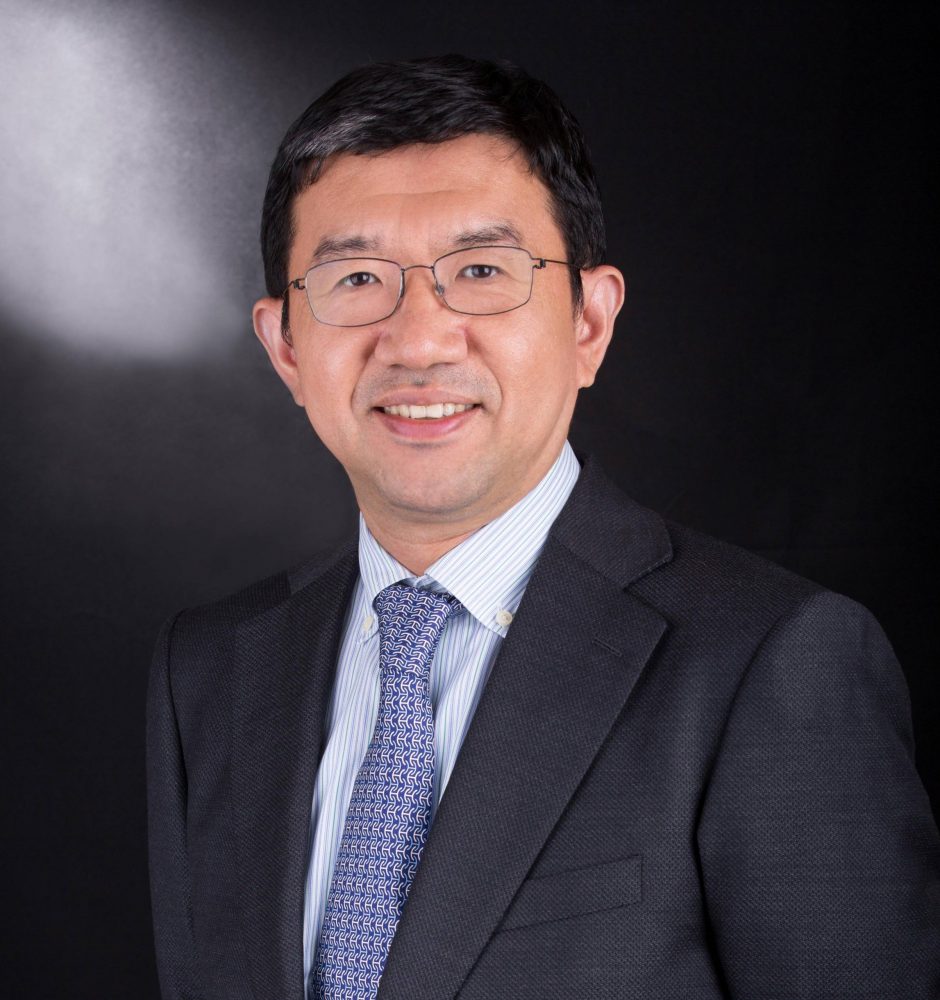
Peter W. Glynn is the Thomas Ford Professor in the Department of Management Science and Engineering (MS&E) at Stanford University's School of Engineering, and also holds a courtesy appointment in the Department of Electrical Engineering. Additionally, he serves as a Senior Fellow of the Hong Kong Institute for Advanced Study at City University of Hong Kong. His distinguished career spans over four decades, with significant contributions to the fields of simulation, computational probability, and stochastic modeling. Professor Glynn received his Ph.D. in Operations Research from Stanford University in 1982 and his B.S. with Honors in Mathematics from Carleton University in 1978. His academic journey began at the University of Wisconsin at Madison (1982-1987) before returning to Stanford, where he has held various leadership positions including Deputy Chair of MS&E (1999-2005), Director of Stanford's Institute for Computational and Mathematical Engineering (2006-2010), and Chair of MS&E (2011-2015). His research interests focus on simulation , computational probability , queueing theory , statistical inference for stochastic processes , and stochastic modeling . Professor Glynn's work has developed algorithms widely used across the field of Monte Carlo simulation, with applications in financial risk management, service systems engineering, logistics, and retail operations. His recent publications demonstrate continued innovation in areas such as numerical methods for stochastic systems, rare-event simulation, and analysis of queueing systems under various traffic conditions, showing a strong trajectory of advancing both theoretical foundations and practical applications. Professor Glynn's scholarly contributions have been recognized with numerous prestigious awards, including: Fellow of INFORMS (2007) Fellow of the Institute of Mathematical Statistics (1998) John von Neumann Theory Prize from INFORMS (2010) Member of the US National Academy of Engineering (2012) Lifetime Professional Achievement Award, INFORMS Simulation Society (2021) Philip McCord Morse Lecturer, INFORMS (2020) Throughout his career, Professor Glynn has mentored numerous doctoral students whose research has made significant contributions to operations research and related fields. His editorial service has been extensive, including founding Editor-in-Chief of Stochastic Systems and service on the editorial boards of leading journals in operations research, probability, and statistics. His professional service extends to numerous advisory boards and committees at national and international levels, reflecting his standing as a leader in his field.
Ka Ho Chow is an Assistant Professor in the Department of Computer Science at the University of Hong Kong, part of the School of Computing and Data Science. He holds a PhD from Georgia Institute of Technology and was previously a research scientist at IBM Research. His research focuses on the intersection of machine learning, cybersecurity, and scalable systems, emphasizing trustworthy AI and defense against security/privacy threats in federated learning, large language models, and visual recognition systems. Key achievements include IBM PhD Fellowship (2022) and Croucher Scholarship (2021). Education: PhD in Computer Science from Georgia Tech (2020), advised by Prof. Ling Liu. His work spans algorithmic optimization, infrastructure resilience, and adversarial machine learning. Current research explores attack-resilient solutions for centralized/federated learning and AI system vulnerabilities. Recent articles highlight innovations in federated learning security, gradient inversion attacks, backdoor detection, and privacy-preserving techniques. He has openings for PhD students interested in AI security and trustworthy systems. His lab collaborates on projects involving blockchain fraud detection (ZipZap), facial recognition privacy (Personalized Masks), and graph neural network robustness. Awards: IBM PhD Fellowship (2022), Croucher Scholarship (2021). Active in guiding PhD candidates and advising on microservices cloud migration (Atlas/SCAD systems). Research outputs include over 30 peer-reviewed papers spanning cybersecurity, AI ethics, and distributed learning frameworks.
Ryo Ikeshiro is an Assistant Professor at the School of Creative Media, City University of Hong Kong, and co-director of the spatial audio art/research unit SoundLab. His work bridges sound art, computational creativity, and cultural studies through immersive installations, algorithmic audio-visual systems, and sonification techniques. PhD in Creative Practice (Goldsmiths, University of London) MPhil in Music (University of Cambridge) BMus (King's College London) Ikeshiro's research interrogates the materiality of sound through: Multichannel Ambisonics and directional audio Neural network-driven temporal dislocation Sonification of climate data and historical soundscapes Machine learning for artistic interpretation Interplay of identity and technology East Asian ideophonic traditions His 2010-2024 publications and installations reveal cross-disciplinary engagement with: Fractal mathematics in audiovisual art Algorithmic composition systems Interactive installation technologies Sonic cartography Historical memory in sound Collaborative research frameworks SoundLab, which he co-directs, develops spatial audio research at the intersection of: Technical innovation Cultural representation Experimental pedagogy Public engagement International artistic exchange Practice-based research
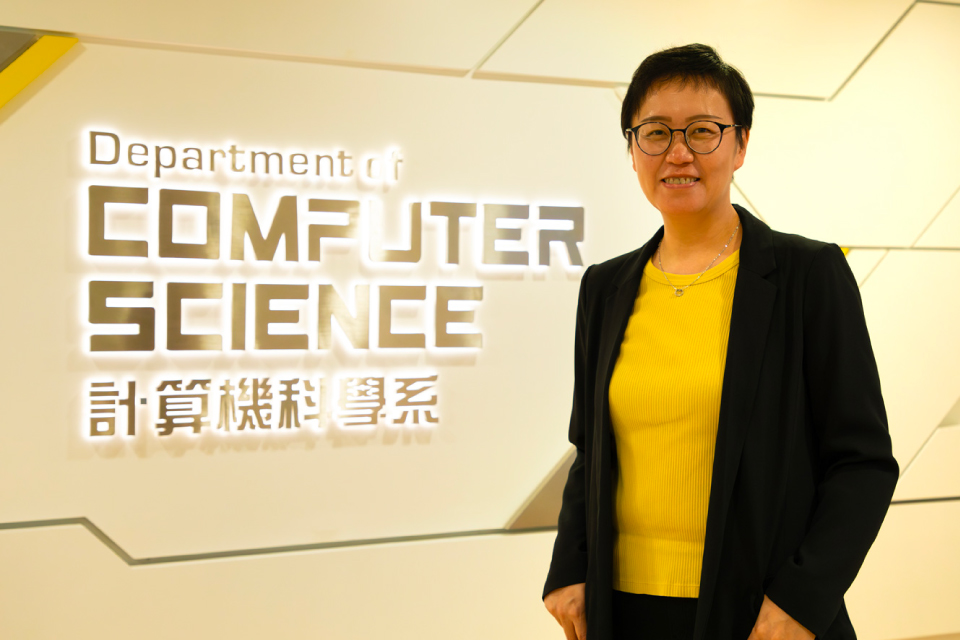
Professor Li Chen is a full Professor and Associate Head (Research) in the Department of Computer Science at Hong Kong Baptist University (HKBU), with an affiliate appointment at the Academy of Wellness and Human Development. She leads the Positive Intelligence Lab , focusing on intelligent technologies for human well-being. Her research spans conversational AI, explainable AI, recommender systems, and human-computer interaction. Education: PhD in Computer Science, Swiss Federal Institute of Technology in Lausanne (EPFL), Switzerland (Nominee for Best PhD Thesis Award) Master in Computer Software and Theory, Peking University, China Bachelor in Computer Science, Peking University, China Her research interests revolve around personalized conversational and explainable AI, with applications in entertainment, education, e-commerce, and mental well-being. She has published over 150 papers in top venues including ACM TOIS, IJHCS, CHI, SIGIR, AAAI, RecSys, and UMAP . Her work has been recognized with awards such as the RecSys Best Student Paper Award (2024), CHI Honourable Mention (2022), and multiple best paper awards at UMAP and UMUAI. The most recent publications reflect a strong trend toward fair, explainable, and user-centric recommender systems , with increasing integration of large language models , mental health applications , and conversational agents . Her research emphasizes user feedback, negative sampling techniques, and evaluation frameworks grounded in real user behavior. Scientific Awards & Recognition: President’s Award for Outstanding Performance in Teaching (Individual), HKBU (2024/25) President’s Award for Outstanding Performance in Research Supervision (2022/23) World’s Top 2% Most-Cited Scientists, Stanford University (2021–2024) ACM Senior Member (2015) RecSys’24 Best Student Paper Award CHI’22 Honourable Mention Award UMAP’20 Best Student Paper Award UMUAI 2018 Best Paper Award THE Awards Asia 2021 Excellence and Innovation in the Arts (Co-I) Professor Chen is actively involved in mentoring PhD and Master’s students such as Wanling Cai and Yuhan Zhao, who have co-authored award-winning papers. She has secured research funding through grants like the HKBU IRCMS Project. Her editorial leadership includes serving as Co-Editor-in-Chief of ACM Transactions on Recommender Systems (TORS) , Associate Editor for ACM TiiS , and Editorial Board Member for UMUAI . She has chaired major conferences including ACM RecSys’23 (General Co-Chair), RecSys’20 (Program Co-Chair), and UMAP’18 (Program Co-Chair). She leads the Positive Intelligence Lab , which conducts interdisciplinary research on AI for well-being. The lab has developed datasets like the Intent Annotation of Recommendation Dialogue (IARD) and focuses on user-centric AI design, mental health chatbots, and personalized recommendation interfaces.
Jin Li serves as Zhang Yonghong Professor in Economics and Strategy, Area Head of Management and Strategy, and Director of the Centre for AI, Management and Organization (CAMO) at Hong Kong University Business School. Previously, he held tenured positions at Kellogg School of Management and London School of Economics where he was Tenured Associate Professor of Managerial Economics and Strategy. Professor Li's research focuses on organizational economics, personnel economics, and labor economics, examining how firms design organizations to align incentives and build trust. His recent work explores digital economy topics including causality issues in machine learning algorithms, blockchain governance, and AI-organization interactions. This research demonstrates how organizational design creates competitive advantage through effective incentive structures and relational contracts. His publication portfolio shows consistent output in top-tier journals with recent emphasis on AI's organizational impact (2022-2023). Key thematic clusters include relational contracting dynamics (30% of recent work), digital transformation challenges (25%), labor market structures (20%), and blockchain governance mechanisms (15%). Management Department teaching prize at London School of Economics Associate Editor, Management Science Professor Li has advised numerous PhD students through courses like 'Economics of Organization for PhDs' at Kellogg. His service includes reviewing for 30+ top journals (AER, Econometrica, JPE, QJE, ReStud) and grant proposals for NSF and SSHRC. He serves as external PhD examiner for Norwegian School of Economics. As Director of CAMO, he leads research initiatives at the AI-organization interface, focusing on how artificial intelligence transforms workplace structures, managerial decision-making, and competitive dynamics in digital economies.
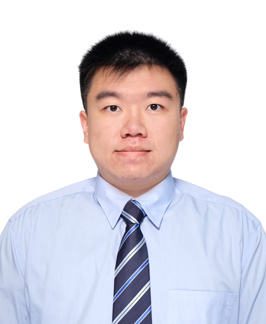
Dr. YANG, Renchi is an Assistant Professor in the Department of Computer Science at Hong Kong Baptist University, Faculty of Science. He earned his BEng in Software Engineering from Beijing University of Posts and Telecommunications and his PhD in Computer Science from Nanyang Technological University, followed by a postdoctoral fellowship at the National University of Singapore. His research is centered on developing efficient algorithms and systems for large-scale data management and analysis. His research interests include: Big Data Management and Analysis Graph Learning and Network Embedding Databases and Data Management (especially graph query processing and similarity search) The Web and Information Retrieval (search, ranking, recommendation, web mining) Data Mining and Machine Learning (social network analysis, text mining, large language models) Dr. Yang’s recent publications span top conferences such as KDD, SIGMOD, WWW, ICDE, and AAAI, focusing on scalable graph clustering, network embedding, GNNs, and LLM integration. His work emphasizes algorithmic efficiency, scalability, and practical applications in real-world graph data. Scientific honors include: VLDB 2021 Best Research Paper Award 2022 ACM SIGMOD Research Highlight Award Best Paper Award Nominee in WWW 2022 Honorable mention as best PC member in WWW 2022 Dr. Yang actively mentors PhD and research students, currently supervising several RPg students including LIN Xiaoyang, LAI Yurui, and ZHENG Haoran. He has secured research funding enabling PhD scholarships and research assistant positions. He serves on the program committees of major conferences like VLDB, KDD, WWW, and SIGIR, and reviews for journals including TKDE and VLDBJ. He is a key member of the Database Research Group at HKBU, which has published extensively in top venues, including 8 papers at SIGMOD 2023. His research lab, the LAGAS Group, focuses on large-scale graph analytics and systems. The team is actively working on projects involving graph clustering, embedding, GNNs, and integration with large language models. Dr. Yang is currently recruiting PhD students for 2026 and research assistants for 2025, indicating active and expanding research operations.
The Chinese University of Hong Kong (CUHK)Hong Kong SAR
Prof. Kelvin Kam-fai TSOI is an Associate Professor at the JC School of Public Health and Primary Care, Faculty of Medicine, The Chinese University of Hong Kong (CUHK). He holds courtesy appointments at the Stanley Ho Big Data Decision Analytics Research Centre and The Jockey Club Institute of Ageing. A Visiting Associate Professor at Nanyang Technological University’s Lee Kong Chian School of Medicine and Visiting Professor at Shenzhen Institutes of Advanced Technology, he specializes in Digital Health and Epidemiology. Education: BSc in Statistics and PhD in Public Health from CUHK. Postdoctoral training in Gastroenterology and Hepatology at CUHK’s Department of Medicine and Therapeutics. Served as Director of the CUHK JC Bowel Cancer Education Centre and worked in the Hospital Authority on chronic disease management projects. Research interests focus on digital innovations for chronic disease management, including AI in hypertension, cognitive screening technologies, and wearable health devices. His work combines traditional epidemiology with big data analytics, emphasizing interdisciplinary collaboration between medicine and engineering. Key projects include developing a mobile blood pressure management platform via DeepHealth Limited, a social enterprise he founded in 2019. Current research explores seasonal effects on blood pressure variability and AI applications in healthcare. He co-founded the International Society for Digital Health and organizes global symposiums on digital health innovation. Grants & Awards: Supported by CUHK’s Sustainable Knowledge Transfer Fund (SKPF). Awards include IBM Honorarium Award (2020) and President’s Prize for Best Paper Presentation (2017).
Professor Chen Ho is a Chair Professor at the University of Hong Kong (HKU), holding dual affiliations with the Musketeers Foundation Institute of Data Science and the Department of Computer Science within the School of Computing and Data Science. He directs the JC STEM Lab of Intelligent Cybersecurity and serves as a Fellow of the IEEE. His research focuses on advancing cybersecurity through machine learning, program analysis, and testing methodologies. Chen earned his PhD from the University of California, Berkeley. His work has produced influential tools like Angora and HOPPER, which address software vulnerability detection and adaptive security frameworks. Key publications include pioneering studies on fuzzing techniques, adversarial example defenses, and systematic evaluation of transfer-based attacks. His contributions span conferences such as ACM CCS, NeurIPS, and IEEE S&P, reflecting interdisciplinary strengths in both theoretical and applied computer security.
Professor Chenshu Wu is an Assistant Professor and Associate Head of the Computer Science Division at the School of Computing and Data Science, University of Hong Kong. He holds a PhD from Tsinghua University. His research interests span Computer Science with a focus on Artificial Intelligence and Data Science, leveraging computational methodologies to address complex problems in these domains. Education: PhD in Computer Science, Tsinghua University Research Interests: His work explores cutting-edge areas in AI and Data Science, including machine learning frameworks, algorithm optimization, and interdisciplinary applications of computational models. The lack of specific publications listed suggests focus on emerging research or recent academic activities. Awards: No scientific awards explicitly mentioned in the provided text. Teaching & Advising: Involved in academic leadership and curriculum development, but specific student advisees or grant details are not documented here. Contributes to undergraduate and postgraduate programs in Computer Science and related disciplines. Labs/Teams: Affiliated with the School's research groups and laboratories, though specific lab names or team structures are not detailed in the text.
Professor David Xu is a distinguished faculty member in the Department of Information Systems at City University of Hong Kong, where he has served as Professor since 2023 after progressing from Associate Professor (2017-2023). Prior to joining CityU, he held academic positions at Wichita State University from 2011-2017, culminating in the Bomhoff Endowed Professor of Business title in 2017. His educational background includes a PhD in Management Information Systems from the University of British Columbia (2011), an MPhil in Information Systems from City University of Hong Kong, and a First-class honors BBA in Business Administration from Lingnan University. As Programme Leader for both BBA Information Management and Bachelor's Degree in Information Systems programs since 2018, he plays a significant administrative role in curriculum development. Professor Xu's research spans human-computer interaction, artificial intelligence applications, and technology adoption across diverse domains. With over 90 publications including 40+ journal papers in top-tier venues like MIS Quarterly and Information Systems Research, his work demonstrates exceptional scholarly impact. His Google Scholar metrics (3,300+ citations, h-index of 22) reflect substantial influence in the field. His recent publications reveal a strategic focus on AI ethics, information cocoon mitigation in social media, healthcare applications of AI, and digital transformation effects on business. The work spans theoretical contributions and practical implementations, with increasing emphasis on societal impacts of technology. AIS Early Career Award (2018) AIS Distinguished Member – Cum Laude (2020) Multiple teaching excellence awards (2021, 2024, 2025) ICIS and ISR Best Associate Editor Awards (2020-2021) Numerous paper award nominations across major conferences Professor Xu has secured significant research funding including NSFC, RGC GRF, and CityU Strategic Research Grants totaling millions in funding. His current projects address critical issues like AI beauty filters, depression treatment systems, and information cocoon mitigation. As Senior Editor for Information Systems Journal and Associate Editor for Information Systems Research, he shapes the field's scholarly discourse while supervising DBA and PhD students across multiple programs.
Zhiyi Huang is an Associate Professor of Computer Science at the University of Hong Kong, leading the Computer Science Division within the School of Computing and Data Science. He holds a PhD from the University of Pennsylvania (2013) and completed a postdoctoral fellowship at Stanford University (2013–2014). His research focuses on Theoretical Computer Science, Algorithmic Game Theory, Online Algorithms, and Differential Privacy, with notable contributions to Machine Learning and Computer Networks. Education: PhD in Computer and Information Science, University of Pennsylvania (2013) Postdoctoral Researcher, Stanford University (2013–2014) Bachelor's Degree from the Yao Class at Tsinghua University (2008) Research interests span foundational areas including algorithmic game theory, online optimization, and privacy-preserving mechanisms. He has pioneered work on revenue maximization in single-parameter settings and developed novel frameworks for analyzing price of anarchy in game theory. Key Awards: Early Career Award (Research Grant Council of Hong Kong, 2014) Best Paper Award at ACM Symposium on Parallelism in Algorithms and Architectures (SPAA 2015) Morris and Dorothy Rubinoff Dissertation Award (2013) Simons Graduate Fellowship in Theoretical Computer Science (2012–2013) Recent grants include studies on algorithmic foundations of Bayesian mechanism design (HK$675,647), online primal dual techniques (HK$496,028), and privacy-preserving mechanisms (HK$931,737). His work bridges theoretical advancements with practical applications in healthcare, autonomous systems, and cybersecurity. Notable Projects: Medical predictive systems for acute cardiopulmonary events AI-driven maritime navigation using AIS data Secure federated learning frameworks with blockchain