Professor Arko Lucieer is the Head of the School of Geography, Planning, and Spatial Sciences at the University of Tasmania. He holds a PhD in Remote Sensing from Utrecht University (Netherlands). His research focuses on advancing drone and remote sensing technologies for environmental monitoring, particularly in biodiversity mapping, ecosystem dynamics, and Antarctic ecology. He leads the TerraLuma research group, pioneering ultrahigh-resolution remote sensing applications. Key roles include: Established TERN DroneScape for national ecosystem monitoring Developed protocols for drone-based data collection and AI-driven analysis Recipient of the 2008 National Banksia Environmental Award Research Interests: Integration of drone technology, multispectral/hyperspectral imaging, and AI to quantify plant traits, map ecosystems, and address climate change impacts. Projects span forest health, Antarctic moss communities, and precision agriculture. Grants & Projects: TERN DroneScape: $1.6M for standardized drone-based ecosystem monitoring NatureScan: $1.2M for national biodiversity monitoring using drones and AI Supervision: Mentor to over 20 doctoral students, focusing on remote sensing applications in ecology, forestry, and environmental science. Labs/Teams: TerraLuma research group, specializing in drone remote sensing innovation and environmental data analytics.
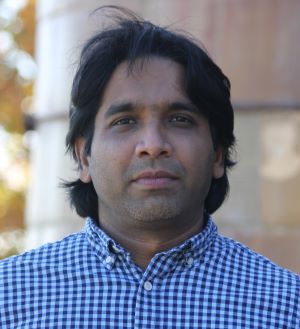
Dr. Gian Maria Niccolo’ Benucci is a Data Analyst and Bioinformatician at the Great Lakes Bioenergy Research Center (GLBRC) and the Department of Plant, Soil and Microbial Sciences at Michigan State University (MSU). He holds a Ph.D. in Biology and Biotechnology from the University of Perugia, Italy, with expertise in microbial ecology, plant-microbe interactions, and mycology. His research focuses on holobiont dynamics, microbial community responses to environmental changes, and microbiome manipulation to enhance host health. He has published over 55 peer-reviewed articles and collaborates with 160+ researchers globally. Dr. Benucci's work integrates genomics, bioinformatics, and machine learning to study microbiome structure and function across ecosystems. He co-leads GLBRC's bioinformatics support hours and is involved in the National Microbiome Data Collaborative. His teaching includes courses like Statistics for Biologists (STT464) and modules in Advanced Mycology . Key research areas: Mycorrhizal symbioses, truffle microbiome dynamics, and sustainable agriculture practices. His contributions span from fungal systematics (e.g., Tuber rugosum discovery) to bioenergy crop optimization.
Dr. Chandi Witharana is an Assistant Professor in the Department of Natural Resources and the Environment at the University of Connecticut's College of Agriculture, Health, and Natural Resources. Previously, they served as Assistant Professor in Residence (2020-2023), Assistant Research Professor (2018-2020), and Visiting Assistant Professor (2016-2018) at UConn. Their academic journey includes a Postdoctoral Research Fellowship at SUNY Stony Brook (2014-2016) and graduate work at UConn where they earned their PhD in Remote Sensing in 2014. Dr. Witharana teaches courses in high-resolution remote sensing, geospatial analysis, and introductory geomatics. Dr. Witharana's educational background includes: PhD in Remote Sensing, University of Connecticut (2014) MS in GIScience, University of Connecticut (2009) BS in Geology, University of Peradeniya, Sri Lanka (2005) Dr. Witharana's research focuses on methodological developments for analyzing large volumes of multi-modal remote sensing data for environmental, industrial, and agricultural applications, with special emphasis on Arctic Permafrost remote sensing. They harness sub-meter resolution satellite imagery, AI, and high-performance computing resources to map permafrost landforms, monitor thaw disturbances, and assess risks to human-built infrastructure in the Arctic. Their work extends beyond research to include innovative applications of remote sensing in K-12 STEM education through imagery-enabled lesson plans. Dr. Witharana aims to use cutting-edge geospatial technologies as transformative learning instruments to help students understand complex human-environment interactions. The recent publications of Dr. Witharana demonstrate a strong focus on applying advanced AI and remote sensing techniques to Arctic permafrost monitoring and infrastructure risk assessment. Their work increasingly incorporates vision transformers and deep learning models for more accurate detection of permafrost features and unhealthy tree crowns. There's a clear trend toward developing scalable geospatial datasets with standardized approaches, particularly for retrogressive thaw slumps. Many publications address practical applications including power outage risk modeling, forest management for storm resistance, and infrastructure monitoring in changing Arctic landscapes. The research shows growing interdisciplinary collaboration across environmental science, computer science, and engineering domains. Dr. Witharana has secured significant research funding as PI or Co-PI on numerous grants totaling over $14 million, including: NSF's Permafrost Discovery Gateway project ($3,000,000) Google-funded research on tracking Arctic permafrost thaw ($5,000,000) NSF's role of capillaries in the Arctic hydrologic system ($2,000,000) USDA projects on drone imaging for nutrient deficiency detection ($200,000) Eversource Energy projects on tree risk modeling ($275,000) As an educator, Dr. Witharana mentors students through research projects funded by these grants and teaches specialized courses in remote sensing and geospatial analysis. They serve as Director of the Remote Sensing & Geospatial Data Analytics Graduate Program and as a Steering Committee Member for UConn's Data Science Masters Program. Dr. Witharana is also an Editorial Advisory Board Member for the ISPRS Journal of Photogrammetry and Remote Sensing and regularly reviews proposals for NSF and other agencies. Their research group leverages high-performance computing resources including Frontera/NSF and XSEDE allocations for large-scale geospatial analysis. Dr. Witharana leads research teams focused on Arctic permafrost monitoring and geospatial AI applications, collaborating with institutions including University of Alaska-Fairbanks, Woodwell Climate Research Center, and UC Santa Barbara. Their work involves developing advanced workflows for processing satellite imagery and implementing machine learning models for environmental monitoring. The research group actively engages in developing educational applications of remote sensing technology, particularly for K-12 STEM education.
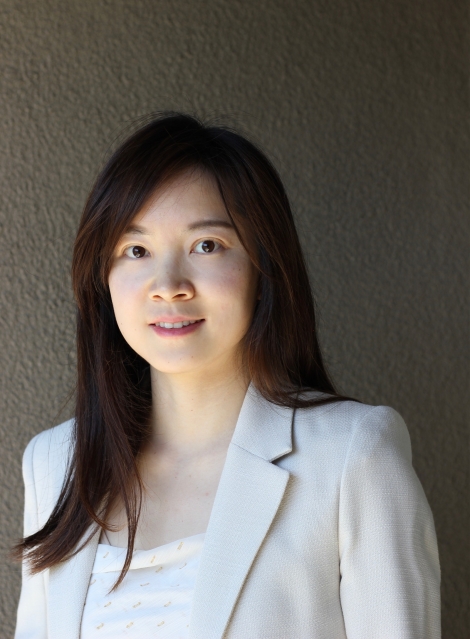
Elham Kowsari is a Postdoctoral Researcher specializing in Automation Technology and Mechanical Engineering. Her research focuses on advanced control systems, particularly in forestry machinery automation and sway motion reduction in cranes. She explores nonlinear control strategies for DC microgrids and develops fault detection algorithms for electrical systems, including induction motors and continuous stirred-tank reactors. Her work integrates techniques like Kalman filtering, Gaussian processes, and model predictive control to address real-world engineering challenges. Key research areas include: Motion control and vibration suppression in forestry cranes Stabilization of DC microgrids with complex loads Fault diagnosis in electrical and mechanical systems Elham has collaborated internationally on sensor calibration (Star Tracker-Fiber Optic Gyroscope integration) and nonlinear system analysis. Her 12 peer-reviewed articles since 2014 demonstrate expertise in both theoretical control methodologies and practical industrial applications.
Karsten Schulz is a Professor in the Department of Hydrology and Water Management at the University of Natural Resources and Life Sciences (BOKU), Vienna. His research focuses on hydrological processes in alpine environments, remote sensing applications, and machine learning-driven environmental modeling. He leads studies on snow cover dynamics, groundwater recharge, and the integration of big data into hydrological systems analysis. Teaching responsibilities include courses on geoecology, hydrology, and uncertainties in water flow modeling. His research emphasizes interdisciplinary approaches, combining field observations with advanced computational methods to address challenges in climate change, water resource management, and sustainable agriculture. Recent work highlights include regional-scale assessments of Austrian water balance components, the application of superconducting gravimeters for snowpack monitoring, and the development of machine learning models for soil hydraulic property prediction. He collaborates internationally on projects involving transboundary hydrology and agricultural sustainability in East Africa. Consultation hours are held weekly (except cancellations), and his lab (iHYWA) focuses on hydrological innovation for environmental resilience. Research outputs span over 50 peer-reviewed articles since 2018, addressing topics from snow hydrology to AI-driven water temperature forecasting.
Shawn Landry is a Research Associate Professor and Director of the USF Water Institute at the University of South Florida's School of Geosciences. His research focuses on environmental equity, water resource management, and geospatial technologies, with a strong emphasis on applied projects addressing urban forests, wetlands, and land cover change. He holds a Ph.D. (2013), two M.S. degrees (2005, 1996), and a B.S. (1992) from the University of South Florida and University of New Hampshire. Key projects include the Statewide Ecosystem Assessment of Coastal and Aquatic Resources (SEACAR) and the development of decision-support tools like the Water Atlas and Tampa Tree Map. His work integrates remote sensing, machine learning, and GIS to support policy and community engagement in coastal and urban environments. Landry is a PI on multiple NSF-funded initiatives and collaborates with state agencies and municipalities on flood mitigation, urban forest resilience, and environmental justice. Education: Ph.D., University of South Florida (2013) M.S., University of South Florida (2005) M.S., University of South Florida (1996) B.S., University of New Hampshire (1992) Key Projects: RAPID Collaborative Research on urban forest resilience post-Hurricane Irma SEACAR database for coastal resource assessment Orange/Seminole County Water Atlas initiatives GIS-based tools for urban forestry and floodplain management His research outputs span over 50 peer-reviewed articles and technical reports, focusing on topics like urban tree canopy analysis, groundwater dynamics, and policy-driven environmental decision-making. Landry also teaches GIS 6355 (Water Resources GIS) and serves on committees for organizations including the American Association of Geographers and the Tampa Bay Estuary Program.
Maarten van Reeuwijk is a Professor of Urban Fluid Mechanics at the Department of Civil and Environmental Engineering, Faculty of Engineering at Imperial College London. He serves as Director of Research and teaches at both undergraduate and postgraduate levels. His research focuses on transport processes in urban environments, atmospheric convection, and turbulent flows, with applications to air quality, urban microclimate, and sustainable infrastructure. He leads a multidisciplinary research group involving Aeronautical, Civil, and Mechanical Engineering experts. Education: MSc in Civil and Environmental Engineering (Fluid Mechanics), Delft University of Technology (1995-2002) PhD in Applied Physics (Turbulent Thermal Convection), Delft University of Technology (2002-2007) Research Interests: Urban fluid mechanics, turbulence dynamics, green infrastructure impacts, microplastics behavior, cloud physics, and large-eddy simulation (LES). His work integrates computational modeling (e.g., uDALES software) with experimental data to address environmental challenges like urban heat islands and pollution dispersion. Awards & Recognition: None explicitly stated in the text. Advising & Grants: Supervises PhD/postdoc researchers in diverse engineering and physics backgrounds. Active in securing grants for urban sustainability projects and computational fluid dynamics research. Labs/Teams: Heads the Urban Fluid Mechanics group and collaborates with Imperial's Grantham Institute and Artificial Intelligence Network. Develops the uDALES LES model for urban flow simulations.
Jenni Niku is a Senior Lecturer at the Department of Mathematics and Statistics, University of Jyväskylä, specializing in multivariate statistical modeling and computational methods for ecological data. She is actively involved in the Predictive Community Ecology Group and leads research projects on latent variable models for complex ecological structures. Research Focus: Latent variable models for community ecology Spatial-temporal pattern analysis Statistical methodology for multivariate data Joint species distribution modeling Computational tools for ecological datasets Recent Publications: Jenni has contributed to advancements in analyzing compositional count data, fungal dispersal dynamics, chronic disease modeling, and peatland restoration. Her work bridges statistical innovation with ecological applications, particularly in handling high-dimensional data. Collaborations: She works extensively with researchers from Biological and Environmental Science departments, focusing on interdisciplinary applications of her statistical models.
Dr. Qingqing Sun is an Assistant Professor in the Department of Sustainable Technology and the Built Environment at Appalachian State University, where she contributes to sustainable architectural education and research. Her academic roles focus on integrating technology and human-centered design in the built environment. Education: Ph.D., Planning, Design and Built Environment, Clemson University, 2022 M.Arch, School of Architecture, Clemson University, 2018 B.E., College of Urban Construction, Wuhan University of Science and Technology, China, 2013 Her research centers on smart building systems, environmental performance modeling, and human factors in architecture. She explores innovative applications of parametric design, smart materials, and machine learning in building IoT for predictive control. Her work bridges sustainable design with technological advancement in high-performance buildings and adaptive urban environments. The recent publications reflect a strong focus on environmental sustainability, indoor air quality, and climate resilience. Her studies span interdisciplinary domains including building science, environmental health, urban forestry, and restorative experiences in children, indicating a holistic approach to sustainable and healthy built environments. Scientific Awards: Dr. Sun teaches core architectural design studios (TEC 3728, TEC 3758, TEC 4738) and mentors students in sustainable design practices. While specific grants or advising details are not listed, her research output suggests active engagement in funded or collaborative projects. She integrates advanced computational methods and environmental policy into her pedagogy and scholarship. No dedicated lab or research team is mentioned in the text, but her work implies collaboration in interdisciplinary sustainable design and building performance research initiatives.
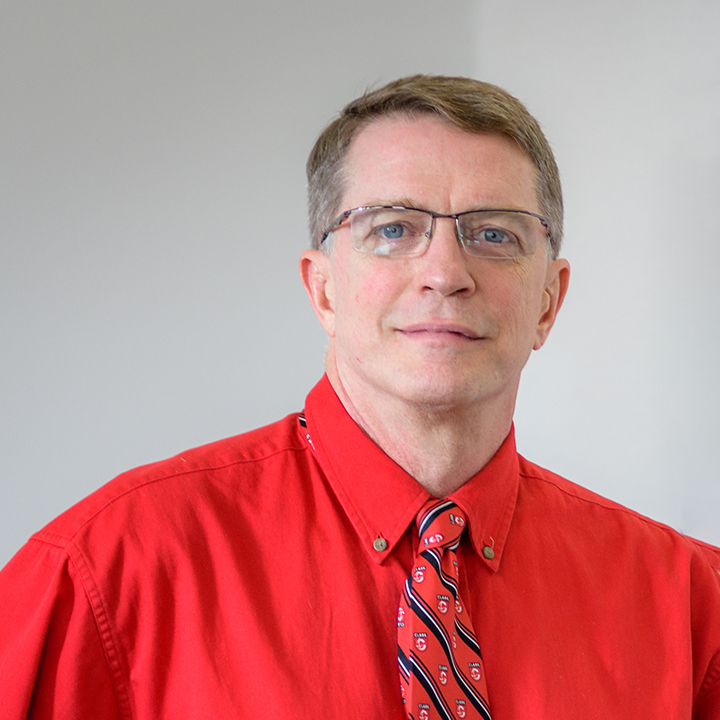
Robert Gilmore Pontius Jr. is a Professor at Clark University's Graduate School of Geography specializing in Geographic Information Science with expertise in Land Change Science , Simulation Modeling , and Statistical Analysis . He develops quantitative methods for spatial data analysis that are implemented in the TerrSet software suite. B.S. Mathematics & Economics , University of Pittsburgh (1984) M.S. Applied Statistics , Ohio State University (1989) Ph.D. Environmental Science , SUNY College of Environmental Science and Forestry (1994) His research focuses on map comparison methodology and land change modeling , particularly addressing quantity disagreement and allocation disagreement in spatial data. He pioneered the Total Operating Characteristic (TOC) framework and advanced techniques for accuracy assessment in remote sensing . Recent publications analyze land category transitions , urban risk modeling , and multi-resolution map comparison . His work has received 19,000+ citations and been funded by NSF , NASA , and Edna Bailey Sussman Fund for research in Plum Island Ecosystems and Brazilian Cerrado Biome . Michael Breheny Prize (2005) Fulbright Scholar of Brazil Clark Labs research affiliate Scientific Advisory Board member, MapBiomas He teaches GIS & Land Change Models and GIS & Map Comparison , with student-created tutorials viewed internationally. He also performs as Doctor Stardust , a professional juggler who won the International Jugglers Association's People's Choice Award .
Dr. Ahalya Ravendran is a Research Fellow at Data61 , Commonwealth Scientific and Industrial Research Organisation (CSIRO), Australia. Her work focuses on advancing computer vision , artificial intelligence , and distributed sensing for robotics, particularly in light-constrained environments. She previously held a postdoctoral position at the University of Sydney in collaboration with SCION, a New Zealand Crown Research Institute. PhD in Engineering and Information Technology (2023), University of Sydney Master's (Thailand), Bachelor's in Mechatronics Engineering (Sri Lanka) Her research spans robotic vision , 3D reconstruction , and burst imaging techniques. Recent publications highlight applications in low-light navigation , deep learning domain adaptation , and AI for forestry innovations . Scientific accolades include: IEEE Young Professional Fellowship (2023) Career Advancement Award (University of Sydney, 2023) Engineering and Information Technologies Research Scholarship (2019-2023) Dr. Ravendran actively advocates for women in technology as a WomenTechMaker Ambassador . Her interdisciplinary approach connects robotics , climate innovations , and sustainable technology .
Martin Riegler is a researcher at the Institute of Physics and Materials Science , part of the University of Natural Resources and Life Sciences, Vienna (BOKU). His work focuses on advanced material analysis and sustainable construction within the wood technology sector. Specializes in electrical resistivity measurements of wood Applies machine learning to wood machining acoustics Studies adhesive bondlines modified with carbon fillers Investigates moisture dynamics in wood Recent publications highlight his contributions to smart wood composites , non-invasive testing , and machine learning applications in wood processing. He has presented research at international conferences and collaborated with institutions like the Northern European Network for Wood Science and Engineering. Riegler's work intersects with Materials Science , Wood Technology , and Sustainable Engineering , particularly in optimizing particleboard production and wood moisture prediction . His research spans technical innovation and environmental stewardship in forestry applications.
Wendy Lomas is a researcher and lecturer at the Faculty of Science and Engineering, University of Wolverhampton , specializing in artificial intelligence and computational bioacoustics . She holds an MSc in Artificial Intelligence from the University of Wolverhampton and a BA (Hons) in Social and Political Science from the University of Cambridge. Education MSc in Artificial Intelligence (2023-2024), University of Wolverhampton BA (Hons) in Social and Political Science (1989-1993), University of Cambridge Her research focuses on developing lightweight associative memory AI algorithms for bioacoustic monitoring of ecosystems, targeting wildlife conservation and carbon cycle monitoring . Projects include sustainable AI models for identifying endangered primate vocalizations in Peruvian rainforests and captive settings, lemur welfare initiatives, and collaborations on beetle outbreak detection in forestry. All work emphasizes energy efficiency and AI equity , enabling models to run on standard field devices to reduce dependence on high-performance computing. Her recent publications highlight applications of Hopfield networks in bioacoustic classification, with a focus on bat echolocation and primate vocalizations . These works align with her broader goals of democratizing AI tools for global conservation efforts. Scientific Awards Invest to Grow PhD Studentship (University of Wolverhampton) OpenBright Awards (2024, 2025) Wendy supervises MRes Artificial Intelligence students and lectures on MRes Cybersecurity and Artificial Intelligence courses. She is involved in STEM outreach and educational development, including the SEDA certification for technology-enhanced learning. Her grants from the OpenBright Foundation support projects on environmentally sustainable AI and bat recognition.
Dr. Matias Valdenegro Toro is an Assistant Professor of Machine Learning at the University of Groningen within the Faculty of Science and Engineering and the Artificial Intelligence department of the Bernoulli Institute. He holds a PhD from Heriot-Watt University (2019) and a Master's in Autonomous Systems from Bonn-Rhein-Sieg University of Applied Sciences (2014). His research focuses on trustworthy machine learning models , particularly in uncertainty quantification , medical AI , and robotics , with applications in computer vision and explainable AI. He teaches courses like Introduction to Machine Learning and Deep Learning at the Bachelor and Master levels. His work emphasizes robustness in AI systems, including uncertainty estimation for medical applications, super-resolution techniques, and neuromorphic robotics. He has published widely on topics like Bayesian neural networks, prompt tuning, and sanity checks for explanations. Notable awards include Best Reviewer at ICML (2024) and Highlighted Reviewer at ICLR (2022). He collaborates with institutions like the German Research Center for Artificial Intelligence and actively contributes to open-source datasets (e.g., the Japanese Uncertain Scenes Dataset ). Key grants and activities include organizing the ENLIGHT BIP Course on Deep Learning for Forestry and teaching at the European Summer School on AI . His research also addresses regulatory challenges like the EU AI Act's implications for uncertainty quantification in general-purpose AI.
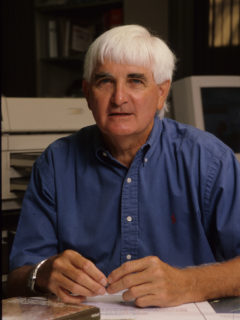
Robert Coulson is a Professor in the Department of Entomology at Texas A&M University, serving as Director of the Knowledge Engineering Laboratory (KEL). He holds academic appointments within the College of Agriculture & Life Sciences and is affiliated with Texas A&M AgriLife Research and Extension. His expertise spans Forest Entomology, Insect Ecology, Landscape Ecology, and Landscape-use Management. Education: B.S. Biology, Furman University M.S. Entomology, University of Georgia Ph.D. Entomology, University of Georgia Post-Doctorate, Institute of Ecology, University of Georgia Research Focus: Dr. Coulson’s transdisciplinary research addresses ecological and landscape-scale challenges, including insect impacts on forests, prairies, and urban environments. He co-founded the Knowledge Engineering Laboratory to integrate computer applications with ecological science, focusing on decision support systems for environmental management. Key areas include monarch butterfly conservation, roadkill modeling, and invasive species management (e.g., hemlock woolly adelgid). Awards & Recognition: Former Student Association Faculty Achievement Award for Research Award of Merit from Texas Forestry Association A. D. Hopkins Award (Southern Forest Insect Work Conference) J. E. Bussart Award and Fellow of Entomological Society of America Teaching & Publications: Teaches undergraduate forest protection and graduate landscape ecology courses. Authored textbooks Forest Entomology (1984) and Basic Landscape Ecology (2010). Secured $10.5M in research funding, with a Google Scholar h-index of 42 and 133 citations. Labs & Collaborations: Directs the Knowledge Engineering Laboratory (KEL), which develops computational tools for environmental problem-solving. Collaborates on projects involving GIS, ecological modeling, and conservation planning.