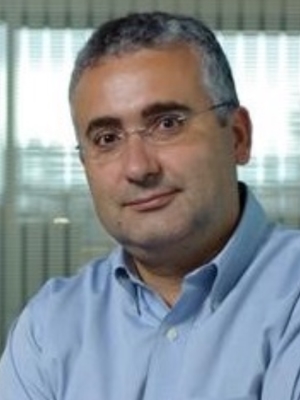
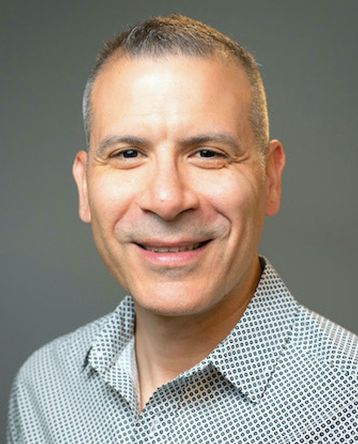
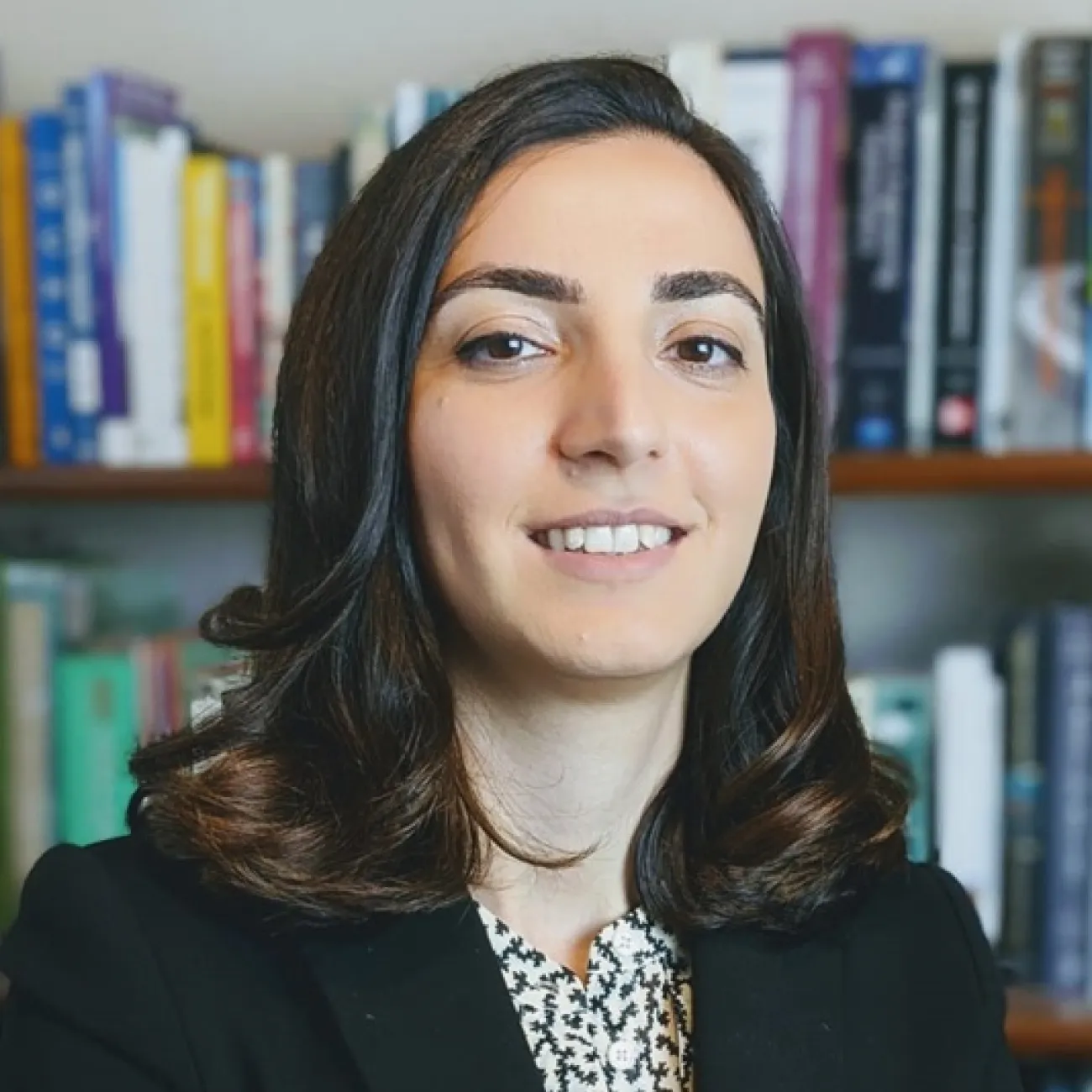
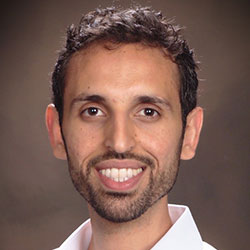
Emilio Frazzoli is a Full Professor at ETH Zurich’s Department of Mechanical and Process Engineering. He leads the Institute for Dynamic Systems and Control and the Center for Sustainable Future Mobility, focusing on autonomous systems, robotics, and socio-technical control frameworks. Current affiliations: ETH Zurich (Dynamic Systems and Control, Sustainable Future Mobility) Research: Autonomous mobility-on-demand, game theory for resource allocation, and safety verification in multi-agent systems His work bridges robotics, control theory, and economics, with projects like the open-source AMoDeus simulation framework for autonomous taxis and karma-based resource allocation systems. Recent publications emphasize trustworthy AI, reproducibility in autonomous vehicle control, and human-robot interaction challenges. Notable projects include nuReality (VR-based pedestrian interaction studies) and CARSI II (context-driven vehicle interfaces).
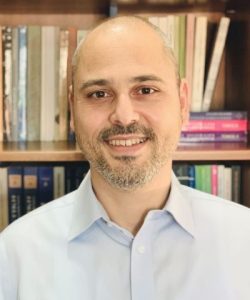
Geert Deconinck is a full professor at KU Leuven , leading the Electrical Energy Systems and Applications (ELECTA) research group within the Department of Electrical Engineering (ESAT). He also serves as scientific leader of the EnergyVille research center's algorithms domain, focusing on smart electrical networks and thermal systems. M.Sc. and Ph.D. from KU Leuven Head of ELECTA since 2012 (10 professors, 8 postdocs, 70+ PhDs) Over 8 million EUR research budget in last 5 years 44 completed PhDs and 10 current advisees IEEE Transactions editorial board member His research spans smart grid architectures , distributed control , and cyber-physical security , with recent focus on EV-grid integration , renewable energy democratization , and multi-carrier energy systems . Current projects include: Smart Charging - E-Mobility meets Renewable Energy Early Detection and Defense Systems for Smart Grids Open-source P2P energy sharing platforms Microgrid control strategies for PV-battery systems Awarded IET Fellow and IEEE Senior Member status, his work combines machine learning with power systems engineering through both theoretical modeling and experimental validation . He has contributed over 575 publications with 9800+ Google Scholar citations.
Xianguo Li is a Professor in the Department of Mechanical and Mechatronics Engineering at the University of Waterloo, Canada. He holds prestigious fellowships including Fellow of the Canadian Academy of Engineering (FCAE), Fellow of the Engineering Institute of Canada (FEIC), and Fellow of the Canadian Society for Mechanical Engineering (CSME). His primary research focuses on thermal fluid science, energy systems, and fuel cell technology, with a strong emphasis on green energy solutions. **Education**: 1989: Doctorate in Mechanical Engineering, Northwestern University, USA 1986: Master's in Mechanical Engineering, Northwestern University, USA 1982: Bachelor's in Thermal Energy Engineering, Tianjin University, China **Research Interests**: His work spans fuel cells, spray dynamics, fluid dynamics, heat and mass transfer, power generation, and renewable energy systems. He leads the Fuel Cell and Green Energy Lab, advancing innovations in energy storage, propulsion systems, and sustainable technologies. **Awards**: Outstanding Performance Award (University of Waterloo, 2007) Frank Walk Service Award (2001) Best Paper Award (2003) Recipient of the Simpson Fellowship (1988) **Advising & Grants**: He supervises graduate students and research associates in projects funded by NSERC, Auto 21, CFI, and industry partners. His lab collaborates on fuel cell durability, thermal management, and green energy policy initiatives. **Editorial Roles**: Founding Editor-in-Chief of the International Journal of Green Energy , Field Chief Editor of Frontiers in Thermal Engineering , and serves on dozens of editorial boards. He chairs major conferences like the International Green Energy Conference and the World Fuel Cell Conference series.
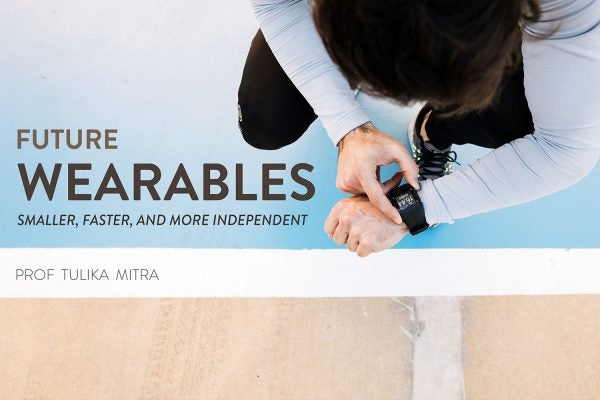
Professor Tulika Mitra is the Dean of the School of Computing and Vice Provost (Special Projects) at the National University of Singapore (NUS). She holds the Provost’s Chair Professor in the Department of Computer Science and has been instrumental in shaping academic policies and strategic initiatives at NUS since joining in 2001. PhD in Computer Science, Stony Brook University (2000) M.E. in Computer Science, Indian Institute of Science (1997) B.E. in Computer Science, Jadavpur University (1995) Her research focuses on hardware-software co-design for energy-efficient computing systems, particularly in real-time embedded systems, heterogeneous architectures, and AI accelerators. She leads major research programs such as the NRF Competitive Research Programme on Low-Power Edge Accelerators and the MOE Tier-3 Programme on Green AI , collaborating with industry leaders like ARM, AMD, and Meta. Her recent publications highlight innovations in CGRA optimization , sparse attention mechanisms , photonic-digital hybrid architectures , and low-power ML inference . These works often integrate compiler techniques, architectural design, and real-time constraints for edge computing applications. Scientific Awards : ESWEEK Test-of-Time Award (2022), ACM SIGDA Distinguished Service Award, IEEE CEDA Outstanding Service Recognition Award, Teaching Excellence Award (2006), and multiple best paper recognitions. Education Leadership : Spearheaded the Computer Engineering (CEG) Programme at NUS, a joint initiative between Engineering and Computing. As a mentor , she has supervised over 25 PhD students , many now in prominent academic or industrial roles. Her research group eCO Lab focuses on embedded computing challenges, while her grant collaborations include projects on 5G base stations, reconfigurable architectures, and IoT-optimized SoCs.
Levent Burak Kara is a Professor in the Department of Mechanical Engineering at Carnegie Mellon University (CMU), with a courtesy appointment in the Robotics Institute. He is a leading researcher in AI-driven computational design, additive manufacturing, and intelligent engineering systems, leading the Visual Design and Engineering Lab (VDEL) at CMU. Education: B.S., Mechanical Engineering, Middle East Technical University (1998) M.S., Mechanical Engineering, Carnegie Mellon University (2000) Ph.D., Mechanical Engineering, Carnegie Mellon University (2005) His research focuses on integrating machine learning, optimization, and geometric modeling to revolutionize engineering design and manufacturing. Key areas include topology optimization, CAD intelligence, digital twins, generative design, bioengineering, and electronic design automation. His work enables automation of traditionally labor-intensive design processes using deep learning and reinforcement learning. His recent publications reveal a strong trend toward physics-informed surrogate modeling, real-time simulation, manufacturability prediction, and AI-driven automation in mechanical, biomedical, and electronic systems. These works frequently appear in top journals such as Journal of Mechanical Design and Journal of Applied Mechanics , and at premier conferences like NeurIPS and DAC. Scientific Awards: National Science Foundation CAREER Award ASME Design Automation Society Young Investigator Award Google AI for Social Good Impact Scholar Kara advises several Ph.D. students and has secured significant funding from federal agencies such as the NSF and the U.S. Army Research Laboratory, as well as collaborations with industrial leaders including Cadence Design Systems and NVIDIA. His research is also supported by CMU’s NextManufacturing Center and the Critical Technology Initiative. He is actively involved in developing intelligent design systems that leverage AI to automate product design, optimize manufacturing processes, and improve medical diagnostics, particularly in oral cancer screening and organ preservation. His lab, VDEL, is a hub for innovation in AI-enabled engineering.
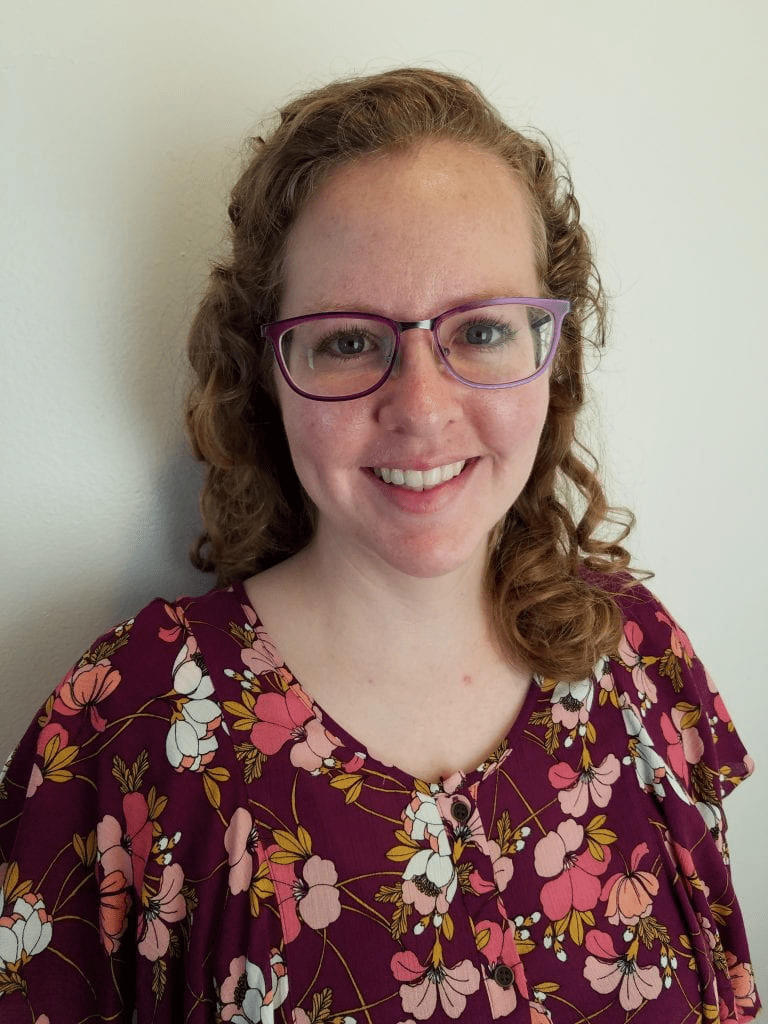
Dr Bahareh Zaghari (MSc, PhD, CEng, FHEA) is a Lecturer in the Electrical Power Engineering group at the University of Southampton's School of Electronics and Computer Science. Her research focuses on electrified aircraft systems, sensors with machine learning applications, electrical power systems, and nonlinear dynamics modeling. Current projects include acoustic sensing for temperature/flow measurement Co-design of electrical machines for aircraft electrification Research activities span hybrid-electric aircraft design (FutPrint50 Horizon project), fully electric aircraft development (EnabEl Innovate UK), and smart sensing systems for aerospace components. Industrial collaborations include KISTLER, iNetic, PALL Aerospace, Safran, ARUP, Embraer, and BAE Systems. Conference coordinator for IEEE Transportation Electrification Council's Electrified Aircraft committee Chair of IEEE/AIAA Electrified Aircraft Technology Symposium (2023) Panel moderator at AIAA Propulsion and Energy (2021) Her work demonstrates innovative applications of acoustic transducers in harsh environments, with contributions to temperature mapping, fault analysis, and energy harvesting systems. She currently supervises PhD student Shikhar Singh.
Yayue Pan is a Professor at the Department of Mechanical and Industrial Engineering, University of Illinois Chicago (UIC) , and serves as the Director of NASA MIRO Center for In-Space Manufacturing: Recycling and Regolith Processing (CISM-R2) . Her research focuses on advancing Additive Manufacturing (AM) technologies for applications in biomedical engineering , energy storage , and smart structures . Ph.D., Industrial and Systems Engineering, University of Southern California (2014) M.S., Mechanical Manufacturing and Automation, Zhejiang University, China (2010) B.S., Industrial Engineering, Zhejiang University of Technology, China (2007) Her work addresses technical challenges in AM such as multi-material printing , multi-scale fabrication , and field-assisted processes . Notable projects include: Development of electrostatically-assisted direct ink writing (eDIW) for high-speed, high-resolution printing Continuous projection stereolithography for rapid solid object manufacturing Acoustic field-assisted particle patterning for smart composites Light-curable hydrogels for corneal repair applications Her 15 most recent publications (2022–2025) span topics in: Multi-material AM (conductive polymers, hierarchical composites) Biomedical applications (soft robotics, corneal repair) Energy components (battery electrolytes, supercapacitors) Field-assisted processes (acoustic, electrostatic, magnetic) Scientific Awards : 2024 ASME Chao and Trigger Young Manufacturing Engineer Award 2022 UIC Researcher of the Year Rising Star Award 2020 ASME CIE TC Leadership Award 2019 UIC Outstanding Teaching Award 2017 SME Outstanding Young Manufacturing Engineer Award NSF REU Supplements (2023–2024) Advising : Mentored 24+ graduate/undergraduate researchers, including 17 NASA/GPIP interns. Former advisees hold academic positions at University at Buffalo and University of North Carolina at Charlotte , and industry roles at Apple , GE Healthcare , and ANSYS . Grants : Recipient of a $4.65M NASA grant and multiple NSF awards. Collaborations include Northwestern University, University of Michigan, and NASA centers.
Ashwani K. Gupta is a Distinguished University Professor at the University of Maryland, holding the Minta Martin Professorship in Engineering. He serves as Professor in the Department of Mechanical Engineering, Professor at the Institute of Physical Science and Technology, and Affiliate Professor in the Department of Aerospace Engineering. With over 45 years of experience in combustion engineering since graduating from Southampton University in 1970, Gupta has established himself as a leading authority in advanced combustion technologies. Dr. Gupta earned his Ph.D. from the University of Sheffield in 1973, followed by a D.Sc. from the same institution in 1986 and another D.Sc. from Southampton University in 2013. His academic journey includes six years at MIT as a research staff member and three years at Sheffield University as an independent research worker before joining the University of Maryland in 1983. Gupta's research focuses on revolutionizing combustion technology through innovations in swirl flows, high-temperature air combustion (HiTAC), and distributed combustion systems. His pioneering work on 'colorless distributed combustion' has enabled ultra-low emission combustion processes with significant applications in gas turbine engines and waste-to-energy conversion. His research spans biofuels, CO2 utilization, sulfur chemistry, waste conversion, and advanced laser diagnostics, addressing critical challenges in sustainable energy and environmental protection. Analyzing his recent publications reveals a strong emphasis on waste-to-energy conversion, biomass processing, and CO2-assisted technologies. Gupta's work demonstrates a clear trajectory toward sustainable energy solutions, with increasing integration of artificial intelligence for combustion optimization and emission control. His research bridges fundamental combustion science with practical engineering applications for cleaner energy systems. Among Gupta's numerous accolades are: Election to Fellowship of the Royal Academy of Engineering (2023) Honorary Fellowship of the Royal Aeronautical Society (2020) Recognition as one of the top 2% of scientists worldwide by Stanford University (2022-2024) Multiple prestigious medals from ASME and AIAA including the Soichiro Honda Medal (2018) and AIAA Air Breathing Propulsion Award (2014) Honorary doctorates from three international universities Gupta has secured substantial research funding throughout his career, resulting in over 850 technical papers, three books, 18 edited books, and 22 book chapters. He has delivered over 100 plenary/keynote/invited presentations at international conferences. His mentorship has shaped numerous graduate students who continue to contribute to the field of combustion engineering. Gupta directs the Combustion Laboratory at the University of Maryland, which serves as a hub for cutting-edge research in sustainable combustion technologies. The Combustion Laboratory, under Gupta's leadership, has become a center of excellence for advanced combustion research, particularly in distributed combustion systems, waste-to-energy conversion, and alternative fuels. The lab maintains strong collaborations with industry partners and international research institutions, facilitating technology transfer and practical implementation of research findings. Gupta's team employs state-of-the-art diagnostics and computational tools to advance fundamental understanding while developing practical engineering solutions for cleaner energy systems.
Nabil Alshurafa is an Associate Professor at Northwestern University, holding joint appointments in the McCormick School of Engineering (Computer Science and Electrical and Computer Engineering) and the Feinberg School of Medicine (Preventive Medicine). He directs the HABits Lab, which focuses on developing mHealth systems to address health behaviors such as overeating, stress, and UV exposure. His work integrates wearable sensors, machine learning, and behavioral science to create passive sensing solutions. Education: PhD in Computer Science and Wireless Health (UCLA), MS and BS in Computer Science (UCLA). Research Interests: Body sensor networks, activity recognition, embedded systems, and health informatics. His lab designs wearable devices (e.g., neck-worn sensors, UV patches) and AI frameworks to detect behaviors like eating patterns and stress levels. Collaborations include domain experts in medicine and engineering to translate technical innovations into clinical interventions. Recent Projects: Developing systems for stress monitoring via ECG-PPG patches, UV exposure tracking, and just-in-time interventions for overeating. The lab emphasizes ethical design, privacy preservation, and user-centered technology. Students and Lab Team: Supervises PhD, MS, and undergraduate researchers in areas like machine learning, embedded systems, and health data analytics. Notable advisees include Rawan Alharbi (PhD candidate), Shibo Zhang (PhD student), and Wilson Wang (MS student). Labs/Teams: HABits Lab collaborates with experts in Preventive Medicine, Psychiatry, and Dermatology to advance interdisciplinary health research. Current projects include predictive analytics for weight loss and interventions targeting maternal stress during pregnancy.
Yang Weng is an Associate Professor at the School of Electrical, Computer and Energy Engineering, Arizona State University. He leads the U.S.-Israel International Consortium on Energy Cyber Initiative on Cybersecurity R&D and directs a research lab focused on smart grid resilience and machine learning applications. Previously, he was a TomKat Postdoctoral Scholar at Stanford University. Education: Ph.D. in Electrical and Computer Engineering, Carnegie Mellon University M.S. in Machine Learning, Carnegie Mellon University Research: His interdisciplinary work bridges power systems, machine learning, and cybersecurity, emphasizing renewable integration, grid optimization, and cyber-physical resilience. Key themes include physics-informed AI, adversarial robustness in energy infrastructure, and real-time control algorithms for dynamic grids. Publications: Recent articles (2024–2025) demonstrate strong trends in AI-driven grid security, adaptive control under uncertainty, and climate-impact modeling. Dominant domains include neural network applications for stability guarantees, cyber-attack mitigation, and data-efficient renewable integration. Awards: NSF CAREER Award (2021), Amazon Research Award (2023) Best Paper Awards at IEEE SmartGridComm (2012, 2013), PES GM (2014), PMAPS (2016) IEEE Senior Member, Sun Award (ASU), Centennial Award (ASU) Grants & Leadership: Secured DOE, NSF, and AFOSR funding for projects on AI-enhanced grid resilience. Advises PhD/postdoc candidates and chairs the U.S.-Israel Energy Center consortium. Organized international workshops (e.g., ICRDE 2023) and validated research via hardware-in-the-loop experiments. Lab & Team: Directs a research group developing deployable ML solutions for utilities (e.g., OPAL-RT collaborations). Focus areas: cybersecurity toolchains, reinforcement learning for grid control, and anomaly detection architectures.
Prof. Dr. Christian Breitsamter is a Professor at the Technische Universität München (TUM), leading the Chair of Aerodynamics and Fluid Mechanics within the TUM School of Engineering and Design. He has held this position since 2007 and has been a member of key committees such as the ICAS Programme Committee and STAB-Programmleitung. His research focuses on aerodynamics of aircraft and rotorcraft configurations, including vortex dynamics, aeroelasticity, and fluid-structure interaction. Education: PhD in Aerodynamics (1997) Master’s in Aerospace Engineering (1989) Research Interests: Prof. Breitsamter’s work spans experimental and numerical studies of high-agility aircraft, helicopter aerodynamics, and advanced wing designs. Key areas include leading-edge vortices, gust load mitigation using flexible wings, and flow control techniques. His group investigates cutting-edge topics like deep learning for buffet prediction and hybrid neural networks for aerodynamic modeling. Awards: Willy Messerschmitt Preis (1999) AIAA Associate Fellow (2007) Advising & Grants: While specific student names are not listed, his research involves collaborative projects with industry partners (e.g., RACER Compound Helicopter) and EU initiatives like the FURADO program. His team contributes to the NFDI4ING infrastructure for engineering data. Labs/Teams: Active in the Aerodynamics Wind Tunnel facilities (Windkanäle A/B/C) and leads the SAGITTA flying wing demonstrator project. His group also explores membrane wings and elasto-flexible morphing technologies.
Ivan C. Christov is an Associate Professor of Mechanical Engineering at Purdue University's School of Mechanical Engineering in West Lafayette, Indiana. His research focuses on fluid dynamics, non-Newtonian fluid mechanics, and multiphase processes, with applications in biomedical engineering, micro/nanotechnology, and advanced materials. He leads the Transport: Modeling, Numerics & Theory laboratory. Education: Ph.D., Northwestern University, 2011 M.S., Northwestern University, 2008 M.S., Texas A&M University, 2007 S.B., Massachusetts Institute of Technology, 2005 Research Interests: Soft hydraulics, computational science, scientific machine learning, nonlinear waves, and fluid-structure interactions. His work spans theoretical modeling, numerical simulation, and experimental validation in complex fluid systems. Publications: Recent work includes studies on flow-rate pressure-drop relations in deformable microchannels, physics-informed neural networks for particle dynamics, and fluid-structure interaction in cerebral aneurysms. Themes include microfluidics, elastohydrodynamics, and rheological characterization of soft materials. Awards: Fulbright U.S. Scholar (2022) Outstanding Engineering Instructor (multiple recognitions) Richard P. Feynman Distinguished Postdoctoral Fellowship (2013) Labs/Teams: Directs the Transport laboratory at Purdue, focusing on interdisciplinary research in fluid mechanics and computational methods. Collaborates on biomedical fluid dynamics and advanced materials characterization.
Dr. Jessica A Eisma is an Assistant Professor of Water Resources in the Department of Civil Engineering at the University of Texas at Arlington. Her research focuses on urban and dryland hydrology, remote sensing, machine learning, citizen science, and climate change adaptation. She holds a PhD from Purdue University (2020) and prior degrees from Purdue and Michigan State University. Her work emphasizes community-centered solutions for flood resilience and green infrastructure planning in vulnerable areas. Education: PhD, Civil Engineering, Purdue University, 2020 MS, Civil Engineering, Purdue University, 2015 BS, Civil Engineering, Michigan State University, 2012 Research Interests: Urban hydrology and climate impacts on rainfall patterns Remote sensing applications for water resource management Machine learning in hydrological modeling Citizen science for environmental data collection Green infrastructure design for flood mitigation Recent Article Trends: Dr. Eisma’s recent work addresses urbanization effects on extreme rainfall, UAV-based thermal mapping of micro-urban heat islands, and equity-focused green infrastructure planning. Her publications often bridge technical innovation and community-driven solutions for climate resilience. Awards: 2024: Faculty/Staff Graduating Student Impact Reception (UTA) 2023: Emerging Leaders Award (Purdue CEG SAC) 2020: Magoon Award for Excellence in Teaching (Purdue College of Engineering) 2015: NSF Graduate Research Fellowship Advising & Grants: Advises 3 PhD students and multiple undergrad researchers Principal Investigator on grants totaling over $1M from NOAA, NSF, and others Focus areas: Houston flood resilience, Texas urban stormwater systems Lab & Teams: Leads the SEUSI Lab, dedicated to socio-environmental solutions in urban sustainability and infrastructure. Collaborates with national and international partners on water security and climate adaptation projects.
Stelios Timotheou is an Associate Professor at the Department of Electrical and Computer Engineering and faculty member at the KIOS Research and Innovation Center of Excellence, University of Cyprus. He holds a Dipl-Ing from National Technical University of Athens, and MSc/PhD from Imperial College London. His research focuses on developing real-time distributed methodologies using mathematical optimization, machine learning, and computational intelligence to enhance efficiency in critical infrastructure systems. Research interests center on data-driven decision making for urban mobility management, traffic control systems, and energy optimization. Key areas include: Intelligent UAV-based sensing for traffic monitoring Cooperative control algorithms for multi-agent systems Optimization of renewable energy integration Robust infrastructure protection strategies Recent publications demonstrate strong focus on traffic state estimation (76%), energy system optimization (16%), and UAV applications (8%). Awarded the Cyprus Research Award (2017) and ERC Consolidator Grant for URANUS project. Secured multiple research grants focusing on real-time control systems.
Andrew Markham is a Professor of Computer Science at the University of Oxford , affiliated with Kellogg College . He leads a research group focusing on Cyber Physical Systems (CPS) , specializing in sensors, signal processing, and machine learning to enable machines to better perceive the physical world. His work emphasizes cross-disciplinary collaboration, notably in wildlife tracking and indoor positioning systems. He has held roles as a Postdoctoral Fellow (2008-2012), Associate Professor (2013), and Full Professor (2021). Education : PhD in Electrical Engineering (University of Cape Town, 2008), BSc (Hons) in Electrical Engineering (2004). Research Interests : Tracking and localization in GPS-denied environments (e.g., underground, indoors), magneto-inductive systems, physics-informed machine learning, and data-driven approaches for noisy sensor data. His projects include wildlife monitoring via wireless sensor networks and mmWave radar for human motion capture. Key Projects : CARACAL acoustic monitoring system, mmPoint dense human tracking, and RandLA-Net for large-scale point cloud segmentation. His work spans robotics, environmental sensing, and biomedical applications. Advising & Grants : Supervises over 30 students and collaborates with industrial partners. Research teams include Cyber Physical Systems, Autonomous Ubiquitous Sensing, and Wildlife Monitoring initiatives. Labs/Teams : Leads the CPS research group, focusing on sensor networks, inertial navigation, and multimodal fusion systems. Collaborates with zoology and earth science disciplines on applied projects.