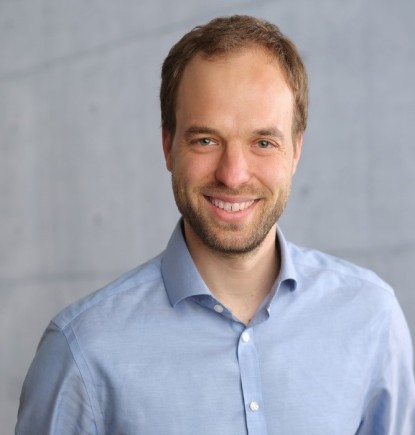
Prof. Benno Liebchen holds a faculty position at the Technische Universität Darmstadt within the Institute for Condensed Matter Physics , part of the Faculty of Physics. He leads the Liebchen Group , dedicated to advancing research in the Theory of Soft Matter , focusing on active matter, colloidal systems, and non-equilibrium phenomena. His work explores collective behavior in self-propelled particles, phase transitions in active fluids, and adaptive strategies in smart materials. Research Interests include: Active matter dynamics and pattern formation Non-equilibrium statistical mechanics Biophysical systems and biomimetic design Computational modeling of soft matter Recent publications highlight breakthroughs in intelligent active particles , self-reverting vortices , and motility-induced phase coexistence . His lab develops tools like the AMEP Python package to analyze active systems. Teaching responsibilities include advanced modules in soft matter physics. Collaborative projects involve interdisciplinary approaches to microswimmer behavior and machine learning-driven optimization of collective systems. Contact: +49 6151 16-24509 / Office: S2|04 104
Atreyee Banerjee is a Researcher and Early Career Fellow at Albert-Ludwigs-Universität (Oct 2024–Jun 2025) and a Postdoctoral Researcher at the Max Planck Institute for Polymer Research (MPIP), Mainz, Germany, under Prof. Kurt Kremer. She completed her PhD in Chemical Science at CSIR-National Chemical Laboratory (2017) and postdocs at Cambridge University (2017–2019) and MPIP (2019–present). Education PhD (2017): CSIR-NCL, Pune, India (Supervisor: Dr. Sarika Maitra Bhattacharyya) MSc (2011): Visva Bharati, Santiniketan (Physical Chemistry) BSc (2009): Visva Bharati, Santiniketan Research Interests Focused on data-driven analysis of complex systems, including supercooled liquids, polymers, and organic crystals. Specializes in combining theory, simulations, and machine learning to study structural/dynamical properties. Key areas include glass transition, free energy landscapes, and polymer dynamics. Publications Overview Recent work includes machine learning approaches to glass transition in acrylic polymers (J. Chem. Phys., 2023), data-driven analysis of polymer dynamics (ACS Macro. Lett., 2023), and thermodynamic studies of supercooled liquids (Soft Matter, 2022). Research emphasizes methodological innovations like PCA clustering and basin-hopping optimization. Awards Recipient of DST-India Travel Award (2017), Best Research Scholar Award (CSIR-NCL, 2017), Shell-India Computational Talent Prize Bronze (2015), and multiple best poster awards (2014–2015). Grants & Labs Collaborates with Dr. Oleksandra Kukharenko in the Polymer Theory Group at MPIP. Active in computational initiatives like the ENGAGE Summer School (2023). Research involves datasets from GROMACS trajectories and open-source tools (e.g., scikit-learn).
Prof. Dr. Chase Broedersz is a tenured W2 Professor of Theoretical Physics – Statistical and Biological Physics at Ludwig-Maximilians-Universität München (LMU Munich) since 2015. He also holds a secondary affiliation as Associate Professor at VU Amsterdam since 2020. He is a member of the Young College of the Bavarian Academy of Science since 2017. Education Ph.D. in Theoretical Physics , VU Amsterdam (2011) MSc. in Physics , VU Amsterdam (2007) BSc. in Physics and Astronomy , VU Amsterdam (2005) Research Interests Prof. Broedersz leads a research program at the intersection of statistical physics and biological physics , with a focus on: Soft Matter Physics : mechanics of biopolymer networks, semiflexible filaments, and composite materials Active Matter : non-equilibrium dynamics in living systems, motor-driven networks, and active gels Cell Mechanics : confined cell migration, mechanosensing, and force transmission in tissues Chromosome Organization : bacterial chromosome structure, protein-DNA interactions, and SMC condensins His work combines theoretical modeling , computational simulations , and experimental collaborations to uncover the physical principles governing complex biological systems. Publication Trends Prof. Broedersz has authored over 50 peer-reviewed publications since 2010. His recent work (2019–2025) emphasizes: Cell migration in confined and soft environments, with studies in Nature Physics and PNAS Non-equilibrium dynamics in active biological systems, including broken detailed balance and emergent contractility Machine learning approaches to infer stochastic dynamics in biological data, published in Nature Communications and Physical Review Letters Chromosomal organization in bacteria, combining polymer physics with genomic data Labs and Teams He leads the Statistical and Biological Physics Group at LMU Munich, affiliated with the Arnold Sommerfeld Center for Theoretical Physics (ASC) . The group collaborates closely with experimental teams at LMU, Princeton, and other institutions, focusing on interdisciplinary biophysics research. Teaching Prof. Broedersz has taught advanced courses including: Advanced Statistical Physics Soft Matter Physics Stochastic Processes in Physics and Biology
Prof. Dr. Igor Lesanovsky is a leading researcher in quantum physics at the University of Tübingen, where he heads the Arbeitsgruppe (Research Group) Lesanovsky within the Institute of Theoretical Physics, part of the Faculty of Mathematics and Natural Sciences. His research focuses on quantum many-body systems, particularly utilizing Rydberg atoms for quantum simulation, quantum information processing, and exploring non-equilibrium phenomena. His research interests span quantum many-body physics, Rydberg atom systems, quantum simulation techniques, non-equilibrium quantum dynamics, quantum thermodynamics, and quantum soft-matter physics. His group investigates how highly excited Rydberg atoms can be used to simulate complex quantum processes, study phase transitions, and develop applications for quantum information processing. They're particularly interested in emergent phenomena such as time-crystals, quantum glassiness, and non-ergodic behavior in quantum systems. The publication record shows a consistent stream of high-impact research, primarily in Physical Review Letters, Physical Review A, and other top physics journals. The research trends indicate a strong focus on quantum simulation with Rydberg systems, quantum non-equilibrium dynamics, quantum information applications, and increasingly on the intersection of quantum physics with machine learning. Recent work explores quantum neural networks, quantum measurement theory, and the application of large-deviation methods to quantum trajectory ensembles. Prof. Lesanovsky's research is supported by multiple prestigious projects including the BMBF Quantum Technology project 'Neural quantum networks on NISQ quantum computers', the DFG Excellence Cluster 'Machine Learning: New Perspectives for Science', DFG Research Units on long-range interacting quantum spin systems and quantum thermalization, the EU EIC Pathfinder Project 'Brisk Rydberg Ions for Scalable Quantum Processors', the QuantERA Project CoQuaDis, and The Center for Integrated Quantum Science and Technology (IQST). The group maintains strong connections with experimental teams, particularly in the areas of quantum simulation of interacting many-body systems and the development of matter wave interferometers and collectively enhanced electric field sensors. They collaborate extensively across Germany and internationally, with publications showing co-authorship with researchers from multiple institutions worldwide.
Dr. Mirko Nitschke is a senior researcher at the Leibniz Institute of Polymer Research Dresden (IPF), affiliated with the Max Bergmann Center of Biomaterials Dresden. He has been instrumental in advancing polymer biomaterials science since joining the institute in 1996, focusing on plasma-based surface engineering and biocompatible material development for medical applications. His academic foundation includes: Graduate studies (1992-1996) at Chemnitz University of Technology, where he investigated FTIR Spectroscopic Investigation of Plasma Modified Polymer Surfaces Physics undergraduate degree (1987-1992) from Friedrich-Schiller-University Jena with thesis on Computer Simulation of Ion Trajectories in Solids Nitschke's research centers on plasma surface functionalization and polymer diagnostics to engineer biocompatible materials. His work bridges fundamental surface science with clinical applications, particularly in vascular stents, nerve regeneration, and corneal tissue engineering. Key innovations include thermo-responsive cell carriers and bioactive hydrogel coatings that respond to physiological cues. Analysis of his 15 most recent publications reveals a strong trajectory in advanced biomaterials characterization using ToF-SIMS and plasma techniques. His work increasingly integrates machine learning for spectral analysis while maintaining focus on medical device applications—particularly in cardiovascular and ophthalmic implants where surface-biology interactions dictate clinical success. As a core member of the Polymer Biomaterials Science Division, Nitschke collaborates extensively with clinical partners through the Max Bergmann Center's university-linked infrastructure. His laboratory specializes in plasma modification systems and surface analytics for next-generation biomaterials development.
Prof. Dr. Jan Kierfeld is a faculty member in the Department of Physics at Technical University of Dortmund, where he leads a research group focused on soft matter theory and biological physics. His work bridges statistical physics, mechanics, and hydrodynamics of soft and biological systems, with strong interdisciplinary connections to materials science and biophysics. His research interests include polymer physics , cytoskeletal filaments (actin and microtubules), elastic capsules and shells , active matter , and the development of novel simulation techniques such as event-chain Monte Carlo. He is particularly interested in how chemical energy (e.g., ATP/GTP hydrolysis) drives mechanical forces in biological systems, and in the mechanics of semiflexible polymer networks and microswimmers. His group also pioneers the application of machine learning to problems in soft matter, such as pendant drop tensiometry and traction force microscopy. The recent publications of Prof. Kierfeld span topics in biophysics, soft matter, and computational physics, showing a strong trend toward integrating theoretical modeling with experimental collaboration, especially in microswimmer dynamics, microtubule mechanics, and interfacial phenomena. His work frequently appears in journals such as Soft Matter , Physical Review , Biophysical Journal , and Nature Communications . He has no listed scientific awards in the provided text, but his active publication record and leadership in DFG programs (e.g., SPP1726 Microswimmers) indicate significant recognition in the field. He advises students and postdoctoral researchers in theoretical and computational soft matter physics, though specific names are not listed. His research is supported by grants from German funding agencies such as the DFG. Prof. Kierfeld’s group develops and applies advanced simulation methods and collaborates with experimentalists on problems involving elastic instabilities (buckling, wrinkling), microswimmers , and chemomechanical models of cellular structures. The group maintains strong technical development in numerical algorithms and data analysis tools, including open-source software like MLFTM for traction force microscopy.
Lars Schäfer , Professor at the Faculty of Chemistry and Biochemistry at Ruhr University Bochum , leads the Molecular Simulation Group. His research focuses on the interplay between structure, dynamics, and function of biological macromolecules using computational methods like molecular dynamics (MD) and QM/MM simulations. Key research areas: solvation science, membrane protein dynamics, ABC transporters, and hydration thermodynamics. His group contributes to the Cluster of Excellence RESOLV and utilizes the ZEMOS facility for solvent-driven process simulations. Recent work includes collaborations on oxygen-stable hydrogenases, nanodisc modeling, and force field development (e.g., Martini 3). The group's scientific approach spans from fundamental quantum mechanical studies (e.g., atomic radii calculations) to applied research in pharmaceuticals (e.g., therapeutic protein stabilization). Their simulations provide atomic-level insights into phenomena like liquid-liquid phase separation and ATP-driven membrane transport. Labs & Collaborations : Hosted at the Center for Theoretical Chemistry (ZEMOS). Active in interdisciplinary networks: Integrated Graduate School Solvation Science, RUB Research School, and international partnerships.
Prof. Frauke Gräter is the newly appointed Director at the Max Planck Institute for Polymer Research (MPI-P), effective July 2024. She holds a professorship in Molecular Biomechanics at Heidelberg University and previously led the Molecular Biomechanics group at the Heidelberg Institute for Theoretical Studies (HITS). Her research focuses on mechanical forces in biochemical processes, combining AI/ML with experimental and computational methods. She earned her doctorate at the Max Planck Institute for Biophysical Chemistry and conducted postdoctoral work at Columbia University and the Max Planck Partner Institute in Shanghai. Education: Studied chemistry at Universities of Tübingen, Kyoto, and Heidelberg; PhD at MPI Göttingen; postdoctoral training at Columbia University and Shanghai's MPG-CAS Partner Institute. Research Interests: Molecular biomechanics, soft matter, AI-driven material design, and biomimetic systems. Specific projects include studies on blood coagulation, spider silk mechanics, and collagen structures. Her interdisciplinary methods integrate high-performance computing, molecular simulations, and AI to explore non-equilibrium material systems. Awards: PRACE Ada Lovelace Award for HPC ERC Consolidator Grant (European Research Council) Advising & Grants: Led the 'Protein Mechanics and Evolution' group in Shanghai and the HITS 'Molecular Biomechanics' team. Current focus includes collaborative projects at MPI-P to develop AI-predicted materials with bio-responsive properties. Labs/Teams: Heads the newly established Department Graeter at MPI-P, fostering interdisciplinary research with the Institute's five existing departments. Active in international collaborations to advance computational biology and smart material systems.
Prof. Dr. Peter Sollich is a Professor of Theoretical Physics at Georg-August-Universität Göttingen, affiliated with the Institute for Theoretical Physics. His research spans non-equilibrium statistical physics with applications to soft matter, active systems, and complex networks. He maintains a small part-time appointment at King's College London. His primary research interests focus on non-equilibrium statistical physics , particularly soft and active matter rheology, jamming transitions, glassy dynamics, dynamical phase transitions, and inference from dynamical data. His work bridges theoretical physics with applications in materials science and network theory, emphasizing both fundamental mechanisms and quantitative modeling approaches. Analysis of his recent publications reveals strong thematic consistency in studying glassy dynamics and active matter systems , with increasing integration of machine learning techniques for network analysis. Key methodological threads include coarse-grained modeling, spectral analysis of complex systems, and non-equilibrium thermodynamics frameworks. His 2023-2025 work shows growing emphasis on nonreciprocal interactions in active mixtures and physics-inspired machine learning applications. Prof. Sollich actively supervises Bachelor's, Master's, and PhD students, welcoming thesis inquiries in theoretical physics. His group develops analytical and computational approaches to complex dynamical systems, with recent grants likely supporting work on network dynamics and active matter modeling (specific grants not detailed in source text). His research group operates within the Institute for Theoretical Physics at Göttingen, focusing on computational and analytical modeling of disordered systems. Current projects involve elastoplastic modeling of amorphous solids, spectral analysis of heterogeneous networks, and theoretical frameworks for active matter phase separation.
Dr. Torsten Stuehn serves as IT Group Leader at the Max Planck Institute for Polymer Research (MPI-P) in Mainz, Germany, leading scientific software development and HPC infrastructure since joining in 2003. He oversees the ESPResSo++ simulation package and collaborates with the University of Mainz and Max Planck Compute and Data Facility (MPCDF). Education: Diploma in Physics, University of Mainz, 1999 Doctorate in Physics, University of Mainz, 2005 His research focuses on scientific software engineering for exascale computing, developing neural network-based force fields, adaptive resolution methods, and load balancing algorithms to advance molecular simulation capabilities. This work addresses critical challenges in maintaining computational leadership for soft matter physics. Recent publications reveal a clear evolution in ESPResSo++ toward exascale readiness, integrating machine learning with multiscale modeling and parallel computing innovations. The software's progression reflects broader trends in computational physics where AI-driven methods and heterogeneous architecture optimization are becoming indispensable. Stuehn directs MPI-P's computational infrastructure team and contributes to major initiatives including Transregio SFB 146 and the European E-CAM project, driving open-source scientific software development for the global research community.
Dr. Thorsten Auth is a researcher at Forschungszentrum Jülich GmbH, affiliated with the Institute for Advanced Simulation (IAS) and its Theoretical Physics of Living Matter (IAS-2) division. His work bridges physics and biology, focusing on lipid-bilayer membranes, active matter, and cellular mechanics. Research Interests : Biological Physics, Active Matter, Soft Condensed Matter, Membrane Biophysics, and Computational Biophysics. He investigates membrane interactions with nano/microstructures and simulates active matter dynamics in cellular environments. Publications Trends : His recent work emphasizes active matter modeling, membrane-particle interactions, and computational approaches to non-equilibrium biological systems. Keywords include Biophysics , Nanotechnology , Non-equilibrium Physics , and Soft Matter . Contact : Available via phone (+49 2461/61-1735) or online profile ( Link ). ORCiD: 0000-0002-6618-2316 . Labs/Teams: Theoretical Physics of Living Matter (IAS-2), Forschungszentrum Jülich
Professor Johannes Neugebauer serves as University Professor of Theoretical Organic Chemistry at the Institute of Organic Chemistry, University of Münster, where he leads a research group dedicated to developing quantum chemical methodologies for complex chemical environments including solvents, proteins, molecular crystals, and surfaces. His work bridges theoretical predictions with experimental validation through extensive collaborations across multiple disciplines. Neugebauer's research focuses on advanced computational approaches including subsystem-based Density Functional Theory (DFT) and density-based embedding methods for both ground and excited electronic states. His group has pioneered subsystem methods for excited states and linear-response properties, developed theoretical frameworks for light-driven processes, and created multi-level electron-correlation techniques. Key contributions include the Subsystem Quantum Chemistry Program SERENITY and insights into light-enabled deracemization of cyclopropanes through collaborations with experimental groups. The research spans applications in molecular spectroscopy, catalytic processes, and materials science, with emphasis on selective and efficient calculations for complex systems. Analysis of recent publications reveals a consistent trajectory toward increasingly sophisticated computational models for chemical reactivity, with growing emphasis on interdisciplinary applications in photochemistry, surface science, and catalytic reaction mechanisms. The work demonstrates strong integration between method development and practical applications across organic chemistry, materials science, and spectroscopy. Professor Neugebauer has mentored numerous doctoral students who have established careers at prestigious institutions worldwide, including ETH Zurich, University of Basel, Rutgers University, and University of Bristol. His research is supported by major collaborative initiatives including CRC 1459 "Intelligent Matter", IRTG 2678 Münster-Nagoya on Functional Pi-Systems, CMTC (Center for Multiscale Theory and Computation), SoN (Center for Soft Nanoscience), and BACCARA (International Graduate School of Battery Chemistry). The Neugebauer group operates within the University of Münster's Institute of Organic Chemistry while maintaining active participation in multiple interdisciplinary research centers. The group collaborates extensively with experimental chemistry teams both within Münster and internationally, particularly in the areas of photocatalysis, surface chemistry, and molecular modeling. Current research directions include advancing quantum chemical methods for machine learning integration and developing computational tools for next-generation materials design.
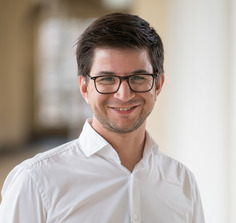
Tristan Bereau is a Professor at Heidelberg University, affiliated with the Institute for Theoretical Physics. His research focuses on computational physics and multiscale modeling of soft matter and biomolecules, integrating physics-inspired machine learning techniques. Current affiliation: Professor, Institute for Theoretical Physics, Heidelberg University Research themes: Multiscale modeling, coarse-graining, data-centric materials science Research interests center on multiscale modeling , machine learning for molecular systems , and chemical space exploration . Key trends in his recent publications include physics-based diffusion models , high-throughput computational screening , and data-driven design of biomolecular systems . His lab has produced 15 recent works spanning free-energy estimation , coarse-grained parameterization , and machine learning for membrane interactions , with a focus on reproducibility and FAIR data principles in materials science.
Professor Ute A. Hellmich is a leading structural biologist specializing in membrane protein biochemistry at Friedrich Schiller University Jena. She holds a W3 Professorship for Biostructural Interactions at the Institute of Organic Chemistry & Macromolecular Chemistry (IOMC) and is affiliated with the Cluster of Excellence Balance of the Microverse. Her research spans multiple institutions including Goethe University Frankfurt and collaborations with Harvard University. Her educational background includes undergraduate studies in Biochemistry (2000-2005), a PhD in Biochemistry/Biophysical Chemistry (2006-2010), and postdoctoral fellowships at Goethe University Frankfurt (2011) and Harvard University (2012-2014, EMBO Long Term Fellowship). Professor Hellmich's research focuses on membrane protein dynamics, particularly ABC transporters and their role in cellular processes. Her work combines structural biology techniques including NMR spectroscopy to investigate protein dynamics in various environments. She has significant expertise in parasite biochemistry, particularly trypanosomes related to neglected tropical diseases (NTDs), and has made contributions to understanding microbial communication systems. Her research often bridges fundamental structural insights with biomedical applications, including antimicrobial strategies and therapeutic development. Her recent publications demonstrate a strong trend toward interdisciplinary research connecting structural biology with microbial ecology, chemical communication, and disease mechanisms. She frequently employs advanced techniques like cryo-EM and NMR to study protein dynamics in diverse membrane environments. Many of her papers focus on ABC transporters, protein-ligand interactions, and the molecular mechanisms underlying microbial communication and defense systems. Elected Chair, Gordon Research Conference 'Ligand Recognition and Molecular Gating' (2024) Boehringer Ingelheim Stiftung Exploration Grant for outstanding junior researchers (2020) Fulbright-Cottrell Award for Excellence in Research and Teaching (2017) Chair, Gordon Research Seminar 'Mechanisms of Membrane Transport' (2017) EMBO Long Term Award, Harvard University (2012-2014) Professor Hellmich actively mentors students and postdocs, as evidenced by her public recognition of their work. She leads multiple significant research projects including DFG CRC 1507 'Membrane-associated Protein Assemblies', DFG CRC 1278 'PolyTarget', and the Carl Zeiss Stiftung project 'Synthetic therapeutic microbes for tailored antimicrobial therapies' (since 2025). Her funding portfolio demonstrates strong support from major German research agencies including DFG, BMBF, and state-level initiatives like LOEWE. She is deeply embedded in the Jena research ecosystem through her roles in the Jena School of Microbial Communication (JSMC), Jena Center for Soft Matter (JCSM), and the Balance of the Microverse Cluster of Excellence. Her lab actively collaborates with multiple Max Planck Institutes and international partners, creating a vibrant research environment focused on the intersection of structural biology and microbial systems.
Dr. Marco Werner is a Researcher in the Soft Matter Theory and Polymer Physics department at the Leibniz Institute of Polymer Research Dresden, part of the Theory of Polymers division. His work bridges computational methods with polymer physics to advance soft materials understanding. His research focuses on: Machine learning of structure-property relationships in polymers Patterns in chemical sequences controlling copolymer-membrane interactions Neural network approaches to reveal hidden physical variables Inverse problems in soft materials design Static and dynamic conformation patterns in polymers Data-driven coarse-graining of simulation models Dr. Werner's publications demonstrate expertise at the intersection of AI and polymer physics, with recent work in ACS Macro Letters and npj Computational Materials showing how machine learning can accelerate materials discovery and solve complex physics problems in soft matter systems. His research trends indicate increasing integration of deep learning techniques with traditional polymer physics approaches. His contributions include developing "trans-encoder" neural networks for chemical space analysis and advancing transfer learning methods between different levels of coarse-graining in polymer simulations.