معرفی
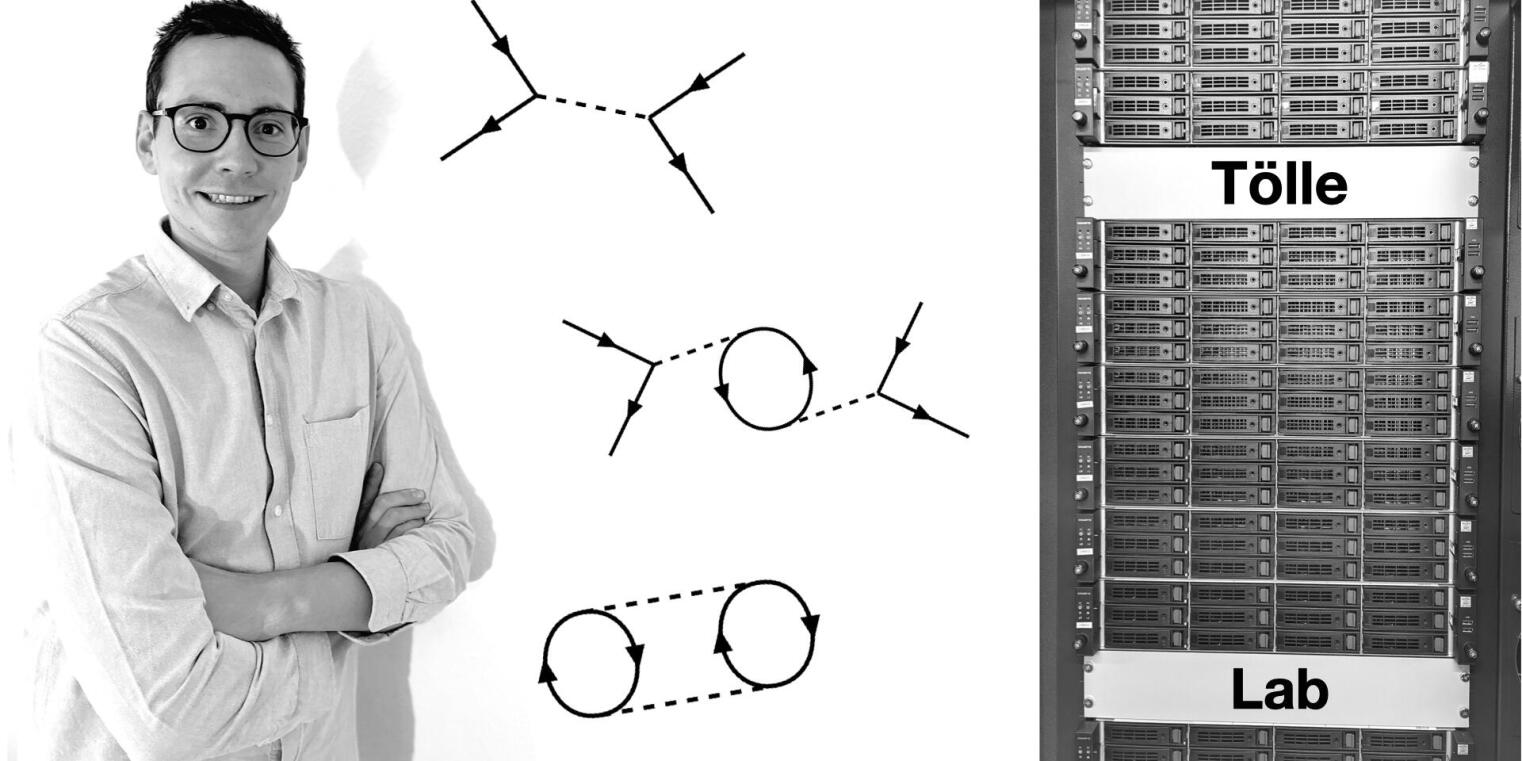
Professor Johannes Neugebauer serves as University Professor of Theoretical Organic Chemistry at the Institute of Organic Chemistry, University of Münster, where he leads a research group dedicated to developing quantum chemical methodologies for complex chemical environments including solvents, proteins, molecular crystals, and surfaces. His work bridges theoretical predictions with experimental validation through extensive collaborations across multiple disciplines.
Neugebauer's research focuses on advanced computational approaches including subsystem-based Density Functional Theory (DFT) and density-based embedding methods for both ground and excited electronic states. His group has pioneered subsystem methods for excited states and linear-response properties, developed theoretical frameworks for light-driven processes, and created multi-level electron-correlation techniques. Key contributions include the Subsystem Quantum Chemistry Program SERENITY and insights into light-enabled deracemization of cyclopropanes through collaborations with experimental groups. The research spans applications in molecular spectroscopy, catalytic processes, and materials science, with emphasis on selective and efficient calculations for complex systems.
Analysis of recent publications reveals a consistent trajectory toward increasingly sophisticated computational models for chemical reactivity, with growing emphasis on interdisciplinary applications in photochemistry, surface science, and catalytic reaction mechanisms. The work demonstrates strong integration between method development and practical applications across organic chemistry, materials science, and spectroscopy.
Professor Neugebauer has mentored numerous doctoral students who have established careers at prestigious institutions worldwide, including ETH Zurich, University of Basel, Rutgers University, and University of Bristol. His research is supported by major collaborative initiatives including CRC 1459 "Intelligent Matter", IRTG 2678 Münster-Nagoya on Functional Pi-Systems, CMTC (Center for Multiscale Theory and Computation), SoN (Center for Soft Nanoscience), and BACCARA (International Graduate School of Battery Chemistry).
The Neugebauer group operates within the University of Münster's Institute of Organic Chemistry while maintaining active participation in multiple interdisciplinary research centers. The group collaborates extensively with experimental chemistry teams both within Münster and internationally, particularly in the areas of photocatalysis, surface chemistry, and molecular modeling. Current research directions include advancing quantum chemical methods for machine learning integration and developing computational tools for next-generation materials design.