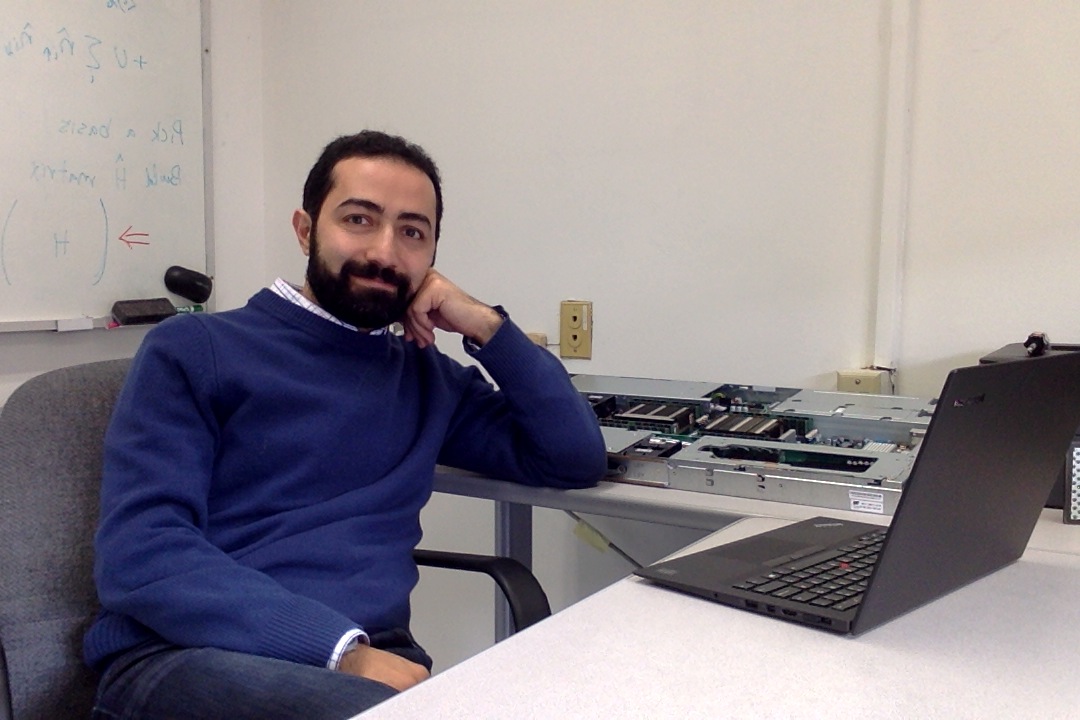
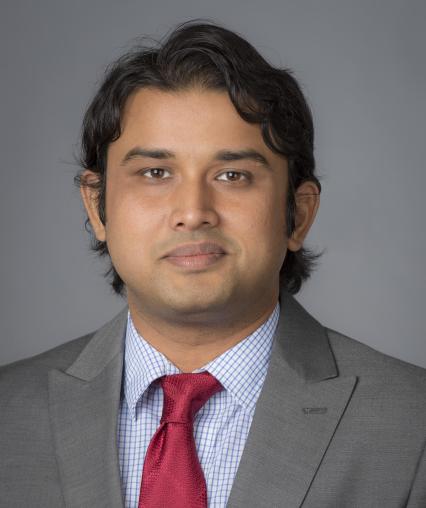
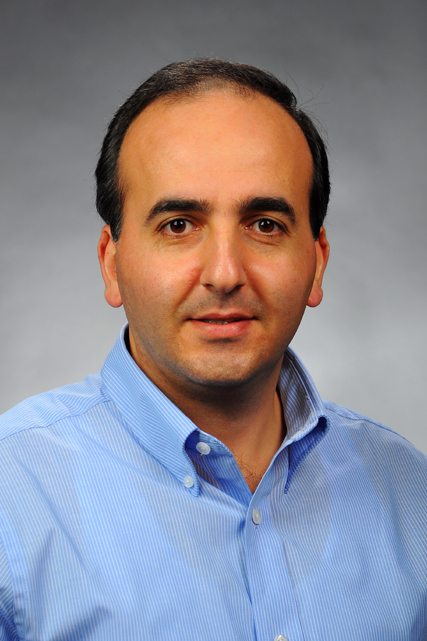
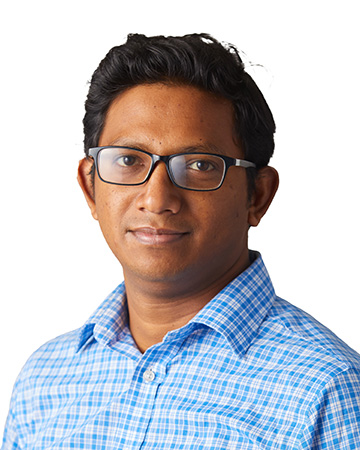
Ehsan Khatami is an Assistant Professor at the Department of Physics, Charles W. Davidson College of Engineering, San Jose State University. His research focuses on theoretical and computational studies of strongly correlated electron systems, particularly the effects of disorder on electronic properties in materials, utilizing quantum Monte Carlo simulations and machine learning techniques. Khatami’s research interests include: Disorder-driven phase transitions in solids Quantum many-body systems (Hubbard and Holstein models) Machine learning applications in condensed matter physics Quantum simulations using cold atoms and quantum dots High-temperature expansions and numerical methods His recent work, supported by an NSF RUI grant ($171,000), explores the interplay between disorder and electron organization in materials, with applications in superconductivity and exotic insulating phases. He also contributed to the NSF MRI grant ($900K) for acquiring High-Performance Computing infrastructure. His publications span topics such as kinetic magnetism, Nagaoka polarons, and AI-assisted discovery in quantum systems. Scientific contributions include: NSF RUI Grant for theoretical investigations NSF MRI Grant as Co-PI for computational infrastructure Pioneering work on neural network-based simulations of quantum systems Khatami actively involves students in his research, with NSF grant funding supporting two undergraduate and one graduate student to develop parallel computing codes and analyze quantum simulation results.
Olga Błaszkiewicz serves as an Assistant Lecturer at the Department of Radiocommunication Systems and Networks within the Faculty of Electronics Telecommunications and Informatics at Gdańsk University of Technology. Her academic position is based in Building A, room 402, with contact information including email olga.blaszkiewicz@pg.edu.pl and phone 583472928. Her research spans wireless communication technologies with particular focus on NB-IoT, LTE systems, and deep learning applications. Key interests include radio navigation, UWB systems, LOS/NLOS identification, and software-defined radio frameworks. Her experimental work demonstrates practical applications in transportation monitoring through wireless signal analysis and indoor positioning systems. Analysis of her recent publications (2019-2025) reveals a strong trend toward integrating machine learning with traditional telecommunications systems, particularly in solving real-world problems like train detection using existing LTE infrastructure and improving synchronization in narrowband IoT systems. Her work bridges theoretical signal processing with practical deployment scenarios. She actively contributes to multiple research projects including SDIDS (Software-Defined Device for Detecting Interferences), KODEŚ (Power Data Concentrator), DUCH IoT (Software-Defined Radio Interface), and VCS-MLAT (Aircraft Location Systems). These projects are funded by Poland's Operational Program Intelligent Development and LIDER programs. Her teaching portfolio encompasses 21 courses including Radio Communication Measurement, Wireless Technology, Telecommunication Signals Laboratory, and Signal Processing. She collaborates extensively with researchers like Krzysztof Cwalina, Piotr Rajchowski, and Jacek Stefański on both teaching and research initiatives within the Department of Radiocommunication Systems and Networks.
Francesco Restuccia serves as an Assistant Professor in the Department of Electrical and Computer Engineering within Northeastern University's College of Engineering. He leads the Mobile Embedded NeTworked Intelligent Systems (MENTIS) laboratory, where his research focuses on pushing the boundaries of mobile computing, wireless networking, and artificial intelligence integration. His educational background includes: PhD in Computer Science, Missouri S&T, 2016 MS in Computer Engineering, University of Pisa, 2011 BS in Computer Engineering, University of Pisa, 2009 Dr. Restuccia's research program creates unconventional pathways to enhance the performance and resilience of mobile computing and networking systems. His work spans resilient and efficient AI/ML implementations, mobile computing architectures, FPGA acceleration, embedded systems design, and advanced wireless networking protocols. He has pioneered approaches that integrate deep learning directly into the physical layer of wireless communications, enabling self-adaptive systems that can dynamically optimize performance under varying conditions. His publication portfolio demonstrates consistent innovation in wireless AI systems, with recent work focusing on securing next-generation cellular networks, improving AR/VR performance through AI optimization, and addressing critical security vulnerabilities in existing Wi-Fi systems. His research has evolved from foundational work on network slicing and polymorphic wireless receivers toward more resilient AI architectures for tactical systems and spectrum-aware communications. His honors include: 2025 DARPA Young Faculty Award 2025 IEEE INFOCOM Best Paper Award 2025 Søren Buus Outstanding Research Award 2023 AFOSR Young Investigator Award 2023 ONR Young Investigator Award 2022 IEEE INFOCOM Best Paper Award 2019 Mario Gerla Young Investigator Award Dr. Restuccia has secured substantial research funding as Principal Investigator on multiple NSF and Department of Defense grants, including projects like 'Securing xApps in Open RANs with Reliable and Principled AI Red-Teaming' ($900,000 NSF grant) and 'DHARMA.AI Digital Hardware + Analog-RF for Multifunctional Apertures with AI' ($200,000 NSF grant). His research group has produced numerous patents in wireless communications and AI-driven networking. He serves on editorial boards for prestigious journals including IEEE Transactions on Mobile Computing and IEEE Transactions on Cognitive Communications and Networking, and is a Senior Member of both IEEE and ACM. At the MENTIS laboratory, Dr. Restuccia oversees a research team focused on disrupting conventional approaches to mobile computing and wireless networking through AI integration. Current projects include developing resilient AI systems for tactical applications, creating secure Open RAN implementations, and building next-generation wireless testbeds for AI-ready infrastructure.
Rahul Gomes, Ph.D., is an Associate Professor of Computer Science and Ramsey Research Professor (2025-2028) at the University of Wisconsin–Eau Claire within the College of Arts and Sciences. His work bridges artificial intelligence, machine learning, and computational science with applications in healthcare, geospatial analytics, and cybersecurity. He maintains active research collaborations with clinical, scientific, and community partners while mentoring undergraduate and graduate students in cutting-edge projects. His educational background includes: Ph.D. in Computer Science from North Dakota State University, Fargo M.S. in Computer Science from Sikkim Manipal University, India B.Ed. and B.S. from St. Xavier's College Kolkata, India Gomes leads research in multiple high-impact domains with a focus on developing interpretable AI systems that address real-world challenges. His biomedical informatics work spans medical imaging analysis (particularly for IVCF detection and pancreatic cancer diagnosis), single-cell RNA sequencing, and retrieval-augmented generation for clinical workflows. In geospatial analytics, he develops deep learning approaches for remote sensing and land cover classification. His cybersecurity research investigates AI-based threats and defense mechanisms, including analysis of large language model vulnerabilities. The interdisciplinary nature of his work is reflected in publications spanning computer science, medical journals, and domain-specific applications. His publication record demonstrates consistent productivity across multiple domains, with recent work showing particular strength in medical AI applications, geospatial deep learning, and cybersecurity analysis. The research shows a clear trajectory toward increasingly complex multimodal approaches, with recent papers integrating vision transformers, domain adaptation techniques, and specialized architectures for specific medical and geospatial challenges. Many publications involve undergraduate student co-authors, reflecting his commitment to research-based education. His scientific recognition includes: Ramsey Research Professorship (2025-2028) NSF REU grant as PI ($459,810) for advancing HPC undergraduate research (2025-2028) RET Site grant as Co-PI to bridge gaps in high school computing education (2024-2027) Gomes actively mentors students through research projects that often lead to publications and conference presentations. His research group develops advanced methods for medical image analysis, spatial transcriptomics, and AI-driven healthcare decision support. He has successfully secured significant grant funding that supports undergraduate research experiences, demonstrating his commitment to involving students in meaningful research. His TARCC RET Site project specifically aims to enhance computing education at the high school level through teacher training. His research lab focuses on several key projects including IVCF Filter Detection using AI (employing Swin-UNet for CT scan analysis), PDAC Diagnosis using Deep Learning, scRNA-seq Analysis for pancreatic cancer, CABG Outcomes analysis, and RAG applications in healthcare. These projects involve interdisciplinary teams of students working with technologies including PyTorch, MONAI, LangChain, and various high-performance computing resources.
Hovannes Kulhandjian is an Associate Professor in the Department of Electrical and Computer Engineering at California State University, Fresno (Fresno State), within the Lyles College of Engineering. He teaches undergraduate and graduate courses in electrical and computer engineering and conducts research in wireless communications, applied machine learning, and their applications in transportation and agriculture. His educational background includes: Ph.D. in Electrical Engineering from the State University of New York at Buffalo (2014) M.S. in Electrical Engineering from the State University of New York at Buffalo (2010) B.S. in Electronics Engineering with high honors (magna cum laude) from the American University in Cairo (2008) Dr. Kulhandjian's research spans wireless communications, applied machine learning, and their applications. His work in intelligent transportation systems includes AI-based road inspection and pedestrian detection, while in precision agriculture, he develops drone-based systems for weed detection and tree health monitoring. He also explores underwater acoustic communications, visible light communications, and physical layer security. His recent publications demonstrate a strong trend in applying artificial intelligence to solve real-world problems in transportation and agriculture, often using drones and multi-sensor fusion. In communications, he advances techniques for next-generation wireless systems, including OTFS and NOMA for 6G, and optical wireless for IoT. Scientific awards and honors: IEEE Senior Member Outstanding Reviewer Award from ELSEVIER Ad Hoc Networks Outstanding Reviewer Award from ELSEVIER Computer Networks Claude C. Laval Award for Innovative Technology and Research Dr. Kulhandjian advises Master's students through thesis (ECE 299) and project (ECE 298) courses. His research is supported by multiple grants, including the Department of Defense Research and Education Program, NSF-ADVANCE Research Alliance Seed Grant, CSU-WATER Faculty Research Incentive, and the Fresno State Transportation Institute SB1 Research Grant for six consecutive years. During his doctoral studies, he worked in the Wireless Networks and Embedded Systems (WiNES) Laboratory at SUNY Buffalo. At Fresno State, he leads a research group focused on the development of innovative solutions in wireless communications and AI applications, collaborating with various institutions and industry partners.
Henry Duwe is an Affiliate Assistant Professor at Iowa State University, specializing in energy-efficient computing systems and embedded systems design. His research focuses on batteryless intermittent systems, energy harvesting, and low-power hardware architectures. He has contributed to the development of frameworks for dependable computing in resource-constrained environments and explores intersections between design thinking and engineering education. His work includes pioneering studies on lifecycle management protocols for batteryless networks, RF energy harvesting systems, and neuromorphic accelerators. Notably, he received the NSF CAREER Award (2022) for advancing intelligent computing on batteryless devices. Duwe also investigates pedagogical methods such as design thinking to enhance course design in computer engineering, addressing challenges in interdisciplinary education and student skill development. Key areas of exploration include: batteryless networks, neural architecture search for energy-constrained devices, hardware-software co-design, and debugging methodologies in engineering curricula. His publications span both technical innovations in embedded systems and educational strategies for effective learning. Recent projects include the PAIL protocol for robust coordination in batteryless systems (2025) and the Lure simulator for intermittent networks (2024). His research bridges theoretical advancements with practical applications in low-power computing and sustainable energy solutions. Awards and grants include the NSF CAREER Award (2022), which supports his work on dependable intelligent computing systems. His contributions also extend to educational innovations like persona-based course design and reflective learning activities in engineering education.
Dr. Gregory Mazzaro is a Professor in the Department of Electrical and Computer Engineering at The Citadel, School of Engineering. He joined The Citadel in 2013 after working as an Electronics Engineer at the U.S. Army Research Laboratory (ARL) from 2009–2013. His research focuses on nonlinear radar for detecting RF electronics and characterizing materials, with over 100 publications and 10 patents. Education: Ph.D. (North Carolina State University), M.S. (SUNY Binghamton), B.S. (Boston University) Research interests include radar systems (non-linear, ultra-wideband), RF electronics, and electromagnetic material analysis. He received a 2012 U.S. Army R&D Achievement Award for his ring-resonator technique. Teaching responsibilities include Electromagnetic Fields, Antennas & Propagation, and laboratory courses. His recent work explores harmonic radar for smart electronics detection, educational curriculum design, and device-centric radar imaging. Awards: 2012 U.S. Army Research & Development Achievement Award Grants and patents include innovations in radar transceiver design, nonlinear junction detection, and acoustic-radar integration. He advises undergraduate and graduate engineering projects, emphasizing hands-on experimentation.
Amin Arbabian is an Associate Professor in the Department of Electrical Engineering at Stanford University. His research spans biomedical devices, sensing systems, and Internet of Things (IoT) technologies, with a focus on wireless power transfer and miniaturized sensor design. Education: BSc in Electrical Engineering, Sharif University of Technology (2005) MSc in Electrical Engineering and Computer Sciences, UC Berkeley (2007) PhD in Electrical Engineering and Computer Sciences, UC Berkeley (2011) Arbabian's lab specializes in end-to-end design of RF/microwave systems for medical implants, sensing interfaces, and terascale IoT networks. Key projects include ultrasonically powered implants for neural stimulation and drug delivery, mm-wave radar systems for gesture recognition, and ultrasound wake-up radios for ultra-low-power IoT devices. His recent publications highlight advancements in wireless neural implants, adaptive radar sensing, and photoelastic modulation for time-of-flight imaging. These works span disciplines including Electrical Engineering, Biomedical Engineering, and Applied Physics. Scientific Awards: Best Student Paper Award, ISSCC 2018 Best Student Paper Award, PIERS 2015 1st Place Best Paper Award, 2016 IEEE Biomedical Circuits and Systems Conference Best Student Paper Award, SPIE Security and Defense 2016 Arbabian collaborates with Stanford faculty in Chemistry, Comparative Medicine, and Radiology. His lab's funding sources include NSF, DARPA, NIH, ARPA-E, and ONR. The group also explores industrial applications like semiconductor manufacturing optimization with AI-driven digital twins.
Andreas Fhager is an Associate Professor in Biomedical Electromagnetics at Chalmers University of Technology, where he leads the research group of the same name. His work focuses on developing microwave-based imaging diagnostics for breast cancer, stroke, and other biomedical applications, encompassing system design, signal processing, electromagnetic modeling, and optimization. He co-founded Medfield Diagnostics AB to commercialize microwave diagnostic equipment, demonstrating strong translational research capabilities. His research centers on biomedical electromagnetics with emphasis on microwave imaging for medical diagnostics. Key areas include breast cancer detection through tomographic systems, stroke diagnosis using ultra-wideband technology, and traumatic injury monitoring via wearable devices. He develops advanced electromagnetic models, optimization algorithms, and signal processing techniques to improve diagnostic accuracy while reducing hardware complexity. His work bridges theoretical innovation with practical clinical applications, particularly targeting prehospital care settings where rapid diagnosis is critical. Analysis of his recent publications (2021-2025) reveals three dominant trends: hardware simplification (reducing transmission channels, frequency points, and system components), noise/multipath mitigation (using lossy gels, dielectric antennas, and asymmetry detection), and clinical translation (wearable abdominal injury monitors, stroke triage tools, and muscle rupture diagnostics). His research increasingly focuses on real-world implementation, with studies using porcine models and phantom testing to validate systems for emergency medical applications. No scientific awards were mentioned in the provided text. Fhager co-founded Medfield Diagnostics AB, indicating active engagement in research commercialization and likely related grant acquisition. While specific grants aren't detailed, his leadership of a research group and extensive publication record suggest successful funding from sources like the Swedish Research Council or EU programs. He teaches Electromagnetic Field Theory, Medical Signals and Systems, and Diagnostic Imaging, contributing to academic training in biomedical engineering. His entrepreneurial activity demonstrates effective translation of academic research into medical technology solutions. He leads the Biomedical Electromagnetics research group at Chalmers University of Technology, which develops end-to-end microwave diagnostic systems from electromagnetic modeling to prototype validation. The group's work includes antenna design (e.g., dielectric rod antennas), computational methods (e.g., discrete dipole approximation), and clinical testing (e.g., porcine models for abdominal injuries). Current projects focus on wearable prehospital diagnostics and stroke triage tools, with future directions likely expanding into point-of-care applications and integration with AI-driven analysis.
Professor Arthur James Lowery (BSc, PhD) is a full-time faculty member at Monash University's Faculty of Engineering , specifically within the Department of Electrical and Computer Systems Engineering (ECSE). He holds the ARC Laureate Fellow distinction and has served as Head of Department (2007-2012). His research spans electro-photonics , optical OFDM , and brain-machine interfaces , with extensive work on photonic integrated circuits and fiber nonlinearity compensation . He leads major projects like COMBS: Centre for Optical Microcombs (2023-2029) and previously directed the Monash Vision Group for bionic eye development. His educational background includes a BSc (Hons) from Durham University and a PhD from Nottingham University . Current research focuses on high-capacity optical communication networks , energy-efficient photonic devices , and direct cortical vision restoration systems . Notable grants include a $72M ARC Centres of Excellence award (2022) and a $924k MRFF Frontiers grant (2019) targeting brain-machine interface commercialization. His Google Scholar publications (over 15 recent works) reveal a trajectory toward soliton microcomb applications , photonic neuromorphic computing , and low-latency optical processing . Awards include Fellowships from IEEE and ATSE , the Clunies Ross Award (2007), and the Peter Doherty Prize (2006). He actively seeks postdocs and graduate students for research in photonic chip design , optical signal processing , and brain-machine interfaces , with scholarships available. Scientific Honors : IEEE Fellow (2009), ATSE Fellow (2007), Clunies Ross Award (2007), Peter Doherty Prize (2006) Key Grants : $72M ARC (2022), $924k MRFF (2019), $440k ARC Discovery (2019), $500k MTPconnect (2018) Leadership Roles : Director of Monash Vision Group (2010-2017), CTO of Ofidium Pty Ltd His work bridges optical communications and biomedical engineering , with patents in optical OFDM and nonlinearity compensation. The Monash Vision Group's Gennaris cortical implant project exemplifies his translational research, aiming to restore vision through wireless cortical stimulation systems.
Keith Winstein is an Associate Professor of Computer Science at Stanford University, with a courtesy appointment in Electrical Engineering. His research focuses on creating innovative networked systems, particularly in communication, compression, and computing. Notable projects include Mosh (an interactive remote shell for mobile clients), Puffer (a video-streaming platform), Lepton (a compression tool), Mahimahi (network emulators), and the gg framework for distributed computing. He has received prestigious awards such as the SIGCOMM Rising Star Award, Sloan Research Fellowship, and NSF CAREER Award. Winstein's academic journey includes undergraduate and graduate studies at MIT. Before academia, he worked at The Wall Street Journal as a reporter and at Ksplice (now part of Oracle), where he held roles in product management and business development. His research spans network protocols, video streaming optimization, cloud computing, and machine learning applications in networking. His work emphasizes practical systems that bridge theoretical concepts with real-world implementation. Recent projects explore computation-centric networking, in-network performance enhancements, and low-latency video streaming. He advocates for reproducible experiments through tools like Mahimahi and has contributed to open-source software widely used in academia and industry. Key Projects: Mosh, Puffer, Lepton, Mahimahi, gg Awards: SIGCOMM Rising Star Award, Sloan Fellowship, NSF CAREER Expertise: Networked Systems, Compression Algorithms, Distributed Computing
Dr. Hasan Abbas is a Senior Lecturer at the University of Glasgow's James Watt School of Engineering, affiliated with the Electronic & Nanoscale Engineering department. He holds a BSc from the University of Engineering and Technology, Lahore (2009) and a PhD from Texas A&M University (2017) under a Fulbright scholarship. Previously, he worked as a lecturer at UET Lahore (2009–2012) and a postdoctoral researcher at Texas A&M Qatar (2018–2019). His research focuses on AI-driven electromagnetic design, real-time microscopy techniques, and sustainable antenna technologies. Research interests include plasmonic microscopy for biological systems, AI-powered antenna design, and energy-efficient THz communication. He leads projects funded by grants and collaborates with industry partners. Abbas serves as Secretary of the IEEE AP/MTT Scotland Chapter and an executive member of the IET Electromagnetics Professional Network. Recent work emphasizes RF sensing for healthcare (e.g., gesture recognition, vital sign monitoring) and terahertz applications in biomedical imaging. His contributions span 99+ publications, including peer-reviewed journals and conferences like EuCAP, IEEE AP-S, and IEEE RadarCon.
Dipankar Mitra is an Assistant Professor in the Department of Computer Science & Computer Engineering at the University of Wisconsin-La Crosse (UW-L). He holds a Ph.D. and M.S. in Electrical and Computer Engineering from North Dakota State University (NDSU), and a B.Sc. in Electrical and Electronic Engineering from Chittagong University of Engineering and Technology, Bangladesh. His research focuses on transformation optics/electromagnetics, metamaterials, 3D-printed antennas, and RF circuits for IoT and biomedical applications. He has published over 50 peer-reviewed articles and is a reviewer for several IEEE journals and conferences. Education: Ph.D., Electrical and Computer Engineering, NDSU (2021) M.S., Electrical and Computer Engineering, NDSU (2016) B.Sc., Electrical and Electronic Engineering, Chittagong University of Engineering and Technology (2013) Research Interests: Mitra’s work spans transformation-based antenna design, metamaterials, RF MEMS for IoT, 3D-printed flexible electronics, and electromagnetic applications in medicine. Recent projects include non-invasive physiological monitoring and microwave-based tissue characterization. Awards: NDSU Doctoral Dissertation Fellowship (2020-2021) UW-L Early Start Award Nominated as NDSU GTA of the Year (2019-2020) Teaching & Grants: Teaches courses in computer architecture, digital logic, and software design. His research is funded by UW-L, NASA, AFRL, and industry partners like NextFlex/Uniqarta. He collaborates with the U.S. Air Force Research Lab and Mayo Clinic. Labs & Teams: Active in the Applied Electromagnetics Lab at NDSU and the RFIC Lab. Leads UW-L projects on conformal antennas and wearable sensors.
Wayne Burleson is a Professor in the Department of Electrical and Computer Engineering at the University of Massachusetts Amherst, affiliated with the Manning College of Information and Computer Sciences. His research focuses on embedded security, hardware security, VLSI circuit design, and VLSI architectures for digital signal processing (DSP), cryptography, and graphics. He has pioneered work on physically unclonable functions (PUFs), remote power attacks on FPGAs, and thermal management strategies in chip multiprocessors. He holds a B.S. and M.S. from MIT (1983) and a Ph.D. from the University of Colorado (1989). His honors include the 2011 IEEE Fellow distinction and the 1999 Ben Dasher Award for Best Paper. He is actively involved in IEEE, ACM, ASEE, and Sigma Xi societies. Burleson’s recent work addresses grand challenges in embedded security, including IoT device vulnerabilities, medical device cybersecurity, and mitigation of hardware Trojans. His lab explores novel approaches in reconfigurable hardware security, energy-efficient asynchronous interconnects, and adaptive systems-on-chip.
Prof. Simona Lohan is a Full Professor at the Electrical Engineering unit of Tampere University, Finland, and a visiting professor at Universitat Autònoma de Barcelona. Her research focuses on wireless positioning, GNSS algorithms, and wearable computing, with an emphasis on privacy-aware localization and interference mitigation. She leads the Signal Processing for Wireless Positioning research group and coordinates the H2020 MSCA European Joint Doctorate A-WEAR (2019-2023). She holds a PhD in Telecommunications from Tampere University of Technology (2003), and has authored/co-authored over 250 peer-reviewed publications. Education background includes an MSc in Electrical Engineering from Polytechnics University of Bucharest (1997), a DEA in Econometrics from École Polytechnique, Paris (1998). Her research spans satellite navigation (Galileo/GPS/GLONASS), UMTS/WCDMA positioning, 5G positioning, IoT localization, and medical applications of positioning systems. She is an associate editor for the RIN Journal of Navigation and IET Journal on Radar, Sonar, and Navigation . Key projects include the H2020 A-WEAR project (wearable health tech), Academy of Finland ULTRA (2020-2022), and SJU GATEMAN (2018-2019). Her work addresses global navigation challenges through LEO-PNT constellations, low-cost positioning solutions for Africa, and fusion of 5G/mmWave radar for airport surveillance. She has pioneered datasets like TUJI1 for indoor localization and developed open-source tools like SyDR for GNSS algorithm benchmarking. Her research themes include: LEO satellite-based positioning systems Anti-spoofing techniques for GNSS RF fingerprinting for device identification Privacy-preserving localization algorithms IoT and industrial internet applications Embedded signal processing systems Her team's innovations bridge communication and navigation domains, with applications in aviation, healthcare, and smart infrastructure. Recent work emphasizes energy-efficient GNSS signal processing and multi-constellation PNT solutions for global accessibility.