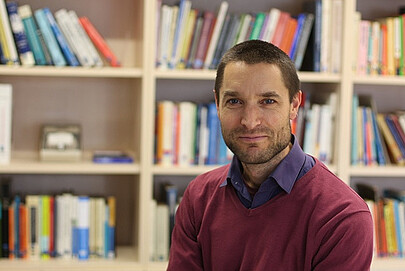
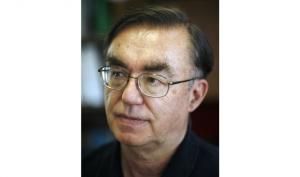
Siamak Mehrkanoon is Assistant Professor in Information and Computing Sciences at Utrecht University. His research develops deep learning architectures for real-world applications including precipitation nowcasting, wind prediction, and biomedical data analysis. With dual PhDs in machine learning and numerical analysis, he creates efficient computational methods for complex dynamical systems.
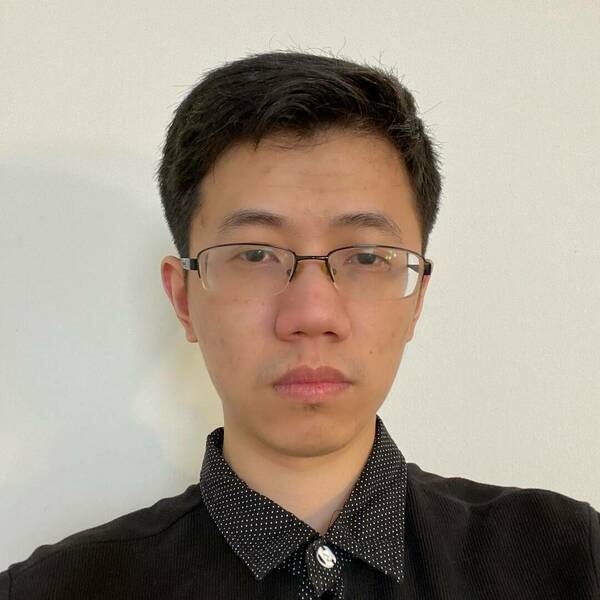
Yuefeng Han is an Assistant Professor in the Department of Applied and Computational Mathematics and Statistics at the University of Notre Dame, part of the College of Science. He holds a Ph.D. in Statistics from the University of Chicago (2019), an M.Sc. in Statistics from the University of Chicago (2014), and a B.S. in Mathematics from Zhejiang University, China (2012). His research focuses on high-dimensional statistics, tensor data analysis, time series analysis, and statistical machine learning, with a particular emphasis on developing methodologies for complex, high-dimensional data structures and dynamic systems. His work has led to contributions in tensor factor models, statistical inference for stochastic optimization, and applications in econometrics and climate science. Han has been recognized with awards including the Consulting Award (2016) and Senior Consultant distinction (2016) from the University of Chicago Department of Statistics, along with a fellowship during his doctoral studies. He has advised PhD and undergraduate students, including Ke Xu, Rui Sheng (co-advised), and Xianglu Zhu. His publications span top journals like the Annals of Statistics, Journal of the Royal Statistical Society Series B, and the Journal of the American Statistical Association. Han also contributes to software development, notably the tensorTS R package for tensor time series analysis. His service includes reviewing for leading statistical journals and consulting projects addressing interdisciplinary challenges in neurobiology, linguistics, and environmental science.
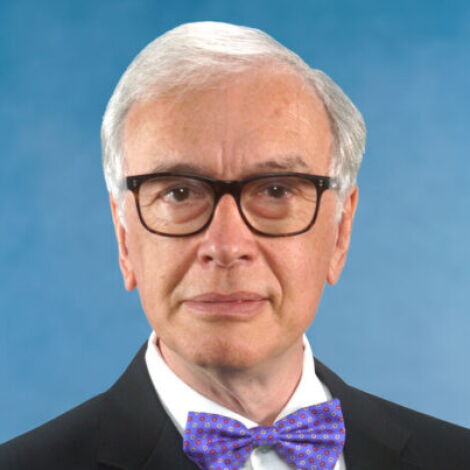
Eric Ghysels is the Edward Bernstein Distinguished Professor of Economics and Professor of Finance at the Kenan-Flagler Business School, University of North Carolina at Chapel Hill. His research focuses on time series econometrics, mixed data sampling (MIDAS) models, machine learning, and FinTech. He holds a PhD from Northwestern University and a BA from the University of Brussels. Ghysels has published extensively in leading journals and authored influential books such as Applied Economic Forecasting using Time Series Methods . He served as co-editor of the Journal of Business and Economic Statistics and founded the Society for Financial Econometrics (SoFiE). His honors include Fellowships from the American Statistical Association and SoFiE. Education: PhD and MA in Economics from Northwestern University (USA), BA in Economics from the University of Brussels (Belgium). Research Interests: Time series econometrics, MIDAS regression models, machine learning applications in finance, volatility modeling, asset pricing, and financial econometrics. He pioneered the MIDAS methodology for mixed-frequency data analysis and contributed to quantum computing applications in asset pricing. Scientific Awards: Fellow of the American Statistical Association (2020), Fellow of the Society for Financial Econometrics (2009), Duisenberg Fellow at the European Central Bank (2011). Advising & Grants: While specific student names are not listed, Ghysels teaches PhD courses in empirical finance and time series analysis. His research has been supported by initiatives such as a $50M Ripple-funded academic program on blockchain applications in finance. Labs/Teams: Co-founder and president of the Society for Financial Econometrics (SoFiE), fostering collaboration between academia and industry in financial econometrics.
Thomas Graf is an Associate Professor at the Institute of Fluid Mechanics and Environmental Physics in Civil Engineering, Leibniz University Hannover. His primary affiliation is within the Faculty of Civil Engineering and Geodetic Science. He specializes in hydrogeology, groundwater modeling, and environmental fluid mechanics. His research focuses on variable-density flow processes, geothermal systems, and coastal aquifer dynamics. Graf leads projects such as the RADON initiative on radioactive waste repository safety and contributes to TransTiP studies on Tibetan Plateau geoecosystems. He has advised students including Jonas Suilmann and Radhakrishna Bangalore Lakshmiprasad. His work spans academic publications, numerical benchmarks, and interdisciplinary collaborations involving hydrogeology, geophysics, and environmental engineering. Education: Ph.D. in Hydrogeology from Laval University (2005), Diplom thesis in GIS integration (2001). Research interests include thermal convection in porous media, permafrost dynamics, and urban flood modeling. He has pioneered methodologies for pipe leakage simulation and groundwater-surface water interactions. Current projects address climate change impacts on coastal aquifers and radioactive waste repository safety. His lab develops tools for subsurface flow modeling and integrates geophysical data with hydrological simulations. Grants: Federal Agency for Final Storage (2021–2024), German Research Foundation (2018–2022). Projects emphasize uncertainty quantification, robust infrastructure design, and environmental risk assessment. Teaching includes courses on hydromechanics, contaminant transport, and numerical modeling.
Prof. Ege Yazgan is a full Professor of Economics at Istanbul Bilgi University , where he serves in multiple leadership roles including Interim Rector and Director of the Center for Financial Studies (CEFIS). He is affiliated with the Faculty of Business Administration and the Department of Economics. His academic work spans econometrics, macroeconomics, and financial economics, with a strong focus on Turkish economic policy. PhD, University of Sussex (2000) MA, Istanbul University and Boğaziçi University BA, Faculty of Economics, Istanbul University (1991) His research interests include Applied Econometrics , Monetary Policy , International Finance , GDP Nowcasting , and Financial Cycles . He is the founder of simditahmin.com , a real-time Turkish GDP forecasting platform, and frequently uses high-frequency and big data in his models. He has published extensively in journals such as International Journal of Forecasting , Empirical Economics , and Journal of Business Cycle Research . The recent trends in his publications show a growing emphasis on nowcasting using alternative data sources (e.g., online prices, financial transactions), machine learning applications in macroeconomic forecasting, and nonlinear modeling of financial and business cycles in emerging markets, particularly Turkey. Scientific contributions and outreach: Regular commentator on macroeconomic issues in Turkish media (CNBC-e, Bloomberg, NTV, TRT) Organizer of major conferences in macro-finance and econometrics Active participant in policy debates on inflation, external deficits, and financial stability Advising and grants: He has advised multiple researchers and co-authored numerous papers with junior colleagues such as B. Soybilgen and H. Kaya. He has led research projects on forecasting and financial studies, supported through institutional and academic grants, though specific grant names are not listed. He is a member of several research centers including CEFIS, Murat Sertel Center, Rimini Center, and Economic Research Forum. Labs and teams: He leads the Center for Information Finance Research (CEFIS) at Istanbul Bilgi University, which focuses on financial data analysis, econometric modeling, and macroeconomic forecasting. The center organizes workshops and collaborates with international scholars in nonlinear dynamics and econometrics.
Renato Procopio is a full-time Professor at the Department of Naval, Electrical, Electronic and Telecommunications Engineering (DITEN), University of Genoa , Italy. His work focuses on power systems, lightning protection, renewable energy integration, and machine learning applications in energy systems. Current research includes lightning-induced overvoltage analysis , optimal inertia allocation for transmission networks, and vehicle-to-home energy systems Recent publications highlight applications of machine learning in lightning location, photovoltaic microgrid optimization , and energy storage virtual partitioning . His work addresses grid stability in renewable-heavy networks and soil conductivity impacts on distribution line performance. He is organizing the 2025 AEIT HVDC International Conference in Genoa, Italy.
Jeremy Piger is a Professor of Economics in the Department of Economics within the College of Arts and Sciences at the University of Oregon. His research focuses on business cycles, inflation, forecasting, and Bayesian econometrics, with particular expertise in real-time recession probability modeling for the U.S. economy. He maintains regularly updated recession probability estimates that are publicly available through his university website and integrated into economic monitoring systems. Dr. Piger holds a PhD in Economics from the University of Washington (2000), an MA in Economics from the University of Washington (1998), and a BA in Economics from Seattle Pacific University (1996). His educational background has provided the foundation for his specialized work in macroeconomic time-series analysis and econometric modeling. His research interests center on applied macroeconomics with emphasis on business cycle analysis, recession probability estimation, and Bayesian econometric methods. Piger has developed sophisticated models that track U.S. economic conditions in real-time, providing valuable insights for policymakers, financial institutions, and academic researchers. His work bridges theoretical econometric approaches with practical applications for economic monitoring and forecasting. Analysis of his recent publications reveals a consistent focus on recession probability modeling, with increasing integration of Bayesian methods and machine learning techniques to enhance forecasting accuracy. His research demonstrates particular attention to real-time data challenges, model specification issues, and the practical implementation of economic monitoring systems that can adapt to changing economic conditions. As Editor-in-Chief of Studies in Nonlinear Dynamics and Econometrics , Dr. Piger plays a significant role in advancing research at the intersection of economic theory, statistical methodology, and computational approaches. His leadership in this journal reflects his standing in the econometrics community and his commitment to rigorous methodological research. Dr. Piger maintains active engagement with both academic and policy communities through his widely referenced recession probability models, which are updated monthly and have become a standard resource for economic analysts. His work provides critical insights during periods of economic uncertainty and has been particularly valuable during recent economic transitions including the post-pandemic recovery period.
Stefan Sperlich is a Full Professor and Director of the Research Institute for Statistics and Information Science at the University of Geneva's Geneva School of Economics and Management. He holds dual appointments in the Department of Econometrics and Statistics, with affiliations in both the Research Institute for Statistics and Information Science and the Institute of Economics and Econometrics. Dr. Sperlich earned his diploma in mathematics from the University of Göttingen and completed his PhD in economics at Humboldt University of Berlin. His academic career includes professorships at University Carlos III de Madrid (1998-2006) and the University of Göttingen (2006-2010), before joining the University of Geneva in 2010. Professor Sperlich's research spans nonparametric and semiparametric statistics , small area estimation , and impact evaluation methods . His work bridges theoretical econometrics with practical applications in development economics, policy evaluation, and poverty measurement. He has made significant contributions to specification testing, causal inference methodologies, and the development of robust statistical techniques for small area estimation. His research often addresses real-world problems through collaborations with international institutions and development programs. His recent publications reveal a strong focus on advancing methodological frameworks for small area statistics, causal inference, and nonparametric estimation. Key themes include developing robust inference techniques for linear mixed models, improving bandwidth selection methods, and creating model-free approaches to difference-in-differences estimation. His work increasingly integrates computational statistics with traditional econometric methods to address challenges in big data analysis and distributed data environments. Professor Sperlich has received numerous accolades including: Tjalling C. Koopmans Econometric Theory Prize (2000-2002) Augusto Gonzalez Linares award (2014) for attracting international talent Elected member of the International Statistical Institute (since 2025) Special rewards from the Economics Department at University Carlos III de Madrid (2004-2005) Grants from the Institute Flores de Lemus (2001-2003) As an advisor and researcher, Professor Sperlich has supervised numerous graduate students and led significant research initiatives. He co-founded the research center 'Poverty, Equity and Growth in Developing Countries' at the University of Göttingen and serves as a research fellow at the Center for Evaluation and Development in Mannheim, Germany. His consultancy work spans regional, national, and international institutions, with participation in development programs like EUROSOCIAL and UN assessment reports. He has secured multiple research grants supporting his work in statistical methodology and economic applications. Professor Sperlich leads research teams focused on nonparametric methods, small area statistics, and impact evaluation. His research group develops innovative statistical approaches for poverty mapping, causal inference, and composite indicator construction. The team maintains strong connections with statistical offices and international organizations, ensuring their methodological advances have practical applications in policy development and evaluation.
Michael Kunz is an Associate Professor at the Karlsruhe Institute of Technology (KIT), leading the Atmospheric Risks group at the Institute of Meteorology and Climate Research - Tropospheric Research (IMKTRO). He serves as speaker for CEDIM (Center for Disaster Management and Risk Reduction Technology) and Topic 6 of the KIT Center Climate and Environment, while also coordinating modules for the Faculty of Economics and Business. His research centers on extreme weather phenomena, with specialized focus on hailstorm dynamics, thunderstorm mechanisms, and flood risk assessment in Central Europe. He investigates serial clustering of extreme events, climate change impacts on convective systems, and atmospheric risk modeling through interdisciplinary approaches combining observational data, climate simulations, and machine learning techniques. Recent publications (2021-2025) reveal strong emphasis on hail risk modeling using satellite and radar data, analysis of catastrophic events like the 2021 Central European floods, and development of early warning systems. Key trends include machine learning applications for hail prediction, field campaign integration (Swabian MOSES), and climate change effects on severe convective storms across European regions. Scientific Awards: No specific awards mentioned in source materials. Kunz actively supervises Master's students including G. Kavil Kambrath, Ch. Sperka, and M. Tonn through projects like HailDetect and HAR-CC. His grant portfolio features major initiatives such as Swabian MOSES field campaigns, European Hail Risk Management (HAR-CC), and flood analysis frameworks, often involving cross-institutional collaborations with national meteorological services and international research consortia. He directs the Atmospheric Risks laboratory at IMKTRO, coordinating field operations like the Swabian MOSES swarm-sounding campaign for convective storm observation. His team integrates meteorological radar data, climate models, and risk assessment frameworks to develop hazard maps and early warning systems for wind, hail, and flood events across Germany and Europe.
Dr. Shingo Shimizu is a Senior Researcher at the National Research Institute for Earth Science and Disaster Resilience (NIED), Japan , and a Visiting Professor at Yokohama National University's Advanced Research Institute for Science and Technology, Typhoon Science and Technology Research Center . His work focuses on mesoscale meteorology and extreme weather prediction using advanced radar systems and data assimilation techniques. Education: PhD (Science, 2007) - Nagoya University Master's (Environmental Studies, 2003) - Nagoya University BSc (Physics, 2001) - Hokkaido University Dr. Shimizu's research interests include cloud-resolving numerical simulations , Doppler radar analysis , and data assimilation for improving short-term precipitation forecasts. His work has pioneered linear precipitation band (Senjo-Kousuitai) prediction systems critical for disaster prevention in Japan. Key trends in his 15 most recent publications (2019–2025) span topics like 3D lightning observation networks , water vapor lidar assimilation , and machine learning applications to rainfall forecasting. Subfields include storm dynamics , urban meteorology , and atmospheric instability . Scientific Awards : 2024: Science and Technology Award (Development Division), Ministry of Education, Japan 2023: JDR Most Cited Paper Award 2022: Japan Meteorological Society's Okada Prize (Service Contribution) 2022: NIED President's Award (Achievement Recognition) Dr. Shimizu holds 9 patents related to precipitation and lightning prediction systems. He has coordinated major research programs like SIP/BRIDGE (2018–2023) and currently leads Advanced Disaster Prevention Technology Integration research (2023–2025). Active in professional societies including the Meteorological Society of Japan (since 2024) and Japan Geoscience Union (since 2023), he serves on various government advisory committees.
John Lawson is a Research Assistant Professor at Utah State University, affiliated with the Bingham Research Center and Department of Mathematics and Statistics. Based at the Vernal campus, he serves as a Senior Research Scientist focusing on air-quality modeling in the Uintah Basin. With meteorology degrees from the University of Reading (MMet), University of Utah (MS), and Iowa State University (PhD), his work bridges numerical modeling, artificial intelligence, and public risk communication. His research navigates the intersection of atmospheric modeling, predictability analysis, and AI applications for weather forecasting. Current projects focus on improving ozone prediction in intermountain basins using novel machine learning approaches. Lawson maintains particular expertise in probabilistic forecasting verification, severe storm prediction, and developing accessible risk communication frameworks for decision-makers. Lawson's recent publications (2021-2025) demonstrate strong focus on: AI/ML applications for weather and air quality prediction Novel approaches to probabilistic forecasting Winter ozone formation in complex terrain Forecast communication strategies High-resolution ensemble modeling This work frequently employs machine learning, fuzzy logic systems, and information theory to address meteorological challenges. He has previously collaborated with the National Severe Storms Laboratory (NSSL) on supercell forecasting and pioneered storm-chase educational programs. Earlier career experience includes founding a cloud-based forecasting startup serving energy and weather industry clients.
Qingshan Liu is a faculty member at the Nanjing University of Information Science & Technology, School of Information and Control. His research focuses on computer vision, pattern recognition, remote sensing, and artificial intelligence, with specialized applications in satellite imagery analysis, LiDAR processing, and spatiotemporal modeling. Dr. Liu has contributed significantly to neural network architectures for video analysis, 3D segmentation, and domain adaptation techniques. His recent work demonstrates strong engagement with deep learning approaches for environmental monitoring and geospatial analysis, including precipitation nowcasting systems, change detection in remote sensing data, and crowd counting methodologies. Publications show consistent innovation in transformer networks, generative adversarial models, and multimodal learning frameworks applied to real-world problems in urban computing and autonomous systems.
Rutger-Jan Lange is an Associate Professor at the Econometric Institute of Erasmus School of Economics, Erasmus University Rotterdam. His research spans time-series econometrics, filtering, stochastic processes, real options, and optimal stopping. He completed his PhD at the University of Cambridge and has held positions at Boston Consulting Group and Vrije Universiteit Amsterdam. Education: PhD in Management Science & Operations Research (Cambridge), Master's in Theoretical Physics (Cambridge). Research Interests: Focus on developing advanced econometric models for financial forecasting, climate policy optimization, and high-dimensional data analysis. Recent work integrates machine learning with traditional econometrics to enhance predictive accuracy. Publication Trends: Articles emphasize methodological innovations in time-series analysis (e.g., Bellman filtering), applications in climate economics, and real-option valuation. Cross-disciplinary themes include quantum physics and financial risk modeling. Research Supervision: Mentors PhD students in projects on score-driven filters and economic modeling. Received a Starter Grant to fund new PhD positions. Affiliations: Tinbergen Institute, Econometric Institute, ERIM.
Geoffrey C. Fox is a Professor in the Biocomplexity Institute & Initiative and Computer Science Department at the University of Virginia. He holds a Ph.D. in Theoretical Physics from Cambridge University (1967), where he was Senior Wrangler. His career includes roles at Caltech, Syracuse University, Florida State University, and Indiana University, with postdoctoral research at Princeton’s Institute for Advanced Study and CERN. With an h-index of 85 and over 41,000 citations, he is a Fellow of the ACM and APS. His research focuses on AI for science, high-performance computing, deep learning surrogates, and earthquake nowcasting via machine learning. **Education**: Ph.D. in Theoretical Physics (Cambridge University, 1967). **Research Interests**: Network Systems Science High-Performance Computing and Clouds AI for Science Deep Learning Data Analytics & Simulation Surrogates Data Engineering-Science Interface **Awards**: ACM-IEEE CS Ken Kennedy Award (2019) HPDC Achievement Award (2019) ACM Fellow (2011) APS Fellow (1990) **Advising & Grants**: Supervised 75 Ph.D. students. Active in NSF-funded CyberTraining initiatives and collaborative projects like CINES. Leads efforts in MLCommons/MLPerf for AI benchmarking in science. **Labs/Teams**: Co-founder of MLCommons Science Working Group. Collaborates with Twister2, Cloudmesh, and FURY visualization frameworks.
Dr. George Nicholson is a Postdoctoral Researcher in the Department of Statistics at the University of Oxford , specializing in statistical genetics , biomedical data analysis , and methodological innovation . His work bridges probabilistic modeling with real-world health applications. Research Focus: Development of advanced statistical methods for analyzing complex biomedical datasets, including longitudinal clinical trials, UK Biobank, and SARS-CoV-2 surveillance systems. Key Contributions: Creation of composable statistical inference frameworks, generalized Bayesian approaches for model misspecification, and hierarchical models for population differentiation studies. Methodological Expertise includes Bayesian networks , Markov chain Monte Carlo techniques , spatio-temporal modeling , and multivariate factor analysis . His recent publications address critical challenges in: Public Health: Designing robust methodologies for SARS-CoV-2 prevalence estimation through wastewater surveillance and clinical data integration Genomics: Characterizing genetic determinants of adiposity progression and metabolic disease trajectories Clinical Trials: Developing novel latent factor models for treatment response evaluation in autoimmune disorders