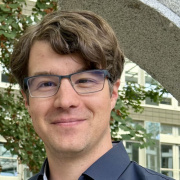
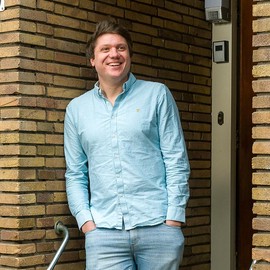
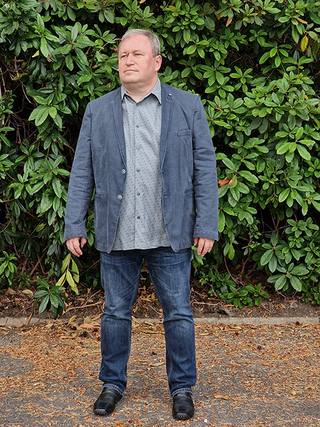
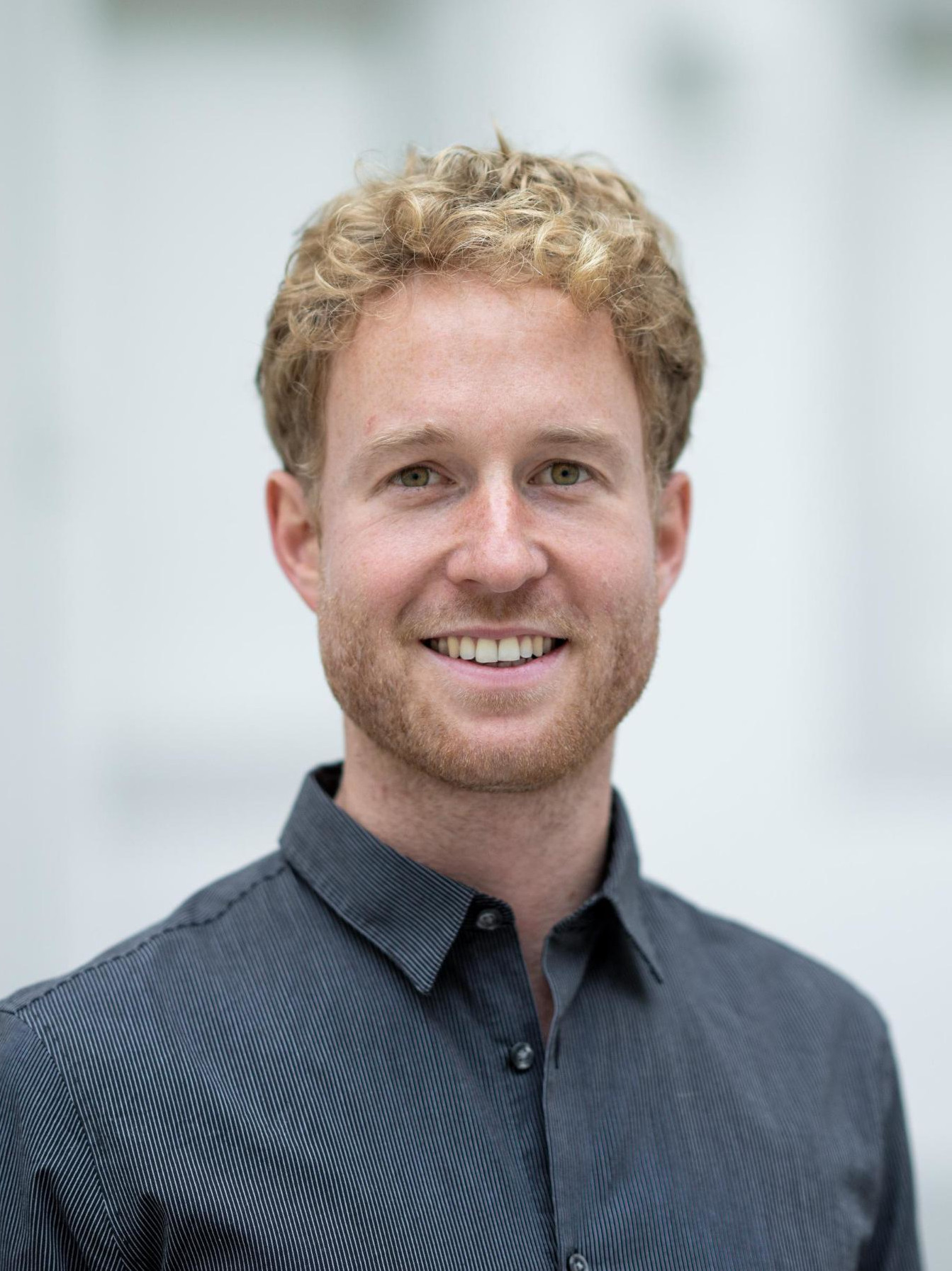
Dr. rer. nat. Xu Li is a researcher at the Institute of Semiconductor Technology within the TU Braunschweig (Technische Universität Braunschweig), Germany. Affiliated with the Faculty of Electrical Engineering, Information Technology, Physics , Xu Li contributes to interdisciplinary research spanning materials science, environmental science, and computer engineering. Fields of Interest : Materials Science, Environmental Science, Biotechnology, Sensor Technology, Computer Science, Civil Engineering, IoT Contact : xu.li@tu-braunschweig.de Xu Li's research focuses on: Materials Science : Developing magnetoelectric sensors with energy harvesting capabilities, exploring concrete shrinkage mechanisms using porous aggregates. Environmental Science : Investigating microplastic impacts on soil ecosystems and carbon dynamics in tea plantations. Biotechnology : Advancing PCR-based mutation detection for viral pathogens. Computer Science : Innovating face recognition algorithms and agricultural IoT systems.
Prof. Monika Sester is a distinguished Professor and Executive Director of the Institute of Cartography and Geoinformatics at Leibniz University Hannover, within the Faculty of Civil Engineering and Geodetic Science. She also serves as Spokesperson for the Leibniz Research Center FZ:GEO and holds multiple leadership roles including Faculty Information Officer (FIO) for the Faculty of Civil Engineering and Geodetic Science, Ombudsman for Good Scientific Practice, and Exchange Coordinator for Geodetic Science and Geoinformatics. Her research focuses on the intersection of geospatial information science, cartography, and urban mobility. Prof. Sester's work spans several key areas: Geospatial data processing and analysis Cartographic representation and visualization Urban mobility and transportation systems Spatial data uncertainty and quality Digital mapping technologies and applications Historical map analysis and interpretation Prof. Sester's recent publications demonstrate a strong focus on applying advanced computational techniques to geospatial problems. Her work shows increasing emphasis on machine learning applications for map analysis, urban mobility optimization, and 3D spatial modeling. She has been particularly active in researching applications of deep learning for historical map interpretation, urban mobility patterns, and spatial uncertainty visualization. Her contributions to the field have been recognized through leadership positions in major research initiatives: Executive Director, Institute of Cartography and Geoinformatics Spokesperson, Leibniz Research Center FZ:GEO Faculty Information Officer, Faculty of Civil Engineering and Geodetic Science Ombudsman for Good Scientific Practice Member of multiple academic committees including the Admissions and Examination Board Prof. Sester actively collaborates with students and researchers across multiple projects focused on geospatial information systems, urban mobility, and cartographic visualization. Her leadership extends to guiding research directions within the Leibniz Research Center FZ:GEO, which brings together interdisciplinary expertise to address complex spatial challenges.
Zoi Kaoudi is a researcher at the IT University of Copenhagen , specializing in Data Management , Knowledge Graphs , and Machine Learning . Her work focuses on cross-platform data processing, query optimization, and scalable systems for graph analytics. She has published extensively in venues like SIGMOD , VLDB , and ISWC , with recent contributions to Apache Wayang , DORIAN , and Space-Efficient Graph Algorithms . Her research bridges theoretical advancements with practical frameworks for data science pipelines. Collaborations include Volker Markl, Jorge-Arnulfo Quiané-Ruiz, and Ioana Manolescu. She has explored topics such as Parameter Servers , Knowledge Graph Embeddings , and RDF Data Management in the cloud. Her work emphasizes open science and system integration.
Wenhao Sun is a researcher at the Chair of Design Automation at the Technical University of Munich (TUM). His work focuses on advancing neural network design and electronic design automation (EDA), particularly in areas like accuracy enhancement and class-based quantization for AI models. Research: Neural Networks, Accelerators, Analog EDA, Timing Analysis Contact: wenhao.sun@tum.de Recent publications highlight his contributions to optimizing neural networks for hardware efficiency, with two papers presented at the 2023 Design, Automation and Test in Europe (DATE) conference. His work bridges the gap between machine learning and EDA, focusing on incremental and quantization-based improvements.
Severin Reiz is a Researcher at the School of Informatics, Technische Universität München, affiliated with the Chair of Scientific Computing (SCCS). His work spans interdisciplinary domains, combining computational methods with mechanical engineering and machine learning. Research focus: Reactive flow modeling, hierarchical matrices, and optimization in neural networks. Teaching involvement: Tutorials for Modeling and Simulation, Quantum Computing, and Parallel Computing courses. Project roles: Main Developer of ExaNIML (2018-2020), Program Manager of SPPEXA (2017-2019). He has conducted research stays at institutions like the University of Texas at Austin (2018). Additional activities include organizing the SCCS Colloquium, leading a soccer department, and volunteering with the Münchener Flüchtlingsrat.
Ermeson Carneiro de Andrade is a Professor at the Department of Systems and Computer Engineering within the Center of Informatics at the Federal University of Pernambuco (UFPE) in Brazil. His research focuses on dependability engineering, performability analysis, and fault tolerance in distributed and embedded systems. Over his career spanning more than 15 years, he has established himself as a prominent researcher in the field of system reliability through numerous publications in top-tier journals and conferences. Dr. Andrade's research interests primarily center on the analysis and modeling of system dependability, with particular expertise in UAV-based monitoring systems, cloud computing environments, and IoT architectures. His work bridges theoretical modeling with practical applications, particularly in environmental monitoring, disaster recovery solutions, and mission-critical systems. He has made significant contributions to understanding software aging phenomena in various computing environments and developing performability-aware solutions for real-time systems. The analysis of his recent publications reveals a strong focus on UAV systems for environmental monitoring, particularly deforestation detection, with increasing attention to weather impacts and vehicle density-aware traffic monitoring. His research demonstrates a consistent pattern of applying stochastic modeling techniques to solve practical problems in distributed systems, with recent work expanding into NoSQL database performance, satellite constellation dependability, and the performance-interpretability trade-offs in machine learning models. This evolution shows his ability to adapt to emerging technologies while maintaining core expertise in system reliability. Dr. Andrade has been actively involved in mentoring students and collaborating with researchers across Brazil and internationally. His work often involves interdisciplinary teams addressing complex system challenges. While specific awards aren't detailed in the available publication records, his consistent output in high-impact venues demonstrates recognition within the dependability engineering community. His laboratory work appears to focus on system modeling and analysis, with particular emphasis on experimental validation through simulation and real-world testing. Current projects suggest involvement in UAV-based monitoring systems for environmental applications, with strong connections to public sector institutions in Pernambuco state.
Daniel Leidner is a Cooperation Professor at the University of Bremen and a researcher at the German Aerospace Center (DLR) where he has been contributing to the Institute of Robotics and Mechatronics since 2011. He earned his doctorate in Artificial Intelligence and Robotics from the University of Bremen in 2017. Since 2017, he has led the Semantic Planning Group and the Fault-Tolerant Autonomy Architectures group at DLR, focusing on advanced task planning for autonomous robotic systems and enhancing the reliability of robotic operations in dynamic environments. Leidner's research interests span multiple areas in robotics and artificial intelligence. His work emphasizes developing robust and resilient robotic systems capable of autonomous operation in complex environments. He specializes in creating systems that can not only handle predictable scenarios but also flexibly respond to unforeseen events. His ERC Starting Grant project RECOVER.ME aims to equip robots with metacognitive abilities to autonomously manage hardware malfunctions by integrating formal reasoning with Vision-Language Models. This innovative approach enhances the resilience and efficiency of space robots, reducing the need for manual intervention during missions and leveraging insights from cognitive psychology for improved problem-solving capabilities. Leidner's research portfolio includes significant projects such as RECOVER.ME, FUTURO, EASE, OPERA, Smile2gether, Surface Avatar, and CoViPa. His publications demonstrate a strong focus on autonomous task planning, human-robot interaction, fault tolerance, and metacognitive capabilities in robotic systems. Recent publications highlight advancements in space teleoperation, assistive robotics, and cognitive reasoning for resilient robotic systems. ERC Starting Grant (2024) for project RECOVER.ME Georges Giralt PhD Award (Best European PhD Thesis in Robotics) Helmholtz Doctoral Prize MIT Technology Review Innovator under 35 Award Leidner has served as an advisor to the German Federal Government from October 2023 to July 2024, where he played a crucial role in developing a national strategy for AI-based robotics. His leadership in the Semantic Planning Group and Fault-Tolerant Autonomy Architectures group at DLR demonstrates his significant contributions to advancing robotic capabilities in challenging environments. His work bridges theoretical advances in cognitive robotics with practical applications in space exploration, healthcare, and industrial automation.
Emelie Engström is a software engineering researcher at Lund University, specializing in empirical studies at the intersection of academia and industry. Her work focuses on regression testing, machine learning applications in software quality, DevOps practices, and aligning requirements engineering with autonomous systems validation. University: Lund University Research Areas: Software Engineering, Machine Learning, DevOps, Autonomous Systems Her recent research examines ML-driven bug report classification, sustainable DevOps for cyber-physical systems, and optimizing anomaly detection through industrial case studies. She has developed taxonomies like SERP-test to improve communication between academic researchers and software practitioners. Key article trends show strong emphasis on: 2025: ML techniques for bug classification 2024: Ericsson case studies on automated bug assignment 2023: Anomaly detection in DevOps 2021: Autonomous driving system testing As a prolific collaborator, she works with researchers across Sweden including Per Runeson, Markus Borg, and Kai Petersen on projects ranging from cognitive load analysis in large-scale development to regression test scoping in software product lines.
Vlad-Costin Andrei is a Researcher at the Chair of Theoretical Information Technology , Technical University of Munich (TUM), specializing in wireless communication systems and digital twinning. He joined the ACES Lab (TUM's Chair of Theoretical Information Technology) in late 2021 after 3.5 years in the aerospace and defense industry. Research Focus: Joint Communications and Sensing (6G), Neuromorphic PHY Layer, Digital Twins, MIMO-OFDM Resilience Projects: 6G-life, 6G Future Lab Affiliation: ACES Lab, TUM His work bridges theoretical foundations with practical implementations, including demonstrations of digital twinning platforms and sensing-assisted receivers. Recent publications emphasize anti-jamming frameworks, federated learning over wireless networks, and trajectory optimization for UAV-enabled ISAC systems. Scientific Awards: Best Paper Award, IEEE Symposium on Joint Communications and Sensing (2023) His research is supported by third-party grants such as BMBF's 6G-life, DFG's Gottfried Wilhelm Leibniz Prize, and multiple collaborative projects.
Thomas Nagler is a Professor at the Department of Statistics, Faculty of Mathematics, Computer Science and Statistics at Ludwig Maximilian University of Munich (LMU Munich). He also serves as a principal investigator at the Munich Center for Machine Learning (MCML), where he leads research at the intersection of mathematical statistics and machine learning. Nagler received his academic training at Technical University of Munich (TU Munich), earning a BSc in Mathematics (2009-2012), followed by an MSc in Mathematical Finance (2012-2014), and ultimately a PhD in Mathematical Statistics (2014-2018). Prior to his current position at LMU Munich, he held assistant professor positions at TU Delft (2021-2022) and Leiden University (2019-2021). Professor Nagler's research focuses on developing novel statistical methods with theoretical guarantees and scalable algorithms. His work spans high-dimensional dependence modeling, particularly using vine copulas, statistical machine learning, time series and functional data analysis, and statistical computing. He emphasizes creating methods that can be practically implemented and applied to solve real-world problems across diverse domains. An analysis of Nagler's recent publications reveals a strong emphasis on vine copula methodology, uncertainty quantification in machine learning, and applications to climate science and epidemiology. His work bridges theoretical statistics with practical implementation, often resulting in open-source software tools that make advanced statistical methods accessible to practitioners. The interdisciplinary nature of his research is evident in collaborations spanning climate modeling, healthcare, and finance. While specific awards are not detailed in the available information, Nagler's research impact is evident through his significant contributions to statistical methodology and his active engagement with the research community through open-source software development. As a principal investigator at MCML and Professor at LMU Munich, Nagler leads a research group focused on advancing statistical methodology for complex data analysis. His GitHub profile indicates active collaboration with students and researchers, with several followers from LMU Munich and other institutions. His research program appears to be well-funded through the MCML and university resources, supporting both methodological development and application-focused projects. Nagler maintains strong ties with the computational statistics community through his leadership of the VineCopula and pyvinecopulib projects, which provide essential tools for dependence modeling. His work with the Munich Center for Machine Learning positions him at the forefront of interdisciplinary research combining statistical theory with practical machine learning applications.
Dr. Hendrik Morgenstern serves as a Postdoc and Senior Engineer at RWTH Aachen University's Chair and Institute of Construction Management, Digital Engineering and Robotics in Construction (ICoM), where he advances digital solutions for building maintenance and construction robotics. His work focuses on integrating Building Information Modeling (BIM) with diagnostic data to optimize infrastructure lifecycle management. Morgenstern earned his B.Sc. and M.Sc. in Civil Engineering with specialization in Functional and Structural Engineering from Karlsruhe Institute of Technology (KIT), complemented by studies in Sustainable Development. He completed his Dr.-Ing. doctorate at RWTH Aachen in 2023 with research on automated maintenance planning using BIM-enriched diagnostic data. His research program centers on digitized building maintenance, BIM applications for existing structures, and robotics automation in construction. Key contributions include predictive maintenance frameworks using Bayesian inference, geopolymer material development for structural repair, and point cloud integration for as-built modeling. He emphasizes resource efficiency and data-driven decision-making across all projects. Analysis of his 15 publications (2021-2025) reveals three dominant trends: (1) Convergence of BIM with non-destructive diagnostics for predictive maintenance, (2) Development of smart materials like temperature-stable geopolymers for crack injection, and (3) Integration of robotics and AI for automated facility management. His work consistently bridges civil engineering fundamentals with computer science innovations. Morgenstern actively contributes to major research initiatives including the RoboTUNN project (awarded bauma Innovation Award 2025 for tunneling robotics) and the BIM4People consortium focused on digital transformation in construction. His work demonstrates strong industry collaboration through projects with German construction firms and participation in standards development.
Dr. Yulin Hu serves as a Visiting Professor at RWTH Aachen University, holding the Chair of Information Theory and Data Analytics. His research program bridges theoretical foundations with practical implementations in next-generation wireless systems, with particular emphasis on UAV-aided networks and information-theoretic approaches to communication challenges. His core research interests span multiple interconnected domains: Wireless Communications (especially finite blocklength regimes) Information Theory applications in network design UAV trajectory optimization and network integration Wireless power transfer with nonlinear energy harvesting Edge computing and distributed learning systems Data analytics for network performance optimization Analysis of Dr. Hu's 2025 publication record reveals a concentrated research thrust on UAV trajectory design, where he develops joint optimization frameworks addressing energy efficiency, security, and reliability constraints. His work consistently integrates information-theoretic principles—particularly finite blocklength analysis—to solve practical challenges in ultra-reliable low-latency communications (URLLC) and wireless power transfer. A distinctive feature of his approach is the fusion of deep reinforcement learning with traditional optimization methods for dynamic network scenarios, including no-fly zone constraints and covert operations. While no specific scientific awards are documented in the available materials, his prolific output across top-tier venues demonstrates significant scholarly impact. Details regarding graduate student mentoring and research funding mechanisms remain unspecified in the current documentation. The Chair of Information Theory and Data Analytics, which Dr. Hu leads, functions as a specialized research unit focused on theoretical rigor and algorithmic innovation for wireless systems, though specific laboratory infrastructure or team composition details are not provided.
Artur Czumaj is a Professor of Computer Science and Director of the Center for Discrete Mathematics and its Applications (DIMAP) at the University of Warwick, United Kingdom. He is a member of the Global Faculty at the University of Cologne and serves as President of the European Association for Theoretical Computer Science (EATCS). PhD and Habilitation from University of Paderborn Recipient of the IBM Award and Fellow of EATCS His research focuses on theoretical computer science, particularly in the design of randomized algorithms, analysis of large data, and applications to parallel/distributed computing, property testing, sublinear algorithms, optimization algorithms, and algorithmic game theory. His work has been funded by major institutions including EPSRC, NSF, Royal Society, European Union, Simons Foundation, and IBM. The 15 most recent publications reflect expertise in graph algorithms, distributed systems, approximation techniques, and algorithmic complexity. His research spans foundational algorithm design to practical applications in large-scale data processing. Fellow of the European Association for Theoretical Computer Science (EATCS) IBM Award recipient Czumaj has held leadership roles in prominent conferences, including Program Committee Chair for STOC, ICALP, SODA, and HALG. His academic career is supported by grants from multiple international research councils and organizations.
Srishti Yadav is a Research Fellow at the University of Copenhagen and University of Amsterdam , affiliated with the Pioneer Centre for AI and ILLC respectively. She is advised by Dr. Serge Belongie and Dr. Ekaterina Shutova . Education: M.Sc. (Research-Track) in Computing Science, Simon Fraser University , Canada Research Interests: AI and Society Cross-Cultural Competency in Multimodal Models AI Safety and Evaluation Frameworks Model Interpretability and Dataset Creation Scientific Awards: ELLIS PhD Fellowship Advising & Community: Board Member, Women in Computer Vision (WiCV) Advisor for WiCV@ICCV2023 and WiCV@CVPR 2021 Chaired workshops at CVPR 2024, CVPR 2023, CVPR 2020 Labs & Teams: Belongie Lab (University of Copenhagen) Shutova Lab (University of Amsterdam) Collaborator at MILA Biodiversity Monitoring Project
Lukas Hermann is a PhD researcher at the Autonomous Intelligent Systems group within the Department of Computer Science at the University of Freiburg. He collaborates with Prof. Dr. Wolfram Burgard and Prof. Thomas Brox, focusing on robot learning and autonomous systems . University of Freiburg: 2011–2019 (B.Sc. and M.Sc. in Computer Science) Current role: Researcher in Robotics & AI (since 2020) Research Interests: Robot Learning Deep Reinforcement Learning Self-Supervised Learning Language-Conditioned Policy Learning Sim-to-Reality Transfer Article Trends: Lukas's publications focus on language-driven robotic imitation learning, adaptive curriculum generation for sim-to-real transfer, and unsupervised dynamics modeling. His work addresses challenges in autonomous manipulation, visual servoing, and data-efficient policy learning using optical flow and structured representations. Projects: CALVIN: Benchmark for language-conditioned long-horizon tasks FlowControl: Optical flow-based visual servoing Bike Navigation in Rome: Safe/easy route planning Adaptive Curriculum Generation for Sim-to-Real Vision-Based Robotic Manipulation with Natural Policy Gradients