Dr Robert Hughes is a Clinical Assistant Professor at the London School of Hygiene & Tropical Medicine's Department of Population Health. With dual expertise in clinical medicine (University of Bristol) and public health (Harvard School of Public Health), he bridges academic research with policy implementation. Faculty of Epidemiology and Population Health Research focus on urban early childhood development in LMICs and climate change impacts on child wellbeing His work combines epidemiology , climate change analysis, and social policy research, particularly examining urban health dynamics in Sub-Saharan Africa. Recent publications address climate-sensitive health outcomes in Kenya, AI applications in knowledge sharing, and pandemic childcare disruptions in Nairobi slums. Scientific contributions include: Investigating decarbonization health impacts in global cities Developing nurturing care frameworks for urban childcare Advocating for child-centered climate governance Key awards include the Albert Schweitzer Award (2011) and Kennedy Scholarship to Harvard (2010). He teaches epidemiology to 60-70 students annually and contributes to environmental health policy modules.
Raquel Alexandra Gonçalves Costa is an Associate Professor at University Lusófona's Faculty of Psychology and Education, where she serves as a key researcher in the School of Psychology and Life Sciences and the Human Environment Interaction Lab (HEI-LAB). With an h-index of 20 and 1,690 citations across 181 research outputs, she has established herself as a leading scholar in perinatal mental health research. Her research interests span maternal mental health, psychometric assessment in perinatal contexts, parenting programs, obstetric violence, and child development. Dr. Costa has made significant contributions to understanding depression screening tools like the Edinburgh Postnatal Depression Scale and has developed expertise in fear of birth assessment through multicountry studies. Her work bridges clinical psychology with practical healthcare applications, particularly in improving maternal care systems. Analysis of her recent publications (2023-2025) reveals a strong focus on how social support systems impact perinatal mental health outcomes, with particular attention to partner dynamics during childbirth and the moderating effects of women's mental health history. Her research increasingly incorporates innovative methodologies including EEG assessment during pregnancy and statistical learning approaches to mental disorder etiology. Best Research Article with a Practice Focus Award (2022) Dr. Costa actively leads and participates in significant research grants , including the TIK-PT project adapting emotion-focused parenting programs for the Portuguese context, the multinational Riseup-PPD-COVID-19-BABYS study comparing maternal mental health across pandemic cohorts in Spain and Portugal, and the HiTOP-SR project advancing psychological assessment methodologies. She serves on the Marcé Society for Perinatal Mental Health committee and regularly contributes expert evaluation for research funding bodies. As a core member of the Human Environment Interaction Lab (HEI-LAB), she collaborates with interdisciplinary teams integrating psychological research with technological approaches to mental health assessment and intervention. Her work with the Tuning in to Kids® program demonstrates her commitment to translating research into practical parenting support systems that address emotional regulation in parent-child relationships.
John Harrison Kurunathan is an Integrated PhD Researcher affiliated with the CISTER Research Centre at the University of Porto, Portugal. He holds a PhD in Electrical and Computer Engineering (2021), a Master's in Very Large-Scale Integration (2014), and a Bachelor's in Electronics and Communication (2012). Education: PhD (2021) - University of Porto, Portugal MSc (2014) - SSN College of Engineering, Anna University BSc (2012) - SRM University His research focuses on Wireless Sensor Networks (WSNs) , Cyber-Physical Systems (CPS) , and Automotive Networks , with an emphasis on Quality-of-Service (QoS) optimization, secure communication, and vehicular platooning. Notable projects include SafeCOP for safety-related CO-CPS and work on IEEE 802.15.4e DSME networks. Recent publications (2023-2025) span areas like Visible Light Communication , Vehicular Security , and Machine Learning in UAV Operations , reflecting his interdisciplinary work bridging embedded systems and transportation technologies. Scientific Awards: Best oral communication Award (in ex aequo) at DCE 2019 Reviewing Roles: Conference: ICCPS, EWSN, MSN, RTN Journal: IEEE ACCESS, IEEE Transactions on Vehicular Technology, ACM Sigbed Harrison is actively involved in workshops and conferences, including chairing roles at WIN-WIN-4S 2024 and technical demonstrations at WoWMoM 2023. His work appears in venues like IEEE Transactions on ITS, IEEE COMST, and PDP 2025.
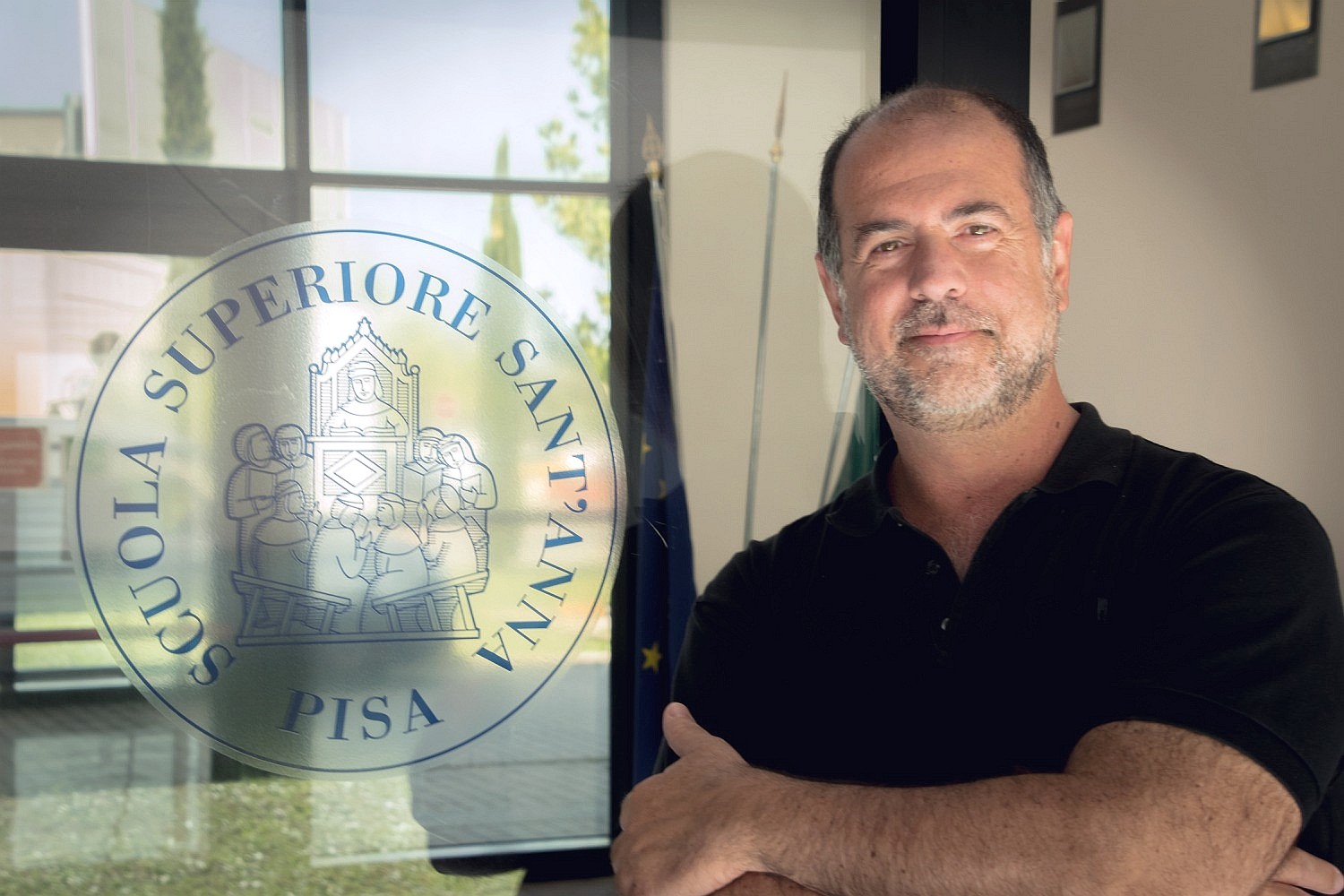
Giorgio C. Buttazzo is a Full Professor of Computer Engineering at the Scuola Superiore Sant'Anna in Pisa, Italy, and founder/director of the RETIS Lab. His career includes roles at the University of Pavia and co-founding Evidence s.r.l. (a real-time embedded systems company). He holds an IEEE Fellowship (2012) and the IEEE TC RTS Outstanding Technical Contributions Award (2013). Education: Electronic Engineering (University of Pisa, 1985), Master in Computer Science (University of Pennsylvania, 1987), PhD in Computer Engineering (Scuola Superiore Sant'Anna, 1991). Affiliations: TeCIP Institute, RETIS Lab, and leadership roles in IEEE Technical Committees. Research focuses on real-time systems, robotics, and AI integration. He has authored 10 books, over 300 papers, and pioneered frameworks like the ERIKA/SHARK kernels. Current projects include RETICULATE, OPERAND, and NANCY (5G networks). Teaching includes Real-Time Systems, Neural Networks, and Jazz Guitar Improvisation. Advised over 150 master and PhD students. Active in conferences like ECRTS, RTSS, and RTAS.
Johan Eker is an Adjunct Professor at Lund University and Principal Researcher at Ericsson. He works at the intersection of computer science and control theory, focusing on control of large-scale compute systems, machine learning, and networked control systems. His research includes optimizing cloud deployments, virtualized network functions, and edge computing for industrial applications. He collaborates closely with Ericsson to leverage real-world data and infrastructure. Education & Affiliations: Affiliated with the Department of Automatic Control at Lund University and Ericsson Research. Active in teaching and supervising projects related to systems engineering, machine learning, and control theory. Research Interests: Large-scale systems, control of interconnected systems, distributed control, and applications in industrial IoT and autonomous systems. His work emphasizes scalability and real-time adaptation in complex computing environments. Grants & Collaborations: Involved in projects like WASP (Wallenberg AI, Autonomous Systems Program) and ELLIIT (Excellence Center in Information Technology). Collaborates with Ericsson on cloud computing resource management and network dynamics. Labs & Teams: Engaged with the RobotLab LTH and initiatives like the Nordic University Hub on Industrial Internet of Things (HI2OT). His research bridges academic theory with industrial applications in autonomous systems and cloud optimization.
Inês Cláudia Rijo De Carvalho is a Lecturer at Universidade Europeia in Lisbon and serves as Research Coordinator at the Faculty of Social Sciences and Technology. She holds dual PhDs in Tourism (University of Aveiro) and Management (ISEG-Lisbon School of Economics), with a BSc in Modern Languages and Literatures (University of Coimbra) and an MSc in Tourism Management (University of Aveiro). She was a visiting scholar at Linköping University’s Gender Studies Unit in Sweden. Affiliated with CETRAD and GOVCOPP research centers, her work focuses on gender dynamics in tourism, cultural tourism, language tourism, and AI applications in the sector. She has conducted research on gender equality in tourism leadership and led projects funded by Portugal’s Foundation for Science and Technology. Her recent publications explore topics like chatbot applications in tourism, pandemic impacts on travel industries, and machine translation in traveler experiences. She has co-authored book chapters on women’s voices in tourism research and contributed to policy-oriented studies on tourism development. Education: BSc English/German Literature, MSc Tourism Management, PhD Tourism, PhD Management (ongoing) Key Research Themes: Gender & Tourism, Language Tourism, AI in Tourism, Cultural Heritage, Tourism Resilience Affiliations: CETRAD, GOVCOPP, Universidade Europeia Her research has been published in journals like Tourism Review, Anatolia, and Humanities and Social Sciences Communications. She actively participates in conferences such as the International Tourism Congress and THInC, addressing topics from emotional labor in hospitality to post-pandemic tourism strategies. Her work bridges academic rigor with practical insights for tourism policy and industry innovation.
Nuno Guimarães is a Full Professor at ISCTE – University Institute of Lisbon, affiliated with the Department of Information Science and Technology in the School of Technology and Architecture. He is also an Integrated Researcher at ISTAR-Iscte, where he leads the 'Digital Living Spaces' research group. He previously served as Dean of the Faculty of Sciences at the University of Lisbon (2003–2009), Pro-Rector (2012–2013), and Vice-Rector (2014–2018) at ISCTE-IUL, demonstrating extensive academic leadership. Aggregation in Computing, University of Lisbon (1999) PhD in Electrical and Computer Engineering, Instituto Superior Técnico, Technical University of Lisbon (1992) MSc in Electrical and Computer Engineering, Instituto Superior Técnico (1987) BSc in Electrical Engineering, Instituto Superior Técnico (1983) His research focuses on human-machine interaction, user experience, and the intersection of digital technologies with law, rights, and cultural diversity. He explores how technology can be designed to be more inclusive, ethical, and cognitively supportive, often using neurophysiological methods such as EEG to assess usability and mental workload. His recent publications (2024–2009) show a consistent trajectory in interdisciplinary research combining computer science, cognitive science, and legal informatics. Key themes include data privacy in microservices, normative systems in digital society, EEG-based usability analysis, and interactive learning environments. The works demonstrate a strong emphasis on practical tools, real-world applications, and the societal implications of digital technologies. ACM Senior Member (since 2012) Chair of the Board of ISOC (PT) (2021–2025) Guimarães has held numerous academic management roles, including Director of ISTAR-Iscte and the Master’s program in Information Systems Management. While no direct student advising list is provided, his extensive collaborations and leadership in research projects suggest active mentorship. His work bridges technical innovation with social responsibility, particularly in digital rights and inclusive design. He has led and contributed to research in areas such as interactive architecture, media façades, digital talking books, and judicial dialogue systems. His team, 'Digital Living Spaces,' focuses on creating intelligent, adaptive environments that respond to human behavior and cognitive states, integrating insights from architecture, computing, and neuroscience.
Luca Molteni is an Assistant Professor at the Department of Decision Sciences at Bocconi University and a Faculty Member of the MBA program at SDA Bocconi School of Management. He has been collaborating with SDA Bocconi since 1987 and served as the Department of Decision Science Liaison Officer at SDA Bocconi School of Management since January 2017. His academic work focuses on data analysis, predictive modeling, and their applications in marketing and strategic decision-making. His research spans statistical methods for customer satisfaction, market positioning, segmentation, and quantitative analysis in business contexts. He has contributed to publications like International Journal of Design & Nature and Ecodynamics and Economia & Management , emphasizing practical data science applications in banking and pharmaceutical industries. His works highlight the integration of Big & Small Data analytics into business strategy, marketing research, and CRM systems. Selected Publications Co-edited a comprehensive marketing research book with Gabriele Troilo (2022) Authored chapters on product positioning, market segmentation, and quantitative research (2022) Published an article on data science roles in Economia & Management (2021)
Teresa Cristina de Freitas Gonçalves is an Associate Professor at the Department of Informatics, School of Sciences and Technology, University of Évora, where she has been employed since 1999. She serves as an integrated researcher at the ALGORITMI research centre and is the Director of the VISTA Lab (Video, Image, Speech and text Analysis Lab), the unit of the ALGORITMI research centre at University of Évora. Her leadership roles include Director of the Master programme in Informatics Engineering and deputy Director of both the Master programme in Artificial Intelligence and Data Science and the Doctoral program in Computer Science. She earned her PhD in Computer Science from University of Évora and a MSc degree in Informatics Engineering from New University of Lisbon. Her academic journey at University of Évora has included significant leadership positions including Head of the Computer Science Department (2011-2015), Director of the Bachelor programme in Informatics Engineering (2016-2021), and Deputy Director roles for various undergraduate and graduate programs. Dr. Gonçalves' research focuses on intelligent systems, particularly Machine Learning approaches, with substantial contributions in evolutionary algorithms, information extraction and retrieval, and supervised learning across multiple data modalities including tabular data, text (in both Portuguese and English), and images (medical and satellite). Her work bridges theoretical advances with practical applications in healthcare, remote sensing, and natural language processing. She has successfully supervised 6 doctoral theses, 19 master theses, and 3 postdocs, and currently mentors 5 doctoral and 6 master students from diverse international backgrounds including Bangladesh, Cabo Verde, Nepal, Philippines, India, Sri Lanka, China, Mongolia, and Portugal. Her publication record includes over 100 scientific articles indexed by Scopus with 640 citations and an h-index of 12, demonstrating significant international impact with 56% of her work involving international collaboration. Her recent research shows a strong trend toward applying advanced machine learning techniques to healthcare applications, information retrieval systems, and remote sensing analysis, with particular emphasis on transformer networks, learning-to-rank methodologies, and multimodal data analysis. Dr. Gonçalves has made substantial contributions to the academic community through her service as a reviewer for over 50 articles in prestigious international journals and conferences, and as chair for major international conferences including IDEAL 2023, PROPOR 2020, SKIMA 2017 and 2018, and CLEF 2016. She serves on the board of APRP (Associação Portuguesa de reconhecimento de Padrões) and as a jury member for APRP prizes for best MSc and PhD theses. Her current research portfolio includes coordination of the Horizon Europe MSCA Staff Exchange HarmonicAI project and local coordination of WP6 in the NewSpace Portugal mobilising agenda. She is also actively involved in numerous other international research initiatives including Interreg VI-B Sudoe SenforFire, PRR CANTE, La Caixa INCOME, Erasmus+ KA220-HED REDINEST, Interreg POCTEP TID4AGRO, and ATTRACT DIH projects. Previously, she led the FCT AI in the Public Administration SNS24.Scout.IA project and coordinated the FEDER R&D NIIAA project. As Director of the VISTA Lab, Dr. Gonçalves leads a dynamic research team focused on video, image, speech, and text analysis. The lab serves as the Évora hub of the ALGORITMI research centre and has established strong international collaborations. Under her leadership, the VISTA Lab has developed innovative approaches in medical image analysis, natural language processing for Portuguese, and satellite image classification, with applications spanning healthcare, environmental monitoring, and public administration.
Sungsoo Ahn is an Assistant Professor at the Graduate School of AI, KAIST, where he leads the Structured and Probabilistic Machine Learning (SPML) Lab. His research focuses on developing machine learning algorithms for molecular science, particularly in drug discovery, material design, and generative modeling. He directs a team of 13 researchers (including 2 post-docs and 11 students) and maintains collaborations with institutions like Mila and industry partners. His core research integrates probabilistic machine learning , generative models , and AI for science , with applications spanning molecular dynamics simulation, language model reasoning, combinatorial optimization, and graph neural networks. Key methodologies include flow matching, diffusion models, GFlowNets, and equivariant neural networks applied to chemical and biological domains. Recent publications (2023–2025) demonstrate strong emphases on: (1) Molecular generation/optimization for drug design, (2) Enhancing reliability and reasoning in large language models, (3) Graph-based machine learning for scientific discovery, and (4) Efficient training paradigms for generative samplers. These appear predominantly in NeurIPS, ICML, ICLR, and ACL. He advises multiple PhD/master's students and post-doctoral researchers in the SPML Lab. Current research directions include torsion-aware molecular generation, causal AI safety, neural operators for quantum chemistry, and multi-agent systems for molecular optimization.
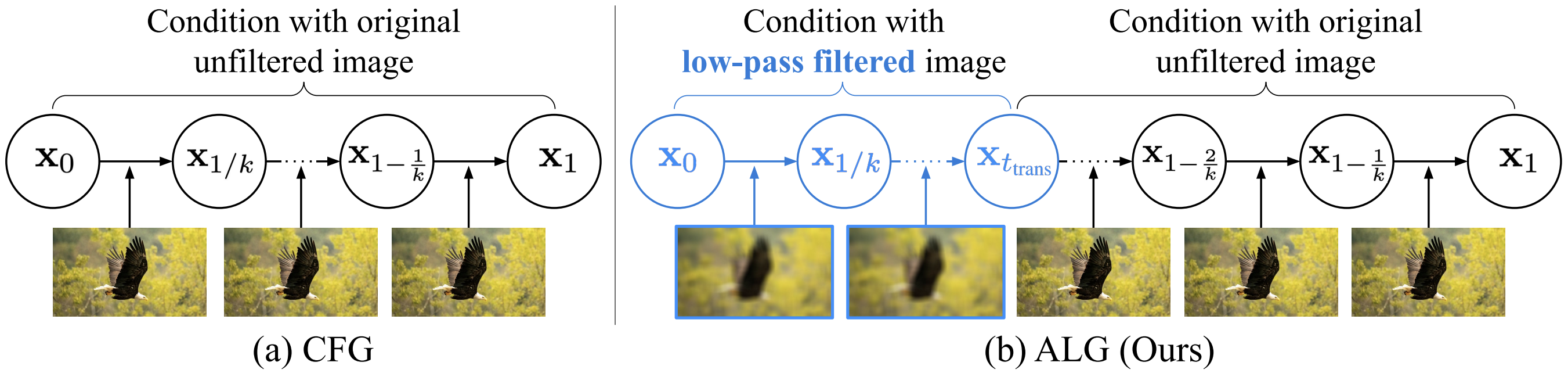
Kimin Lee is an assistant professor at the Graduate School of AI at Korea Advanced Institute of Science and Technology (KAIST), where he focuses on developing safe and capable decision-making agents. His research spans multiple aspects of artificial intelligence with a strong emphasis on safety and reliability. Dr. Lee completed his educational journey at KAIST, earning a Ph.D. in Electrical Engineering with a focus on Machine/Deep Learning (2015-2020), advised by Professor Jinwoo Shin. He also holds a Master's degree in Electrical Engineering (Wireless Communication Networks, 2013-2015) and a Bachelor's degree in Electrical Engineering (2009-2013), both from KAIST. His primary research interests include: Physical AI - developing AI systems that can interact safely and effectively with the physical world Alignment - particularly reinforcement learning from human feedback (RLHF) and scalable oversight techniques Monitoring - safety evaluation frameworks and benchmarking for AI systems LLM Agents - enhancing the capabilities and safety of large language model-based agents Dr. Lee's recent publications reveal a strong trajectory toward addressing critical challenges in AI safety. His work consistently bridges theoretical advances with practical applications, particularly in the areas of reinforcement learning, computer vision, and natural language processing. A notable trend in his research is the development of methods to evaluate and enhance the safety of AI systems, especially large language models and diffusion models, while maintaining or improving their capabilities. As an active member of the academic community, Dr. Lee serves as an area chair for major conferences including NeurIPS, ICLR, and ICML, and regularly reviews for top-tier AI venues. He has also organized workshops focused on safe and trustworthy AI agents. Dr. Lee's research group at KAIST appears to focus on AI safety and decision-making, with research projects spanning from theoretical foundations to practical implementations of safe AI systems. His collaborative work with institutions like UC Berkeley and Google Research demonstrates the interdisciplinary nature of his research approach.
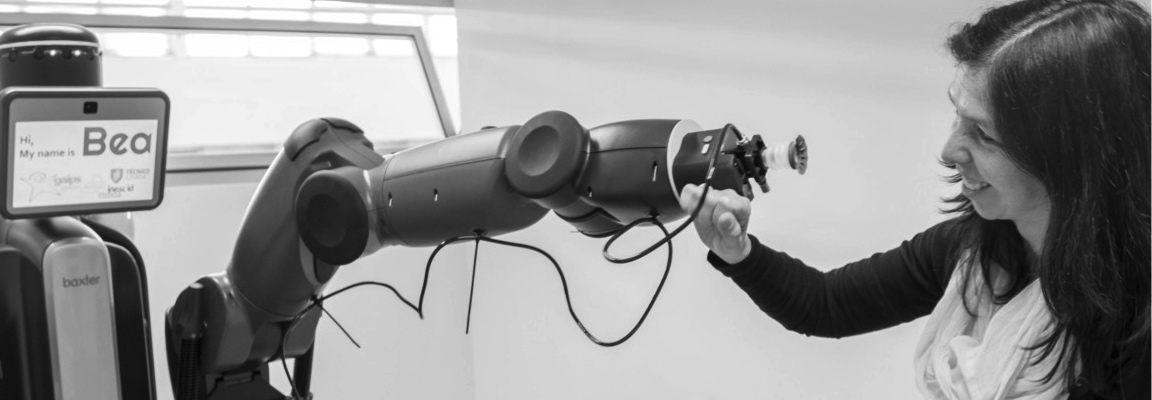
Ana Paiva is a Full Professor in the Department of Computer Science and Engineering at the University of Lisbon's Instituto Superior Técnico (IST), and coordinator of the GAIPS research group at INESC-ID, now focused on AI for People and Society. She holds a Katherine Hampson Bessell Fellowship at Harvard University's Radcliffe Institute for Advanced Study. Her work centers on creating socially intelligent AI and robots through agent-based approaches, emphasizing emotional and cultural competencies. Key research areas include Social Robotics, Affective Computing, and Pro-social Computing. She leads projects like the EU-funded ANIMATAS ITN network and Portugal's AMIGOS/AGENTS initiatives. Notable contributions include the FAtiMA Toolkit for developing emotional AI agents and pioneering work in hybrid human-machine societies. She has received awards such as the EurAI Fellowship (2019) and the Blue Sky Ideas Award at AAAI’18. Her research explores how machines can foster prosocial behaviors like altruism and cooperation, with applications in education, therapy, and ethical AI design. Her advising includes PhD students like Fernando Santos (Victor Lesser Award winner) and Elmira Yadollahi (ACM award recipient). Current projects focus on inclusive robotics for mixed-ability classrooms and ethical frameworks for human-robot collaboration.
Francisco C. Santos is a Full Professor at Instituto Superior Técnico (IST), University of Lisbon, and currently serves as Vice-President of the Portuguese Science Foundation (FCT). He holds a PhD in Computer Science from Université Libre de Bruxelles (ULB), Belgium, where he was a Marie Curie Fellow. His research spans computer science, evolutionary biology, economics, and physics, focusing on cooperation dynamics, environmental governance, network science, and AI's societal impact. He leads the GAIPS and ATP research groups at INESC-ID, Lisbon. Education PhD in Computer Science, Université Libre de Bruxelles (ULB), Belgium (Marie Curie Fellowship) FNRS Senior Researcher at ULB's Machine Learning Group Research Interests His work bridges AI, complex systems, and social dynamics. Key areas include: - Evolution of cooperation and social norms - Climate governance and collective-risk dilemmas - Network science and urban planning - Machine learning and robotics applications Awards Young Scientist Award (German Physical Society) CGD/ULisbon Prize in Computer Science AAAI Blue Sky Award IST Teaching Excellence Awards (multiple) Advising & Grants Supervised over 30 PhD and MSc students, many of whom have gone on to prestigious postdocs and academic roles. Co-headed research groups and led projects funded by FCT-Portugal and EU initiatives. Labs & Teams Leads the Group of Artificial Intelligence for People and Society (GAIPS) and the ATP interdisciplinary group at INESC-ID. Collaborates internationally on AI ethics and environmental policy.
Manuel Reis is an Associate Professor with Agregação at the University of Trás-os-Montes e Alto Douro (UTAD), Portugal, in the Electrical Engineering Department. His research focuses on signal/image processing, smart environment systems, and multimedia education technologies. He is affiliated with the Institute of Electronics and Telematics Engineering of Aveiro (IEETA) and collaborates with Brazil's IFPA-Santarém in computing education research. Education: Bachelor's in Electrical Engineering (University of Trás-os-Montes e Alto Douro, 1991) Master's in Electronics and Telecommunications (University of Aveiro, 1996) PhD in Electrical Engineering (University of Aveiro, 2001) Research Interests: Signal & Image Processing Cybersecurity for IoT and Smart Environments Education Technology (e-learning, multimedia tools) 5G and Edge Computing Applications Artificial Intelligence in Agriculture and Healthcare Recent articles highlight his work on cybersecurity in connected vehicles, federated learning for IoT security, and IoT-based systems for drowsiness detection. He has contributed to projects involving smart city infrastructure, sustainable waste management, and low-cost biomedical devices. His educational research explores e-learning frameworks, student engagement metrics, and innovative teaching methodologies in engineering education. Lab/Affiliations: Institute of Electronics and Telematics Engineering of Aveiro (IEETA) Multidisciplinary Research Group IFPA-Santarém-Brazil (Computing in Education)
João Guerreiro is a Visiting Assistant Professor at ISCTE-IUL (Instituto Universitário de Lisboa) with a PhD in Marketing from the same institution. He is affiliated with the Iscte Business School, where he teaches undergraduate and master's degree courses in marketing and decision support systems, applying data mining techniques to analyze large information sets. His research expertise spans three interconnected domains: Decision Support Systems - particularly in banking and insurance sectors where he has held executive positions Neuroscience Applied to Marketing - utilizing eye-tracking and studying autonomic emotional responses to consumer stimuli Corporate Social Responsibility - examining cause-related marketing and pro-environmental behavior in tourism Dr. Guerreiro's recent publications (2020-2023) reveal a strong emphasis on immersive technologies, with multiple studies on virtual reality applications in consumer behavior, augmented reality's impact on purchasing decisions, and cross-cultural differences in digital marketing effectiveness. His methodological approach frequently incorporates text mining, sentiment analysis, and neuromarketing techniques to uncover deeper consumer insights. His industry experience in decision support systems provides practical grounding for his academic work, creating a valuable bridge between theoretical marketing concepts and real-world business applications in financial sectors.





.jpg?width=150&height=150&length=150&name=Joao%20Guerreiro%20(4).jpg)