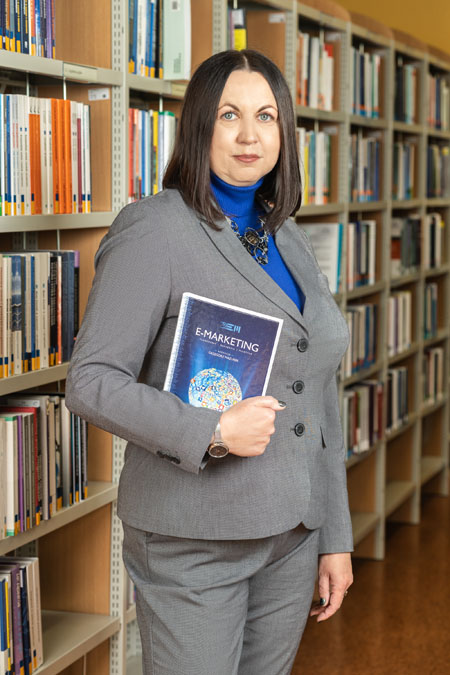
Krzysztof Walczak is a Professor at the Department of Information Technology, University of Economics in Poznan. His work bridges Information and Communication Technology (75%) with Management and Quality Studies (25%). 2020–Present: Professor 2010–2020: Assistant Professor 2001: Doctorate Research focuses on Virtual & Augmented Reality applications in education, industry, and cultural heritage. Key themes include semantic modeling for adaptive XR interfaces, 3D content creation for marketing, and AI integration in immersive environments. Recent work explores: Generative AI ethics in education Industry 4.0 VR training systems Financial data visualization in AR Green digital transition policies As a scientific leader, he has published 70+ works and supervised 110+ research activities. His Hirsch index (approx. 25) reflects significant impact in semantic XR systems and 3D web technologies.
Mohsen Sharifpur is a Professor at the University of Pretoria, South Africa, within the Faculty of Engineering, Built Environment and Information Technology, Department of Mechanical and Aeronautical Engineering. He additionally holds appointments at China Medical University (Taiwan), Duy Tan University (Vietnam), and the University of Science and Culture in Tehran, reflecting a truly global academic footprint. His educational background is not explicitly detailed in the provided text, but his extensive publication record and affiliations suggest advanced degrees in mechanical or thermal engineering. Research Focus Thermal Engineering & Heat Transfer: Investigating fundamental and applied aspects of heat transfer enhancement, phase change phenomena, and energy conversion systems. Nanofluids & Advanced Materials: Exploring the synthesis, characterization, and application of nanoparticle-enhanced fluids for improved thermal performance in diverse engineering systems. Computational & Experimental Fluid Dynamics: Employing CFD, molecular dynamics, and experimental techniques to model complex multiphase flows and optimize energy systems. Sustainable Energy Technologies: Addressing contemporary challenges in energy efficiency, renewable energy forecasting, and environmentally friendly fuels such as biodiesel. Across more than 300 peer-reviewed publications, Prof. Sharifpur’s work demonstrates a consistent trajectory toward enhancing energy efficiency through nanotechnology, advanced computational methods, and sustainable engineering practices. His recent studies integrate machine-learning techniques (e.g., LSTM networks) for solar power forecasting, highlighting an interdisciplinary approach that bridges mechanical engineering and data science. Scientific Awards & Funding Sponsored research supported by the National Research Foundation (South Africa) National Institutes of Health (USA) National Natural Science Foundation of China King Saud University, Taif University, King Faisal University, and numerous other international agencies Collaborations & Teams Prof. Sharifpur leads or participates in multiple international research collaborations, evidenced by a co-authorship network spanning 272 institutions and 99.6 % of his papers being co-authored. These collaborations integrate expertise from mechanical engineering, materials science, energy policy, and computational sciences to deliver impactful technological solutions.
Piotr Demczuk is a Lecturer at the Department of Geomorphology and Paleogeography within the Institute of Earth and Environmental Sciences, Faculty of Earth Sciences and Spatial Management at Maria Curie-Skłodowska University (UMCS) in Lublin, Poland. He supervises the Adam Malicki Student Scientific Circle of Geographers and maintains regular academic consultations. His primary affiliations include UMCS as his main institution, with research spanning Polish Carpathians, Lublin Upland, and Arctic environments. Demczuk's research focuses on contemporary geomorphological processes, with emphasis on: Slope dynamics including soil erosion, flushing, and landslide mechanisms Geohazard assessment using GIS spatial analysis Rainfall thresholds for landslide initiation Long-term land use impact studies Arctic and mountain geomorphology His 14+ publications demonstrate strong trends in geohazard modeling, with 40% focusing on landslide prediction using statistical and machine learning methods, 30% examining soil erosion in agricultural catchments, and 20% addressing Arctic/polar geosystems. Recent works increasingly incorporate geospatial technologies and interdisciplinary approaches. Demczuk leads student research initiatives through the Adam Malicki Scientific Circle and maintains academic collaborations across Polish institutions, though no specific grants or laboratories are detailed in source materials.
Anna Borucka serves as an Assistant Professor at the Faculty of Security, Logistics and Management, Military University of Technology (WAT) in Warsaw, Poland. Her academic profile spans dual disciplines with equal focus: civil engineering, geodesy and transport (50%) and security studies (50%). With 189 publications, an h-index of 15 (Scopus), and a ministerial score of 9,765, she maintains significant scholarly impact in transport systems and national security domains. Her institutional affiliation includes active roles in research supervision and project leadership within Poland's premier military technical institution. Her research concentrates on transport logistics systems, military logistics, public security, and vehicle safety/reliability. Key interests include sustainable mobility transitions, military transport adaptation during geopolitical crises, road safety analytics using machine learning, and energy policy impacts on transport emissions. She investigates practical applications such as UAV deployment in prison services, military logistics during pandemics, and CO2 emission modeling across transport sectors, often contextualized within Polish infrastructure and policy frameworks. Analysis of her 15 most recent 2025 publications reveals dominant trends in sustainable transport decarbonization, military logistics adaptation to geopolitical disruptions, and advanced safety analytics. Her work increasingly integrates machine learning for traffic safety prediction while maintaining strong focus on Poland-specific case studies in energy transition and defense policy. The publications demonstrate interdisciplinary convergence between transport engineering, security studies, and environmental science. Professor Borucka has supervised 21 promoted theses and leads 4 active research projects, indicating substantial mentoring activity and grant acquisition capability. Her bibliometric profile shows consistent high-impact output with total CiteScore of 226.24 and SNIP of 56.458, reflecting significant influence in transport and security literature. She maintains active scholarly networks through multi-center publications and international database profiles (ORCID, Scopus, Web of Science).
Iwona Kaczmarek is a Professor in the Department of Systems Research at the Wrocław University of Science and Technology's Faculty of Spatial Management and Landscape Architecture. Her work focuses on advancing spatial data infrastructure (SDI), geoinformatics, and machine learning applications in urban and regional planning. She leads interdisciplinary research integrating GIS, natural language processing (NLP), and graph neural networks to address challenges in spatial planning, policy analysis, and socio-economic modeling. Research interests include: Spatial data integration and interoperability Machine learning for geospatial analysis Semantic web technologies for open data Urban sustainability and transit-oriented development Policy text mining and stakeholder analysis Recent work emphasizes: 1. Combining media sentiment analysis with economic indicators during crises (2025) 2. GeoAI-driven quality of life predictions using graph neural networks (2023) 3. Knowledge graph extraction from spatial development plans (2023) 4. Harmonizing local planning documents via NLP (2022) Collaborations include projects like the EYE initiative analyzing remote sensing for economic trends and SDI implementations in academic contexts. Over 75 documented outputs highlight her contributions to geospatial innovation and policy-relevant research.
Dr. Monika Kaczmarek is a faculty member at the Department of Economic Informatics , part of the Faculty of Informatics and Electronic Economy at the Poznań University of Economics and Business . Her work focuses on semantic technologies, expert finding systems, and energy load forecasting. She has collaborated on research projects like Insemtives and ASG , and contributed to conferences such as ADBIS, eKnow, and ICEIS. Key research areas: Semantic Web, Database Systems, Information Retrieval Notable award: Best Paper Award at eKnow2011 Her publications span topics in semantic expert systems and real-time energy forecasting, with a focus on ontologies, scalable retrieval, and mobile applications. Collaborations include institutions like SAP AG and Technical University of Munich.
Piotr Skurski serves as Professor and Head of the Department of Theoretical Chemistry at the Faculty of Chemistry, University of Gdańsk, while maintaining a concurrent Professor of Chemistry position at the Henry Eyring Center for Theoretical Chemistry, University of Utah since 2006. His leadership spans multiple research units including the Laboratory of Quantum Chemistry at UG since 2014. His educational background includes: MSc in Chemistry (1993) from University of Gdańsk under Prof. Wiesław Wiczek PhD in Chemical Sciences (1997) supervised by Prof. Maciej Gutowski (PNNL, USA) Habilitation (2001) leading to Professor title (2005) by Presidential decree Skurski's research pioneers quantum chemical investigations of molecular anions, superhalogens, and reaction mechanisms. His work spans from fundamental electron binding phenomena to applied materials design, particularly focusing on superhalogen anions with electron affinities exceeding 15 eV, DNA repair processes, and polymerization mechanisms. His molecular design innovations include synthons, peptide crosslinks, and superacids. Analysis of his 15 most recent publications reveals a dominant focus on superhalogen chemistry (7 articles), with significant contributions to molecular synthons (4 articles) and environmental applications like PFAS degradation (2 articles). His methodology consistently combines high-level quantum mechanical calculations with machine learning approaches for materials prediction. His accolades include: Karol Taylor Scientific Award (2021) Prime Minister's Award for habilitation work (2002) 15+ Rector's Awards from University of Gdańsk (1995-2023) Foundation for Polish Science Scholarship (1997) Skurski has supervised 10 doctoral students while securing major EU grants including MULTIPOL (FP6), PARYLENS (FP7), ENERLIQ (Polish-Swiss Program), and MAGENTA (Horizon 2020). His 198 publications with 5,371 citations (h-index 42) demonstrate substantial research impact. He leads the Laboratory of Quantum Chemistry at UG and maintains active collaborations with University of Utah's Henry Eyring Center.
Prof. Iwona Anusiewicz is a distinguished faculty member at the University of Gdańsk , affiliated with the Faculty of Chemistry and the Department of Theoretical Chemistry . Her research focuses on advanced quantum chemistry, superhalogen anions, superacids, and electron attachment mechanisms. Current Position: Professor, Department of Theoretical Chemistry, University of Gdańsk Research Themes: Quantum chemical modeling, superhalogen/superalkali systems, CO2 activation, and biomolecule-nanomaterial interactions Contact: iwona.anusiewicz@ug.edu.pl Her recent publications explore ambiphilic inorganic compounds, dative bonding in alkaline earth metal systems, and hybrid molecular simulation frameworks for biomolecule adsorption. Key subfields include anion stability , electron transfer , and acid-base catalysis . While no formal awards or student advisement details are listed, her work contributes significantly to theoretical and computational chemistry. For consultation hours: Fridays 11:00 AM - 1:00 PM (room B327).
Anna Bryniarska is an Assistant Professor at the Institute of Computer Science, Opole University of Technology, Poland. She holds a PhD in Automation and Robotics (2014) from the same institution, alongside BSc and MSc degrees in Computer Science (2010). Prior to her academic role since 2015, she gained practical experience in IT companies between 2010–2015. Education: BSc and MSc in Computer Science (2010), Opole University of Technology PhD in Automation and Robotics (2014), Opole University of Technology Her research focuses on knowledge granulation, fuzzy logic systems, semantic web applications, and AI-driven technical diagnostics. Recent work emphasizes machine learning applications in biological signal analysis, particularly EEG data. She has authored one book and over 30 scientific articles. No specific grants or awards are listed in the provided text. Professional networks include ORCID, ResearchGate, and SCOPUS profiles. No lab affiliations or team leadership roles are explicitly mentioned.
Prof. Andrzej Dudek is a faculty member at the Department of Econometrics and Informatics, Wrocław University of Economics – Jelenia Góra Branch. His research focuses on advanced data analysis methodologies, including symbolic data analysis, machine learning applications, and statistical modeling. Dudek has contributed to the development of R packages such as IFMCDM and mdsOpt, which support multi-criteria decision making and multidimensional scaling. His work addresses challenges in outlier detection, clustering, and predictive modeling across domains like tourism, healthcare, and finance. Recent studies explore consumer behavior shifts during the pandemic, AI-driven medical modeling, and robust regression techniques for noisy data. Key research areas include econometric modeling, computational statistics, and the integration of machine learning with traditional statistical methods. Dudek’s interdisciplinary approach spans from theoretical algorithm development to practical applications in industry and public health. He actively contributes to academic conferences and publishes in leading journals, demonstrating expertise in both methodological innovation and real-world problem-solving.
Dr. Daria Jaremen is a researcher affiliated with the Department of Marketing and Tourism Management at the Wrocław University of Economics’ Jelenia Góra Branch. Her work focuses on consumer behavior in tourism, sharing economy implications, service quality, and hospitality industry innovation. She has published extensively on topics such as pandemic-driven travel behavior changes, customer loyalty analysis, and the socio-economic impacts of collaborative consumption. Her research often employs case studies, machine learning, and bibliometric methods to explore tourism market dynamics and policy challenges. Key areas of expertise include the sharing economy’s role in urban tourism, digital transformation in hospitality, and sustainable tourism practices. She contributed to studies on smart hotels, ICT applications in tourism enterprises, and the competitiveness of tourism destinations. Her work bridges theoretical frameworks with real-world case analyses, particularly in Poland and other European regions. Contact: daria.jaremen@ue.wroc.pl , located at Nowowiejska 3, 58-500 Jelenia Góra.
Dr. Izabela Michalska-Dudek is a Professor and Head of the Department of Marketing and Tourism Management at Wrocław University of Economics’ Jelenia Góra Branch. She specializes in customer loyalty mechanisms, consumer behavior in tourism, and digital transformation impacts on travel agencies. Her work emphasizes empirical studies on CRM systems, post-pandemic travel decision-making, and predictive modeling for loyalty programs. Research Interests: Customer Relationship Management (CRM), Virtualization in Tourism, Pandemic Impact Analysis, Retail Tourism (ROPO), and Machine Learning applications in loyalty analytics. She actively publishes in peer-reviewed journals and organizes international conferences like the 'Current Trends in Spa, Hotel and Tourism' series. Publications focus on analyzing socio-economic factors influencing travel behavior, crisis management strategies, and technological adoption in the tourism sector. Recent work explores how machine learning can uncover consumer loyalty motives and quantify pandemic-related behavioral shifts. No scientific awards listed. She supervises doctoral students and is open to socio-economic collaborations. Consultations available via MS Teams on Fridays.
Adrian Widłak is a Teaching Assistant at the Department of Computer Science, Faculty of Computer Science and Telecommunications, Cracow University of Technology. His research focuses on information and communication technology (ICT) with specialization in point cloud analysis, visibility mapping, and network security. Specializes in LIDAR technology and Digital Surface Model (DSM) processing for viewshed generation Conducts research in big data algorithms, cryptography, and artificial intelligence Active in edge computing optimization and intelligent transportation systems His work spans multiple interdisciplinary domains including environmental monitoring, biomedical applications, and blockchain security. Recent publications demonstrate a focus on: 3D spatial analysis techniques using point cloud data Machine learning applications in ecological modeling Cybersecurity challenges in modern network architectures Optimization of edge computing infrastructures Blockchain consensus mechanisms and security frameworks
Paweł Myszkowski is a Professor at Wrocław University of Science and Technology, affiliated with the Department of Artificial Intelligence within the Faculty of Computer Science and Management. He is a key member of the Metaheuristics Team and actively contributes to research in evolutionary computation, multi-objective optimization, and scheduling algorithms. His research focuses on evolutionary algorithms , metaheuristics , and multi-objective optimization , particularly applied to the Multi-Skill Resource-Constrained Project Scheduling Problem (MS-RCPSP). He has developed hybrid algorithms combining differential evolution, greedy methods, and ant colony optimization. His work includes the creation of benchmark datasets (iMOPSE) and quality measures for optimization algorithms. The recent publications show a strong trend in algorithmic innovation for complex scheduling and design automation , with applications in architectural design and financial modeling. His work bridges theoretical optimization and practical implementation in software systems. Golden Badge of Wrocław University of Science and Technology He supervises diploma theses and collaborates extensively with researchers such as Maciej Laszczyk and Marek Skowroński. He has contributed to the development of tools and benchmarks that support reproducibility and comparative evaluation in computational intelligence research. He is involved in research projects on dark-box optimization, multi-criteria optimization for classifiers, and application-aware network optimization, indicating an ongoing active research agenda.
Michał Panek is a researcher at the Department of Computer Systems and Networks, Faculty of Computing, Wroclaw University of Science and Technology. He is a member of the Machine Learning Team (ZUM) and actively contributes to research in optimization and machine learning applications in networking. His research interests include: Machine Learning in cellular networks Multi-criteria and many-objective optimization Evolutionary algorithms with gene-linkage techniques Application-aware multi-layer network optimization Classifier training using optimization methods The research projects he is involved in focus on developing advanced general-purpose optimizers (Dark-Box Optimization), evolutionary methods for high-dimensional multi-criteria problems, and performance analysis for wireless network automation. These projects reflect a strong interdisciplinary trend combining computer science, optimization theory, and telecommunications engineering. Michał Panek serves as a supervisor for diploma theses and is engaged in teaching activities. He is currently completing his doctoral studies, with a thesis titled "Machine Learning-based performance analysis to enhance the wireless network automation," supervised by Prof. Michał Woźniak and Prof. Ireneusz Jabłoński. The defense is scheduled for March 18, 2025. He is involved in key research teams including: Machine Learning Team Teaching Team Computer Networks Team Advanced Data Analysis Methods Team Metaheuristics Team