
معرفی
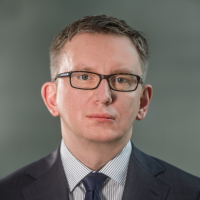
Piotr Skurski serves as Professor and Head of the Department of Theoretical Chemistry at the Faculty of Chemistry, University of Gdańsk, while maintaining a concurrent Professor of Chemistry position at the Henry Eyring Center for Theoretical Chemistry, University of Utah since 2006. His leadership spans multiple research units including the Laboratory of Quantum Chemistry at UG since 2014.
His educational background includes:
- MSc in Chemistry (1993) from University of Gdańsk under Prof. Wiesław Wiczek
- PhD in Chemical Sciences (1997) supervised by Prof. Maciej Gutowski (PNNL, USA)
- Habilitation (2001) leading to Professor title (2005) by Presidential decree
Skurski's research pioneers quantum chemical investigations of molecular anions, superhalogens, and reaction mechanisms. His work spans from fundamental electron binding phenomena to applied materials design, particularly focusing on superhalogen anions with electron affinities exceeding 15 eV, DNA repair processes, and polymerization mechanisms. His molecular design innovations include synthons, peptide crosslinks, and superacids.
Analysis of his 15 most recent publications reveals a dominant focus on superhalogen chemistry (7 articles), with significant contributions to molecular synthons (4 articles) and environmental applications like PFAS degradation (2 articles). His methodology consistently combines high-level quantum mechanical calculations with machine learning approaches for materials prediction.
His accolades include:
- Karol Taylor Scientific Award (2021)
- Prime Minister's Award for habilitation work (2002)
- 15+ Rector's Awards from University of Gdańsk (1995-2023)
- Foundation for Polish Science Scholarship (1997)
Skurski has supervised 10 doctoral students while securing major EU grants including MULTIPOL (FP6), PARYLENS (FP7), ENERLIQ (Polish-Swiss Program), and MAGENTA (Horizon 2020). His 198 publications with 5,371 citations (h-index 42) demonstrate substantial research impact. He leads the Laboratory of Quantum Chemistry at UG and maintains active collaborations with University of Utah's Henry Eyring Center.


