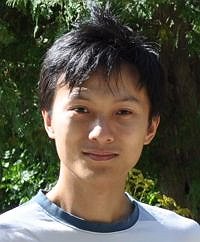
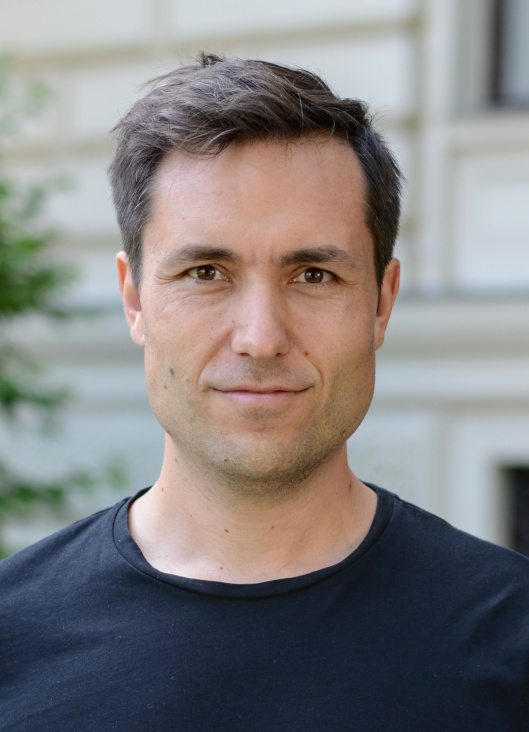
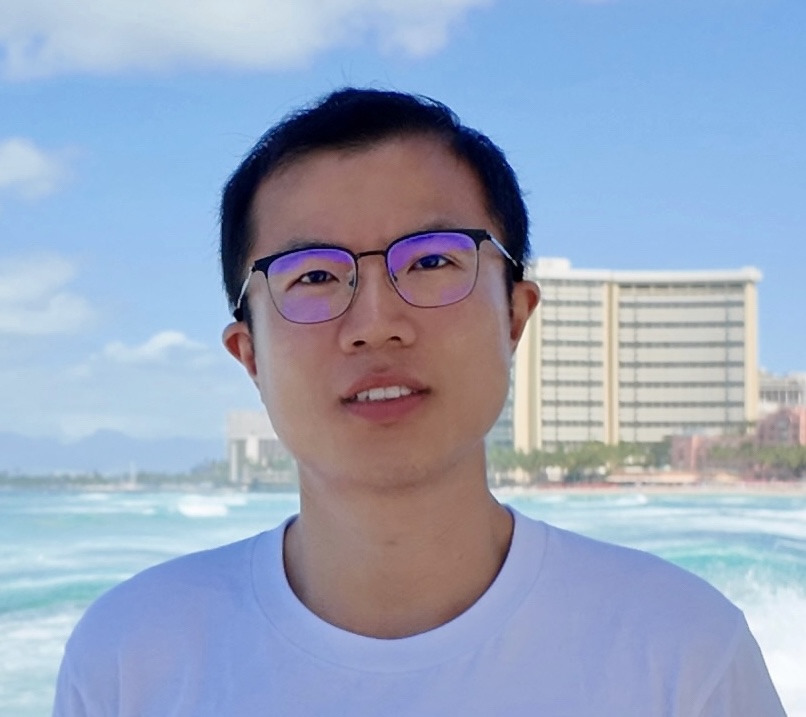
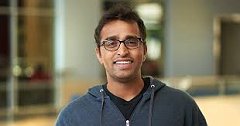
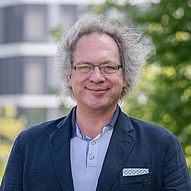
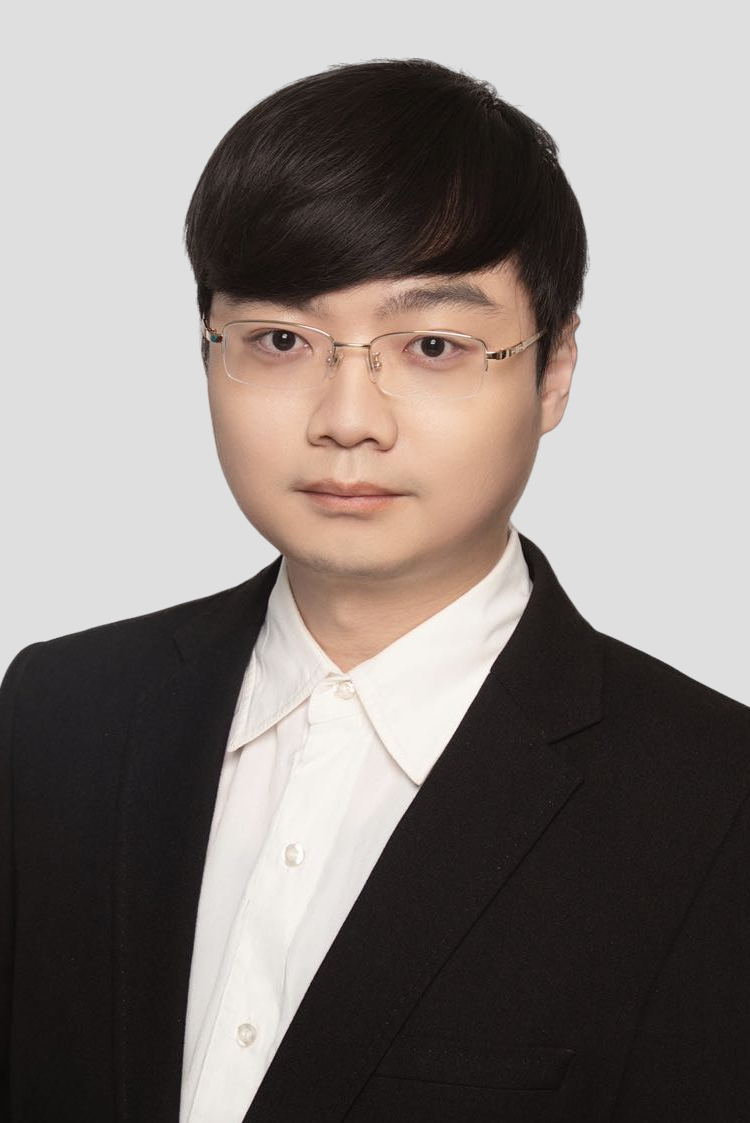
Gias Uddin is an Associate Professor at York University's Lassonde School of Engineering and an Adjunct Professor at the University of Calgary . His research bridges Software Engineering (SE) and Artificial Intelligence (AI) , focusing on AI Trustworthiness Assessment (SE4AI) and AI-Driven Productivity Tools (AI4SE) . PhD in Software Engineering & AI, McGill University (2018) MSc in Software Engineering, Queen’s University (2008) BSc in Computer Science & Engineering, Bangladesh University of Engineering and Technology (2004) His research explores: Metamorphic Relations for LLM Hallucination Detection AI-Enhanced Software Documentation Foundational Models for Runtime System Modernization Developer-Centric AI Tooling Recent article trends show expertise in LLM Trustworthiness , Low-Code Platforms , and IoT Developer Communities . Awards include Distinguished Paper at FSE 2025 , multiple IBM Champion recognitions, and York Research Award . He leads the Data Intensive Software Analytics (DISA) Lab and mentors PhD students in SE-AI Intersections .
Yingfei Xiong is an active Associate Professor at Peking University, China, specializing in software engineering and programming languages. With a consistent research trajectory from 2013 through 2026, Xiong has established themselves as a prominent figure in the software engineering research community, regularly contributing to top-tier conferences including SPLASH, ICSE, ASE, and PLDI. Dr. Xiong's research primarily focuses on program synthesis, automated program repair, and software analysis techniques. Their work bridges theoretical programming language concepts with practical software engineering applications, particularly in developing novel approaches for code generation, bug fixing, and program optimization. The research demonstrates strong interdisciplinary connections between traditional software engineering, programming languages theory, and emerging AI techniques. Analysis of Xiong's publication trends reveals a clear evolution in research focus, beginning with foundational work in API transformations and program adaptation around 2013-2016, shifting toward program repair techniques from 2017-2020, and most recently incorporating machine learning and neural approaches into program synthesis and repair (2021-2026). The work consistently addresses practical challenges in software development while maintaining theoretical rigor, with increasing integration of AI techniques in recent years. Dr. Xiong has served in various leadership roles across the software engineering conference ecosystem, including program committee membership and session chair positions at major conferences. Their extensive service demonstrates recognition by peers as a subject matter expert in software engineering and programming languages research. While specific grant information isn't detailed in the provided text, the sustained publication record suggests successful research funding.
George Haller is a Professor at the Department of Mechanical and Process Engineering at ETH Zurich . He leads the Institute of Mechanical Systems and holds the Chair in Nonlinear Dynamics . His research focuses on: Nonlinear dynamical systems theory Data-driven model reduction Spectral submanifolds (SSMs) Coherent structure identification in fluids and solids Control of complex nonlinear systems His recent work emphasizes equation- and data-driven modeling across solids, fluids, and control systems . Key contributions include: SSMTool - a MATLAB package for nonlinear model reduction SSMLearn - open-source software for data-driven modeling Transport barrier detection algorithms with oceanographic applications Scientific accolades include: 2025 Lyapunov Award (ASME) 2023 Stanley Corrsin Award (APS) Fellowships: ASME, APS, SIAM External Member, Hungarian Academy of Sciences His group has trained notable alumni: Thomas Breunung (Assistant Professor, University of Wisconsin-Madison) Shobhit Jain (Assistant Professor, Delft University of Technology) Mattia Serra (Assistant Professor, UCSD) Publications span Nonlinear Dynamics, Nature Communications , and Physical Review Fluids , with a 2025 book Modeling Nonlinear Dynamics for Equations and Data (SIAM Press). Current projects include: Reduced-order modeling of fluid-structure interactions Control of soft robots via nonlinear dynamics Identifying material barriers in turbulence
Dr Michael Boemo is an Assistant Professor at the University of Cambridge, holding dual appointments in the Department of Pathology and Department of Genetics. He leads research at the intersection of computational biology, DNA replication, and cancer genomics, developing machine learning tools to analyze replication stress and genomic instability. Academic Background: BA in Mathematics (Rutgers University), PhD in Physics (University of Oxford) Research Focus: Genomic instability in cancer, DNA replication/repair defects, computational modeling using machine learning and high-performance simulations Teaching: Lectures in Natural Sciences Tripos (mathematical biology, genetics, systems biology), module organizer for cancer biology and biological modeling His research group leverages nanopore sequencing and AI to map replication fork dynamics, revealing how stalled forks generate mutations in cancer cells and pathogens. Recent work examines extrachromosomal DNA replication vulnerabilities and transcription-replication conflicts. Dr Boemo collaborates across computational biology and cancer research domains, with publications spanning journals like Nature Methods, Cell, and PLoS Computational Biology. His lab develops tools such as DNAscent for replication fork analysis and explores therapeutic targeting of replication stress.
Benjamin Recht is a Professor in the Department of Electrical Engineering and Computer Sciences and Department of Statistics at the University of California, Berkeley. Previously, he was an Assistant Professor in the Department of Computer Sciences at the University of Wisconsin-Madison. Recht received his BS in mathematics from the University of Chicago and his MS and PhD from the MIT Media Laboratory, followed by a postdoctoral fellowship at Caltech's Center for the Mathematics of Information. His research interests span Machine Learning, Optimization, Control Theory, and Statistics , with a focus on both theoretical foundations and practical applications. Recht's work addresses fundamental questions in reproducibility, generalization, and robustness of machine learning systems, while also developing novel methods for control, computer vision, and data analysis. Recht's recent publications reveal a strong focus on reproducibility in machine learning , with papers like "The Mechanics of Frictionless Reproducibility" (2024), alongside continued contributions to statistical learning theory ("Interpolating Classifiers Make Few Mistakes", 2023) and computer vision ("Plenoxels", 2022; "K-planes", 2023). His work increasingly addresses societal implications of AI , including papers on systemic harm detection and post-deployment evaluation. NSF Career Award Alfred P. Sloan Research Fellowship 2012 SIAM/MOS Lagrange Prize in Continuous Optimization Presidential Early Career Award for Scientists and Engineers 2014 Jamon Prize 2015 William O. Baker Award for Initiatives in Research 2017 and 2020 NeurIPS Test of Time Awards Recht has advised numerous PhD students who have gone on to faculty positions at top universities and research roles at leading technology companies. His work on optimization algorithms has been widely influential, including the development of methods like HOGWILD! for parallel stochastic gradient descent. He co-founded the Conference on Learning for Decision and Control and has served on editorial boards for the Journal of Machine Learning Research and Mathematical Programming. His research group spans both theoretical and applied work, with connections to healthcare (adaptive medication tapering), computer vision (radiance fields), and social impact (systemic harm detection in deployed systems).
Martin Holler is a Professor at the Institute of Mathematics and Scientific Computing at the University of Graz, Austria, where he leads the research group Applied Mathematics and Machine Learning . His work bridges theoretical mathematics with practical applications in imaging and machine learning. Research Focus: His primary research areas include the mathematics of data science, variational methods in imaging, dynamic and multi-modality inverse problems, and biomedical imaging. He has made significant contributions to model-based regularization techniques, particularly with Total Generalized Variation (TGV) approaches for image and video reconstruction. Publication Trends: Over the past decade, Holler's research has evolved from traditional variational methods for image reconstruction toward increasingly sophisticated machine learning approaches. His recent work (2021-2023) focuses on integrating deep learning with variational methods, particularly for motion separation in medical imaging and learning-informed parameter identification in partial differential equations. His publications demonstrate a consistent thread of applying rigorous mathematical frameworks to solve practical problems in medical imaging and computer vision. Mathematics of data science and machine learning Generative models in machine learning Variational methods in imaging Dynamic and multi-modality inverse problems Model-based regularization Biomedical imaging Image and video decompression Technical Leadership: Holler has developed several open-source software packages implementing advanced reconstruction algorithms, particularly for multi-modal imaging problems. His GitHub repositories show active maintenance and development of these tools, which have been cited in the medical imaging community.
Yan Chen is an Assistant Professor at the Virginia Tech College of Engineering , where he leads the PRIME Lab (Programming with Intelligent Machines & Environments) . His work focuses on creating interactive Human-AI systems to enhance real-time data analysis and programming education, particularly addressing barriers in collaborative learning environments. University of Toronto (Postdoctoral Fellow) University of Michigan (Ph.D., Information Science) University of Colorado, Boulder (BS/MS in Applied Math & Electrical & Computer Engineering) His research bridges Human-Computer Interaction (HCI) and Computer Science Education , with a focus on real-time data analysis , AI-driven programming assistance , and scalable learning tools . He employs LLMs and human-centered design to simplify complex computational processes, enabling data workers to detect critical patterns efficiently. Recent publications highlight trends in generative AI for education , proactive AI programming support , and collaborative analytics . Key themes include real-time classroom insights , intergenerational smartphone learning , and automated feedback systems . Scientific recognition includes: 🏆 Best Paper at L@S 2024 🏅 Best Paper Honorable Mention at CHI 2023 🏅 Best Paper Honorable Mention at UIST 2022 🏆 Best Short Paper at VL/HCC 2020 He mentors a team of PhD and MS students in projects spanning AI-assisted education, web automation, and collaborative coding tools, with active recruitment for future research directions.
Aravind Machiry is an Assistant Professor at Purdue University's Electrical and Computer Engineering Department and a founding member of the Purdue Systems and Software Security (PurS3) Lab . His research focuses on system security, particularly vulnerability detection, prevention, and secure system development using static/dynamic program analysis, fuzzing, type systems, and machine learning. Designing practical solutions for software and embedded system security Recipient of NSF CAREER and Amazon Research awards Active participant in SPLASH 2025 as OOPSLA Review Committee member His recent work includes automated vulnerability detection in embedded software, spatial memory safety enhancements, and security analysis of GitHub workflows. He has received recognition for his research through multiple distinguished paper awards and industry funding. Selected scientific awards include NSF CAREER Award (2024) Amazon Research Award (2022) Test of Time Award at FSE 2023 for DynoDroid Distinguished Paper Award at OOPSLA 2022 for 3c Qualcomm Innovation Fellowship (2025) His research team has developed frameworks like ARGUS for taint analysis of CI/CD workflows and FuzzUEr for UEFI interface fuzzing, discovering hundreds of critical vulnerabilities in open-source projects and thousands of command injection flaws in GitHub repositories.
Christian Wolff is a University Professor and Chair of Media Informatics at the Institute for Information and Media, Language and Culture at the University of Regensburg. Since April 2022, he has served as the founding Dean of the Faculty of Computer Science and Data Science, while maintaining secondary membership in the Faculty of Languages, Literature and Cultural Studies (SLK). His academic career spans over three decades with significant contributions to multiple disciplines at the intersection of computer science and humanities. Wolff's research interests center around multimedia and multimodal information systems, electronic publishing, and text technology, particularly text mining. His work bridges computer science with digital humanities, legal informatics, and social media analysis. Recent publications demonstrate a strong focus on large language models, sentiment analysis applications across various domains, legal technology innovations, and virtual reality research for cognitive studies. His interdisciplinary approach has produced significant contributions in both technical and humanities domains. His recent publication trends reveal a strategic shift toward applied AI research, particularly in legal technology (LegalTech), social media analysis, and sentiment analysis using large language models. The publications show increasing collaboration across disciplines, connecting computer science with law, political science, literature, and psychology. His work on the digital basis document for legal proceedings represents a major practical application of his research in the German justice system. East Bavarian Cultural Prize Doctoral Award of the University of Regensburg Wolff has led numerous interdisciplinary research projects connecting computer science with humanities and legal studies. His leadership extends to institutional roles including Dean of Research, Vice Dean, and Dean of Faculty positions. He has been instrumental in establishing the new Faculty of Computer Science and Data Science at the University of Regensburg, demonstrating significant impact on institutional development and research infrastructure. Wolff directs research initiatives focused on text technology, digital humanities, and legal informatics. His work with the INDIGO - Internet and Digitization Eastern Bavaria initiative and the TRIO project demonstrates commitment to regional technology transfer and innovation. The interdisciplinary nature of his research groups connects computer scientists with legal scholars, linguists, and social scientists to address complex digital transformation challenges.
Associate Professor Seojeong Lee is a faculty member at the University of New South Wales (UNSW) Business School, School of Economics, specializing in advanced econometric theory. She joined UNSW in 2012 after completing her PhD at the University of Wisconsin-Madison and has established herself as a leading researcher in robust inference methods under complex data conditions. Her educational background includes: Ph.D. in Economics, University of Wisconsin-Madison (2008-2012) M.A. in Economics, Seoul National University (2006-2008) B.A. in Economics and Political Science (dual major), Seoul National University, summa cum laude (2000-2006, with military service 2002-2004) Professor Lee's research centers on developing theoretically rigorous methods for econometric inference, with primary focus on generalized method of moments (GMM), instrumental variables (IV), and two-stage least squares (2SLS) under model misspecification. Her work addresses critical challenges including invalid/many/weak instruments, heterogeneous treatment effects, and clustered sampling, contributing foundational advances to statistical inference in economics. Analysis of her recent publications reveals a strong trajectory in refining methods for many-instrument settings and misspecified models, with increasing emphasis on computational implementations (e.g., Stata packages) and applications to causal inference. Her work bridges theoretical econometrics with practical policy-relevant analysis. Her scientific achievements include: Australian Research Council DECRA Fellowship (2017-2019) UNSW Dean's Research Fellowship (2020-2022) Zellner Thesis Award Honorable Mention from American Statistical Association (2014) Multiple competitive UNSW research awards Professor Lee actively supervises PhD candidates Wei Tian and Fangzhou Yu, and has secured over AUD 700,000 in research funding including ARC Discovery Projects. She teaches undergraduate and postgraduate econometrics courses, integrating her research into pedagogy. Her ongoing work continues to push boundaries in robust econometric methodology for modern data challenges.
Ming Lu is a Professor in the Department of Civil and Environmental Engineering at the University of Alberta, Faculty of Engineering. Specializing in Construction Engineering and Management (CEM), he leads the Construction Automation Lab (AutoLab) since 2010, focusing on integration, automation, and optimization in construction. Dr. Lu holds professional engineering licensure (PEng) in Alberta and has extensive academic experience across Canada, Hong Kong, and China. PhD in Civil Engineering (University of Alberta, 2000) B.Eng. in Road & Traffic Engineering (Tongji University, 1994) His research spans Construction Automation , Project Scheduling , and Resource Optimization , with over 150 publications in top journals. Recent work emphasizes model trees , time-window constraints , and labor cost regression . Publications appear in Automation in Construction , Journal of Computing in Civil Engineering , and ASCE Journal of Construction Engineering and Management . Notable awards include the 2022/23 CSCE Stephen G. Revay Award , Fiatech STAR Award (2013) , and multiple Best Paper Awards from ASCE. His software tools like SDESA and S3 revolutionized construction simulation and resource-constrained scheduling. Dr. Lu supervised numerous graduate students in projects involving BIM applications , earthwork optimization , and steel fabrication scheduling . He developed key courses like CIV E 406 (Construction Estimating) and CIV E 607 (Productivity Modeling), integrating simulation-based learning into construction education.
Martin Wells is the Charles A. Alexander Professor of Statistical Sciences at Cornell University, with joint appointments in Social Statistics, Clinical Epidemiology, and Industrial Labor Relations. Since joining Cornell in 1987, he has developed methodologies spanning Bayesian inference, tensor analysis, and machine learning applications in biomedicine and finance. His research integrates statistical theory with computational innovations, particularly in high-dimensional modeling and quantum-inspired algorithms. Recent work focuses on geometric approaches to tensor decomposition, misclassification correction methods, and phylodynamic models incorporating dormancy effects. Professor Wells teaches statistical methodology across disciplines including law, medicine, and biology, adapting analytical frameworks to diverse research contexts. His interdisciplinary collaborations extend to Weill Medical College and the School of Industrial and Labor Relations.
Li Yang is an Assistant Professor in the Department of Information Technology , part of the Faculty of Business and Information Technology at Ontario Tech University. His research focuses on applying AI and machine learning to cybersecurity, particularly in intrusion detection and anomaly detection for 5G/6G networks and IoT systems. He holds a PhD in Electrical and Computer Engineering from Western University (2022), and has held roles such as Vice Chair of IEEE Computer Society, London Section (2022–2023). Education: PhD in Electrical and Computer Engineering, Western University (2022) Master of Science, University of Guelph (2018) Bachelor of Engineering, Wuhan University of Science and Technology (2016) Research Interests: His work spans cybersecurity, machine learning, deep learning, AutoML, model optimization, network automation, IoT security, intrusion detection, and adversarial machine learning. He develops frameworks for concept drift adaptation and online learning to enhance cybersecurity measures, with a focus on trustworthy AI and defense strategies against adversarial attacks. Awards: Graduate Student Award for Excellence in Research (2022) Graduate Symposium Award for Best Presentation (2022) Mitacs Accelerate Fellowship (2021) OC2 Lab Industrial Research Excellence Award (2020) Ranked in Stanford/Elsevier's Top 2% Scientists (2024) Grants & Involvement: Li Yang has contributed to conferences like IEEE GlobeCom and IEEE CCECE, and authored patents such as 'Convenient primary-secondary barrels' (2009). His work has garnered thousands of citations and GitHub stars, emphasizing practical applications of AI in cybersecurity.
Angelica Lim is an Assistant Professor of Professional Practice and Rajan Family Scholar in the School of Computing Science at Simon Fraser University. Her research focuses on Human Robot Interaction, Affective Computing, and Multimodal Perception with applications in healthcare and developmental robotics. She holds a PhD in Informatics from Kyoto University (2014), an M.Sc. from Kyoto University (2012), and a B.Sc. in Computing Science from SFU (2008). Her work bridges robotics and human-centered AI through projects like the ROSIE Lab, exploring emotion-aware systems, socially assistive robots, and VR programs for aging populations. Key contributions include benchmarking emotional speech recognition (BERSting), developing embodied emotion models for robots, and co-designing healthcare technologies with patient partners. Recent publications emphasize ethical AI, multimodal perception systems, and human-robot collaboration in dynamic environments. Teaching includes courses on software engineering, artificial intelligence, and introductory computer science. Her research has been applied in dementia care through VR programs, robotic companionship for older adults, and emotion-aware human-robot communication systems. Current initiatives focus on inclusive HRI design and sim2real methodologies for underrepresented data in affective computing.
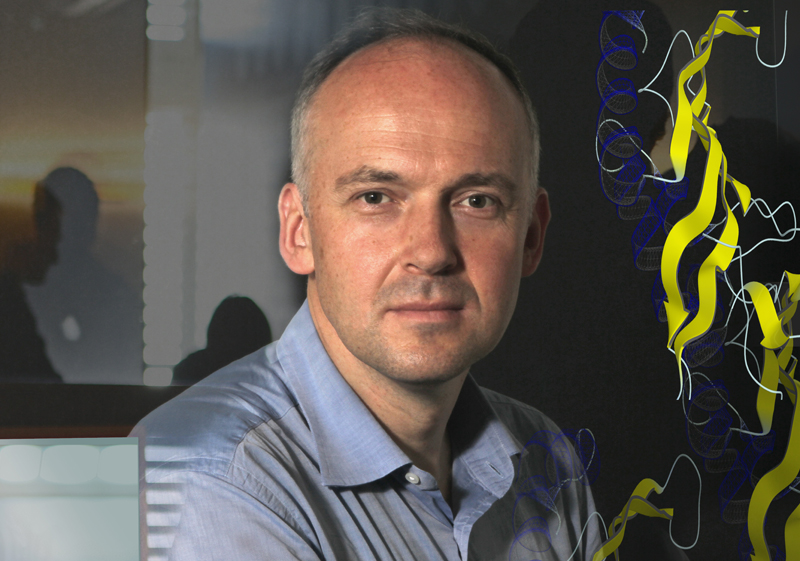
Torsten Schwede is a Professor for Structural Bioinformatics at the Biozentrum, University of Basel, and serves as Vice President for Research at the same institution. He leads the SPHN Data Coordination Center at SIB Swiss Institute of Bioinformatics. His research focuses on computational structural biology, protein structure prediction, and structural bioinformatics, with contributions to tools like SWISS-MODEL. He has been honored as a Highly Cited Researcher in Biology and Biochemistry (2019–2021). Education: PhD in Protein X-ray Crystallography from Albert-Ludwigs-Universität Freiburg (Germany). Positions include leadership roles in academia and industry (e.g., GlaxoSmithKline). His work emphasizes protein modeling, data management, and integrative structural methods. Collaborations span computational drug design, benchmarking initiatives (CASP), and open-source software development. Scientific contributions include advancements in protein-ligand interactions, homology modeling, and the development of ModelCIF and QMEANDisCo frameworks. He actively participates in global initiatives like the Swiss Personalized Health Network (SPHN) and precision medicine.