معرفی
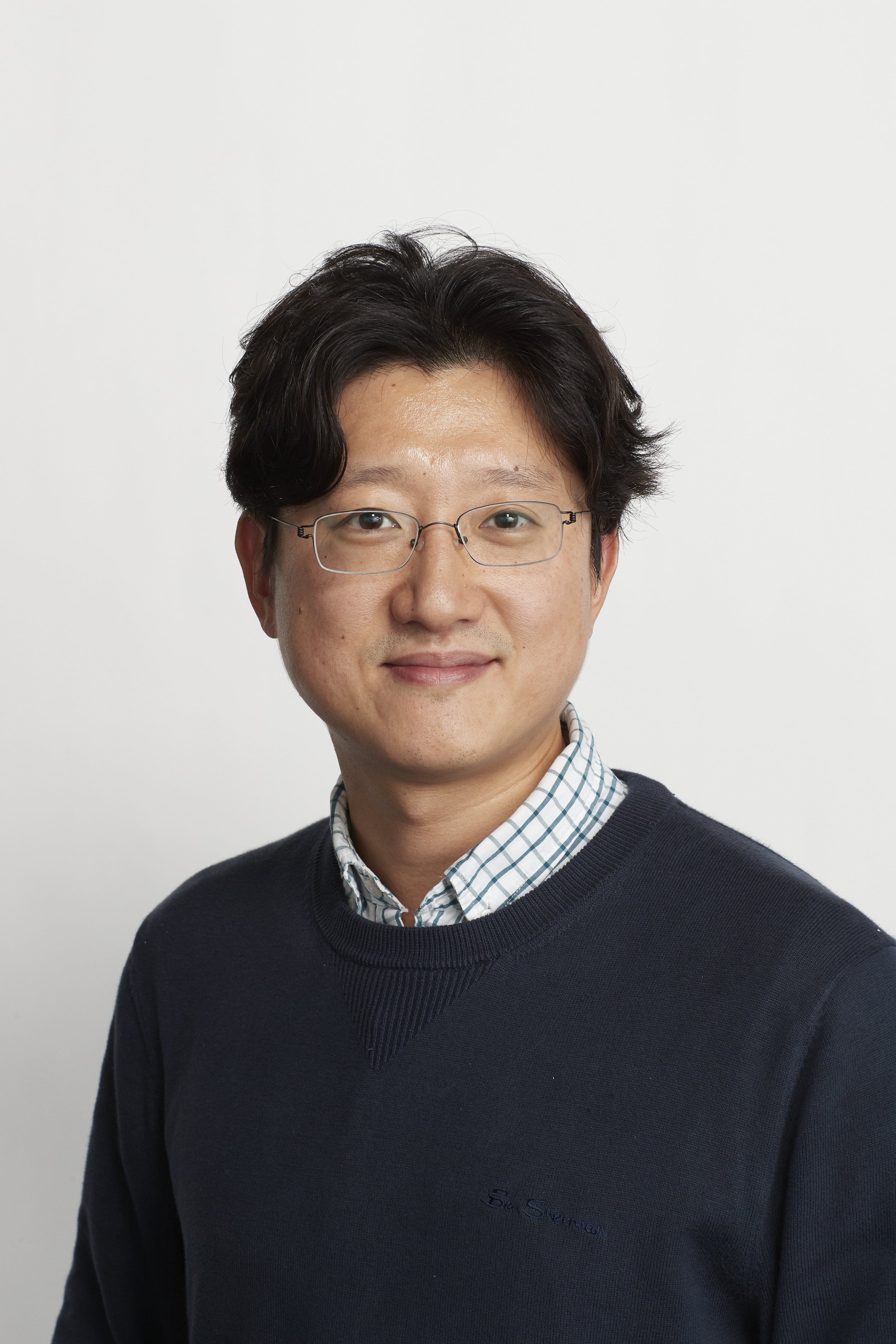
Associate Professor Seojeong Lee is a faculty member at the University of New South Wales (UNSW) Business School, School of Economics, specializing in advanced econometric theory. She joined UNSW in 2012 after completing her PhD at the University of Wisconsin-Madison and has established herself as a leading researcher in robust inference methods under complex data conditions.
Her educational background includes:
- Ph.D. in Economics, University of Wisconsin-Madison (2008-2012)
- M.A. in Economics, Seoul National University (2006-2008)
- B.A. in Economics and Political Science (dual major), Seoul National University, summa cum laude (2000-2006, with military service 2002-2004)
Professor Lee's research centers on developing theoretically rigorous methods for econometric inference, with primary focus on generalized method of moments (GMM), instrumental variables (IV), and two-stage least squares (2SLS) under model misspecification. Her work addresses critical challenges including invalid/many/weak instruments, heterogeneous treatment effects, and clustered sampling, contributing foundational advances to statistical inference in economics.
Analysis of her recent publications reveals a strong trajectory in refining methods for many-instrument settings and misspecified models, with increasing emphasis on computational implementations (e.g., Stata packages) and applications to causal inference. Her work bridges theoretical econometrics with practical policy-relevant analysis.
Her scientific achievements include:
- Australian Research Council DECRA Fellowship (2017-2019)
- UNSW Dean's Research Fellowship (2020-2022)
- Zellner Thesis Award Honorable Mention from American Statistical Association (2014)
- Multiple competitive UNSW research awards
Professor Lee actively supervises PhD candidates Wei Tian and Fangzhou Yu, and has secured over AUD 700,000 in research funding including ARC Discovery Projects. She teaches undergraduate and postgraduate econometrics courses, integrating her research into pedagogy. Her ongoing work continues to push boundaries in robust econometric methodology for modern data challenges.