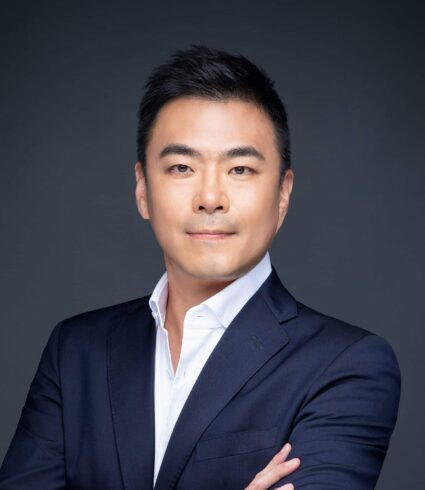
Jeehwan Kim is an Associate Professor in Mechanical Engineering and Materials Science and Engineering at MIT. He joined the Mechanical Engineering faculty in 2015 and became a joint faculty member in DMSE in 2016. His research focuses on nanotechnology for computing/electronics, electronic/photonic devices, neuromorphic computing, and heterogeneous integration. He holds over 100 patents from IBM and has received awards like the Samsung Fellow (2022) and DARPA Director’s Award (2021). Education : BS (Hongik University), MS (Seoul National University), PhD (UCLA), all in Materials Science and Engineering. Research Interests : Kim’s group innovates in 2D materials, remote epitaxy, neuromorphic systems, and next-gen electronics. Key areas include monolithic 3D integration, bioelectronic devices, and energy-efficient semiconductors. His work bridges material physics with practical device applications. Awards : Samsung Fellow (2022) DARPA Director’s Award (2021) Young Faculty Award (2019) IBM Faculty Award (2016) IBM Master Inventor (2012) Labs/Teams : Jeehwan Kim Research Group at MIT, focusing on advanced material synthesis and device engineering. Active in cross-disciplinary projects involving AI and semiconductor innovation.
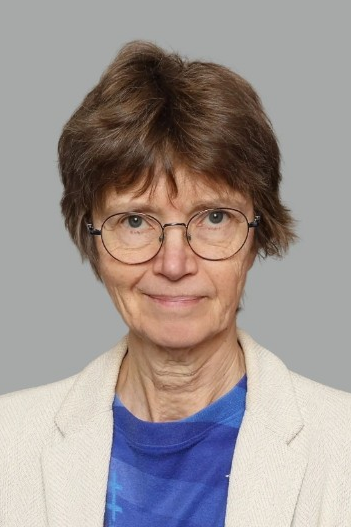
Katrina Morgan-Innes is a Lecturer (Assistant Professor) at the School of Electronics and Computer Science, University of Southampton. Her research focuses on advanced flexible materials for energy harvesting and storage, leveraging semiconductor industry fabrication techniques to develop wearable thermoelectric devices and next-generation batteries. She leads the Morgan Materials and Devices for Energy (MADE) research group and a £220k EPSRC New Horizons grant (Smart Cloth). Her work emphasizes commercial scalability and integration of 2D materials with flexible substrates. Education: MPhys in Physics (University of Sussex, 2011), CASE Award PhD in Electronics and Computer Science (University of Southampton, 2016–2022). Previous roles include Photonics Development Engineer at the AIM Photonics Programme (SUNY) and Visiting Fellow at the Optoelectronics Research Centre. Research interests include energy harvesters, flexible wearables, 2D materials, and nanofabrication. She has pioneered scalable manufacturing methods for photonic and energy devices and contributed to chalcogenide material applications. Her research group aims to create fully flexible systems enabling integrated sensing, power, and communication on lightweight platforms. Key grants include EPSRC funding for wearable thermoelectric generators and collaborations like the ChAMP/WAFT-funded projects on flexible ion sensors and 3D nanophotonics. She has published in high-impact journals (e.g., ACS Applied Materials and Interfaces , npj 2D Materials and Applications ) and conferences, focusing on thermoelectric materials, photonic heterostructures, and scalable manufacturing. Awards: UNSW Women in Engineering Visiting Fund (2019), Top 100 Physics Paper (2020), Outreach Engagement Award (2016) Labs/Teams: Morgan MADE Group, Collaboration with Optoelectronics Research Centre and Zepler Institute Advocacy: Chair of WiSET+ (University-wide STEM+ Equality Committee), founder of Early Career Researcher Forum
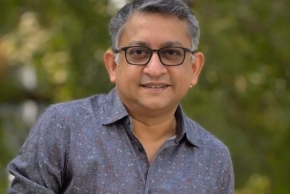
Prof. Arindam Chowdhury is a Professor in the Department of Chemistry at the Indian Institute of Technology Bombay (IITB), India. His research focuses on unraveling the optical and electronic properties of advanced materials, particularly organo-metal halide perovskites and 2D materials like MoS₂. He investigates phenomena such as photoluminescence intermittency (blinking) and spatiotemporal optical instabilities in these systems, with implications for solar energy and light-emissive devices. His work combines micro-spectroscopy techniques to study hard and soft systems. Education: Not explicitly stated in texts. Research interests include understanding charge carrier dynamics, metastable traps, and material defect mechanisms in perovskites. His group has published notable studies on MoS₂ monolayers and self-healing perovskite solar cells (ACS Energy Letters, 2024; Applied Physics Letters, 2024). Students supervised include Mansi (MoS₂ photoluminescence), Shruti (poster awards), and Tejmani (self-healing solar cells). A PhD position is currently open under his supervision. Labs/Teams: Leads a research group at IITB focused on advanced materials and micro-spectroscopy.
Lincoln J. Lauhon is a Professor of Materials Science and Engineering at Northwestern University. His research focuses on nanoscale structure-property relationships in low-dimensional materials, emphasizing synthesis, characterization, and device applications. He leads the Lauhon Research Group, which explores nanowires, 2D semiconductors, and heterostructures for quantum computing, high-power electronics, and energy conversion. Lauhon holds significant recognition including the Camille Dreyfus Teacher-Scholar Award (2008) and National Science Foundation CAREER Award (2005). His work bridges fundamental materials science with practical technologies through advanced microscopy and modeling techniques. Education: Postdoc in Chemistry at Harvard University, Ph.D. in Physics from Cornell University, and B.S. in Physics (Honors) from the University of Michigan. Research interests span nanowire synthesis, 3D nanotomography, scanning probe microscopy, and computational modeling. Current projects include III-As-Sb nanowire networks for quantum computing, GaN diodes for power electronics, and ferroelectric 2D materials. Lauhon's lab emphasizes collaboration across disciplines, with contributions to high-impact journals like Science Advances and Nano Letters . Awards highlight his dual excellence in teaching and research, including the Teacher of the Year award (2006). Professional service includes leadership roles in the Materials Research Society and organizing conferences on electronic materials. His team's innovations include novel nanomaterial synthesis methods and device architectures, with applications in computing, energy, and optoelectronics. The group actively engages in graduate and undergraduate training, fostering future leaders in nanotechnology.
Yongxiang Li is a Professor in the School of Engineering at RMIT University, Australia, specializing in advanced materials and nanotechnology. His research focuses on piezoelectric materials, 2D functional materials, and energy harvesting systems. He is actively involved in supervision of PhD and Master’s projects, including topics like flexible piezoelectric nanogenerators, 2D heterostructures, and low-temperature co-fired ceramic (LTCC) sensors. Research Interests: Materials Engineering, Electrical Engineering, Nanotechnology, Condensed Matter Physics, and Functional Ceramic Design. Key projects include developing lead-free piezoelectric materials, integrating sensors for lithium-ion batteries, and exploring gas sensors using liquid metal-derived oxides. Teaching Interests: Dielectric materials, ferroelectric systems, sensor technologies, and LTCC applications. His interdisciplinary work bridges materials science with optoelectronics and energy storage. Publications span over 400 outputs, emphasizing machine learning-driven materials discovery, defect engineering in 2D materials, and sensor innovation. He leads projects in collaboration with industry, focusing on practical applications of advanced ceramics and nanomaterials.
Dr. Iftikhar Ahmad serves as an Assistant Professor in the Department of Electrical Engineering at the University of South Carolina's Molinaroli College of Engineering and Computing. He joined the faculty in 2018 after eight years in industry as a Senior Scientist developing ultra-wide bandgap materials for UV-LEDs, and prior post-doctoral and research professor roles at USC. His expertise lies in the growth and characterization of wide bandgap semiconductors for advanced electronic and optoelectronic applications. Dr. Ahmad earned his M.Sc. from Govt. College Lahore (ranking first in the state) and completed his M.S. and Ph.D. at Texas Tech University in 2003 and 2005, focusing on wide bandgap semiconductors. He furthered his training with post-doctoral work at Virginia Commonwealth University in MBE and MOCVD growth techniques. His educational background established the foundation for his current research in semiconductor materials engineering. His research centers on ultra-wide bandgap semiconductors, especially gallium oxide and boron nitride, for applications in deep UV LEDs and high-power electronics. He explores novel MOCVD growth methods for these materials and their integration with traditional III-nitrides (AlGaN) to advance device performance in optoelectronics and power electronics. Current projects focus on defect engineering, phase stabilization, and device fabrication for next-generation semiconductor technologies. Analysis of his recent publications reveals a strong emphasis on β-Ga2O3 and h-BN for next-generation devices. Key themes include MOCVD growth optimization, defect characterization, and device integration for radiation detectors, high-temperature transistors, and UV emitters. His work bridges materials science and electrical engineering to address critical challenges in wide bandgap semiconductor technology, with increasing focus on computational modeling and industrial applications. No scientific awards or fellowships were mentioned in the provided materials. Regarding advising, while specific students are not listed, Dr. Ahmad teaches core courses including Introduction to Microelectronics (ELCT 363) and Advanced Semiconductor Materials (ELCT 874), indicating active engagement in graduate and undergraduate education. Grant details are not specified, but his laboratory operations suggest external funding support for semiconductor research. Dr. Ahmad leads the Ultrawide Bandgap Semiconductor Laboratory, equipped with an MOCVD growth system, Oceanoptics spectrometer, and comprehensive characterization tools for electrical, optical, and atomic force microscopy. The lab supports research in materials growth, device fabrication, and testing, fostering innovation in semiconductor technology through collaborations with industry and government research programs.
Leijun Li, PhD, P.Eng., is a Professor in the Department of Chemical and Materials Engineering at the University of Alberta, where he also serves as Chair. With a career spanning institutions including Rensselaer Polytechnic Institute, University of Northern Iowa, and Utah State University, he specializes in physical metallurgy , welding metallurgy , and additive manufacturing . His research focuses on microstructure characterization, mechanical properties, and modeling of non-equilibrium phase transformations during welding and AM processes. Current affiliations: University of Alberta, American Welding Society, ASM International Research themes: Additive manufacturing of alloys, Corrosion science, Pipeline metallurgy, Phase transformations, Welding robotics He has received multiple AWS Hobart Awards (4 times) and Savage Awards (2 times) for his work on pipeline welding and metallurgy. His group has published extensively on topics including delta-ferrite retention in Grade 91 steel, inverse bainite transformations , and welding defect analysis . Recent projects include NSERC Alliance Missions Grant for rare earth mineral recovery and Alberta Innovates Ecosystem Program for advanced manufacturing. Key collaborators: Dr. Tom Lienert, Dr. Xiaoying Fang, Dr. P-Q Xu Labs: Rooms 2-158/3-133 (CME Building), Office 12th Floor DICE Building
Dr. Karen Kavanagh is a Professor in the Department of Physics at Simon Fraser University (SFU), specializing in Electronic Materials Science, Semiconductor Interfaces, and Nanotechnology. Her research focuses on nanowire heterostructures, 2D materials, and advanced microscopy techniques such as helium ion microscopy and electron holography. She leads the Kavanagh Lab, located at TASC II Rm 7040, South Campus, Burnaby. Dr. Kavanagh holds a BSc from Queens University and MSc/PhD from Cornell University. Her work bridges materials science and device engineering, with applications in sensors, photovoltaics, and biomedical technologies. Notable achievements include developing ultrasensitive cytokine sensors and pioneering wafer bonding techniques at low temperatures. Dr. Kavanagh is a Fellow of the Materials Research Society and actively mentors a diverse group of graduate students and postdocs.
Rudolf Petra is a distinguished Professor and Chair of Experimental Solid State Physics at the Zernike Institute for Advanced Materials, University of Groningen. She holds a Laurea in Physics from Università di Roma 'La Sapienza' (1987) and a PhD in Physics from Facultés Universitaires Notre-Dame de la Paix de Namur (1995). As Dean of Graduate Studies (2020–present) and former Director of the Groningen Graduate School of Science (2014–2018), she has significantly enhanced academic programs, boosting applications by 28% and achieving top national rankings for 7 programs. Her research focuses on materials science, surface science, and molecular rotors/switches, with over 8,820 citations and an h-index of 49. She has received prestigious awards including membership in the German National Academy of Science and Engineering and the DESCARTES Prize. Leadership Roles : Managed the Zernike Institute for nine years, elevating its THE materials science ranking to 4th globally and 1st in Europe. Education : Supervised 19 Bachelor's, 34 Master's, and 27 PhD students, notably fostering female representation in STEM. Research Impact : Her work spans 2D materials (e.g., germanane synthesis), molecular electronics, and superconductivity. Notable contributions include nonvolatile memory devices using molecular tunneling junctions and defect analysis in MoS₂. Awards : Elected to multiple academies, including the European Physical Society presidency. Collaborations : Visiting professorships at São Paulo, Santiago, Cagliari, and Modena universities. Labs/Teams : Leads experimental solid-state physics research at Zernike Institute, focusing on advanced materials characterization and device applications.
Aleksandra Radenovic is a Full Professor at École Polytechnique Fédérale de Lausanne (EPFL) holding multiple positions across the institution. She is a Full Professor at the Laboratory of Nanoscale Biology (LBEN) within the School of Engineering (STI), a Full Professor in Teaching at the School of Life Sciences (SV), and a Full Professor in Teaching at the School of Engineering (STI). Additionally, she serves as Co-Director of both the IBI-STI and IBI-SV administrative units, and is a Member of both the STI School direction and SV School direction. Dr. Radenovic received her PhD from the University of Lausanne in 2003, where she worked with Prof. Dietler in the Laboratory of Physics of Living Matter. Prior to that, she studied physics at the University of Zagreb from 1994-1999, and completed her baccalaureate at a Classical gymnasium in 1994. She conducted postdoctoral research at the University of California, Berkeley from 2004-2007 in the group of Prof. Liphardt. Her research focuses on single molecule biophysics, with particular emphasis on developing techniques and methodologies based on optical imaging, biosensing, and single molecule manipulation. Her laboratory works on three major research directions: (i) developing and using nanopores as platforms for molecular sensing and manipulation, particularly solid-state nanopores in glass nanocapillaries and 2D-material membranes; (ii) studying biomolecular function, especially protein and nucleic acid interactions, using force-based manipulation techniques like optical tweezers and Anti-Brownian Electrokinetic traps; and (iii) developing super-resolution optical microscopy based on single molecule localizations for quantitative cellular imaging. Her work bridges physics, engineering, and biology to create innovative tools for understanding molecular processes at the nanoscale. Analysis of her recent publications reveals a strong focus on nanofluidics, 2D materials (particularly MoS 2 and hBN), nanopore sensing, super-resolution microscopy, and the development of novel instrumentation for biophysical applications. Her research demonstrates increasing interdisciplinary collaboration, integrating materials science, nanotechnology, and biological applications to address fundamental questions in molecular biophysics. Dr. Radenovic has received numerous prestigious awards and grants, including: 2021: ERC Advanced Grant 2021: Optica Fellow 2016: CCMX Materials challenge award 2015: SNSF-ERC Consolidator Grant 2010: ERC Starting Grant 2003: SNSF Fellowship She has successfully advised numerous PhD students whose research spans single molecule biophysics, nanofluidics, and optical techniques. Her laboratory, the Laboratory of Nanoscale Biology (LBEN), is well-equipped for advanced biophysical research, with capabilities in nanopore fabrication, optical trapping, super-resolution microscopy, and 2D materials characterization. Dr. Radenovic has secured significant research funding through competitive grants, including multiple ERC grants, which have supported her innovative research program at the intersection of physics, engineering, and biology.
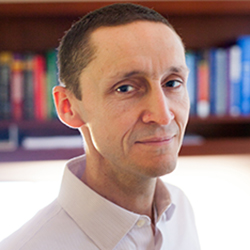
Goran S. Ristic is a Full Professor at the Faculty of Electronic Engineering, University of Nis, Serbia, since 2004. He holds a PhD in Semiconductor Physics from the same institution (1998), preceded by a master's (1994) and bachelor's degree (1990) in Physics. His research focuses on semiconductor materials, radiation effects on electronic devices, and dosimetry systems. He has published widely in journals like Journal of Applied Physics and IEEE Transactions , with over 69 papers in impact-factor journals. His work includes developing microcontroller-based dosimeter systems and studying defect behaviors in MOSFETs under irradiation and high electric fields. Key research interests include radiation-induced defects in semiconductors, annealing processes, and applications in medical dosimetry. He leads the Applied Physics Laboratory (website: http://www.apl.elfak.rs/ ). Current projects involve 1 national and 1 international collaboration. His contributions span semiconductor device reliability, gas breakdown measurements, and radiation-hardened electronics. Contact details: Email , Phone: +381 (18) 529-329, Address: Aleksandra Medvedeva 4, 18104 Nis, Serbia.
Stephen J. McDonnell is an Associate Professor at the University of Virginia's School of Engineering and Applied Science, Department of Materials Science and Engineering. His research focuses on interfaces in nanoelectronics, 2D materials integration, surface science, and energy conversion. He leads the McDonnell Group, which investigates materials synthesis in-vacuo, electronic structure via photoelectron spectroscopy, and anti-viral properties of copper alloys. Education: B.S. in Applied Physics (Dublin City University, 2004), Ph.D. in Physical Sciences (Dublin City University, 2009) Teaching: Courses include 'Materials for Electronic/Magnetic/Optical Applications' and 'Introduction to Materials Science.' Key research interests include nanoelectronics, 2D materials (e.g., WSe₂, MoS₂), ferroelectric HfO₂/ZrO₂ interfaces, and anti-viral copper-based alloys. His group correlates synthesis conditions with device properties like contact resistance and thermal boundary conductance. Publications span 2D material growth, interface engineering, and catalytic materials. Collaborations emphasize device-relevant properties and real-world applications in energy and healthcare.
Yung C. Shin is the Donald A. and Nancy G. Roach Distinguished Professor of Advanced Manufacturing at Purdue University's School of Mechanical Engineering. He leads research in laser-based manufacturing, ultrafast laser interactions, and multi-scale modeling. His affiliations include the Manufacturing Laboratories, Center for Laser-Based Manufacturing, and Laser-Assisted Materials Processing Lab. Education: B.S. in Mechanical Engineering, Seoul National University, 1976 M.S. in Mechanical Engineering, KAIST, 1978 Ph.D. in Mechanical Engineering, University of Wisconsin, 1984 Research interests span advanced manufacturing technologies, including laser additive manufacturing, ultrafast laser ablation, multi-physics modeling, and micro/nano engineering. His work addresses challenges in materials processing, thermal dynamics, and process optimization. Awards: ASME Blackall Machine Tool and Gage Award (2007) SME Frederick W. Taylor Research Medal (2015) Fellow, ASME (2010) and SME (2012) Donald A. and Nancy G. Roach Distinguished Professorship (2020–present) Advising and Grants: While specific grant details are not listed, Prof. Shin’s research is supported by institutional and industry partnerships. His students and collaborators include authors like S. Liu, K.M. Hong, and C. Katinas, reflecting active mentorship in advanced manufacturing. Labs and Teams: He directs the Center for Laser-Based Manufacturing and the Laser-Assisted Materials Processing Lab, focusing on interdisciplinary innovations in additive manufacturing and laser-material interactions.
Dr. Theodosia Gougousi is a Professor and Graduate Program Director in the Department of Physics at the University of Maryland, Baltimore County (UMBC). She holds a Ph.D. in Physics from the University of Pittsburgh (1996), an M.Sc. from the same institution (1993), and a B.S. from Aristotle University of Thessaloniki, Greece (1990). Prior to joining UMBC, she held postdoctoral positions at North Carolina State University and the University of Maryland College Park. Her research focuses on nanostructured materials, thin films, and interfaces, with an emphasis on atomic layer deposition (ALD) and physical vapor deposition methods. Key areas of study include dielectrics, semiconductors, photonic materials, and 2D materials such as MoS₂ and TiO₂. Her work addresses challenges in interface engineering, film properties, and material characterization for advanced nanodevices. Research Highlights: Development of ALD techniques for smooth, conformal thin films on high-aspect-ratio structures. Investigation of surface functionalization for selective deposition on 2D materials like MoS₂. Study of nonlinear optical properties in nitrogen-doped TiO₂ films. Exploration of strong coupling phenomena in quantum emitters using tip-enhanced optics. Labs & Facilities: She leads the Materials Physics Lab at UMBC, equipped for thin film deposition, surface characterization, and nanoscale device fabrication. Collaborations include interdisciplinary projects on semiconductor interfaces and photonic materials.
Professor Shankar Madathil holds the Chair in Power Electronic Systems at the University of Sheffield , within the School of Electrical and Electronic Engineering . His academic journey began with a PhD in Engineering from Cambridge University (1992), preceded by a Master's in Semiconductor Technology (1986) and MSc in Applied Sciences (1984) from PSG College of Technology , India.