Professor Ruerd Ruben is an external academic expert in Development Economics with over 300 research outputs spanning food systems, smallholder livelihoods, and rural poverty alleviation. His work focuses on value chain transformation, nutrition, and sustainable agricultural practices in Africa, Latin America, and Asia. Research Pillars: Food systems optimization Smallholder economic empowerment Value chain governance Sustainable diets and nutrition Rural development strategies Ruben's recent publications examine midstream actors in informal economies (2025), market-based poverty reduction (2024), and fair trade limitations (2023). His editorial work includes contributions to Food Security journal, and he has supervised 19 PhD projects on topics ranging from Ethiopian potato chains to climate-resilient East African agribusinesses. Scientific Leadership: Contributed to 300+ academic works Received 7 Scopus citations for key publications Active in global food systems discourse
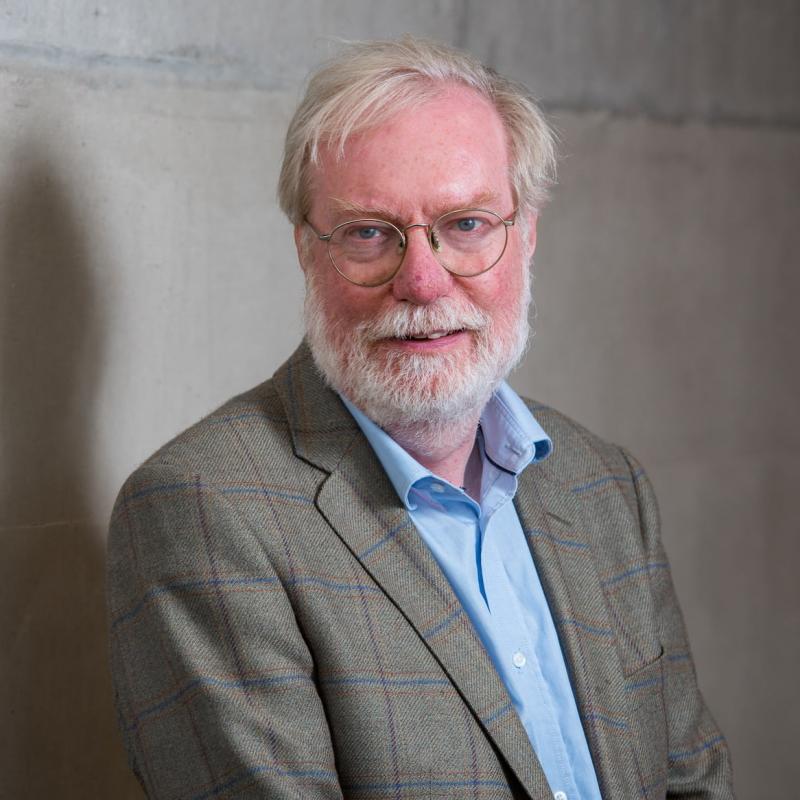
Sir Paul Collier is Professor of Economics and Public Policy at the Blavatnik School of Government, University of Oxford, and serves as the Oxford Academic Director of the International Growth Centre, a collaboration between the LSE and Oxford Universities. He is also a member of the Natural Resource Governance Institute Board. His academic work spans decades of research focused on economic development challenges in the world's poorest regions, bridging theoretical economics with practical policy solutions, particularly in contexts of conflict, natural resource management, and regional economic decline. Professor Collier's research interests center on economic development, with specific focus areas including: Mitigating the challenges of migration and the refugee crisis Understanding urbanization processes in low-income countries Addressing the political economy of resource-rich but economically poor nations Exploring how cultural factors influence economic outcomes Developing frameworks for regional renewal in neglected places Analyzing the relationship between democracy and economic development in fragile states His recent publications reveal a consistent focus on the intersection of economic policy, social cohesion, and cultural dimensions in development contexts. Collier's work increasingly emphasizes the importance of collective learning, social capital, and local agency in reversing economic decline, moving beyond traditional market-centric approaches. Among his notable scientific contributions are: Handesblatt Prize for The Future of Capitalism Arthur Ross Prize for The Bottom Billion Adam Smith Prize by Glasgow's Philosophical Society (2023) Global Citizenship Award by Belgium's cooperative movement (2018) 2025 Axiom Business Book Award for Left Behind Professor Collier actively advises governments and international organizations on development policy, with particular emphasis on practical approaches to regional renewal. His current research project "Establishing state legitimacy and effectiveness in fragile and conflict-affected societies," funded by a British Academy Grant, examines how conflict-affected states can build functional governance capacity. He has also contributed to Oxford University's first MOOC "From poverty to prosperity: understanding economic development," making his expertise accessible globally.
Dr. Silvia Baiocco serves as Assistant Professor at University of Rome Tor Vergata, teaching entrepreneurship, tourism management, and marketing courses across Bachelor and Master programs including 'Creation of Enterprises and Entrepreneurship' (Master), 'Fundamentals of Service Management' (Bachelor), and 'Tourism and Cultural Management for Sustainability' (Bachelor). Her institutional affiliation centers on Business Economics (sector ECON-07/A) with research rooted in co-evolutionary theory. Her research critically examines sustainable business model innovation through three interconnected lenses: (1) tourism-destination co-evolution in historic villages and Alberghi Diffusi, (2) university-industry knowledge exchange for sustainable spin-offs via PNICube Observatory frameworks, and (3) technology integration in smart tourism through AI-driven destination management. She emphasizes context-specific adaptation in both high-income (Italy) and low/middle-income settings (Ghana), with strong focus on social impact and heritage preservation. Analysis of her 2023-2025 publications reveals accelerating focus on digital tourism transformation (AI applications, smart city integration) and resilience-building in accommodation firms. Her work consistently applies co-evolutionary frameworks to decode organizational adaptation, particularly in sustainable entrepreneurship contexts. The PNICube Observatory reports highlight her policy-relevant contributions to university research valorization. As educator, Dr. Baiocco actively shapes future business leaders through courses spanning startup creation to sustainable destination management. Her research trajectory indicates deepening engagement with technology-mediated sustainability solutions and cross-sectoral innovation ecosystems, particularly through ongoing PNICube Observatory initiatives.
Rafael Pérez-Escamilla is a Professor of Public Health (Social and Behavioral Sciences) and serves as Director of the Office of Public Health Practice, the Global Health Concentration, and the Maternal and Child Health Promotion Track at the Yale School of Public Health. He leads the Yale-Griffin CDC Prevention Research Center with over $70 million in extramural funding, focusing on improving breastfeeding outcomes, maternal-child nutrition, food security, and early childhood development through community health worker interventions. He holds a BS in Chemical Engineering from Universidad Iberoamericana (Mexico City), an MS in Food Science, and a PhD in Nutrition from the University of California, Davis. His postdoctoral training at UC Davis explored the link between nutrition and early childhood development. His research interests emphasize breastfeeding promotion , maternal and child health equity , food security measurement , and implementation science . He co-leads studies in vulnerable communities, including U.S. communities of color, and has published over 340 articles, three books, and numerous technical reports. Key publications from 2024–2025 highlight innovations in addressing food insecurity, hypertension disparities, and the evaluation of global nutrition programs. His work bridges research and practice, advocating for scalable interventions. Awards: Lifetime Achievements Award in Global Nutrition (2020) Elected to U.S. National Academy of Medicine (2019) Doctor Honoris Causa from Universidad de Guadalajara (2016) Patricia Martens Award for Excellence in Breastfeeding Research (2015) As a senior advisor to WHO, UNICEF, and U.S. federal agencies, he collaborates on global nutrition policies and measurement frameworks. His grants fund programs like the FOOD4MOMS initiative and the Criança Feliz Program in Brazil. He mentors students through the Maternal and Child Health Promotion Track and oversees Yale’s Global Health and Public Health Practice initiatives. Active in interdisciplinary teams such as the Becoming Breastfeeding Friendly (BBF) initiative and the Center for Methods in Implementation and Prevention Science (CMIPS), he promotes collaboration between academia, communities, and policymakers.
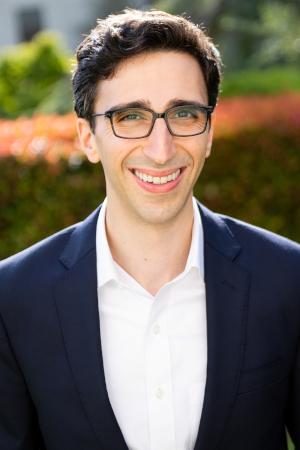
Naz Koont is an Assistant Professor of Finance at the Stanford Graduate School of Business . Her research explores how technology and nonbank intermediaries reshape banking landscapes, focusing on financial stability, competition, and consumer welfare. PhD in Finance (Columbia Business School, 2024) MPhil in Finance (Columbia Business School, 2021) Honors BSc in Mathematics and Economics (University of Toronto, 2018) Her research interests include: Financial Intermediation : Analyzing digital banking’s impact on bank roles. Credit Markets : Studying credit lines and leverage constraints. Industrial Organization : Modeling competition dynamics in banking. Technology : Assessing digitalization’s effects on financial systems. Article trends reveal her work combines empirical analysis and structural modeling to examine: Digital banking’s role in bank competition and consumer welfare Credit lines’ function in debt dilution mitigation ETFs’ active management strategies in illiquid markets Peer effects in deposit market demand Scientific awards include: HEC Paris Top Finance Graduate Award (2024) Bernstein Center Doctoral Grant (2021) Columbia Finance Department Best 4th Year Paper (2021)
Dr. Xue Dong (Sarah Dong) serves as a Research Fellow at the Arndt-Corden Department of Economics within the Crawford School of Public Policy at the Australian National University. Her work focuses on Indonesian socio-economic development, particularly labor markets, gender equality, and policy interventions in education and business formalization. Education: PhD in Economics from the University of Western Ontario Research Focus: Dr. Dong employs empirical methods including randomized controlled trials to investigate electoral impacts on public spending, financial aid accessibility for low-income students, and microenterprise registration barriers. Her fingerprint analysis reveals 100% concentration on Indonesian contexts with strong emphasis on labor markets (90%) and gender equality (71%). Publication Trends: Recent outputs (2023-2025) demonstrate methodological rigor in causal analysis of policy reforms, with consistent regional specialization in Indonesia. Her work bridges academic research and practical development solutions through partnerships with Indonesian institutions. Project Leadership: As Co-Investigator on three major grants, she examines corporate social responsibility in emerging economies (2022-2026), tax registration for MSMEs (2018-2020), and foreign aid effectiveness (2016-2021). These projects involve multi-institutional collaborations across Australia and Indonesia. Academic Service: Registered to supervise graduate students at ANU, she contributes to gender equality discourse through editorial work including the 2023 ISEAS-Yusof Ishak Institute publication on Indonesian gender dynamics.
Amir Sufi is the Bruce Lindsay Distinguished Service Professor of Economics and Public Policy at the University of Chicago Booth School of Business, where he has been a faculty member since 2005. He serves as a Research Associate at the National Bureau of Economic Research and co-director of its Corporate Finance Program. Bachelor’s Degree, Walsh School of Foreign Service, Georgetown University (1999) PhD in Economics, Massachusetts Institute of Technology (2005) His research focuses on finance , macroeconomics , and corporate finance . Key areas include household debt dynamics , credit market structure , income inequality , and interest rate impacts on productivity growth . Recent work examines customer capital investment and low-interest rate effects on market concentration . Selected scientific awards include the 2017 Fischer Black Prize, Econometric Society Fellow (2022), and American Academy of Arts and Sciences Fellow (2024). His peer-reviewed publications and working papers span topics from syndicated loans to global household debt cycles , with notable contributions to understanding credit-driven business cycles and government-led consumer credit programs . He teaches courses in leveraged finance , private credit , and corporate restructuring .
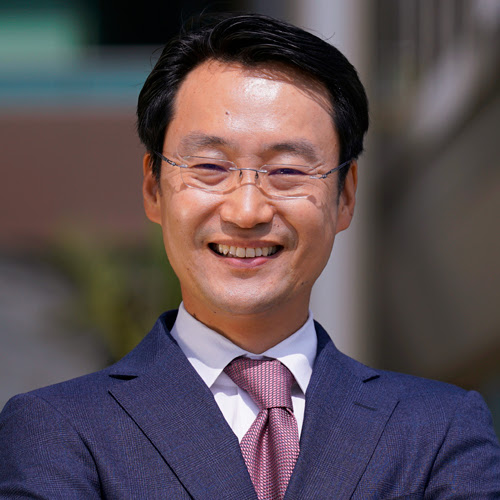
Hyoduk Shin holds the Jimmy Anklesaria Presidential Chair in Innovation and Entrepreneurship as a Professor of Innovation, Information Technology, and Operations at UC San Diego's Rady School of Management. His research bridges operations management, information systems, and strategic decision-making across multiple industries. His educational background includes: Ph.D. from Stanford University M.S. in Statistics from the University of Chicago M.S. in Management Engineering from Korea Advanced Institute of Science and Technology B.S. in Industrial Engineering from Korea Advanced Institute of Science and Technology Professor Shin's research explores critical intersections of supply chain transparency , information economics , and innovation dynamics . He investigates how forecast sharing impacts supply chain coordination, how cybersecurity investments affect open source ecosystems, and how operational constraints shape competitive strategies. His work in pharmaceutical supply chains addresses drug shortages through mandated reporting systems, while his entertainment industry research analyzes release strategies amid digital disruption. This multidisciplinary approach reveals fundamental principles about information value in complex business environments. His publication portfolio (2013-2021) demonstrates consistent contributions to top-tier journals including Management Science , Operations Research , and Information Systems Research , with emerging emphasis on healthcare operations and cybersecurity. Key thematic clusters include supply chain transparency mechanisms, open source software economics, and innovation in constrained environments. His recognition includes: Best paper award at Conference on Information Systems and Technology (2012) Management Science Meritorious Service Award (2011) Lieberman Fellowship from Stanford University (2006-2007) Chairs’ Core Course Teaching Award at Kellogg School of Management While specific grant details aren't documented in available materials, Shin's research program demonstrates sustained external validation through publication in premier outlets and industry-relevant findings. His prior position as Assistant Professor at Northwestern University's Kellogg School indicates progressive academic leadership, and his current named professorship reflects institutional recognition of research impact. The absence of student listings suggests primary focus on independent or collaborative research rather than doctoral supervision.
Jesper Rangvid is a Professor of Finance and Director of the Pension Research Centre (PeRCent) at Copenhagen Business School (CBS), where he also serves as Associate Dean of the Executive MBA program . His research focuses on financial markets, macroeconomics, financial crises, household finance, and mutual funds. He has authored influential works such as How Low Interest Rates Change the World (Oxford University Press, 2025) and From Main Street to Wall Street (Oxford University Press, 2021), exploring topics like interest rate trends, economic growth, and policy impacts. He chairs the Council for Return Expectations and holds board positions at Formuepleje, Advantage Investment Partners, and Finansiel Stabilitet, among others. His advisory roles include Levring & Levring and projects for Danish institutions like Forenet Kredit and BankInvest. Recent research highlights include analyzing Denmark’s pension system reforms, fiscal-monetary policy interactions, and the implications of low interest rates on global economies. Rangvid’s publications combine rigorous academic analysis with policy relevance, addressing topics like dividend predictability, economic growth’s impact on asset returns, and the behavior of professional investors. His work often bridges theoretical frameworks with empirical data, offering insights into macro-financial linkages and policy design.
Marco Bertini is a Professor in the Marketing Department at Esade School of Business Administration and Management , affiliated with the Institute for Data-Driven Decisions . His research focuses on pricing, marketing, and consumer behavior, particularly in low-cost strategies and decision-making frameworks. Research Interests: Bertini’s work explores pricing psychology, consumer experience, and behavioral economics. He investigates how pricing strategies influence customer trust and how friction in retail interactions can enhance engagement, with applications in nonprofit finance and food waste reduction. Articles: Recent publications highlight value-based sales, beneficiary pricing in nonprofits, and the impact of price promotions on food waste. His research spans interdisciplinary topics, integrating data-driven insights with behavioral interventions. Projects: He is a member of the JUICE research group, focusing on judgment and decisions in the marketplace, and contributes to the ESADE D3 initiative on data-driven decision-making.
Danny Yagan is a Researcher at the University of California, Berkeley Department of Economics, with expertise in public economics, taxation, and income inequality. He contributes to the National Bureau of Economic Research (NBER) and the Conference on Research in Income and Wealth. His research focuses on fiscal policy, including deficit sustainability and the "growth dividend" concept. He has extensively studied pass-through business entities' impact on labor income share and inequality, using administrative tax data to analyze wealth distribution and taxation of top earners. Recent work examines spatial inequality trends, place-based redistribution, and the role of colleges in intergenerational mobility. Collaborations with scholars like Raj Chetty, Emmanuel Saez, and Owen Zidar highlight his interdisciplinary approach. Yagan's publications span topics including tax reform, capital taxation, and household investment behavior. He is actively involved in policy analysis and empirical economic research.
Thomas Berger is a Professor at the University of Hohenheim , affiliated with the Faculty of Agricultural Sciences and leading the Department of Economics of Land Use . He also contributes to the Computational Science Hub and Hohenheim Tropics initiatives. Focus Areas: Climate change adaptation, land-use modeling, biodiversity-productivity trade-offs, agent-based simulation, and machine learning in agricultural systems. Key Projects: Simulation frameworks for smallholder resilience in Ethiopia, bioeconomic modeling in the Amazon, and hybrid intelligence applications in European agricultural policy. Recent Publications: 2025 study on climate change effects on insecticide reduction in Germany, 2024 work on reconciling biodiversity with productivity via hybrid models, and 2023 methodological contributions to surrogate modeling and seasonal forecast integration. Research Trends: Interdisciplinary integration of climate science, agricultural economics, and computational modeling, with increasing emphasis on AI-assisted decision support systems and sustainability policy validation. Teaching & Outreach: Offers Agricultural Economics seminars and Hohenheim Tropics discussions, requiring advance email registration for office hours.
Professor Kurt Squire is a leading scholar in games research and development at the University of California Irvine, affiliated with the Donald Bren School of Information and Computer Sciences. He holds a Ph.D. in Education from Indiana University (2004). His work focuses on leveraging computer games and augmented reality to enhance learning outcomes and social impact. Squire has pioneered platforms enabling students and teachers to co-create educational tools, fostering global grassroots communities through collaborative game design. Notable contributions include the Games + Learning + Society (GLS) center, which he co-founded with Constance Steinkuehler and has since relaunched at UCI. He currently explores AR applications, community-based AI design, and mitigating right-wing extremism in gaming ecosystems. Squire’s research has been funded by NSF, NIH, and major foundations, with over a dozen commercially launched games stemming from his projects. Education: Ph.D. in Education, Indiana University, 2004 Research Interests: Squire investigates how games and emerging technologies can address societal challenges through participatory design. His work spans educational equity, cognitive development via casual gaming, and ethical AI frameworks. He emphasizes translating academic innovations into market-ready solutions while aligning with institutional goals. Recent projects include wearable apps for youth self-regulation and trauma-informed GenAI design with marginalized communities. Notable Achievements: Recipient of the Inaugural Hasso Plattner Endowed Chair in Artificial Intelligence (2025) Co-founder of GLS, a globally influential research hub Authored Making Games for Impact (2021), a practitioner-focused guide Labs/Teams: Directs the Games + Learning + Society center at UCI, focusing on XR research, well-being technologies, and entrepreneurship in education. Collaborates with MIT on augmented reality initiatives.
Hundanol Kebede is an Assistant Professor of Economics at Southern Illinois University, Carbondale . His research focuses on International Trade , Development Economics , and Applied Microeconomics , with a particular emphasis on low-income countries. Ph.D. in Economics from the University of Virginia (2020) Key research themes: Trade and infrastructure impacts on economic activities, structural transformation, household responses to shocks, and gender disparities in technology adoption Research trends from his five published articles (2013–2024) include analyses of rural road construction’s welfare gains, market integration effects on agricultural households, commodity price shock transmission, and gender-based risk aversion in technology adoption. His work often leverages Ethiopian case studies with high-resolution micro data. Contact : hundanol.kebede@siu.edu | Faner Hall, Room 4138 | (618) 453-5072
Terrance L. Green is an Associate Professor of Educational Leadership and Policy at the University of Texas at Austin College of Education , with a focus on racial justice and equity in educational systems. He has over a decade of experience at UT Austin and teaches courses on educational administration. Education : Ph.D. in Educational Leadership & Policy Analysis (University of Wisconsin-Madison), B.S. in Biology Education (Kentucky State University, HBCU) His research examines the intersection of urban school reform and equitable community development, addressing critical issues like school closures, gentrification, and equity audits. His work emphasizes leadership strategies to combat systemic inequities in low-income neighborhoods of color. Dr. Green's publications in top-tier journals such as American Educational Research Journal and Urban Education reflect trends in school gentrification, equity leadership frameworks, and spatial analysis of educational markets. His scholarship combines critical theory with practical tools like the Community Equity Literacy Leadership Assessment (CELLA). Scientific Awards : William T. Grant Scholar (2020-2025), NAEd Spencer Postdoctoral Fellowship (2018), AERA Division A Early Career Award (2017), William J. Davis Award (2016) His research has been funded by the Spencer Foundation and William T. Grant Foundation, and his op-eds appear in TIME.com , Psychology Today , and regional newspapers. Prior to academia, he was a high school science teacher.