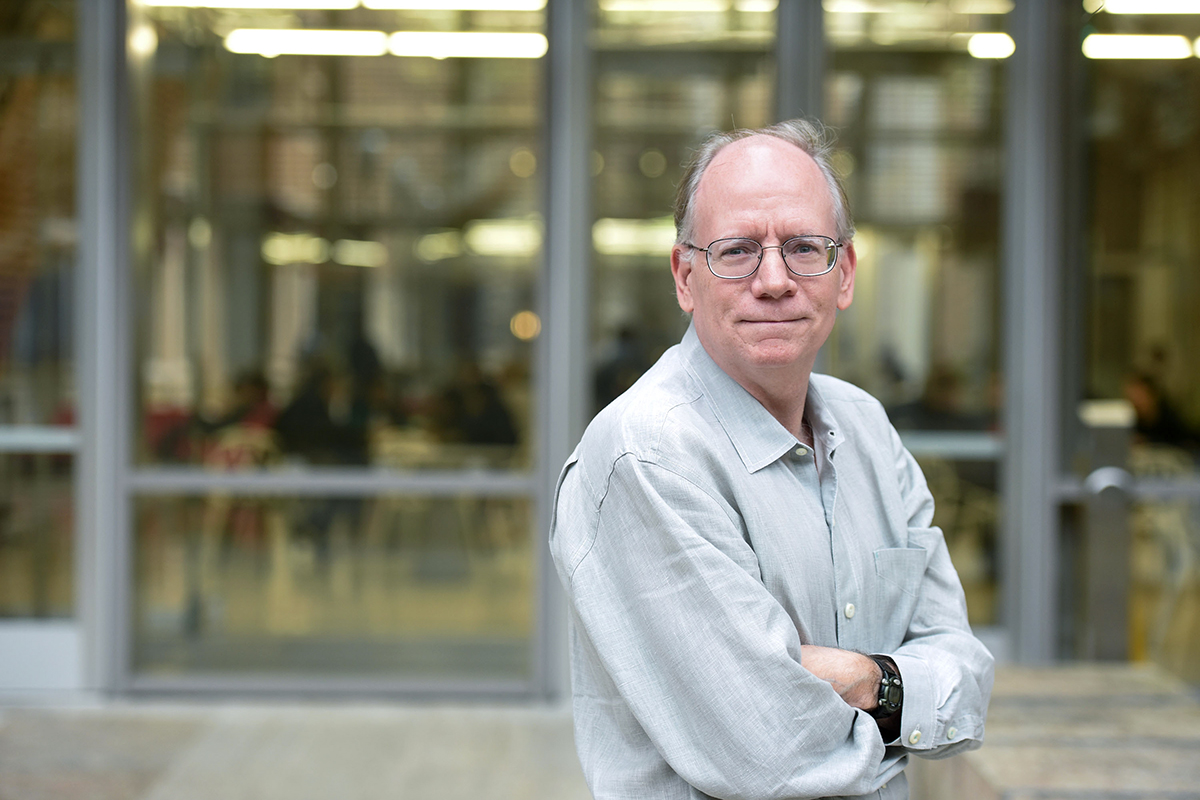
Stephen Bach is an Assistant Professor in the Computer Science Department at Brown University, where he leads the BATS (Bach's Awesome Team of Students) research group. His research focuses on improving how humans teach computers through programmatic weak supervision and methods for learning from fewer examples like zero-shot and few-shot learning. His primary research interests include weak supervision, data programming, probabilistic soft logic (PSL), statistical relational learning (SRL), information extraction, zero-shot learning, and few-shot learning. Bach's work often focuses on exploiting high-level, symbolic or semantically meaningful domain knowledge, with applications in information extraction, image understanding, scientific discovery, and data science. Bach's recent publications show a strong focus on language models, weak supervision techniques, and multimodal learning, particularly examining the capabilities and limitations of models like CLIP. His research has increasingly emphasized practical applications in low-resource settings and cross-lingual scenarios. Best Paper Award at NeurIPS Workshop on Socially Responsible Language Modelling Research (SoLaR) 2023 Larry S. Davis Doctoral Dissertation Award Selected for oral presentation at ICLR 2024 Best of VLDB 2018 paper selection Bach advises numerous Ph.D., Master's, and undergraduate students, many of whom have gone on to positions at leading tech companies, research institutions, and graduate programs. His research group has developed several influential frameworks including Snorkel (for weak supervision), PSL (Probabilistic Soft Logic), T0 (for zero-shot task generalization), ZSL-KG (for zero-shot learning with knowledge graphs), TAGLETS (for semi-supervised learning with auxiliary data), and WISER (for programmatic weak supervision in sequence tagging).
Dr. Hilde Kuehne is a Professor at the University of Tuebingen and a key researcher at the Tuebingen AI Center. She holds affiliations with MIT-IBM Watson AI Lab and Goethe University Frankfurt, with a focus on computer vision, multimodal learning, and explainable AI. Her work bridges vision-language models, audio-visual alignment, and self-supervised methods. Co-organizer of the New Frontiers in Associative Memories workshop @ ICLR 2025 Member of the Scientific Advisory Board of the Carl-Zeiss-Foundation Contributor to CVPR 2025's UTD dataset for unbiased video benchmarks Her research addresses critical challenges in: Explainability for Vision Transformers (LeGrad) Fine-grained audio-visual alignment (CAV-MAE Sync) Zero-shot visual recognition automation (Meta-Prompting) Spatio-temporal grounding without annotations Recent collaborative work spans 15+ publications across CVPR, NeurIPS, ICCV, and ICLR, with emphasis on multimodal foundation models, dataset bias mitigation, and differentiable logic networks. She actively contributes to workshop organization and peer review as evidenced by her involvement in CVPR 2025 and ICLR 2025 program committees.
Joakim Nivre is a Professor at Uppsala University's Department of Linguistics and Philology. He is a leading researcher in computational linguistics, with a focus on dependency parsing, Universal Dependencies (UD) framework development, and multilingual NLP applications. His recent work explores LLMs in climate change discourse analysis, pharmacovigilance explainability, and historical text processing. Key research areas: Dependency parsing theory, Universal Dependencies standardization, LLM evaluation Collaborations: SweSAT-1.0 benchmark development, ClimateEval project, PARSEME integration His 2025-2023 publications demonstrate expertise in explainable AI for healthcare, synthetic data generation for idioms, and multilingual benchmark design. Notably, he co-developed SweSAT-1.0 to evaluate Swedish LLMs and contributed to typology-informed UD revisions. Despite extensive work in NLP, no scientific awards are mentioned in available texts.
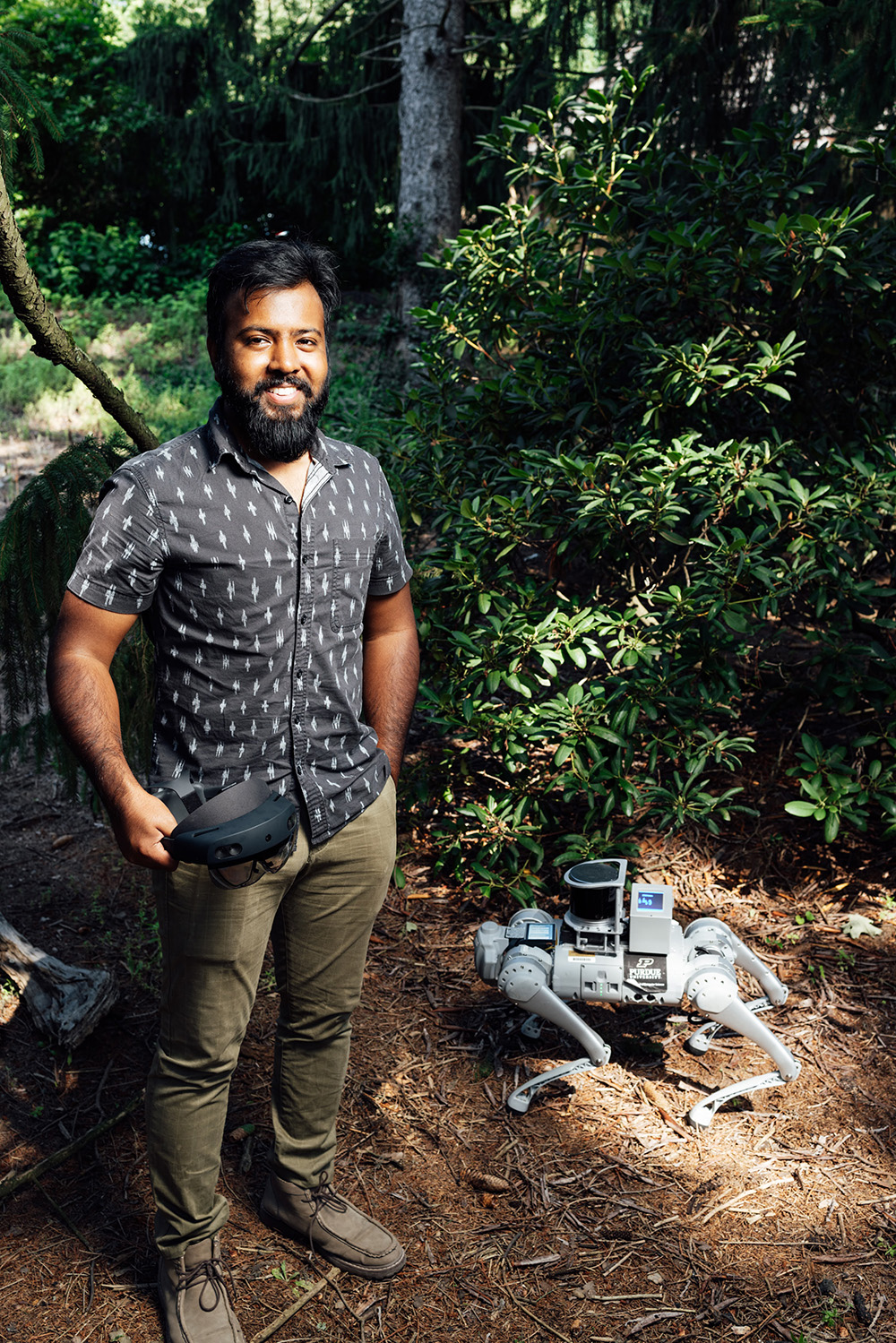
C. S. George Lee is a Professor of Electrical and Computer Engineering at Purdue University's Elmore Family School of Electrical and Computer Engineering, located in West Lafayette. His research focuses on Robotics, Transfer Learning, Neuro-fuzzy Systems, Automatic Controls, and Computer Engineering. He holds a BSEE (1973), MSEE (1974) from Washington State University, and a PhD (1978) from Purdue University. His work integrates computational intelligence with AI, robotics, and education technology, emphasizing human-machine co-learning models and bilingual systems. His contributions span domains like quantum computing, generative AI, and knowledge graph applications. He leads the Art Lab at Purdue and has published extensively on topics ranging from humanoid robotics to cross-cultural educational platforms. His research areas include developing intelligent agents for edutainment, robotic assistants for student learning, and advanced machine learning techniques. Notable trends in his publications involve computational intelligence applied to bilingual language models (e.g., Taiwanese/English co-learning), quantum-based AI systems, and human-centric robotics. He has explored applications in healthcare (e.g., blood donor analysis), autonomous navigation, and game AI (e.g., Go). His work often bridges theoretical advancements with real-world implementations, such as Java software tools for motor activity assessment (JKinect) and AI-driven platforms for skill evaluation. Lee's research emphasizes interdisciplinary collaboration, with contributions to IEEE conferences and cross-institutional projects. His lab develops tools for adaptive e-learning, robotic task performance evaluation, and human pose estimation using neural networks. Despite prolific publishing, no specific grants or awards are explicitly mentioned in the provided text. His work continues to explore the intersection of human intelligence and smart machines through platforms like Metaverse integration and BCI (Brain-Computer Interface) applications.
Kerry Taylor is an Associate Professor (Data Science) at the School of Computing, Australian National University (ANU). She holds visiting roles at the University of Surrey (UK) and University of Melbourne. Her career spans 20 years at CSIRO, UN big data projects with ABS, and interdisciplinary research in data management, IoT, and semantic technologies. She lectures in data mining and convenes ANU's postgraduate applied data analytics programs. Education includes a BSc (Hons 1) in Computer Science from UNSW (1983) and a PhD in Computer Science and Technology from ANU (1996). She co-chaired the W3C/OGC Spatial Data on the Web working group (2015-2017) and serves on editorial boards for Knowledge-Based Systems and International Journal of Distributed Sensor Networks . Research focuses on ontologies, semantic web, machine learning in IoT, and spatial data systems. Active projects include government information frameworks, distributed IoT facilities, and sensor data integration. Her work emphasizes interdisciplinary applications of logic-based and semantic approaches to data challenges.
Dr. Aniket Bera is an Associate Professor in Computer Science at Purdue University and holds an Adjunct Associate Professor role at the University of Maryland at College Park (UMIACS). He directs the IDEAS Lab at Purdue and previously served as a Research Assistant Professor at UNC Chapel Hill. His research focuses on Affective Computing, Computer Graphics (AR/VR), AI & Robotics, Social Robotics, and medical AI applications for mental health diagnostics. Affiliations: Purdue University (Primary), University of Maryland (Adjunct), UMIACS Career: Joined Purdue in 2017, extensive industry collaborations with Disney Research, Intel, and C-DAC Research Interests: Affective Computing: Emotion perception via gait analysis, speech, and facial/body expressions AR/VR: Redirected walking, virtual environments, and human motion modeling Medical AI: AI-driven mental health detection systems (e.g., VidSole dataset) in collaboration with medical schools Key Contributions: Developed Project Dost (mental health initiative) Received 2020 Brain & Behavior Seed Grant ($X) for emotion-gait research Authored 65+ papers (1,800+ citations) with awards at IEEE VR 2021 Funding & Leadership: Serves as Senior Editor for IEEE RA-L (Planning/Simulation) Conference Chair for ACM SIGGRAPH MIG 2022 Labs/Teams: IDEAS Lab (Purdue), UMD GAMMA Group
Professor Katja Vogt is a distinguished faculty member in the Department of Philosophy at Columbia University's Faculty of Arts and Sciences. She serves as Professor of Philosophy, Director of the M.A. Program in Philosophy, and Chair of the Climate Committee. Additionally, she is an Affiliate of the Data Science Institute and has affiliations with Computing Systems for Data-Driven Science, Data, Media and Society, and Health Analytics. Professor Vogt joined Columbia University in 2002 after teaching at Humboldt University Berlin, both in the Philosophy Department and at the Charité Medical School. Professor Vogt specializes in ancient philosophy, ethics, and normative epistemology, with particular expertise in Plato, Aristotle, Stoicism, and Pyrrhonian skepticism. Her research explores fundamental questions that bridge ancient and contemporary philosophical discussions: What are values? What kind of values are knowledge and truth? What does it mean to want one's life to go well? She has developed significant work on the role of knowledge in ethics, generics and generalizations, and is currently finalizing a monograph entitled The Original Stoics . Her approach combines careful historical scholarship with contemporary philosophical analysis, creating dialogues between ancient texts and modern debates in metaethics, epistemology, and philosophy of action. Professor Vogt's scholarly output reveals consistent engagement with ancient philosophical frameworks while addressing contemporary concerns. Her recent work shows a particular focus on Stoic philosophy, with multiple papers examining Stoic logic, physics, and ethics. She also maintains a strong interest in skepticism, particularly Pyrrhonian approaches, and has made significant contributions to understanding how ancient philosophical concepts can inform current debates about generics, value theory, and the relationship between knowledge and virtue. Her collaborative work with Jens Haas on topics like ignorance, love, and hatred demonstrates her interdisciplinary approach that connects ancient philosophy with contemporary philosophical issues. Columbia Distinguished Faculty Award Class of 1932 Fellow in Classical Philosophy at Princeton University Fellowships from the Templeton Foundation, Maimonides Centre in Hamburg, Center for Advanced Studies in Munich, DFG (German Research Association), and Columbia University-Paris 1 Alliance Program Professor Vogt is actively involved in mentoring students and developing innovative educational approaches. She serves as academic sponsor for "Logic Made Accessible," a project mentored with Columbia College student Jonathan Tanaka that has reached students in over 30 countries. The project makes ancient logic freely accessible to learners of all ages, backgrounds, and interests. She has also served on numerous university committees including the Provost's Faculty Committee on Educational Innovation, Policy and Planning Committee, Committee on Instruction, and as Acting Director of the Center for the Ancient Mediterranean. Her grant work includes support from major foundations that have enabled her to pursue research at the intersection of ancient philosophy and contemporary epistemology. Professor Vogt collaborates with photographer and artist Jens Haas on the "On the Road" project, which combines artistic photography with philosophical reflection. She is also involved in "Movies and Morals," a collaboration with H8URS that provides philosophical commentary on contemporary film and television. These projects demonstrate her commitment to making philosophical inquiry accessible beyond traditional academic settings.
John Heron is an Associate Professor in the Department of Materials Science and Engineering at the University of Michigan. His research focuses on epitaxial growth of complex oxide thin films and heterostructures to engineer new electronic phenomena for next-generation devices. B.S. in Physics, University of California, Santa Barbara (2007) M.S. in Materials Science and Engineering, University of California, Berkeley (2011) Ph.D. in Materials Science and Engineering, University of California, Berkeley (2013) His work explores ferroic materials like (anti)ferromagnets and (anti)ferroelectrics, utilizing techniques such as X-ray diffraction, scanning probe microscopy, and magnetotransport measurements. The Ferroelectronics Lab (http://ferroelectronicslab.com) employs in-situ transfer systems for high-quality oxide and metal growth. Recent publications emphasize magnetoelectric switching, entropy-stabilized oxides, and spintronic devices. Current teaching includes MSE500 Materials Physics and Chemistry. No explicit scientific awards or students are listed in the provided texts.
Muhammad Ali Gulzar is an Assistant Professor in the Computer Science Department at Virginia Tech and an Amazon Scholar at Amazon Web Services. His research focuses on improving developer productivity through automated debugging and testing for applications in emerging domains, including data-intensive software such as dataflow programs, ML/AI applications, and computational notebooks. Education Ph.D. in Computer Science from University of California, Los Angeles (Google Ph.D. Fellow 2017-2020) Research Interests Gulzar's research spans three primary areas: (1) automated tracking-code localization techniques in web applications, (2) re-engineering testing and debugging for data-intensive applications, and (3) advancing current testing and debugging practices in Federated Learning Applications. His work addresses the challenges of debugging in complex systems where traditional approaches fail due to the scale and distributed nature of modern applications. His research has significant implications for improving software quality, developer productivity, and accessibility in web applications. Research Trends Recent publications demonstrate a strong focus on debugging and testing challenges in emerging application domains. His work bridges traditional software engineering with machine learning, data-intensive systems, and web technologies. Notably, he has made significant contributions to Federated Learning debugging (FedDebug), accessibility challenges in ad-driven web applications, and semantic caching for Large Language Models. His approach often combines novel algorithmic insights with practical implementations that address real-world challenges in software development and maintenance. Scientific Awards Google Ph.D. Fellow (2017-2020) $1.1 million NSF award for Federated Learning research ACM CCS 2024 Distinguished Artifact Award Advising and Grants Gulzar leads a productive research group with multiple students contributing to publications in top-tier venues. His NSF-funded research on Federated Learning demonstrates his ability to secure competitive funding for innovative projects. His advising style appears to emphasize practical impact alongside theoretical contributions, with students often taking lead roles in publications. Current research directions include debugging techniques for Large Language Models, accessibility challenges in modern web applications, and novel testing approaches for distributed data processing systems.
Ana Paulina Lee is an Assistant Professor of Writing and Digital Humanities in the Comparative Literature, English, and Creative Writing Department at the American University of Paris. She joined AUP in 2025 after teaching Latin American literature and culture at Columbia University for eight years and serving as a Mellon Postdoctoral Fellow at Tulane University. Her interdisciplinary scholarship bridges literature, history, law, and urban studies with particular focus on marginalized narratives in the Americas. Ph.D. from University of Southern California M.A. from New York University B.A. from Binghamton University Professor Lee's research examines how stories—archival, fictional, oral—shape legal imagination, social life, and urban experience in the Americas. She specializes in the intersections of magic, law, and literature in Latin America, with particular focus on Asian and African diasporas in Brazil. Her work traces how narrative functions as both historical record and catalyst for social transformation, exploring themes of slavery, emancipation, colonial legacies, and urban memory. She approaches these topics through interdisciplinary lenses combining literary analysis with histories of labor, migration, and performance. Lee's recent publications reveal a consistent focus on marginalized narratives and their impact on social structures. Her scholarship connects legal history with cultural production, showing how magical thinking and narrative practices shape urban spaces and social relations. Works like 'Urban Sorcery, Segregation, and Spectacle in Twentieth-Century Rio de Janeiro' and 'Black Magic City' demonstrate her innovative approach to understanding the relationship between occult logics and legal frameworks in Brazilian contexts. Her research on diasporic communities, particularly Chinese and Japanese experiences in Latin America, contributes significantly to transnational and comparative race studies. David B. Larson Fellowship in Health and Spirituality, Kluge Center, United States Library of Congress (2025-2026) National Endowment for the Humanities Fellowship (2025) Social Sciences Research Council, Inaugural Recipient of Interdisciplinary Projects in the Social Sciences (2020-2023) Institute for Ideas and Imagination Fellowship, Columbia University in Paris, France (2021-2022) Provost's Tsunoda Senior Fellowship, Visiting Scholar, Waseda University, Tokyo, Japan (2019) Heyman Center Fellow, The Heyman Center for the Humanities, Columbia University (2017-2018) Fulbright, Lisbon, Portugal (2013-2014) Professor Lee's scholarly activities have been generously supported by major research grants from the National Endowment for the Humanities, the Social Sciences Research Council, and the Library of Congress. Her work demonstrates a commitment to interdisciplinary approaches that bridge humanities and social sciences, particularly through projects examining intersections of race, migration, and cultural production in the Americas. Her publication 'Socially Engaged Oral History Pedagogy Amid the COVID-19 Pandemic' indicates a strong commitment to innovative teaching methods and community-based research. While specific details about current advisees aren't provided, her research program suggests engagement with graduate students interested in diaspora studies, urban history, and literary-cultural analysis. Though not explicitly mentioned in the available information, Professor Lee's research on urban spaces, magic, and law in Brazil likely involves collaborative work with scholars across disciplines. Her participation in centers like the Institute for Ideas and Imagination at Columbia University suggests engagement with interdisciplinary research communities focused on global cultural production and social transformation. Her work contributes to ongoing conversations about how narrative practices shape legal frameworks and social structures in the Americas, particularly regarding racial formation and diasporic experiences.
Raymond J. Mooney is a Professor in the Department of Computer Science at the University of Texas at Austin, where he has been a faculty member since 1987. He is the Director of the UT Artificial Intelligence Laboratory and affiliated with multiple research groups including the Machine Learning Research Group, UT Computational Linguistics Lab, and the UT Center for Computational Biology and Bioinformatics. He holds a B.S., M.S., and Ph.D. in Computer Science from the University of Illinois at Urbana-Champaign, where his thesis was supervised by Gerald DeJong. His research spans diverse areas in artificial intelligence, machine learning, and natural language processing: Natural Language Learning Connecting Language and Perception Statistical Relational Learning Information Extraction Transfer and Active Learning Abductive Reasoning Text Mining and Clustering Recommender Systems Knowledge-Base Refinement Recent publications highlight trends in grounded language processing, human-robot interaction, and multimodal reasoning. He has been recognized with prestigious fellowships including ACL (2014), ACM (2010), and AAAI (2005). Scientific awards: Fellow of the Association for Computational Linguistics (2014) Fellow of the Association for Computing Machinery (2010) Fellow of the American Association for Artificial Intelligence (2005) Classic Paper Award (2019) Best Paper Awards (2007, 2004, 1996) He teaches graduate courses like CS 371R: Information Retrieval and Web Search (Fall 2025) and CS 395T: Grounded Natural Language Processing (Spring 2025). His research labs include: UT Artificial Intelligence Laboratory Machine Learning Research Group UT Computational Linguistics Lab UT Center for Computational Biology and Bioinformatics
Filippo Carlo Wezel is a Full Professor of Organization and Management at the Faculty of Economics of Università della Svizzera italiana (USI), where he also serves as Director of the Institute of Management and Organisation. He holds additional research affiliations as a Visiting Research Professor at emlyon Business School (France) and a Research Fellow at Judge Business School, University of Cambridge. He plays a significant editorial role as Senior Editor at Organization Studies and serves on the editorial review boards of Organization Science , Strategic Entrepreneurship Journal , Strategic Organization , and the Advisory Board of Research in the Sociology of Organizations . His educational background includes a PhD in Management from the University of Bologna. Prior to joining USI in 2009, he held academic positions at the University of Groningen (post-doctoral researcher) and Tilburg University (Assistant and Associate Professor). He has also been a visiting scholar at leading institutions including Wharton, MIT, Columbia, Duke, London Business School, LSE, and Hong Kong University. His research centers on organizational identity, managerial and inter-firm mobility, entrepreneurship, and institutional theory. His recent publications explore identity hybridization in political parties, category dynamics in creative industries, historical organizational practices in colonial firms, and stigma in emerging markets. He frequently employs longitudinal, historical, and experimental methodologies, often bridging sociology and management. The most recent articles (2020–2025) reflect a strong trajectory in the sociology of organizations, with recurring themes of identity, categorization, legitimacy, and mobility. He investigates how social evaluations, historical constraints, and institutional environments shape organizational behavior and strategic positioning. His work spans diverse contexts—from 18th-century Lyon silk traders to modern ICT firms and medical marijuana markets—demonstrating a broad empirical and theoretical reach. Scientific Honors and Editorial Roles: Senior Editor, Organization Studies Editorial Review Board, Organization Science Editorial Review Board, Strategic Entrepreneurship Journal Editorial Review Board, Strategic Organization Advisory Board, Research in the Sociology of Organizations He has extensive experience in teaching organizational theory and behavior at undergraduate, master’s, PhD, and executive levels. His research has been published in top-tier journals such as Administrative Science Quarterly , American Sociological Review , Academy of Management Journal , and Strategic Management Journal . He leads a vibrant research agenda at USI, supported by a broad international network, though specific grants and funded projects are not detailed in the provided text. He is also involved in mentoring students and shaping the next generation of organizational scholars, though a list of advisees is not available. Filippo Carlo Wezel is a key figure in the European organizational studies community, leading the Institute of Management and Organisation at USI and fostering interdisciplinary dialogue between organization theory and strategy. His work combines deep historical insight with contemporary theoretical innovation, contributing significantly to our understanding of how organizations and careers evolve under institutional and social pressures.
Maneesh Agrawala is the Forest Baskett Professor of Computer Science at Stanford University and Director of the Brown Institute for Media Innovation. His research spans computer graphics, human-computer interaction, and information visualization. Agrawala's lab develops computational tools for visual communication, investigating how design principles improve media effectiveness. Current projects include diffusion models for image and video generation, sketch-based interfaces, and visualization tools for scriptwriting. His team creates systems that enable new forms of content creation and analysis. His publications demonstrate consistent innovation in visual computing, with recent advances in controllable generative models, video understanding, and visualization design. Agrawala has received numerous honors including the MacArthur Fellowship and ACM Fellowship for his contributions to visual computing.
Tuğba Dalyan is an Associate Professor in the Department of Computer Engineering at Istanbul Bilgi University, Faculty of Engineering and Natural Sciences. She holds a Ph.D. in Computer Engineering from Yıldız Technical University (2014), an MSc from Kocaeli University (2007), and dual BSc degrees in Mathematics and Computer Science and Business Administration (Minor) from Istanbul Bilgi University (2003). She has been a faculty member since 2016 and previously served as a Teaching Staff member and Research Assistant at the same institution. Her research focuses on Natural Language Processing , Machine Learning , Deep Learning , Text Mining , Data Science , and Big Data Analytics . Her work spans computational linguistics, sentiment analysis, author profiling, machine translation, and smart systems. She has led and contributed to numerous research projects, particularly in AI-driven urban solutions and health technologies. The most recent publications show a strong trend in Turkish NLP, zero-shot classification, multimodal AI (image captioning), emotional robotics, and decision support systems using fuzzy logic. Her work combines theoretical rigor with practical applications in smart cities, education, and healthcare. Best Paper Award , CICLing 2012 TÜBİTAK 2209-A student project awards (2022–2024) Horizon2020 Eşik Üstü Ödülü , MIMOSCSA 2024 TÜBİTAK 2242 competition: 2nd and 3rd place (2016, 2018) She has advised numerous student research projects, many of which have received national recognition. She has directed multiple TÜBİTAK and institutional research grants, including projects on smart homes, blockchain crowdfunding, mental health, and AI for social polarization. Her leadership roles include Head of Department, Vice Dean, and Director of Graduate Programs. Tuğba Dalyan leads research in AI and NLP with a strong emphasis on Turkish language technologies. She is involved in interdisciplinary teams working on emotional robots, smart city platforms, and citizen science ecosystems. Her lab activities focus on neural networks, text analysis, and intelligent systems development.
Mercè Oliva is an Associate Professor at the Department of Communication, Pompeu Fabra University (UPF), Barcelona. She serves as Director of the B.A. Programme in Audiovisual Communication and Coordinator of the MEDIUM Research Group. Her academic background includes a PhD in Social Communication (2010) and a Bachelor's in Audiovisual Communication (2002) from UPF. Research Focus: Television and Reality TV Celebrity and Media Culture Neoliberalism and Political Communication Video Games as Cultural Artifacts Her recent publications analyze: Visual motifs in political coverage (handshakes, hugs, kisses) Citizens' responses to neoliberal resilience narratives Celebrity tax evasion cases (e.g., Cristiano Ronaldo) Video game cover art as neoliberal propaganda Working-class stereotypes in Spanish media ('chonis', 'canis') Key collaborations include co-PI roles in projects like 'Heroes of the Crisis' (2015-2019) and 'Redistributive Imaginaries' (2022-2025), funded by Spain's Ministry of Economy and AEI/NextGenerationEU.