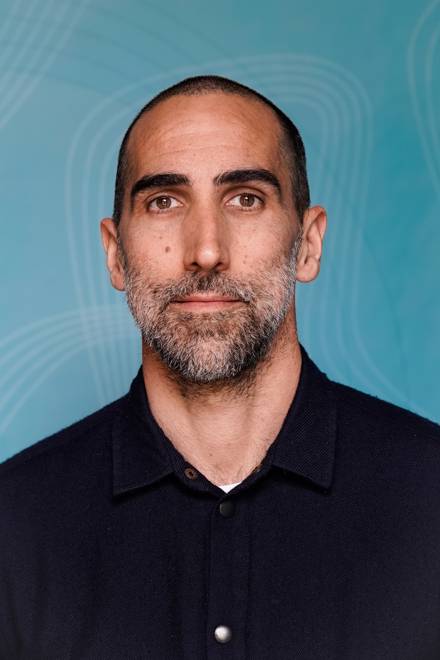
Nikkie Wiegink is an Associate Professor in Cultural Anthropology at the Department of Cultural Anthropology , Utrecht University . Her research focuses on corporate sovereignty , resource extraction , and post-war social reconstruction in Mozambique . She has conducted extensive fieldwork in Tete province, analyzing how transnational mining corporations assume governance roles and reshape citizenship. She is currently a NIAS Fellow (2024–2025) for her book project on Frontier Governance .
Susanne Keesman serves as Programme Director of the Deep Transitions Lab and is part of the Navigating Deep Transitions Flagship Team led by Professor Johan Schot at Utrecht University's Centre for Global Challenges (UGlobe). Her work focuses on global sustainability transitions through an international project team spanning institutions in the Netherlands, United Kingdom, Spain, Austria and Estonia. Her research interests center on transformative investment approaches, systemic innovation, and deep transitions toward sustainability. Keesman specializes in developing frameworks that redirect investment from system optimization toward addressing root causes of unsustainable practices that increase social inequality. Her work bridges historical analysis with contemporary sustainability challenges, connecting institutional frameworks with practical investment strategies. The two most recent publications demonstrate her evolving research trajectory from historical security studies to contemporary sustainability transitions. The 2022 publication establishes principles for transformative investment that trigger multi-dimensional change, while her 2013 historical work examines post-WWII political dynamics in the Netherlands. Keesman has managed significant research projects including MOTION (2019-2021) which developed methodologies for catalyzing transformative change through system innovation, and PROPORTION (2020) which prototyped indicator frameworks for systemic innovation. Within the Transformative Innovation Policy Consortium (TIPC), she served as project manager for MOTION and VINNOVA projects. As an experienced project leader, Keesman brings expertise in research funding, grant proposal writing, and research data management to her role. She has organized academic events including the ERC SECURE Final Conference on 'Cultures of Security in the Nineteenth Century' in 2019.
Professor Damiano Varagnolo is affiliated with the Department of Engineering Cybernetics at the Norwegian University of Science and Technology (NTNU), where he conducts research spanning control systems, robotics, power systems, and data-driven modeling. His work bridges theoretical advances with practical applications in underwater vehicles, medical rehabilitation, and energy infrastructure. His research focuses on: Development of formation control algorithms for autonomous underwater vehicles (AUVs) and snake robots Transient stability enhancement for grid-forming converters in renewable energy systems Data-driven modeling of physiological signals for wheelchair propulsion and industrial processes Distributed optimization for underwater communication networks Recent publications (2024-2025) demonstrate strong emphasis on: Underactuated vehicle control using hand position concepts Energy expenditure estimation through physiological signal processing Consensus protocols for JANUS-based underwater networks Educational innovation through control-themed outreach initiatives like the Advent Calendar project He actively collaborates with NTNU colleagues across engineering disciplines and contributes to curriculum development through graph-theoretic approaches for educational coherence.
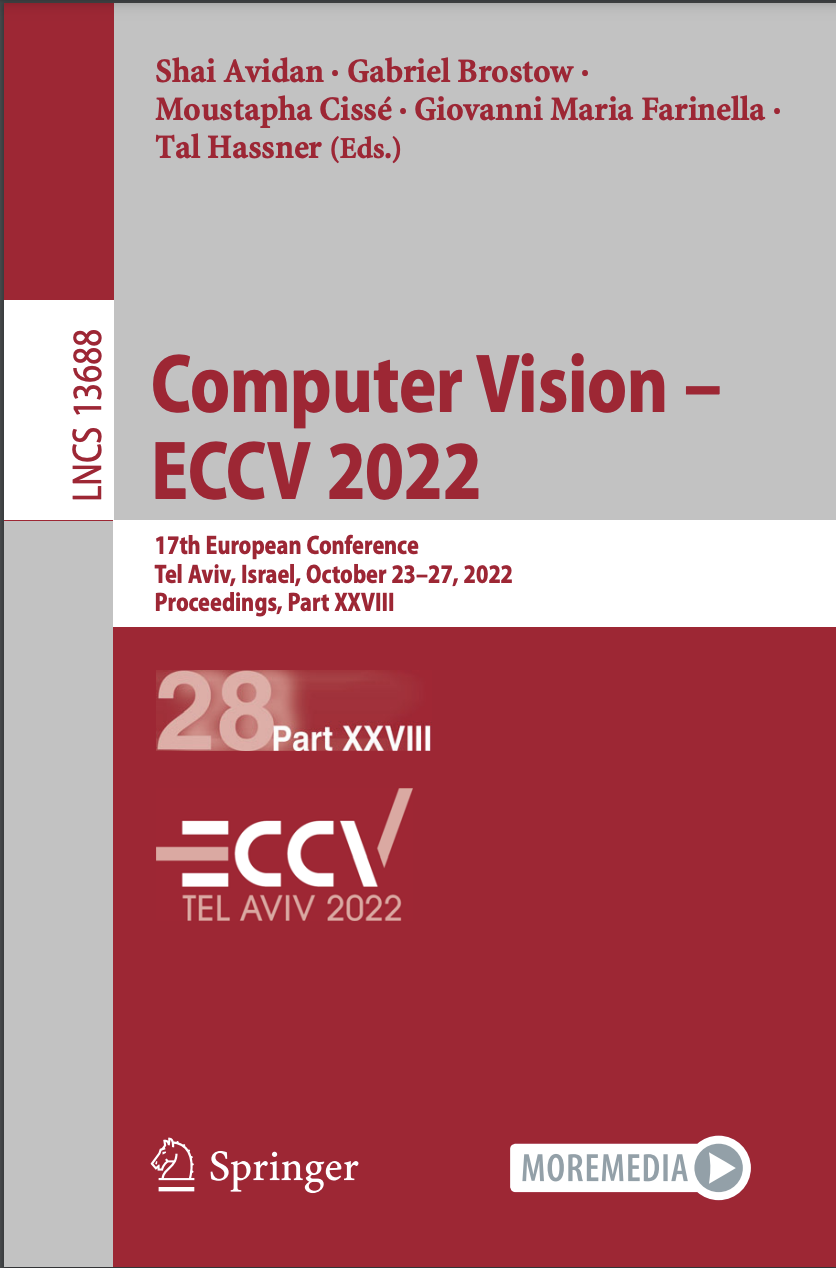
Giovanni Maria Farinella is a Full Professor at the Department of Mathematics and Computer Science, University of Catania, Italy. He is the Founder Member of the IPLAB Research Group at University of Catania since 2005, an Associate Member of the Computer Vision and Robotics Research Group at University of Cambridge since 2006, and an Associate Member of the Italian National Research Council since 2018. He serves as Scientific Advisor of the NVIDIA AI Technology Centre and board member of the CINI Laboratory of Artificial Intelligence and Intelligent Systems. Dr. Farinella obtained his degree in Computer Science (summa cum laude) from the University of Catania in 2004 and was awarded a Doctor of Philosophy (Computer Vision) from the same institution in 2008. He has obtained the National Scientific Qualification to Associate Professor in 2013-2014 and to Full Professor in 2018. His primary research interests focus on First Person (Egocentric) Vision, Computer Vision, Pattern Recognition, and Machine Learning. Dr. Farinella has pioneered research in egocentric video analysis, object interaction detection, activity recognition, and scene understanding from a first-person perspective. His work bridges theoretical computer vision with practical applications in industrial settings, healthcare, and cultural heritage sites. His recent publications demonstrate a clear trajectory toward more sophisticated, real-time egocentric vision systems capable of understanding complex human activities, anticipating actions, and detecting procedural mistakes through integration of visual analysis, gaze tracking, and large language models. Dr. Farinella has published extensively in top-tier computer vision venues, with his most recent work focusing on egocentric action anticipation, mistake detection in procedural tasks, and the integration of multimodal large language models with visual understanding. His research shows strong emphasis on practical industrial applications while advancing fundamental computer vision techniques. PAMI Mark Everingham Prize 2017 Intel's 2022 Outstanding Researcher Award Dr. Farinella has served as Associate Editor for IEEE Transactions on Pattern Analysis and Machine Intelligence, Pattern Recognition - Elsevier, and International Journal of Computer Vision. He has held leadership roles as Area Chair for CVPR 2020/21/22/23, ICCV 2017/19/21/23, ECCV 2020, and as Program Chair of ECCV 2022. He founded and directs the International Computer Vision Summer School (since 2006) and the Medical Imaging Summer School (since 2014). As PI of the EGO4D project, he helped create one of the largest egocentric video datasets with over 3,670 hours of footage from 923 participants across 74 locations worldwide. His IPLAB research group leads multiple significant projects including VALUE, ENIGMA, and FIPEVIS, with strong industry collaborations.
Dr. hab. Agnieszka Żyta serves as a Professor in the Department of Special Education and Resocialization at the University of Warmia and Mazury, where she leads research on intellectual disabilities and inclusive education. Her academic profile reflects deep engagement with self-determination frameworks and international comparative studies across Polish, Serbian, and Czech contexts. Her research interests center on Intellectual Disabilities, Inclusive Education, and Self-Determination, with significant contributions to understanding professional competencies in healthcare and education settings. Recent work examines social acceptance dynamics, faith narratives among individuals with disabilities, and systemic barriers to autonomy. She actively develops practical frameworks like the “Kręgi Wsparcia” (Support Circles) model for community-based inclusion. Analysis of her 2023-2025 publications reveals three dominant trends: cross-national healthcare education studies (particularly nursing/medical student competencies), exploration of self-determination through qualitative narratives, and implementation of inclusive school-community models. Over 60% of recent work involves international collaboration, with growing emphasis on participatory research methods engaging individuals with disabilities as co-researchers. She directs applied projects including the ASPE assistant services pilot for students with special educational needs and the CUPID initiative for cancer prevention among individuals with intellectual disabilities. Her work demonstrates consistent funding acquisition for field implementation, particularly in community support systems and professional training programs.
William Jones is a Lecturer in Ethnology at Lund University's Department of Arts and Cultural Sciences within the Faculty of Humanities and Theology. He is currently completing his doctoral studies while teaching courses in Applied Cultural Analysis (TKAN19, TKAN20, TKAN25) and serving as an active researcher in the Agenda 2030 Graduate School. Room: LUX:C416 Visiting Address: Helgonavägen 3, Lund Contact: william.jones@kultur.lu.se | +46 46 222 40 55 His research focuses on pastoral cultures in East Africa and their interaction with development initiatives. As a member of the Agenda 2030 Graduate School, he evaluates how well Sustainable Development Goals are implemented on the ground, with particular attention to how development agencies understand and integrate pastoral cultures into their agendas. He advocates for incorporating pastoral community voices in development planning and evaluation. His research interests include human-nature relations, perceptions of knowledge, and identity questions related to tribe, clan, and environment in Kenya. He has teamed up with a filmmaker and grassroots NGO in Kenya to create Hekima, a project connecting development practitioners with marginalized voices. His recent publications span ethnographic analysis of pastoral communities, reflections on sustainable development accountability, and commentary on academic life during the pandemic. His doctoral thesis Resilient Pastoralism: A Cultural Analysis of Navigating Climate Change, Modernity and the Development Industry in Northern Kenya (2025) represents the culmination of his research on how pastoral communities navigate climate change and development initiatives. His work contributes significantly to understanding the implementation gap between global development frameworks and local realities. Professional activities include organizing the panel discussion "White Men in Africa" (2024), participating in the Agenda 2030 Graduate School kick-off (2023), and presenting at the 2nd PhD Conference on Sustainable Development (2022).
Chelsea Walton is a Professor in the Mathematics Department at Rice University. She received her B.S. from Michigan State University in 2005 and her Ph.D. from the University of Michigan in 2011. Her research is centered in Noncommutative Algebra, with particular focus on quantum symmetries of algebras and algebraic structures in categories. B.S. (2005) Michigan State University Ph.D. (2011) University of Michigan Professor Walton's research interests span multiple areas of algebra and category theory. She is particularly interested in noncommutative algebra, quantum symmetries of algebras, monoidal categories, Frobenius algebras, and Hopf algebras. Her work often bridges abstract algebraic structures with geometric and topological applications. Lately, her research has been centered on algebraic structures in categories, exploring how categorical frameworks can illuminate quantum symmetries. She is currently writing a three-volume book series on Algebraic Quantum Symmetry entitled "Symmetries of Algebras," with Volume 1 already published. Her extensive publication record demonstrates a consistent focus on developing the theoretical foundations of noncommutative algebra. The most recent articles reveal a deepening exploration of monoidal categories, Frobenius structures, and quantum symmetries, with increasing sophistication in the categorical frameworks employed. Her work shows strong connections between representation theory, quantum algebra, and topological quantum field theory, suggesting a unifying perspective on these seemingly disparate areas. Professor Walton has advised numerous students and maintains an active research group at Rice University. She has delivered several notable invited talks, including the NAM Claytor-Woodard Lecture at the 2021 Joint Mathematics Meetings titled "An Invitation to Noncommutative Algebra" and an MAA Invited Address at the same conference titled "Navigating Collaboration."
Rudra Dutta is a Professor and Associate Department Head in the Department of Computer Science at North Carolina State University, part of the College of Engineering. He joined the faculty in 2001 after completing his Ph.D. at NC State and working as a software developer at IBM. His academic journey includes progression from Assistant Professor (2001-2007) to Associate Professor (2007-2013) to Professor (2013-present), with additional administrative responsibilities as Associate Department Head since Fall 2018. His educational background includes: Ph.D. in Computer Science from North Carolina State University (2001) M.E. in Engineering System Science and Automation from Indian Institute of Science, Bangalore, India (1993) B.E. in Electrical Engineering from Jadavpur University, Kolkata, India (1991) Dutta's research focuses on the design and performance optimization of large-scale networking systems, Internet architecture, wireless networks, and network analytics, with recent emphasis on Cyber-Physical Systems and Software Defined Networking. His work has been particularly influential in areas such as drone communications, wireless security, and network optimization. He has led significant projects including the AERPAW (Aerial Experimentation and Research Platform for Advanced Wireless) testbed, which represents a major national research infrastructure for wireless experimentation. His research has been supported by over $24 million in funding from the National Science Foundation, Army Research Office, National Security Agency, and industry partners. The most recent major grant is the AERPAW project ($11.6 million from NSF, 2021-2025). His scientific honors include: ACM Distinguished Engineer (2016) IEEE Senior Member (2015) Dutta has advised numerous doctoral and master's students, with over ten PhD students completing their degrees under his supervision. He has served on editorial boards for journals including the Journal of Optical Switching and Networking and Photonic Communication Networks, and has contributed to major conferences including serving as General Co-Chair of the IEEE Sarnoff Symposium. At NC State, he has served on numerous university committees, including the University Standing Committee on Extension, Engagement, and Economic Development and the University Reappointment, Promotion, and Tenure Committee. He is currently teaching courses including CSC/ECE 573 (Fall 2024) and CSC402 (Spring 2025), with a focus on networking education that emphasizes software-defined approaches relevant to modern computer science practice.
Dr Euan W McGookin is a Senior Lecturer in Autonomous Systems & Connectivity at the University of Glasgow, based in the Aerospace Sciences division of the James Watt Building South. He coordinates Glasgow-delivered aerospace degree programmes in Singapore and serves on the IFAC Technical Committee on Marine Systems, underlining his sustained engagement with both local and international academic activities. Education: 1st Class Honours Master of Engineering in Avionics, University of Glasgow PhD in Optimisation of Sliding Mode Controllers for Marine Applications, University of Glasgow (1997) Research Interests Dr McGookin’s core expertise lies in the design, simulation, control and physical realisation of autonomous robotic systems. His work spans Autonomous Underwater Vehicles (AUVs) , Unmanned Aerial Vehicles (UAVs) , Planetary & Terrestrial Rovers , and Biomimetic Robotics . He is particularly recognised for applying biologically inspired principles to robotic locomotion, navigation and control. Complementary themes include advanced control methodologies—Sliding Mode Control, H-infinity, Inverse Model Control—optimisation heuristics, guidance & navigation, fault detection & isolation (FDI), and system health monitoring for both terrestrial and space applications. Publication Trends Across 80 publications from 1995 to 2025, his work has evolved from early genetic-algorithm-based controller optimisation for marine vessels to cutting-edge multi-rover mission planning and health monitoring for planetary exploration. Recent outputs (2022–2025) concentrate on micro-rover coordination, friction modelling for planetary soils, reinforcement-learning-driven sensor fusion, and robust health-monitoring architectures, reflecting a strategic pivot toward space robotics while retaining strong roots in control theory and autonomous systems. Scientific Awards & Fellowships Member, IFAC Technical Committee on Marine Systems Grant & Advising Narrative While specific grant values are not disclosed, his continuous funding stream is evidenced by sustained publication output, international conference leadership, and ongoing supervision of postgraduate projects. Dr McGookin advises a steady cohort of PhD and MSc students whose theses align with his research themes—ranging from rover fault diagnosis to biomimetic AUV coordination—thereby fostering the next generation of control and robotics engineers. Laboratory & Team Dr McGookin heads research activities within the James Watt Building South, leveraging interdisciplinary laboratories that integrate simulation suites, rapid-prototyping facilities for AUV and UAV subsystems, and dedicated test rigs for biomimetic propulsion and rover mobility studies. Collaborative networks extend across the University of Glasgow’s Aerospace Engineering group, Singapore Institute of Technology partners, and international consortia such as ESA and IFAC.
Fergal Finnegan is an Associate Professor and Senior Lecturer at Maynooth University's School of Education. His academic work focuses on critical approaches to adult and higher education, with particular emphasis on social class, access, and equity issues within educational systems. Dr. Finnegan's research interests form an interconnected web of critical educational scholarship: Critical approaches to adult and higher education Working-class access to and experiences in higher education Transformative learning and critical pedagogy Community development and social justice Migration and superdiversity in educational contexts Biographical and narrative research methods Neoliberalism's impact on educational policy His publication record reveals consistent engagement with power dynamics in education. Finnegan examines how structural inequalities shape educational access while exploring critical pedagogical approaches that create spaces for transformative learning. His work frequently employs biographical methods to understand how individuals navigate educational systems shaped by class divisions. A recurring theme across his scholarship is the relationship between education, social justice, and possibilities for emancipation. Dr. Finnegan has established himself as a significant contributor to critical educational scholarship through publications in leading journals including the Australian Journal of Adult Learning, Community Development Journal, Studies in Higher Education, and International Journal of Lifelong Education. His research connects local Irish educational contexts with broader European and global discussions about educational equity and transformation. As an active academic, Finnegan regularly presents his work at international conferences including the International Transformative Learning Conference and events organized by the European Society for Research on the Education of Adults. His scholarship bridges theoretical frameworks with practical concerns about creating more just and equitable educational systems.
Karin Blomberg is an Assistant Professor at OsloMet – Oslo Metropolitan University, based in the Faculty of Health Sciences, Department of Nursing and Health Promotion. She also serves as Head of Studies for Area of responsibility 4, underscoring her dual role in teaching and curricular leadership. Her research centres on nursing education, especially the development of local curricula that support learning and assessment during clinical placements. She investigates how nurse mentors experience these assessment processes and how students navigate learning environments, including during crises such as the COVID-19 pandemic. Research interests: Curriculum design for practice-based nursing education Assessment strategies in clinical placements Mentorship experiences and mentor support systems Impact of pandemics on nursing student learning and motivation Across her publications, a clear trend emerges: improving the quality of nursing education through rigorous assessment frameworks and supportive learning environments, with recent emphasis on pandemic-related disruptions. Contact: Office N080.010, Pilestredet 32, 0166 Oslo, Norway Phone: +47 672 36 068 Email: karin.blomberg@oslomet.no
Dr. Yohai Hakak serves as a Senior Lecturer in Social Work at Brunel University within the Department of Health Sciences, College of Health, Medicine and Life Sciences. He joined Brunel in September 2014 and maintains an active presence in research, teaching, and professional practice in social work with a focus on cultural and religious diversity. Dr. Hakak's research interests center on migration, embodiment, parenting, risk-perception, religious minorities, gender, and mental health within social work contexts. His work frequently examines Ultra-Orthodox Jewish communities, particularly Haredi populations in Israel and the United Kingdom, exploring themes of masculinity, motherhood, and religious identity. He has conducted extensive ethnographic research in these communities, resulting in significant publications including his 2016 book 'Haredi Masculinities between the Yeshiva, the Army, Work and Politics.' His recent scholarly output reveals a strong emphasis on the migration patterns of social workers to and from the UK, with particular attention to cultural adaptation challenges faced by professionals from South Africa, India, Romania, and Zimbabwe. Dr. Hakak's publications also address critical contemporary issues including the impact of the Prevent Agenda on social work practice and the experiences of Ultra-Orthodox Jewish mothers navigating the UK social services system. Award-winning documentary films complementing his academic research Principal investigator on Newham Local Authority-funded project (2022-2024) supporting newly qualified social workers British Academy-funded research on Islamic parenting in the West (2013-2014) Dr. Hakak actively supervises doctoral research on topics including 'Muslim Men in Contemporary England' and 'The Government's Prevent Agenda and its Impact on Social Work.' His teaching portfolio includes postgraduate courses such as Foundations for Social Work, Social Work with Adults, and Assessment and the Management of Risk and Complexity. His collaborative research approach is evident through numerous multi-author publications across diverse institutional partnerships.
Marco Bozzola is an Associate Professor at the Department of Architecture and Design (DAD) of Polytechnic University of Turin. He serves as Deputy Coordinator of the College of Architecture and Design and holds key roles in Polito's Spin-Off Evaluation Commission and Patent Commission. Research areas: Design for Cultural Heritage, Design for Territory, Packaging Design ERC sectors: SH5_8 (Cultural heritage), PE8_10 (Industrial design), SH7_5 (Sustainability sciences) His work focuses on enhancing cultural heritage through multidimensional design interventions, including signage systems, narrative artifacts, and inclusive strategies. He explores sustainable packaging solutions and territorial development projects, particularly for SMEs and artisanal businesses. Recent publications analyze intercultural design methodologies and environmental sustainability in packaging. Prof. Bozzola holds editorial roles in ARCHALP (2018-) and Architecture Design Technology (2017-) and has received prestigious awards like ADI Compasso d'Oro (2013). He supervises PhD students Claudia Rolletto, Monica Oddone, and Irene Caputo.
Kristian Hoelscher serves as Research Director at the Peace Research Institute Oslo (PRIO), where he leads interdisciplinary research at the intersection of cities, markets, politics, conflict, and development in the Global South. His work spans Sub-Saharan Africa, South Asia, and Latin America, employing both quantitative and qualitative methodologies to examine urban political transformations and peacebuilding processes. Hoelscher earned his PhD in Political Science from the University of Oslo, complemented by an MSc in Population and Development Studies from the London School of Economics and Political Science, and dual undergraduate degrees (BA in Business and BSc Honors in Psychology) from the University of Queensland, Australia. His multilingual capabilities include fluency in English and Norwegian, with working knowledge of Portuguese and Spanish. His research agenda centers on understanding how urbanization shapes political change in the Global South, with particular focus on African cities. A distinctive thread throughout his work examines small and medium enterprises (SMEs) as critical actors in conflict-affected urban environments, exploring how businesses navigate insecurity while contributing to community resilience and peacebuilding. His approach integrates political science, urban studies, development economics, and peace and conflict studies to address complex urban challenges in rapidly transforming cities across the Global South. Analysis of Hoelscher's recent publications reveals three interconnected research streams: 1) Urban political transformations in Africa, examining how demographic shifts reshape state-society relations; 2) SME resilience in conflict zones, documenting business strategies for navigating polycrises in cities like Kampala and Beirut; and 3) Digital peacebuilding, critically assessing technology's role in conflict resolution. His work consistently emphasizes place-based approaches that account for local context while identifying broader patterns across regions. Hoelscher has secured significant research funding including: Young Researcher Talent Funding from the Research Council of Norway for the Political Change in African Cities (PACE) project Funding for The Crime-Reducing Effect of Education project (CREED) He leads multiple collaborative initiatives including Peace Positive Private Sector Development in Africa (P3A), Working Through Violence; SMEs and the SDGs in Fragile Urban Spaces, and Critical Perspectives on Digital Peacebuilding. These projects involve partnerships with researchers across Africa, Latin America, and Europe, reflecting his commitment to globally engaged scholarship that bridges academic research with practical peacebuilding applications.
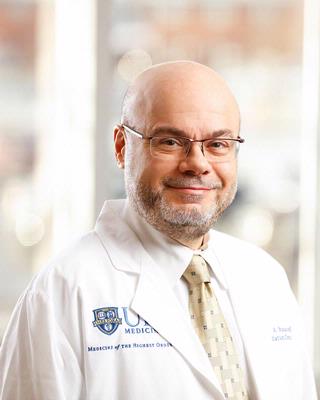
Ralph A. Brasacchio, M.D. serves as Associate Professor of Clinical Radiation Oncology at the University of Rochester School of Medicine and Dentistry, Department of Radiation Oncology. Board-certified by the American Board of Radiology, he practices at Sands Cancer Center in Canandaigua, NY, and is part of the University of Rochester Medical Faculty Group and Accountable Health Partners network, currently accepting new patients. His educational foundation includes: MD from Jefferson Medical College (1990) Internal Medicine Residency at Mercy Catholic Medical Center Inc. (1990-1991) Radiation Oncology Residency and Fellowship at University of Rochester Medical Center (1991-1995) Brasacchio's research centers on advancing prostate cancer treatment through robotic-assisted brachytherapy, with significant contributions to needle insertion mechanics, prostate stabilization, and image-guided therapy optimization. His work addresses critical challenges in radiation oncology including cancer-related fatigue management and gastrointestinal complications from radiotherapy, demonstrating consistent innovation from 1998 through 2014 publications. Analysis of his 15 most recent publications reveals a dominant focus on prostate brachytherapy robotics (12/15 articles), emphasizing surgical precision through force modeling, motion measurement, and conical implant optimization. Secondary themes include metastasis biology and radiation-induced secondary cancers, reflecting his dual expertise in technical innovation and clinical oncology outcomes. Key recognitions include: Philip Rubin / Mayer Mitchell Award for Excellence in Teaching (1998) Clinical Oncology Fellowship (1993-1994) NIH Research Traineeship Grant (1987) Clinical Research Elective in immunologic disease mechanisms (1990) His research portfolio features NIH-funded projects and leadership in multi-institutional trials like the Phase III pentosanpolysulfate study for radiation-induced gastrointestinal toxicity. Brasacchio maintains active clinical research in prostate cancer brachytherapy optimization while contributing to textbook chapters in prostate cancer treatment and CNS tumor management.