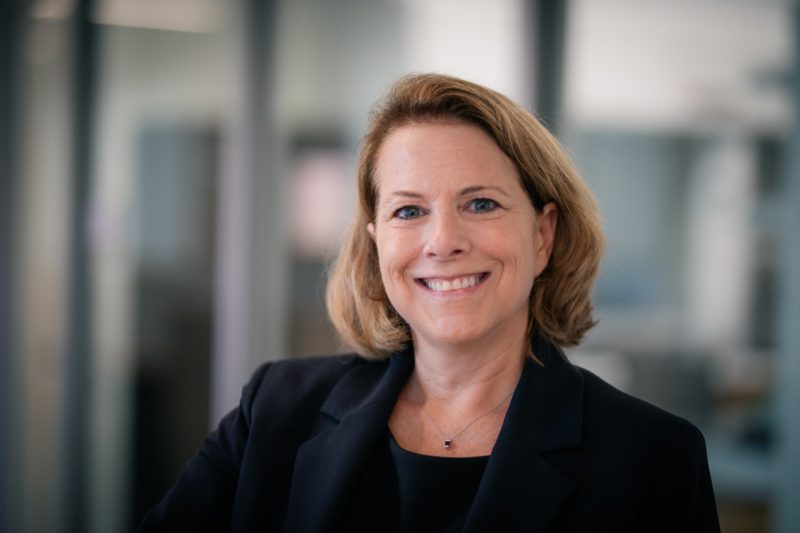
Dr. Courtney Quinn is an Assistant Professor of Sustainability Science at Furman University. She joined the faculty in 2024 and has been teaching since 2013, focusing on fostering intellectually challenging yet joyful classroom environments. Her research explores leadership in sustainability, food systems, place attachment, and critical thinking development. She co-founded the Sustainability Leadership Initiative (SLI) in 2021, a program uniting business and conservation leaders for cross-sectoral dialogue and experiential learning. Education: Ph.D. in Leadership Studies, University of Nebraska-Lincoln M.S. in Human Dimensions of Natural Resources, University of Nebraska-Lincoln B.A. in Environmental Policy, Drake University Dr. Quinn’s work bridges theory and practice, emphasizing sustainability futures, coupled human-natural systems, and resilience modeling. Her recent articles address topics like local food networks, pandemic-driven sustainability thinking, and climate policy implementation. The SLI program highlights her commitment to translating academic insights into actionable leadership strategies for real-world environmental challenges. Her research spans agriculture, environmental governance, and education, with a focus on fostering ethical decision-making and community engagement. She advises students on projects related to food systems, climate resilience, and farmer-land relationships.
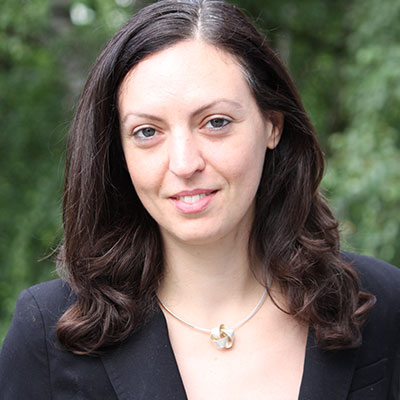
Eileen M. Van Aken is a Professor and Department Head in the Department of Industrial and Systems Engineering at Virginia Tech's College of Engineering. She holds a Ph.D. (1995), M.S. (1991), and B.S. (1988) in Industrial and Systems Engineering from Virginia Tech. Her research focuses on performance measurement systems, lean work systems, and organizational improvement methodologies, with particular emphasis on Kaizen event effectiveness, nonprofit performance frameworks, and military organizational dynamics. Key professional roles include Editor of Engineering Management Journal (2012-present), ABET Evaluator, and Fellowships in IISE, ASEM, and the World Academy of Productivity Sciences. Recent research projects include studies on lean management in local governments, digital engineering metrics, and nonprofit performance measurement systems. She has led over 20 sponsored research initiatives, including studies funded by the Belgian Armed Forces, National Science Foundation, and Danaher Corporation. Education: Ph.D. & M.S. in Industrial and Systems Engineering (Virginia Tech, 1995/1991), B.S. Industrial Engineering (Virginia Tech, 1988) Research Projects: Kaizen sustainability (NSF), military learning organizations (Belgian Armed Forces), and enterprise transformation frameworks Professional Roles: IISE Fellow (2014), ASEM Fellow (2010), Technical Vice President of Institute of Industrial Engineers (2012-2015) Publications emphasize Kaizen event success factors, lean healthcare systems, and nonprofit performance measurement. Her work bridges theoretical frameworks and practical applications in organizational performance improvement across industries and military contexts.
Alan M. Taylor is a prominent Research Fellow at National Bureau of Economic Research (NBER) and Centre for Economic Policy Research (CEPR) . He holds a permanent affiliation with Columbia University in the United States, where he contributes to economics research. His research spans financial history , macroeconomic policy , international trade , and capital market dynamics . Key themes include credit cycles , monetary policy , economic crises , and historical financial systems . He has extensively analyzed the trilemma of exchange rates, monetary policy, and capital mobility, and pioneered work on long-term rate of return data across capital assets. His recent publications focus on financial stability , credit booms , and macroeconomic consequences of pandemics . Collaborative works with economists like Òscar Jordà, Moritz Schularick, and Kevin H. O'Rourke demonstrate interdisciplinary engagement. His empirical methodology emphasizes local projections , historical econometrics , and long-run equilibrium modeling in international finance.
Na Young Kim is an Associate Professor in the Department of Electrical and Computer Engineering at the University of Waterloo with affiliations at the Institute for Quantum Computing (IQC) and Waterloo Institute for Nanotechnology. She holds cross-appointments in the Departments of Physics and Astronomy and Chemistry. Her research focuses on developing large-scale quantum processors using novel materials and advanced technologies, including semiconductor quantum processors and multi-functional nanoscale devices. Dr. Kim leads the Quantum Innovation (QuIN) laboratory, pioneering projects in planar architecture design for quantum devices integrating electrical, optical, thermal, and mechanical functionalities. Prior to academia, she worked at Apple Inc. on small display technologies. She earned a BS in Physics from Seoul National University and a PhD in Applied Physics from Stanford University, where she specialized in mesoscopic transport in nanostructures. Her postdoctoral work expanded into quantum optics and nanophotonics through collaborations with international researchers. Current teaching includes courses on quantum mechanics, quantum computing algorithms, quantum information processing devices, and photonic systems. She actively supervises graduate students in quantum technology development and is accepting new applications. Research activities span quantum artificial intelligence, quantum security protocols, and nanotechnology applications. Her work bridges theoretical frameworks with experimental implementations in solid-state quantum systems.
Tara Boroushaki is an incoming Assistant Professor in Electrical & Computer Engineering at Yale University. She completed her Ph.D. at MIT (expected May 2025), advised by Prof. Fadel Adib, with a focus on sensing and mobile technologies. Her research spans wireless networking, robotics, and human-computer interaction, emphasizing multi-modal sensing for environmental perception. Key achievements include the Microsoft Research PhD Fellowship (2022–2024) and the IEEE RFID '23 Best Paper Award. Her work on RF-based 'X-ray vision' has been featured in TEDxMIT and media outlets like the BBC and World Economic Forum. She co-founded Cartesian Systems, deploying sensing technologies in retail and supply chain. Research interests include non-line-of-sight perception, RFID localization, and robotic grasping. She has developed systems like FuseBot and RFusion, highlighted as transformative in MIT's '103 Ways to Make the World Better' initiative.
Jian Peng is an Assistant Professor in the Department of Computer Science at the University of Illinois at Urbana-Champaign. His research focuses on computational biology, machine learning, and their applications to protein structure prediction, drug design, and molecular modeling. He has contributed to advancements in antibody engineering, protein-ligand docking, and generative models for biological systems. Key research areas include: Machine Learning for Molecular Modeling Protein Structure Prediction Antibody and Peptide Design Genomics and Single-Cell Analysis Structure-Based Drug Discovery His work emphasizes integrating deep learning techniques with biological datasets to address challenges in precision medicine, drug development, and systems biology. Notable achievements include developing the FastFold system to accelerate AlphaFold training and pioneering flow-based methods for antibody design. Awards include the Overton Prize (2020), recognizing contributions to computational biology. His research has been published in top journals and conferences, spanning topics from protein mutation prediction to geodesic-based immune complex modeling.
Giovanna Gioli is a Senior Lecturer in Human Geography at Bath Spa University's School of Sciences. She is a co-investigator in the Leverhulme Trust-funded project Digital Climate Futures , exploring decolonial and justice perspectives in climate change adaptation. Her research focuses on political ecology, climate migration, gender equity, and socio-ecological resilience in mountain regions of the Global South, particularly South Asia. PhD in Political Philosophy (University of Parma) MA in Political Philosophy (University of Pisa) MSc in European Studies and Migration (London School of Economics) Her research interests intersect political ecology, climate change adaptation, and the socio-cultural dimensions of migration. She examines how gender, conflict, and environmental hazards shape livelihoods and vulnerability in regions like Pakistan, Nepal, and the Hindu Kush Himalaya. Her work challenges dominant narratives, advocating for justice-oriented approaches to digitalized climate adaptation and decolonizing environmental research frameworks. Gioli has contributed to major projects such as HI-AWARE, analyzing vulnerability in glacier-dependent river basins, and authored commissioned reports for UN Women on migrant workers' socio-economic impacts in Nepal. She also co-edited Water Security across the Gender Divide and Thinking as Anarchists , advancing interdisciplinary debates in environmental humanities and critical theory. Teaching: Directed BSc Global Development and Sustainability at Bath Spa University (2020–2025), module leader for Cities and Environment , and teaches interdisciplinary research methods in environmental humanities. Grants: Leverhulme Trust (Digital Climate Futures, 2023–2026), HI-AWARE (2014–2018), and others addressing environmental migration and vulnerability. She is affiliated with the Research Centre for Environmental Humanities and the Climate, Hazards and Environmental Change Research Cluster at Bath Spa University. Her work bridges philosophical inquiry (e.g., Deleuze, Sartre) with applied research on environmental displacement, emphasizing the need for equitable, community-centered solutions.
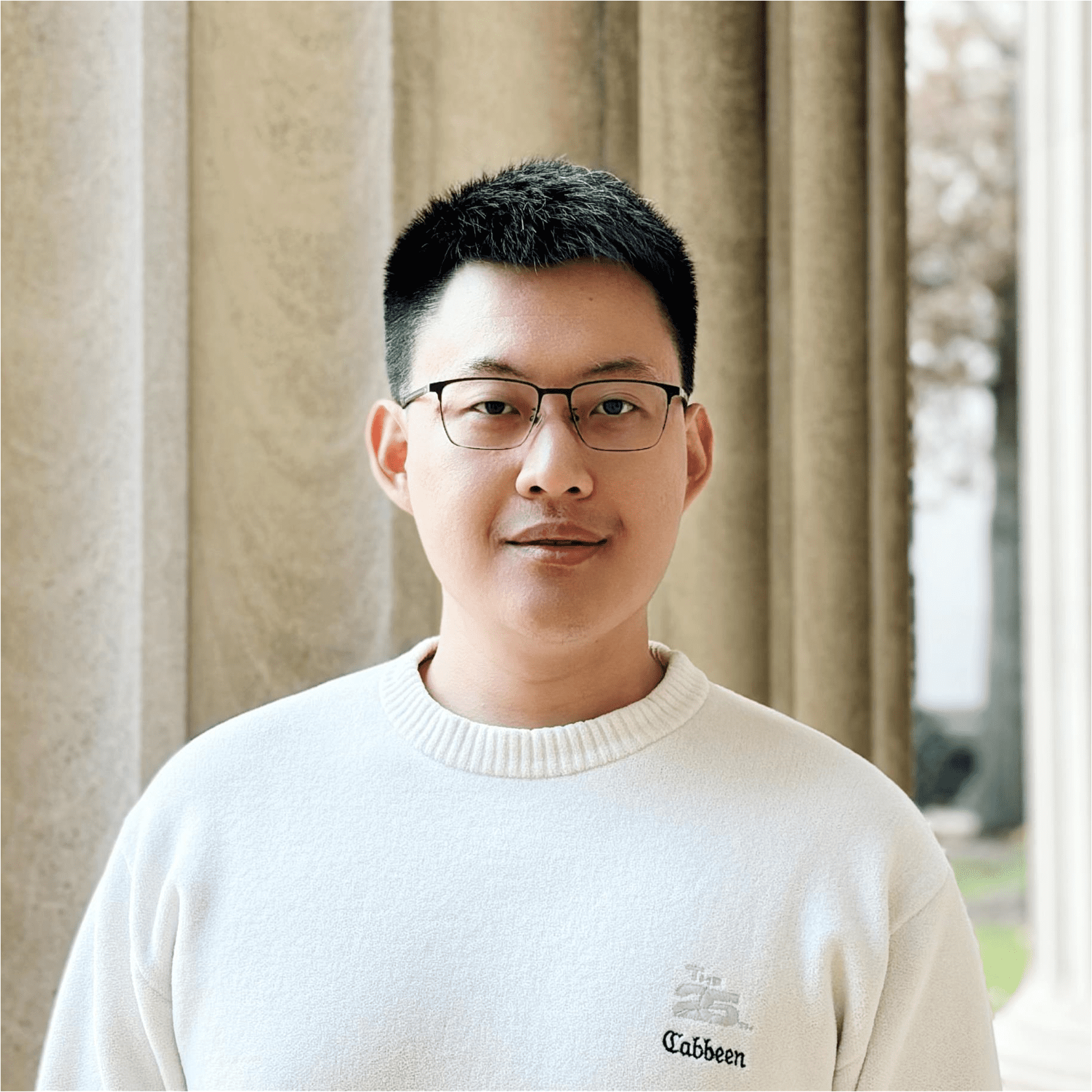
Lenan Zhang is an Assistant Professor in the Sibley School of Mechanical and Aerospace Engineering at Cornell University, joining in July 2024. He directs the Energy Research Laboratory (ERL), focusing on energy sustainability through advanced materials and metrology tools. His research spans thermal and fluid transport phenomena at extreme scales, and he has developed innovative solutions for clean energy and water production. Education: B.S., Mechanical Engineering, Shanghai Jiao Tong University and Purdue University (2016) M.S. and Ph.D., Mechanical Engineering, Massachusetts Institute of Technology (2018 and 2022) Research Interests: Advanced Materials, Computational Fluid Dynamics, Sustainable Energy Systems, and Thermal Systems. His work integrates mechanistic modeling and high-resolution spectroscopy to address global challenges in energy and environment. Publications: Recent work emphasizes solar desalination, energy-efficient systems, and electrochemical processes. Key trends include optimizing thermal localization, developing novel materials for desalination, and advancing renewable energy applications. Awards: Best Inventions of 2023 (TIME Magazine) Wunsch Foundation Silent Hoist and Crane Award (2022) Luis de Florez Award in Science (2021) Martin Family Fellowship for Sustainability (2020) Advising and Labs: Leads the Energy Research Laboratory (ERL) at Cornell. Prior roles include Research Scientist at MIT’s Mechanical Engineering Department. Collaborates across disciplines to advance clean energy solutions.
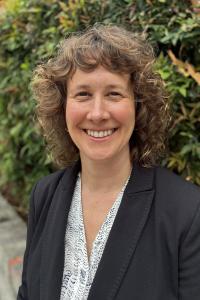
Kathryn Lanouette is an Assistant Professor of Learning Sciences and Science Education at William & Mary’s School of Education. She holds faculty affiliate appointments in the Arts & Sciences (ENSP, IIC). Her research explores place-based pedagogies, emerging technologies, and their roles in fostering joyful, ethical science and data science learning for K-8 students. She collaborates with schools, museums, and youth-serving organizations to design curricula and outdoor learning experiences. Education: Ph.D. in Learning Sciences and Human Development, University of California, Berkeley (2017) M.A. in Museum and Childhood Education, Bank Street Graduate School of Education B.A. in Politics, Oberlin College Research Interests: Lanouette focuses on intersections between emotion, place, and data literacy, emphasizing participatory approaches to environmental and socio-ecological education. Her work bridges theory and practice, advocating for equitable, interdisciplinary STEM+ curricula that connect students to local ecosystems and global challenges. Recent Trends in Publications: Her articles emphasize participatory methodologies (e.g., digital mapping, data storytelling), socio-political dimensions of learning, and ethical frameworks for data science education. Recent work highlights collaborations between educators and community organizations to co-create knowledge about climate change and socio-ecological systems. Awards: Outstanding Short Paper Award (2025), International Society of the Learning Sciences NSF-funded ‘Writing Data Stories’ postdoctoral research (2017–2020) Teaching & Mentorship: Lanouette teaches courses on education research, science pedagogy, and applied conservation sciences. She mentors students through interdisciplinary projects, such as the NSF-funded ‘Writing Data Stories’ initiative and NOAA’s Teacher at Sea program. Labs/Teams: Collaborations include partnerships with UC Berkeley’s Science Education Lab, museums, and K-12 schools to develop place-responsive curricula and community-driven data projects.
David Blaauw is the Kensall D. Wise Collegiate Professor of Electrical Engineering and Computer Science (EECS) at the University of Michigan. His research focuses on ultra-low-power analog/mixed-signal circuits, mm-scale sensors, neural networks, and biomedical applications. He leads the Blaauw Lab, which has pioneered innovations like the Michigan Micro Mote (M^3) and neural recording probes. His work emphasizes real-world deployability, with applications in environmental monitoring (e.g., monarch butterflies), medical devices, and robotics. Education: B.S. in Physics and Computer Science, Duke University (1986) Ph.D. in Computer Science, University of Illinois Urbana-Champaign (1991) Research Interests: Blaauw’s lab explores ultra-low-power computing, mm-scale systems, RF communication, in-memory computing, and genomics acceleration. Key projects include: Millimeter-scale computers (e.g., 0.04mm³ temperature sensors) Wireless neural interfaces for brain-machine communication Energy-efficient accelerators for edge AI and genomics Micro-robotics with sensing/actuation/computation Awards: IEEE Fellow 2016 SIA-SRC Faculty Award Motorola Innovation Award Best Paper Awards at ISSCC, ISCA, and RFIC Advising & Impact: Over 600 publications, 65 patents, and 4 startup companies spun from his lab. Current research includes genome sequencing accelerators (GenAx) and neural recording dust for brain mapping. He directs the Michigan Integrated Circuits Lab and chairs major conferences like ISSCC and DAC. Labs/Teams: Blaauw Lab (University of Michigan) Michigan Integrated Circuits Lab (MICAL)
Dr. Patrick Bianchi serves as a Researcher at the Swiss Seismological Service (SED) within ETH Zurich, Switzerland, where he conducts fundamental investigations into earthquake processes and rock failure mechanisms. His work integrates laboratory experimentation with numerical modeling to advance seismic hazard assessment methodologies. His research spans seismology, rock mechanics, and experimental geophysics with emphasis on fault mechanics and earthquake physics. Dr. Bianchi employs distributed fiber-optic strain sensing, acoustic emission monitoring, and triaxial testing to study strain localization, precursory signals, and the transition from aseismic to seismic deformation in crystalline and siliclastic rocks. His experimental approaches bridge laboratory observations with natural fault behavior, focusing on how surface roughness, wear processes, and fluid pressure influence fault stability and rupture nucleation. Analysis of his 15 most recent publications (2024-2025) reveals consistent investigation of strain heterogeneities, preslip phenomena, and energy dissipation during earthquake preparation phases. Key methodological trends include scaling deep learning applications from labquakes to megathrusts, comparative laboratory-numerical modeling of pre-failure processes, and environmental loading effects on brittle failure thresholds. His work demonstrates particular expertise in distributed strain sensing techniques applied to fault zone deformation. As an integral member of the Swiss Seismological Service, Dr. Bianchi contributes to Switzerland's national seismic monitoring network and fundamental research on earthquake physics. The SED operates as ETH Zurich's center for seismic hazard analysis, maintaining real-time earthquake detection systems while conducting experimental and theoretical research to improve understanding of seismic sources and ground motion prediction.
Alex Dunlap is an Assistant Professor in the Department of Mathematics at Duke University. His research focuses on probability theory, partial differential equations (PDEs), and applied mathematics, particularly the asymptotic behavior of stochastic PDEs. Before joining Duke in 2023, he was an NSF postdoctoral fellow at NYU Courant, sponsored by Jean-Christophe Mourrat and Yuri Bakhtin. He earned his Ph.D. from Stanford University in 2020 under the supervision of Lenya Ryzhik. His work involves studying nonlinear stochastic PDEs such as the KPZ equation, stochastic Burgers equation, and stochastic heat equations. He is particularly interested in universality phenomena, fluctuation scaling, and invariant measures. Dunlap co-organizes the Duke Probability Seminar and has published extensively in top journals including Annals of Probability , Communications on Pure and Applied Mathematics , and Archive for Rational Mechanics and Analysis . His research is supported by NSF grant DMS-2346915. Notable contributions include work on viscous shock fluctuations, Edwards-Wilkinson universality in 2D systems, and stationary solutions of stochastic Burgers equations. He has collaborated with leading researchers such as Cole Graham, Yu Gu, and Lenya Ryzhik.
David Damanik is the Robert L. Moody, Sr. Professor of Mathematics at Rice University, where he has established himself as a leading researcher in spectral theory, dynamical systems, and aperiodic order. His work bridges pure mathematics with mathematical physics, focusing on the spectral properties of operators arising in quantum mechanics and quasicrystal theory. Dr. Damanik received his academic training at Johann Wolfgang Goethe-Universität in Frankfurt, Germany, earning a Dipl.-Math. in 1995, Dipl.-Inform. in 1996, and Dr. phil. nat. in 1998. His educational background reflects a strong foundation in both mathematics and computer science, which informs his interdisciplinary research approach. His research interests center around spectral theory of Schrödinger operators, particularly those with ergodic, quasi-periodic, and aperiodic potentials. He has made significant contributions to understanding the spectral properties of operators associated with quasicrystals, substitution sequences, and other aperiodic structures. His work often connects spectral properties with dynamical systems concepts, particularly through the study of rotation numbers, Lyapunov exponents, and gap labeling theorems. Damanik's research has profound implications for understanding quantum transport in aperiodic media and the mathematical foundations of condensed matter physics. Analysis of his recent publications (2022-2024) reveals a continued focus on ergodic Schrödinger operators, with two comprehensive monographs providing a systematic treatment of the field. His work spans both theoretical foundations and specific applications, addressing problems in one-dimensional systems, quasi-periodic potentials, and aperiodic tilings. The research demonstrates strong connections between spectral theory, dynamical systems, and mathematical physics, with particular emphasis on the interplay between spectral properties and the underlying dynamics of the potential. Annales Henri Poincaré Prize (2014) for the paper "Continuum Schrödinger operators associated with aperiodic subshifts" Professor Damanik has mentored numerous PhD students and maintains an extensive network of collaborators across the globe, as evidenced by his long list of coauthors. His research has been supported by various grants that enable him to organize workshops and conferences, fostering collaboration in his field. He has been instrumental in organizing major conferences such as the Spectral Theory and Mathematical Physics conference honoring Barry Simon's 80th birthday (scheduled for 2026) and multiple workshops on aperiodic order at prestigious institutions like Banff International Research Station and Mathematisches Forschungsinstitut Oberwolfach. Through his teaching of specialized courses like "Mathematics of Aperiodic Order" and "Ergodic Theory and Topological Dynamics," Damanik has cultivated the next generation of researchers in his field. His leadership in organizing conferences and workshops has established him as a central figure in the international community studying spectral theory and aperiodic structures.
Karl Ulrich Schreiber is an Adjunct Professor at the Department of Physics and Astronomy, University of Canterbury, New Zealand, and an apl. Professor at the Institute for Astronomical and Physical Geodesy at the Technical University of Munich (TUM). He is a scientist at the Geodetic Observatory Wettzell, jointly operated by TUM and the Bundesamt für Kartographie und Geodäsie (BKG). His work bridges fundamental physics and geodetic applications, with leadership roles in major international projects including ESA’s MAGIC/Science, QSG4EMT, and Baltic+ Theme 5, as well as DFG Research Units NEROGRAV and UPLIFT. His research focuses on Space Geodesy , Satellite and Lunar Laser Ranging , and Ring Laser Technology . He has pioneered the use of large ring laser gyroscopes for measuring Earth's rotation, polar motion, and seismic rotations. His work enables high-precision monitoring of geophysical phenomena such as Earth tides, Chandler wobble, and rotational ground motions from earthquakes. He is a key contributor to multi-technique co-location studies (VLBI, SLR, GNSS) and time transfer experiments, advancing the Global Geodetic Observing System (GGOS). His recent publications show a strong trend in developing and applying large-scale ring laser arrays (e.g., ROMY) for geophysical sensing, photon-counting laser ranging for space debris and satellite tracking, and optical timing systems for synchronization across geodetic networks. These efforts span disciplines including geodesy, seismology, quantum optics, and fundamental physics. Scientific contributions include: Development of the Wettzell Large Ring Laser (G-ring) for continuous Earth rotation monitoring. First direct measurements of Earth's diurnal polar motion and Chandler wobble using ring lasers. Pioneering work in rotational seismology, validating ring laser data against seismic arrays. Contributions to lunar laser ranging and its role in reference frame realization. Leadership in ESA and DFG projects advancing space geodesy and inertial sensing. He advises doctoral and master’s students within the DFG Research Training Group UPLIFT and collaborates with international institutions on instrumentation and data analysis. His lab at Wettzell hosts advanced laser ranging and ring laser systems, serving as a fundamental geodetic observatory. Future work includes enhancing clock ties for global geodesy, expanding multi-component rotation sensing, and advancing space-based geodetic technologies.
Svetlana Lazebnik is a Full Professor and Willett Faculty Scholar in the Department of Computer Science at the University of Illinois at Urbana-Champaign (UIUC), part of the Grainger College of Engineering. She holds a Ph.D. from UIUC (2006) and previously served as an Assistant Professor at the University of North Carolina at Chapel Hill (2007–2011). Her research focuses on computer vision, including generative models for virtual try-on, image stylization, scene understanding, and joint modeling of images and language. She has advised numerous Ph.D. students and postdocs, many of whom now hold prominent academic and industry roles. Education: Ph.D. in Computer Science, UIUC (2006); supervised by Jean Ponce. Research Interests: Her work spans generative adversarial networks (GANs), diffusion models, virtual try-on systems (e.g., Dressing-in-Order, Street Try-On), exemplar-based stylization, and large-scale photo analysis. She has pioneered spatial pyramid matching and contributed to binary code learning for image retrieval. Key Awards: NSF CAREER Award (2008), Microsoft Research Faculty Fellow (2009), Sloan Research Fellow (2013), IEEE Fellow (2021), and the Longuet-Higgins Prize (2016) for her CVPR 2006 paper. Teaching: Recent courses include CS 444 (Deep Learning for Computer Vision), CS 543 (Computer Vision), and a Ph.D. Job Search Seminar. She has also taught at UNC Chapel Hill. Grants & Funding: Supported by NSF, Amazon, AWS, Microsoft, Sloan Foundation, Google, ARO, and Adobe. Notable grants include CCF 2348624 and IIS 1718221. Labs/Groups: Leader in the Illinois CS Vision Group, contributing to collaborative projects on embodied AI, multi-agent systems, and visual-semantic reasoning.