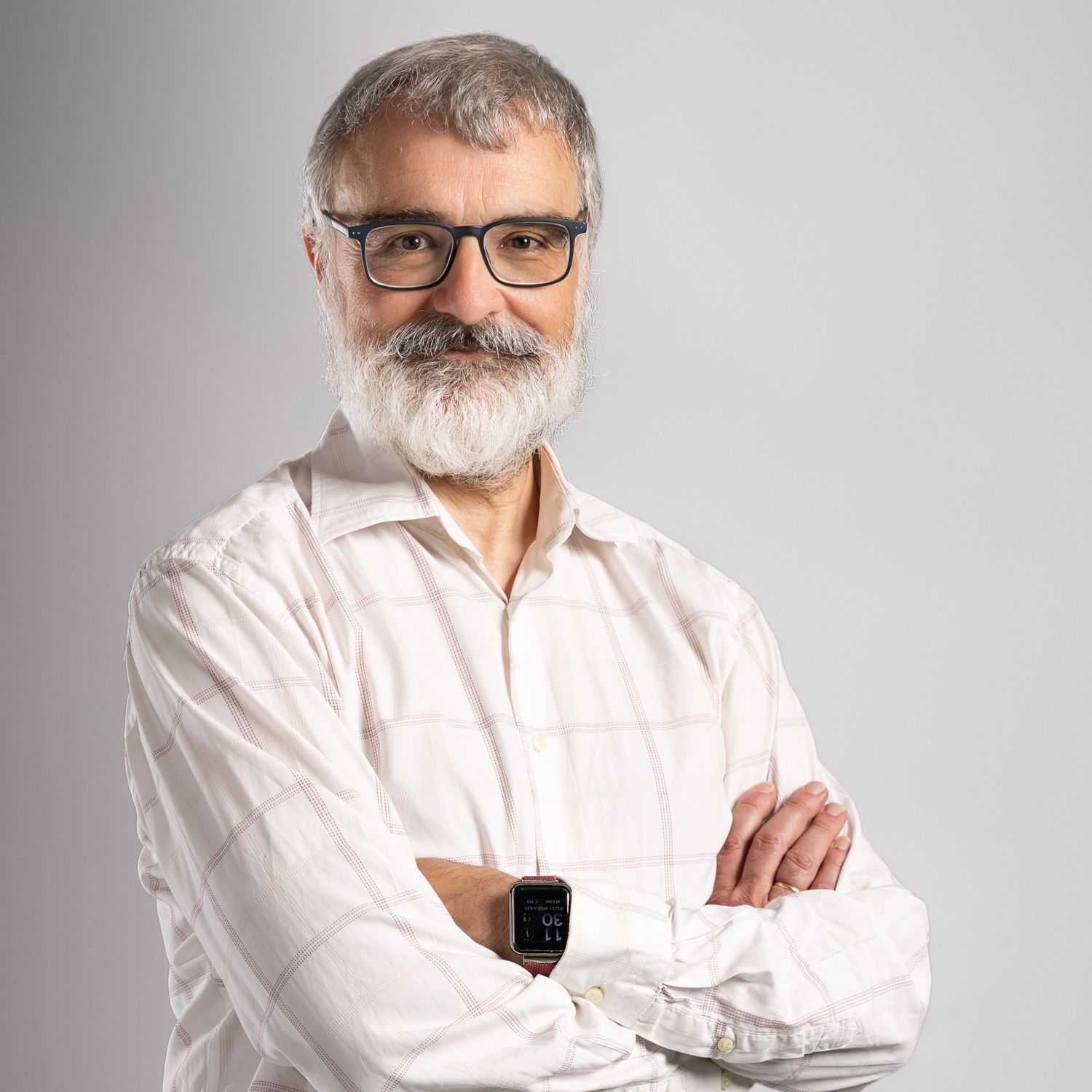
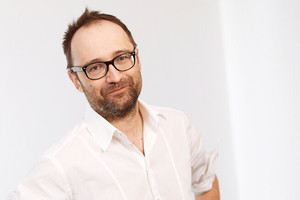
Fabian Theurl is a researcher at the Institute of Geodesy (Graz University of Technology). His work focuses on autonomous robotics, sensor fusion, and geospatial engineering, with expertise in GNSS, LiDAR, and factor graph optimization for localization systems. Key collaborations include research on smart composting , autonomous agricultural systems , and emergency response robotics . Active in presenting at conferences like IEEE/ION PLANS and ION GNSS+ (2023-2025). Research interests include: Enhancing robustness in LiDAR/IMU/wheel odometry integration for SLAM. Low-cost GNSS-based positioning for autonomous agents. Application of sensor fusion in industrial and agricultural environments. Recent publications highlight trends in factor graph optimization, adaptive multi-sensor integration, and sustainable agricultural automation. Activities encompass conference talks on GNSS weighting, LiDAR route planning, and composting technologies (2023-2024).
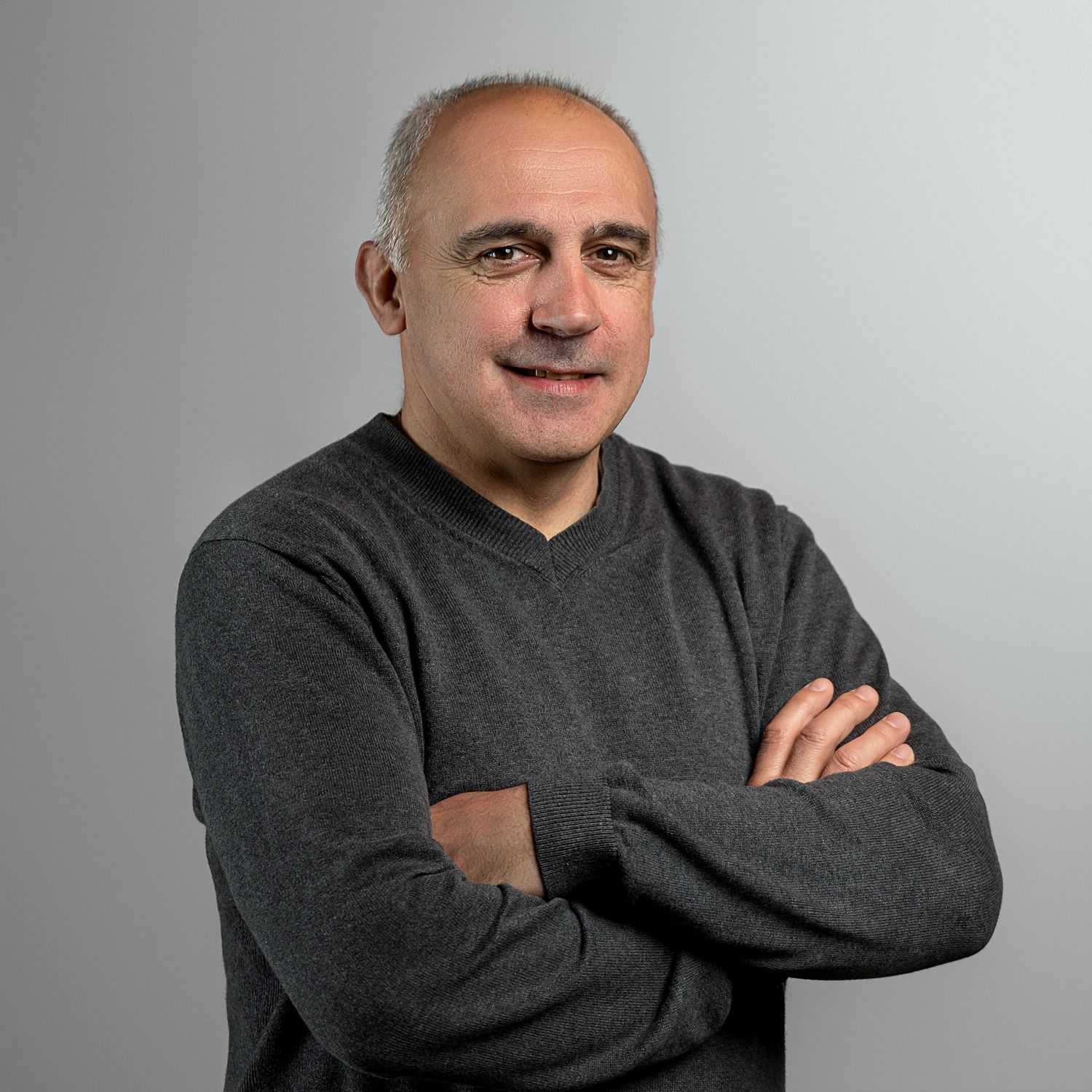
Carolina de Los Angeles Piñana Diaz is a Researcher at the University of Murcia affiliated with the Intelligent Systems and Telematics research group. She earned her Doctorate from the University of Murcia in 2017 with a thesis titled Localización de vehículos en entornos urbanos mediante GPS y mapas 3D (Vehicle Localization in Urban Environments using GPS and 3D Maps), supervised by Dr. Rafael Toledo Moreo and Dr. Antonio Skarmeta Gómez. Her research focuses on Intelligent Systems and Telematics, with specialized expertise in vehicle localization algorithms, GPS integration, 3D spatial mapping, and urban mobility solutions. Her work bridges theoretical intelligent systems frameworks with practical telematics applications, particularly in smart transportation infrastructure and real-time navigation systems for complex urban landscapes. As an active contributor to the Intelligent Systems and Telematics research group, she participates in collaborative projects advancing sensor fusion technologies and spatial data processing methodologies.
Francisco Fernández Rivera is a Full Professor in the Department of Computer Architecture at the University of Santiago de Compostela (Spain), where he obtained both his BS (1986) and PhD (1990). His academic career spans parallel processing, computer architecture, and high-performance computing applications. He has supervised 7 PhD theses and authored over 150 publications, including 60+ journal articles and 90+ conference papers. Research Focus: His work centers on parallel/distributed system optimization, including compilation of irregular codes, performance prediction, sparse matrix algebra, GIS, and memory hierarchy improvements. Key applications include LiDAR data processing for infrastructure analysis, NUMA system optimization, and heterogeneous computing. Publication Trends: Recent works (2021-2024) emphasize LiDAR-based geospatial analysis, thread/memory optimization for NUMA systems, and heterogeneous computing frameworks (e.g., Intel OneAPI). Methodologies feature parallel algorithms, hardware-aware optimizations, and real-world applications in urban planning and remote sensing. Projects & Leadership: Principal investigator for 8 research projects (e.g., HiPerHC2DA, SDNHPC) focused on high-performance and cloud computing. Manages collaborations in geospatial technologies and parallel systems.
Xosé Ramón Fernández Vidal is an Associate Professor at the Applied Physics Department of the University of Santiago de Compostela (Spain), where he has worked since 1992. His research focuses on Computer Vision and Visual Attention , with applications in robotics, photogrammetry, and scene recognition. PhD in Physics (1996) from the University of Santiago de Compostela MS in Physics (1991) from the same institution Key research areas include: Visual attention modeling and saliency detection 3D reconstruction using wireframes Scene recognition with invariant features Line matching in low-textured images Motion segmentation via energy features Recent publications (2017-2021) demonstrate expertise in dynamic saliency , UAV navigation , and synthetic dataset generation . Collaborations include researchers like Xosé M. Pardo, Xavier Otazu, and Victor Leboran. Funding projects involve robotics automation and "glocal" machine learning for intelligent devices.
Atle Ivar Olsen is a researcher at Nord University with a focus on science education and ornithology. His work spans two distinct domains: Investigating the relevance of science education for secondary school teachers and classroom practices Documenting avian biodiversity in Nordland through the Fugler i Nordland LRSK-rapport series and regional ornithological journals His research in science education explores the alignment between teacher training and practical implementation, while in ornithology, he contributes to conservation efforts, species documentation, and ecological monitoring of birds like the stillits and lappugle . Recent publications highlight invasive bird species, habitat protection, and interdisciplinary collaborations. Although no formal scientific awards are mentioned, his extensive publication record demonstrates sustained contributions to both marine biology and environmental education.
Dr. Qi Hao is an Associate Professor and Deputy Director of the Department of Computer Science and Engineering at Southern University of Science and Technology (SUSTech) in Shenzhen, China. He also serves as Executive Director of the SUSTech & Haylion Intelligent Transportation Center and Head of the SUSTech & FengXiangBiao ICV Education Joint Laboratory. Prior to joining SUSTech in 2014, he was an Assistant Professor at the University of Alabama (2007-2014) following postdoctoral training at the University of Kentucky. Dr. Hao received his PhD in Electrical and Computer Engineering from Duke University in 2006, with Master's and Bachelor's degrees from Shanghai Jiaotong University (1997 and 1994). His academic journey includes research positions at Singapore's Data Storage Institute (1998-2001) and engineering experience at Shanghai Electric Tool Research Institute (1997-1998). As an expert in intelligent sensing and unmanned autonomous systems, Dr. Hao's research spans bionic intelligent sensor design, machine learning applications, and autonomous vehicle technologies. His work demonstrates a strong integration of theoretical frameworks with practical implementations, particularly in pyroelectric infrared sensing, UAV systems, and distributed sensor networks. His research has evolved to address increasingly complex challenges in autonomous navigation, multi-robot coordination, and edge computing for intelligent transportation systems. Dr. Hao's publication trend reveals a strategic shift toward integrated autonomous systems, with recent work emphasizing robotics, machine learning, and wireless communication. His research bridges computer vision, sensor fusion, and deep learning to solve practical challenges in autonomous vehicle perception, wireless energy transfer, and human activity recognition. The interdisciplinary nature of his work connects electrical engineering principles with cutting-edge AI techniques. US National Science Foundation Research Awards (2009, 2011) Multiple IEEE conference best paper awards and finalists (2012-2021) Shenzhen Overseas High-level Talents Peacock Plan Category C (2017) Advanced Educators in Shenzhen (2017) Outstanding Teacher of Guangdong Province (2021) SUSTech Outstanding Research and Service Awards (2017-2021) Dr. Hao has secured significant research funding as Principal Investigator for projects from NSFC, Shenzhen Nanshan District, and industry partners including Huawei, Intel, and Haylion Technology. His current projects focus on intelligent binary sensing, next-generation camera systems, autonomous driving safety frameworks, and federated learning for vehicle perception. He has also contributed to educational initiatives through Guangdong Province and Shenzhen City education reform projects. Leading the SUSTech & Haylion Intelligent Transportation Center and the SUSTech & FengXiangBiao ICV Education Joint Laboratory, Dr. Hao oversees research teams developing solutions for intelligent transportation challenges. His labs integrate expertise across computer science, electrical engineering, and mechanical engineering to advance autonomous vehicle technologies, sensor networks, and robotics applications for real-world implementation.
Ilias Gerostathopoulos is a Professor at the Chair for Software and Systems Engineering (I4) at the Technical University of Munich. His research focuses on software architecture, self-adaptive systems, big data analytics, and component-based development for cyber-physical systems. Education: PhD in Model-Driven Development of Software-Intensive Cyber-Physical Systems (Charles University, 2015) Research Venues: Active in PC member roles and track co-chair positions across conferences like ECSA, FAS*, SEAA, SASO, and ICSE. Organized workshops on evaluation metrics and data-driven software engineering. Scientific Contributions: Developed frameworks for dynamic component ensembles Advanced architectural homeostasis in adaptive systems Created toolchains for smart farming and traffic optimization Pioneered experiment-driven adaptation in cyber-physical systems Scientific Awards: Second place in ACM Student Research Competition (MODELS'14) Teaching: Offered graduate-level seminars on software architecture trends and IoT systems co-developed with Christian Prehofer.
Astrid Kappers is a Full Professor at the Eindhoven University of Technology , affiliated with the Mechanical Engineering and Industrial Engineering and Innovation Sciences departments. She leads research in the Control Systems Technology , Human Technology Interaction , and Dynamics and Control groups, focusing on fundamental and applied haptics, human perception, and man-machine interfaces. Research Interests: Human interaction with haptic devices and visual systems Quantification of haptic discrimination capabilities Linking haptic perception to material properties Improving intuitiveness of haptic interfaces Applications in prosthetics, telesurgery, and aids for the visually impaired Scientific Contributions: 2003 recipient of the prestigious VICI grant Editorial roles in Acta Psychologica (2006-present), Current Psychology Letters (2000-2011), and IEEE Transactions on Haptics (2007-2011, 2017-present) Trends in Recent Publications: Her 2024-2025 works emphasize vibrotactile spatial acuity, directional friction in haptic tracing, and wearable navigation systems. Key themes include optimizing haptic device design through psychophysics, addressing individual differences in perception, and advancing applications for visually impaired users.
Dr. Okuary Osechas is a researcher at the ZHAW Zurich University of Applied Sciences , affiliated with the School of Engineering's Aviation Infrastructure group. His work focuses on resilient navigation systems for aviation, particularly addressing GNSS vulnerabilities through alternative technologies like DME, LDACS, and RFI localization. Current projects include leadership roles in EGNSS DFMC for GBAS operations (ongoing) and DME Integrity Monitoring Enhancements (completed). Past projects involve LDACS-based navigation, tropospheric delay modeling, and multipath error detection. His research spans terrestrial navigation alternatives , GNSS jamming/spoofing mitigation , and unpiloted airspace requirements , with publications in venues like IEEE and Institute of Navigation conferences. Collaborations include Gary McGraw, Michael Felux, and Martin Strohmeier. Contact: okuary.osechas@zhaw.ch .
Gregory Dudek is a James McGill Chaired Professor and Director of the School of Computer Science at McGill University . He leads the Mobile Robotics Laboratory , focusing on sensor-based robotics, multi-robot systems, and underwater perception. Education: B.Sc. (Queen’s University), M.Sc. (University of Toronto), Ph.D. (University of Toronto, Computer Vision) His research spans computational principles for mobile robotics, including foundation models (3FM framework for planning/self-healing), amphibious robots (Aqua family), and multi-sensor mapping . Key applications include reef monitoring, autonomous exploration, and robust field robotics. Awards : IEEE Gold Medal (2017) CS-CAN/INFO-CAN Lifetime Achievement Award (2024) Acfas Bombardier Prize (2010) Former students like Nicholas Roy (MIT), Florian Shkurti (Toronto), and Ioannis Rekleitis (Delaware) now hold faculty positions. The lab’s work integrates marine robotics and 5G/6G network optimization .
Mônica Mesquita is a Researcher at NOVA University Lisbon's MARE Centre, founder and coordinator of the Ocean Literacy Observatory (OLO), and lecturer/advisor for Master's programs in Environmental and Educational Sciences and the PhD Programme in Environment and Sustainability. Her work integrates environmental science, education, and community engagement with a focus on coastal populations. Her academic foundation includes a BSc in Pure Mathematics and MSc in Mathematics Education from PUC/São Paulo, Brazil. After moving to Portugal in 2001, she completed a PhD in Science Education specializing in socio-anthropology of space, shifting her focus toward environmental applications. Mônica's research centers on four interconnected domains: Indigenous Scholar Education and Ethnogenesis Movement examining knowledge reclamation; Environmental Communitarian Education for coastal community empowerment; Cultural Studies in emancipatory environmental education; and Political Philosophy addressing intellectual extractivism. She employs critical ethnography and cultural mapping to challenge anthropocentric paradigms through embodied and affective methodologies. Analysis of her recent publications reveals consistent interdisciplinary patterns examining bodies, emotions, and sustainability in coastal contexts. She investigates how artisanal fishing communities navigate socio-ecological changes through participatory approaches, emphasizing local ecological knowledge systems and decolonial perspectives in environmental education. Mônica has led significant projects including Urban Boundaries (2011) with Portuguese coastal communities, current initiatives Partibridges ERASMUS+ and Smart Fishing MAR2020, and prior European projects ModellingSpace and DALEST in technological education. Her grant portfolio demonstrates sustained international collaboration across Portugal, Brazil, and the EU. As OLO founder, she directs interdisciplinary teams developing community co-creation frameworks for ocean literacy. Her work within MARE Centre fosters cross-sector partnerships addressing marine sustainability through educational innovation and policy engagement.
Yonghwan Kim serves as an Associate Professor in the Department of Computer Science within the Graduate School of Engineering at Nagoya Institute of Technology. His academic foundation includes a Doctorate (2015) and Master's (2011) in Information Science from Osaka University, where he completed both graduate programs. Dr. Kim's research spans distributed algorithms with emphasis on autonomous mobile robot systems, fault tolerance, and self-stabilization. His work addresses critical challenges in multi-robot coordination under asynchronous scheduling, defected view models, and dynamic network topologies. Key research areas include: Distributed algorithm design for mobile entities Self-stabilizing graph construction techniques Optimization of robot gathering and dispersion Fault-tolerant systems in constrained environments His publication record reveals strong focus on theoretical foundations with practical applications, particularly in robotics and network systems. Recent work (2022-2024) demonstrates increasing complexity in handling defected views, multi-color luminous robots, and dynamic grid environments. His research shows consistent progression from foundational graph algorithms toward sophisticated mobile entity coordination systems. Professional recognition includes the Engineer of Information Processing qualification and multiple principal investigator roles for competitive research grants. His committee service spans prestigious conferences including SSS, DISC, and CANDAR where he served on program committees from 2018-2024. Dr. Kim actively mentors researchers, evidenced by his role as corresponding author for junior colleagues' publications. His grant portfolio demonstrates leadership in projects like 'Distributed Graph Algorithms for Unpredictable Dynamic Environments' (2020-2024) with ¥16,120,000 funding, and internal university grants focused on low-functionality mobile terminals and network optimization.
Jessica Hanser serves as a Tenure Track Assistant Professor at the SAXO-Institute, University of Copenhagen, where her research centers on global historical dynamics with particular emphasis on empires, capitalism, slavery, and cross-cultural encounters within the British Empire and Qing China. Her methodological innovation lies in deliberately manipulating spatial and scalar frameworks to bridge macrostructural analyses with microhistorical case studies, thereby revealing intricate connections between global systems and localized experiences in imperial contexts. Hanser's scholarly profile demonstrates deep engagement with transnational historical processes, especially examining how economic networks, cultural mediation, and power structures operated across imperial boundaries during the 18th and 19th centuries. Her work consistently interrogates themes of credit systems, trade mechanisms, linguistic exchange, and colonial debt formation, while maintaining critical attention to both European imperial expansion and East Asian responses within global historical frameworks. This dual geographic focus positions her research at the intersection of Western and Eastern imperial histories. Analysis of her publication trajectory reveals consistent thematic concentration on economic and cultural dimensions of empire, with recurring investigations into British commercial activities in Asia, cross-cultural brokerage, and the lived experiences of historical actors navigating imperial systems. Her scholarship exhibits methodological versatility across archival research, digital humanities (evidenced by historical mapping projects), and critical review of major historiographical works, while maintaining conceptual coherence around scale manipulation in historical analysis. No scientific awards were documented in the provided source material. Information regarding graduate student supervision, research mentorship, or externally funded grant projects remains absent from the available documentation, though her collaborative publications suggest active engagement with scholarly networks. Her citation metrics indicate moderate scholarly impact with documented Scopus citations and academic readership across platforms like Mendeley. Specific laboratory affiliations, research team structures, or institutional research centers directly associated with Professor Hanser were not identified in the source text, though her work demonstrates clear alignment with global historical methodologies and cross-cultural analytical frameworks prevalent in contemporary historical scholarship.
Daniele De Martini is a Departmental Lecturer in Mobile Robotics at the Oxford Robotics Institute (ORI) and a College Lecturer in Engineering Science at Pembroke College, University of Oxford. He co-leads the Mobile Robotics Group (MRG) with Professor Paul Newman. His academic journey began in Pavia, Italy, where he earned his BSc in Mechanical Engineering, followed by an MSc in Mechatronic Engineering from Politecnico di Torino, and completed his PhD in Robotics at Università degli Studi di Pavia under the supervision of Prof. Tullio Facchinetti. De Martini's research focuses on robust navigation and scene understanding for mobile robots, with particular emphasis on enabling robot operation in challenging weather conditions and diverse scenarios. His work spans from odometry and localization to detection and segmentation, utilizing various sensing technologies including vision, laser, and radar systems. A significant portion of his research explores FMCW scanning radar technology as a more robust alternative to traditional visual perception systems, especially in adverse weather conditions. He also investigates techniques to enhance the training of perception modules using machine learning approaches, believing that learning and adaptation are paramount for achieving true robot autonomy. His publication record demonstrates a clear progression from early work on energy management and scheduling algorithms to his current focus on mobile robotics and perception. The analysis of his recent publications reveals strong emphasis on radar-based perception, robust localization methods, scene generation for autonomous driving simulation, and long-term autonomy systems. His work bridges the gap between theoretical robotics and practical field deployment, as evidenced by projects like The Hulk vehicle platform designed for weather-proof outdoor operations. As an educator, De Martini teaches Structures and Mechanics at Pembroke College and contributes to the academic mission of the Department of Engineering Science. His research group actively develops solutions for real-world robotic challenges, with applications ranging from urban mobility safety assessment to long-term autonomous inspection systems.
Professor David Keays is a leading researcher in developmental neurobiology at the Ludwig Maximilian University of Munich (LMU), where he heads the Keays Lab within the Faculty of Biology. His research focuses on answering fundamental questions in sensory and developmental neuroscience through creative experimental design and meticulous attention to detail. He is particularly recognized for his work on magnetoreception, electroreception, and the role of microtubule-associated proteins in neurodevelopmental disorders. Professor Keays' research spans three primary scientific questions: how animals detect magnetic fields, how animals detect electric fields, and how mutations in microtubule-associated proteins cause neurodevelopmental disease. His lab employs an interdisciplinary approach using genetic, molecular, cellular, and behavioral tools, with increasing reliance on iPSC models and cerebral organoids to study brain development. His work on magnetoreception has challenged previous assumptions about magnetite-based sensing in birds, while his research on tubulin mutations has revealed critical insights into brain development disorders. Analysis of Professor Keays' recent publications reveals a strong focus on magnetoreception mechanisms, particularly involving cryptochrome proteins (CRY4) and electromagnetic induction in the pigeon inner ear. His work also extensively investigates tubulin mutations and their relationship to neurodevelopmental disorders, with particular interest in MAST1 kinase and its role in regulating Tau phosphorylation in cortical development. His research demonstrates both methodological innovation and conceptual advances across multiple neuroscience subfields. ERC Consolidator Grant Deutsche Forschungsgemeinschaft funding Studienstiftung support Professor Keays' research is supported by prestigious funding sources including the Deutsche Forschungsgemeinschaft, an ERC Consolidator Grant, and Studienstiftung. He maintains extensive international collaborations with researchers at the University of Freiburg, University of Western Australia, University of Adelaide, NYU, and IMBA Vienna. His lab employs advanced methodologies including 2-photon imaging, iDISCO whole brain imaging, RNA sequencing, CRISPR/Cas9 genome editing, and cerebral organoid generation. The Keays Lab operates at the intersection of multiple neuroscience disciplines, with dedicated research teams focused on magnetoreception, electroreception in monotremes, and microtubule-related neurodevelopmental disorders. The lab's interdisciplinary approach combines cutting-edge molecular techniques with sophisticated behavioral analyses to address fundamental questions about sensory systems and brain development.