معرفی
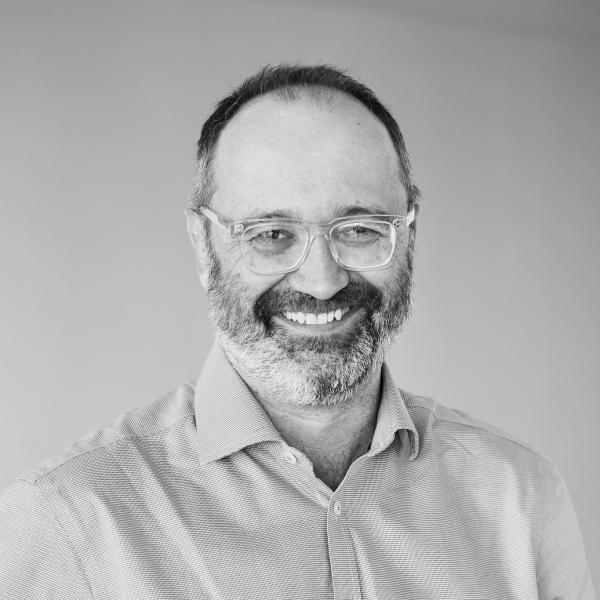
Professor David Keays is a leading researcher in developmental neurobiology at the Ludwig Maximilian University of Munich (LMU), where he heads the Keays Lab within the Faculty of Biology. His research focuses on answering fundamental questions in sensory and developmental neuroscience through creative experimental design and meticulous attention to detail. He is particularly recognized for his work on magnetoreception, electroreception, and the role of microtubule-associated proteins in neurodevelopmental disorders.
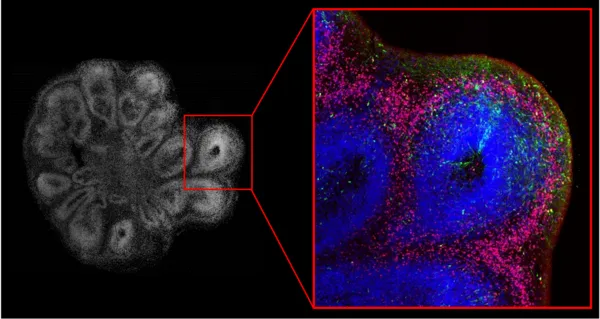
Professor Keays' research spans three primary scientific questions: how animals detect magnetic fields, how animals detect electric fields, and how mutations in microtubule-associated proteins cause neurodevelopmental disease. His lab employs an interdisciplinary approach using genetic, molecular, cellular, and behavioral tools, with increasing reliance on iPSC models and cerebral organoids to study brain development. His work on magnetoreception has challenged previous assumptions about magnetite-based sensing in birds, while his research on tubulin mutations has revealed critical insights into brain development disorders.
Analysis of Professor Keays' recent publications reveals a strong focus on magnetoreception mechanisms, particularly involving cryptochrome proteins (CRY4) and electromagnetic induction in the pigeon inner ear. His work also extensively investigates tubulin mutations and their relationship to neurodevelopmental disorders, with particular interest in MAST1 kinase and its role in regulating Tau phosphorylation in cortical development. His research demonstrates both methodological innovation and conceptual advances across multiple neuroscience subfields.
- ERC Consolidator Grant
- Deutsche Forschungsgemeinschaft funding
- Studienstiftung support
Professor Keays' research is supported by prestigious funding sources including the Deutsche Forschungsgemeinschaft, an ERC Consolidator Grant, and Studienstiftung. He maintains extensive international collaborations with researchers at the University of Freiburg, University of Western Australia, University of Adelaide, NYU, and IMBA Vienna. His lab employs advanced methodologies including 2-photon imaging, iDISCO whole brain imaging, RNA sequencing, CRISPR/Cas9 genome editing, and cerebral organoid generation.
The Keays Lab operates at the intersection of multiple neuroscience disciplines, with dedicated research teams focused on magnetoreception, electroreception in monotremes, and microtubule-related neurodevelopmental disorders. The lab's interdisciplinary approach combines cutting-edge molecular techniques with sophisticated behavioral analyses to address fundamental questions about sensory systems and brain development.