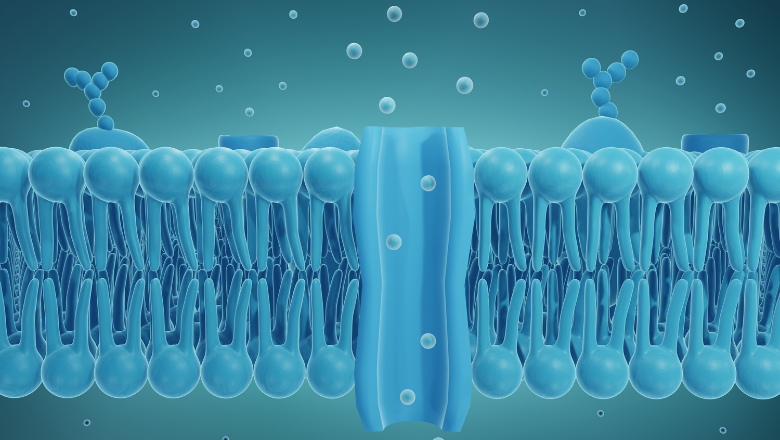
Mark Wallace is a Professor of Chemistry at King's College London, affiliated with the Department of Chemistry and the Faculty of Natural, Mathematical & Engineering Sciences. He holds a Royal Society University Research Fellowship (2005–2016) and has been a lecturer at Oxford University before joining King's in 2016. His research focuses on membrane protein function and artificial membrane mimics, combining optical microscopy and nanotechnology. He earned a PhD from the University of Cambridge (2002) and postdoctoral training at Stanford University and the National Institute for Medical Research. Key research interests include membrane protein dynamics, lipid bilayer engineering, and single-molecule imaging. He has pioneered techniques like droplet interface bilayers and interferometric scattering microscopy. His work has led to patents and applications in molecular sensing and medical research. Awards include the 2002 Gregorio Weber Prize and the 2015 RSC Norman Heatley Award. He is actively involved in public outreach, including video podcasts and educational competitions. Recent publications emphasize artificial ion channels, nanoparticle formation monitoring, and mitochondrial protein dynamics. His lab collaborates with institutions like the London Centre for Nanotechnology and the Rosalind Franklin Institute. Over 30 students and researchers have been mentored, with active grants from EPSRC, Wellcome Trust, and BBSRC.
Vernita Gordon is an Associate Professor in the Department of Physics at the University of Texas at Austin (since 2018), previously serving as an Assistant Professor there from 2010 to 2018. She holds a Ph.D. in Physics from Harvard University (2003) and a B.Sc. in Physics and Mathematics from Vanderbilt University (1997). Her research focuses on understanding how physical characteristics like mechanics and spatial structure influence bacterial biofilms, particularly their interactions with the immune system and resistance to antibiotics. She has pioneered techniques such as laser trapping to manipulate biofilm structures and studies radiation effects on bacteria like Deinococcus radiodurans . Education: Ph.D. in Physics, Harvard University (2003) B.Sc. in Physics and Mathematics, Vanderbilt University (1997) Research Interests: Dr. Gordon’s work integrates biophysics, microbiology, and materials science to explore biofilm mechanics, bacterial mechanosensing, and radiation biology. Key areas include: How biofilm mechanics resist immune clearance and antibiotic treatment Role of surface stiffness and shear stress in biofilm initiation Radiation resistance mechanisms in Deinococcus radiodurans Development of tools like laser trapping to study biofilm structure Key Achievements: Recipient of the Elizabeth B. Gleeson Professorship (2023) and Texas Mindset Initiative Fellowship (2023) Provost’s Teaching Fellow (2020–2024) and multiple teaching awards Funded by NSF, NIH, and Cystic Fibrosis Foundation Published over 60 peer-reviewed articles, including in Nature , PNAS , and Biophysical Journal Advising & Outreach: She mentors graduate students in Physics, Microbiology, and Biomedical Engineering, emphasizing interdisciplinary training. Her group actively recruits undergraduates and collaborates with industry partners like Solvay and the College of Pharmacy. Outreach includes lesson plans for high school STEM education and community science initiatives. Labs & Collaborations: Her lab uses advanced microscopy, microrheology, and computational modeling. Key collaborations include work with the Contreras Lab (UT Austin Chemical Engineering) on radiation-resistant bacteria and the Raizen Lab (UT Austin Physics) on self-sterilizing surfaces.
Shinsuke Shimojo is the Gertrude Baltimore Professor of Experimental Psychology at the California Institute of Technology (Caltech). He holds a B.A. (1978), M.A. (1980) from the University of Tokyo, and a Ph.D. (1985) from MIT. At Caltech, he has served as Associate Professor (1997–98), Professor (1999–2010), and Baltimore Professor (2010–present). His research focuses on perceptual decision-making, implicit cognition, and the neural mechanisms underlying sensory perception and social interaction. His work employs advanced methods like fMRI, EEG, and transcranial stimulation to study topics such as crossmodal integration, visual illusions, and the social brain. Shimojo leads the Shimojo Psychophysics Laboratory, collaborating with institutions like NTT Communication Science Laboratories, Harvard MGH, and MetaModal Inc. His lab investigates phenomena like sensory substitution, team flow dynamics, and human magnetoreception. Notable achievements include pioneering studies on the 'gaze cascade effect' and developing the ePlegona game system for studying team flow. Awards include the Red Dot Design Concept Award (2024) and grants from JST CREST and MEXT gCOE programs. His research bridges cognitive and neuroscience disciplines, emphasizing interdisciplinary approaches to understanding human perception and decision-making. Current projects explore implicit brain functions, social communication, and the neural correlates of emotional decisions. Shimojo also contributes to science communication through his column in Asahi Shimbun and public outreach via YouTube demonstrations of visual illusions.
Professor Ezio Rosato is a Professor of Biology at the University of Leicester's School of Biological Sciences. His research focuses on molecular genetics of circadian rhythms, examining biological clocks across diverse organisms from insects to crustaceans. Research investigates genetic and molecular mechanisms underlying circadian timekeeping, seasonal adaptations, and light-responsive behaviors. Current projects explore cryptochrome-mediated magnetosensitivity, circadian neuronal plasticity, and environmental influences on biological timing. Recent publications analyze ultrastructural changes in clock neurons, genetic regulation of seasonal phenotypes, and evolutionary dynamics of circadian systems. His work employs molecular genetics, behavioral analysis, and comparative genomics across model organisms. Professor Rosato collaborates internationally on chronobiological research and contributes to teaching programs in genetics and molecular biology.
Prof. Dr. Gil Westmeyer is a Professor of Neurobiological Engineering at the Technical University of Munich (TUM), holding joint appointments at the TUM School of Natural Sciences and TUM School of Medicine and Health. He serves as Director of the Institute for Synthetic Biomedicine at Helmholtz-Zentrum München and leads the Chair of Neurobiological Engineering at TUM. His research program bridges molecular engineering, neuroimaging, and synthetic biology to develop next-generation tools for understanding and manipulating cellular networks. Westmeyer's educational background includes medical and philosophical studies in Munich, doctoral work on the molecular basis of Alzheimer's disease under Professor Christian Haass, clinical training at Harvard Medical School, and postdoctoral research with Professor Alan Jasanoff at MIT. His laboratory focuses on creating genetically encoded molecular sensors and actuators that enable non-invasive imaging and remote control of cellular processes across multiple scales. His research spans three primary domains: molecular sensors for multimodal imaging (from electron microscopy to whole-organism optoacoustics), molecular actuators for spatiotemporal control of cellular processes, and neurobehavioral imaging in freely behaving model organisms. The lab's work integrates synthetic biology, nanotechnology, and advanced imaging techniques to create tools that map dynamic signaling processes and manipulate cellular functions with unprecedented precision. Westmeyer's publication record demonstrates consistent innovation in molecular engineering, with recent work focusing on genetically encoded barcodes for electron microscopy, intron-encoded reporting systems, multiplexed optoacoustic imaging, and magnetically responsive cellular compartments. His publications in high-impact journals like Nature Methods, Cell, and Nature Biotechnology reflect the significance of his contributions to molecular imaging and engineering. ERC Proof of Concept 'inteRNAlizer' (2023) ERC Consolidator Grant 'EMcapsulins' (2019) ERC Starting Grant 'MagnetoGenetics' (2013) Helmholtz Young Investigator's Group (2011) Westmeyer actively mentors students and researchers through multiple teaching positions at TUM, including courses in biological chemistry, genetic machine development (iGEM), mammalian cell technology, and neuro-recording methods. His laboratory develops technologies with clear translational potential for future neurotherapies and regenerative medicine applications, particularly through the creation of imaging-controlled cellular interventions. The lab maintains strong collaborations across disciplines and institutions, with research that contributes to multiple UN Sustainable Development Goals related to health and wellbeing.
Kasper Thorup is a Professor in Movement Ecology at the Globe Institute , University of Copenhagen , and serves as Section Head of the Center for Macroecology, Evolution and Climate . He is also an Affiliated Scientist at the Max Planck Institute of Animal Behavior in Radolfzell, Germany, and holds advisory roles at the Copenhagen Bird Ringing Centre and the Natural History Museum of Denmark . Education PhD in Zoology , University of Copenhagen (2004) MSc in Biology , University of Copenhagen (2000) Research Interests Thorup’s research lies at the intersection of movement ecology , behavioral ecology , ornithology , and conservation . His work focuses on the mechanisms and drivers of bird migration , using advanced tracking technologies such as satellite telemetry, geolocators, and radio transmitters. His lab investigates orientation systems , climate change impacts , and conservation strategies for migratory birds across continents. His team also explores animal navigation , disease spread via migratory birds , and habitat use across breeding and wintering grounds. Fieldwork has taken him to remote locations including Kamchatka, Angola, Svalbard, and the Ural Mountains. Scientific Awards Corresponding Member , Deutsche Ornithologen-Gesellschaft Sapere Aude – Research Leader , Danish Fund for Independent Research Fellow , International Ornithologist's Union Post-doc Scholarship , Danish Fund for Independent Research DTUsat Payload Competition , DTU Supervision and Teaching Thorup has supervised 6 postdocs , 9 PhD students , and 19 Master’s students since 2005. He teaches Danish vertebrates (BSc) and Ornithology (MSc) at the University of Copenhagen, and welcomes theoretical and field-based student projects in bird migration, orientation, and conservation. Labs and Teams He leads the Bird Migration Lab and is head of the Thorup Group within the Section for Biodiversity at the Globe Institute. His team is closely affiliated with the Copenhagen Bird Ringing Centre and collaborates globally with institutions like the Max Planck Institute and Lund University.
Prof. Dr. Sabine Begall is a Researcher at the Department of General Zoology , Faculty of Biology , University of Duisburg-Essen. With over 25 years of experience, she focuses on the sensory ecology of subterranean mammals, particularly Fukomys anselli , exploring magnetoreception , acoustic communication , visual adaptations , and physiological responses to underground environments . Key Research Areas: Subterranean mammal sensory ecology Thyroid hormone regulation in aging Magnetic field orientation mechanisms Comparative auditory and visual systems Domestication syndrome in rodents Evolutionary adaptations in burrowing species Recent Article Trends: 2025 study on retinal ganglion cell diversity in microphthalmic mammals 2024 thyroid hormone and hypoxia research in mole-rats 2023 comparative analyses of burrow acoustics and dental structures Scientific Awards: Honor for outstanding dissertation (2001), University of Essen Fritz Frank Prize (2001), German Society for Mammalogy She serves as a reviewer for journals including Journal of Morphology , Animal Behaviour , and Scientific Reports , and has contributed to major publications on subterranean rodent ecology.
Lukas Landler is a Senior Lecturer at the Institute of Zoology, Department of Ecosystem Management, Climate and Biodiversity, University of Natural Resources and Life Sciences Vienna. His research focuses on amphibian ecology , animal migration , magnetic reception , and urban wildlife conservation . Supervised over 20 university theses on topics including green toad populations, wild bee telemetry, and eDNA analysis Developed innovative methods for automated anuran call detection and multisensor biologging collars Active in citizen science projects like AmphiBiom for urban habitat restoration Research Trends : Recent publications emphasize urban ecology (green toad habitat preferences), telemetry technology (wild bee and mammal tracking), and conservation biology (mercury contamination studies). His work bridges biophysics , ecotoxicology , and spatial ecology through interdisciplinary approaches. Community Contributions : Editor-in-Chief of Herpetozoa (2024) Editorial Board Member (since 2020) Peer reviewer for 14 journals including Ecology, Journal of Herpetology, and PLoS One Active member of Austrian Neuroscience Association and Royal Institute of Navigation
Susanne Åkesson is a Professor at Lund University's Department of Biology, where she leads the Animal Navigation Lab and serves as Principal Investigator at the Center for Animal Movement Research (CAnMove), which she has directed since 2008. She is also a member of Lund University's Profile Areas: Natural and Artificial Cognition and Light and Materials, as well as part of eSSENCE: The e-Science Collaboration. Her research focuses on animal navigation and migration, particularly in birds, with expertise spanning sensory ecology, movement patterns, and the intersection of biology and physics. She studies how animals navigate using skylight polarization and Earth's magnetic field, with notable projects including continental-wide tracking of common swifts documenting their 10-month non-stop flights. Her work connects biology with physics through studies on Viking navigation, zebra coat coloration, and animal navigation mechanisms. Her 215+ publications reveal a strong focus on migration phenotypes, endogenous migration programs, and how animals adapt to long migrations. Recent work emphasizes conservation applications, with studies mapping migratory routes using pan-European telemetry networks and assessing threats to migratory species in the Anthropocene. Her research combines large-scale field experiments, tracking technology, and innovative remote sensing methods like lidar systems for monitoring insect movement. Awarded the Silver medal for excellence in research and communication from the Swedish Ornithological Society (2009), she is also a Fellow of the Royal Institute for Navigation in London (2006), the Royal Physiographic Society in Lund (2010), and the Royal Academy of Sciences in Stockholm (2016). Her popular science communication includes books nominated for the August Prize and regular contributions to Swedish National Radio's 'Naturmorgon' program since 2002. She teaches undergraduate courses in Evolutionary Animal Ecology and Ornithology and has developed Lund University's international PhD course on 'Ecology of Animal Migration' since 1999. Her current research projects include evolutionary ecology of avian migration (Swedish Research Council, 2023-2027) and species-specific adaptations to migration in songbirds (Carl Tryggers Foundation, 2024-2026).
Maria Procopio is a Senior Lecturer and Associate Research Scientist at Johns Hopkins University, where she has been contributing to both teaching and research since 2016. Her work bridges biophysics and quantum biology, with a focus on biological responses to weak magnetic fields. Education: Ph.D. in Physics (Biophysics), University of Bologna, Italy B.S. in Physics, University of Bologna, Italy Her research centers on the biophysical and quantum mechanisms underlying magnetoreception in biological systems. She investigates how extremely low electromagnetic fields interact with ion channels and how photo-induced radical pairs in cryptochrome photoreceptors may enable magnetic sensing in organisms. Her interdisciplinary work connects physics, biology, and quantum mechanics. Dr. Procopio's research trajectory reflects international training and collaboration, having worked at the University of Bologna, University of California, Irvine, and Sorbonne University in Paris. Her work contributes to the growing field of quantum biology, particularly in understanding sensory mechanisms that may rely on quantum effects. Scientific Awards: Marco Polo Fellowship Dr. Procopio has been actively involved in academic mentoring and teaching at Johns Hopkins University. While specific grant details are not mentioned, her research has been supported through fellowships and institutional affiliations. She collaborates across disciplines and institutions, advancing understanding of non-traditional sensory mechanisms in biology. She has worked in research labs including Prof. Ferdinando Bersani's lab (University of Bologna), Prof. Thorsten Ritz's group (UC Irvine), and Dr. Margaret Ahmad's lab at Sorbonne University. At Johns Hopkins, she continues her investigations into magnetic sensing in biological systems.
Massimo Emilio Maffei is a Professor at the Department of Life Sciences and Systems Biology, University of Turin. His research focuses on plant physiology and chemical ecology, with specific expertise in plant-herbivore/pathogen/environment interactions, multitrophic interactions, and astrobiology. He leads the Plant Physiology unit and contributes to teaching in Biological Sciences programs. Current member of the Department Board and academic committees Coordinates graduate courses like Plant Physiology (SVB0027) and Ecology of Climate Change His research group investigates signal transduction pathways (calcium, ROS dynamics), metabolomics, and genomic responses in model systems like Arabidopsis thaliana and Oryza sativa , while also exploring plant magnetoreception through the PRIN 2022 TREES MAG project. Teaching responsibilities include laboratory training in chlorophyll extraction, secondary metabolite quantification, and plant light response analysis. Course materials and exams are managed via Moodle, with strict attendance requirements for mandatory practical sessions.
Sonke Johnsen is the Ida Stephens Owens Distinguished Professor in the Department of Biology at Duke University's Trinity College of Arts & Sciences, with additional appointments as Professor in the Division of Marine Science and Conservation at the Nicholas School of the Environment. He is also affiliated with the Duke Institute for Brain Sciences and the Duke Initiative for Science & Society. His research program focuses on visual ecology, examining how animals interact with light in natural environments. The Johnsen Lab investigates bioluminescent signals underwater, visibility of aquatic animals, tissue ultrastructure and transparency, polarization vision, ultraviolet vision effects on predation, and optical sampling techniques for zooplankton. They also collaborate with Dr. Ken Lohmann at UNC on magnetoreception research. Dr. Johnsen's recent publications reveal a strong focus on visual acuity across marine species, dynamic visual appearance, color signaling, and the interplay between light environments and animal behavior. His work spans from molecular mechanisms to ecological implications, showing particular interest in how visual systems have evolved to meet environmental challenges in aquatic habitats. His research has been supported by significant grants from the International Human Frontier Science Program Organization, Air Force Research Laboratory, and University of North Carolina - Chapel Hill for projects on transparency in fish, visual acuity, and magnetoreception in marine animals. Dr. Johnsen earned his Ph.D. from the University of North Carolina, Chapel Hill (1996) and his B.A. from Swarthmore College (1988). His interdisciplinary approach combines protein biochemistry, microscopy, behavioral studies, field techniques, and mathematical modeling to address fundamental questions in sensory biology.
Professor Alfredo Franco-Obregón is a Research Associate Professor at the National University of Singapore (NUS), with multiple appointments across the Yong Loo Lin School of Medicine. He holds positions in the Department of Surgery and the Department of Physiology, and is affiliated with the Institute for Health Innovation & Technology, the Healthy Longevity Translational Research Programme, the NUS Centre for Cancer Research, and the Nanomedicine Translational Research Programme. He leads the Biolonic Currents Electromagnetic Pulsing Systems (BICEPS) Laboratory, which focuses on developing non-invasive electromagnetic technologies to enhance muscle function and systemic health, particularly for aging populations and those with mobility limitations. Dr. Franco-Obregón's research centers on understanding how biophysical forces, particularly mechanical and electromagnetic stimuli, translate into tissue regeneration and survival. His work specifically investigates the role of Transient Receptor Potential (TRP) channels, particularly TRPC1, in skeletal muscle development and how magnetic fields can activate mitochondrial respiration through a process he terms "Magnetic Mitohormesis." This research has significant implications for metabolic health, cancer therapy, and aging interventions. His laboratory has demonstrated that brief (10-minute) weekly exposure to low-energy pulsed electromagnetic fields (PEMFs) can enhance muscle development, improve metabolic efficiency, and even produce anticancer effects through the activation of muscle secretome responses. His recent publication record demonstrates a strong focus on translating these findings into clinical applications, with numerous randomized controlled trials examining the effects of PEMF therapy on conditions including knee osteoarthritis, Achilles tendinopathy, metabolic disorders, and breast cancer. His research bridges fundamental cellular mechanisms with practical clinical applications, showing how magnetic field exposure can serve as a non-invasive exercise mimetic for populations unable to engage in physical activity. 2020: Innovation of the Year Product Winner by the Ageing Asia World Ageing Festival (for QuantumTx) 2015: Wong Hock Boon Society Best Mentor Award (NUS) 2008: Goldenen Eule (The Golden Owl Excellence in Teaching Award) (ETH) 1990: Martin Luther King Mentorship Award (UCSF) Dr. Franco-Obregón is actively engaged in mentoring students and collaborating on international research projects. He has established the BICEPS Laboratory as a hub for interdisciplinary research, bringing together engineers, clinicians, and basic scientists. His work has led to the founding of QuantumTx Pte. Ltd., a NUS spin-off company developing magnetic therapeutic devices, and he is currently conducting human clinical trials in Singapore, China, Southeast Asia, and the US to evaluate the efficacy of his magnetic therapeutic platforms. The BICEPS Laboratory operates at the intersection of engineering and clinical medicine, with a mission to develop non-invasive technologies that enhance muscle function and bioenergetics. The lab's research has significant potential to transform clinical practice, particularly in preventative medicine and rehabilitation. Dr. Franco-Obregón is also working to establish international collaborations, including potential student exchange programs between ETH/UZH and NUS, to further advance this field of research.
Spencer Balay, PhD, is a Researcher affiliated with the Keays Lab at the Faculty of Biology of Ludwig-Maximilians-Universität München. His research focuses on sensory and developmental neuroscience, particularly in photoreceptor development, retinal biology, and neurogenesis. He investigates mechanisms underlying retinal cell specification, magnetoreception, and molecular pathways in zebrafish models. His work spans topics such as cryptochrome proteins' roles in vision and navigation, genetic regulation of adult-born neurons, and retinal morphogenesis in mutants. Balay's contributions include studies on CRY2 proteins in pigeons, capicua gene regulation in hippocampal neurogenesis, and NRL's role in photoreceptor development across vertebrates. He is part of the Sensory and Developmental Neuroscience group, collaborating on projects involving zebrafish as a model organism for understanding developmental and sensory processes. His research integrates molecular biology, genetics, and systems-level analysis to address fundamental questions in neurobiology.
Dr. Marcus Schmitt is a Researcher and Lecturer in General Zoology at the University of Duisburg-Essen's Faculty of Biology. With a career spanning since 2009, his work focuses on urban zoology and small mammal ecology, particularly analyzing owl pellets for biodiversity insights. He conducts field excursions, identification exercises, and lectures on human biology. Studied Forestry (Dipl.-Ing., 1995) and Ecology (Dipl.-Ökol., 1999) at the University of Essen Doctorate in Natural Sciences (2008), specializing in Muridae family ecology Schmitt's research combines ecological fieldwork with detailed laboratory analysis, emphasizing thermophilic spider distribution in Central Europe and urban-rural faunal dynamics. His work includes long-term monitoring of vertebrate communities in anthropogenic habitats like railway tracks and former industrial sites. Recent publications analyze Schleiereule pellet content (2025), herpetofauna diversity in Lefkada (2024), and urban mammal distribution patterns (2023-2024). Studies span from the Šumava Mountains to the Rhine River, documenting species adaptation across fragmented landscapes. Active in education, Schmitt leads: Zoological identification exercises Educational excursions Practical fieldwork training Human biology lectures Ecological research seminars He contributes to regional biodiversity strategies and environmental assessments, particularly through the Offensive Grüne Infrastruktur 2030 project, analyzing urban habitats and green infrastructure development in the Ruhrgebiet.