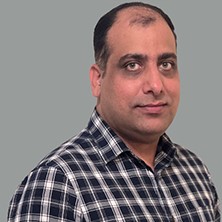
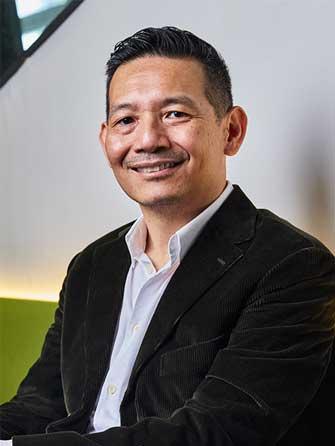
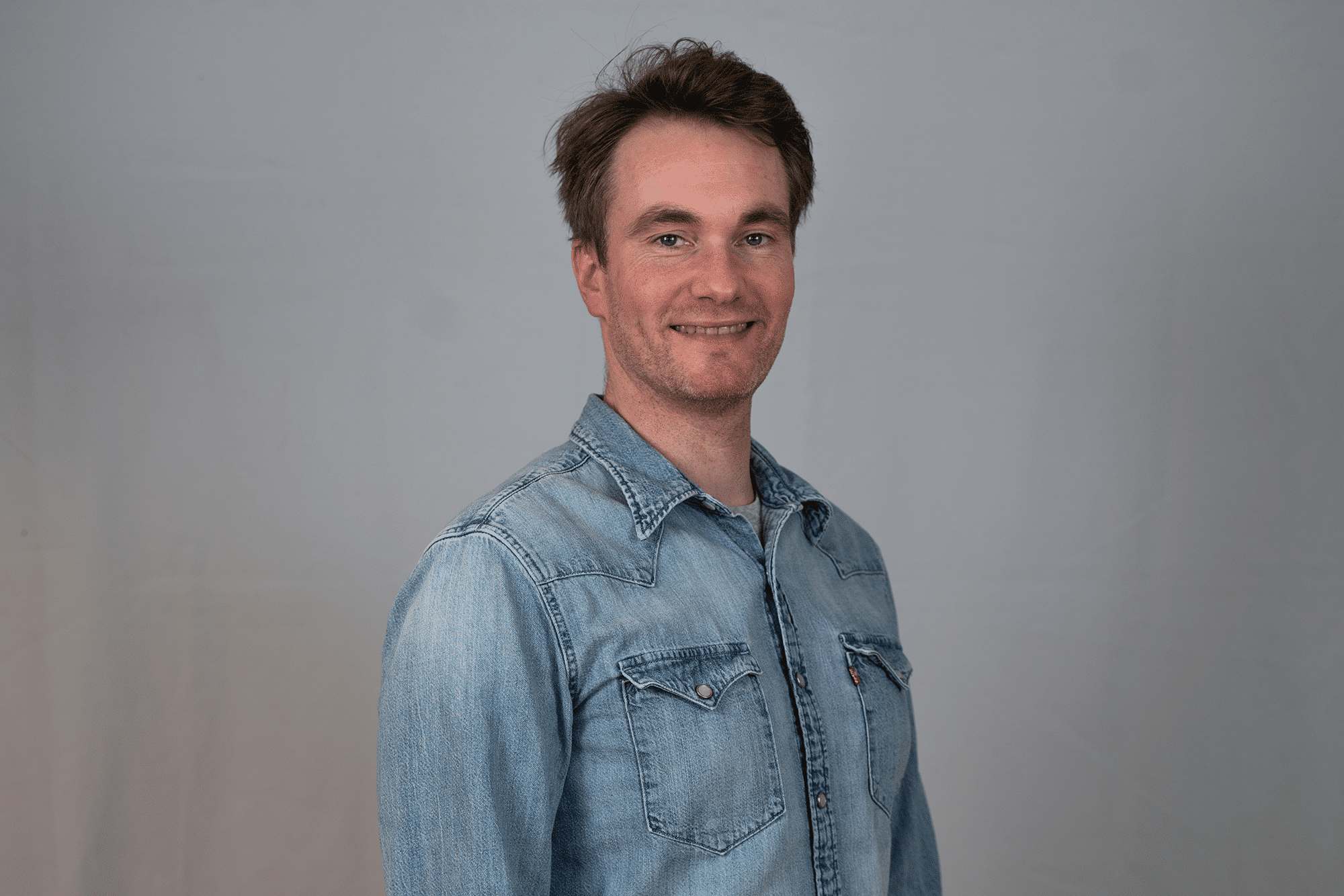
James Manning is a Lecturer in Digital Design at RMIT University's School of Design. His research focuses on game design, digital media, and cultural memory, exploring topics such as game preservation, livestreaming practices, and the intersection of play and technology. He is particularly interested in 'anarchaeological' approaches to defunct games and the documentation of everyday play practices. His teaching interests include game studies, interactive media, animation aesthetics, and design methodology. He actively supervises research in strategies for reflective shortform game design and has contributed to projects like the Astrosurf interactive dome experience. Key research themes include media archaeology, esports culture, and the sociocultural dimensions of digital games. His work bridges theoretical frameworks with empirical studies, examining how digital platforms shape media consumption and cultural production.
Tan Chuan Hoo is an Associate Professor (tenured) and Deputy Head of the Department of Information Systems and Analytics at the National University of Singapore's School of Computing. With a distinguished academic career spanning multiple continents, he brings expertise in digital transformation, healthcare informatics, and enterprise systems to his teaching and research. His educational background includes: B.Sc. (1st Class Honours, National University of Singapore) M.Sc. (Accelerated, National University of Singapore) Ph.D. (National University of Singapore) Professor Tan's research focuses on digital transformation, particularly designing, deploying, and evaluating technological innovations. His work centers on two critical areas: digital commerce (provision of digital services such as online shopping aids) and digital organization (ensuring operational efficiency and performance). His research has significant implications for healthcare institutions, corporations, and crisis preparedness and response organizations. He conducts comprehensive analyses using various scientific methodologies including field experiments and mixed methods to understand how digital technologies reshape business operations and enhance societal well-being. His publication record shows a consistent focus on information systems, with recent articles (2020-2025) emphasizing healthcare informatics, digital transformation, and open innovation. His work demonstrates a clear trajectory toward understanding how technology intersects with organizational effectiveness and societal implications, with increasing attention to healthcare applications and digital crisis management. Professor Tan has received numerous prestigious awards for his contributions to the field: Faculty Teaching Excellence Award, NUS (2024, 2017) Information Management Research Award, China Information Economics Society (2023) Reviewer Hall of Fame, Journal of AIS (2020) Outstanding Associate Editor Award, MIS Quarterly (2016) Best Reviewer Award, Journal of AIS (2016) INFORMS ISS Design Science Award (2013) Honorable Mention, Journal of AIS (2015) He has successfully advised PhD students and collaborated with public and private entities on research projects. His editorial service as Associate Editor for Information Systems Research and MIS Quarterly, along with board memberships at other leading journals, demonstrates his significant influence in the field. Professor Tan has secured research grants supporting projects on digital crisis preparedness, disaster response technology, and healthcare digitalization. His research group focuses on understanding how technology can be designed and implemented to support organizations in crisis situations, enhance healthcare services, and improve digital commerce. Current projects include examining digital crisis management, technology for disaster response, and the digital transformation of healthcare services.
Professor Hala Zreiqat AM is a leading biomedical engineer at The University of Sydney , serving as the Director of the ARC Training Centre for Innovative BioEngineering . A Fellow of all major Australian academies (AAS, ATSE, FAHMS, FRSN), she develops 3D printed bioceramics for bone regeneration while championing diversity through initiatives like the IDEAL Society and BIOTech Futures mentorship program. Her work bridges academia, clinical practice, and industry in musculoskeletal research . Research Focus: Her lab creates synthetic bone scaffolds that mimic natural bone architecture, strength, and porosity, enabling non-rejected bone regeneration via patient-matched implants. Key applications include orthopaedic, dental, and maxillofacial repair , with over $18M in competitive funding and multiple patents. Current projects explore AI-driven scaffold performance prediction and anti-senescence strategies for aging-related bone loss. Scientific Trends: Recent publications highlight 3D printed nanovoxelated ceramics , antisenescence biomaterials , and multifunctional theranostic platforms . Her team integrates machine learning for scaffold design, atom probe tomography for interface analysis, and two-photon imaging for cellular monitoring in 3D environments. 2021-2022 Fulbright Senior Scholar 2018 NSW Premier's Woman of the Year 2019 Eureka Prize for Innovative Use of Technology Fellow of Australian Academy of Science (2021) Over $18M in research funding Teaching & Leadership: She designed core courses like Tissue Engineering and Nanomaterials in Medicine , mentoring 158 students in 2020 alone. As Chair of CAAR (2020-2023), she strengthens Australia-Arab collaborations. Her lab trains early-career researchers , with alumni now in academia and industry.
Mohamed Bouri is a Senior Lecturer and Researcher at École Polytechnique Fédérale de Lausanne (EPFL), where he is affiliated with the School of Engineering (STI) and specifically the Microengineering Department (SCI-STI-MB). He is part of the ReHAssist research group (http://rehassist.epfl.ch), which focuses on rehabilitation robotics and human-robot interaction. His office is located in the MED Building (MED 3 1016) at Station 9, 1015 Lausanne. Dr. Bouri's research spans several key areas in robotics and rehabilitation engineering. His primary focus is on the development and control of exoskeleton systems for mobility assistance and rehabilitation. He has made significant contributions to hip exoskeleton technology, adaptive control strategies, and human-robot interaction paradigms. His work bridges engineering principles with clinical applications, particularly for individuals with mobility impairments and neurological conditions. Additional research interests include sensory substitution techniques, balance control systems, and astronomical instrumentation involving robotic fiber positioners for multi-object spectrographs. Analysis of Dr. Bouri's recent publications reveals a strong emphasis on practical applications of robotics in rehabilitation settings. His work increasingly focuses on user-centered design, adaptive control systems that respond to individual user needs, and ecological validity in testing environments. There's a clear trend toward developing systems that can function effectively in real-world scenarios rather than controlled laboratory settings. His research also shows growing integration of physiological feedback mechanisms and multimodal sensing to enhance human-robot cooperation, with applications spanning from Parkinson's disease rehabilitation to astronomical instrumentation. Dr. Bouri has supervised numerous doctoral students whose theses reflect the breadth of his research interests, including work on lower-limb exoskeletons, robotic control systems, and rehabilitation technologies. His collaborative approach is evident in the extensive list of co-authored publications across multiple institutions and disciplines, demonstrating his ability to bridge engineering with clinical and astronomical applications. Based at EPFL's Microengineering Department, Dr. Bouri leads research activities within the ReHAssist laboratory, which specializes in rehabilitation assistance technologies. The lab focuses on developing innovative robotic solutions for mobility assistance, with particular expertise in exoskeleton design, control algorithms, and human-robot interaction paradigms. His work on projects like TWIICE One has demonstrated real-world impact in assistive technology development.
Golan Levin is Professor of Electronic Art at Carnegie Mellon University's School of Art, with courtesy appointments in the School of Design, School of Architecture, School of Computer Science, and Entertainment Technology Center. From 2009 to 2022, he served as Director and Co-Director of CMU's Frank-Ratchye STUDIO for Creative Inquiry, a laboratory dedicated to supporting atypical, anti-disciplinary research at the intersection of arts, science, technology, and culture. Levin's research spans interactive art, digital fabrication, information visualization, and generative design. He explores the critical potential of visualization, generative computation for expressive form, and how abstraction connects to realities beyond language. His practice engages interactive gestural robotics, nonverbal interaction aesthetics, and tactical applications of personal digital fabrication through responsive artifacts and media provocations that highlight human-machine relationships. His publications reveal consistent innovation in real-time audiovisual systems, interactive fabrication interfaces, and pedagogic tools for artists. Key trends include slit-scan video techniques, tangible augmented-reality performance, and noise-based visualizations, demonstrating his commitment to expanding human action vocabulary through digital media while bridging artistic expression with computational systems. Levin's work has received significant recognition: Permanent collection inclusion at Museum of Modern Art (MoMA) Whitney Biennial exhibition "50 Designers Shaping the Future" by Fast Company (2012) Competitive grants from National Endowment for the Arts, National Endowment for the Humanities, Creative Capital, and Rockefeller MAP Fund As an educator, Levin teaches "studio courses in computer science" on interactive art, experimental capture, and generative design, emphasizing computation as a medium for critical inquiry. His research funding from major cultural institutions supports interdisciplinary exploration at the arts-technology nexus. The Frank-Ratchye STUDIO for Creative Inquiry, which he directed for 13 years, remains a vital hub for anti-disciplinary collaboration, continuing his legacy of fostering creative agency through technology-infused artistic practice.
Prof. Dr. Mareike Kühne is a full-time Professor of Business Administration at the Department of Business and Management, Brandenburg University of Technology. With a unique interdisciplinary background spanning economics, business administration, philosophy, and neuroscience, she bridges affective dimensions with economic rationality to develop holistic decision-making frameworks. Doctorate in Economics, Otto von Guericke University Magdeburg (1992-1997) Fulbright Scholar, San Diego State University (1997-1998) Studies in Philosophy, Humboldt University (2007-2011) Doctoral and Master’s in Neuroscience, Berlin School of Mind and Brain (2011-2013) Her research integrates insights from psychology and neuroscience into capital market-oriented corporate reporting, corporate governance, and normative rationality frameworks. She critiques current economic models for neglecting the embodied nature of cognition, advocating for a more nuanced understanding of rationality that incorporates lived experience. Her 15 most recent works span sustainability reporting (2025), neuroeconomics (2021), M&A disputes (2017), and IFRS standard evolution (2005-2012). These publications highlight her focus on reconciling traditional accounting principles with interdisciplinary approaches to decision-making. Fulbright Scholar (1997-1998) Prof. Kühne has taught at Humboldt University, HHL Leipzig, and the Berlin School of Mind and Brain. She actively participates in professional organizations including the German Society for Philosophy, European Accounting Association, and European Financial Reporting Advisory Group. Her work emphasizes the practical impact of neuroscientific findings on economic policy and standard-setting.
Eric Smialek is a Senior Research Fellow at the University of Huddersfield, specializing in extreme metal vocals, popular music studies, and Taylor Swift analysis. He holds a Marie Skłodowska-Curie Actions Postdoctoral Fellowship and is affiliated with the Centre for Research in Music and its Technologies. His research explores vocal expression, cultural meaning in metal, and intersections of music with class, disability, and LGBTQ+ advocacy. Education: PhD in Genre and Expression in Extreme Metal Music (McGill University, 2016) Master's in Rethinking Metal Aesthetics (McGill University, 2009) Bachelor's from University of British Columbia (2006) Research Interests: Smialek’s work bridges music analysis and sociology, focusing on extreme metal’s vocal techniques, global social-class divides in metal scenes, and Taylor Swift’s cultural impact. He co-founded the European Taylor Swift Research Network and organized the 2024 Taylor Swift unconference in Amsterdam. Awards: Marie Skłodowska-Curie Actions Postdoctoral Fellowship Advising & Collaboration: Accepts PhD students and collaborates on projects like Extreme Metal Vocals: Musical Expression, Technique, and Cultural Meaning (2022–2025). His work has been cited in venues like Metal Music Studies and Contemporary Music Review . Labs/Teams: Member of the Centre for Research in Music and its Technologies, contributing to interdisciplinary studies in music acoustics and cultural analysis.
Muhammad Farooq is an Assistant Professor of English at Seton Hall University's Department of English. He specializes in 20th- and 21st-century British, postcolonial, and global Anglophone literature, with research focusing on postcolonial studies, necropolitics, memory, and spatial literary studies. His current book project, The Production of Necrospace: Literary Imaginary and Ungrievable Lives in the Af-Pak Frontier , examines necrogeographies through literary texts from the British colonial era to contemporary Af-Pak works. Education: PhD in English, Kent State University (2023) His research explores intersections between literature and socio-political structures, particularly in contested regions like the Afghanistan-Pakistan frontier. Farooq’s work often addresses how literature conceptualizes spaces of death (necrospace) and the politics of grievability. His recent publications analyze Afghan American fiction’s soundscapes, Pashto poetry’s engagement with drone warfare, and modernist narratives like Virginia Woolf’s works. He has received multiple awards including the 2024 University Research Council Grant and the 2023 Ohio International Consortium Award. Farooq teaches courses such as Postcolonial Theory and Literature and Death, Memory, and Resilience , emphasizing critical thinking across cultural divides. Grants: University Research Council Grant (2024), Newberry Renaissance Consortium Grant (2020) No specific labs or research teams are mentioned, but his interdisciplinary approach bridges literary analysis with geopolitical and cultural studies.
Marcos Cruz is Professor of Innovative Environments at The Bartlett School of Architecture, University College London (UCL), where he leads research in bio-integrated design. He runs Bio-ID with Dr. Brenda Parker, a multidisciplinary research platform investigating design driven by biotechnology, computation, materials, and fabrication. Previously, he served as Director of The Bartlett from 2010-2014 and founded the BiotA Lab (2014-2018). His academic career spans multiple institutions including University College London (where he ran MArch Unit 20 for 19 years), University of Westminster (2008-2010), UCLA (2010), and IAAC (2014-present). Professor Cruz holds a Licenciatura from ESAP Porto, a Masters with distinction from UCL, and a PhD from UCL (2007), sponsored by the Portuguese Foundation for Science and Technology. His doctoral research on 'Neoplasmatic Architecture' earned him the RIBA President's Research Award in 2008. He is a registered architect with both the Architects Registration Board (ARB) and the Portuguese Architecture Chamber. His primary research area is Bio-Integrated Design, which explores how biotechnology and computation can reshape our built environment in response to climate change. This work goes beyond using nature as inspiration; instead, it treats nature as the medium for a multi-layered design approach. His key research project, Poikilohydric Living Walls, investigates integrating growth systems directly on building facades using algae and mosses that can switch photosynthetic activity on and off without additional maintenance. Another significant research area is The Body in Architecture, which examines the relationship between human flesh and architectural flesh, proposing a 'thick embodied flesh' that creates truly inhabitable architectural interfaces. His recent publications demonstrate a strong progression toward integrating living systems directly into building materials and facades. The research spans from microbial to tectonic scales, with increasing focus on biomaterials, robotic fabrication, and sustainable design approaches that actively participate in urban ecosystems rather than merely responding to them. RIBA President's Research Award (2008) for 'Neoplasmatic Architecture' Multiple Best Unit awards at Bartlett Summer Show (awarded by Thom Mayne, Paul Finch, Richard Rogers, Claude Parent, and Ross Lovegrove) Work part of permanent collection at FRAC Orleans Exhibitions at Venice and São Paulo Biennales Professor Cruz has supervised numerous PhD students through UCL's Research-by-Design programme and currently directs the MArch/MSc in Bio-Integrated Design. His research has been supported by EPSRC and involves industrial partners including Laing O'Rourke, Pennine Stone Limited, and Amorim, with academic partners at UCL Biochemical Engineering, University of Coimbra, and IST Tomar. He co-founded MAM-ARCH London (formerly marcosandmarjan) in 2000, whose work has built buildings and pavilions, won international competitions including the Kunsthaus Graz, and been exhibited globally. His practice represents a significant bridge between architectural design and biological systems, positioning him at the forefront of bio-integrated architectural research.
Dr Francis Maravillas is a Senior Lecturer and Programme Leader of the BA (Hons) Art Histories and Curatorial Practices: Asia and the World at LASALLE College of the Arts, Singapore. His academic work bridges art historical research, curatorial practice, and interdisciplinary teaching with a focus on contemporary Asian art contexts. His educational background includes a PhD in Humanities and Social Sciences from the University of Technology Sydney and a First Class Honours BA in Politics from Macquarie University, Australia. Maravillas' research centers on modern and contemporary Asian art, with particular expertise in curatorial practices, exhibition histories, and socially engaged/performatory art forms. His current projects investigate the aesthetics and politics of food in contemporary Asian art, examining how food functions in performance, installation, and community-based practices within post-colonial and global contexts. This research explores intersections between alimentary practices, political economies of survival, and post-colonial histories across Asia. His publication record reveals consistent engagement with Southeast Asian contemporary art worlds, food-art practices, and diasporic visual cultures. Key projects include the co-edited World Art special issue on Southeast Asian art publics (2020) and the forthcoming Routledge anthology 'Tastes of Justice' (2025), which examines food, art, and justice politics in Asian-Australian contexts. Maravillas has secured significant research funding including a SGD 20,000 LASALLE College of the Arts grant for 'Tastes of Justice' (2024) and an AUD 49,526 Creative Australia grant for related art, performance, and symposia activities in Sydney and Singapore (2024). He actively collaborates internationally through co-curated exhibitions like 'Bruised Food: A Living Laboratory' (2019) and the symposium 'Shifting Grounds, New Horizons' (2022), demonstrating commitment to building transnational networks in contemporary Southeast Asian art.
Anna Grigolon is an Assistant Professor at the University of Twente , Netherlands, affiliated with the Transport Engineering and Management Research Group . Her research focuses on sustainable urban mobility , user-centric transport solutions , and travel behavior analysis using tools like discrete choice modeling , spatial analysis , and social psychology theories . Research Interests : Sustainable Urban Mobility Accessibility Modeling Travel Behavior Discrete Choice and Latent Class Modeling Spatial Analysis and GIS Shared Micromobility and Mobility Hubs Equity in Transport Planning Article Trends : Anna’s recent work (2025–2024) emphasizes mobility justice , 15-minute city transitions, and equity in transport access , particularly for marginalized communities like São Paulo favelas. She integrates digital tools (e.g., serious games, kiosks) and space-time metrics to evaluate mobility solutions. Projects : She currently leads the SmartHubs project and contributes to DREAMS and R-map , focusing on smart, equitable mobility systems in Europe and Saudi Arabia.
Jun Hwa (Jacky) Cheah is an Associate Professor in Marketing at the Norwich Business School, University of East Anglia (UEA), a position he has held since February 2023. Before joining UEA, he served as a Senior Lecturer at Universiti Putra Malaysia and Universiti Teknologi Malaysia in Malaysia. He holds a PhD in Business Economics and an MBA in International Business from Universiti Putra Malaysia, along with a Bachelor of Management in Marketing from Universiti Malaysia Terengganu. His research focuses on digital marketing, technology marketing, consumer behavior, data analytics, and statistical modeling. He has published extensively in top journals such as the Journal of Business Research , European Journal of Marketing , and Psychology & Marketing . He currently serves as a Guest Editor, Associate Editor, and Editorial Board member for multiple academic journals. Dr. Cheah has received several accolades, including the Emerald Young Researcher Award (2021) and a Young Researcher Award from his former university. He has supervised PhD students, one of whom successfully completed their doctoral program. He is actively engaged in PhD supervision and collaborative research, with a strong emphasis on advancing quantitative methodologies and addressing contemporary marketing challenges.
Jon Miller is a Research Associate Professor in the Department of Civil, Environmental and Ocean Engineering at Stevens Institute of Technology. He holds dual roles as Director of the NJ Coastal Protection Technical Assistance Service and NJ Sea Grant Coastal Processes Specialist. Miller earned a B.E. in Civil Engineering from Stevens (1999), followed by M.S. and Ph.D. in Coastal Engineering from the University of Florida (2001, 2004). His research focuses on coastal hazard mitigation, nature-based solutions, and numerical modeling of coastal systems. Education: - Ph.D. Coastal Engineering, University of Florida (2004) - M.S. Coastal Engineering, University of Florida (2001) - B.E. Civil Engineering, Stevens Institute of Technology (1999) Research Interests: Miller's work emphasizes coastal resilience through innovative engineering approaches. Key areas include: - Wave attenuation mechanisms of natural/nature-based features - Climate change impacts on coastal erosion - Living shoreline design and implementation - Sediment management strategies for inlets and beaches - Dune system vulnerability analysis Grants & Awards: - $1M+ funding from NOAA, NSF, and state agencies - 2024 ASCE Educator of the Year Award - 2023 Robert G. Dean Coastal Award - Over 20+ technical reports guiding coastal policy Professional Leadership: - Editorial roles in Shore & Beach and Journal of Coastal Research - Leadership in NJ Coastal Resilience Collaborative - Advisor for 3 Technogenesis Summer Scholars Labs & Projects: - Principal Investigator for SEECPRS disaster response system - Co-developed NJ Living Shorelines Engineering Guidelines - Conducts fieldwork on Hudson River shoreline restoration
Laurent DUPONT is a Research Engineer and Co-coordinator of the IUVTT Master’s program at ENSGSI (École Nationale Supérieure de Géologie et de Sciences Industrielles), part of the Groupe INP in Nancy, France. He also serves as Scientific Manager of the Lorraine Fab Living Lab. His work focuses on user-driven innovation, smart and sustainable territories, collaborative engineering, and immersive environments. He holds a PhD in Industrial Systems Engineering from INPL (2009), a DEA (2004), and a degree in Industrial Systems Engineering (2003) from ENSGSI. Research interests include innovation lab strategies, open innovation spaces, territorial resilience, and digital twin applications in manufacturing. He leads projects like INEDIT, exploring co-design frameworks and circular economy solutions. His articles highlight trends in collaborative innovation networks, systemic impact mapping, and the integration of extended reality in industrial contexts. Key contributions include frameworks for evaluating territorial resilience and tools for monitoring innovation lab networks. He has been involved in initiatives such as the DHDA Project for resilience assessment and the Smagrinet project on smart grid training. His work bridges academia and practice through participatory methods and cross-sector collaborations. Current projects emphasize Industry 5.0, open manufacturing, and community-driven innovation.
Aishwarya Ganesan is an Assistant Professor at the Siebel School of Computing and Data Science, University of Illinois Urbana-Champaign. Her research focuses on distributed systems, storage systems, and fault tolerance mechanisms, with emphasis on high-performance computing and datacenter infrastructure. She leads projects addressing challenges in replicated storage, consensus protocols, and system resilience. Her work explores fault tolerance in disaggregated datacenters, log abstractions for low-latency applications, and novel replication strategies for modern storage systems. She has developed frameworks like LazyLog and IONIA to improve system efficiency and reliability. Her research also extends to automatic reliability testing for cluster management controllers and analyzing distributed storage vulnerabilities. Key contributions include demonstrating how redundancy alone does not guarantee fault tolerance, and proposing consistency-aware durability mechanisms for storage systems. She received the NSF CAREER Award in 2024 for her research on storage-aware fault tolerance. Her work spans 21 peer-reviewed publications, with notable contributions in conferences like SOSP, EuroSys, and FAST. Current projects investigate fault tolerance in emerging memory technologies and system recovery protocols for consensus-based storage.