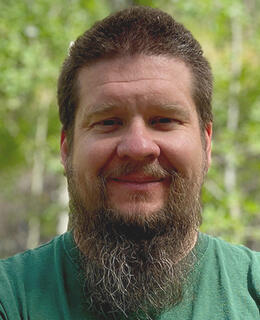
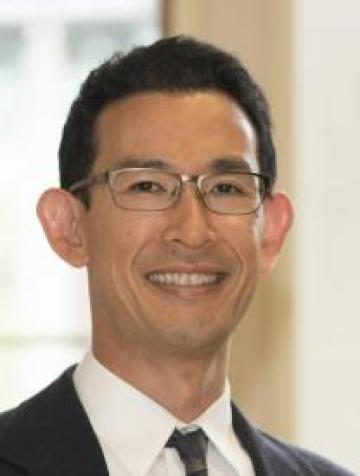
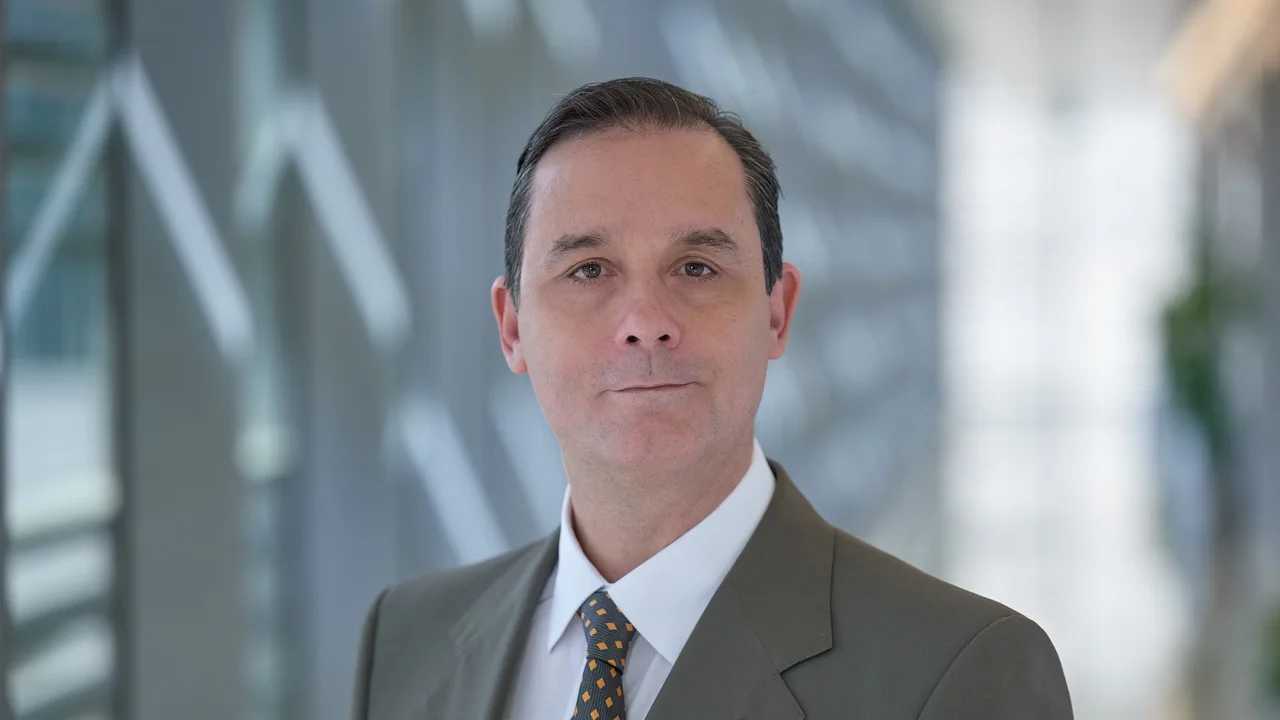
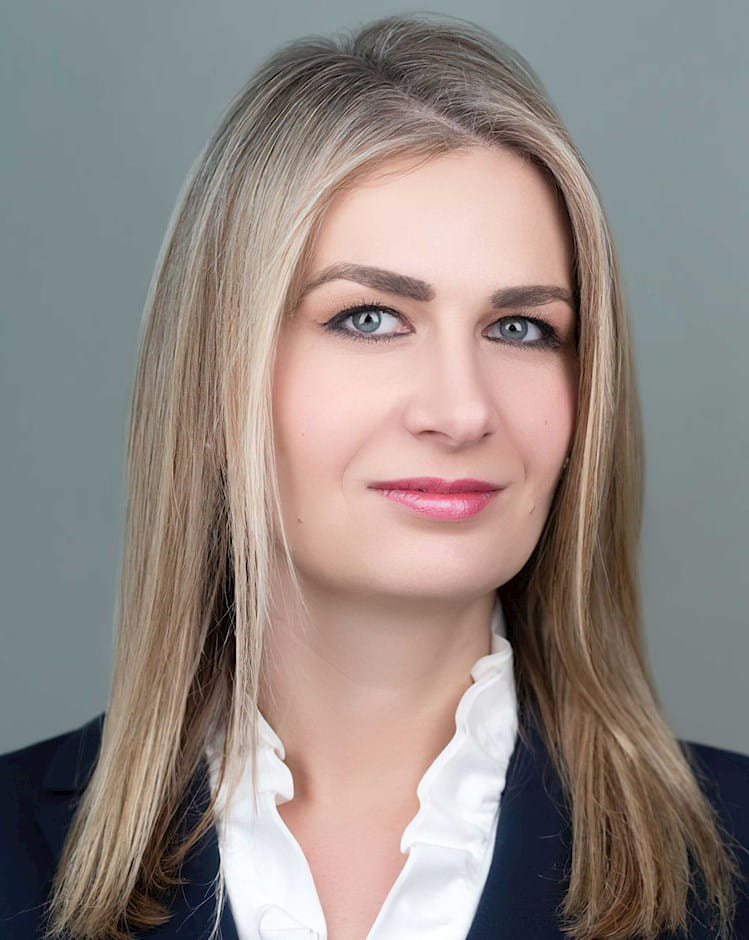
Dr. Justin MacCallum is an Associate Professor in the Department of Chemistry at the University of Calgary, holding dual roles as the Canada Research Chair (CIHR CRC II) in Biomolecular Structure and Design and Associate Dean of Graduate and Post-Doctoral Scholars in the Faculty of Science. His research focuses on protein structure determination, biomolecular recognition, and machine learning integration with physical modeling to advance computational and experimental methods in biophysics. Dr. MacCallum earned his BSc in Biochemistry (2002) and PhD in Biomolecular Simulation (2008), both from the University of Calgary. His lab develops hybrid computational-experimental approaches to study protein interactions and membrane systems, emphasizing tools like MELD (Machine learning Enhanced Likelihood Dynamics) for structure determination and molecular dynamics simulations. Research interests include: (1) alternative structure determination techniques using sparse NMR data, (2) design of peptide-protein interactions via free energy simulations, and (3) scientific machine learning combining physical principles. His work aligns with University strategic initiatives in energy innovation and health solutions. Recent publications highlight advancements in biosensor development (e.g., TLR-based electrochemical systems), machine learning-enhanced molecular modeling, and structural studies of fatty acid binding proteins. He contributes to interdisciplinary projects bridging chemistry, bioinformatics, and engineering. Labs/Teams: Directs the MacCallum Lab, integrating computational and experimental biophysics to solve complex biomolecular problems. Collaborates on initiatives involving lipid-protein interactions, drug design, and sensor technologies.
Masao Sako is the Arifa Hasan Ahmad and Nada Al Shoaibi Presidential Professor of Physics and Astronomy at the University of Pennsylvania. He has held academic positions including Professor (2020–present), Associate Professor (2012–2020), and Assistant Professor (2006–2012) at UPenn. His research focuses on observational cosmology using Type Ia supernovae to study dark energy and the universe's expansion, leveraging large-scale surveys like DES, LSST, and Roman. He also develops machine learning/deep learning methods for astronomical data analysis and GPU-accelerated image processing. His educational background includes a B.S. from Columbia University (1995), and M.A., M.Phil., and Ph.D. in Physics from Columbia (1997–2001). Postdoctoral training included Chandra and KIPAC fellowships at Caltech and Stanford. Research interests emphasize cosmological parameter estimation via supernova surveys, systematic uncertainty mitigation, and interdisciplinary applications of AI/ML. Recent work includes Hubble constant measurements, dark energy constraints, and astrometric redshift techniques. Key contributions include the Dark Energy Survey's cosmological results, photometric classification with SCONE, and collaborations with LSST/ Rubin Observatory. His team's machine learning tools enhance transient detection and photometric redshift estimation.
Dr Andrew Black is a Senior Lecturer in the School of Computer and Mathematical Sciences at the University of Adelaide, within the Faculty of Sciences, Engineering and Technology. His research focuses on stochastic modelling, mathematical epidemiology, evolutionary biology, probabilistic learning, Bayesian inference, and data science. He is eligible to supervise Masters and PhD students in these areas. Key research interests include applying generative machine learning techniques (e.g., diffusions, normalising flows) to stochastic models, analyzing household outbreak data for influenza and COVID-19, and modeling evolutionary transitions from cells to multicellular life. He also develops new simulation methods and importance sampling algorithms for stochastic systems. Recent work spans topics such as viral dynamics inference, smart grid optimization with low-resolution data, and barriers to genetic disease detection. His interdisciplinary approach bridges mathematical theory with real-world applications in public health and energy systems.
Zhen Hu is an Associate Professor in the Department of Industrial and Manufacturing Systems Engineering at the University of Michigan-Dearborn's College of Engineering and Computer Science. He holds a Ph.D. in Mechanical Engineering from Missouri University of Science and Technology, an M.S. in Mechatronics Engineering from Huazhong University of Science and Technology (HUST), and a B.S. in Mechanical Engineering from Central South University (CSU). His research focuses on uncertainty quantification, risk and reliability analysis, design under uncertainty, additive manufacturing, and structural health monitoring. Ph.D., Mechanical Engineering, Missouri University of Science and Technology (2014) M.S., Mechatronics Engineering, HUST (2009) B.S., Mechanical Engineering, CSU (2007) Zhen Hu's recent work integrates machine learning with structural health monitoring, additive manufacturing, and autonomous systems. His publications highlight applications of Bayesian networks, surrogate modeling, and deep learning for damage diagnostics, corrosion prognostics, and probabilistic digital twins. He has developed frameworks for data fusion in crashworthiness prediction and physics-enhanced models for hydrology. Notable scientific awards include the ASME Papers of Distinction (2016), Best Paper Award at the ISC Graduate Research Symposium (2013), and multiple scholarships from Chinese institutions (2004-2008). Current grants include projects funded by NSF, DoE, and Ford Motor Company for digital enterprise technology, hybrid modeling, and battery workforce development.
Naoaki Okazaki is a Professor in the Department of Computer Science at Tokyo Institute of Technology's Graduate School of Information Science and Engineering, with joint research affiliations at AIST (National Institute of Advanced Industrial Science and Technology). He serves as a leading researcher in Natural Language Processing with particular expertise in grammatical error correction, bias evaluation in language models, and Asian language processing. His research interests span multiple critical areas of contemporary NLP including: Natural language processing for educational applications Bias evaluation and mitigation in pre-trained language models Machine translation, especially for Japanese and Korean Subword tokenization techniques and vocabulary optimization Multimodal learning and vision-language models Development of evaluation metrics for NLP tasks Professor Okazaki's publication record demonstrates consistent high-impact contributions to top NLP conferences (ACL, EMNLP, NAACL) from 2021-2025. His recent work shows increasing focus on the challenges posed by large language models, including membership inference attacks, prompt sensitivity in bias evaluation, and developing native Japanese resources rather than relying on translation approaches. His research group regularly achieves state-of-the-art or competitive results across multiple NLP tasks. As Program Chair for ACL 2023, Professor Okazaki contributed to improving conference peer review processes and increasing transparency in academic decision-making. His leadership extends to mentoring numerous graduate students who frequently appear as co-authors on his publications.
Bryon Aragam is an Associate Professor and Topel Faculty Scholar at the Booth School of Business , University of Chicago . His work bridges causality , statistical machine learning , and probabilistic modeling , with applications in AI systems like ChatGPT and DALL-E. Key research themes include: Causal Structure Learning : Extracting latent causal graphs from multimodal data using nonparametric methods. Deep Generative Models : Analyzing overparametrization and variational inference for representation learning. Latent Variable Discovery : Using Markov boundaries and convex subset lattices to uncover hidden dependencies. Algorithm Design : Developing scalable methods like DAGMA for DAG learning and theoretical guarantees for GES/PC algorithms. His paper trends reveal a focus on nonparametric statistics , graphical models , and neural network theory , with recent work on transformer memory dynamics and identifiability in deep latent models . Papers frequently appear in top venues like NeurIPS , JMLR , and AOS , emphasizing theoretical rigor and practical validation.
Professor Raul Tempone is a distinguished faculty member at King Abdullah University of Science and Technology (KAUST), holding the position of Professor in the Department of Applied Mathematics and Computational Science within the Computer, Electrical and Mathematical Sciences and Engineering division. He serves as Principal Investigator of the Stochastic Numerics Research Group and has made significant contributions to numerical analysis and uncertainty quantification, aligning with KAUST's mission and Saudi Arabia's Vision 2030 goals through advancements in computational science that drive technological innovation and sustainability. Professor Tempone's academic foundation includes: Ph.D. in Numerical Analysis from the Royal Institute of Technology (KTH), Sweden (2002) M.S. in Engineering Mathematics from Universidad de la República, Uruguay (1999) B.S. in Industrial and Mechanical Engineering from Universidad de la República, Uruguay (1995) Professor Tempone's research focuses on the mathematical foundations of computational science and engineering, with particular emphasis on uncertainty quantification, stochastic differential equations, and numerical methods. His work bridges theoretical mathematics with practical applications across multiple domains including computational mechanics, quantitative finance, biological and chemical modeling, and wireless communications. He has pioneered advancements in adaptive algorithms, Bayesian inverse problems, and scientific machine learning, driving innovation in computational efficiency and accuracy for solving complex real-world problems. His recent publications demonstrate a strong trend toward integrating uncertainty quantification with machine learning approaches and addressing complex optimization problems under uncertainty. The research spans diverse applications from wireless network performance analysis to medical imaging and sustainable energy systems, reflecting his commitment to solving real-world challenges through advanced computational methods that combine theoretical rigor with practical applicability. Professor Tempone's scientific achievements have been recognized through numerous prestigious awards: Alexander von Humboldt professorship (2018-2025) ISI Highly Cited Researcher (2016) Elected Program Director of the SIAM Uncertainty Quantification Activity Group (2013-2014) Fellow of the Deutsche Forschungsgemeinschaft Priority Program (2014) First Dahlquist Fellowship at the Royal Institute of Technology, Sweden (2007-2008) As an academic advisor, Professor Tempone has successfully supervised ten PhD students to completion. His research has attracted significant funding, including the Alexander von Humboldt professorship grant worth up to 5 million euros. He has directed the KAUST Strategic Research Initiative in Uncertainty Quantification (2012-2016) and collaborated extensively with industry partners including Saudi Aramco. His research group has placed numerous members in academic positions worldwide and in leading companies such as Bain & Company, Baker Hughes, Enel Group, G-Research, Honeywell, McKinsey & Company, and Saudi Aramco. Professor Tempone leads the Stochastic Numerics Research Group at KAUST, which focuses on developing and analyzing numerical methods for stochastic and deterministic problems. The group's work encompasses a posteriori error approximation, data assimilation, hierarchical and sparse approximation, optimal control, and optimal experimental design. Through strategic collaborations and interdisciplinary approaches, the research group continues to push the boundaries of computational science and its applications to real-world challenges across engineering, finance, biology, and energy sectors.
Veronika Rockova is the Bruce Lindsay Professor of Econometrics and Statistics in the Wallman Society of Fellows at the University of Chicago Booth School of Business. She joined Booth after postdoctoral training at the Wharton School and has been internationally recognized for her work at the intersection of statistics and machine learning. Her research focuses on developing decision-centric statistical tools for large datasets, specializing in Bayesian computation Variable selection High-dimensional decision theory Hierarchical modeling Uncertainty quantification for generative AI Recent publications highlight trends in Bayesian CART mixing rates Generative posterior sampling Deep learning integration with Bayesian frameworks Tree-based bandit approaches for ABC Quantile methods for credible sets Scientific recognition includes COPSS President's Award (2024) COPSS Emerging Leader Award (2023) NSF CAREER Award (2020) She currently serves on editorial boards for Annals of Statistics Journal of the American Statistical Association Journal of the Royal Statistical Society (Series B) and mentors PhD students in econometrics and statistics.
Dr. Jan Hamann is a Senior Lecturer at the School of Physics , University of New South Wales, specializing in theoretical cosmology. His research focuses on analyzing high-precision astrophysical observations to study the universe's history, composition, and inflationary models. Education: PhD in Cosmology from Hamburg University (2007) Research Interests: Cosmic Microwave Background (CMB) analysis, inflationary features, dark matter (sterile neutrinos), cosmological parameter estimation, and machine learning applications to astrophysical data. Supervision: Primary supervisor for PhD students Yuqi Kang, Julius Wons, and Nathan Cohen; secondary supervisor for Kai Yi; and Honours supervisor for Jahanvi Maheshwari. Teaching: Courses include PHYS1241 Higher Physics 1B (Special) , PHYS4143 General Relativity , and PHYS3115 Particle Physics and the Early Universe . Recent publications (2024–2017) address CMB lensing, inflationary model optimization, sterile neutrino constraints, and machine learning techniques for cosmological data. He has contributed extensively to Planck mission analyses, particularly in CMB power spectra, isotropy tests, and inflationary parameter constraints.
Jaakko Hollmen serves as a Senior University Lecturer in the Department of Computer Science at Aalto University, affiliated with the Helsinki Institute for Information Technology (HIIT) and the Computer Science Lecturers research group. His interdisciplinary work bridges machine learning with critical applications in healthcare, transportation systems, and environmental science. His research focuses on advanced machine learning methodologies including Bayesian optimization, random forests, and principal component analysis. Key application areas span neonatal healthcare (mortality prediction, brain injury analysis), transportation modeling (activity-based model calibration), and environmental data science (weather-crop relationships, drug-environment interactions). His approach emphasizes practical implementations of complex algorithms for real-world problems. Hollmen's recent publications (2018-2023) reveal a consistent trajectory in developing machine learning solutions for high-dimensional data challenges, with increasing emphasis on medical applications. His work demonstrates strong cross-domain collaboration, particularly with medical researchers at Helsinki University Hospital. His notable recognition includes: Best paper finalist and runner-up award (Computer Track) at the first IEEE Life Sciences Conference (LSC) for research on predicting complications in very low birth weight infants (2017) As a core member of HIIT, Hollmen contributes to Finland's national information technology research infrastructure while maintaining active collaborations with medical and agricultural research groups. His current projects focus on optimizing transportation models and advancing clinical prediction systems through novel machine learning techniques.
Ayush Bharti is an Academy Research Fellow at the Department of Computer Science, School of Science, Aalto University, supported by the Research Council of Finland. He is affiliated with the Probabilistic Machine Learning research group and the Finnish Centre for Artificial Intelligence (FCAI). Previously, he was a postdoctoral researcher working with Prof. Samuel Kaski at Aalto University. Dr. Bharti received his PhD from the Department of Electronic Systems, Aalborg University, Denmark, where he focused on making approximate Bayesian computation methods for estimating parameters of stochastic models in radio propagation. His primary research area is simulation-based inference (or likelihood-free inference), with specific interests in developing approximate inference methods that are (i) robust to model misspecification, and (ii) computationally efficient. His work bridges machine learning, statistics, and wireless communications, with applications in radio channel modeling and parameter estimation for stochastic systems. His recent publications show a strong trend toward robustness in simulation-based inference, with multiple papers on handling model misspecification, missing data, and cost-aware approaches. His research increasingly integrates neural networks and deep learning techniques into traditional statistical inference frameworks. Academy Research Fellowship grant from the Research Council of Finland (June 2024) Dr. Bharti has received significant research funding through his Academy Research Fellowship. He has supervised student projects on radio channel model calibration and recently welcomed Yuga Hikida as a PhD student on his Research Council of Finland project. His collaborative work spans institutions including Aalto University, University College London, and the Alan Turing Institute. He is actively involved in the Probabilistic Machine Learning research group at Aalto University and contributes to the Finnish Centre for Artificial Intelligence, fostering collaborations between Finnish and international researchers in machine learning and artificial intelligence.
Nenad Šuvak is an Associate Professor at the School of Applied Mathematics and Informatics, Josip Juraj Strossmayer University of Osijek. His research focuses on diffusion processes and statistical analysis of stochastic systems, with applications spanning finance, epidemiology, neuroscience, and agricultural modeling. Education : PhD in Mathematics (University of Zagreb, 2010), BSc in Mathematics and Computer Science (University of Osijek, 2004) Šuvak's work extends classical stochastic models to heavy-tailed and fractional frameworks. He has developed diffusion models for EEG data in cerebral malaria patients, created non-linear stochastic models for dopamine cycles, and refined epidemic SEIR models for SARS-CoV-2. His methodological contributions include correlated continuous-time random walks and parameter estimation techniques for non-stationary diffusions. His publications demonstrate expertise in stochastic processes with heavy-tailed distributions, fractional calculus applications, and statistical inference for complex systems. Notably, he has worked on financial risk assessment (CROBEX modeling), epidemiological modeling (SARS-CoV-2 spread), and biomedical applications (EEG analysis). Professional Activities : Organizer of mathematical conferences, member of program committees (Young Statisticians Meetings), and reviewer for multiple scientific journals Projects : PI for stochastic models projects, participant in EU COST actions, and international bilateral collaborations
Alexandre Miron Tartakovsky is a Professor in the Department of Civil and Environmental Engineering at the University of Illinois. His research focuses on computational methods for environmental and energy systems, including hydrodynamics, pore-scale modeling, and uncertainty quantification. His work integrates deep learning with physics-informed models to address challenges in geological carbon storage, wind energy systems, and Bayesian data assimilation. Recent publications highlight applications of surrogate modeling , likelihood-free inference , and stochastic optimization in high-dimensional problems. Key collaborators include researchers from the University of Illinois and external institutions. His recent articles demonstrate expertise in Chance-constrained power system control Neural network-based parameter estimation Dimensionality reduction for 3D geological modeling
Jukka Corander is a Professor at the University of Oslo's Department of Biostatistics, Faculty of Medicine, and concurrently holds positions at the University of Helsinki's Department of Mathematics and Statistics. He specializes in Bayesian statistics, microbial genomics, and evolutionary biology, with a focus on bacterial pathogen evolution and antibiotic resistance mechanisms. Affiliations: Professor, Department of Biostatistics, University of Oslo (since 2016) Professor, Department of Mathematics and Statistics, University of Helsinki (since 2009) Former roles at Åbo Akademi University and Churchill College, University of Cambridge Research Interests: Bayesian inference methods, stochastic simulation algorithms, machine learning applications in genomics, population genetics of bacteria, and forensic statistical analyses. Key Awards: 2015 Cozzarelli Prize (PNAS) for groundbreaking work on bacterial pathogen evolution 2008 Per Brahe Award (Young Scientist of the Year) Grants & Leadership: ERC StG Grant (SmartBayes, 2009–2014) COIN Centre of Excellence (Vice-Director, 2015–2017) Leadership roles in Helsinki Institute of Information Technology (HIIT) Labs & Collaborations: Leads the Corander Lab, focusing on computational methods for microbial genomics and evolutionary analysis. Collaborates globally on projects involving antibiotic resistance, pathogen transmission, and epidemiological modeling.
Xun Huan is an Associate Professor in the Department of Mechanical Engineering at the University of Michigan, Ann Arbor. He holds a PhD in Computational Science and Engineering from MIT (2015), an SM in Aeronautics and Astronautics from MIT (2010), and a B.A.Sc. in Engineering Science (Aerospace) from the University of Toronto (2008). His research focuses on uncertainty quantification, data-driven modeling, numerical optimization, Bayesian analysis, and machine learning applications across engineering systems. Key research areas include optimal experimental design, stochastic modeling for manufacturing processes, and interdisciplinary applications in aerospace, energy systems, and biomedical engineering. He leads a research group conducting weekly meetings, emphasizing collaborative problem-solving and student independence. His work has been supported by grants such as the Keck Foundation award for cancer cell research (2022). He actively mentors PhD students, emphasizing continuous literature engagement, flexible work hours, and strategic internship planning. Education : Ph.D., MIT (2015) S.M., MIT (2010) B.A.Sc., University of Toronto (2008) Awards/Grants : Keck Foundation Collaborative Research Award (2022) Regents-approved promotion to Associate Professor (2024) Advising Philosophy : Weekly one-on-one meetings transitioning from hands-on to independent guidance Encourages academic career exploration through teaching opportunities Supports strategic internships, particularly in later PhD stages Current research emphasizes uncertainty-aware AI for digital twins, Bayesian methods in complex systems, and optimal experimental design frameworks. His group collaborates on projects ranging from material flow analysis to space weather prediction, leveraging interdisciplinary methods to address real-world challenges.