Professor Stephen Madden is a Senior Fellow at the Australian National University (ANU) within the Department of Quantum Science & Technology. He leads research in hybridizing Chalcogenide, Tellurite, silicon nitride, and germanosilicate technologies for integrated optical devices used in sensing, communications, and chip-based ultrafast laser systems. His work also extends to high-power ultrafast lasers for nonlinear optics, multiphoton microscopy, and materials processing, with a career spanning academic and industrial roles since 1984. Research Interests: Fibre and Integrated optics Planar waveguides MIR light generation and processing Ultrafast laser systems Optical coatings and diamond-turned optics Hybrid integration for photonic devices Scientific Awards & Projects: ARC Linkage Project on ultrafast laser restoration of the Sydney Harbour Bridge Labs & Facilities: He manages the Precision Optics ANFF Optofab node at ANU, which provides advanced optical coating, diamond turning, and freeform polishing services, with plans for photonic chip development using multi-material hybrid integration.
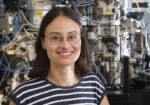
Alicia Kollár is an Assistant Professor at the Joint Quantum Institute (JQI) of the University of Maryland, starting Fall 2019. She earned her PhD at Princeton University in the LevLab and completed postdoctoral research at Stanford University's LevLab and Princeton with Houck. Her work bridges quantum optics, condensed matter physics, and atomic physics through cavity QED systems. Princeton PhD (LevLab) Postdoc at Stanford (LevLab) Postdoc with Houck at Princeton Her research focuses on quantum-optical spin glass systems and materials in cavity QED environments , exploring photon-mediated atomic interactions, polariton condensation, and cryogenic atom microscopy. She has authored 14 publications. Key trends in her 5 listed articles include multimode cavity QED , quantum phase transitions , and precision control of atomic systems using optical resonators. Scientific Awards APS Physics Viewpoint selection (2018) APS Physics Viewpoint selection (2017) She has contributed to experimental advancements in adjustable-length cavity apparatus and scanning quantum cryogenic atom microscopes . Her work with LevLab has been pivotal in cavity QED research.
Dr. Sadhna Mathura is a Senior Lecturer in the School of Chemistry at the University of the Witwatersrand, Johannesburg, South Africa. Holding both MSc and PhD degrees from Wits, she combines academic instruction, administrative duties, and active research in bioinorganic chemistry while championing STEM communication and community engagement initiatives. Her educational qualifications include: MSc, University of the Witwatersrand PhD, University of the Witwatersrand Dr. Mathura's research centers on biological chromophores ('biochromes') and metal ion interactions, with particular expertise in tetrapyrroles (porphyrins, corrins, haems, cobalamins, chlorophylls) and linear chromophores (bilirubin, biliverdin). She also investigates anthocyanin chemistry, exploring how natural color systems evolve and function with implications for sustainable development solutions. Her publication timeline reveals evolving research trajectories: early forestry-focused work (2003-2009) examined chlorophyll dynamics in black wattle, while later studies (2012-2014) transitioned to synthetic bioinorganic chemistry of vitamin B12 analogues and porphyrins. Recent publications (2024-2025) demonstrate advanced computational modeling of protein-porphyrin interactions and novel bilirubin crystallization studies. No scientific awards are documented in her current profile. While her research activity is evident through publications, specific details regarding graduate student supervision or research grant funding are not provided in available materials. Information about dedicated research laboratories or collaborative research teams is not specified in the source documentation.
Dr. Matthias Zeisberger is a researcher at the Leibniz Institute of Photonic Technology (IPHT) , working in the Fiber Photonics department. His research focuses on advanced photonic device engineering through 3D nanoprinting, with particular expertise in optical fiber functionalization, hollow-core waveguide design, and metasurface integration for enhanced light manipulation. His work addresses critical challenges in Nanophotonics , Optical Fiber Technology , and Integrated Photonics through innovations like: Nanostructured fiber tips for broad-angle light coupling 3D holograms on multicore fibers for remote focus control Optofluidic platforms for nanoparticle tracking Phase-modulated hollow-core waveguides for higher-order mode excitation Key applications span Quantum Technologies , Biophotonics , and Environmental Monitoring . While his publications demonstrate leadership in experimental and computational photonics, no formal advising roles or scientific awards are mentioned in the available texts.
Juliette Fedry is a Research Professor at the University of Cambridge, affiliated with the Medical Research Council Laboratory of Molecular Biology (MRC-LMB). Her research focuses on cellular proteostasis networks, investigating how cells maintain protein homeostasis under physiological conditions and stress. She employs advanced techniques including light microscopy, cryo-electron microscopy, and computational analysis to study molecular machines like ribosomes, chaperones, and degradation factors in proteostasis regulation. Research Interests: Proteostasis mechanisms in health and disease Stress response adaptation in protein synthesis Structural characterization of ribosome-translocon complexes Autophagy pathways in neurodegenerative diseases Publications (2023): Molecular reorganization during translation stress ER membrane protein translocation dynamics Nuclear envelope autophagy regulation Team Members: Prince Chivaka Oscar Despard Irene Diaz Lopez
Shinya Inoué (b. 1921) is a renowned researcher affiliated with the University of Chicago's Marine Biological Laboratory (MBL). Born in England to a Japanese diplomat, his early life involved international moves and struggles with the Japanese education system. A pivotal mentorship from Katsuma Dan in 1941 sparked his lifelong passion for experimental biology and cell division studies. Inoué’s work on polarized light microscopy and spindle birefringence in sea urchin eggs laid foundational insights for live-cell imaging techniques. Key Research Contributions : Pioneering use of polarized light microscopy to study mitotic spindles in living cells. Legacy : His 1988 collaboration with Dan and 2006 photographic portrait highlight his enduring impact on MBL’s scientific community.
Thomas Huser is a Professor in the Department of Physics at the University of Bielefeld's Faculty of Physics, with an adjunct professorship in the Department of Internal Medicine at the University of California, Davis. His research group develops advanced optical microscopy techniques for biological applications, focusing on ultra-sensitive imaging of cellular and molecular systems. Physics MA, University of Basel (1992) Physics MS, University of Basel (1994) Physics Ph.D., University of Basel (1998) Postdoc in Materials Science, Lawrence Livermore National Laboratory (1998-2000) Huser's research spans multiple cutting-edge areas in biophotonics, including super-resolution optical microscopy, coherent anti-Stokes Raman spectroscopy (CARS), and nanosensor development. His work bridges physics, biology, and medicine, with applications in HIV research, liver cell imaging, and cancer studies. The group develops novel imaging techniques to study cellular structures at the nanoscale, including virological synapses, tunneling nanotubes, and endothelial fenestrations. His recent publications demonstrate a strong trend toward integrating advanced computational methods with optical microscopy, including deep learning for image reconstruction, novel optical designs using fiber components, and hyperspectral imaging techniques. The research spans fundamental physics of light-matter interactions to direct medical applications in liver disease, HIV transmission, and nanoparticle toxicity. Summa cum laude doctorate from University of Basel Norbert J. Kreidl Award from American Ceramic Society Excellence in Publication Award from LLNL Above and Beyond Teaching Award from Center for Biophotonics Guest Editor for Journal of Biophotonics Editorial roles at Applied Spectroscopy, Scientific Reports, and BME Frontiers Huser leads multiple major research projects funded by the European Union and German Research Foundation, including imaging aging endothelium at the nanoscale, microphysiological sample imaging for polypharmacy evaluation, and sino-German mobility programs for high-speed microscopy. His lab, the Biomolecular Photonics Group, develops innovative imaging technologies while maintaining strong clinical connections through collaborations with medical researchers. The Biomolecular Photonics Group operates state-of-the-art microscopy facilities including super-resolution systems, CARS microscopy, and custom-built imaging platforms. The group maintains international collaborations across Europe and the United States, with particular strengths in translating fundamental optical physics into biomedical applications.
Prof. Dr. Walter Pfeiffer is affiliated with the Faculty of Physics at the University of Bielefeld, specializing in ultrafast nanooptics and quantum systems . His research spans attosecond spectroscopy, plasmonics, and coherent control of nanoscopic fields. Email: pfeiffer@physik.uni-bielefeld.de Research interests include: Ultrafast electron dynamics in nanomaterials Quantum emitter interactions in plasmonic cavities Adaptive optimization of optical nanoantennas Coherent two-dimensional nanoscopy Scientific awards include grants from the German Research Foundation and the AvH grant (2020). He developed the QDT toolbox for simulating quantum systems (2024). Selected publications (2017-2025) address topics like: Attosecond streaking spectroscopy Weak localization in nanostructures Plasmon-exciton coupling Two-dimensional photoelectron spectroscopy
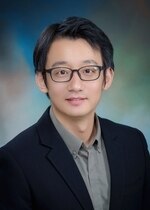
Bo Chen, PhD, is an Assistant Professor in the Department of Neurobiology at the University of Texas Medical Branch (UTMB). Holding a doctorate in Applied Biomedical Science from the University of Reading, his research focuses on developing innovative strategies for spinal cord injury (SCI) recovery through molecular neuroscience and translational approaches. B.Sc. Biological Science - University of Birmingham, U.K. M.Sc. Biomedical Science - Durham University, U.K. Ph.D. Applied Biomedical Science - University of Reading, U.K. Research spans two primary domains: (1) Developing multidisciplinary methods to examine pathological changes in spinal neurons and circuits post-SCI, and (2) Creating translational treatments to enhance brain-spinal cord connectivity for functional recovery. His work employs advanced techniques including neuronal visualization, behavioral analysis, and molecular interventions. Publications demonstrate expertise in neural plasticity, neuroregeneration, and neurotherapeutic development. Recent studies focus on KCC2 modulation, propriospinal neuron engineering, and excitatory neuron swelling reduction. Methodological innovations include optical clearing, light sheet microscopy, and AI-driven image analysis. Collaborative efforts involve Harvard Medical School, Boston Children's Hospital, and international institutions. Research methodologies combine molecular neuroscience, behavioral quantification, and neuroengineering approaches to understand and repair injured spinal circuits.
Dr. Joseph R. Lakowicz is a Professor of Biochemistry and Molecular Biology at the University of Maryland School of Medicine and serves as Director of the Center for Fluorescence Spectroscopy (CFS), which he established in 1988. He has maintained continuous NIH funding for 35 years and authored over 600 peer-reviewed publications, 23 books, and 40 U.S. patents. Education Ph.D. in Chemistry, University of Illinois, Urbana (1973) NATO Postdoctoral Fellow in Nuclear Magnetic Resonance Biophysics, Oxford University Research Focus Dr. Lakowicz pioneered plasmon-controlled fluorescence and radiative decay engineering, enabling breakthroughs in sub-diffraction imaging, LED efficiency, and biosensing. His work spans fluorescence spectroscopy, lifetime imaging, and development of novel probes. Scientific Leadership Founding Editor-in-Chief: Journal of Fluorescence , Journal of Biomedical Optics Co-Editor-in-Chief: Plasmonics Scientific Advisory Board Member: Multiple biotech and optoelectronics companies Education & Outreach He developed an internationally renowned graduate-level video lecture series on fluorescence spectroscopy and co-founded a week-long hands-on course attended by over 1,100 senior scientists globally.
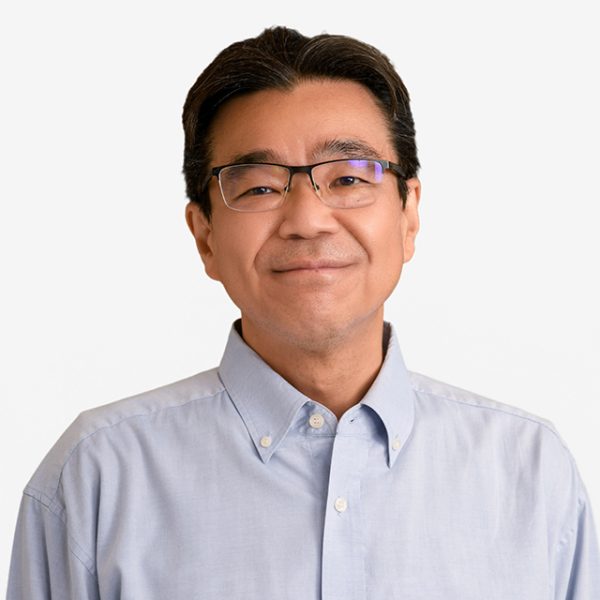
Jin Nakashima is a Senior Research Scholar at the Analytical Instrumentation Facility of North Carolina State University. His expertise combines advanced microscopy with plant science research, focusing on cell wall dynamics in microgravity environments and lignin engineering in bioenergy crops. He has over 20 years of experience operating state-of-the-art light and electron microscopes for biological and non-biological specimen analysis. Education: MS in Wood Science and Technology, Graduate School of Agriculture, Kyoto University PhD in Wood Science and Technology, Graduate School of Agriculture, Kyoto University Research Interests: Plant cell wall remodeling under microgravity Lignin biosynthesis in bioenergy crops Alfalfa forage quality improvement through genetic manipulation Correlative microscopy applications in plant biology
Thomas Renger is a Professor and Department Head at the Johannes Kepler University Linz , leading the Department of Theoretical Biophysics . He is affiliated with the Institute for Theoretical Physics and contributes to interdisciplinary research in quantum biology. Current projects focus on photosynthetic energy transfer , excitonic couplings , and computational modeling of pigment-protein systems Collaboration extends to the Institute of Medical and Biomechatronics Research interests encompass quantum mechanics in biological systems, with emphasis on chlorophyll interactions and protein dynamics in light-harvesting complexes. His computational approaches bridge theoretical biophysics with experimental validation . Recent publications highlight: Modeling STIM1-induced Orai1 activation in cellular signaling Theoretical frameworks for excitonic couplings in Photosystem I 2D spectroscopy analysis of chlorophyll-binding proteins Projects include EU-funded initiatives and Austrian Science Fund (FWF) grants on photosystems II and computational microscopy.
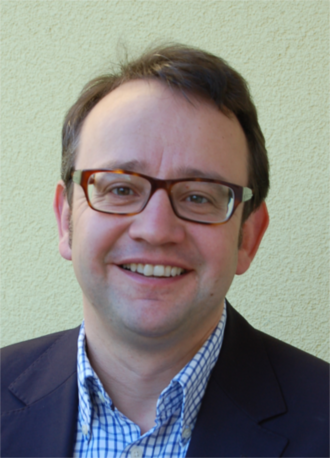
Dr. Frederik Verweij is an Assistant Professor in the Department of Cell Biology, Neurobiology and Biophysics at Utrecht University's Faculty of Science since 2021. His research focuses on the intricate mechanisms of extracellular vesicle (EV) biology, particularly exosomes, using advanced imaging techniques in zebrafish models. Prior to his current position, he served as a Researcher at INSERM U1266, IPNP in Paris (2017-2021) and completed postdoctoral work at the Institut Curie in Paris (2014-2017), where he investigated exosome research under the guidance of Dr. Graça Raposo. Dr. Verweij earned his PhD from the Exosome Research Group led by Dr. D. Michiel Pegtel (2009-2014). Dr. Verweij's research interests span multiple aspects of cell biology, with particular expertise in exosome biogenesis, trafficking, and function. His work integrates cell biology, molecular biology, biochemistry, and advanced imaging techniques to study protein trafficking, virology, and signaling in the endo-exosomal pathway. He has pioneered the use of zebrafish as a model organism for in vivo EV imaging, developing innovative approaches for live imaging, dynamic correlative light and electron microscopy (CLEM), optogenetics, and electron microscopy. His laboratory investigates how extracellular vesicles mediate intercellular communication in physiological and pathological contexts, with implications for cancer, viral infections, and potential therapeutic applications. Analysis of Dr. Verweij's publication record reveals a strong trajectory in extracellular vesicle research, with increasing focus on in vivo imaging techniques and physiological relevance. His work has evolved from basic mechanisms of exosome biogenesis and viral protein sorting to sophisticated in vivo models that capture the dynamic nature of EV communication within living organisms. The zebrafish model has become a cornerstone of his research approach, allowing unprecedented visualization of EV trafficking between organs and during development. Recent publications highlight technical innovations in EV imaging and quantification, demonstrating his leadership in methodological advancements within the EV field. ERC Starting grant - European Research Council 5-year grant (2021) Vidi award - Dutch Research Council (NWO) 5-year grant (2021) KWF Young Investigator Grant (2020) ASEMV 2020 Young Investigator Award INSERM CRCN laureate (tenure) via national competition (2020) Multiple featured abstracts and travel awards from ISEV meetings Dr. Verweij has successfully secured substantial funding as both principal investigator (ERC Starting grant, Vidi award, KWF Young Investigator Grant) and co-PI (INCa PLBIO project, ARC project grants). His research group at Utrecht University combines expertise in cell biology, imaging, and zebrafish models to investigate fundamental questions in EV biology. He actively contributes to the scientific community through extensive peer review activities for high-impact journals and funding agencies, and has taken leadership roles in organizing international workshops, including co-chairing the first international 'EV imaging in vivo workshop' in 2020. Dr. Verweij serves on the scientific board of the French Society for Extracellular Vesicles and has established himself as a rising leader in the extracellular vesicle research community.
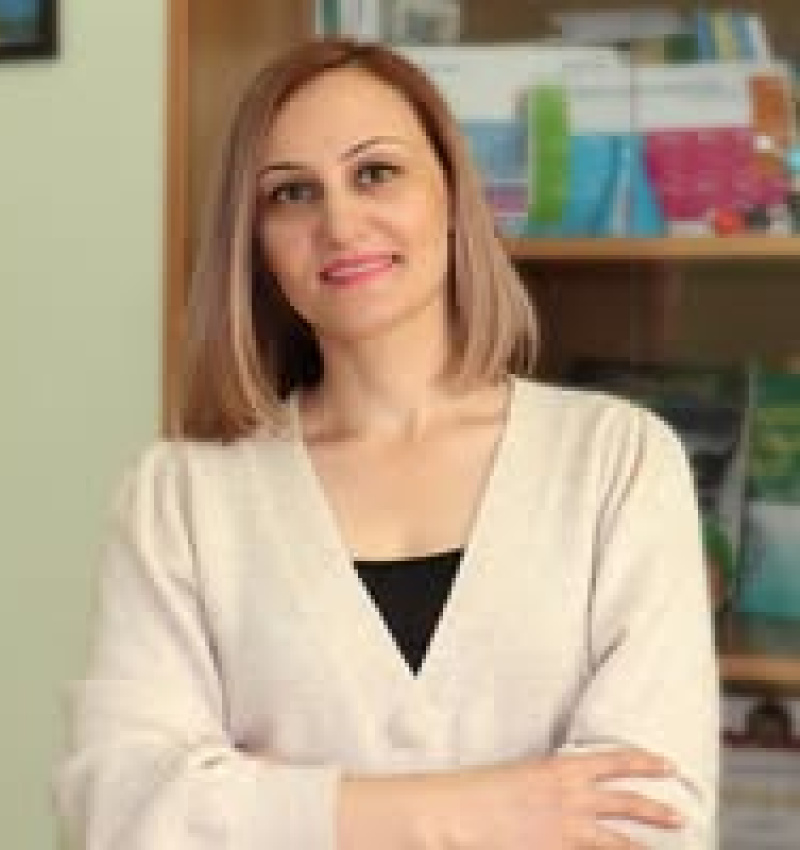
Hayarpi Mantashi Simonyan serves as Head of Department and Associate Professor at Yerevan State University's Institute of Pharmacy, Department of Pharmacochemistry and Pharmacognosy. Her academic leadership spans institutional roles including membership in YSU's Scientific Council (2015-2023) and chemistry expertise for EU4INNOVATION projects (2019-2022). Yerevan State University, Faculty of Chemistry (2001-2006): Certified Specialist Yerevan State University (2014): Candidate of Sciences in Chemical Sciences Her research centers on asymmetric synthesis of non-protein amino acids with therapeutic applications. Current investigations focus on G-quadruplex DNA binding compounds for anticancer activity, neuroprotective phytochemicals for Alzheimer's disease, and thioxo-triazole-bearing dipeptides with ROS-scavenging properties. Her work bridges organic synthesis with biological evaluation, emphasizing structure-activity relationships in amino acid derivatives. Analysis of her 15 most recent publications reveals dominant trends in anticancer drug development (47% of articles), neuroprotective compound research (13%), and novel synthetic methodologies (40%). Key subfields include G-quadruplex DNA targeting, alkyne-functionalized amino acids, and heterocyclic triazole derivatives, demonstrating consistent specialization in bioactive non-proteinogenic amino acids. State Prize in exact and natural sciences (2015) for 'Efficient small-scale production technology of new generation non-protein amino acids' Simonyan maintains active international collaborations including joint programs with Peoples' Friendship University of Russia and research cooperation with Naples' Institute of Biostructures and Bioimaging. Her grant portfolio includes EU4INNOVATION project funding (2019-2022) and multiple conference participations across 8 countries, reflecting strong transnational research engagement. Leadership extends to heading Armenia's Young Chemists Association (2013-2023) and Armenian Association of Biotechnologists (2014-2023). She directs the Department of Pharmacochemistry and Pharmacognosy research group, focusing on synthetic amino acid chemistry with applications in oncology and neurodegenerative diseases. Current projects involve molecular design of G-quadruplex binders and clove-derived neuroprotectants, with emphasis on translational pharmaceutical development.
Dr. Patrycja Brook is a Royal Society University Research Fellow in the Department of Chemistry at Durham University. Her research focuses on organic materials for advanced photonic and biomedical applications, particularly chiral systems exhibiting circularly polarized luminescence (CPL) and thermally activated delayed fluorescence (TADF) for OLEDs. Research Interests: Design of chiral BODIPY and borafluorene photosensitizers for photodynamic therapy Development of CPL-active lanthanide systems and organic probes for bioimaging Engineering efficient near-infrared OLED emitters Study of Dexter energy transfer mechanisms in hyperfluorescence systems Photophysical properties of donor-acceptor π-conjugated macrocycles Applications of time-resolved luminescence imaging Scientific Awards: Royal Society University Research Fellow Supervision Students: Connor Armstrong Paolo Mastroeni