Prof. Dr. Karin Danzer is a Group Leader at the Department of Neurology, Ulm University, and affiliated with the German Center for Neurodegenerative Diseases (DZNE). Her research investigates pathomechanisms in neurodegenerative disorders—particularly ALS and Parkinson's disease—focusing on protein aggregation (alpha-synuclein, TDP-43), neuroinflammation, and epigenetic regulation. She employs multi-omic single-cell sequencing, spatial transcriptomics, and in vivo models to study disease progression, vulnerability of neural cell populations, and therapeutic interventions. Research Focus: Her work spans (1) Prion-like propagation of misfolded proteins, (2) Aging-trauma interactions in neurodegeneration, (3) Heat-shock-protein chaperone systems, (4) Viral-infection triggers for ALS, (5) Neuroimmune dysregulation, and (6) Epigenetic biomarkers in blood/brain tissue. She develops novel TDP-43 mouse models for real-time tracking of protein aggregation. Team & Collaborations: Leads a team of 10+ researchers investigating molecular pathways through integrated wet-lab/bioinformatics approaches. Key projects include CRC 1506 'Aging at Interfaces' and CRC 1149 'Danger Response after Trauma'. Biomarker Development: Validates Contactin-associated protein-like 4 (CNTNAP4) for major depressive disorder and neurofilament light chain for ALS prognostics.
Peter Sundström is a Professor in Neurology and Senior Consultant Physician at the Department of Clinical Sciences, Umeå University, affiliated with the Neurosciences section at Norrlands universitetssjukhus. His research focuses on environmental risk factors for multiple sclerosis (MS), particularly the roles of Epstein-Barr virus (EBV), vitamin D, and other infectious agents. Key affiliations: Umeå University, Swedish MS Association (SMSS), and national health agencies. Leadership roles: Head of Neurosciences unit, Chair of SMSS research board since 2017. Research Interests : Sundström investigates presymptomatic biomarkers in MS, including seroreactivity to EBV and HHV-6A, neurofilament light chain levels, and metabolic factors like leptin. His work spans epidemiology, immunology, and clinical trials. Publications Trends : Recent articles emphasize viral interactions (EBV, HHV-6A), vitamin D metabolism, immune responses post-rituximab, and longitudinal MS cohorts. Studies often employ presymptomatic case-control designs and national registries. Scientific Contributions : He has contributed to understanding MS pathogenesis through biomarker analysis and led clinical trials on therapies like rituximab and dimethyl fumarate. His work informs national MS guidelines via Metodboken.
R. Luke Wiseman is a Professor of Molecular and Cellular Biology at Scripps Research in La Jolla, California. He leads the Wiseman Lab , focusing on stress-responsive signaling pathways and their implications in diseases such as neurodegeneration, metabolic disorders, and aging-related conditions. His work emphasizes leveraging endogenous cellular defense mechanisms for therapeutic intervention. Wiseman holds a PhD in Chemistry from The Scripps Research Institute (2005) and a B.S. in Chemistry from the University of Virginia (2001). He has held academic positions at Scripps Research since 2014, including membership in the Skaggs Graduate School. His research investigates the unfolded protein response (UPR), integrated stress response (ISR), and heat shock response (HSR), with a focus on their roles in maintaining proteostasis. Recent studies highlight pharmacological activation of these pathways to combat diseases like Charcot-Marie-Tooth neuropathy and obesity-related metabolic dysfunction. Wiseman has mentored over 30 graduate students and postdoctoral researchers, many of whom have transitioned to academic and industry roles. Key awards include the 2019 Scripps Research Outstanding Mentor Award and the 2017 Glenn Award for Aging Research. His lab operates out of the Molecular Biology building at Scripps Research, with a focus on translational research bridging basic science and clinical applications. Collaborations span structural biology, pharmacology, and computational modeling to advance therapeutic strategies targeting cellular stress pathways.
Dr. Jessica Damoiseaux is an Associate Professor at Wayne State University, affiliated with the Institute of Gerontology and Department of Psychology. She directs the Ben L. Silberstein Institute for Brain Health and investigates cognitive and brain health changes in aging and neurodegenerative disease. PhD in Cognitive Neuroscience (2008), VU University Medical Center M.Sc. in Psychology (2003), Utrecht University Her research focuses on identifying risk factors for neurodegenerative disease, leveraging MRI to study brain networks, white matter integrity, and structural volumetrics. She explores blood-based biomarkers, genetics, and lifestyle interventions (yoga, exercise) to mitigate cognitive decline. Recent publications (2024–2006) span neuroimaging, aging, Alzheimer's disease, and functional connectivity. Themes include subjective cognitive decline, brain network plasticity, biomarkers, prenatal influences, and multimodal data integration. Collaborations include Dr. Neha Gothe’s exercise trials and interdisciplinary brain network standardization efforts.
Christine Papadakis is a Professor of Experimental Physics - Soft Matter at the TUM School of Natural Sciences , Technical University of Munich. Her research focuses on polymer physics, block copolymers, responsive polymers, and thin films, with applications in medical materials. She employs advanced scattering techniques (light, X-rays, neutrons) to study self-assembly, phase behavior, and kinetics under environmental changes. Her recent work highlights include Comparative swelling dynamics of thermoresponsive thin films under water vapor exposure Pressure-dependent micellar aggregation in diblock copolymers pH and temperature-responsive micelle formation Photo-modulation of azo dye-functionalized polymers Her publications align with UN Sustainable Development Goals through innovations in polymer sustainability and medical applications. She serves as Editor-in-Chief of Colloid & Polymer Science since 2015.
Pete Calabresi is Professor of Neurology at the Johns Hopkins University School of Medicine, where he leads a dynamic research laboratory focused on the neurobiology of multiple sclerosis (MS) and CNS demyelination. His work bridges fundamental neuroscience and clinical neurology, with a focus on understanding how immune cells impair remyelination and drive neurodegeneration. His research interests include: Neuroimmunology of MS Endogenous remyelination mechanisms Glial cell biology (astrocytes, oligodendrocytes, microglia) Neurodegeneration and axonal injury Metabolomics and biomarker discovery in neurological disease Human iPSC-based disease modeling Dr. Calabresi's recent publications reveal a strong trend toward integrating advanced technologies—such as spatial transcriptomics, CEST MRI, and iPSC models—to dissect the molecular and cellular mechanisms of CNS injury in MS. His work frequently explores immune-glial crosstalk, with a focus on T cell modulation of oligodendrocyte precursor cells and the role of reactive astrocytes in neurotoxicity. His research is generously supported by: National Institutes of Health (R01NS041435, R01NS082347, U01NS111678) Department of Defense (W81XWH1910622) National Multiple Sclerosis Society (NMSS 1907-34756, NMSS 1904-33800) Dr. Calabresi actively mentors graduate students and postdoctoral fellows, including Leslie Kirby and Jaime Gonzalez Cardona. He leads a multidisciplinary team comprising research associates, clinical fellows, laboratory managers, and research technologists. His lab's collaborative approach integrates animal models, human tissue analysis, and cutting-edge imaging to advance neuroprotective and reparative strategies for MS.
Professor André Strydom is a Professor of Intellectual Disabilities at King's College London's Institute of Psychiatry, Psychology & Neuroscience, where he leads research on aging-related issues and cognitive aspects of Down syndrome, including Alzheimer's disease. He directs the Neurodevelopmental Disorders Clinical Trials Centre (ND-CTC) and leads the NHSE's LeDeR partnership addressing avoidable deaths in people with learning disabilities and autistic people. Professor Strydom's research focuses on the complex relationship between intellectual disabilities, aging, and neurodegenerative conditions. His primary expertise lies in Down syndrome and Alzheimer's disease, health inequalities affecting people with intellectual disabilities, and developing clinical interventions for neurodevelopmental disorders. He has established himself as a leading expert in understanding the cognitive phenotype associated with trisomy 21 and its progression to dementia, with particular emphasis on biomarker development and clinical trial readiness. His extensive publication record demonstrates a strong focus on biomarker development for Alzheimer's disease in Down syndrome, cognitive assessment tools validated for this population, and health service research addressing disparities in care. Recent work has increasingly incorporated advanced neuroimaging techniques, blood-based biomarkers, and large-scale epidemiological studies to better understand the trajectory of cognitive decline in Down syndrome and identify potential intervention points. Professor Strydom leads multiple significant research initiatives including the LonDownS Consortium, Horizon21 European clinical trial network, and Go-DS21 study. His work has attracted substantial funding from major organizations including the Wellcome Trust, Medical Research Council, National Institutes of Health, and Jérôme LeJeune Foundation. He serves as Chair of the Intellectual Disabilities Dementia Interest group and was Past President of the Trisomy 21 Research Society, demonstrating his leadership in the international research community. His laboratory and research teams include the Neurodevelopmental Disorders Clinical Trials Centre which conducts phase II/III clinical trials for conditions associated with Autism, Down syndrome, and Fragile X syndrome. The London Down Syndrome Consortium brings together clinicians, geneticists, psychologists, and scientists to understand dementia in people with Down syndrome. The LeDeR program works with NHS England to address health inequalities for people with learning disabilities and autistic people through systematic review of deaths and development of quality improvement initiatives.
Christina Campo, PhD, is a researcher affiliated with the Faculty of Psychology and Educational Sciences in Brussels, Belgium. Her work intersects medical research and genetic studies, particularly focusing on hematological disorders and their molecular underpinn'the faculty affiliation suggests broader academic engagement. Her research includes contributions to understanding the genetic links between immunoglobulin light-chain amyloidosis and multiple myeloma, as evidenced by her 2014 publication in Leukemia . While her specific role within the faculty is not detailed, her research output highlights cross-disciplinary expertise in medicine and genetics. As of the provided data, Christina Campo has not disclosed email contact information or scientific awards. Her academic activities are primarily reflected in her single peer-reviewed publication, which explores the genetic basis of blood-related diseases.
Elizabeth Glater is an Associate Professor of Neuroscience at Pomona College, where she has been affiliated since 2014. Currently on leave for the 2025-2026 academic year, she continues to lead research on the genetic and neuronal basis of behavior using Caenorhabditis elegans as a model organism. Education: Ph.D. from Harvard University, M.A. from Brown University, B.A. with High Honors from Swarthmore College Research Interests : Dr. Glater's work focuses on how genetic variation and environmental factors modify neural circuits to produce diverse behaviors. Her lab investigates C. elegans food choice mechanisms, olfactory recognition of pathogens, and the role of natural genetic variation in behavior. Scientific Awards : National Science Foundation Research Starter Grant (2012-13) for studying genetic mechanisms of food preference Collaborations & Teaching : Collaborates with Charles Taylor (Chemistry Department, Pomona College) to analyze odorants via SPME-GC-MS. Teaches courses like Genes and Behavior with Laboratory , Introduction to Neuroscience with Laboratory , and Senior Experimental Thesis .
Martin Turner is Professor of Clinical Neurology & Neuroscience at the University of Oxford's Nuffield Department of Clinical Neuroscience within the Medical Sciences Division. He serves as a Consultant Neurologist at John Radcliffe Hospital and is Associate Director of the Oxford University Clinical Academic Graduate School (OUCAGS). As a Senior Research Fellow at Green Templeton College, he plays a significant role in academic leadership and mentoring. MA (Cantab), MBBS, PhD, FRCP (Lond) Senior Research Fellow, Green Templeton College Associate Director, Oxford University Clinical Academic Graduate School Consultant Neurologist, John Radcliffe Hospital ORCID: 0000-0003-0267-3180 Professor Turner's research focuses on identifying biomarkers for amyotrophic lateral sclerosis (ALS) and motor neuron disease (MND). His work spans from molecular studies to neural network analysis, using advanced techniques including MRI, MEG, proteomics, and extracellular vesicle extraction. He leads the Oxford Study for Biomarkers in MND (BioMOx), which investigates potential diagnostic and prognostic biomarkers through imaging and biofluid analysis. His groundbreaking work on neurofilament light chain as a blood-based biomarker earned his team the Sean M. Healey International Prize for Innovation in ALS in 2023. He also co-leads the £8m NIHR-funded EXPERTS-ALS initiative and directs the Families for the Treatment of Hereditary MND (FaTHoM) program and the C9ORF72 National Registry (ACORN). His publication record reveals a consistent focus on ALS biomarker development, with recent work examining cerebrospinal fluid biomarkers, genetic factors in ALS/FTD, lipid metabolism in neurodegeneration, and neuroimaging techniques to track disease progression. His research increasingly integrates multi-modal approaches, combining neuroimaging with biochemical analysis to develop comprehensive biomarker panels. Professor Turner has received significant recognition for his work, most notably the Sean M. Healey International Prize for Innovation in ALS in 2023. His leadership in the £8m NIHR-funded EXPERTS-ALS program demonstrates his standing as a major figure in international ALS research. Beyond his research, Professor Turner actively mentors early career clinician scientists through his role at OUCAGS, teaches Oxford University medical students, and educates junior doctors and regional GPs about neurological diseases. He chairs the Case Report Podcast for Practical Neurology, demonstrating his commitment to medical education and knowledge dissemination. He leads multiple research initiatives including the Oxford Motor Neuron Disease Centre and the FMRIB Neurodegeneration Group, collaborating with researchers like Alexander Thompson, Kevin Talbot, and Charlotte Stagg. His work bridges basic science and clinical application, with the ultimate goal of improving diagnosis, prognosis, and treatment for patients with ALS and related disorders.
Christopher Lee Baldwin is an Assistant Professor in the Department of Physics & Astronomy at Michigan State University, where he leads a research group focused on theoretical condensed matter physics. He joined MSU in August 2023 after holding postdoctoral positions at the University of Maryland and the National Institute of Standards and Technology (NIST). Education: Ph.D. in Physics, University of Washington (2018) B.Sc. in Physics, Carnegie Mellon University (2013) Research Focus: Baldwin's work centers on non-equilibrium quantum systems, with particular emphasis on disorder effects in quantum dynamics. Primary research domains include quantum annealing for optimization problems, Lieb-Robinson bounds for information propagation in disordered systems, quantum spin glasses, and connections between quantum chaos and many-body localization. His group explores fundamental mechanisms in quantum computing and statistical physics. Scientific Recognition: National Research Council Postdoctoral Fellowship (2018-2021) Academic Advising: Currently mentors graduate students Ian Neuhart and Shahriyar Dadgar, and undergraduate researcher An Le. Teaches undergraduate optics (PHY 431) and graduate statistical mechanics (PHY 831).
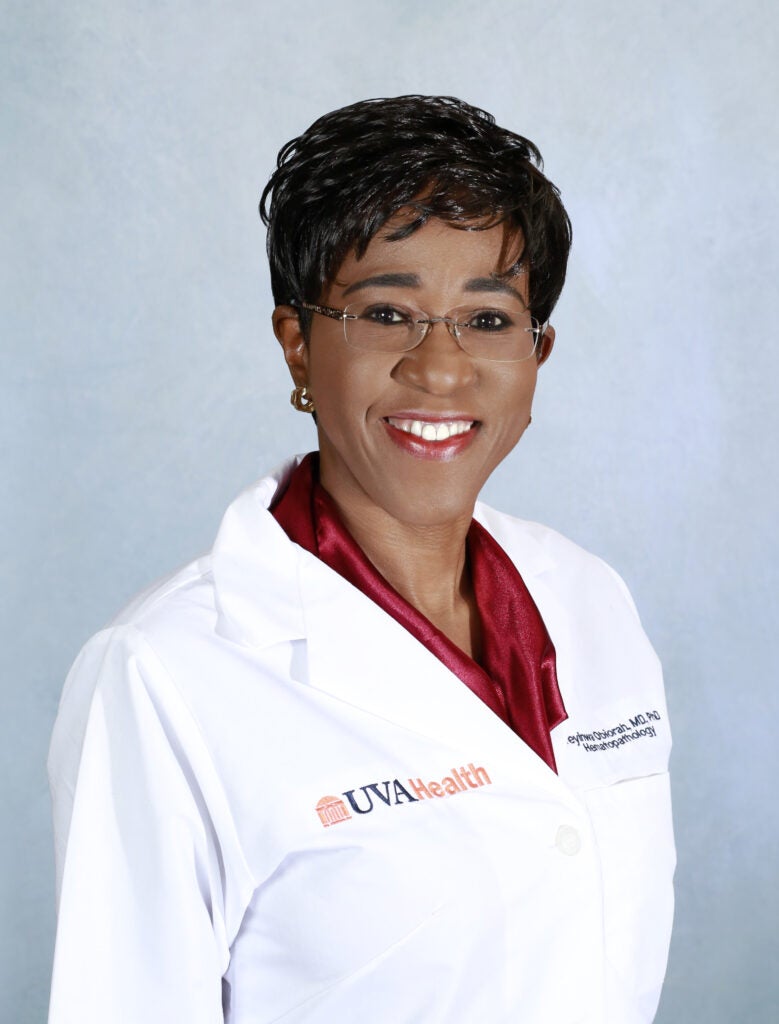
Ifeyinwa E. Obiorah, M.D., Ph.D. serves as an Associate Professor of Pathology at the University of Virginia School of Medicine, specializing in Hematopathology within the Department of Pathology. Her clinical practice focuses on hematopathology diagnostics with particular expertise in lymphoma subtyping. Her research centers on molecular characterization of T-cell lymphomas, especially cutaneous variants, with significant contributions to understanding megakaryocyte abnormalities in myelofibrosis, RUNX1 germline mutations, and diagnostic flow cytometry innovations. Recent work explores lymphoma transformation mechanisms, CNS involvement patterns, and technological advances in urine analyzers. Her publication pattern shows consistent high-impact contributions across hematology, oncology, and laboratory medicine journals. Dr. Obiorah maintains active research collaborations evidenced by multi-institutional publications. Her work bridges diagnostic pathology with translational research, particularly in lymphoma classification systems and germline predisposition to hematologic malignancies. The PubMed record confirms her as a consistently productive researcher with 46 indexed publications spanning 2008-2025. She has contributed extensively to diagnostic methodology refinement, particularly regarding: Molecular classification systems for lymphomas Germline mutation implications in myeloid neoplasms Flow cytometry adaptations for novel therapies Cutaneous lymphoma diagnostic criteria Her educational background includes medical training at Nnamdi Azikiwe University (Nigeria), Anatomic/Clinical Pathology residency at Georgetown University, and Hematopathology fellowship at the National Institutes of Health - reflecting a strong foundation in both clinical practice and research methodology.
Izabella Obál is a Clinical Associate Professor at Aalborg University Hospital, affiliated with the Department of Clinical Medicine under The Faculty of Medicine. She is also part of the Center for Rehabilitation Robotics, focusing on interdisciplinary research at the intersection of neurology and robotics. Her work emphasizes neurological disorders like amyotrophic lateral sclerosis (ALS), motor neuron disease, and rehabilitation engineering. She has contributed to projects such as the CRERoB initiative (2024–2027) and the development of adaptive hybrid control frameworks for ALS patients. Her research spans biomarker development, diagnostic aids using transcranial magnetic stimulation, and assistive robotics for severely disabled individuals. Collaborations include experts in neurology, biomedical engineering, and robotics. Obál’s research outputs (17+ publications) highlight clinical-neuroengineering solutions, including studies on Penn upper motor neuron scoring variability and thrombolysis in pregnancy-related strokes. Her work is published in journals like Journal of Neurology and Annals of Clinical and Translational Neurology . She actively participates in multidisciplinary teams advancing rehabilitation robotics, aiming to improve quality of life for individuals with progressive neurological conditions. Current projects focus on tongue-brain interfaces and exoskeleton systems for motor-impaired patients.
Allan Mackenzie-Graham is an Assistant Professor at the University of California, Los Angeles (UCLA) with affiliations in Neurology and Neuroscience. His research focuses on neuroimaging, neuroimmunology, and neurodegenerative diseases, particularly multiple sclerosis and sex-based differences in brain anatomy. His work integrates computational biology, magnetic resonance imaging (MRI), and preclinical models to explore neuroprotective mechanisms and pathological processes. Research Interests: His studies span neuroimaging methodologies (e.g., voxel-based morphometry, CLARITY), hormonal therapies (e.g., estriol, estrogen receptors), and sex differences in neurodegenerative diseases. Key topics include axonal injury, brain atrophy, and neuroinflammatory processes, often using mouse models to bridge bench-to-bedside applications. Publications: Recent work highlights computational advancements in brain segmentation, hormonal neuroprotection in multiple sclerosis, and cross-species neuroimaging comparisons. Projects involve machine learning (e.g., SwinUNETR), neuroanatomical sex differences, and in vivo/ex vivo MRI analysis.
Olayemi O. Adeoye, MBBS, PhD, MPH holds dual academic appointments at Loma Linda University as Assistant Professor in the Physiology Division of the School of Medicine and Associate Professor in the Pharmaceutical and Administrative Sciences department of the School of Pharmacy. His career spans clinical medicine, public health, and physiological research with a focus on vascular adaptation mechanisms. His educational background includes: MBBS (Bachelor of Medicine & Surgery) from University of Lagos (2004) Postbaccalaureate Certificate from Loma Linda University (2007) MPH (Master of Public Health) from Loma Linda University (2008) PhD in Physiology from Loma Linda University (2013) Adeoye's research centers on vascular smooth muscle responses to hypoxia, particularly in fetal development and pregnancy contexts. His work investigates cytochrome P450 regulation during pregnancy, glucocorticoid receptor homeostasis in obese pregnancies, and cerebrovascular adaptation mechanisms. Current projects include molecular markers of steroid sensitivity in fetal cells (2020-2025) and the Federal Hispanic Center of Excellence in Pharmacy (2022-2027). His 22 publications since 2010 demonstrate consistent contributions to vascular physiology, with recent work expanding into clinical guideline evaluation and cancer pharmacology. His scholarly output reveals strong focus areas: Chronic hypoxia effects on fetal cerebrovascular function (2013-2017) VEGF receptor-mediated vascular remodeling (2010-2014) Neuropeptide Y and sympathetic nervous system roles in hypoxic adaptation (2014-2015) Recent expansion into pregnancy-related metabolic research (2023-2024) Adeoye actively participates in professional development through conferences including Experimental Biology (2018), Meharry Translational Research Center Health Disparities Conference (2016), and Federation of Societies of Experimental Biology meetings. His teaching portfolio includes foundational biomedical science courses (RXPS 542/783) across multiple summer sessions from 2020-2025, reflecting commitment to medical and pharmacy education.