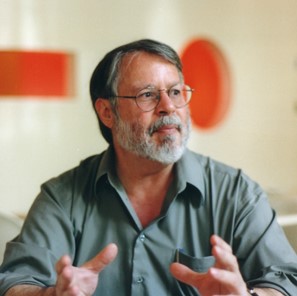
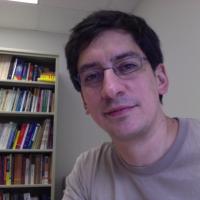
Mark Liberman is a Trustee Professor at the University of Pennsylvania , holding appointments in the Department of Linguistics and Department of Computer and Information Science . He serves as Director of the Linguistic Data Consortium and Faculty Director of Ware College House . His career spans linguistics, speech technology, and computational methods. Education: Harvard University (1965-1969), MIT (M.S. 1972, Ph.D. 1975) Professional Experience: AT&T Bell Laboratories (1975-1990), University of Pennsylvania (1990-present) His research interests include: Corpus-based Phonetics : Analyzing speech patterns via large-scale datasets. Clinical Applications : Developing speech biomarkers for neurodegenerative diseases. Tonal Phonology : Studying lexical tone and intonation in languages like Yoruba and Mandarin. Formal Annotation Models : Creating frameworks for linguistic data standardization. Recent publications highlight automated speech analysis, cross-linguistic prosody, and digital biomarkers for conditions like ALS-FTD and Alzheimer’s. His collaborations span computational linguistics , neurology , and cognitive science . Scientific awards include the IEEE James L. Flanagan Award (2017), Antonio Zampolli Prize (2010), and fellowships from the AAAS and Linguistic Society of America . He advises PhD students May Chan and Jonathan Him Nok Lee and contributes to editorial boards for journals like Cognition and Annual Review of Linguistics . His work bridges speech science , language technology , and neurocognitive research .
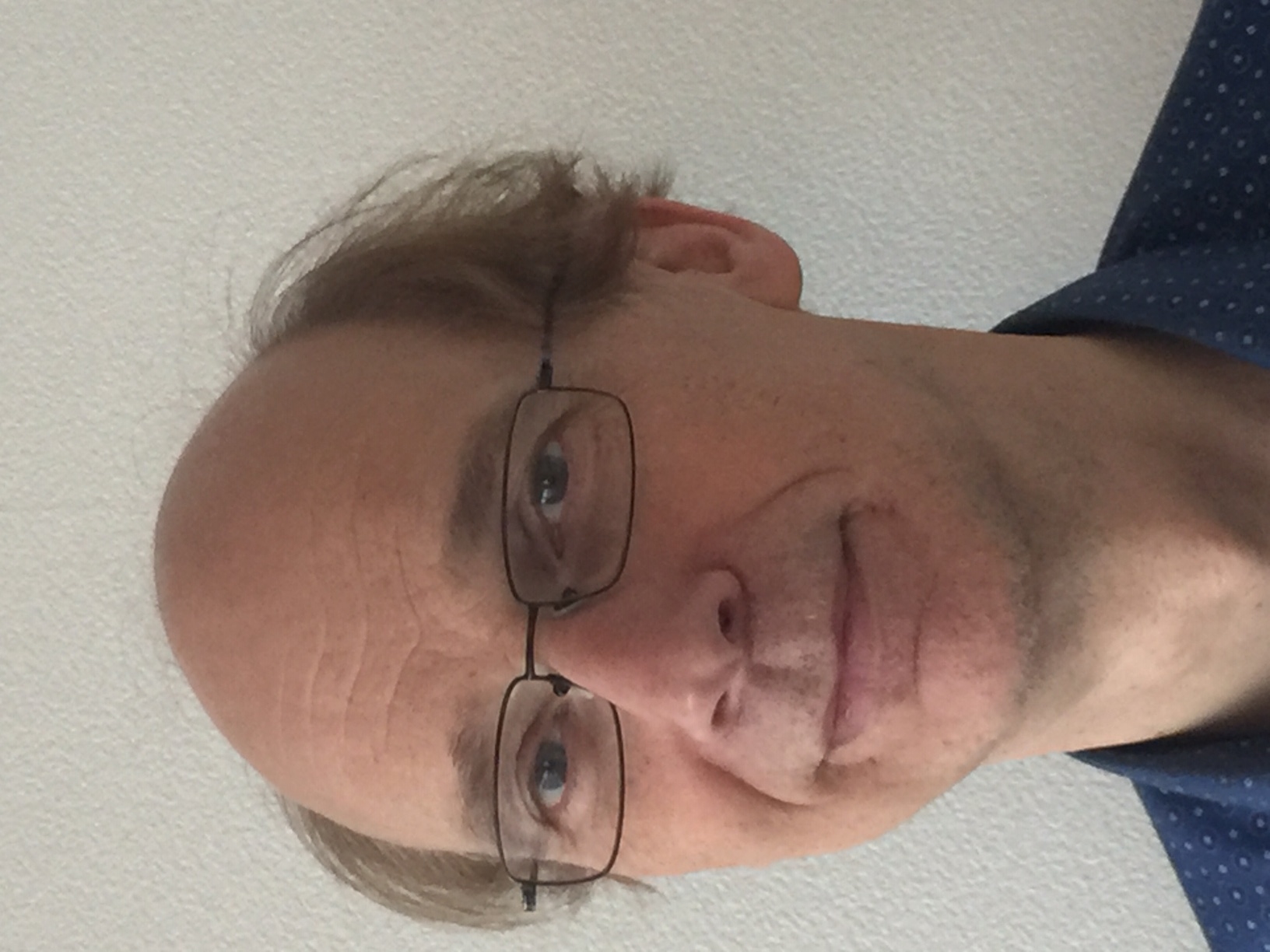
Paul Boersma is a Professor of Phonetic Sciences at the University of Amsterdam within the Faculty of Humanities. His research explores how phonetic, phonological, and morphological phenomena emerge through computational modeling using artificial neural networks and Optimality Theory, with a focus on multi-level constraint interactions and distributional learning. University of Amsterdam Faculty of Humanities Phonetic Sciences Key research areas include: Computational Modeling : Simulations of phonological category emergence from phonetic data Optimality Theory : Gradual Learning Algorithm applications BiPhon Framework : Parallel bidirectional phonology/phonetics models Statistical Learning : Cross-situational and distributional learning mechanisms Recent publications emphasize: 2025: Inclusive speech recognition systems using Whisper model 2025: F0 ratio analysis for creaky voice diagnostics 2024: Prosodic clitics in child speech and checked tones in Shanghai Chinese 2023: Distributional learning in developmental language disorder contexts 2022: Substance-free phonological features and ghost segment phenomena He has also contributed extensively to the Praat software for phonetic analysis, with continuous updates since 1993.
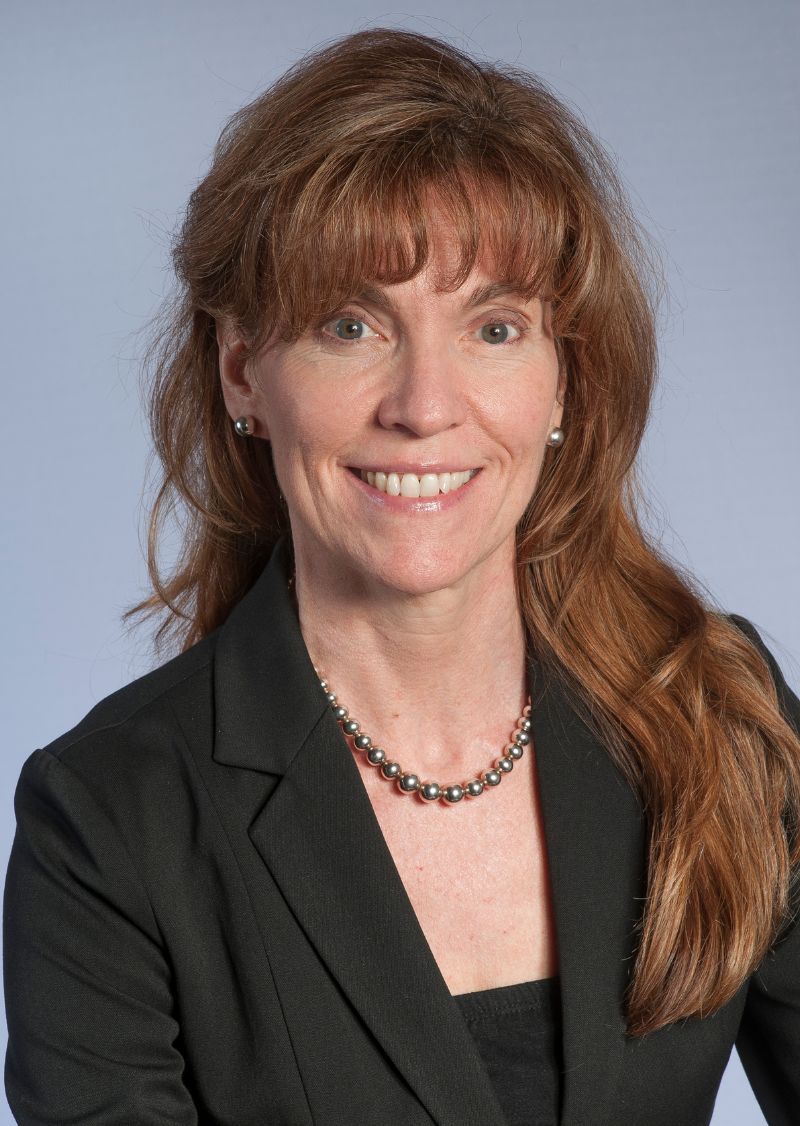
Margaret Greenwald serves as Associate Professor and Ph.D. Coordinator in the Department of Communication Sciences and Disorders (CSD) within Wayne State University's College of Liberal Arts and Sciences. Previously department chair (2014-2020), she is a Licensed and Certified Speech-Language Pathologist (CCC-SLP) recognized in 2022 as Wayne State's Outstanding Graduate Mentor in the health sciences. Her academic credentials include: M.A. in Speech-Language Pathology (University of Florida) Ph.D. in Communicative Sciences and Disorders (University of Florida) Post Doctoral Research Training in Cognitive Neuropsychology (University of Maryland, Department of Neurology) Dr. Greenwald's research centers on adult neurogenic communication disorders , specializing in aphasia, traumatic brain injury, and stroke rehabilitation through cognitive neuropsychology. Her work employs Magnetoencephalography (MEG) to map brain-behavior relationships during language and musical processing tasks, revealing critical insights for rehabilitation. She actively bridges clinical practice with neuroscience to develop evidence-based interventions. Analysis of her recent publications shows consistent focus on neuroimaging applications for understanding language disorders, with growing emphasis on telepractice implementation and the cognitive effects of musical training. Her work demonstrates strong translational value, connecting basic neuroscience to clinical rehabilitation protocols while maintaining rigorous methodological standards. Her scientific recognition includes: Outstanding Graduate Mentor in the Health Sciences, Wayne State University (2022) As an educator, Dr. Greenwald teaches graduate courses in aphasia, neuromuscular speech disorders, research methods, and doctoral seminars, plus undergraduate speech-language pathology instruction. She supervises doctoral research as Ph.D. coordinator and mentors students through clinical research projects. Her teaching integrates current neuroscience findings with clinical practice standards. She maintains active professional engagement through memberships in the American Speech-Language Hearing Association (ASHA), Academy of Aphasia, and International Neuropsychological Society, contributing to both clinical guidelines development and research community advancement.
University of Music, Drama and Media HanoverGermany
Aaron Cassidy is an American composer and conductor based in Berlin and Hannover. He serves as Professor of Composition and Director of Incontri – Institut für neue Musik at the Hochschule für Musik, Theater und Medien Hannover. His work emphasizes innovative graphical notations prioritizing physical sound production and non-geometrical rhythm theory. Cassidy’s compositions have been performed globally across 29 countries, with 12 commercial recordings on major labels like Kairos and NEOS. As a conductor, he specializes in contemporary and historical repertoire, leading over 100 world premieres with ensembles such as Ensemble Musikfabrik and ELISION. Notable engagements include the Munich Biennale and Melbourne Recital Centre. His recent research includes a 2025 reflection on non-geometrical rhythm and collaborative Erasmus+ residencies in Klagenfurt. Current projects include works for bassoon, violin-piano duet, and ANAM residency with ELISION in Melbourne (2025). Cassidy’s academic focus bridges compositional theory and performance practice. His research explores notation’s role in shaping musical interpretation, with particular attention to rhythm’s non-metric frameworks. Recent works like Reassessing Non-Geometrical Rhythm (2025) synthesize a decade of theoretical development. His teaching integrates experimental techniques and historical context, fostering innovation in Hannover’s new music institute.
Afra Alishahi is a Full Professor at Tilburg University's Department of Cognitive Science and Artificial Intelligence within the Tilburg School of Humanities and Digital Sciences. Her research focuses on computational models of human language acquisition and grounded language learning, leveraging neural models to explore how language processing and acquisition occur. She has held roles including Assistant Professor at Tilburg University (since 2011) and Postdoctoral Fellow at Saarland University (2008-2011). Her work bridges computational linguistics, cognitive science, and artificial intelligence, with contributions to understanding language learning mechanisms through models that integrate visual, auditory, and linguistic data. Education: PhD (university unspecified), with prior academic roles in Iran and Germany. Awards: CoNLL 2017 Best Paper Award, 2023 Outstanding Paper Award, NWO Aspasia Grant (2015), and NWO Natural Artificial Intelligence Grant (2015). Her research has been supported by grants such as the Dutch National Research Agenda-funded project on interpreting deep learning models for text and sound. Research Interests: Grounded language learning, interaction effects in language acquisition, and neural model interpretability. Key areas include multi-modal learning (e.g., linking speech to visual scenes), computational modeling of child language learning, and probing neural networks for linguistic knowledge. She co-organized workshops like BlackboxNLP (2018-2020) and has authored over 60 publications, including influential works on phonology encoding in neural models and gender disambiguation in machine translation. Teaching: Courses include Cognitive Models of Language Learning , Computational Linguistics , and Language, Cognition & Computation . She advises master's theses and leads projects in data science and AI. Lab/Team: Leads research on computational modeling, collaboration with interdisciplinary teams (e.g., with Grzegorz Chrupała, Afsaneh Fazly), and involvement in initiatives like the Interpreting Deep Learning Models for Text and Sound project.
Asst. Prof. Hilal Öztürk Baydere serves in the Department of Western Languages and Literatures at Karadeniz Technical University's Faculty of Arts and Humanities since 2021, advancing to Assistant Professor in 2024 after beginning her academic career at the university's School of Foreign Languages in 2013. Her institutional trajectory reflects deep integration within Turkey's translation studies community. Her academic foundation includes: Doctorate in Translation Studies (2016-2022) from Istanbul University's Institute of Social Sciences Postgraduate degree in English Translation and Interpretation (2011-2015) from Hacettepe University Undergraduate degree in English Language and Literature (2007-2011) from Hacettepe University Her research centers on Translation Studies with acute focus on machine translation's disruption of literary translation practices. She investigates translator competence evolution in AI-driven environments, creativity preservation in machine-assisted workflows, and historical/cultural dimensions of translation. Her work bridges theoretical linguistics with practical technological applications, particularly examining lexical diversity and stylistic integrity in neural machine translation outputs. Publication analysis reveals three dominant research vectors: (1) Machine translation evaluation frameworks for literary texts (25% of output), (2) Historical/cultural memory representation through translation (33%), and (3) Translator identity and competence in digital ecosystems (42%). Recent work increasingly incorporates large language models while maintaining strong philological grounding in English-Turkish translation contexts. She actively supervises student research on AI translation applications including subtitle translation effectiveness and e-commerce review sentiment analysis. Her TUBITAK-funded doctoral scholarship (2017-2022) and current membership in the European 'Language in the Human-Machine Era' research consortium demonstrate significant grant acquisition and international collaboration. Conference participation spans 8+ annual international symposia since 2017, primarily KTUDELL and NALANS events. Her ongoing projects with the European Cooperation in Science and Technology group indicate future research directions exploring human-AI symbiosis in translation pedagogy and professional practice, particularly regarding creativity metrics and cultural adaptation in neural machine translation systems.
Dr. Lisa Lim is an Adjunct Associate Professor in the School of Education at Curtin University, serving as Dean, International for the Faculty of Humanities since 2022. Previously, she held professorial positions at the National University of Singapore, Universiteit van Amsterdam, University of Hong Kong (where she was Head of the School of English), and the University of Sydney (Chair of Department). Her research focuses on language contact, World Englishes, and sociolinguistics of globalization. She has authored/co-authored influential books such as Languages in Contact (2016) and The Multilingual Citizen (2018, shortlisted for the BAAL Book Prize 2019). Her work investigates linguistic minorities, including the Peranakans in Singapore and Sri Lanka Malay communities. Lim has been a consultant for the Oxford English Dictionary and runs the linguisticminorities.hk project documenting Hong Kong’s linguistic diversity. She teaches courses on language and communication, emphasizing fieldwork and public engagement. Lim’s advising includes students like Tan Ying Ying (NTU) and Giovanna Tang (CUHK), who pursue careers in linguistics and education. She balances academic rigor with family life, advocating for work-life harmony.
Sharon Rose is a Professor in the Department of Linguistics at the University of California, San Diego. She holds a BA (Honors) from the University of Toronto, an MA from Université du Québec à Montréal, and a PhD from McGill University. Her research specializes in phonological analysis and descriptive fieldwork on African languages, particularly Semitic languages of Ethiopia/Eritrea and Kordofanian languages of Sudan. Her research examines phonological phenomena including: Long-distance consonant/vowel harmony Featural affixation and dissimilation Tone-intonation interfaces Grammatical tone in Heiban languages Musical pitch processing in tone language speakers She leads several research groups including the Field Research Lab, Phonetics-Phonology Research Community (PhonCo), and UCSD Phonetics Lab. Professor Rose is currently a Fellow at the Netherlands Institute for Advanced Study (2025) and an affiliated faculty member with African Studies Minor and Center for Research in Language.
Rory Turnbull is a Senior Lecturer in Phonetics and Phonology at Newcastle University’s School of English Literature, Language and Linguistics. His career spans roles as Assistant Professor at the University of Hawai‘i at Mānoa and Postdoctoral Researcher at the Laboratoire de Sciences Cognitives et Psycholinguistique in Paris. He holds a PhD in Linguistics from Ohio State University and an MA (Hons) in Linguistics and English Language from the University of Edinburgh. Education PhD in Linguistics, Ohio State University (2015) MA (Hons) in English Language and Linguistics, University of Edinburgh (2009) Rory’s research bridges phonetics, phonology, and psycholinguistics, focusing on how frequency, predictability, and usage-based factors shape linguistic sound structures. His work emphasizes cross-linguistic studies to address limitations in single-language research, with projects on lexical organization, prosodic contrasts, and their perception-production dynamics. His recent publications highlight methodological pluralism, including experimental phonetics, computational models, and theoretical phonology. Topics span phonological networks, dialectal variation, L2 sound processing, and prosody’s interaction with cognition. Rory co-convenes Newcastle’s Cross-Faculty Phonetics and Phonology Research Group and coordinates the Language and Linguistics Seminar Series. He serves on the editorial board of Glossa Psycholinguistics and contributes to open science initiatives.
University of California , Santa Barbara (UCSB)United States
Matthew Gordon is a Professor of Linguistics at the University of California, Santa Barbara (UCSB), within the College of Letters and Science. His research focuses on phonetics, phonology, prosody, and linguistic typology, with a particular emphasis on understudied languages such as Estonian, Chickasaw, Koasati, Kabardian, and others. He holds a Ph.D. from UCLA (1999) and has published extensively on topics including speech rhythm, tone-stress interactions, and prosodic structures in morphologically complex languages. Education: 1999 Ph.D., University of California, Los Angeles Research Interests: Acoustic and articulatory phonetics Phonological typology and universals Prosodic systems (stress, intonation, rhythm) Documentation of endangered and understudied languages Experimental methods in phonetics Key Projects: Typological aspects of speech rhythm Prosody in languages with complex morphology Croatian pitch accent analysis Estonian quantity and stress systems Teaching: Linguistics 20: Language and Linguistics Linguistics 106/206: Introduction to Phonetics Linguistics 111/211: Introduction to Phonology Linguistics 220: Prosody Linguistics 221A: Field Methods His work emphasizes empirical approaches to phonological systems, often integrating acoustic analysis, perceptual experiments, and fieldwork with Indigenous and minority language communities.
Swiss Federal Institute of Technology in LausanneSwitzerland
Grzegorz Chrupała is an Associate Professor at the Department of Cognitive Science and Artificial Intelligence , Tilburg University, where he leads research in computational approaches to multimodal communication. Previously, he was a postdoctoral researcher at Saarland University's Spoken Language Systems group and earned his PhD from Dublin City University's School of Computing. His research bridges biological and artificial computation , focusing on enabling machines to learn language from multimodal data (speech, gestures, visual-auditory stimuli) as children do naturally. This involves developing and interpreting deep learning architectures, analyzing emergent representations, and advancing speech technology for under-resourced languages. Key themes include Visually grounded speech modeling Feature attribution and model interpretability Human-inspired learning paradigms BlackboxNLP workshop leadership His recent publications examine speech model reliability , lexical tone encoding , and contextual dependencies in NLP systems. He mentors a team of PhD candidates and alumni working on topics like user-centric interpretability, bioacoustics, and disentangled speech representations. He also serves on the board of the Dutch Open Speech Technology Foundation, chairs Interspeech 2025 tutorials, and contributes as an Action Editor for TACL.
Dr. Silke Hamann is a researcher at the University of Amsterdam, Faculty of Humanities, Department of Linguistics. Her work bridges phonology and phonetics, focusing on the emergence of phonological features, perceptual cues in segmental contrasts, and the interaction of phonology with orthography and language acquisition. Current projects: diachronic loanword adaptation, congenital amusia's impact on speech perception, Bantu languages (with Nancy Kula and Laura Downing), Catalan studies (with Francesc Torres-Tamarit) Research interests span synchronic/diachronic phonology, phonetic perception, computational modeling of phonological acquisition, and cross-linguistic analysis of retroflex consonants. Her publications analyze phenomena in Korean, Japanese, Bantu languages, German, Portuguese, and Slavic languages, with recurring themes of cue weighting, phonological constraints, and orthographic influence. Recent articles highlight her focus on creaky voice diagnostics, loanword phonotactics, congenital amusia, and Bantu intonation systems. Collaborations with Nancy Kula (Bantu) and Francesc Torres-Tamarit (Catalan) underscore her international research network.
Aaron Kaplan is Professor of Linguistics at the University of Utah, a position he has held since 1 July 2024 after earlier serving as Assistant Professor (2010–2018) and then Associate Professor. A theoretical phonologist specializing in prominence-driven processes and optionality, he employs Optimality Theory and Harmonic Grammar frameworks to investigate positional licensing, vowel harmony, and gradient grammaticality. Education BA, Linguistics – University of North Carolina at Chapel Hill, 2002 MA, Linguistics – University of California, Santa Cruz, 2004 PhD, Linguistics – University of California, Santa Cruz, 2008 Research Focus Kaplan’s work is organized around two central themes: prominence-driven phonological processes —especially positional licensing—and optionality . His studies explore how certain positions (stressed syllables, word edges, etc.) become privileged targets or triggers for harmony, reduction, or epenthesis. Complementarily, he investigates how grammars permit variation, modeling categorical versus gradient ungrammaticality within Optimality Theory, Harmonic Grammar, and their stochastic variants. Publications Across more than thirty refereed papers and proceedings (2005–2025), Kaplan has examined phenomena ranging from Chamorro umlaut and Lango vowel harmony to Eastern Andalusian and Bolognese dialect data. A recurring thread is the integration of theoretical insights with computational modeling, yielding predictions about typological frequency, learnability, and speaker variation. Scientific Awards No specific awards are mentioned in the supplied materials. Advising & Grants No lists of advisees or funded grants are supplied. Labs & Teams Kaplan conducts research within the Linguistics Department at the University of Utah and maintains an active GitHub presence under username afkaplan , where he hosts supplementary materials for his articles and collaborates on computational phonology projects.
Dr Jose Elias-Ulloa is a Departmental Lecturer in Phonetics and Phonology at the University of Oxford's Faculty of Linguistics, Philology and Phonetics. His research focuses on the phonetic and phonological aspects of prosody, particularly metrical structure and intonation, and their interaction with segmental phenomena. He specializes in documenting endangered Amazonian languages such as Shipibo-Conibo, Panoan, Quechuan, and Urarina, as well as studying the contact-induced changes in Portuguese/Spanish spoken in Amazonian regions. His fieldwork spans multiple indigenous language families, emphasizing acoustic analysis and language preservation. Dr Elias-Ulloa's affiliations include the Phonetics Lab and Language & Brain Lab at the University of Oxford. His recent work examines intonational patterns in Amazonian Spanish dialects (e.g., La Merced, Pucallpa, Iquitos) and explores phonological processes like spirantization and stress adjustments in contact languages. He has published extensively on topics ranging from non-modal phonation in Boruca to lexical category-governed consonant neutralization in Panoan languages. His research also investigates prosodic influences on segmental phonetics, such as voiced stop spirantization in Peruvian Spanish, and the historical evolution of phonological features in Quechua. He has conducted pioneering studies on loanword adaptation in Shipibo-Konibo, demonstrating phonological stress realignment mechanisms in language contact scenarios.
Max Planck Institute for Human Cognitive and Brain SciencesGermany
Daniela Sammler is an Adjunct Professor at Goethe University Frankfurt and Research Group Leader of the Neurocognition of Music and Language research group at the Max Planck Institute for Empirical Aesthetics in Frankfurt/Main. She has established herself as a leading researcher at the intersection of music cognition, language processing, and neuroscience, with a particular focus on prosody, syntax, and the neural mechanisms underlying both speech and musical processing. Education 2025: Adjunct Professor, Goethe University Frankfurt/M. 2022: Venia Legendi, Goethe University Frankfurt/M. 2018: Habilitation and Venia Legendi, University of Leipzig (Topic: Intonation in speech and music) 2004-2008: Dr. rer. nat. in Psychology, University of Leipzig and MPI for Human Cognitive and Brain Sciences, Leipzig (Topic: Syntax in language and music) 1997-2004: Psychology studies at University of Leipzig and Université Louis Pasteur, Strasbourg (Diploma from Leipzig) Research Interests Daniela Sammler's research focuses on the neurocognitive foundations of music and language processing , with particular emphasis on how prosody, melody, and syntax are represented and processed in the brain. Her work explores the common neural mechanisms underlying speech and music, investigating how the brain processes intonation patterns in both domains. She has made significant contributions to understanding the dorsal and ventral pathways for prosody and the neuroanatomical overlap of syntax processing in music and language. Her research employs a variety of methodologies including fMRI, EEG, intracranial ERP studies, and behavioral experiments with both healthy participants and patient populations. She has conducted groundbreaking work on amusia and language disorders , prosodic structure building , and the neural bases of musical joint action . Analysis of her recent publications reveals a growing focus on interpersonal musical interaction, interbrain synchrony, and the cognitive mechanisms underlying collaborative music-making. Scientific Awards Gold Medal for outstanding achievements in the preservation of historic monuments in Europe (2012) Otto Hahn Medal of the Max Planck Society (2010) Otto Hahn Award of the Max Planck Society (2010) Poster Award, Organization of Human Brain Mapping (2010) Research Leadership and Grants Since 2020, Dr. Sammler has led the Neurocognition of Music and Language research group at the Max Planck Institute for Empirical Aesthetics. Prior to this, she headed the Otto Hahn Group Neural Bases of Intonation in Speech and Music at the MPI for Human Cognitive and Brain Sciences from 2013-2020, which was funded through her Otto Hahn Award. Her research has been supported by prestigious grants from the Max Planck Society and other funding bodies, enabling her to establish cutting-edge research programs at the intersection of music, language, and neuroscience. She currently leads multiple research projects including "Neural Networks for Real-Time Joint Music Performance: Piano duos in the MR-scanner" and "Cognitive drivers of interbrain synchrony during musical interaction," which investigate the complex cognitive and neural processes underlying musical collaboration. Her research group has also explored how vocal tone carries information about emotional state and speaker intention through prosody. Research Environment Dr. Sammler's research group operates within the Department of Music at the Max Planck Institute for Empirical Aesthetics in Frankfurt. Her lab employs state-of-the-art neuroimaging techniques including fMRI, EEG, and intracranial recordings to investigate the neural substrates of music and language processing. The research environment fosters interdisciplinary collaboration between neuroscientists, linguists, musicologists, and cognitive scientists, creating a rich intellectual space for exploring the complex relationships between music and language.