Karina Wilkie is an Associate Professor at Monash University's School of Curriculum Teaching & Inclusive Education. With over 20 years of teaching experience across primary and secondary levels in Australia and England, she specializes in mathematics education. She obtained her PhD from the University of Melbourne in 2011, focusing on academic continuity for mathematics students with chronic illness. At Monash, she teaches pre-service teachers and mathematics leaders while maintaining an active research program. Her research concentrates on: Algebra pedagogy across primary and secondary levels Teacher professional development processes Formative assessment using rich mathematical tasks Student motivation and engagement strategies Argumentation in mathematics classrooms Affective dimensions of mathematics learning Recent publications (2022-2025) demonstrate strong focus on algebraic reasoning, functional thinking, and teacher professional learning. Her work frequently examines how visual representations support mathematical understanding, relational thinking in arithmetic operations, and innovative pedagogical approaches. Emerging themes include problem-solving methodologies, emotional aspects of learning, and developmental teaching strategies. She currently leads the research project "ISET: Inspiring student engagement in school mathematics" (2024-2025) and supervises PhD candidates. Karina also provides professional learning consultations to schools through Independent Schools Victoria and Catholic Education Melbourne.
Kate O'Shaughnessy is a Lecturer at University College London's IOE - Education, Practice & Society, where she teaches across the BA Education Studies programme and supervises dissertations for undergraduate and postgraduate students. She is also a Senior Associate at UCL's Centre for Educational Leadership and Director of OSC Education Consultancy Ltd. Education: Masters in Philosophy of Education (Distinction, 2013), currently completing a PhD on Initial Teacher Education and Phronesis Her research focuses on teacher education in England, the philosophical concept of Phronesis, and the role of technology in extending the "space of reasons" during assessment. She has contributed to national research projects with Ofsted on curriculum and lesson observations. Recent publications include work on curriculum development and educational assessment. She actively presents at conferences such as the Philosophy of Education Society and BERA National Conference, while serving as convenor for BERA's Philosophy of Education SIG and maintaining memberships in the Philosophy of Education Society of Great Britain and Hegel Society. As an Ofsted Inspector for Teacher Education and former secondary school leader with over 20 years of experience, she specializes in developing teaching practices and curricula for institutions like Leicester Secondary SCITT, Hackney Learning Trust, and Kingsford Community School. Her consultancy work spans teacher education, leadership programs, and educational policy implementation.
Torunn G. Hønsi is a senior researcher and group leader at the Western Norway Research Institute (Vestlandsforsking) , where she leads the Technology and Society Group. Since 2015, she has focused on sustainable circular economy policies, green business transformation, and the impacts of climate change on environmental toxins and pollution. Education: Dr. scient. in Ecotoxicology, University of Oslo (2001) Main degree in Molecular Cell Biology, Norwegian University of Science and Technology (NTNU) (1995) Research Focus: Hønsi’s research bridges natural science and policy, addressing how climate change can alter the emission and toxicity of environmental contaminants. Her work spans from molecular ecotoxicology to large-scale policy implementation in circular economy and climate adaptation. Key Projects: Teknojenter (2024–) : Encouraging girls in technology and innovation. FØNIKS – From Ash to Biochar (2020–) : Circular value chains for bio-waste. NORADAPT (2018–) : National center for sustainable climate adaptation. Vannklimrisk (2020–) : Water management under changing climate. ENABLING (2017–) : Bio-based innovation networks for growth. Publications & Dissemination: Hønsi has authored or co-authored numerous reports, kronikks, and presentations. Her recent work includes critiques of Norway’s plastic agreement, cultural heritage as a driver for rural competitiveness, and the toxicological risks posed by climate change to aquatic environments. Media Engagement: She is a frequent contributor to NRK and other Norwegian media, discussing projects like Teknojenter and the intersection of climate change and environmental pollution. Previous Roles: Associate Professor in Cell Biology, Physiology and Genetics, Western Norway University of Applied Sciences Lecturer in Natural Sciences, Luster Upper Secondary School Operations Manager, SIMAS (Sogn Intermunicipal Waste Company) Risk Assessor, Norwegian Institute of Public Health Inspector, County Governor’s Environmental Division, Sogn og Fjordane
Rauno Neito is a Junior Research Fellow in Educational Science at the University of Tartu, Faculty of Science and Technology, Institute of Physics. His current appointments include a 0.50 FTE position from September 2025 to December 2025, a 1.00 FTE position from June 2024 to August 2025, and a 0.30 FTE position from April 2022 to May 2024. Neito holds a Master's Degree in Physics (2021) with thesis on binary stars W Ser, RX Cas and SX Cas, and is currently pursuing doctoral studies in Educational Sciences since 2021. His educational background includes Bachelor's studies in Physics at the University of Tartu (2016-2019). His research focuses on physics education, particularly situational interest and engagement in project-based learning. His work bridges astronomy and educational science, examining how students perceive relevance in physics learning modules and how instructional activities influence situational interest. His astronomical research includes contributions to the ExoClock project, which involves exoplanet ephemerides and transit timing analysis. Neito is involved in the trans-national STEM teacher education project (2023-2026) focusing on transversal competences and sustainable education, funded by the Education, Audiovisual and Culture Executive Agency with 424,325 EUR. His publication record shows a strong trend toward interdisciplinary research combining physics education with astronomical phenomena. Recent work demonstrates increasing focus on educational psychology aspects of physics learning, while maintaining connections to astronomical research through large collaborative projects like ExoClock.
Professor Marcus Nührenbörger is a Professor of Mathematics Education with a focus on Inclusion at the University of Münster, Faculty of Mathematics and Computer Science, Institute for Basic and Inclusive Mathematical Education. Previously, he was a Professor of Mathematics Education at the Institute for Development and Research in Mathematics Education (IEEM) at TU Dortmund from 2009-2022, where he served as Institute Director from 2018-2022. His educational background includes: Doctorate in mathematics education at the University of Münster (2002) with dissertation "Children's thought and learning processes when measuring lengths" 2. Staatsexamen für das Lehramt an Grund- und Hauptschulen (1995-1996) 1. Staatsexamen für das Lehramt Primarstufe (1990-1995) Professor Nührenbörger's research focuses on didactic development and transfer research on mathematical teaching and learning processes with a special emphasis on inclusion and potential development, as well as interaction and collaboration. His work explores how to create inclusive mathematical learning environments that support diverse learners while maintaining high-quality mathematical content. He investigates teacher professional development, particularly how to enhance teachers' abilities to implement inclusive mathematics instruction effectively. His research also examines diagnostic approaches to identify and address students' mathematical difficulties, with a special focus on early mathematical development and the transition from counting strategies to more advanced mathematical reasoning. His recent publications demonstrate a strong focus on inclusive mathematics education, teacher professional development through digital platforms (particularly the "degree" platform), and diagnostic approaches to support mathematical learning. There's a clear emphasis on practical applications of research in classroom settings, with many publications addressing specific teaching strategies, assessment tools, and professional development models. His work bridges theoretical research with classroom practice, particularly in the areas of early mathematics education and inclusive teaching approaches. His scientific recognition includes: 2017 Schulbuch des Jahres in der Kategorie Mathematik (1. Preis) – Leibniz-Institut für Bildungsmedien | Georg-Eckert-Institut (GEI) Professor Nührenbörger is actively involved in multiple research projects focused on inclusive mathematics education, teacher professional development, and diagnostic approaches. His team includes numerous research assistants and collaborators working on projects such as DoMathG, QuaMath, LemaS-Transfer, Födima, Mathe inklusiv mit PIKAS, and ComeMINT. He serves in various editorial and committee positions, including with the Grundschulverband, Deutsches Zentrum für Lehrkräftebildung Mathematik, and Gesellschaft für Didaktik der Mathematik. He leads the Institute for Basic and Inclusive Mathematical Education at the University of Münster, which focuses on research and development in inclusive mathematics education. The institute works closely with schools, teacher education programs, and other research institutions to develop and evaluate approaches for inclusive mathematics teaching and learning.
David Noble is an Adjunct Associate Professor in the Faculty of Business, Law and Arts at Southern Cross University with over 30 years of senior management experience across for-profit, not-for-profit, and tertiary sectors. His work focuses on public policy frameworks for university-industry collaboration and innovation systems. His academic credentials include: Bachelor of Theology (BTheo) from University of Divinity Master of Applied Linguistics (MAppLing) from University of New England Master of Management (MMan) from Southern Cross University PhD from Southern Cross University Noble's research centers on university-industry collaboration , national innovation systems , and concierge services for startups/SMEs , examining how public administration can foster entrepreneurial ecosystems. His work investigates resilience in innovation hubs during disruption, boundary-spanning organizations for policy implementation, and cultural dimensions of Australian innovation adoption. Key themes include valuing intangible research outcomes, governance of complexity in turbulent times, and strategic cooperation in cooperative research programs. His 15 most recent publications (2017-2024) reveal consistent focus on innovation policy implementation, with increasing emphasis on resilience during crises and practical support mechanisms for entrepreneurs. Dominant trends include public value creation in university initiatives, SME integration into national innovation frameworks, and cultural explanations for technology adoption patterns. As a member of the International Research Society for Public Management, Noble contributes to Southern Cross University's Graduate School. His applied research includes government-commissioned reports like the NSW Department of Industry study on concierge services, demonstrating direct policy relevance. Current affiliations include Adjunct Associate Professor in the Faculty of Business, Law and Arts, while past roles encompass Deputy Dean & Academic Lead and Director of the Centre for Teaching and Learning in the School of Business and Tourism.
Prof. Dr. Miriam Leuchter is Professor of Primary-School Education with a focus on general science education at the University of Koblenz-Landau , Landau campus, where she also serves as head of the department. She enjoys the diversity of her role, which encompasses research, teaching and administration. Education: 2009 – Doctorate in Educational Psychology, University of Zurich (Faculty of Philosophy) 2002 – Licentiate in Educational Psychology Earlier training – Kindergarten teacher in Switzerland and Sweden Research Interests: Her research agenda centres on primary science education and educational psychology . She investigates how young children learn scientific concepts, the cognitive processes of teachers when planning and reflecting on instruction, and how theory-driven didactics can be linked to authentic classroom practice. A signature feature of her work is bringing children into university seminars so that pre-service teachers can test theory-based micro-lessons in a controlled yet realistic setting. Current projects & funding: She currently leads six concurrent third-party funded research projects and is actively preparing new grant proposals. These projects typically involve collaborations with kindergartens and primary schools across the region. Teaching load: She teaches approximately nine semester hours per week, integrating empirical findings directly into her courses—often with 45 students per seminar. Career trajectory: 2002–2009 – Lecturer, PH Central Switzerland (PHZ Schwyz & Lucerne) 2011–? – Professor of Early Science Education, University of Münster Present – Professor & Head of Department, University of Koblenz-Landau Collaborations: Long-standing collaborations include colleagues such as Henrik Saalbach (University of Leipzig) and Ilonca Hardy (University of Frankfurt), with whom she began empirical studies on kindergarten children’s understanding of floating and sinking while still based in Switzerland. Advice culture: She emphasizes the importance of supportive professional networks, genuine enjoyment of research and teaching, and periodically stretching one’s perceived boundaries.
Tatsuhiko Inoue is a Professor at Waseda University's School of Commerce, where he holds multiple teaching positions including Business Model and Competitive Strategy, Business Model Design, and Entrepreneurship courses for both undergraduate and graduate programs. He also maintains an affiliation with Waseda's Global Education Center and School of Political Science and Economics. His academic journey began at Yokohama National University's Faculty of Management (Accounting) and culminated with a Ph.D. in Business Administration from Kobe University in 1997. Before joining Waseda, Professor Inoue served as Associate Professor at Hiroshima University's Graduate School of Social Sciences (Management), and held faculty positions at Osaka University of Economics and Surugadai University. His research interests span business models, entrepreneurship, and competitive strategy, with particular expertise in how businesses create value through innovative structures and strategic positioning. His work bridges sociological perspectives with business administration, examining how organizations function within complex ecosystems. Professor Inoue's recent publications reveal a clear evolution in business model research, moving from foundational theoretical work to increasingly empirical and comparative studies. His scholarship has progressed from examining basic business model concepts to analyzing complex business ecosystems, with recent work focusing on Chinese startups, digital platforms, and investor perspectives. A distinctive thread throughout his research is the examination of imitation as a strategic tool, challenging conventional views on innovation while exploring how businesses create value through both novel and adapted approaches. Japan Society for Management Information Award (2003) Professor Inoue has secured multiple significant research grants from the Japan Society for the Promotion of Science, including a current project (2021-2026) on business models that increase corporate value, and previous projects on business ecosystems in creative industries and collective innovation systems. His research methodology has evolved to incorporate advanced text mining and machine learning techniques, working with programming-savvy collaborators to analyze business model literature and case studies. He has established productive relationships with venture capitalists and institutional investors for interview and experimental studies on how business models influence investment decisions. Professor Inoue maintains active involvement with research institutions including the Research Institute of Business Administration (as Concurrent Researcher since 2019) and has conducted international research collaborations, notably a comparative study of Japanese and US content industry business ecosystems at the University of Pennsylvania (2012-2014). His work on Japanese business practices, particularly regarding imitation and collective learning systems, has contributed significantly to understanding alternative innovation pathways beyond Western models.
Ton de Jong is a Full Professor in Instructional Technology at the University of Twente, Netherlands, with over 457 research publications and an h-index of 51. He chairs the Program Council for the Netherlands Initiative for Education Research (2020-2025) and leads pioneering work in inquiry-based learning through digital environments like the Go-Lab platform for online science labs. His research centers on designing technology-enhanced learning systems that foster scientific inquiry, including virtual experiments, conversational agents, and gamified environments. Key interests include how analogies facilitate quantum physics understanding, how reflection improves concept mapping, and how collaborative dialogue boosts knowledge acquisition. His work emphasizes addressing misconceptions in science education through simulation-based learning and adaptive feedback systems. Recent publications (2022-2025) reveal a strong focus on AI-driven educational tools, particularly collaborative conversational agents for dialogue productivity and team-based gamification for engagement. He also investigates the integration of inquiry-based and direct instruction methods, quantum physics pedagogy, and learning analytics applications across diverse educational contexts from secondary schools to vocational training. His scientific recognition includes: Distinguished Development Award by AECT (2017) Fellow of the International Society of Learning Sciences (2018) Science Inquiry Based Instruction Prize (2013) Winner of Estonian Research Council’s National Contest (2015) He has supervised 33 students and contributed to major international projects like Go-Lab’s implementation in Africa. His editorial roles include serving on the boards of PLoS ONE and Themes in eLearning, and he actively shapes policy through national research initiatives. De Jong collaborates globally through networks like the Go-Lab federation, developing transferable tools for science education. Current efforts focus on AI-enhanced learning analytics, stress measurement in digital decision games, and inclusive digital environments for gifted learners, positioning him at the forefront of educational technology innovation.
Megan Burton is a Professor of Elementary Education in the Department of Curriculum and Teaching at Auburn University. She specializes in STEM education, with a focus on elementary mathematics teachers' identities, beliefs, and inclusive practices. Her work includes developing teacher candidates' abilities to address diverse learner needs through innovative instructional strategies and technology integration. Dr. Burton has led STEM camps and conducted research on AI in education, equity frameworks, and culturally responsive pedagogy. Ph.D. in Elementary Education, Mathematics (2006), The University of Alabama M.Ed. in Early Childhood Education (1998), Kennesaw State University B.S. in Elementary Education (1994), Auburn University Dr. Burton's research spans inclusive STEM education, teacher identity, and the application of artificial intelligence in mathematics instruction. She has published extensively in journals such as Journal of Teacher Education and Young Children , emphasizing accessible pedagogy and equity. Her recent articles explore AI tools, STEM equity in picture books, and design thinking for societal improvement. Key trends in her work include: Integration of STEM with literacy and empathy-driven design Addressing the digital divide through discursive practices and AI tools Advancing inclusive pedagogy for struggling and multilingual learners Analyzing teacher self-efficacy in virtual and pandemic-driven environments Developing pre-service teachers' STEM and mathematics competencies Advocating for equity-focused scholarly communities Past President, Association of Mathematics Teacher Educators Co-author of Making Mathematics Standards Accessible to Students with Diverse Learning Needs Dr. Burton combines classroom experience from her decade as an elementary teacher with academic research to prepare educators for inclusive STEM teaching. She mentors teacher candidates through field experiences and technology-enhanced pedagogy, ensuring practical application of her findings.
Jada Kohlmeier serves as Professor and Program Coordinator for Secondary Social Sciences Education at Auburn University's College of Education, holding the prestigious Humana-Germany-Sherman Distinguished Professorship within the Department of Curriculum and Teaching. Her work bridges academic research with practical classroom applications through sustained engagement with K-12 educators. Her educational foundation includes: B.A. in History from Kansas State University Master of Arts in Teaching from Washington University in St. Louis Ph.D. from the University of Kansas Dr. Kohlmeier's research centers on teacher learning through structured lesson study and student development of historical, ethical, and civic reasoning. With over 18 years of continuous Lesson Study implementation with local history teachers, she has pioneered professional development models that integrate problem-based historical inquiry and discussion leadership. Her work examines how scaffolded mentoring and discussion facilitation techniques cultivate deeper student reasoning capabilities. Analysis of her 2003-2022 publications reveals consistent focus on historical empathy development through discussion-based pedagogy, with increasing integration of technology like virtual reality. Her scholarship demonstrates methodological evolution from observational studies of classroom practice to technology-enhanced experimental designs, always maintaining practical relevance for secondary social studies educators. Her honors include the Humana-Germany-Sherman Distinguished Professorship. Major funded initiatives comprise: Plowing Freedom's Ground: Three-year project with 30 U.S. History teachers National Endowment for the Humanities institute (2021) on Alabama-originated Landmark Supreme Court cases for national teacher cohort Ongoing summer Lesson Study collaborations with local history educators since 2003 Through externally funded projects and sustained professional development, Dr. Kohlmeier has mentored hundreds of in-service teachers in evidence-based practices for historical inquiry and civic reasoning. Her grant portfolio demonstrates strategic alignment with federal education priorities while addressing persistent challenges in social studies instruction. Her professional learning communities function as de facto research laboratories where teachers co-develop and refine instructional strategies through iterative lesson study cycles, creating organic networks that extend beyond individual projects.
Matthias Leichtfried is a Research Fellow at the Institute of German Studies within the Faculty of Philology and Cultural Studies at the University of Vienna, specializing in German didactics with a particular focus on artificial intelligence applications in education. His work bridges literary theory, digital pedagogy, and sociological perspectives on classroom dynamics, examining how generative AI transforms German language instruction and literary education. His research interests include German lessons in digital culture, generative artificial intelligence applications in German teaching, fake news and disinformation as epistemological challenges, literary classroom discussions, performativity-theoretical German didactics, aesthetics and literary aesthetic experience, and sociological perspectives on German teaching with emphasis on class, milieu, stratum, and educational equity. Leichtfried's recent publications and speaking engagements reveal a strong focus on AI's integration into educational settings, with numerous workshops and presentations on implementing AI technologies while maintaining critical pedagogical approaches. His work demonstrates increasing specialization at the intersection of humanities education and emerging technologies, particularly examining how AI tools can enhance rather than replace fundamental educational values. Media Literacy Award (2018) for the school project 'Medien und Dystopie' Stipendium Philosophicum Lech (2020) for his essay 'Versinken und Auftauchen: ein Gedanke zur Kraft der Fiktion' Publikationsstipendium agora for his dissertation publication Nomination for the 'Ars Docendi-Staatspreis für exzellente Lehre 2024' Leichtfried actively contributes to teacher training through numerous workshops and professional development sessions, both at the University of Vienna and internationally. His work with the university's working group 'Künstliche Intelligenz in der Hochschullehre' demonstrates his commitment to advancing educational practices through responsible technology integration. He also participates in the Research Platform Mediatised Lifeworlds, examining young people's narrative constructions in digital environments.
Jasper Ole Cirkel serves as a Researcher in the Department of Physics Education at the University of Göttingen, focusing on interdisciplinary approaches to natural sciences education and the psychological dynamics of physics students. His work bridges curriculum development, teacher training, and student well-being research within integrated science frameworks. His academic credentials include: Master of Education in Physics and Mathematics (2015, Georg-August University of Göttingen) Bachelor's degree in Physics and Mathematics (2012, Georg-August University of Göttingen) Erasmus exchange at University of Lyon I (2013-2014) Cirkel's research centers on interdisciplinary teaching phenomena, particularly how teachers navigate 'partially unrelated' subjects in integrated science curricula. He investigates identity formation among subject-integrated science teachers, out-of-field teaching challenges in Germany, and stress dynamics in physics students' first academic years. His environmental education work connects physics with biology through projects like bat conservation and wind energy analysis, plus greenhouse effect simulations using model experiments. Analysis of his 2020-2024 publications reveals two dominant research streams: interdisciplinary science education (50% of output) examining teacher identity and curriculum integration, and physics student stress research (50%) employing longitudinal studies on workload perception, mindset interactions, and exam-related anxiety. The stress studies consistently identify individual variation in student experiences while correlating stress patterns with academic performance metrics. His scientific recognition includes: Highly Commended award in Trinity College Dublin's 2013 Undergraduate Awards for his bachelor's thesis on granular gas velocity distribution Cirkel taught Physics Didactics I (Bachelor level, 2017-2021), Didactics of Physics III with practical training (Master level, 2016-), and natural sciences teaching modules (2017-2021). He contributed to the Schlözer Teacher Training Program's 'Connecting Subjects' initiative and served in the Office of the Dean of Teacher Education for system accreditation. No grant funding details were documented in the source material. As an active member of the German Physical Society (DPG) and Physics Education Association (DD), he regularly presents at international conferences including New Perspectives in Science Education and DPG Spring Conferences, demonstrating sustained engagement with the physics education research community.
Vadim Safronov is a Research Associate in the Department of Computer Science at the University of Oxford, specializing in IoT systems security, privacy, and AI/ML applications. Holding a PhD from the University of Cambridge, he maintains dual institutional affiliations through his Visiting Researcher role at Cambridge and leads critical projects addressing modern cyber-physical challenges. Education: PhD in Computer Science, University of Cambridge Research Focus: Dr. Safronov's work bridges theoretical and applied domains in IoT security, with emphasis on memory-safe wireless gateways, protocol-independent smart building automation, and privacy-preserving edge computing. His research integrates AI/ML for anomaly detection in home routers and develops novel frameworks like SunBlock for cloudless IoT protection. Recent publications demonstrate consistent innovation in securing AI supply chains (TAIBOM) and optimizing LoRaWAN traffic (LoRaLive), reflecting deep expertise in real-world IoT deployments including 185-sensor networks across Cambridge campuses. Publication Trends: Analysis of his 15 most recent articles (2018-2025) reveals three dominant trajectories: (1) IoT security architecture evolution from device identification to memory-safe gateways, (2) AI/ML integration for threat detection and federated learning at the edge, and (3) smart environment infrastructure development including Digital Twins and real-time event recognition. His work increasingly addresses AI supply chain vulnerabilities while maintaining core focus on wireless communication security. Grant Leadership: He serves as Research Associate on multiple high-impact projects including EPSRC SCULI (2025-active) for securing smart infrastructures, UKRI TAIBOM (2025) on AI supply chain threats, and UKRI DSbD (2024-2025) for secure networking design. Previously, he contributed to EPSRC PETRAS PRISM (2023) developing router-based anomaly detection, and Innovate UK's Centre for Digital Built Britain (2018-22) deploying LoRaWAN networks and Digital Twin models. Teaching & Service: Dr. Safronov teaches Network Security and Security Principles for Oxford's MSc Software and Systems Security program since 2024, and supervised Cambridge undergraduates in Computer Networking (2022-active). He chairs TPC sessions for IEEE WoWMoM 2025 and PerFail 2025, and served as Shadow PC for EuroSys 2024, demonstrating active community engagement.
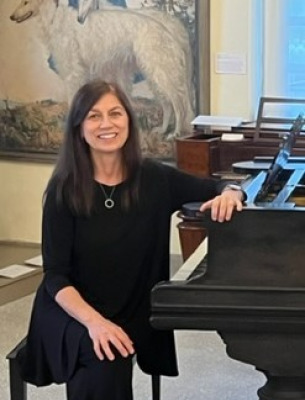
Jane Fiske serves as a Professor in the Humanities Department of Fitchburg State University's School of Arts and Sciences, teaching undergraduate courses including Art of Music, Women in Music and Society, and Romanticism to Rock, alongside graduate seminars in Music and the Modern Arts. Her office resides in Conlon Fine Arts 163 with Fall 2025 office hours held Wednesdays and Thursdays from 12-1:30 p.m. Education: D.M.A. in Music Education from Boston University, College of Fine Arts (1997) M.M. in Piano from New England Conservatory of Music (1981) B.M. in Piano from New England Conservatory of Music (1979) Certifications: Certificate in Management and Leadership in Education, Harvard Graduate School of Education (2015) Certified Music Instructor, Pre K-9 (MA) (1990-present) Research Focus: Professor Fiske's work centers on Video Game Music analysis, Women in Music historiography, and Critical and Creative Thinking pedagogy within music education. Her scholarship integrates Interdisciplinary Studies with Contemporary Humanities issues, particularly examining Piano Instruction methodologies across age groups and Mentorship frameworks for academic leadership development. Current projects include performing Four-Hand Piano works by women composers and video game adaptations through the Women in the Arts initiative. Publication Trends: Her 25-year publication history reveals evolving emphasis from foundational mentorship studies (2001-2003) toward contemporary intersections of music, technology, and cognition. Recent conference presentations (2018-2024) demonstrate growing specialization in Video Game Music analysis and Critical Thinking applications, reflecting broader disciplinary shifts toward digital humanities and experiential learning in music education. Awards: MSCA Professional Development Project Funding for video game music research (2023) Vincent J. Mara Award for Excellence in Teaching (2010) Marion and Jasper Whiting Fellowship (2006) Fitchburg State Creative Activity Award for Piano Recitals (2006) Ruth Butler Grant for Piano CD production (2006) Teacher of the Year Award from Student Government Association (1996) Professional Engagement: Professor Fiske directs the Community Music Lesson Program and instructs for ALFA (Adult Learners in Fitchburg Area), extending her pedagogy beyond campus. Her mentorship activities include formal guidance for new department chairs and faculty development, supported by her Harvard certification in educational leadership. She maintains active performance schedules with orchestras including Indian Hill Symphony and Salem Philharmonic while producing scholarly recordings that benefit the Patterson Music Scholarship. Current Initiatives: Leading the Fiske-Schilling Piano Duo's video game music performances, collaborating with Women in the Arts since 2015, and developing critical thinking curricula through interdisciplinary honors courses demonstrate her commitment to innovative music scholarship and community engagement.