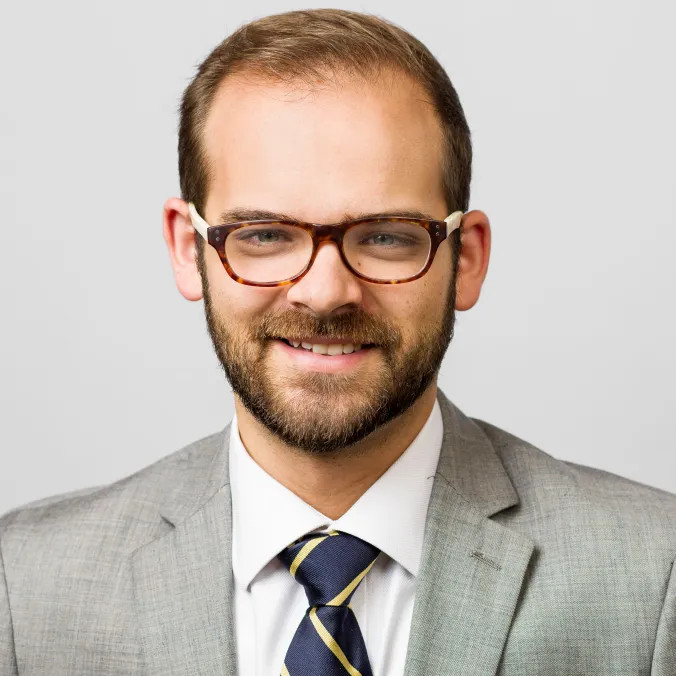
William H. Henning is an Executive Professor of Law at Texas A&M University School of Law , with expertise in Business Law, Commercial Law , and the Uniform Commercial Code , particularly focusing on Articles 2 (Sales), 2A (Leases), and 9 (Secured Transactions). He actively engages in law reform projects and can be contacted at bhenning@law.tamu.edu . Key research areas: Legal Reform, Secured Transactions, Contract Law, and Federalism His scholarly work spans topics like international treaty implementation, electronic lien filing systems, and legislative drafting. Recent publications emphasize harmonizing federal and state laws, improving commercial law frameworks, and addressing equity in contract rights. Notable awards include: Life Member, Uniform Law Commission , Spurgeon Smithson Award , Lloyd E. Roberts Memorial Prize , and Kemper Fellowship for Teaching Excellence
Su-Hua Lee is a Professor of Law at National Taiwan University (NTU) and an affiliate professor in the School of Pharmacy. She has served as a full-time faculty member at NTU since 2016, following academic positions at National Tsing Hua University and National Taipei University. Her expertise spans intellectual property law with specialized focus on pharmaceutical and biotechnology applications, competition law, and civil law. Her educational background includes: Bachelor of Laws from National Taipei University Master of Laws (Magister iuris comparativi, M. iur. Comp.) from Rheinischen Friedrich-Wilhelms-Universität Bonn Doctor of Laws (PhD) from National Taiwan University in 2006 Professor Lee's research examines the complex interplay between intellectual property frameworks and specialized industries, particularly pharmaceuticals and biotechnology. She has conducted extensive comparative analysis of German and Taiwanese legal systems, informed by her time as a visiting researcher at the Max Planck Institute for Innovation and Competition in Munich (2005-2007). Her scholarship addresses critical issues including patent linkage systems, infringement damages calculation, trade secret protection, and the application of competition law to digital platforms. She frequently bridges theoretical legal concepts with practical policy implications, making her work highly relevant to legislative and regulatory development. Analysis of her recent publications (2022-2024) reveals three dominant trends: 1) Examination of IP challenges in digital environments (internet marketing, social media trademarks), 2) Pharmaceutical regulation issues (patent linkage, term extension, public health crises), and 3) Economic dimensions of IP enforcement (damages calculation, multi-sided platform economics). Her work consistently incorporates comparative perspectives, particularly from German legal frameworks, while addressing Taiwan-specific legal and policy contexts. Professor Lee leads a research team that has been instrumental in drafting Taiwan's drug approval-patent linkage legislation since 2015. She serves on governmental expert committees related to intellectual property and pharmaceutical affairs and participates in regional academic networks focused on Asian intellectual property law development. Her research has been supported by multiple grants from Taiwan's Ministry of Science and Technology, Ministry of Health and Welfare, Intellectual Property Court, and Fair Trade Commission. Her scholarly contributions span numerous law journals in Taiwan and internationally, with publications covering patent law, trademark enforcement, trade secrets, and the intersection of intellectual property with competition policy. She has also contributed chapters to several edited volumes on intellectual property systems in Asia and comparative approaches to patent enforcement.
Andrea Jamardo Lorenzo is an Assistant Professor at the University of León , affiliated with the School of Law and working within the Department of Public Law . Her research focuses on Procedural Law , with particular emphasis on Chain of Custody mechanisms, Technology in Law , and Legal Education innovations. Education : PhD in Law from the University of León (2023), thesis titled La cadena de custodia: análisis sistemático , supervised by Dr. Piedad González Granda. Her research explores the legal configuration and technological evolution of chain of custody systems in both national and European contexts. She investigates how digital evidence handling , AI applications , and cybersecurity protocols impact judicial integrity and procedural guarantees. Recent work also addresses pedagogical methods like flipped classrooms and role-playing in legal education. Analysis of her publications reveals trends in criminal procedure reforms , comparative chain of custody models (Spain vs. US), and ethical implications of legal technology . While no scientific awards are documented, her work contributes to debates on judicial efficiency , fundamental rights , and data protection in criminal contexts.
Professor Oles Andriychuk is a faculty member at the University of Exeter Law School, specializing in Competition Law & Digital Markets, and the Constitutional/Jurisprudential Aspects of Competition Policy. He leads the Digital Markets Research Hub , a YouTube channel with over 800 subscribers providing weekly expert discussions on digital market regulation. Principal Investigator for the UK in the AHRC & DFG-funded "Shaping Competition in the Digital Age (SCiDA)" project (2024–2027) Ongoing REF-2029 Impact Case Study contributor for UK and EU digital competition reforms Former co-investigator in the UK PETRAS-funded ROAST-IoT project (2021–2023) His research integrates competition law with data protection, privacy, and geopolitical considerations, focusing on the EU Digital Markets Act (DMA), UK Digital Markets, Competition and Consumers Act, and Germany's amended Competition Act. His work informs regulatory reforms in Ukraine and EU member states through roles like OECD expert and Department for Digital Transformation of Ukraine working group member. Key scientific contributions include the 2022 Portuguese Competition Authority Award-winning article on digital market regulations and editorial leadership for publications like The Normative Foundations of European Competition Law (Edward Elgar, 2017). He regularly acts as an external examiner at Edinburgh, Glasgow, KCL, and UCL Law Schools.
Antonio Viana Tomé is a Professor and former Dean (2012–2021) of the Faculty of Canon Law at the University of Navarra. He holds PhDs in Canon Law (1984) and Law (1987) from the University of Navarra, and studied at the University of Deusto (Law, 1979) and University of Bamberg (as DAAD scholar, 1992). His research focuses on hierarchical Church governance, canon law structures, and ecclesiastical organizations. He directed the journal Ius Canonicum (1991–2009) and co-edited the General Dictionary of Canon Law (2012). Awards include the DAAD Scholarship (1992). He has served in leadership roles such as Vice President of the Spanish Association of Canonists (2002–2004) and on the board of the Consociatio Internationalis Studio Iuris Canonici Promovendo . His work bridges legal and theological dimensions of church governance. Educación: Licenciado en Derecho, Universidad de Deusto (1979) Doctor en Derecho Canónico, Universidad de Navarra (1984) Doctor en Derecho, Universidad de Navarra (1987) Investigación: Specializes in Church governance structures, canon law codification, and ecclesiastical institutions. Key themes include: Hierarchical organization of the Church Legal foundations of prelatures Canon law interpretation in contemporary contexts Reconocimientos: DAAD Scholarship (1992) Docencia y liderazgo: Dean of Canon Law Faculty (2012–2021), full professor since 2005. Involved in major projects like the General Dictionary of Canon Law , a collaborative global effort. Active in academic and professional networks, contributing to legal scholarship and church policy.
Peter Alldridge is the Drapers' Professor of Law at Queen Mary University of London's School of Law, a position he has held since 2003. He served as Head of the Department of Law from 2008 to 2012 and was President of the Society of Legal Scholars in 2017-2018. As a Specialist Adviser to Parliamentary Committees on the draft Corruption Bill (2003) and Bribery Bill (2009), he has significantly influenced UK criminal legislation. His expertise in criminal justice is internationally recognized, including UN consultancy work in Indonesia (2017). His academic credentials include: LLB from the University of London LLM from Wales LLD from Cardiff University Professor Alldridge's research critically examines intersections between criminal law and societal structures. His work spans money laundering frameworks, disability rights jurisprudence, medical ethics, and technological impacts on legal systems. He pioneers analysis of economic crime through comparative lenses, questioning foundational assumptions in legal fictions and reform processes. His scholarship consistently bridges theoretical rigor with practical policy implications. Recent publications (2015-2023) reveal evolving focus from historical legal principles (double jeopardy, corruption in sports) to contemporary challenges like disability access and financial crime regulation. His work demonstrates methodological diversity—combining doctrinal analysis, socio-legal critique, and historical examination—while maintaining core commitment to criminal justice reform. Key trends include deconstruction of 'lawyers' law' limitations and interrogation of legal terminology in cross-cultural contexts. His honors include: Fellow of the Academy of Social Sciences (2014) Professor Alldridge supervises postgraduate research in money laundering law, commercial fraud, and comparative criminal justice. His advisory roles extend beyond parliamentary work to UN consultancy and roundtable participation on anti-corruption frameworks. Research funding supports his critical examinations of legal institutions, particularly regarding economic crime proceeds and corruption mechanisms. He actively shapes policy through scholarly engagement with legislative bodies. He is integral to Queen Mary's Criminal Justice Centre, fostering interdisciplinary collaboration on criminal law theory and practice. The Centre serves as a hub for analyzing jurisdictional conflicts, evidentiary standards, and global crime trends, with Professor Alldridge driving initiatives that connect academic research to real-world justice challenges.
Associate Professor Katharine Kemp is an Associate Professor at the Faculty of Law & Justice , UNSW Sydney, and leads the UNSW Public Interest Law & Tech Initiative . Her work focuses on competition law, data privacy, and consumer protection. She holds a BCom, LLB (Hons) from the University of Queensland, an LLM from Stellenbosch University, and a PhD from UNSW. Her research addresses digital regulation challenges, including privacy legislation, competition in online platforms, and public health surveillance ethics. Recent publications explore topics like Australia’s Online Privacy Bill, the impact of concealed data practices on competition, and policy responses to digital surveillance during the pandemic. Her work bridges legal scholarship and practical policy advocacy, particularly in balancing technological innovation with privacy rights and market fairness. She has contributed to major policy submissions on public health data laws and digital market conduct. Her leadership in the Public Interest Law & Tech Initiative fosters interdisciplinary collaboration on law, technology, and societal impact. While no specific awards are listed, her contributions to legal scholarship and policy reform are widely recognized.
Professor Emily Grabham holds the rank of Professor of Law at the University of Kent's Kent Law School. She specializes in socio-legal scholarship, focusing on law and time, legislative drafting, and labour and employment law. Her interdisciplinary research integrates sociology, social anthropology, feminist legal studies, and queer theory. She earned a BA (Law) from the University of Cambridge, LLM from Queen’s University (Canada), MSc (Gender, Society & Culture) from Birkbeck College, London, MFA (Creative Writing) from the University of British Columbia, and PhD (Law) from the University of Kent. Her research projects include the ESRC-funded Future of Legal Gender (FLaG) Project (2018–2021) and the ESRC Balancing Precarious Work & Care Project (2013–2016). She has been recognized with a Philip Leverhulme Prize in Law (2020), as well as awards from the UK Socio-Legal Studies Association and Canadian Law & Society Association. Her publications span articles on legal temporalities, gender recognition law, and legislative drafting, with contributions to journals like Journal of Law and Society and Feminist Legal Studies . She has authored books including Brewing Legal Times: Things, Form and the Enactment of Law (2016) and edited volumes such as Law and Time (2018). Prof. Grabham has served on peer review panels for the ESRC and AHRC and sits on editorial boards, including Feminist Legal Studies . She has taught courses on Labour Law, Gender & Sexuality Law, and EU Law, though she is currently on study leave until 2024. Her work explores intersections of law with time, embodiment, and social ordering, reflecting her commitment to critical socio-legal inquiry.
Luc Thévenoz is a full professor and Dean at the Faculty of Law, University of Geneva, where he also directs the Center for Banking and Financial Law. His academic and professional work focuses on the law of obligations, banking and financial markets law, and trusts and fiduciaries. He has held influential roles in Swiss financial regulation, including chairing the Swiss Takeover Commission and serving on the Swiss Federal Banking Commission. His research interests include financial regulation, private banking, intermediated securities, trust law, and corporate governance. He has contributed significantly to international harmonization efforts, notably the Geneva/UNIDROIT Convention on Intermediated Securities and the Hague Trusts Convention. He has also been instrumental in shaping Swiss legislation on financial services and fiduciary structures. The most recent articles reflect his ongoing engagement with Swiss financial law, particularly in areas such as trust regulation, investment damages, private banking, and the legal treatment of cryptocurrencies. His publications often combine doctrinal analysis with practical implications, bridging academic scholarship and regulatory practice. He frequently collaborates with other experts and contributes to annual reviews of Swiss banking law. Honorary Member of the Society of Trust and Estate Practitioners (STEP), 2007 Luc Thévenoz is deeply involved in academic leadership and continuing education. He founded the CAS in Compliance Management and co-directs the CAS in Financial Regulation at the Universities of Geneva and Bern. He regularly teaches at the University of Luxembourg and has been a visiting professor at Berkeley, Boston University, and Duke Law School. He co-organizes the annual Banking and Financial Law Day, which brings together around 350 practitioners. He is a member of the editorial board of the Swiss Journal of Business Law and Trust Law International and serves on the board of directors of Banque Mirabaud & Cie SA. His academic work is centered at the Center for Banking and Financial Law at the University of Geneva, where he leads research and educational initiatives in financial law. He has supervised numerous collaborative projects and publications, often involving teams of researchers and practitioners. His leadership extends to editorial boards and professional associations that shape the discourse on financial and trust law in civil law jurisdictions.
Alison Young is the Sir David Williams Professor of Public Law at the University of Cambridge, a Fellow of Robinson College, and an academic associate at 39 Essex Chambers. She holds a DPhil from Oxford and has been recognized with a Leverhulme Research Fellowship (2015) and as a Inner Temple Book Prize runner-up (2018). She is affiliated with the Centre for European Legal Studies and Centre for Public Law at Cambridge, and the Oxford Human Rights Hub . Research Interests : Constitutional theory, dialogue theory, comparative public law (UK, EU, Commonwealth, France), freedom of expression, and human rights protection in private law. Key Publications : Author of Democratic Dialogue and the Constitution (OUP, 2017) and Unchecked Power (Bristol, 2023), with extensive contributions to journals on UK constitutional law, Brexit, and human rights. Her work explores the interplay between parliamentary sovereignty , judicial review, and the rule of law , particularly through the lens of Brexit-related legal challenges and the Human Rights Act 1998. She has served as a legal advisor to the House of Lords Select Committee on the Constitution and holds advisory roles in the UK Constitution Monitoring Group and The Constitution Society.
Prof. K.J. (Kars) de Graaf is a Professor of Public Law and Sustainability at the University of Groningen's Faculty of Law, leading the Department of Constitutional Law, Administrative Law & Public Administration since 2020. His expertise spans administrative law, environmental law, and sustainability governance. Education: PhD in Comparative Administrative Law (2004). He has held roles such as Government Commissioner for the Environment and Planning Act (since 2024), Honorary Judge at the North Netherlands District Court (2005–present), and editorial board member of Dutch environmental law journals. He teaches administrative law and sustainability courses at the Grotius Academy and judicial training institutes. Research focuses on environmental law, administrative law reforms, and sustainable governance. Recent publications address environmental permits, legal procedures, and proportionality in environmental planning. His work bridges academic research and practical legal challenges in sustainability policy. Awards: None explicitly listed. Ancillary roles include VMR Dutch Environmental Law Association chair and board member of SBB Foundation. Grants/Advising: No specific grants listed; however, his advisory roles in government and legal institutions reflect impactful professional engagement. Labs/Teams: Active in the Department's research groups and collaborates with legal practitioners and policymakers through editorial and advisory roles.
Johanna Mattissen is a Research Fellow in the Department of Linguistics at the University of Cologne, specializing in European Legal Linguistics. Her office is located at Bernhard-Feilchenfeld-Str. 11, 50969 Köln, with postal address Albertus-Magnus-Platz, 50923 Köln. Contact is available by appointment via telephone (+49-221-470-3012) or email. Her research spans: Linguistic typology with focus on polysynthesis, morphological complexity, and endangered languages (Nivkh, Japanese, Laz, Greenlandic, Basque) Legal linguistics analyzing multilingual EU legislation, coordination phenomena, and terminology in European law Cross-linguistic analysis of discourse markers, modality, and reference-tracking in legal texts Machine translation challenges in human vs neural approaches for specialized domains Her recent publications (2021-2023) predominantly examine linguistic structures in EU legal instruments, investigating coordination ambiguity, terminological precision, and multilingual equivalence in binding texts. Earlier works establish foundations in polysynthesis typology and morphological theory.
Jesse Crosson is an Associate Professor at Purdue University's Department of Political Science and Co-Director of the Program on American Institutional Renewal (PAIR) . His work investigates hyperpartisan institutional transformation , focusing on how insecure majorities , interest groups , and legislative centralization affect policy change and decentralized expertise . He also contributes to Cornerstone Integrated Liberal Arts and Cornerstone for Business teaching sequences. Ph.D. , Political Science, University of Michigan (2019) B.A. (summa cum laude), Political Science, Hofstra University (2013) His research examines: Institutional gridlock mechanisms Legislative polarization dynamics Interest group depolarization roles Electoral reform effectiveness Legislative capacity erosion Artificial intelligence policy development PAIR activities highlight constitutional legacy through Sen. Birch Bayh's work and executive power analysis . Recent publications analyze legislative strategy , AI regulation , and polarized pluralism . The program has expanded with postdoctoral and graduate fellows , including Ayoung Chun (money in politics) and Rylee Crum (economics).
Paul Yowell serves as Benn Fellow, Tutor in Law, and Tutor for Graduates at Oriel College, University of Oxford, positions he has held since October 2012. His academic affiliation resides within the Faculty of Law, where he contributes to the university's legal education and research ecosystem through college-based teaching and university-level scholarly engagement. Dr Yowell completed his BCL in European and Comparative Law and MPhil in Law at Balliol College, followed by a DPhil in Law at University College, Oxford. His foundational education established expertise in comparative legal frameworks and theoretical jurisprudence. His research centers on public law and legal theory with concentrated expertise in constitutional law, human rights, separation of powers, and comparative constitutional systems. He investigates the democratic deficit in rights protection, parliamentary sovereignty, and the philosophical underpinnings of legal clarity—examining how precise legislative drafting interacts with common law reasoning to strengthen rule of law principles. His work bridges theoretical jurisprudence and practical constitutional design across European contexts. Dr Yowell's publication record reveals consistent thematic focus on constitutional adjudication, rights enforcement, and legislative-judicial dynamics. His scholarship demonstrates methodological range—combining empirical analysis of judicial review with philosophical critique of rights theories—while maintaining strong engagement with EU legal frameworks and UK constitutional practice. The recurring emphasis on 'virtue of clarity' underscores his commitment to actionable legal principles. As Tutor for Graduates, he oversees all graduate students at Oriel College from admissions through degree completion, providing academic guidance and pastoral support. His research is supported by significant grants including the Arts and Humanities Research Council (AHRC) project 'Parliaments and Human Rights: Redressing the Democratic Deficit' and the ongoing 'Parliaments, Rule of Law and Human Rights' initiative. He actively participates in the Legal Philosophy in Oxford Research Programme and leads collaborative work through the Parliaments, Rule of Law and Human Rights research group, fostering interdisciplinary dialogue between legal theory, political science, and human rights practice.
Dagmar Schiek is a Full Professor of EU Law and Labour Law at University College Dublin's Sutherland School of Law, where she directs the ERC-funded RIGHTS TO UNITE project developing a socio-legal theory of European integration. Her research examines EU non-discrimination law, intersectionality, and social governance. Schiek holds a Jean Monnet Chair and has led multiple EU research consortia, including projects on economic/social constitutionalism post-Lisbon and Brexit's impact on Ireland. She has drafted gender equality legislation for German states and serves on pension fund investment committees. Her scholarship critically analyzes multidimensional discrimination through the lens of race, gender, and disability. Recent publications explore the disintegration risks of Brexit for Northern Ireland and the constitutional conditioning of EU internal markets.