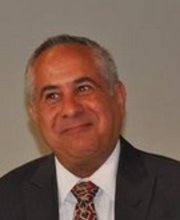
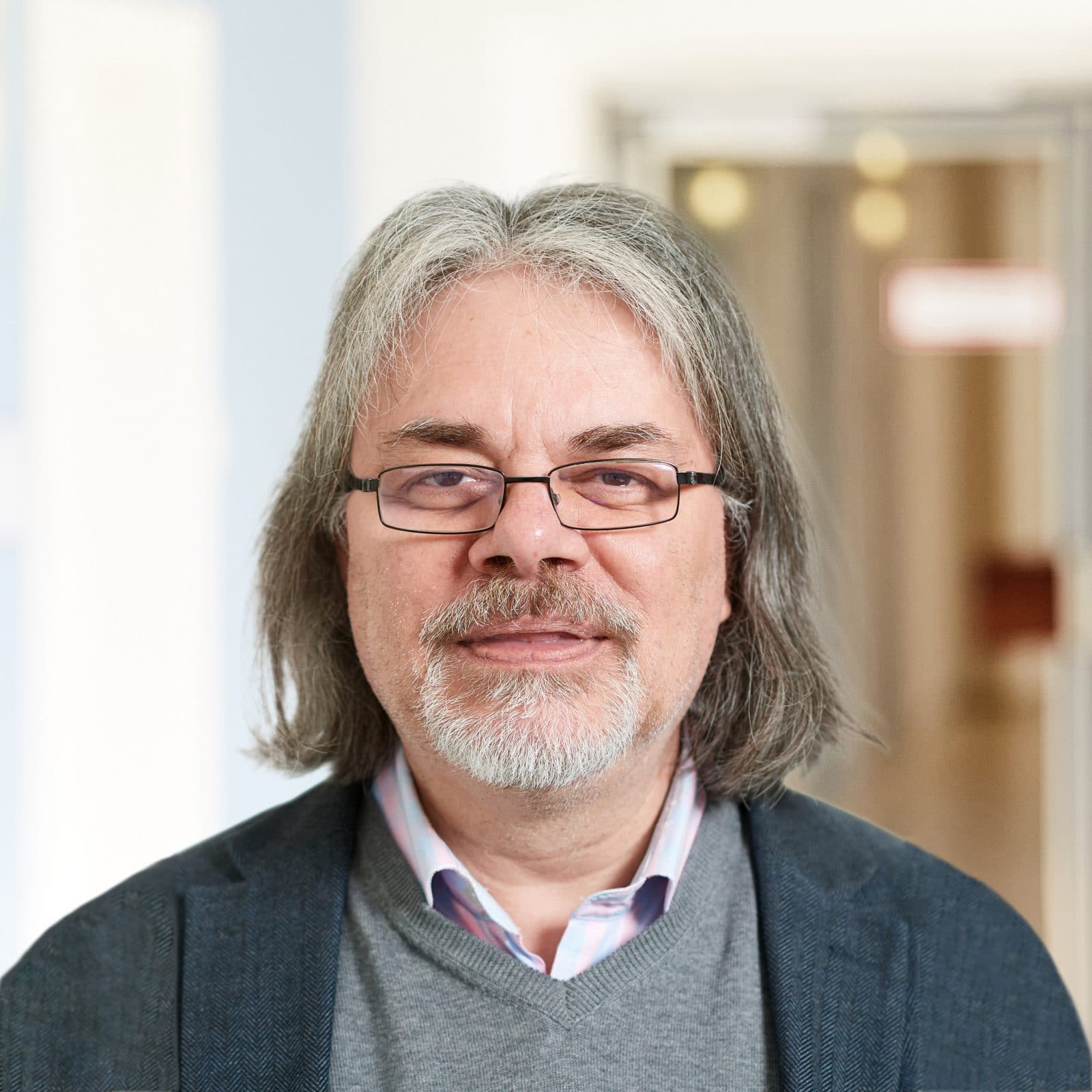
Kevin Buterbaugh is a Professor of Political Science at Southern Connecticut State University. His academic appointment resides within the Department of Political Science, where he teaches courses in International Relations, International Organization, U.S. Security and Defense Policy, and European Politics. His research centers on International Organization, International Relations, U.S. Security and Defense Policy, and International Development. Professor Buterbaugh investigates state fragility during the Arab Spring, gender dynamics in U.S. ambassadorial appointments, and counterterrorism legislation impacts, emphasizing the interplay between security frameworks and international cooperation mechanisms. Recent scholarly output includes critical reviews of nuclear security literature, cyber espionage analyses, and economic foundations of national security. His publications consistently address security studies and international political economy through book chapters, journal articles, and conference presentations. Professor Buterbaugh served as Supporting Team Member for the Faculty Development-sponsored grant "Reflecting on Tocqueville" (2006). He maintains active research collaboration with colleagues Calin and Marchant-Shapiro, presenting findings at New England Political Science Association and International Studies Association conferences.
Maria De Angelis is a Full Professor at the University of Bari Aldo Moro (UniBA) and serves as Director of the Department of Soil, Plant and Food Sciences (Di.SSPA) . Her research focuses on food microbiology, gut microbiota interactions, and nutritional enhancement of fermented products. Department: Soil, Plant and Food Sciences (Di.SSPA) Email: maria.deangelis@uniba.it Contact: +39 0805442949 (office), +39 3485894077 (mobile) Research Interests include: Microbial ecology of fermented foods Probiotic and prebiotic development Food waste valorization through fermentation Gut microbiota modulation in health and disease Traditional food processing optimization Functional food design Recent Publications demonstrate expertise in sourdough fermentation, probiotic delivery systems, and microbiome interactions with dietary interventions. She maintains active teaching responsibilities including Microbiology of Fermented Foods in the Food Science and Technology degree program.
Craig Becker serves as a Professor in the Health Education and Promotion department within the College of Health and Human Performance at East Carolina University. His office is located in the Carol Belk Building (3201), and he can be contacted at beckerc@ecu.edu or by phone at 252-328-5312. With a career spanning multiple decades, Dr. Becker has established himself as a leading researcher in salutogenic approaches to health and wellness promotion. Becker's research program centers on the development, validation, and application of the Salutogenic Wellness Promotion Scale (SWPS) across diverse populations including college students, older adults, and Arabic-speaking communities. His work challenges traditional disease-prevention paradigms by advocating for chronic wellness creation through innovative theoretical frameworks like the Tree Model for Public Health. His scholarship bridges health education theory with practical applications in tobacco control policy, student wellness initiatives, and health promotion program evaluation. Analysis of his publication record reveals a clear trajectory from tobacco control policy research toward comprehensive wellness frameworks. His most recent work focuses on digital health solutions (mHealth), brief wellness assessment tools (SWPS-SF), and the intersection of academic performance with health behaviors. A consistent theme throughout his career is the development and validation of measurement tools that capture positive health constructs rather than merely risk factors. Dr. Becker has successfully secured significant research funding as Principal Investigator from sources including i-Corps, ECU Intramural funds, and the North Carolina Department of Health and Human Services for projects such as the Tobacco-Free Campus initiatives and digital health coaching development. His service contributions include journal reviewing for the Journal of American College Health and TQM Journal, chairing the Academic Integration Working Group at the App Energy Summit (2022-2024), and serving as a Trustee for the National Wellness Association.
Professor Alon Tal is a distinguished environmental policy scholar currently serving as a Professor in the Department of Public Policy at Tel Aviv University, where he previously chaired the department from 2016-2020. His career uniquely bridges academia, public service, and environmental activism, having served as a Member of the Israeli Knesset (2021-2022) where he chaired the Subcommittee for Environment, Climate & Health. Professor Tal has held numerous academic appointments including Visiting Professor roles at Stanford University (2023-2024, 2011, 2013-14), Michigan State University (2015-2016), Otago University in New Zealand (2007, 2011, 2016), and Renmin University in Beijing (2015). Professor Tal's educational background includes: B.A. in Political Science and Economics from the University of North Carolina, Chapel Hill (1980) Ll.B. in Law from the Hebrew University, Jerusalem (1986) M.Sc. in Environmental Health Policy from Harvard School of Public Health (1987) Sc.D. in Environmental Health Policy from Harvard University (1989) Professor Tal's research spans multiple interconnected domains of environmental policy, with particular expertise in Israeli and Middle Eastern environmental challenges. His work examines demographic pressures on environmental resources, environmental law and policy, climate change strategies, and transboundary environmental cooperation. His scholarship on historical environmental issues, evident in books like 'Pollution in a Promised Land' and 'All the Trees of the Forest,' provides crucial context for contemporary policy debates. His recent research increasingly addresses the intersection of population dynamics, water security, and climate change adaptation in arid regions. Analysis of Professor Tal's recent scholarly output reveals a consistent focus on pressing environmental challenges with growing emphasis on climate change impacts and innovative policy solutions. His publications demonstrate methodological diversity, combining legal analysis, policy evaluation, empirical research, and historical perspective. Recent work shows particular attention to water management in arid regions, demographic pressures on environmental sustainability, and transboundary environmental issues across the Middle East. Professor Tal's scholarly excellence has been recognized with numerous prestigious awards: 2016 Haiken Prize for Best Original Israeli Book on Geostrategic Topics for 'The Land is Full' 2011 Best Article Prize in International Water Management 2008 Israel Ministry of Environment Life Achievement Award 2006 Haim Shiva Award and Charles Bronfman Humanitarian Award 1999 Jewish National Fund Lewis Award for Forestry Research 1997 Henry Ford European Conservation Award Throughout his career, Professor Tal has made significant contributions to environmental policy through his academic work, public service, and advocacy. His research has directly informed policy development in Israel and internationally, particularly in the areas of water management, desertification, and climate change adaptation. He has established numerous research collaborations across institutional and national boundaries, fostering dialogue between Israeli, Palestinian, and Jordanian scholars on shared environmental challenges. Professor Tal has been deeply involved in environmental institutions throughout his career. He founded the Arava Institute for Environmental Studies in 1996, creating a platform for Middle Eastern university students to engage in environmental cooperation. He served as founding director of Adam Teva V'din (Israel Union for Environmental Defense) from 1991-1998 and chaired Life and Environment, the umbrella organization for Israeli environmental NGOs, from 1997-2003. His leadership extended to the KKL-JNF International Board where he chaired the Land Development Committee from 2004-2016, influencing national land use and conservation strategies.
Dr Kaitlyn Regehr is an Associate Professor and Programme Director of Digital Humanities in the Department of Information Studies at University College London (UCL). She holds a doctorate from King's College London and has established herself as a leading expert on the cultural impacts of social media, particularly on children and youth. Her research directly informs policy and legislation, including the Online Safety Act and new Cyberflashing legislation. University College London - Department of Information Studies Programme Director of Digital Humanities Associate Professor in Digital Humanities Dr Regehr's research focuses on the intersection of digital culture, youth safety, and policy development. She leads significant projects including the "Safer Scrolling Report" which generated media attention across 300 outlets including the Guardian's front page, and has influenced national curriculum changes. Her work on "Understanding and Combatting Youth Experiences of Image-Based Sexual Harassment and Abuse" has led to policy recommendations adopted by educational authorities. She also contributed to the Mayor of London commissioned report "Women We See: Advertising in London's Public Spaces" which informed national advertising standards. Analyzing her recent publications reveals a consistent focus on how digital platforms facilitate and amplify image-based sexual harassment against youth, with particular attention to school environments across diverse socioeconomic contexts. Her work demonstrates how platform design features actively direct harmful content to young people, creating distinct digital sexual cultures in different educational settings. The research combines digital humanities methodologies with critical analysis of social media platforms' role in normalizing abuse. Dr Regehr has provided consultation to the House of Lords, Members of Parliament, the Metropolitan Police, Scottish Government, and Education Scotland on digital citizenship education and online safety. She has been awarded over £2 million in research funding including AHRC projects and UCL Policy Lab funding. Her media work includes producing and serving as topic specialist on documentaries for BBC News, BBC Women's Hour, Channel 4, and the Economist.
Emiliano Grossman is a Professor at Sciences Po , holding a Habilitation à Diriger des Recherches (HDR). He serves as Director of the Center for Socio-Political Data (CDSP) and is affiliated with the Center for European Studies and Comparative Politics (CEE) . Based at Sciences Po's Paris and Reims campuses, he teaches comparative politics and introduction to political science , while leading the "Politics and Public Policy" policy stream at the School of Public Affairs. PhD (IEP Paris), MPhil (University of Cambridge), Habilitation (2014) Co-editor-in-chief of European Journal of Political Research (2017-2024) Research Focus: Specializes in comparative political institutions , agenda-setting processes , and media-politics nexus . Current work examines "attention cycles" , partisan strategies , and media visibility effects . Leads the ANR-funded political agendas project measuring French institutional evolution through quantitative indicators. Academic Contributions: 45+ peer-reviewed articles across Climate Policy , Comparative Political Studies , and European Journal of Political Research . Key themes include climate policy acceptance , science skepticism trends , and Yellow Vest movement analysis . Supervision: Mentored PhD students including recently Lennard Alke (defended 2024 on EU affairs politicization). Collaborates with scholars like Cristina Peñasco (Cambridge/Banque de France) on cross-national climate surveys.
Dr. George Serra serves as a Professor of Political Science at Bridgewater State University, holding appointments in the Political Science department. His extensive administrative contributions include founding director of the university’s Center for Democratic Governance and Leadership (1997-2018), founding chairman of the Institutional Review Board (1999-2007), and founding campus liaison for The Washington Center Program (1999-2014). His research focuses on legislative and electoral behavior , congressional representation of minority interests , presidency and executive politics , and policy implementation . Dr. Serra has published in leading political science journals including The Journal of Politics , Political Research Quarterly , and Legislative Studies Quarterly . Award highlights include: Bridgewater State University’s 2022 Presidential Faculty Lifetime Achievement Award 2003-2004 American Political Science Association Congressional Fellow Administrative leadership spans founding coordinator of the interdisciplinary civic education minor (2005-2018), political science department chairperson (2004-2014), and faculty coordinator of the Mandela Washington Fellows Program (2016-2018). His educational background includes BA, MA, and PhD from State University of New York, Stony Brook.
Nadia E. Brown is a Professor of Government at Georgetown University's College of Arts and Sciences, where she also serves as Director of the Women’s and Gender Studies Program and is affiliated with the African American Studies Program. Her academic work centers on the intersections of race, gender, and political power, with a focus on Black women’s political engagement and identity formation. Her research spans identity politics , legislative studies , and intersectionality , bridging political science with women’s and gender studies. Trained as a political scientist, she actively challenges disciplinary boundaries to foster more inclusive and holistic analyses of political identity and behavior. While no individual journal articles are listed, her scholarly output is heavily centered on Black women’s political representation, appearance politics among political elites, minority women’s political participation, and social movements like Black Lives Matter. Her publications reflect a consistent commitment to amplifying marginalized voices and transforming academic discourse. Award-winning author and editor of books published by Oxford University Press and Routledge Lead editor of Politics, Groups and Identities Editor at The Monkey Cage , Washington Post Principal Investigator on NSF-funded anti-harassment initiative Professor Brown mentors across interdisciplinary programs and leads major collaborative research grants. She is a co-Principal Investigator on a million-dollar National Science Foundation grant through the #MeTooPoliSci Collective, aimed at reforming professional culture in political science. She also contributes to public scholarship through editorial work and advocacy for equity in academia. She is actively involved in institutional leadership and scholarly communities, particularly through her roles in the Women’s and Gender Studies Program and her national efforts to combat sexual harassment in the discipline. Her work integrates academic rigor with social justice advocacy, influencing both research and professional norms in political science.
Juan Carlos Farah serves as both a Scientific Collaborator and Lecturer at the Fribourg School of Engineering and Architecture, part of the University of Applied Sciences and Arts of Western Switzerland (HES-SO). His academic appointments indicate an active role in both research and teaching within the institution's engineering and technology programs. Dr. Farah holds a PhD in Robotics, Control, and Intelligent Systems from the École Polytechnique Fédérale de Lausanne (EPFL), a Master of Science in Computing from Imperial College London, and a Bachelor of Arts in Economics from Harvard University. This interdisciplinary background spans computer science, engineering, and economics, providing a strong foundation for his current research endeavors. His research focuses on the intersection of human-computer interaction, social neuroscience, and information theory, with particular emphasis on how artificial intelligence with anthropomorphic traits affects human behavior and learning. Farah has made significant contributions to educational technology, especially in the development and evaluation of conversational agents for learning environments. His work examines how chatbots and large language models can be effectively integrated into educational contexts to support students while maintaining pedagogical integrity. An analysis of his recent publications reveals a strong trajectory in human-AI interaction within educational settings, with increasing focus on large language models since their emergence. His research spans multiple dimensions of educational technology including code review systems, computational thinking development, and the psychological impacts of technology on learners. The interdisciplinary nature of his work connects computer science, cognitive science, and educational theory. While no specific scientific awards are mentioned in the provided documentation, Dr. Farah's research has been published in reputable journals and presented at significant international conferences in educational technology and human-computer interaction. His research methodology combines both qualitative and quantitative approaches, often conducting controlled experiments with student populations to evaluate the effectiveness of educational technologies. Farah frequently collaborates with colleagues from multiple institutions, suggesting strong interdisciplinary research networks. His work appears to focus on practical applications of technology in real educational settings rather than purely theoretical investigations. Dr. Farah's research program appears centered around developing frameworks and tools for educational technology, with particular attention to how conversational agents can be designed to support specific learning objectives. His TRACE model for educational chatbot design and work on code review notebooks represent structured approaches to integrating AI technologies into pedagogical practices while addressing the unique challenges of educational contexts.
André Kaiser is a Professor of Political Science at the University of Cologne's Faculty of Economics and Social Sciences. He serves as a Principal Investigator in the Cluster of Excellence 2126: ECONtribute: Markets & Public Policy since 2019 and is a faculty member of the international Max Planck Research School 'The Social and Political Constitution of the Economy' in Cologne. His extensive administrative roles include serving as Vice-President of the German consortium for the Turkish-German University since 2017 and as an elected member of the DFG Review Board 111 Social Sciences since 2016. Dr. Kaiser earned his PhD from the University of Freiburg in 1994 and completed his habilitation at the University of Mannheim in 2000. His academic career progressed from Assistant Professor at the University of Mannheim (1996-2003) to Full Professor at the University of Cologne since 2003 (holding C4/W3 status). Prior to this, he served as a Full Professor pro tempore at the University of Konstanz (2000-2001). Professor Kaiser's research primarily focuses on comparative political institutions, with particular emphasis on federalism, decentralization, and multilevel governance systems. His work examines executive and legislative behavior in parliamentary democracies during periods of external shocks, exploring how political institutions adapt to crises. His scholarship bridges theoretical frameworks with empirical analysis of political behavior across different institutional contexts, contributing significantly to our understanding of how political systems function under stress. His publication record demonstrates a consistent trajectory of high-impact research in top political science journals over the past 25 years. Recent work shows increasing attention to contemporary democratic challenges including democratic backsliding in Turkey, gender representation in multilevel systems, and asymmetric accommodation of minorities. His research combines theoretical innovation with rigorous empirical analysis, often employing comparative methods across multiple political systems. Professor Kaiser holds several significant leadership positions including membership on the Rectorate Tenure Commission at the University of Cologne since 2016, service on the Board of Competence Area II - Social and Economic Behavior since 2014, and advisory roles at the University of Exeter and Friedrich-Alexander University Erlangen-Nuremberg. As Principal Investigator in the ECONtribute Cluster of Excellence, Professor Kaiser leads research at the intersection of political institutions and economic policy. The cluster, Germany's first in economics jointly funded by the Universities of Cologne and Bonn, aims to develop new paradigms for analyzing markets and public policy in response to societal challenges. His leadership extends to the Cologne Center for Comparative Politics (CCCP), which serves as a hub for comparative political research within the university's research infrastructure.
Dr. Iain Green is the Deputy Head of the Department of Life and Environmental Sciences at Bournemouth University. His research focuses on pollution ecology, particularly heavy metals, organic pollutants, and microplastics, across terrestrial, marine, and freshwater ecosystems. He holds a PhD from Bournemouth University (2003) and a BSc in Biology from the University of Portsmouth (1992). Research Interests: Pollution's environmental effects, soil biology and chemistry (including forensic applications), invertebrate studies, and ecosystem services. Current projects include soil protection and heathland restoration. Supervising five PhD students, he welcomes inquiries in his research areas. Recent Work: Key publications address microplastic impacts on freshwater ecosystems, soil enzyme pH optimization, and trace metal dynamics in food chains. Collaborates with the Environment & Threats Strategic Research Group and interdisciplinary teams. Awards: None explicitly listed. Professional Memberships: British Ecological Society, Royal Entomological Society, Society of Biology (Chartered Biologist). Teaching: Courses include Cell Biology, Environmental Pollution, and Fundamentals of Environmental Science. Dedicated to advancing sustainable environmental policies and ecological management practices.
Darragh Hare is a Research Fellow in the Department of Natural Resources at Cornell University, affiliated with the Center for Conservation Social Sciences. His interdisciplinary research combines conservation science with moral and political theory, examining wildlife governance, human-wildlife conflicts, and the evolution of environmental ethics. Current field projects include deer management studies in Scotland and the US, human-wildlife conflict resolution in Africa, and predator reintroduction debates. Hare's publications analyze conservation conflicts through social-ecological frameworks, investigating topics such as trophy hunting policies, wildlife trade regulation, and ethical dimensions of rewilding. His theoretical work develops evolutionary models of environmental morality, exploring how human moral psychology influences conservation behaviors. With an MA in moral and political theory and PhD in Natural Resources, Hare bridges academic research with practical conservation policy, collaborating with agencies and NGOs to design equitable wildlife governance systems.
Jørn Henrik Petersen is a Professor Emeritus at the University of Southern Denmark (SDU), affiliated with the Department of Political Science and Public Management under the Faculty of Business and Social Sciences. He holds academic qualifications including a dr.phil. (1985) and lic.oecon. (1971). His career spans over five decades, with roles such as Prorector (2002–2005), director of the Danish Center for Welfare Studies (2005–2008), and leadership in numerous research institutions and governmental committees. His research focuses on the history and core values of the Danish welfare state, including its challenges, Christianity’s influence, and historical policy developments. Key projects include Dansk Velfærdshistorie (2008–2014) and studies on elderly welfare and welfare-state legitimacy. Petersen has authored over 50 books and 500+ academic works, including monographs on welfare-state history and social policy theory. He has advised national and international bodies on welfare, health, and social policy. Awards include the Aarhus University Gold Medal (1970).
Jan Mikołajczyk is a Professor at the Department of Commerce and Marketing, University of Economics in Poznan. His roles include Rektor's Delegate for Open Classes, Director of the 'Marketing in Practice' Postgraduate Studies Program, and Member of the UEP Electors' College. He is actively involved in professional organizations, serving as a member of the Polish Economic Society and the Foundation Council. His research focuses on marketing management, retail trade dynamics, and sales strategies. Key areas of inquiry include neuromarketing applications in e-commerce, promotional effectiveness in niche markets, and the role of non-commercial services in enhancing shopping center appeal. His work also explores culinary tourism development and strategic distribution channel optimization. Recent publications analyze Zalando SE's consumer behavior patterns, martial arts school promotional strategies, and Lech Poznan's social media marketing. Earlier studies examined retail innovation in petrol stations and critical factors influencing shopping center attractiveness among student populations. While no scientific awards are listed, his contributions to marketing education are notable through his leadership in postgraduate programs and his involvement in shaping academic standards for management-related theses.
Dr Nga Pham is a Senior Research Fellow at the Monash Centre for Financial Studies (MCFS), Monash University. She holds a PhD in Finance from La Trobe University and a Bachelor of Commerce from the University of Melbourne. Her research focuses on corporate governance, ESG integration, shareholder activism, and modern slavery disclosure in financial systems. Nga has extensive industry experience, including roles as an equity analyst, corporate governance consultant with the World Bank Group, and academic leadership in Vietnam's higher education sector. Her career includes managerial roles such as Dean of the Business Faculty at Hanoi University and Executive Director of a joint program with La Trobe University. Nga is a CFA Charterholder and contributes to policy through submissions to ASX governance consultations. Key research projects include analysis of superannuation tax concessions, carbon pricing trends, and modern slavery reporting standards for ASX-listed companies. Notable awards include the 2023 Dean's Award for Research Impact and ICGN's Rising Star Award. Her work spans 20+ publications, emphasizing sustainable finance, pension system reform, and ethical investing. Nga actively engages in academic-industry collaborations, advising on regulatory frameworks and presenting at forums like the CFA Society Australia Investment Leader Forum.