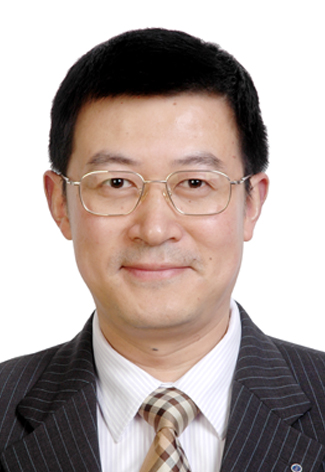
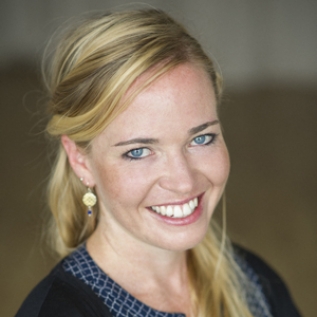
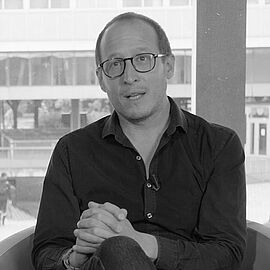
Professor David Robinson is a leading academic in housing and urban studies at the University of Sheffield's School of Geography and Planning. With a career spanning two decades at Sheffield Hallam University's Centre for Regional Economic and Social Research and leadership roles as Head of Geography and Urban Studies & Planning departments at Sheffield, he operates at the intersection of planning, geography, and social policy. PhD in Geography, University of Edinburgh Undergraduate in Geography, University of Newcastle Upon Tyne His research focuses on urban inequality, social justice in housing systems, and housing challenges for an ageing population. He critically examines policy responses to migration, community cohesion, and neoliberal housing reforms through extensive publications and projects like the UK Collaborative Centre for Housing Evidence (CaCHE). Recent work analyzes racial inequality in housing policy and pandemic-era spatial practices in compact homes. Current research projects include: UK Collaborative Centre for Housing Evidence , and recent publications explore housing aspirations, urban rhythms during crises, and specialist housing for older adults. His scientific recognition includes Fellowship in the Academy of Social Sciences and editorial leadership roles for Housing Studies journal. Professor Robinson supervises doctoral research and teaches modules on housing inequalities (GPL313), urban planning (GPL121), and housing policy (GPL451). He contributes to reports evaluating older people's housing needs, migration housing challenges, and community cohesion strategies.
Dr. Yunpeng Zhang is a Lecturer/Assistant Professor at University College Dublin's School of Architecture, Planning and Environmental Policy since November 2022. He holds a PhD in Human Geography (2015) and an MSc in Urban Management and Development (2009) from the University of Edinburgh and Erasmus University Rotterdam, respectively. His research focuses on urban-centric transformations under neoliberal financial capitalism, particularly socio-spatial justice, speculative urbanization, land financialization, and digital platform-urbanization intersections in China. He advocates for grounded, critical urban theories challenging Western centrism and investigates temporal politics in megaprojects and state-authoritarian dynamics. Recent publications explore topics like Wuxi's environmental policies, Nanjing's gentrification mechanisms, and Yangzhou's feature town developments. These works analyze land commodification, displacement ethics, and state-society conflicts. Scientific recognition includes the 2025 Influential Paper Nomination at China's National Science and Technology Forum, highlighting his contributions to urban political economy debates. Dr. Zhang supervises research projects on digital platforms, rural land markets, and socio-spatial inequality in China and the Global South. He is involved in international collaborations on urban regeneration and platform capitalism.
Yang Su is a Professor in the Department of Sociology at the University of California, Irvine (UCI), affiliated with the School of Social Sciences. His research focuses on political violence, revolution, and social movements, with a particular emphasis on state responses to protest in China and comparative historical analysis. He holds a dual expertise in ethnography and statistical methods. Su has authored two major books: *Collective Killings in Rural China during the Cultural Revolution* (2011) and *Deadly Decisions in Beijing: Succession Politics, Protest Repression and the 1989 Tiananmen Massacre* (2023), which have received prestigious awards including the Barrington Moore Book Prize and honorable mentions from the American Sociological Association. His research interests span labor disputes, state repression, and the historical memory of contentious politics. He teaches graduate courses like *Comparative Contentious Politics* and undergraduate courses such as *Social Movements and Revolution*. Su’s work bridges empirical rigor with theoretical innovation, examining how state institutions shape—and are shaped by—collective action. Awards: 2022 Barrington Moore Book Prize; 2024 Honorable Mention ASA Distinguished Scholarly Book Award Teaching: Graduate courses on contentious politics, undergraduate courses on socialism and social movements Methodology: Mixed-methods approach combining ethnography and statistical analysis Su has published extensively on topics such as labor protests in China, the Tiananmen Square protests, and comparative genocide studies. His scholarship critically engages with authoritarian governance, state-society relations, and the legacies of Maoist policies.
Prof. Yu Xiang is a Professor and Director of the Sino-European Institute for Intellectual Property at Huazhong University of Science & Technology (HUST), Wuhan, China. He also serves as Vice President for International Engagement at Hubei Normal University. His academic career includes leadership roles in the Chinese-German Institute for Intellectual Property (since 2005) and directorships in HUST's International Office (2010–2016). He has held visiting positions at Hokkaido University (Japan), the University of Technology Sydney (Australia), and the Centre for International Intellectual Property Studies (France). His research focuses on intellectual property law, patent strategy, technology transfer, and international trade. Key projects include directing Chinese IP teams for the US-China CERC Project and China-EU NZEC-CCS Project. He is a member of the European Academy of Sciences & Arts and has received prestigious fellowships from the Alexander von Humboldt Foundation and JSPS. His work bridges legal frameworks with technological innovation, emphasizing global cooperation and policy impact. Education: Doctorate in relevant field (implied by title). Grants/Projects: US-China CERC, China-EU NZEC-CCS, JSPS Fellow Alumni initiatives. Labs/Teams: Sino-European Institute, Chinese-German Institute, and international IP collaboration networks.
Eva Riedke is an Assistant Professor in Ethnology and Cultural Anthropology at the University of Konstanz, conducting a DFG-funded project on Solar Off-Grid Infrastructure and Ethical Subjects . She combines Science and Technology Studies (STS) with Political Sociology to examine how solar technologies shape notions of progress and ethics in Germany and Kenya. PhD in Anthropology (2017), Johannes Gutenberg-University Mainz DFG start-up grant (2017-2019) for postdoctoral research Her research bridges feminist and postcolonial STS to analyze: The culture-technology nexus in energy systems Transformation of infrastructure in Southern Africa Human-environment relations in off-grid living Recent publications focus on energy transition , ownership concepts , and STS theory , with fieldwork spanning 13 months in Durban and ongoing research in Kenya and Germany. She collaborates on Citizen Science projects in the Lake Constance region, addressing AI and sustainability through interdisciplinary teaching.
Pierre-Yves Baudot is a Professor of Sociology at Paris-Dauphine University/PSL, specializing in disability policies, state modernization, and the intersection of digital tools with public administration. He holds leadership roles as co-head of the Social Sciences Degree program and co-head of Preparation for Administrative Competitions at the institution. Current affiliations: Paris-Dauphine University/PSL Previous roles: Lecturer at Paris-13 and Versailles Saint-Quentin-en-Yvelines Universities His research explores: Disability policy governance in France Electoral participation of people with disabilities Digital transformation in administrative procedures Policy layering and institutional dynamics Research Trends & Articles Recent publications analyze the de-democratization of elections through disability and race lenses, the death of rights under legislative changes, and biographical experiences of disabled voters. His work bridges political science, sociology, and digital governance, emphasizing accessibility and institutional accountability. Leadership Roles Active in both academic and policy spheres, he serves on the National Consultative Council for People with Disabilities (CNCPH) and leads educational programs at Paris-Dauphine.
Professor Alon Tal is a distinguished environmental policy scholar currently serving as a Professor in the Department of Public Policy at Tel Aviv University, where he previously chaired the department from 2016-2020. His career uniquely bridges academia, public service, and environmental activism, having served as a Member of the Israeli Knesset (2021-2022) where he chaired the Subcommittee for Environment, Climate & Health. Professor Tal has held numerous academic appointments including Visiting Professor roles at Stanford University (2023-2024, 2011, 2013-14), Michigan State University (2015-2016), Otago University in New Zealand (2007, 2011, 2016), and Renmin University in Beijing (2015). Professor Tal's educational background includes: B.A. in Political Science and Economics from the University of North Carolina, Chapel Hill (1980) Ll.B. in Law from the Hebrew University, Jerusalem (1986) M.Sc. in Environmental Health Policy from Harvard School of Public Health (1987) Sc.D. in Environmental Health Policy from Harvard University (1989) Professor Tal's research spans multiple interconnected domains of environmental policy, with particular expertise in Israeli and Middle Eastern environmental challenges. His work examines demographic pressures on environmental resources, environmental law and policy, climate change strategies, and transboundary environmental cooperation. His scholarship on historical environmental issues, evident in books like 'Pollution in a Promised Land' and 'All the Trees of the Forest,' provides crucial context for contemporary policy debates. His recent research increasingly addresses the intersection of population dynamics, water security, and climate change adaptation in arid regions. Analysis of Professor Tal's recent scholarly output reveals a consistent focus on pressing environmental challenges with growing emphasis on climate change impacts and innovative policy solutions. His publications demonstrate methodological diversity, combining legal analysis, policy evaluation, empirical research, and historical perspective. Recent work shows particular attention to water management in arid regions, demographic pressures on environmental sustainability, and transboundary environmental issues across the Middle East. Professor Tal's scholarly excellence has been recognized with numerous prestigious awards: 2016 Haiken Prize for Best Original Israeli Book on Geostrategic Topics for 'The Land is Full' 2011 Best Article Prize in International Water Management 2008 Israel Ministry of Environment Life Achievement Award 2006 Haim Shiva Award and Charles Bronfman Humanitarian Award 1999 Jewish National Fund Lewis Award for Forestry Research 1997 Henry Ford European Conservation Award Throughout his career, Professor Tal has made significant contributions to environmental policy through his academic work, public service, and advocacy. His research has directly informed policy development in Israel and internationally, particularly in the areas of water management, desertification, and climate change adaptation. He has established numerous research collaborations across institutional and national boundaries, fostering dialogue between Israeli, Palestinian, and Jordanian scholars on shared environmental challenges. Professor Tal has been deeply involved in environmental institutions throughout his career. He founded the Arava Institute for Environmental Studies in 1996, creating a platform for Middle Eastern university students to engage in environmental cooperation. He served as founding director of Adam Teva V'din (Israel Union for Environmental Defense) from 1991-1998 and chaired Life and Environment, the umbrella organization for Israeli environmental NGOs, from 1997-2003. His leadership extended to the KKL-JNF International Board where he chaired the Land Development Committee from 2004-2016, influencing national land use and conservation strategies.
Dr. Adam Crymble is an Associate Professor in Digital Humanities at University College London's Department of Information Studies, where he also serves as co-director of the UCL Centre for Digital Humanities. His academic career focuses on the intersection of historical research and digital methodologies, with particular emphasis on migration history, London's social history, and the application of technology to historical inquiry. Dr. Crymble's educational background includes: PhD in History & Digital Humanities from King's College London (2015-2020) MA in Public History from University of Western Ontario (2007-2008) BA in History from University of Western Ontario (2002-2007) PGCERT in Learning and Teaching in Higher Education from University of Hertfordshire (2014-2016) Certificate in Writing & Communication from University of Western Ontario (2002-2007) His research interests center on the study of migration and community formation, particularly how technology creates both challenges and opportunities for historical research. Dr. Crymble is currently leading a major cultural study analyzing over 40,000 dishes served in the Royal Households of King George III and IV to understand foreign influences on British cuisine during the 18th and 19th centuries. This work reveals previously obscured German, French, and Italian migrant influences on British culture, as well as the British Empire's extractive approach to food culture from colonial territories. He is also a strong advocate for Global Digital Humanities, working with communities worldwide to develop context-appropriate digital humanities solutions and empower communities to control their own historical narratives through technology. Dr. Crymble's publication record demonstrates consistent focus on migration history, digital methodologies, and cultural exchange. His recent work shows increasing attention to food history as a lens for understanding cultural identity and migration patterns, alongside continued development of digital tools and methods for historical research. He has also been increasingly focused on global perspectives in digital humanities, examining how digital tools function differently across cultural contexts. His notable achievements include: Open Publishing Award from Coko Foundation (2021) Open Scholarship Award from Canadian Social Knowledge Institute (2020) Fellow of the Royal Historical Society (2019) Senior Fellow of the Higher Education Academy (2019) Fellow of the Software Sustainability Institute (2014) As an educator, Dr. Crymble serves as Programme Lead for the 'Information in Society' BSc and contributes to the Digital Humanities MA/MSc program. He supervises PhD students working on projects related to migration, cultural heritage, and technology. He is also a long-time contributor to the 'Programming Historian' suite of journals, which publishes digital methods papers in multiple languages, having worked on this project for over ten years. His teaching philosophy emphasizes the importance of understanding local contexts when applying technology across cultural boundaries. Dr. Crymble co-directs the UCL Centre for Digital Humanities, which serves as a hub for interdisciplinary research at the intersection of computing, information studies, and humanities disciplines. Through this center, he facilitates collaborations between historians, computer scientists, linguists, and other scholars to develop innovative approaches to historical research.
Gabriel Byng is a researcher at the University of Vienna's Institute of Art History within the Faculty of History and Cultural Studies, with additional affiliation to the History Department at University of Cambridge. His office is located at Garnisongasse 13, University Campus Hof 9, 1090 Vienna, where he can be reached at +43-1-4277-41484. Dr. Byng holds degrees including BA and MA from Cambridge (Cantab) plus another MA. Dr. Byng's research spans multiple interconnected fields in medieval studies with particular focus on architecture's relationship to economic structures, political theory, material culture, and religious experience. His work examines how spatial organization in churches reflected and shaped social hierarchies, how building practices connected to broader economic patterns, and how material objects mediated religious experiences. His Digital Pilgrim II project represents his commitment to applying digital methodologies to traditional art historical questions, particularly regarding medieval pilgrimage practices and iconography. An analysis of Dr. Byng's recent publications reveals a consistent scholarly trajectory exploring the intersection of architecture, social organization, and religious practice in medieval Europe. His work demonstrates particular expertise in English parish church architecture while increasingly incorporating Viennese contexts, as seen in his 2023 article on St. Stephen's Cathedral during the 1408 political crisis. Methodologically, he bridges traditional archival research with theoretical frameworks from practice theory, phenomenology, and material culture studies. Reginald Taylor and Lord Fletcher Essay Prize (for 'The Function and Iconography of the Minstrels' Gallery at Exeter Cathedral') Dr. Byng's scholarly contributions extend beyond traditional academic publishing through his involvement with projects like Digital Pilgrim II, which examines medieval pilgrimage practices through digital mapping of badge distributions. His policy paper submission to the Culture, Media and Sport Committee's inquiry into tourism demonstrates engagement with contemporary heritage management issues. His work with the Churches Conservation Trust and the Cathedral and Church Buildings Division shows practical application of his research to current preservation challenges. Dr. Byng actively participates in academic discourse through numerous conference papers, seminars, and public talks on topics ranging from medieval synagogues to parish church guides. His research on the 'iconographic communities' formed through shared visual culture in late-medieval Europe represents an innovative approach to understanding medieval social networks through material evidence.
Benno Gammerl is a Full-time Professor of History of Gender and Sexuality at the European University Institute (EUI), where he has directed graduate studies since 2021. Previously, he co-founded the Centre for Queer History at Goldsmiths, University of London, and conducted research at the Max Planck Institute for Human Development. His interdisciplinary work bridges postcolonial theory, feminist studies, and emotional history, with a focus on marginalized communities. Research Focus: Queer historiography in modern Germany, tracing legal/social evolution from imperial era to reunification Intersection of migration and sexuality, analyzing how mobility reshaped intimate practices in 20th-century Europe Oral history methodologies centering voices of LGBTQ+ individuals, particularly through autobiographical narratives Emotional impacts of legal discrimination and liberation movements in post-war Germany He leads the Queer and Feminist Studies Working Group and Interviewing/Oral History Working Group at EUI. His publications demonstrate consistent examination of how power structures shape intimate lives, with recent works emphasizing spatial dimensions of queer history and methodological innovations. Supervision & Collaborations: Gammerl mentors 17 doctoral researchers on topics ranging from Sicilian anti-mafia LGBTQ+ activism to 18th-century Parisian lesbian networks. He collaborates with Goldsmiths Centre for Queer History and Vienna's Sammlung Frauennachlässe archive, strengthening transnational research networks.
Johannes Hackl serves as Professor of Ancient Near Eastern Studies at the University of Jena's Institute for Oriental, Indo-European Studies & Prehistoric and Early History Archaeology since December 2021. Previously, he held academic positions at the University of Leipzig (2015-2021) and University of Vienna (2006-2013), culminating in his habilitation with venia legendi from Leipzig in 2021. His research centers on the linguistic evolution of Akkadian during the first millennium BCE, particularly examining language contact with Aramaic and the socio-economic contexts of Babylonian legal documentation. Specializing in charter studies, seal analysis, epigraphy, and paleography, Hackl investigates Babylonian economic, social, and legal history during the late Achaemenid and Hellenistic periods through cuneiform archives. His publication portfolio demonstrates expertise in Late Babylonian textual analysis, with significant contributions to understanding administrative practices, temple economies, and linguistic transitions. Recent work includes editorial leadership on the Achaemenid History series and critical editions of Babylonian legal texts. International Association for Assyriology Prize for Best First Assyriological Article Written after PhD (2017) Hackl directs the Chair of Ancient Near Eastern Studies at Jena, supervising research on Babylonian cuneiform documentation and linguistic history. His current projects include analyzing the Professor Hilprecht Collection of Babylonian Antiquities and investigating scribal practices in Hellenistic Babylonia through archival materials. He regularly presents at international conferences on topics including diplomatics, sealing practices, and multi-ethnic societies in ancient empires. Hackl maintains active research collaborations across European institutions, frequently working with scholars like M. Jursa and J. Oelsner on Babylonian economic history and textual analysis. His work bridges linguistic, historical, and archaeological methodologies to reconstruct Babylonian societal structures during imperial transitions.
Areej Sabbagh-Khoury is an Associate Professor of Sociology and Anthropology at The Hebrew University of Jerusalem (currently on leave) and Assistant Professor at the Department of Sociology at the University of California, Berkeley. She received her doctorate from Tel Aviv University and completed research posts at Columbia, Brown, and Tufts Universities. Her academic career bridges Israeli and American institutions, reflecting her transnational scholarly perspective on Israeli-Palestinian relations. Dr. Sabbagh-Khoury's research focuses on the political and historical sociology of settler colonialism, with particular attention to citizenship, memory, and knowledge production in the context of Palestinian citizens of Israel. Her work critically examines how power operates through institutional, discursive, and ideological frameworks to maintain structures of hierarchy and exclusion within settler colonial regimes. Methodologically, she employs historical archival research, ethnography, in-depth interviews, and discourse analysis to unravel the material and symbolic mechanisms of colonial domination. Her influential book Colonizing Palestine: The Zionist Left and the Making of the Palestinian Nakba (Stanford University Press, 2023) challenges conventional narratives about the Socialist Zionist left, revealing its role in reinforcing settler colonial logic through land appropriation, population transfer, and legal-political frameworks. Her current NIAS fellowship project for 2025-2026, Settler Colonial Citizenship Between Ethno-Nationalist and Neoliberal Governmentality , investigates the apparent contradiction between exclusionary settler colonial practices and recent economic investments targeting Palestinians in Israel. Dr. Sabbagh-Khoury's scholarly output demonstrates consistent engagement with critical questions of power, inequality, and resistance. Her publications reveal a trajectory that moves from historical analysis of the Nakba's formation to contemporary examinations of settler colonial governance, showing how foundational power relations continue to influence Israel-Palestine's sociopolitical landscape. Her work connects micro-level memory practices with macro-level structures of settler colonialism, offering nuanced understandings of indigenous resistance and colonial disavowal. Her research has been published in top-tier journals including Sociological Theory, Politics and Society, Theory and Society, and Current Sociology. She has also co-edited volumes on Palestinians in Israel, contributing to both Hebrew and Arabic academic discourse on Palestinian politics and society within Israel.
Dr. Roselinde van der Wiel serves as an Assistant Professor of Social Demography within the Department of Demography at the Faculty of Spatial Sciences, University of Groningen. Her academic profile demonstrates a strong commitment to advancing demographic research with particular emphasis on family structures and their societal implications. As an active board member of the Dutch Demographic Society, she contributes significantly to the national demographic community. Her research expertise centers on the intricate relationships between family complexity, migration patterns, and economic outcomes. Dr. van der Wiel has made substantial contributions to understanding how previous relationships, children from former partnerships, and repartnering influence major life transitions including cohabitation, migration decisions, and labor market participation. Her work frequently examines gender differences in these processes and employs sophisticated longitudinal methodologies to track family dynamics over time. Analysis of her recent publications reveals a cohesive research trajectory focused on the interplay between family structure and spatial mobility. A consistent theme across her work is how pre-existing family ties shape critical life decisions, with particular attention to how these dynamics vary across different social contexts and national settings. Her research increasingly incorporates cross-national comparative elements to identify universal patterns and context-specific variations. GUF-100 Prize (July 2016) NIDI-NVD thesis award (November 23, 2016) Dr. van der Wiel plays a key role in the ERC Advanced Grant project 'Family ties that bind,' led by Clara H. Mulder, which investigates how family networks influence migration behavior and labor market outcomes. Her academic service extends to peer review activities for journals including the Journal of Family Studies, and she regularly presents her research at international conferences. Media outlets have featured her expertise on how previous relationships and children impact new romantic partnerships, demonstrating the societal relevance of her work. As part of the Department of Demography at Groningen, she collaborates with an international network of researchers on family demography. Her research group maintains strong connections with demographic institutions across Europe and participates in various interdisciplinary initiatives examining the demographic dimensions of social change. She has organized academic events including the Symposium with valedictory lecture of Leo van Wissen in 2024, further cementing her role in the academic community.
Egidio Dansero is a Full Professor in the Department of Cultures, Politics and Society at the University of Turin, where he also serves as Vice Rector for Sustainability and Development Cooperation and Director of the School of Legal, Political and Economic-Social Sciences at Campus Luigi Einaudi (2022-2024). His academic work bridges political and economic geography with practical applications in urban development and sustainability initiatives. Dansero's research centers on urban food systems, territorial development, and sustainability transitions. He leads the Italian Network on Local Policies of Food (Rete italiana politiche locali del cibo), the Atlas of Turin Food System (www.atlantedelcibo.it), and the PRIN 'Emplacing Food' project. His work examines how cities can transform food systems through innovative governance approaches, with particular focus on Alternative Food Networks, urban-rural linkages, and food sovereignty. He also investigates the territorial impacts of mega-events like the Olympics, industrial heritage regeneration, and green economy transitions. Analysis of Dansero's recent publications reveals a strong emphasis on urban food policy implementation across diverse contexts, from Italian cities like Turin and Milan to African urban centers. His work consistently applies geographical perspectives to sustainability challenges, particularly examining spatial dimensions of food systems, territorial governance, and urban resilience. A notable trend is his increasing focus on participatory approaches, including VGI (Volunteered Geographic Information) systems and crowdmapping for community engagement in urban planning. Dansero actively leads multiple research initiatives including 'Empowering cities as agents of food system transformation' and 'Circular Business Models for Sustainable Urban Food Systems.' His work with the RUS (Rete delle Università per lo Sviluppo Sostenibile) demonstrates commitment to connecting academic research with practical sustainability transitions in urban contexts. He coordinates the Atlas of Turin Food System and directs several collaborative projects involving the University of Turin, the University of Gastronomic Sciences, and international partners. His approach emphasizes transdisciplinary collaboration, bringing together academic researchers, policymakers, and community stakeholders to address complex urban sustainability challenges, particularly in the food domain.
Dr. Shawn Day serves as Head of Department and Lecturer in Digital Humanities at the Department of Geography, University College Cork (UCC), Ireland. He holds a PhD in Cultural Geography from UCC and an MA in History from the University of Guelph. His interdisciplinary research spans Cultural Geography of Irish Craft Beer, 19th Century Economic History, Spatial Humanities, and the History of Health and Medicine. He has pioneered digital humanities projects like the Digital Humanities Observatory (DHO) and contributed to global initiatives such as the Dariah Project and NeDiMAH. Education: PhD Cultural Geography, UCC (2024) MA History, University of Guelph (2004) BA Management Economics, University of Guelph (1988) Research focuses on spatial humanities methodologies (GIS, statistical modeling) applied to Victorian public mental hospitals and Canadian economic history. He has co-authored key works on DH infrastructure and led projects like the 1871/1891 Canadian census databases. His work bridges academic scholarship with entrepreneurial ventures, including founding software companies in Canada. Professional roles include Director of the European Health Futures Forum and Open Knowledge Foundation Ireland, and Coordinator of the Canadian Network for Economic History. He actively collaborates with institutions like Trinity College Dublin and the Royal Irish Academy.