معرفی
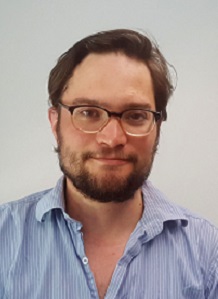
Gabriel Byng is a researcher at the University of Vienna's Institute of Art History within the Faculty of History and Cultural Studies, with additional affiliation to the History Department at University of Cambridge. His office is located at Garnisongasse 13, University Campus Hof 9, 1090 Vienna, where he can be reached at +43-1-4277-41484. Dr. Byng holds degrees including BA and MA from Cambridge (Cantab) plus another MA.
Dr. Byng's research spans multiple interconnected fields in medieval studies with particular focus on architecture's relationship to economic structures, political theory, material culture, and religious experience. His work examines how spatial organization in churches reflected and shaped social hierarchies, how building practices connected to broader economic patterns, and how material objects mediated religious experiences. His Digital Pilgrim II project represents his commitment to applying digital methodologies to traditional art historical questions, particularly regarding medieval pilgrimage practices and iconography.
An analysis of Dr. Byng's recent publications reveals a consistent scholarly trajectory exploring the intersection of architecture, social organization, and religious practice in medieval Europe. His work demonstrates particular expertise in English parish church architecture while increasingly incorporating Viennese contexts, as seen in his 2023 article on St. Stephen's Cathedral during the 1408 political crisis. Methodologically, he bridges traditional archival research with theoretical frameworks from practice theory, phenomenology, and material culture studies.
- Reginald Taylor and Lord Fletcher Essay Prize (for 'The Function and Iconography of the Minstrels' Gallery at Exeter Cathedral')
Dr. Byng's scholarly contributions extend beyond traditional academic publishing through his involvement with projects like Digital Pilgrim II, which examines medieval pilgrimage practices through digital mapping of badge distributions. His policy paper submission to the Culture, Media and Sport Committee's inquiry into tourism demonstrates engagement with contemporary heritage management issues. His work with the Churches Conservation Trust and the Cathedral and Church Buildings Division shows practical application of his research to current preservation challenges.
Dr. Byng actively participates in academic discourse through numerous conference papers, seminars, and public talks on topics ranging from medieval synagogues to parish church guides. His research on the 'iconographic communities' formed through shared visual culture in late-medieval Europe represents an innovative approach to understanding medieval social networks through material evidence.