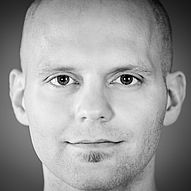
Tarun Yenamandra is a researcher at the Computer Vision Group within the TUM School of Computation, Information and Technology at Technical University of Munich . He holds an M.Sc. in Informatik from Saarland University and a B.E. in Electronics and Communication Engineering from Osmania University . His research focuses on generative models , model-based learning , 3D/4D reconstruction , and differentiable rendering . Tarun has contributed to advancements in inverse rendering , implicit shape modeling , and multi-graph matching , with publications in top conferences like CVPR , WACV , and 3DV . His work intersects deep learning , geometric processing , and neural rendering , emphasizing efficient and accurate 3D modeling.
Rigas-Filippos Soldatos serves as a Visiting Assistant Professor in the Department of Psychiatry at the Medical School of the National and Kapodistrian University of Athens, where he currently holds an Academic Fellow position in Neuropsychiatry at Aeginitio Hospital's First Neurological Clinic since May 2021. His academic career includes prior roles as an Academic Fellow in Psychiatry at the university's First Psychiatric Clinic (2014-2020) and a Research Fellow in Neuropsychiatry at the University of Melbourne's Melbourne Neuropsychiatry Centre (2019-2020) under a Greek-Australian Research Fellowship. His educational credentials feature a Doctoral degree (2014) from the National and Kapodistrian University of Athens' 1st Department of Pathological Anatomy with thesis 'Molecular study of meningiomas', a Medical degree (2005) from the same institution's Medical School, and a Bachelor of Science in Biomedical Science (1999) from King's College London. Soldatos specializes in advanced psychiatric research focusing on first-episode psychosis , schizophrenia spectrum disorders , and exposome-environment interactions . His work integrates machine learning methodologies to develop predictive models for symptom remission while examining socioeconomic and familial influences on disease progression. He actively contributes to the Athens first-episode psychosis research study , advancing early intervention frameworks through longitudinal clinical investigations. Analysis of his publication record reveals a concentrated research trajectory on computational psychiatry applications, with recent work emphasizing exposome scoring systems in schizophrenia and pandemic-related caregiver impacts in neurocognitive disorders. His methodological approach bridges clinical psychiatry with data science to address critical gaps in psychosis management and functional outcomes. As a core collaborator in the Athens first-episode psychosis research initiative, Soldatos operates within multidisciplinary teams at Aeginitio Hospital while maintaining international research connections established during his fellowship at the Melbourne Neuropsychiatry Centre.
Jennifer A. H. Becker is an Associate Professor in the Department of Communication at the University of Texas at San Antonio , part of the College of Liberal and Fine Arts. Her research focuses on interpersonal communication, applied communication, community-based research, family communication, health communication, and communication pedagogy. Education: Ph.D. in Communication, University of Oklahoma (2005) M.A. in Communication, Ball State University (1999) B.A. in Communication and Psychology (double major), Winona State University (1998) Research Interests encompass interpersonal communication in relational and applied contexts, with recent work exploring community strengths, online teaching methodologies, and honors education. She utilizes both quantitative and qualitative methods to analyze interpersonal dynamics in diverse settings. Publications highlight trends in interpersonal communication pedagogy, long-distance relationships, defensive communication in romantic contexts, and community-based applications of communication theory. Her scholarship appears in outlets like the Journal of Communication Pedagogy , Journal of Social and Personal Relationships , and Communication Monographs . Teaching Experience spans undergraduate and graduate levels, including honors courses, service-learning, and hybrid modalities. She has taught courses in interpersonal communication, relational communication, family communication, human communication theory, and research methods.
Dr. Lecturer Emre YALÇIN is a theater educator and researcher at Kafkas University's Faculty of Fine Arts, Department of Performing Arts. With a Ph.D. in Performing Arts from Dokuz Eylül University (2013-2019) and a Master's in Theater Criticism and Dramaturgy from Istanbul University (2002-2013), he has dedicated his career to exploring acting-directing methodologies, theater theory, and dramatic writing. His academic journey includes full-time research assistant roles at Dokuz Eylül University since 2014 and department chairmanship at Kafkas University from 2020 onward. Ph.D. in Performing Arts (Dokuz Eylül University, 2013-2019) Master's in Theater Criticism and Dramaturgy (Istanbul University, 2002-2013) Bachelor's in Information and Document Management (Istanbul University, 2002-2009) His research focuses on acting-directing techniques , theater theory , and dramatic writing , evidenced by publications analyzing William Forsythe's improvisation methodologies, Molière's tragicomedies, and postdramatic staging in contemporary European theater. The 15 most recent publications reveal a trajectory from classical drama analysis (Sophocles, Shakespeare) to modern experimental forms (post-musical theater, digital performance education). Scientific awards include multiple film festival recognitions (2020-2021) for creative works like Yağmur, Şnorkel ve Taze Fasulye , demonstrating his interdisciplinary approach blending academic research with artistic practice. He has led international projects like Erasmus Art+ (2022) and served as consultant for Goethe Institute's cultural initiatives (2023-2024). Best Film Awards (2020-2021) Erasmus Program leadership UNESCO-supported project involvement Currently teaching 16 undergraduate courses in movement training, role interpretation, and stage composition (2023-2024 academic year), he continues to bridge theoretical research with practical training in performing arts education.
Dr. Michael E. Miller is a Professor of Systems Engineering at the Air Force Institute of Technology (AFIT) , where he leads the Human Systems specialization within the Department of Systems Engineering and Management. His expertise bridges Human-Agent Teaming , Human Digital Twins , and Human-System Integration . Doctor of Philosophy in Industrial and Systems Engineering, Virginia Tech (1993) Master of Science in Industrial and Systems Engineering, Ohio University (1989) Bachelor of Science in Industrial and Systems Engineering, Ohio University (1987) Dr. Miller’s research focuses on: Human-Agent Teaming – Modeling intent, coordination, and cognitive processes in mixed human-AI teams Digital Imaging and Display Systems – Lifetime modeling for OLED displays and visual search optimization Human Digital Twins – Developing metrics and unified frameworks for digital human representations His recent publications emphasize interdisciplinary applications in Systems Engineering , Cognitive Science , and Military Technology , particularly for defense and aviation contexts. Notable awards include: Southwestern Ohio Council for Higher Education Faculty Excellence Award (2017) Multiple Best Paper awards (2012-2016) from the Industrial and Systems Engineering Research Conference C.E.K. Mees Award, Eastman Kodak (2004) With over 100 US patents and 50 peer-reviewed articles , Dr. Miller has advanced human-machine integration in digital imaging during his 15-year tenure at Eastman Kodak prior to joining AFIT in 2010. He co-leads a NATO Research Specialists' Meeting on Human Digital Twins (December 2024).
Jorg Huijding is a Professor at Utrecht University's Faculty of Social Sciences, specializing in Clinical Child & Family Studies . His work bridges education, research, and society through community-engaged learning , focusing on integrating social partners into pedagogical curricula and analyzing the benefits of such engagement. Research Interests Dynamics of Youth (DoY) initiatives Information processing in anxiety/aggression Parental interpretations of child behavior Self-regulation development in children Recent Trends include studies on frontal EEG activity, brain network connectivity, and childcare impacts on self-regulation. His articles emphasize longitudinal designs and multimodal methods (EEG, eye-tracking). Leadership Roles Bachelor's program Pedagogical Sciences Director UU-wide community engaged learning council member Chairman of national Pedagogics chamber Committee Involvement spans interdisciplinary education, Open Science, and clinical psychologist training reform. He contributed to the YOUth cohort study and the Healthy Urban Living Innovation Hub.
Hürcan Tarhan is an Associate Professor affiliated with the Faculty of Economics and Administrative Sciences at Bahcesehir University. Her academic work spans Human Resources Management, Organizational Behavior, and Educational Administration, with a focus on cross-cultural studies in Turkey, Indonesia, and international education policy. Doctoral Degree: Business Administration - Human Resources Management, Bahcesehir University (2019) Master's Degree: Educational Administration and Management, Yıldız Technical University (2005) Bachelor's Degree: English Language and Literature, University of Uludag (1993) Her research examines paternalistic leadership , precarious employment , and creative learning districts , often integrating psychological and sociological frameworks. Recent publications address TQM-oriented HRM practices in Indonesia and inclusion strategies in Turkish educational systems. While no scientific awards are explicitly mentioned, her work includes administrative tasks and international educational policy analysis, such as challenges faced by Turkish educational attachés abroad.
Aurora Hoel is a Professor of Media Studies and Visual Culture at the Department of Art and Media Studies at the Norwegian University of Science and Technology (NTNU), where she also serves as Deputy Head of the strategic focus area "Ocean and Coast." She leads the NFR project "Visualizing the Deep Sea in the Age of Climate Change" (2023-2027) and the research group "AI Media." Previously, she served as Vice-Dean for Art and Innovation at the Faculty of Humanities at NTNU (2021-2024). Hoel has held various prestigious academic positions, including Novo Nordisk Foundation Visiting Professor in Art & Art History at Aarhus University, Professor of Media Aesthetics at the University of Oslo (2019-2020), and Marie Skłodowska-Curie Actions (MSCA) Fellow at Humboldt University in Berlin (2015-2017). She has also been a visiting professor at Harvard University, UC Berkeley, Stony Brook University, the University of Copenhagen, École des hautes études en sciences sociales, and École polytechnique. Her research focuses on images and imaging technologies, including photography, scientific instruments, medical visualization, and underwater robots and sensors, with particular attention to their epistemological implications. Hoel's work explores the active dimension of images and image technologies (their "agency") and aims to develop operational aesthetics and theories of knowledge. Her research spans disciplines such as image theory, visual culture, media philosophy, and science and technology studies. Hoel's recent publications reveal a strong focus on operative images, technological mediation, and the philosophical dimensions of visualization. Her work increasingly examines how AI-generated imagery and deep learning systems transform our understanding of visual representation and knowledge production. She has developed frameworks for analyzing the "operational" status of images that go beyond traditional representational models. She has led several major research projects, including the MSCA project "Styles of Objectivity: Agency, Alignment and Automation in Image-Guided Surgery" (2015-2017), "Face of Terror: Understanding Terrorism from the Perspective of Critical Media Aesthetics" (2016-2021), and "Picturing the Brain: Perspectives on Neuroimaging" (2010-2014). She has also participated in projects like "Digitization and Diversity" and "Photography in Culture." Her artistic collaborations include exhibitions such as "Operating Fields: Medical Imaging Across Art and Science" (2014), "A-me: Augmented Memories" (2013), and her 2007 exhibition "Maktens bilder" at the Norwegian Museum of Justice, demonstrating the interdisciplinary nature of her scholarly practice.
Seonwook Park is a Researcher at Lunit Inc. , focusing on advancing eye-tracking technology through deep learning. He earned his PhD in June 2020 from ETH Zurich 's Department of Computer Science under the supervision of Prof. Dr. Otmar Hilliges. His research bridges eye tracking and deep learning , aiming to make eye-tracking accessible in uncontrolled, everyday environments. This includes gaze estimation from monocular RGB images, real-time 3D gaze tracking, and self-learning transformations for gaze redirection. His work often intersects with computer vision and human-computer interaction , as seen in his contributions to UI adaptation via eye movement analysis. His publication record spans top conferences like NeurIPS , ECCV , and ICCV , reflecting expertise in gaze estimation , hand pose estimation , and visual SLAM . Notably, he won the Best Presentation Award at ETRA 2018 . He has supervised multiple theses, including MA and BA projects, and served as a teaching assistant for courses such as Machine Perception and Human-Computer Interaction at ETH Zurich.
Dr. Sylvia Niehuis is a Professor in the Department of Human Development and Family Sciences at Texas Tech University’s College of Human Sciences. She also directs the SMITTEN Lab ( Studying Maturation, Interpersonal Transitions, Theory, and Emotions in Newlyweds ), where she and her team investigate romantic relationship development across dating and marital contexts. Education and Training: While specific degree details are not provided, the title “Ph.D.” and her appointment as Professor indicate completion of doctoral training in Human Development, Family Studies, or a closely related field. Research Interests: Dr. Niehuis’s program of research centers on how romantic relationships evolve within ecological systems—family, peers, culture, and even climate change. She examines idealization and disillusionment , the transition from dating to cohabitation and marriage , and relationship dissolution . Methodologically, she integrates surveys, daily diaries, interviews, experiments, physiological assays, language analysis, and functional magnetic resonance imaging (fMRI). Publication Trends: Her most recent work (2019–2024) demonstrates a consistent focus on disillusionment processes across multiple contexts—premarital pregnancy, dating-app use, neuroimaging correlates, and cross-cultural validation of measures. A growing emphasis on big-data and machine-learning approaches is evident, culminating in a 2020 PNAS paper leveraging 43 longitudinal couples studies. Scientific Awards: Berscheid-Hatfield Award for Distinguished Mid-Career Achievement, International Association for Relationship Research IARR Article Award (Runner-Up, 2019–2020) Top Four Paper Award, Interpersonal Communication Division, Western States Communication Association Integrated Scholar Recognition, Office of the Provost, Texas Tech University Nancy J. Bell Graduate Faculty Excellence in Mentoring Award Outstanding Faculty Mentor Award, Center for Active Learning and Undergraduate Engagement, TTU Teaching Award, International Association for Relationship Research Elected Membership, Teaching Academy, TTU President’s Excellence in Teaching Award, TTU Advising, Mentorship, and Funding: Dr. Niehuis has mentored numerous graduate and undergraduate researchers, many of whom appear as co-authors on her publications. Although she is currently not accepting new graduate students , the SMITTEN lab continues to foster collaboration among faculty, graduate, and undergraduate researchers through weekly meetings and shared projects. Laboratory and Team: The SMITTEN lab— Studying Maturation, Interpersonal Transitions, Theory, and Emotions in Newlyweds —maintains an active longitudinal project following predominantly Hispanic newlywed couples in the Lubbock area. The lab’s infrastructure supports survey, interview, and fMRI data collection, and it encourages community participation via hs.smitten@ttu.edu.
Amery Wu serves as Associate Professor and ECPS Graduate Advisor for Admissions and Scholarship at the University of British Columbia's Faculty of Education, specifically within the Department of Educational and Counselling Psychology, and Special Education. Based in Scarfe Library Block 287, Dr. Wu specializes in advanced quantitative methods for educational and psychological measurement. Dr. Wu's research focuses on applied statistical modeling in educational contexts, with particular expertise in test item performance analysis , globalization of testing through internet platforms , and longitudinal assessment methodologies . Their scholarly work bridges psychometrics with practical educational applications, examining how test design impacts diverse learner populations across international contexts. Key methodological contributions include innovations in mixed-effects modeling, differential item functioning analysis, and validation frameworks for complex assessment systems. Recent publications demonstrate a clear trajectory toward integrating response process data with performance outcomes , particularly through Bayesian modeling and advanced visualization techniques for online assessments. The research consistently addresses measurement challenges in high-stakes contexts including immigration language testing (CELPIP), health literacy instruments, and inclusive classroom models. Dr. Wu's work emphasizes the ecological validity of assessments within their sociocultural contexts. Teaching responsibilities include core methodology courses: EPSE 423 (Assessment of Classroom Learning), EPSE 481 (Introduction to Research in Education), EPSE 482 (Statistics for Educational Research), EPSE 483 (Reading Educational Research), and advanced graduate courses EPSE 592 (Experimental Designs) and EPSE 596 (Correlational Analysis). As Graduate Advisor for Admissions and Scholarship, Dr. Wu shapes the quantitative training of future educational researchers.
Roozbeh Mottaghi is a Senior AI Research Scientist Manager at Meta's Fundamental AI Research (FAIR) group and an Affiliate Associate Professor at the Paul G. Allen School of Computer Science & Engineering at the University of Washington. His work bridges academic research and industrial AI development, focusing on embodied artificial intelligence, robotics, and computer vision. Dr. Mottaghi received his Ph.D. in Computer Science from UCLA under the supervision of Alan Yuille. He completed his Master's degrees at Simon Fraser University and Georgia Institute of Technology, and earned his Bachelor's degree from Sharif University of Technology. Prior to his current positions, he was a Postdoctoral Researcher at Stanford University and Research Manager of the PRIOR team at the Allen Institute for AI. Dr. Mottaghi's research focuses on embodied AI , where agents learn to interact with and understand their physical environments. His work spans robotics , computer vision , and human-robot interaction , with particular emphasis on 3D scene understanding, visual reasoning, and language-vision integration. His research addresses fundamental challenges in how AI systems can perceive, navigate, and manipulate the physical world through embodied experiences. His recent publications demonstrate a strong trend toward increasingly sophisticated embodied AI systems capable of complex multi-agent collaboration, open-vocabulary understanding, and human-like reasoning about physical environments. His work bridges simulation and real-world robotics, with significant contributions to benchmark creation and standardized evaluation frameworks for embodied AI. Dr. Mottaghi's work has been recognized with several prestigious honors including: Outstanding Paper Award at NeurIPS 2022 Multiple oral presentations at top-tier conferences (CVPR, ICCV) Spotlight presentations at major computer vision conferences Dr. Mottaghi has mentored numerous students and researchers, including PhD students and Pre-doctoral Young Investigators. His advising style emphasizes both theoretical rigor and practical implementation, preparing students for successful careers in both academia and industry. His work has been supported by significant research funding from Meta and previously from the Allen Institute for AI. Dr. Mottaghi has been instrumental in developing AI2-THOR, RoboTHOR, and Habitat simulation platforms, which have become standard tools in the embodied AI research community. His leadership in the PRIOR team at AI2 and currently at Meta's FAIR has driven significant advances in how AI systems understand and interact with the physical world.
Sarah Westrick is a Postdoctoral Research Associate affiliated with the Neuroscience Program at the University of Illinois at Urbana-Champaign and the Beckman Institute for Advanced Science and Technology . Her research focuses on the interplay between maternal hormones, offspring development, and behavioral plasticity in wild vertebrates, particularly examining glucocorticoid impacts on stress physiology and adaptive traits. Key Research Areas: Maternal stress effects on offspring neurodevelopment and physiology Evolutionary implications of hormonal variation in parental care Stress response mechanisms in amphibians and small mammals Behavioral plasticity under environmental changes Comparative endocrinology across species Life history trade-offs in wild populations Her recent publications explore topics such as corticosteroid measurement accuracy in poison frogs, maternal aggression strategies, and transgenerational effects of stress hormones in red squirrels. These works span disciplines including neuroendocrinology, behavioral ecology, and evolutionary developmental biology. Labs & Teams: Beckman Institute for Advanced Science and Technology Neuroscience Program, College of Liberal Arts & Sciences
Dr. Patrick Ehrich, born in 1976, is a Senior Academic Councillor at the University of Regensburg's Institute of Musicology and Chair of Music Education and Music Didactics since 2019. His career spans music education, composition, and research, with a focus on classroom management, 20th-century music, and speech training. He has held teaching positions at the University of Regensburg since 2006 and is active in teacher training. Education: MA in Music/English (University of Regensburg, 2001); Double Subject Teaching Qualification in Music (University of Regensburg & Catholic Church Music Regensburg, 2005) Dr. Ehrich's research explores music education quality, cognitive activation in teaching, and pop/rock genre pedagogy. His work includes empirical studies on classroom singing and interdisciplinary assessments of teaching standards. Recent publications analyze teaching quality dimensions across six school subjects and aesthetic-emotional learning integration. He contributes to journals like Zeitschrift für Erziehungswissenschaft and mip-journal , covering topics from Taylor Swift to classical works by Handel and Wagner. Awards: Finalist in national "School-Practical Composing and Arranging" competition (2011); Siemens Arts Program Fellow (2004) Dr. Ehrich supervises teacher training internships and participates in national conferences including the German Association for Research in Music Education and Society for Empirical Educational Research. He co-authors textbooks like Tonart: Musik erleben - reflektieren - interpretieren (2024).
Efstathios Stamatatos is a Professor in the Department of Information and Communication Systems Engineering at the University of the Aegean, Greece. He has been a faculty member at the university since 2004, following previous research positions at the Wire Communications Lab of the University of Patras, the Polytechnic University of Madrid, the Austrian Research Institute for Artificial Intelligence, and the TEI of Ionian Islands. His primary research interests include Text mining, Intelligent information retrieval, Natural language processing, Machine learning, and Computer music, with a particular focus on authorship attribution, plagiarism detection, and web genre identification. His work bridges computational linguistics, digital forensics, and digital humanities, applying machine learning techniques to analyze textual patterns and stylistic features. Dr. Stamatatos has authored numerous publications on authorship attribution, plagiarism detection, and text classification, with a strong emphasis on developing robust methodologies that work across different domains and languages. His research has evolved from traditional n-gram approaches to more sophisticated techniques involving machine learning ensembles, topic modeling, and recently, addressing challenges posed by generative AI systems. He has served as Associate Editor for the International Journal of Digital Crime and Forensics, and as Editorial Board Member for Language Resources and Evaluation and Information Processing and Management. He has also been Guest Editor for a Special Issue on Plagiarism and Authorship Analysis in Language Resources and Evaluation. Dr. Stamatatos has been instrumental in organizing the PAN (Uncovering Plagiarism, Authorship, and Social Software Misuse) workshop series, serving as co-organizer and contributing numerous overview papers on authorship verification, plagiarism detection, and digital text forensics. He has also served on program committees for major conferences including ACL, SIGIR, ECIR, and AAAI.