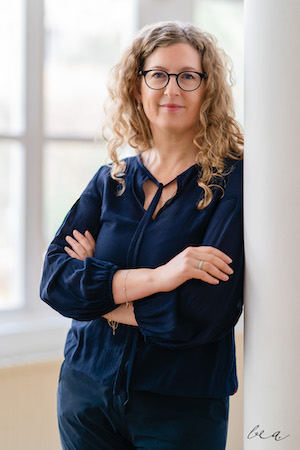
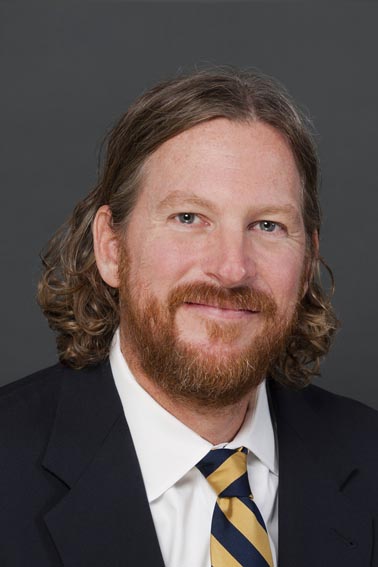
Heidi Selenius is an Associate Professor at the Department of Special Education , Stockholm University . Her research focuses on literacy development for individuals with intellectual disabilities, second-language learners, and forensic psychiatric populations. She investigates assistive technologies, Response to Intervention (RTI) models, and inclusive educational practices. Special Education Psychology (PhD) Research Trends : Her recent publications examine speech-to-text tools for students with disabilities, longitudinal reading interventions, and psychometric validation of inclusion efficacy scales. She combines single-subject designs with cross-sectional studies across Sweden and Nordic countries. Key Contributions include systematic decoding interventions for L2 students, comparative analyses of reading vs listening comprehension, and forensic clinic follow-up studies. Her work emphasizes teacher training, educational equity, and technology integration for marginalized learners.
Anna Sahlée is a Senior Lecturer in Nordic Languages at Uppsala University's Department of Nordic Languages. She holds a PhD and serves as director of studies for undergraduate and preparatory courses in Swedish as a second language, with contact based at Thunbergsvägen 3L, Uppsala. Her research spans critical areas including: Language and Education Text Research and Narrative Analysis Literacy and Multilingualism Grammar and Text Visualization Language Psychology Dr. Sahlée's scholarly work integrates linguistic theory with educational practice, focusing on historical evolution of language assessment, cognitive aspects of text comprehension, and pedagogical challenges in multilingual classrooms. Her methodology combines discourse analysis with empirical studies of student writing across century-long timescales. Publication trends since 2013 reveal sustained investigation into Swedish language education through dual lenses: historical analysis of teacher assessment practices and contemporary studies of multilingual learners. Her work consistently bridges theoretical linguistics with practical classroom applications, particularly in second-language acquisition contexts. Scientific Awards: No awards or honors are documented in the source material. As academic director, she oversees curriculum development and teaching coordination for Swedish language programs but no doctoral supervision or grant-funded projects are specified. Her collaborative research includes partnerships with scholars like Memet Aktürk Drake and Mikael Kalm. No dedicated research laboratories or specialized teams are referenced in the available profile.
Danielle Roussel, MD is a Clinical Professor in the Department of Anesthesiology and currently serves as Assistant Dean for Medical Student Assessment, with prior roles as Assistant Dean for Clinical Curriculum and Course Director for pre-clerkship Pharmacology and cardiovascular/pulmonary/renal units. Her work ensures assessment systems motivate student learning while protecting patient safety through trustworthy advancement judgments. Her educational background includes a BS in Chemical Engineering, BA in English Literature, and MD from the University of Kansas, followed by Anesthesiology residency at the University of Utah and Pediatrics internship. This multidisciplinary foundation informs her academic approach. Roussel's research focuses on medical education innovation, particularly clinical reasoning assessment and clinical skills curricula development. She examines how structured lexicons bridge pre-clerkship/clerkship transitions and how learning communities enhance faculty work meaning through longitudinal learner relationships. Her national leadership includes presidency of the Directors of Clinical Skills Education and co-chairing the GEA CLASS Project's WHY Taskforce. Recent publications reveal evolving trends toward competency-based frameworks integrating Entrustable Professional Activities (EPAs) with clinical reasoning pedagogy. Her work emphasizes national standardization of assessment methods while addressing gaps in clinical reasoning instruction across U.S. medical schools. She actively shapes medical education through leadership roles: serving on the AAMC/ACGME/AACOP Foundational Competencies working group, directing national curriculum initiatives, and collaborating with multi-institutional research teams to advance assessment science. Her grant-funded work focuses on curriculum redesign for clinical reasoning development and assessment validity studies.
Leticia Alvarez is an Associate Professor at the University of Utah’s College of Education , specifically within the Education, Culture & Society department. A first-generation Purépecha Xicana scholar and educator, her work is deeply informed by her upbringing in a working-poor, mixed-status family along the San Diego-Tijuana border and her experiences navigating both underfunded K-12 schools and elite higher education institutions. Her research focuses on the educational experiences of BIPOC and Latinx communities , particularly those racially profiled, academically tracked, or undocumented. Education: Ph.D. in Educational Psychology (University of Wisconsin-Madison), Ed.M. in Human Development and Psychology (Harvard), BA in Liberal Arts with Spanish minor (CSU San Marcos) Research strands include: (1) Latinx immigrant students’ navigational strategies in U.S. education; (2) family-school engagement through community-based research; and (3) culturally sustaining praxis for teachers. Theories employed include critical social theory , Chicana feminist theory , and participatory action research (PAR) . Recent publications address COVID-19’s impact on Latinx education , resisting the school-to-sweatshop pipeline , and undocumented youth agency . Awards include the Distinguished Faculty Service Award (2022), Social Justice & Transformation Award (2022), and multiple honors from the Mestizo Arts & Activism Collective (2016, 2019). She served on the Utah Board of Juvenile Justice and contributed to community engagement initiatives like the Afghan Refugee Leadership Training Series (2023).
Elisabeth Heiszenberger is a researcher at the University of Vienna , Department of Romance Studies, and PhD student at the University of Vienna and University Grenoble Alpes . Her academic work focuses on French phonology and phonetics , particularly the acquisition of French liaison consonants in monolingual and bilingual contexts, with emphasis on orthographic influence and cross-linguistic interference. Her research includes: Longitudinal studies on French liaison development in school-age learners Corpus-based analysis of phonological representations Empirical investigations of German-French bilingual language acquisition Acoustic analyses of sociolinguistic variation Key scientific achievements include: First Jury Prize and Audience Prize at MT180 2024 National Competition (Austria) , and representation in the international final in Ivory Coast. She has contributed to multiple peer-reviewed publications and presented at major phonology conferences. Her teaching portfolio includes linguistics seminars for French teacher candidates at all academic levels, covering corrective phonetics , phonological variation , and corpus linguistics . She actively collaborates with the Austrian Academy of Sciences' Acoustics Research Institute and participates in educational initiatives like the Young Science Ambassadors program.
Verena Krausneker is a Senior Lecturer (half-time) at the Institute of Educational Science , University of Vienna, with affiliations at the Institute of Linguistics and Center for Teacher Education. She leads the Sign Languages Working Group , developing educational resources for Austrian Sign Language (ÖGS). Her academic career includes visiting professorships at Humboldt University Berlin (2024) and the University of Hamburg (2007, 2015). Research Focus ÖGS as educational language (2017–2023 PLIG project) BAG-Sign project (2023–2025) with 10 international partners Sign language avatars (2022 ICCHP-AAATE keynote) Historical studies on deaf Austrians under National Socialism (2008–2010, 202023 projects) Language policy frameworks (European Council, EU) Deaf Studies and minority rights NGO Leadership Co-founder, Anti-Racism Organization ZARA (1999) Board member, Austrian Deaf Association (2001–2007) Co-founder, Shalom Alaikum (2015) Scientific Advisory Board, Society for Sign Language and Communication of the Deaf (since 2021) Additional Roles Co-founder, Feldenkrais Institute Vienna (2007–2021) Confidant for Jewish students at University of Vienna Scientific reviewer and assessor Active in international conferences (World Deaf Congress, European Union of the Deaf)
Cynthia Puranik is a Distinguished University Professor in the Department of Communication Sciences and Disorders at Georgia State University’s College of Education & Human Development. She leads the Child Reading and Writing Lab (CRAWL) and is an affiliate at the Center for Research on the Challenges of Acquiring Language and Literacy. Her research focuses on early writing development, intervention strategies for children with language-based learning disabilities, and cognitive-literacy connections. Puranik holds a Ph.D. in Speech & Language Pathology from the University of Florida and a B.A. in Economics & Statistics from the University of Bombay. Education includes a Postdoctoral Fellowship at the Florida Center for Reading Research, followed by advanced degrees in Speech & Language Pathology and foundational studies in Economics. Her work bridges theory and practice, examining how transcription skills, self-regulation, and oral language influence writing proficiency. Current projects include developing interventions for adult secondary education writing (W-ASE), peer-assisted strategies in kindergarten (PAWS), and tailored interventions for students with learning disabilities (WILLD). Research trends emphasize longitudinal studies of writing development, classroom practices, and the role of cognitive factors like short-term memory. Grants from IES fund multi-state collaborations, and her work addresses underserved populations in literacy education. Puranik’s lab explores technology integration (e.g., tablet feedback for letter writing) and culturally responsive curricula for diverse learners. Key grants: Writing in Adult Secondary Education (W-ASE), PAWS (IES-funded), WILLD (with Seton Hall). Lab affiliation: Center for Research on Language and Literacy Challenges. Professional roles: Certified Speech-Language Pathologist, curriculum developer for literacy interventions. Her publications span 30+ years, addressing topics from preschool letter-writing fluency to adult literacy programs. Ongoing focus is on scalable interventions and measurable outcomes across diverse educational settings.
Dr. W. Monty Jones serves as Associate Professor in the Department of Teaching and Learning at Virginia Commonwealth University's School of Education, where he directs the Certificate in Online Teaching for K-12 Educators and the instructional technology track of the M.Ed. in Curriculum and Instruction program. His work bridges academic research with practical implementation through partnerships with Virginia school divisions and the Virginia Society for Technology in Education (VSTE). Ph.D. in Instructional Technology, University of Virginia M.Ed. in Curriculum and Instruction, Virginia Commonwealth University B.B.A. in Computer Information Systems, James Madison University Dr. Jones' research centers on how K-12 educators develop technological expertise through formal, informal, and independent learning pathways, with particular focus on online teaching preparation, digital fabrication in classrooms, and maker-centered professional development. His investigations examine contextual barriers to technology integration while developing practical frameworks for teacher growth in virtual and physical learning environments. Current projects explore music-based coding instruction and hip hop pedagogy to broaden computer science engagement. Analysis of his publication trajectory reveals deepening specialization in maker education and teacher identity formation within technology-rich contexts. His work consistently applies sociocultural frameworks like activity theory to examine how teachers develop technological expertise across K-12 and higher education settings. Emerging themes include digital badge systems for professional development recognition, culturally responsive computational learning, and the adaptation of TPACK frameworks for language education contexts. Outstanding Curriculum Award from The National Association of Gifted Children (2010) Outstanding Performance Award from Hopewell Public Schools (2006) As program creator and director of VCU's Certificate in Online Teaching, Dr. Jones has established multi-division teacher cohorts through VSTE partnerships, developing infrastructure for statewide online instruction delivery. He designs credit and non-credit courses for teacher re-certification while mentoring educators through virtual field experiences. His research on spaced repetition algorithms and digital badges represents ongoing innovation in professional development recognition systems. Dr. Jones actively contributes to the Greater Richmond Area Educational Technology Council and serves as reviewer for the Journal of Teacher Education. Dr. Jones' work manifests through VCU's collaboration with VSTE and school divisions to establish maker-centered professional learning communities. His research on STEAM labs informs practical implementations of digital fabrication in teacher preparation, emphasizing authentic integration of 3D printing, coding, and creative technologies within subject-specific pedagogy. Current projects explore how commercial makerspaces can be leveraged for sustainable K-12 educator development.
Quintin I. Cutts is a Professor in the School of Computing Science within the College of Science and Engineering at the University of Glasgow. He serves as a leading researcher in computing education with extensive contributions to programming pedagogy, educational frameworks development, and assessment methodologies across multiple educational levels from primary school through undergraduate programs. His research interests focus on computing education , particularly the development of educational frameworks like the ABC Framework for orienting learners in programming classes, spatial skills development in computational thinking, code comprehension strategies, and early-years computing education. His work bridges cognitive psychology with practical educational interventions, examining how spatial reasoning, argumentative reasoning, and physical activities impact programming learning outcomes. Analysis of his recent publications reveals a strong emphasis on developing structured educational approaches for novice programmers, with particular attention to how spatial skills correlate with computational thinking development, how to design effective early programming experiences, and how to address participation inequalities in computer science education. His work increasingly focuses on practical frameworks that can be implemented in real classroom settings across different educational stages. Cutts has established significant collaborative networks through organizing UKICER (United Kingdom and Ireland Computing Education Research) conferences and participating in international computing education research communities. His mentoring approach is evident through frequent co-authorship with junior researchers including Jack Parkinson, Maria Kallia, and Joseph Maguire, who have become established researchers in the computing education field themselves. He has contributed to building research infrastructure through initiatives like Works-in-Progress workshops that support emerging scholars.
Jon Anders Græsli is an Associate Professor at the University of Inland Norway, affiliated with the Department of Mathematics, Natural Sciences, and Physical Education within the Faculty of Education. His research focuses on spatial cognition and geography education, particularly in children’s wayfinding, map skills, and progressive teaching methodologies. He is part of the Future-Oriented Education in Science and Physical Education (FUNK) research group. Græsli’s work emphasizes educational strategies for developing spatial awareness and cognitive mapping abilities in young learners. His studies explore gender differences in spatial navigation, the effectiveness of hand-drawn maps as learning tools, and the abstraction levels of maps in educational contexts. His research bridges pedagogy, psychology, and geography, aiming to enhance spatial literacy through structured, progressive approaches. Publications highlight his contributions to understanding how children interact with maps and spatial information, with recent work focusing on step-by-step methodologies for map skill acquisition. He holds a position at Campus Hamar, Room 2N1296, and is accessible via email at jon.grasli@inn.no .
Denise Davis, MD is a Professor and Associate Director for Faculty Development at the Center of Excellence in Primary Care Education at the San Francisco VA. She specializes in health professions education, focusing on communication skills, feedback, mentorship, and fostering inclusive learning environments. Her work emphasizes improving patient experience through effective clinical communication and addressing systemic inequities in healthcare education. Education: BA/MD Program, University of Missouri-Kansas City School of Medicine (1981-1986) Internal Medicine Residency, Kaiser Foundation Hospital (1989) American Academy on Communication in Healthcare Residency (2010) Diversity, Equity, and Inclusion Training, UC Faculty Development (2017) Research Interests: Dr. Davis investigates communication strategies to enhance clinical teamwork, reduce workplace discrimination, and promote diversity in medical training. She designs curricula addressing professional identity formation and cultural competency, with a focus on marginalized communities. Her work bridges communication theory with practical applications in high-stress clinical environments. Awards: 2021 Excellence in Teaching Award (Academy on Communication in Healthcare) 2018 Martin Luther King Leadership Award (UCSF) 2013 Alpha Omega Alpha Medical Honor Society Grants & Leadership: Leads initiatives on racial trauma protocols in medical schools and peer support ambassador programs. Facilitates retreats for interprofessional teams and advises on institutional culture change. Her work is supported by UCSF and VA grants focused on educational equity. Labs/Teams: Central to the San Francisco VA’s Primary Care Education Center, collaborating with the UCSF Department of Family & Community Medicine and national medical education consortia.
Michael Stinson is a Researcher in the Department of Deaf Education at the National Technical Institute for the Deaf (NTID), which operates under the Rochester Institute of Technology. His work focuses on communication technologies, accessibility tools, and inclusive educational strategies for deaf and hard-of-hearing students. Department of Deaf Education, NTID, RIT Researcher specializing in accessibility and deaf education Stinson’s research explores communication dynamics in mixed hearing-status teams, technology-mediated learning, and accessibility solutions for postsecondary education. His publications highlight the role of captioning, speech-to-text services, and tablet-based tools in enhancing educational outcomes for deaf learners. Recent studies investigate collaborative problem-solving across diverse hearing statuses (2020), communication strategy training (2022), and schema-enriched interactions (2021). Earlier work examined behavioral adaptations in captioned communication (2018) and mobile captioning implementation (2014).
Prof. Alice Delorme Benites is Head of the Institute of Multilingual Communication and holds the Chair of Human-Machine Communication at the ZHAW School of Applied Linguistics (Zurich University of Applied Sciences). Her research focuses on machine translation (MT) literacy, multilingual communication, and the ethical implications of AI in language education and professional practice. Key Projects: Leadership roles in over 10 projects including DigiLinguo (overcoming language barriers in public institutions), MT literacy for academics, and crisis communication using MT. Coordinated initiatives like 'Digital Literacy in University Contexts' and translation tools for nursing staff. Research Interests: Her work bridges applied linguistics and technology, emphasizing: MT integration in education and professional translation AI ethics in multilingual contexts Crisis communication strategies using MT Swiss energy discourse analysis Outreach: Active in media commentary (SRF, TEDx) and international conferences (EST, EUROCALL). Her publications span topics from AI in academic writing to MT policy frameworks. Awards & Grants: While no formal awards are listed, her work has secured funding for multiple research initiatives including EU-funded projects and institutional grants. Lab/Team: Directs the Institute of Multilingual Communication, fostering interdisciplinary collaboration between linguists, technologists, and educators.
Dr. Stanley Sobolewski is an Associate Professor in the Madia Department of Chemistry, Biochemistry, and Physics at Indiana University of Pennsylvania's Kopchick College of Natural Sciences and Mathematics. Education: BS in Physics from St. John Fisher College (1981) MEd in Science Education from University at Buffalo (1984) PhD in Science Education from University at Buffalo (1992) His research focuses on physics education methodologies, particularly investigating innovative pedagogical approaches like peer instruction for large classroom settings. He examines how teaching strategies impact conceptual understanding and problem-solving skills in physical sciences. His publications demonstrate consistent focus on physics education research spanning curriculum development, assessment techniques, and enrollment analysis. Recent works explore technology integration in education while earlier publications established foundations in problem-solving methodologies. No scientific awards are mentioned in the provided materials. No specific advising relationships or grant information is documented. No laboratories or research teams are described in the available information.
Kyle Reardon is an Assistant Research Professor in the College of Education at the University of Oregon, specializing in Special Education. He serves as a Technical Assistance Provider and Evaluator for the National Technical Assistance Center on Transition (NTACT:C) and coordinates the SPED K-12 licensure program. His research focuses on secondary transitions for individuals with disabilities, employment retention strategies, universal design for learning (UDL), and justice-involved youth rehabilitation. PhD in Special Education (University of Oregon, 2020) MA in Special Education (Vermont State University, 2014) BA in Music Education (Vermont State University, 2008) Dr. Reardon’s research spans three domains: transition assessment development for postsecondary education access, employer-side barriers in disability employment, and UDL implementation in higher education. He has developed tools like the Juvenile Justice Work Qualifications Scale and Entry-Level Employability Skills and Behaviors Scale to address employment disparities. His recent publications analyze employment readiness frameworks, employer perspectives on disability inclusion, and fidelity assessments for transition programs. These works emphasize mixed methods research and equity-driven policies. 2024 Career Research Faculty Professional Development Award (UO OVPRI) 2020 Sitlington Emerging Researcher Finalist (CEC Division) 2019 CEC Division of Research Doctoral Scholar 2014 Maple Run Unified School District Teacher of the Year Nominee Kyle collaborates with organizations like NTACT:C and FACT Oregon, where he previously served as Board President. His work bridges academia and practice through grants supporting transition services and disability employment initiatives.