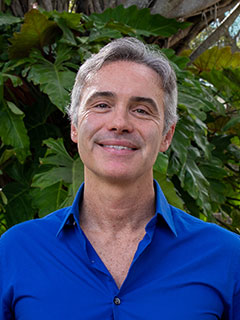
Michael Lucey is the Sidney and Margaret Ancker Chair and Distinguished Professor of French and Comparative Literature at the University of California, Berkeley. His work bridges French literature from the 19th to 21st centuries with social theory, sexuality studies, and linguistic anthropology. He has authored the critically acclaimed What Proust Heard: Novels and the Ethnography of Talk (2022) and Thinking about Sexuality with Novels (forthcoming). As founding director of the Center for the Study of Sexual Culture , he has shaped interdisciplinary research in queer theory and gender studies. Current research focuses on novels as ethnographic tools Specializes in Proust, Balzac, Woolf, and contemporary French fiction Translation work includes Didier Eribon and Édouard Louis His recent articles explore phonetics in narrative, readability frameworks, and sociological implications of literary form. He actively engages with comparative methodologies and critical theory, while his teaching spans British and American literature’s intersections with French modernism. Lucey’s academic leadership includes directing Berkeley’s Center for the Study of Sexual Culture, which supports global discourse through fellowships and conferences. His office hours are held in Dwinelle Hall and via Zoom. Contact: mlucey@berkeley.edu
Sigrid Schmalzer is a Professor of History at the University of Massachusetts Amherst, specializing in the history of science and modern China. She holds a Ph.D. in History and Science Studies from the University of California, San Diego (2004). Her research bridges the social, cultural, and political dimensions of science in China, with a focus on the intersections of agriculture, activism, and revolutionary movements. Schmalzer is the author of *Red Revolution, Green Revolution: Scientific Farming in Socialist China* (2016), winner of the Joseph Levenson Book Prize, and *The People's Peking Man: Popular Science and Human Identity in Twentieth-Century China* (2008), recipient of the Allan Sharlin Award. Her current projects include a book on agricultural heritage in the People’s Republic of China and leadership roles in organizations like the Critical China Scholars and Science for the People. She co-edits the *Activist Studies of Science and Technology* series for UMass Press, emphasizing socially engaged scholarship. Schmalzer also serves as Co-President of the MSP faculty union at UMass Amherst. Research interests span the history of science activism, transnational movements, and the legacy of Maoist science. Notable awards include the Freeman Book Award (2018) for her children’s book *Moth and Wasp, Soil and Ocean*, which integrates science education with historical narratives. Her work often critiques capitalist and authoritarian structures while advocating for science as a tool for justice and sustainability. Recent publications explore themes like agroecology, science policy, and the global dimensions of China’s scientific history. She teaches courses on modern China, science in society, and radical science movements, blending interdisciplinary approaches to engage students in critical analysis of historical and contemporary issues.
Crystal S. Rudds is an Assistant Professor of African American literature and culture in the Department of English at the University of Utah, specializing in twentieth-century American and African American fiction, urban life narratives, Black Feminisms, and black geography/ecology. She earned her PhD in English from the University of Illinois at Urbana-Champaign (2016) and MFA in Creative Writing from Indiana University-Bloomington (2004). Her research explores intersections between literary analysis and community engagement, focusing on urban spatiality, public housing representation, and black interiority. She has published works analyzing Frank London Brown and Jasmon Drain's housing narratives, digital archiving practices, and pedagogical identity evolution. Key grant activities include: Gathering, Sewing, Giving: Chronopolitics and Black Women's Quilting (TRIC/Mellon Foundation, 2023) Utah Presidential Leadership Fellowship (2023) Recognitions: David D. Anderson Award for Midwestern Literary Studies (2023) Mary Blinn Poetry Prize (2022) University of Utah Fellowships (2022) Teaching activities feature: Experiential learning with archival documents Historic site visits Performance-based literary analysis Community-focused pedagogy
Florian Mussgnug is Professor of Comparative Literature and Italian Studies at University College London (UCL), Faculty of Arts and Humanities. He has held visiting roles at Heidelberg University, Roma Tre University, La Sapienza University Rome, University of Siena, and British School at Rome. Educational Background: PhD in Literary Studies (2009) at Scuola Normale Superiore di Pisa DPhil in Italian Literature (2000) at University of Oxford MSt Research Methods in Modern Languages (1999) at University of Oxford BA in Philosophy and Modern Languages (1995) at University of Oxford Research Interests: His scholarship spans theories of authorship, genre and mode; religious/secular apocalyptic storytelling; posthumanism; anthropocene studies; comparative literature; intermediality; narratives of catastrophe and resilience; and modern/contemporary Italian, English, and German literature and culture. Grants and Research Leadership: As co-investigator for the AHRC-funded 'Interdisciplinary Italy 1900-2020' project (£831,131 total), he explores intermediality and interdisciplinarity. Additional grants include £35,000 (UCL Global Engagement Office, 2017) and £12,300 (ANCI, 2019). Scientific Awards & Service: He serves on prize juries (Premio Strega, Peter Lang Young Scholars) and national research assessment panels (Italy, Portugal). Awards include Edinburgh Gadda Prize (2012), Premio Nicoletta Quinto (2002), and Oxford Gibbs Prize (1998). Editorial and Institutional Roles: He sits on editorial boards (Arabeschi, Between, Modern Languages Open) and held leadership roles at UCL, including Vice-Dean International (2021) and Acting Head of School of European Languages, Culture and Society (2022).
Professor Jo Barraket is a leading academic and researcher in social equity, social innovation, and public policy. As Director of the Melbourne Social Equity Institute and member of the Dilun Duwa Centre for Indigenous Business Leadership, she focuses on improving social equity through organizational innovation, cross-sector collaboration, and policy design. Her research addresses social procurement, health equity, digital inclusion, and employment pathways for marginalized groups. Her work includes landmark projects such as the Australian Digital Inclusion Index and evaluations of Commonwealth Social Enterprise Development Funds. She has secured over $11M in research grants, including multiple ARC grants, and produced over 75 scholarly publications. Her current projects compare social procurement policies in Australia and Scotland, and study youth unemployment in construction via employment-focused procurement. Key research themes include: social enterprise scaling strategies, cross-sector partnerships for policy implementation, and the role of philanthropy in equitable housing. She advises governments and OECD on inclusive employment policies and chairs major research initiatives like the Social Enterprise Impact Lab. Prof Barraket’s transdisciplinary approach combines rigorous academic research with practical outputs like policy guides and digital tools to maximize societal impact. She previously founded the Centre for Social Impact Swinburne, now a global leader in social economy research.
Andrea Arpaci-Dusseau is the Susan Beth Horwitz WARF Professor of Computer Sciences and Catherine A. Erickson Professor in the School of Computer, Data & Information Sciences at the University of Wisconsin-Madison. She has been a professor at UW-Madison since January 2000 and currently serves as Graduate Advising Chair for the Computer Sciences Department. Her research focuses on computer systems with primary emphasis on file and storage systems, but also making significant contributions in distributed systems, virtualization, and scheduling. According to csrankings.org, she has published the fourth-most papers in premier systems conferences (SOSP and OSDI) and the most at the top file and storage conference (FAST). Professor Arpaci-Dusseau's recent publications demonstrate continued leadership in storage systems research, with increasing focus on cloud architectures, persistent memory technologies, and system reliability. Her work bridges theoretical foundations with practical implementations, consistently addressing real-world challenges in modern computing environments. ACM SIGOPS Mark Weiser Award 2018 (highest honor in systems field) UW-Madison Van Hise Outreach Teaching Award 2017 Multiple Best Paper awards at FAST, SOSP, OSDI, and EuroSys conferences Carolyn Rosner Award for Excellence in Teaching (2010, 2017) Co-chaired major conferences including USENIX ATC '04, FAST '07, OSDI'18, and SOSP'24 Professor Arpaci-Dusseau has co-advised 28 Ph.D. students and is deeply committed to educational outreach through the CaTaPuLT project, which connects UW-Madison students with K-12 schools to teach computational thinking using Scratch. This initiative has reached hundreds of students across Madison and earned her significant recognition for teaching excellence. She leads the Arpaci-Dusseau Systems Lab (ADSL) and is involved with the Wisconsin Institute on Software-defined Datacenters in Madison (WISDoM), where her research group continues to advance state-of-the-art solutions in computer systems.
Andrew Lynch serves as Professor and Associate Dean for Program Development in the Department of Modern Languages & Literatures within the College of Arts and Sciences at the University of Miami. His academic leadership extends beyond teaching responsibilities to include significant administrative contributions to program development across the institution. Lynch's research interests center on sociolinguistics with particular focus on Spanish language dynamics in Miami, heritage language socialization, bilingualism, and language ideology. His work examines how language functions within specific social contexts, especially in workplace environments where Spanish heritage speakers navigate linguistic demands. He investigates the complex interplay between language, identity, and social structures in postmodern urban settings, with special attention to the Cuban diaspora experience in South Florida. His publication record reveals consistent scholarly engagement with heritage language education, Spanish language variation, and the sociolinguistic landscape of global cities. Lynch's research demonstrates how language practices in Miami reflect broader patterns of linguistic adaptation and resistance within diasporic communities. His work often addresses the tension between linguistic heritage and social integration, examining how language ideologies shape educational practices and community identity. Lynch's scholarly contributions span multiple formats, including single-authored books, co-authored publications, handbook chapters, and journal articles in both English and Spanish. His work frequently appears in high-impact sociolinguistics and language education journals, reflecting his interdisciplinary approach that bridges theoretical linguistics with practical educational implications.
Dawn Song is a Professor in the Department of Electrical Engineering and Computer Science at the University of California, Berkeley, affiliated with multiple research centers including the Berkeley Artificial Intelligence Research Lab (BAIR) and the Berkeley Center for Responsible, Decentralized Intelligence (RDI). She holds leadership roles in AI safety, cybersecurity, and blockchain research. Her work bridges machine learning, security, and distributed systems, with notable contributions to formal verification, privacy-preserving technologies, and AI governance. Education: Ph.D. (2002) and M.S. (1999) in Computer Science from UC Berkeley and Carnegie Mellon University, respectively. She previously served as an Assistant Professor at Carnegie Mellon University before joining UC Berkeley in 2007. Research Interests: Dawn's work focuses on AI safety, cybersecurity, and the ethical implications of frontier AI. She explores topics such as large language model vulnerabilities, zero-knowledge proofs, blockchain security, and policy frameworks for AI governance. Her research combines theoretical rigor with practical applications, addressing challenges in secure systems, adversarial machine learning, and privacy-preserving computation. Publications: Her recent work includes groundbreaking studies on LLM memorization, smart contract decompilation, and AI agent cybersecurity evaluation. She also leads initiatives like the Singapore Consensus and California Report on AI safety priorities, emphasizing global collaboration in risk mitigation. Notable Awards: MacArthur Fellowship (2010), ACM Fellow (2019), IEEE Fellow (2019) Advising & Grants: She advises projects on AI policy and cybersecurity, securing grants from NSF, DARPA, and industry collaborations. Her lab develops tools like CyberGym for evaluating AI agents and zkPyTorch for secure machine learning. Labs & Teams: Her research groups at UC Berkeley focus on cutting-edge projects in AI safety, blockchain, and cybersecurity, collaborating with industry leaders and policymakers to advance both technical and ethical standards.
Jonathan Rosa is Associate Professor in the Graduate School of Education, Center for Comparative Studies in Race and Ethnicity, and, by courtesy, Departments of Anthropology, Linguistics, and Comparative Literature at Stanford University. He serves as Director of Stanford's Program in Chicanx-Latinx Studies and has held leadership positions including President of the Association of Latina/o and Latinx Anthropologists of the American Anthropological Association. Dr. Rosa's educational background includes: Ph.D. in Sociocultural and Linguistic Anthropology from the University of Chicago (2010) M.A. in Sociocultural and Linguistic Anthropology from the University of Chicago (2006) B.A. in Linguistics and Educational Studies from Swarthmore College (2003) Dr. Rosa's research examines the co-naturalization of language and race as a key feature of modern governance, tracking colonially structured interrelations among racial marginalization, linguistic stigmatization, and institutional inequity. His scholarship centers on raciolinguistic ideologies, Latinx studies, and educational justice, with a community-based approach that develops tools for challenging systemic vulnerability. He investigates how race and language are jointly defined across historical, geopolitical, and institutional contexts, with particular focus on Latinx communities and educational settings. His recent publications demonstrate a consistent thematic focus on decolonizing linguistic and educational frameworks, challenging standard language ideologies, and examining the intersections of race, language, and power. The work spans multiple disciplines including sociolinguistics, anthropology, education, and critical race studies, increasingly emphasizing undoing raciolinguistics and addressing coloniality in language education and assessment practices. Dr. Rosa has received numerous prestigious awards for his scholarship: Distinguished Summer Scholar, Banks Center for Educational Justice, University of Washington College of Education (2024) Outstanding Book of the Year Award for "Looking like a Language, Sounding like a Race," American Association of Teaching and Curriculum (2022) First Book Award for "Looking like a Language, Sounding like a Race," American Association for Applied Linguistics (2021) Prose Award for Excellence in Language & Linguistics for "Looking like a Language, Sounding like a Race," Association of American Publishers (2020) Charles A. Ferguson Award for Outstanding Scholarship, Center for Applied Linguistics (2018) Dr. Rosa actively mentors doctoral students across multiple programs, serving as primary advisor for students researching race, ethnicity, language, and education. His research has been supported by major grants from the National Science Foundation, Andrew W. Mellon Foundation, Woodrow Wilson National Fellowship Foundation, and Ford Foundation. He collaborates extensively with community organizations, particularly in Chicago, to develop educational approaches grounded in decolonial praxis, focusing on how scholarship can serve as a platform for social transformation. Dr. Rosa co-directed Stanford's Center for Global Ethnography (2021-2023) and directed Stanford's Program in Chicana/o-Latina/o Studies (2020-2023). He serves on multiple editorial boards including Current Anthropology and Equity & Excellence in Education, and has held leadership positions in professional organizations including President of the Association of Latina/o and Latinx Anthropologists (2020-2022).
Adam Hollowell is an Adjunct Assistant Professor in the Program in Education at Duke University, where he also serves as Senior Research Associate at the Samuel DuBois Cook Center on Social Equity and Director of the Inequality Studies Minor. His teaching spans ethics, inequality studies, and history across Duke’s Kenan Institute for Ethics, Sanford School of Public Policy, and Department of History. Hollowell holds a Ph.D. from the University of Edinburgh (2009). His research focuses on inequality, higher education, public policy, and ethics, with notable work on pandemic impacts, telemedicine in education, and reproductive health access during crises. In Inequality Studies , Hollowell emphasizes understanding policies to drive social change, as highlighted in recent media coverage. His publications explore topics like student behavior shifts during the pandemic, telemedicine adoption in universities, and James Baldwin’s ethical challenges. He is a finalist for the Judith Deckers Prize (2024). Professionally, Hollowell leads projects such as Bass Connections on college contraception access and Story+ initiatives. His work bridges academia and public engagement, addressing systemic inequities through interdisciplinary approaches.
Arvind Parkhe is a Laura H. Carnell Professor of Strategy and International Business at Temple University’s Fox School of Business. He previously taught at Indiana University’s Kelley School of Business (1989–2003) and holds degrees from IIT Bombay (B.Tech.), Georgia State University (MBA), and Temple University (Ph.D.). His research focuses on strategic alliances, global supply chains, international joint ventures, and trust in cross-border partnerships. He has published in top journals like the Academy of Management Journal and Strategic Management Journal, earning awards such as the AIB Best Dissertation Award (1990) and JIBS Decade Award (2001). Teaching excellence spans all academic levels: recognized as outstanding faculty for Ph.D., MBA, and undergraduate programs. Service leadership includes Vice President of the Consortium for Undergraduate International Business Education (2014), Chair of Fox’s Strategic Management Department (2010–2020), and Managing Director of Fox MBA Programs (2005–2010). He received Temple’s Musser Outstanding Service Award (2012) and Faculty Service Excellence Award (2012). Key research contributions emphasize interorganizational networks, global competitive strategies, and trust mechanisms in alliances. His work bridges theory and practice, addressing challenges in global business operations and strategic collaboration.
Prof. Ahmet Atay holds the rank of Professor of Communication Studies at the College of Wooster, serving as Program Chair of Global Media & Digital Studies and liaison to the Digital Visual Storytelling Pathway. His academic journey includes degrees from Marmara University (B.A., 1998), Ohio University (M.A., 2001), University of Northern Iowa (M.A., 2003), and Southern Illinois University (Ph.D., 2009). His research focuses on transnational communication, digital media's societal impact, cultural identity formation in global contexts, and queer diasporic experiences. He actively explores media representation of gender/sexuality, critical pedagogy, and autoethnography as research methodologies. Notable projects include editing works on millennial media ecology, intercultural communication pedagogy, and transnational queer cinema. Teaching responsibilities include courses on intercultural communication, mediated gender studies, and digital storytelling for social justice. He has held leadership roles in professional organizations like the National Communication Association and Central States Communication Association. Prof. Atay's recent publications emphasize digital ethnography, decolonizing communication studies, and queer pedagogy innovations. His work bridges theoretical frameworks with practical educational applications, addressing contemporary issues like diversity in academia and media's role in shaping cultural narratives.
Amanda Phillips is an Associate Professor at Georgetown University, affiliated with the Departments of English, Film and Media Studies, Women’s and Gender Studies, and American Studies. Their research focuses on feminist and queer theory in digital media, with a particular emphasis on critical game studies and digital humanities. Selected publications include Gamer Trouble: Feminist Confrontations in Digital Culture and co-editing the Queer/Trans/Digital book series. Their scholarship appears in journals such as ROMchip , Feminist Media Histories , and Games and Culture . Research Interests: Digital media and gender politics Queer theory in gaming contexts Decolonial and anti-racist digital humanities Critical analysis of game mechanics Digital labor and precarity Affective histories of gaming Scientific Awards: Mellon/ACLS Dissertation Completion Fellow Academic Leadership: Former chair of the American Studies Association Digital Humanities Caucus Co-founder of the #transformDH Collective Editorial work on special issues of Game Studies and Antares: Letras e Humanidades Previous Institutions: IMMERSe Postdoctoral Fellow at University of California, Davis Ph.D. recipient from University of California, Santa Barbara with emphasis in Feminist Studies
Prof. Konrad Schindler holds the position of Full Professor at the Department of Civil, Environmental and Geomatic Engineering at ETH Zürich. He is also the Head of the Institute of Geodesy and Photogrammetry (IGP), leading research and educational activities in geomatics and computer vision. His career spans roles as a Photogrammetric Engineer, scientific assistant, postdoc researcher, and academic faculty across institutions including Graz University of Technology, Monash University, and TU Darmstadt before joining ETH Zürich in 2010. Education: Undergraduate studies in Geodesy (1992–1995), Graz University of Technology, Austria MEng in Photogrammetry and Geoinformation (1995–1999), Vienna University of Technology, Austria PhD in Computer Science (2001–2003), Graz University of Technology, Austria Research focuses on Photogrammetry , Remote Sensing , Computer Vision , and Image Understanding with interdisciplinary applications in environmental monitoring, geospatial analysis, and disaster response. He develops computational methods for 3D reconstruction, fusion of multi-modal data, and AI-driven solutions for satellite imagery interpretation. His work bridges geomatic engineering and machine learning to address challenges in urban mapping, climate modeling, and biological systems analysis. Publications reflect expertise in geospatial AI, diffusion models, and benchmarking datasets for disaster resilience. Notable works include Marigold (image analysis adaptation) and BRIGHT (building damage assessment). His research emphasizes practicality and scalability, such as affordable depth estimation and global biomass datasets. He has received the 2013 Marr Prize Honourable Mention (IEEE) and the 2012 U.V. Helava Award (ISPRS), alongside several Best Presentation Awards. His contributions span technical leadership, editorial roles (ISPRS Journal), and service to Swiss remote sensing commissions. Advising and grants: While no specific advisee names or grant details are listed, his career trajectory includes mentoring postdocs and junior faculty. He teaches advanced courses in Photogrammetry , Image Interpretation , and Machine Vision , integrating cutting-edge AI techniques into curricula. His research group collaborates on global-scale projects like canopy height mapping and satellite-based climate variable assessments. Labs/Teams: As Institute Head, he oversees the IGP lab at ETH Zürich, with prior affiliations including the Digital Perception Lab (Monash University) and the Computer Vision Lab (ETH Zurich). His work often involves multi-institutional collaborations focused on geospatial AI and environmental science.
Prof. Dr. Roland Büchi is a Professor at the School of Engineering, Zurich University of Applied Sciences (ZHAW), specializing in control systems engineering and applied AI. His affiliation includes leadership roles in research projects such as the ongoing 'Digital Bridge to Computer Science' initiative. With a career spanning decades, he maintains active research output and industrial collaborations. Research Interests: Büchi focuses on control systems optimization , particularly PID controller tuning using AI methods, system identification, and applications in robotics and drone technology. His work bridges theoretical control theory with practical implementations in mechatronics. Recent efforts explore machine learning for hysteresis modeling and swarm optimization for control systems. Publication Trends: His 15 most recent works (2018-2024) emphasize AI-driven control optimization , drone technology advancements, and engineering education. Dominant themes include PID parameter tuning for time-delayed systems, drone telemetry, and adaptive learning algorithms. A notable shift toward AI/ML applications in control engineering emerged post-2020. Labs and Teams: Büchi collaborates with researchers like Lukas Gruber and has historical ties to ETH Zurich’s robotics projects. His work involves experimental validation at ZHAW’s engineering facilities, with patents in turbocharger magnetic bearing systems.