Ashley J Thomas is an Assistant Professor at Harvard University, specializing in infant and child social cognition. Her research explores how young humans develop naive sociology, focusing on social hierarchy, intimacy perception, and moral judgments of parenting decisions. Education: PhD in Psychology (2018), MA in Psychology (2015) from UC Irvine, BA in Architecture (2008) from UC Berkeley. Her work reveals infants use caregiver interactions to evaluate social partners and demonstrates that saliva sharing serves as a key cue for relationship recognition. She examines how implicit theories of intelligence correlate with brain plasticity beliefs, showing that malleable intelligence theories align with environmental influence acceptance. Scientific awards include the NIH National Research Service Award and multiple fellowships. She has organized symposia on social cognition at the Cognitive Development Society and Society for Research on Child Development conferences.
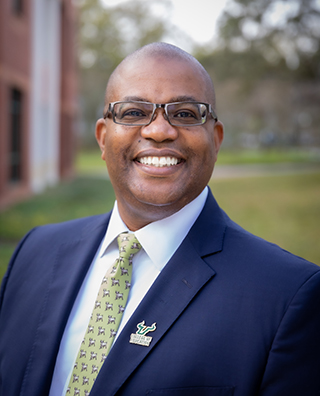
R. Anthony Rolle is a Professor at the University of South Florida’s College of Education, specializing in the Department of Leadership, Policy, and Lifelong Learning. He previously served as Dean of the USF College of Education from 2021 to 2024, and earlier as Dean at the Alan Shawn Feinstein College of Education & Professional Studies at the University of Rhode Island, as well as in leadership roles at the University of Houston and Texas A&M University. Dr. Rolle is a nationally recognized scholar in K-12 education finance and economic policy , known for developing models measuring school system effectiveness and efficiency . His work spans special needs education funding , educational productivity , and policy reform , with a focus on international collaboration and community partnerships. Scientific Awards & Affiliations: President, National Education Finance Academy Distinguished Research Fellow, Shanghai Academy of Education Sciences Research Fellow, National Education Policy Center (Education and Public Interest Center & Education Policy Research Unit) Editorial/Advisory Board Member, multiple national education associations
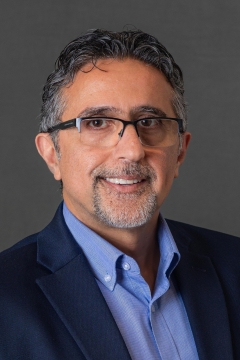
Reza Taheri is a Professor and Senior Associate Dean of Pharmacy Education at Chapman University School of Pharmacy. His expertise spans leadership development, curriculum design, strategic planning, and programmatic accreditation in pharmacy education. Previously, he served as Chief Strategy Officer at RxPrep Inc., founding Associate Dean at West Coast University, and held faculty and leadership roles at Western University of Health Sciences and Loma Linda University School of Pharmacy. Education: Doctor of Pharmacy (University of Minnesota), Executive MBA (University of Southern California) Current Role: Department of Pharmacy Practice, Chapman University His research focuses on pharmacy education , emphasizing emotional intelligence coaching , interprofessional collaboration , and virtual learning modalities . Recent studies examine mock-trial simulations for teaching-assessment, supplemental instruction efficacy, and interprofessional virtual simulations for leadership and patient advocacy. Publications highlight technology integration in pharmacy curricula and resilience measurement in educational contexts. Taheri collaborates extensively on interprofessional education (IPE) interventions, analyzing their impact on patient outcomes like length of stay , medical errors , and mortality . He is a certified Emotional Intelligence Coach and trainer with Crucial Learning and The Table Group.
Xinran Zhu is an Assistant Professor at the University of Illinois Urbana-Champaign College of Education, specializing in Learning Design & Leadership and Instructional Design, Technology, & Organization. Her research intersects learning sciences, learning analytics, and AI in education, focusing on designing technology-supported learning environments for authentic classroom settings. Ph.D. in Learning Sciences and Technologies, University of Pennsylvania (2024) M.A. in Educational Psychology, University of Connecticut Graduate studies in learning technologies, University of Minnesota Her research spans three main areas: (1) design and implementation of educational technologies, particularly social annotation tools for knowledge building; (2) AI integration in education to augment collaborative learning; and (3) computational discourse analysis using network analysis and NLP to generate actionable insights. Recent projects include SynthesisAI , a GenAI-powered chatbot for knowledge synthesis, and the Synthesis Lab , a precursor tool for integrating peer ideas in collaborative writing. Dr. Zhu teaches courses on ubiquitous learning, advanced learning technologies, and eLearning system design. She employs co-design methodologies to develop and implement technologies in both lab and real-world classroom settings, emphasizing student agency and ethical AI partnerships.
Yoon Ji-hyun is a Professor in the Department of Food and Nutrition at Seoul National University's College of Human Ecology. Her work focuses on food service management, nutrition policy, and dietary behavior analysis, with a particular emphasis on multicultural dietary practices and sustainable development in food systems. Education: Bachelor's in Food and Nutrition (SNU), BBA (SNU), MS in Hotel, Restaurant, and Institution Management (Iowa State University), PhD in Hospitality and Tourism Management (Purdue University). Leadership Roles: Associate Dean (2019-2021), Director of Ho-Am Faculty House (2010-2012), and multiple directorships in nutrition policy centers. Her research integrates public health and consumer behavior, analyzing topics like pandemic-induced dietary changes, school lunch standards, and food safety anxiety. She has led projects on non-face-to-face food safety management, food education policies, and sodium-reduced environments, funded by South Korea's Ministry of Food and Drug Safety, Ministry of Education, and others. Professor Yoon's work also addresses urban dietary trends, including single-person households' kitchen needs and workers' meal patterns, using data from national health surveys and time-use studies. She has contributed to regional and inter-Korean comparative studies on nutritional disparities and dietary guidelines. She teaches courses on foodservice management, consumer market analysis, and graduate-level research methodologies, while serving as Vice President in several academic societies, including the Korean Society of Dietary Culture and Korean Cancer Association.
Amy Zavatsky is a Reader in Engineering Science at the University of Oxford and Tutorial Fellow at St Edmund Hall, with faculty service since 1996. Her work bridges mechanical engineering and clinical orthopaedics, focusing on lower extremity biomechanics and gait analysis within the Department of Engineering Science. Education: BSc in Bioengineering, University of Pennsylvania DPhil in Engineering Science, University of Oxford (Thouron Award recipient) Research Focus: Prof. Zavatsky pioneers orthopaedic biomechanics research with emphasis on foot/ankle kinematics, knee osteoarthritis mechanisms, and gait compensations. Her work integrates theoretical modeling with in vitro experimentation to develop clinical applications for cerebral palsy, flatfoot, and running injuries. Current projects advance multi-segment foot modeling and cognitive-efficient data visualization for clinical gait analysis. Publication Trends: 2021-2025 works reveal three converging themes: (1) Open-source foot modeling ( OpenOFM ), (2) Data visualization for clinical decision-making, and (3) Sensor optimization using statistical methods. These publications consistently bridge engineering innovation with orthopaedic clinical practice through collaborations with the Oxford Gait Laboratory. Scientific Recognition: Philip Leverhulme Prize (2003) for outstanding early-career scholarship University Teaching Award (2008) for biomechanics instruction and MSc Biomedical Engineering development Departmental Teaching Awards: Silver (2021), Bronze (2022) Institution of Mechanical Engineers Thomas Stephen Prize (1993) Academic Leadership: Prof. Zavatsky directs undergraduate engineering tutorials at St Edmund Hall while teaching mechanical/civil/biomedical engineering courses. She previously served as Director of Graduate Studies (2016-17), Acting MSc Biomedical Engineering Director (2006-07), and Junior Proctor (2012-13). Her DPhil supervision targets lower-limb biomechanics projects requiring strong engineering fundamentals. Research Infrastructure: Based at the Institute of Biomedical Engineering (Nuffield Orthopaedic Centre), she collaborates extensively with the Oxford Gait Laboratory. Her biomechanics research group utilizes motion capture systems and multi-segment modeling to translate engineering principles into clinical rehabilitation protocols.
Arie E. Kaufman is a Distinguished Professor in the Department of Computer Science at Stony Brook University, serving as Chief Scientist of the Center of Excellence in Wireless and Information Technology (CEWIT) and Director of the Center of Visual Computing (CVC). He additionally holds a Distinguished Professorship in Radiology, with a 40+ year career at Stony Brook since joining in 1985 and chairing the CS department from 1999-2009. His seminal research spans computer graphics, visualization, and virtual reality with biomedical applications, pioneering breakthroughs including 3D Virtual Colonoscopy (FDA-approved colon cancer screening), Cube hardware architectures (commercialized as VolumePro), the Reality Deck (1.5 billion-pixel immersive display), and foundational work in volume visualization. His interests focus on real-time rendering, medical imaging, and immersive analytics, with recent work integrating machine learning for healthcare and environmental risk visualization. Recent publications demonstrate continued leadership in high-resolution immersive displays (Silo), XR analytics with LLMs, storm surge visualization, and neural reconstruction techniques. His work bridges theoretical innovation with practical applications, particularly in pancreatic cancer prognosis and disaster preparedness. Major honors include: IEEE Visualization Career Award (2005) Fellow of the National Academy of Inventors (2017) ACM Fellow (2009) IEEE Fellow (1998) Long Island Technology Hall of Fame (2013) European Academy of Sciences membership (2002) As PI on 100+ research grants, Kaufman's work has generated 300+ refereed papers, 40+ patents, and extensive media coverage (New York Times, Science, Wall Street Journal). He leads the Center of Visual Computing with focus on translational research, including VolVis software (5,000+ installations) and Reality Deck deployments for big data analytics. His lab develops cutting-edge visualization infrastructure for medical diagnostics and environmental modeling, with current projects advancing immersive storm surge analytics, neural structure extraction, and VR-based risk communication systems. Future work emphasizes AI-enhanced visualization for precision medicine and climate resilience planning.
Jasmine Begeske serves as Clinical Assistant Professor of Special Education in Purdue University's Department of Educational Studies within the College of Education. She co-founded and directs CREATE: Center for Research and Equipment for Assistive Technology in Education, an AT library and makerspace providing hands-on opportunities for pre-service teachers to develop individualized solutions for students with disabilities using 3D printers, Cricut, and Glowforge equipment. Her educational background includes: PhD in Special Education with Cognate in Art Education from Purdue University MFA in Photography and Related Media from Purdue University MS in Secondary Education (Special Education specialization) from Indiana University Northwest BFA in Photography with Art History minor from Indiana University Dr. Begeske's research program examines inclusive access to arts education through program evaluation and creative assistive technology development. Her experimental printmaking practice integrates individuals with disabilities as co-creators , while her scholarly work validates instruments measuring preschool arts accessibility and develops multisensory adaptations for students with visual impairments. She bridges art education and special education through evidence-based AT interventions . Analysis of her publication history reveals consistent focus on arts/special education intersections with increasing emphasis on empirical validation of accessibility instruments and multisensory adaptations. Her 2023 work on teacher education in art classrooms and multisensory adaptations demonstrates practical applications of her CREATE center's mission, while her 2022 instrument validation study establishes methodological rigor in measuring arts accessibility. Her scientific recognition includes: 2023 USSEA Outstanding Dissertation Award 2023 Purdue Focus Award for equity initiatives 2022 AEAI President's Award for EDI service Multiple Purdue University teaching and discovery awards (2020-2023) With 15+ years of teacher preparation experience spanning 100+ course sections, Dr. Begeske mentors doctoral students while securing grant funding including $100K from Purdue's Instructional Equipment Grant for CREATE. Her professional service encompasses state-level program reviews, academic standards committees, and leadership roles in Indiana Division of Early Childhood and CEC-DARTS. The CREATE center operates as a dual-space AT innovation hub with fixed location in Beering Hall and mobile carts supporting field experiences. It empowers pre-service teachers to prototype solutions addressing specific student needs while advancing Dr. Begeske's mission of making education universally accessible through technology and creativity.
Prof. Dr. Dirk Holtbrügge is a Professor and Holder of the Chair of Business Administration, especially International Management at Friedrich-Alexander University Erlangen-Nuremberg (FAU). He serves as Dean for International Affairs of the Faculty of Economics and Social Sciences and is jointly responsible for the department's MBA program design. His academic journey began at the University of Dortmund where he studied economics and social sciences from 1983 to 1989, earning his doctorate in 1995 and habilitation in 2000. Prof. Holtbrügge's research focuses on management in multinational corporations, intercultural management research, management in emerging markets (particularly China, India, and Russia), international human resource management, and corporate social and environmental responsibility. His work demonstrates a strong emphasis on practical applications through numerous case studies of German multinational corporations operating globally. His recent publications (2024-2025) reveal a growing focus on sustainability in international business, corporate social responsibility in challenging contexts, and the complexities of internationalization strategies across diverse industries. The research shows particular attention to German companies expanding into emerging markets and navigating cultural differences. Listed in Handelsblatt rankings of 2010, 2012, and 2014 as one of the leading business economists in Germany, Austria, and Switzerland Listed in Wirtschaftswoche rankings of 2019 and 2022 as one of the leading business economists Listed as one of the top 2% most cited scientists in 2020 in Stanford University's Top 2 Percent Scientists list Prof. Holtbrügge maintains strong connections with industry through numerous case studies and collaborative research projects. His position as Dean for International Affairs reflects his commitment to fostering global academic partnerships and developing international business education programs. He has undertaken numerous teaching and research visits worldwide, including in China, France, Great Britain, India, Japan, Russia, South Africa, and the USA, enriching his practical understanding of international business challenges.
Pooja Khatija serves as an Adjunct Professor in the Department of Organizational Behavior at the Weatherhead School of Management , Case Western Reserve University , where she is also a doctoral candidate. Blending scholarship and practice, she focuses her research on Asian American leadership, holistic and inclusive leadership, and implicit biases tied to gender, geography, and social class in recruitment and career advancement. Education Bachelor of Science in Biotechnology Post Graduate degree in Management Doctoral candidate, Department of Organizational Behavior, Weatherhead School of Management Research Interests Dr. Khatija’s scholarly agenda is anchored in advancing equity within organizations. She investigates how Asian American leaders navigate and transform predominantly white institutions, and she develops integrative models of holistic leadership development that emphasize identity, well-being, and social justice. A second stream of inquiry examines implicit biases in hiring and promotion systems, with particular attention to gendered racism and intersectional invisibility experienced by women of color. Her work bridges theory and practice by translating findings into trauma-informed and healing-centered organizational interventions. She leverages coaching methodologies to cultivate inclusive climates and has co-authored critical reviews on reimagining leadership standards that historically center whiteness. Scientific Awards Graduate Dean’s Instructional Excellence Award (2022) Teaching, Coaching & Grants As an educator, Pooja has instructed graduate students in Applied Multivariate Data Analysis (MGMT573) and undergraduates in Leadership in Diversity and Inclusion (ORBH391) across 2020-2022. For over a decade she has coached Management and Engineering graduate students on career and placement strategies, and she is a certified executive coach through Weatherhead’s coaching program. While specific grant details are not enumerated, her sustained engagement in curriculum development and coaching initiatives reflects ongoing institutional investment in her inclusive-leadership agenda. Labs & Teams While no formal lab is named, Pooja collaborates closely with faculty and doctoral peers within the Department of Organizational Behavior and draws on Weatherhead’s broader ecosystem of leadership development and diversity research initiatives.
Maarten Renkema is an Assistant Professor at the University of Twente, specializing in Artificial Intelligence (AI) and its intersection with Human Resource Management (HRM) , Healthcare , and Organizational Innovation . His research explores how AI transforms work design, employee autonomy, and HRM practices in formalized contexts. Key Research Themes: Algorithmic HRM and Digitalization Human-AI Collaboration in Healthcare Self-Managing Teams and Organizational Structures AI Literacy in Education Scientific Awards: Best Dissertation Award (2019) from the Dutch HRM Network Research Trends: His recent work focuses on AI adoption in HRM, ethical implications of algorithmic management, and redefining professional roles in AI-integrated environments. Articles from 2024-2025 highlight practical applications of AI in healthcare workflows, employee-driven innovation, and the evolving responsibilities of HR professionals. Collaborations: Active in cross-sector partnerships, including projects on AI literacy frameworks and talent management in sports. Regularly contributes to professional discourse through invited talks and media commentary on AI's societal impact.
Khiet P. Truong is an Associate Professor affiliated with the Digital Society Institute and the Human Media Interaction group. Their research focuses on the intersection of artificial intelligence, robotics, and human-computer interaction, with particular emphasis on speech emotion recognition, conversational agents for children, and multimodal interaction analysis. Recent work includes exploring how robots can restore trust through apologies, benchmarking Dutch automatic speech recognition systems, and developing child-friendly interfaces for cultural heritage archives. Truong has also investigated physiological signals like laughter and stress markers in speech across diverse contexts. Scientific Awards : Best Functional Design Award (2019) Research Trends : Analysis of speech patterns, emotion recognition, robot-human dialogue, and multimodal behavioral cues dominate their recent publications. Key subfields include Dutch language processing, laughter classification, trust indicators in child-robot interactions, and healthcare applications of speech technology. Academic Activities : Chair of the 26th ACM International Conference on Multimodal Interaction (2024) Examiner roles for PhD defenses and research evaluations (2024–2023) Contributions to workshops on emotion representation and social signal processing
Mickaël CAMPO is an Associate Professor at the University of Burgundy (Université Bourgogne Franche-Comté) in Dijon, France, specializing in sports psychology. He is affiliated with the Faculty of Sports and Physical Education (UFR STAPS) and the Socio-Psychology and Sports Management Laboratory (Laboratoire Psy-DREPI). His educational background includes a Doctorate in Sports Psychology. Prior to his current position, he served as an Associate Professor at Université de Rouen Normandie from 2013 to 2015 and completed his PhD studies at Claude Bernard University Lyon 1 from 2007 to 2010. Dr. CAMPO's research focuses on the interpersonal emotional process (IEP), particularly examining: Relationships between social psychological variables such as social identity and emotions in group contexts Interpersonal emotion regulation in sports settings Emotional contagion phenomena in team sports Psychological adaptation processes in performance and learning contexts Emotional intelligence development and application in sports His work primarily centers on team sports, with a special emphasis on rugby. He has developed theoretical frameworks like the Interpersonal Emotional Process (IEP) model and has conducted extensive research on how emotions affect performance in competitive sports environments. Dr. CAMPO has received recognition for his research, including the 1st Young Researcher Prize in 2010. His scientific contributions span numerous publications in prestigious journals, with his work focusing on the intersection of social psychology and sports performance. As an academic, Dr. CAMPO has supervised multiple research projects and has been invited to present at various conferences, including the clinical medico sport congress in Lyon. His work bridges theoretical research with practical applications for athletes, coaches, and sports psychologists.
Jamal Atif is a Professor at Paris Dauphine University - PSL and a member of the Laboratory for Analysis and Modeling of Systems for Decision Support (LAMSADE). He also serves as program director of PEPR Artificial Intelligence for the CNRS and was scientific delegate for Artificial Intelligence and Digital Infrastructures at INS2I until 2023. He earned his Ph.D. in medical image analysis from Paris-Sud University in 2004. His career includes a post-doctoral position at Télécom ParisTech (2004-2006), collaboration with the Research Institute for Development in French Guiana (2006-2010), and leadership as deputy head of the Learning and Optimization team at the Computer Science Research Laboratory (LRI - CNRS/Paris-Sud University) from 2013 to 2014. Professor Atif's research spans artificial intelligence and data science, with emphasis on machine learning , algorithms for data streams , and knowledge representation and reasoning . His work integrates theoretical foundations with practical applications in decision support systems through LAMSADE. He is affiliated with LAMSADE, a CNRS-Paris Dauphine joint research unit focused on operations research, decision theory, and optimization methodologies.
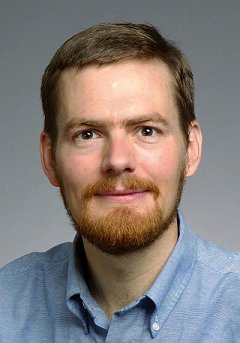
Michael D. Ernst is a Professor in the Computer Science & Engineering department at the University of Washington's College of Engineering. His research aims to make software more reliable, more secure, and easier (and more fun!) to produce. Previously, he was a tenured professor at MIT and a researcher at Microsoft Research. Ernst's primary technical interests are in software engineering, programming languages, type theory, security, program analysis, bug prediction, testing, and verification. His research combines strong theoretical foundations with realistic experimentation, with an eye to changing the way that software developers work. He focuses particularly on programmer productivity and developing practical tools that can be integrated into developers' workflows. Analysis of his recent publications (2018-2025) reveals a continued focus on verification techniques, program analysis, and testing methodologies. His work spans from theoretical foundations of type systems to practical applications of NLP for test generation and LLMs for test oracle creation. A consistent theme is developing lightweight, modular approaches that can be practically applied in real-world development environments. Scientific Awards: ACM Fellow (2014) John Backus Award (2009) NSF CAREER Award (2002) ACM SIGSOFT Impact Paper Award (2013) 8 ACM Distinguished Paper Awards across multiple conferences ECOOP 2011 Best Paper Award Microsoft Academic Search ranked #2 in software engineering research (2013) Ernst has received significant research funding including the NSF CAREER Award, supporting his work on program analysis and verification techniques. His research combines theoretical rigor with practical impact, often resulting in tools that are adopted by the software engineering community. He actively collaborates with researchers across institutions and has served in leadership roles for major conferences in programming languages and software engineering. His research group develops practical tools that address real challenges in software development, with a focus on making verification and analysis techniques more accessible to working developers. Current projects include applying machine learning techniques to software engineering problems while maintaining strong theoretical foundations.