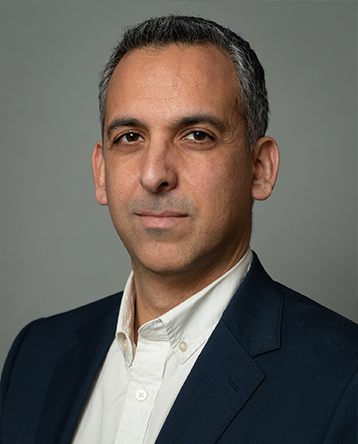
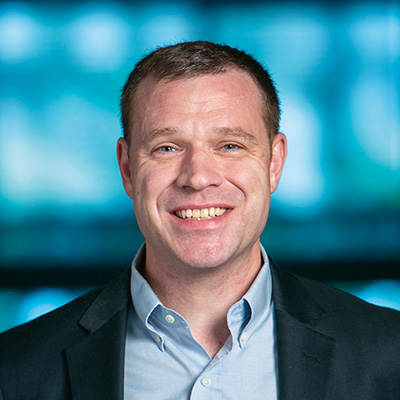
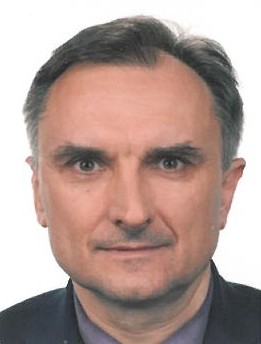
Wieland Konrad is a researcher affiliated with the Institut für Softwaretechnik und Interaktive Systeme at TU Wien. His work focuses on model-driven engineering, software versioning, and collaborative systems. He has extensively contributed to advancing model versioning techniques, conflict resolution in software models, and UML-based solutions. His research emphasizes practical applications in software development lifecycle management and educational methodologies for UML. Key research areas include: Model versioning systems and semantics Conflict detection and resolution algorithms Collaborative cross-organizational modeling EMF/UML profile-based extensions Software evolution analysis His publications highlight advancements in concurrent modeling tools like Colex, adaptable versioning frameworks, and educational strategies for large-scale UML teaching. While no awards are listed, his prolific output since 2009 demonstrates sustained academic contribution.
Carmel Majidi is a Professor in the Department of Mechanical Engineering at Carnegie Mellon University's College of Engineering. He leads the Soft Machines Lab, where his research focuses on soft robotics, wearable computing, and advanced materials that mimic biological systems. His work enables robots and machines to safely interact with humans through soft, deformable technologies. Education: Ph.D. in EECS, University of California, Berkeley (2007) B.S. in Civil and Environmental Engineering, Cornell University (2001) His research interests span soft robotics, stretchable electronics, liquid metal materials, and bio-inspired engineering. He develops soft electromechanical materials for applications in haptics, medical devices, and human-machine interfaces. His group pioneers fabrication methods for soft composites and microfluidic systems that function as artificial skin, nervous tissue, and muscle. The recent trend in his publications highlights a strong focus on soft actuators, self-healing materials, liquid metal composites, and haptic interfaces for virtual and augmented reality. His work integrates materials science, robotics, and advanced manufacturing to enable scalable, robust, and practical soft systems. Scientific Awards: 2023 Inno Fire Award for Trailblazing Innovators, Pittsburgh Business Times Majidi leads a major research thrust in a new NSF Engineering Research Center (ERC) dedicated to improving robot dexterity, funded up to $52 million. He has been instrumental in developing soft robotic systems inspired by prehistoric organisms, such as the pleurocystitid, and in creating healthcare devices powered by body heat using liquid metal technologies. His research has been featured in Popular Science , Communications of the ACM , and Ars Technica . He is actively involved in advancing scalable manufacturing of soft electronics and enabling robust integration between soft materials and conventional microelectronics. His lab collaborates across disciplines to push the boundaries of physical AI and wearable robotics.
Samuel Thibault is a Professor at University of Bordeaux, affiliated with Laboratoire Bordelais de Recherche en Informatique (LaBRI) and Inria Bordeaux -- Sud-Ouest. He is a member of the SATANAS team at LaBRI (theme: High Performance Runtime Systems for Parallel Architectures) and the STORM research team at Inria Bordeaux (previously RunTime). His work bridges academic research and practical implementation of high-performance computing systems. Thibault's research focuses on task-based runtime systems, particularly StarPU, for heterogeneous and parallel computing architectures. His work addresses critical challenges in scheduling algorithms, memory management under constraints, data locality optimization, and performance modeling for complex NUMA architectures. He has made significant contributions to the field of parallel computing through the development and analysis of runtime systems that efficiently manage tasks across diverse hardware resources including CPUs, GPUs, and other accelerators. His research has practical applications in scientific computing, deep learning inference, and large-scale simulations requiring extreme computing power. His recent publication trends show a strong emphasis on optimizing task-based runtime systems for heterogeneous architectures with particular attention to memory constraints and data locality. There's a clear progression toward applying these techniques to deep learning inference workloads, as evidenced by his StarONNX project. His work consistently addresses the challenge of balancing throughput and latency in complex computing environments, with increasing focus on recursive task graphs and dynamic adaptation strategies. Thibault is actively involved in European research initiatives including TEXTAROSSA (focusing on exascale technologies) and EXA2PRO (high development productivity on heterogeneous systems). His work has been published consistently in top-tier conferences and journals in parallel and distributed computing. As part of the STORM team at Inria Bordeaux, Thibault contributes to advancing the state of the art in runtime systems for high-performance computing. His team's work on StarPU has become a reference implementation in the field, enabling researchers and practitioners to develop applications that can efficiently utilize heterogeneous computing resources without needing to manage the complexity of different hardware architectures directly.
Barbara E. Minsker is the Bobby B. Lyle Endowed Professor of Leadership & Global Entrepreneurship at Southern Methodist University, Professor of Civil & Environmental Engineering, and Professor of Computer Science (by courtesy). She is concurrently a Senior Fellow at the Hunt Institute for Engineering and Humanity. Education Ph.D., Civil and Environmental Engineering, Cornell University, 1995 B.S. with Distinction, Operations Research and Industrial Engineering, Cornell University, 1986 Research Focus Dr. Minsker’s research integrates systems analysis , machine learning , and data analytics to advance urban water sustainability and resilience . Specific themes include real-time flood prediction using crowdsourced traffic data, equitable distribution of green infrastructure, identification of “infrastructure deserts,” and nature-based solutions for storm-water management. Her methodological toolkit spans optimization under uncertainty, meta-modelling, spatio-temporal analytics, and socio-environmental modelling to address both engineering performance and social equity dimensions of urban infrastructure. Awards & Honors Presidential Early Career Award for Scientists & Engineers (PECASE) NSF CAREER Award ASCE Walter L. Huber Civil Engineering Research Prize Fellow, ASCE Environmental and Water Resources Institute ASCE Margaret S. Petersen Award Over a dozen additional national and institutional honors spanning 1991-2019 Grants & Advising As Principal Investigator or co-Principal Investigator, Dr. Minsker has secured more than $25 million in competitive funding from NSF, DOE, US Army Research Office, NIST, ONR, Metropolitan Water Reclamation District of Greater Chicago, Microsoft, ADM, and John Deere. These projects support interdisciplinary teams of graduate students and post-docs working at the intersection of water resources, data science, and societal resilience. Labs & Teams She leads an active research group within the Lyle School of Engineering at SMU, collaborating closely with the Hunt Institute for Engineering and Humanity and leveraging high-performance computing resources for large-scale urban analytics.
Greg Bowman is a Professor in the Department of Biochemistry and Biophysics at the University of Pennsylvania's School of Engineering and Applied Science. He leads the Bowman Lab, which focuses on understanding protein dynamics to advance therapeutic development and interpret genetic variation. His research integrates biophysical experiments, machine learning, physics-based simulations, and the Folding@home distributed computing project, one of the world’s largest volunteer computing systems. His research interests lie at the intersection of computational biophysics and biomedical innovation. He develops and applies advanced methods such as Markov state models (MSMs), adaptive sampling algorithms, and deep learning to map the conformational landscapes of proteins. His work targets critical global health issues, including Alzheimer’s disease and emerging viral threats like SARS-CoV-2 and Ebola. A major focus is uncovering cryptic pockets and allosteric mechanisms to expand the druggable proteome, particularly for proteins considered 'undruggable' due to lack of traditional binding sites. Although no articles are listed in the provided text, his research output centers on protein dynamics, simulation methodology, and structure-based drug design, with applications in neurodegeneration and virology. His lab has developed key open-source software tools including MSMBuilder, Enspara, PocketMiner, and FAST, which are widely used in the computational biophysics community. Scientific honors include being named the Louis Heyman University Professor, a distinguished title at the University of Pennsylvania. His work is supported by large-scale collaborative science and public engagement through Folding@home, which involves over 200,000 citizen scientists worldwide. He actively mentors a diverse team of postdoctoral scholars, graduate students, and undergraduate researchers. His mentoring philosophy emphasizes unlocking each trainee’s potential and promoting inclusivity in STEM, informed by his personal experience as a legally blind scientist. He encourages public engagement and supports outreach initiatives within his lab. The Bowman Lab operates at the forefront of integrative biophysics, combining cutting-edge computational methods with experimental validation. The lab collaborates extensively and maintains a strong open-science ethos, sharing code via GitHub and involving the global community through Folding@home. Their adaptive sampling and deep learning approaches enable unprecedented insights into protein behavior and disease mechanisms.
Christopher Wolfe is an Associate Professor of Marine Science at the School of Marine and Atmospheric Sciences (SoMAS) at Stony Brook University. He conducts research on physical oceanography, focusing on large-scale ocean circulation, overturning dynamics, and mesoscale eddy interactions. Education: Ph.D. in Physical Oceanography (2006), Oregon State University M.S. in Physics (2000), Indiana University B.S. in Physics and Mathematics (1999), Evergreen State College His research integrates theoretical frameworks, idealized numerical models, and realistic ocean circulation simulations to study the ocean’s role in climate systems. Key areas include overturning circulation stability, buoyancy-driven currents, and predictability of geophysical flows. Recent publications highlight his work on interannual variability in the Indian Ocean, salt feedback mechanisms, and multi-scale instabilities. He advises Ph.D. and postdoctoral researchers in the Pitt Wolfe group , which has produced alumni now working at institutions such as NOAA and the Ocean University of China. Scientific Affiliations: Active in computational oceanography and nonlinear dynamics Collaborator with P. Cessi, R. M. Samelson, and others
Dr. Tillman Weyde is a Reader in the Department of Computer Science at City, University of London , where he has been employed since 2021. He leads the Machine Intelligence and Media Informatics Research Group and is a member of the Machine Learning Group . Prior to this, he served as Senior Lecturer (2009–2021) and Lecturer (2005–2009) at City, and worked as a researcher at the University of Osnabrück (2001–2005), coordinating the MUSITECH project. His academic background includes PhD in Music Technology (2002), MSc in Computer Science (1999), and MSc in Mathematics, Music, Philosophy & Pedagogy (1994), all from the University of Osnabrück. Research Focus: Machine learning and signal processing methods for data analysis with applications in finance, audio, NLP, music, health, security, and education. His recent work emphasizes inductive biases in neural networks for rule-learning, extrapolation, generalization, and interpretability. Grants & Projects: Principal Investigator for the AHRC-funded Digital Music Lab (2012–2017) and Integrated Audio-Symbolic Model of Music Similarity (2017–present). Co-investigator in Innovate UK and EPSRC projects on safer gambling ( Advancing Consumer Protection , 2015–2018) and Raven (2012–2021). Collaborations: Affiliated with the Institute of Cognitive Science (Osnabrück), Intelligent Systems Research Laboratory (Reading), and the MPEG Ad-Hoc Group on Symbolic Music Representation. Awards: Co-author of the 2000 Comenius Medal-winning educational software Computer Courses in Music Ear Training and co-editor of the Osnabrück Series on Music and Computation . Publications: Over 150 peer-reviewed works including conference papers, journal articles, and book chapters, focusing on interdisciplinary applications of machine learning in music, health, and finance. Students: Supervised 13 PhD students across topics like grammar bias in neural networks, emotion recognition from audio, extrapolation behavior in neural networks, relation-based patterns, legal text parsing, and more.
Ashwin Machanavajjhala is a Professor in the Department of Computer Science at Duke University's Pratt School of Engineering. With over 166 publications spanning from 2001 to 2025, his research has significantly impacted the fields of differential privacy, database systems, and data security. His recent work focuses on practical applications of differential privacy for government data releases, particularly for the US Census Bureau. Machanavajjhala's research primarily centers on differential privacy, with significant contributions to database systems, privacy-preserving data analysis, and statistical disclosure control. His work bridges theoretical foundations with real-world applications, particularly in government statistics and census data protection. He has developed numerous frameworks and algorithms including DPXPlain for explaining differentially private query results, PreFair for generating fair synthetic data, and various components of the US Census Bureau's disclosure avoidance system. His research demonstrates a consistent trajectory from theoretical privacy mechanisms toward practical implementations that balance privacy guarantees with data utility. His recent publications reveal a strong focus on applying differential privacy to census data (SafeTab, PHSafe), developing methods for explaining private query results (DPXPlain), addressing fairness in private data analysis (PreFair), and exploring privacy applications in blockchain technology. His work shows increasing engagement with government agencies, particularly the US Census Bureau, where his research has directly informed disclosure avoidance systems for the 2020 Census. Machanavajjhala has advised numerous PhD students who have become prominent researchers in privacy and databases, including Ryan McKenna, Xi He, Yuchao Tao, and David Pujol. His collaborative network includes leading researchers from major institutions, with frequent collaborations with Gerome Miklau, Michael Hay, and Daniel Kifer. His research has been consistently funded by major grants supporting privacy-preserving data analysis. He leads research on the Tumult Analytics framework, a robust and scalable differential privacy system, and has been instrumental in developing privacy technologies for the US Census Bureau's 2020 data release. His work demonstrates a commitment to making differential privacy practical for real-world statistical agencies and data providers.
Prof. Tomasz Siwowski, PhD, DSc, Eng., is the Head of the Department of Roads and Bridges at the Faculty of Civil, Environmental Engineering and Architecture, Rzeszów University of Technology. Appointed as the Minister of Science's representative to the Scientific Council of the Road and Bridge Research Institute, he specializes in structural analysis, composite materials, fatigue strength, and infrastructure durability. His work bridges academic research with practical applications in large-scale infrastructure projects. PhD, DSc, Eng. in Civil Engineering Expert in composite materials and bridge diagnostics Over 200 publications and patents His research focuses on new materials for road infrastructure , diagnostics and durability of structures , and fatigue analysis of steel bridges . Recent studies include implementing FRP composites for bridge decks and repurposing renewable energy components in civil engineering. The 15 most recent publications highlight advancements in distributed fiber optic sensing for structural health monitoring and hybrid construction systems combining concrete with composite materials. As President of Promost Consulting , he directs design and management of major infrastructure projects. The Road and Bridge Research Institute, where he serves on the Scientific Council, develops innovative materials and European-standard construction systems for transportation facilities. His career spans both academic leadership and practical bridge construction supervision .
Rolf Vegar Olsen is a Professor at the Centre for Educational Measurement (CEMO) at the University of Oslo . His research focuses on educational measurement, international large-scale assessments (e.g., PISA, TIMSS), school effectiveness, teacher evaluation, and educational policy. He has published extensively on topics such as academic resilience, numeracy development, and the impact of school leadership. Current projects include A scale for numeracy (PhD project) , Linking Instruction and Student Achievement (LISA) , and The Evaluation of the New National Curriculum (EVA2020) . Research Trends : Olsen’s recent work examines resource allocation in education, cross-national performance disparities, and the role of leadership in instructional quality. His publications highlight challenges in educational equity and the importance of data-driven policy decisions.
Aki Roberts is an Associate Professor in the Department of Sociology at the University of Wisconsin-Milwaukee (UWM), based in Bolton Hall 740 with contact email aki@uwm.edu. Roberts conducts empirical research in criminology, specializing in crime clearance mechanisms, racial disparities in victimization, and police-citizen interactions using large-scale datasets like NIBRS. Research interests include: Criminology and criminal justice systems Race/ethnicity in crime patterns Victim-offender dynamics Police diversity and investigative outcomes Homicide clearance trends Methodological innovations in crime data analysis Roberts has also published comparative work on Japan's postwar homicide trajectories and structural analyses of university systems. Recent publications (2020-2025) reveal intensified focus on pandemic-era anti-Asian hate crimes, police diversity impacts on minority victim clearance, and methodological refinements in handling missing crime data. Roberts consistently examines how jurisdictional constraints and incident-specific factors affect crime resolution, with recurring emphasis on victim race as a critical variable in clearance disparities. Scientific Awards: No awards listed in source materials. Advising and Grants: No student advisement records or grant funding details were provided in available documentation.
Siobhán Clarke is a Professor at the School of Computer Science and Statistics, Trinity College Dublin, specializing in software systems for smart urban environments . Her work addresses dynamic software adaptation in large-scale, mobile IoT ecosystems , with a focus on QoS optimization and collaborative agent models . Director, Enable : National SFI IoT Research Programme Director, Future Cities Centre for Smart & Sustainable Cities Co-Lead, ADVANCE : SFI Centre for Advanced Networks Co-PI, CONNECT (Future Networks) and Lero (Software Research) Her research spans smart city infrastructure , edge computing , and multi-agent coordination , informed by 15+ years of publications on service-oriented architectures , QoS prediction , and self-adaptive systems . Key project contributions include DIVERSIFY (2016) and TRANSFoRm (2015). Scientific awards include election to the Royal Irish Academy (2023) and a Best Student Paper at IEEE ICWS 2011. She has supervised 20+ PhD/MSc students, including Fan Li (2020: SLA Negotiation Systems), Gary White (2020: IoT QoS Forecasting), and Andrei Palade (2019: Stigmergic Optimization).
Kamesh Madduri is an Associate Professor in the Department of Computer Science and Engineering at Pennsylvania State University, with affiliations to the Huck Institutes of the Life Sciences. His research focuses on graph analytics, parallel algorithms, and high-performance computing for large-scale data analysis. NSF CAREER Award (2013) His work contributes to the development of scalable graph partitioning algorithms, extreme-scale sparse data analytics, and heterogeneous computing frameworks. Recent projects include multilayer network analysis (NetSplicer) and GPU-accelerated graph processing (Jet). Key research areas include network science, computational biology, and distributed-memory graph algorithms. His publications highlight applications in genomic workflows, advertising keyphrase recommendation (Graphite/BroadGen), and large-scale hydrology data management. Collaborative Research: CCRI (2021-2023) SHF: Medium: NetSplicer (2020-2024) PPoSS: Extreme-scale Sparse Data Analytics (2018-2022) XPS: Genomic Workflows Acceleration (2014-2020) EAGER: SME Manufacturing Integration (2024-2026)
Prof. Dr. Turgay Kerem Koramaz is a faculty member at Istanbul Technical University, holding the academic rank of Professor in the Department of Urban and Regional Planning under the School of Architecture. He has served in administrative roles such as Deputy Head of Department (2018-2020) and Chairman of the Urban Planning Working Group (2015-2016), with visiting positions at the University of Sheffield (2015) and Royal Institute of Technology (2008). PhD in Urban and Regional Planning, Istanbul Technical University (2002) MA in Urban Design, Istanbul Technical University (1999) Licence in Urban and Regional Planning, Istanbul Technical University (1995) His research interests span Urban Planning , Information Technologies in Planning , Conservation , and Urban Archaeology , with a focus on heritage data platforms, urban regeneration, and socio-spatial inequalities. Recent work includes digital twin models for heritage sites , residential mobility under large-scale projects , and smart solutions for historical preservation . Key trends in his recent publications include heritage site monitoring (2025, 2023), urban food systems (2025), residential displacement (2023), and transport equity (2020). His work often integrates GIS , digital twins , and spatial analysis to address urban challenges. Scientific Awards TÜBİTAK Support and Award Programs to Encourage Participation in International Collaborations (2024) He has led projects such as the Spatial Segregation Characteristics of Household Housing Preferences (2018-2021) and contributed to international initiatives like Urban-Ist (2006-2012) and Solar Decathlon Europe 2021 . Contact: koramaz@itu.edu.tr
Nikolaos Papaspyrou is a Professor at the School of Electrical and Computer Engineering of the National Technical University of Athens (NTUA) and a member of the Software Engineering Laboratory . His research focuses on the theory and implementation of programming languages, including semantics, type systems, compilers, static analysis, and formal verification. Since October 2021, he has been on leave from NTUA, working as a Software Engineer for Google in the memory management team for the V8 JavaScript and WebAssembly engine. He previously served as Director of the Division of Computer Science (2017-2019) and was on sabbatical with Google's compiler group in Munich (2015-2016). His work includes the RELEASE project (EU FP7 STREP) for reliable large-scale server software and uncertainty handling in distributed databases (European Social Fund). Ph.D. and Diploma in Electrical and Computer Engineering from NTUA M.Sc. in Computer Science from Cornell University His research interests span programming languages , software engineering , and formal verification , with recent publications on coinductive proofs in Liquid Haskell, concurrency semantics, and quantum compilation. He has supervised over 50 diploma projects and mentored numerous students now at institutions like MIT, Princeton, and UC Berkeley. Awards include conference organizing and program committee roles, though no formal scientific prizes are listed.