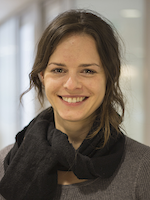
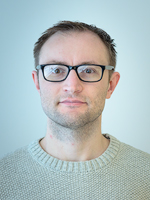
Professor F. LeRon Shults holds a faculty position at the University of Agder's Department of Global Development and Planning. His research focuses on social simulation, computational social science, and the cognitive science of religion. He leads projects analyzing secularization trends, prosocial behavior, and pandemic response strategies through agent-based modeling. Collaborations include international teams addressing issues like religious demography, ethical AI systems, and conflict resolution. Key contributions include modeling the role of religious motivation in societal cooperation and simulating emotional contagion during crises. Research groups affiliated with him include 'Mobility, culture and gender' and 'Social simulation'. His work bridges disciplines such as sociology, cognitive science, and public policy. Recent studies explore secularization's evolutionary foundations, psychedelic experience analysis, and the ethics of artificial societies. He actively participates in conferences and publishes in journals like *Theory and Society* and *Religion, Brain and Behavior*.
Stella Stopkowicz is an Associate Professor at the Department of Chemistry, University of Oslo (UiO), and a member of the Hylleraas Centre for Quantum Molecular Sciences. Her research focuses on theoretical and computational chemistry, particularly in developing advanced quantum chemical methods for studying molecular and atomic systems under extreme conditions such as strong magnetic fields. She specializes in coupled-cluster theory, Cholesky decomposition techniques, and relativistic quantum chemistry. Her work addresses challenges in calculating magnetic properties, such as magnetizability and optical rotation, using gauge-including atomic orbitals and finite-field approaches. Stopkowicz’s contributions span applications in astrophysics, materials science, and catalytic reaction mechanisms, emphasizing the interplay between computational efficiency and accuracy in large-scale simulations. Key areas of research include the development of relativistic two-component coupled-cluster methods, screening techniques for integrals in quantum chemistry calculations, and the study of paramagnetic materials like scandium and yttrium hydrides. She collaborates extensively with international researchers, advancing both the theoretical foundations and practical implementations of quantum chemistry tools. Her publications highlight advancements in computational methodologies for analyzing magnetic field effects in diverse systems, from white dwarf stars to molecular reactions. Stopkowicz’s interdisciplinary approach bridges theoretical chemistry with applications in physics and materials science, contributing to cutting-edge research in quantum molecular sciences.
Esther Ulitzsch is an Associate Professor at the University of Oslo 's Centre for Educational Measurement (CEMO) . Her research focuses on advancing psychometric models, particularly Bayesian latent variable techniques for small-sample conditions, and analyzing digital interaction data from simulated learning environments. She holds a PhD from Freie Universität Berlin and previously worked as a Research Associate at the IPN – Leibniz Institute for Science and Mathematics Education in Kiel, Germany. Education: PhD in Educational Measurement (Freie Universität Berlin) Research Associate at IPN Kiel Research Interests: IRT model development for aberrant response detection Efficient estimation in small samples Clickstream analysis for student behavior Test-taking engagement dynamics Publications: Over 20 peer-reviewed articles since 2017, including work on mixture models for careless responding, neural networks for IRT estimation, and Bayesian factor modeling. Recent contributions address response time analysis, cross-country measurement invariance, and sequential process mining in interactive tasks. Affiliations: Active in the CREATE (Research on Equality in Education) and FREMO (Frontier Research in Educational Measurement) groups at CEMO.
Gaute Einevoll is a Professor in the Department of Physics at the Norwegian University of Life Sciences (NMBU), Faculty of Science and Technology. His academic work bridges the disciplines of physics and neuroscience, with a strong focus on computational and mathematical modeling of brain function. Position: Professor of Physics Institution: Norwegian University of Life Sciences (NMBU) Department: Department of Physics Research Focus: Brain Physics, Computational Neuroscience His research interests lie at the intersection of physics and neuroscience, particularly in understanding the biophysical mechanisms underlying neural signals such as local field potentials (LFPs), EEG, and spike trains. He develops and applies mathematical models to interpret experimental data from multielectrode arrays and laminar recordings. His work includes modeling cortical circuits, thalamocortical networks, and the transition from grid cells to place cells in spatial navigation. He also investigates the biophysical basis of signal propagation and filtering in neural tissue. The 15 most recent publications reflect a consistent focus on computational modeling of neural activity, with strong emphasis on biophysical realism, data analysis methods, and tool development. Articles span topics from single-neuron contributions to EEG, astrocytic ion dynamics, and large-scale neural recordings. Keywords across these works include Computational Neuroscience, Biophysics, Neural Modeling, and Electrophysiology, with subfields covering LFPs, spike-train analysis, cortical circuits, and network dynamics. A recurring theme is the development of analytical and computational tools to bridge experimental data with theoretical understanding. No scientific awards are mentioned in the provided text. Gaute Einevoll has supervised research and taught courses such as FYS388/488 Computational Neuroscience and FYS102 Thermal Physics and Electromagnetism. He has contributed to major collaborative efforts like the Human Brain Project. While specific grants are not listed, his extensive publication record in high-impact journals suggests sustained research funding. He has also authored educational materials, including a textbook on physics and an edited volume on natural sciences. He is associated with research groups focused on computational neuroscience and brain physics. He has developed the LFPy tool for simulating extracellular potentials, indicating leadership in neuroinformatics tool development. His team likely involves interdisciplinary collaboration between physicists, neuroscientists, and computational biologists working on modeling neural systems.
Julien Mayor is a Professor at the Department of Psychology, University of Oslo , specializing in Language Acquisition , Infant Speech Perception , and Computational Modeling in Psychology . His work bridges cognitive development with bilingualism and dialect exposure, focusing on how infants learn words through parental speech patterns. He leads the BabyLing project, developing tools like TLex for unbiased language screening.
Cheng-Zong Ruan is a Research Fellow at the University of Oslo , focusing on Modified Gravity Cosmology , Galaxy Clustering , and N-body Simulations . His research explores cosmological models beyond the standard ΛCDM framework, leveraging advanced computational techniques and observational data. Education: PhD in Physics (2019–2022), Institute for Computational Cosmology, Durham University, UK MSc in Astrophysics (2017–2019), Beijing Normal University, China BSc in Physics (2013–2017), Beijing Normal University, China Research Interests: His work bridges theoretical cosmology and observational data, with a focus on testing gravitational theories using galaxy clusters, weak lensing, and large-scale structure surveys like Euclid. He develops numerical tools (e.g., emulators, N-body simulations) to model modified gravity effects and constrain cosmological parameters. Projects & Affiliations: Member of the Cosmology and Extragalactic Astronomy research group at UiO Involved in the Euclid space mission Key Contributions: His recent publications address challenges in simulating modified gravity scenarios, validating approximations, and analyzing observational data to test deviations from general relativity.
Habtamu Bayera Madessa is an Associate Professor at the Department of Built Environment, Faculty of Technology, Art and Design at Oslo Metropolitan University. His research focuses on energy efficiency, thermal comfort, building physics, and sustainable building technologies. He is a core member of the Sustainable Built Environment (SustainaBuilt) research group. Habtamu has contributed to over 34 scientific publications, 1 textbook, and multiple research reports. His work addresses topics such as net-zero energy buildings, district heating optimization, renewable energy integration, and building automation. Key areas include tropical climate adaptation for energy systems, energy monitoring in Norway, and BIM-based sustainable design practices. His research combines experimental studies (e.g., viscosity analysis of scale inhibitors, PCM-enhanced materials) with numerical modeling (CFD for ventilation systems) and systems integration (smart buildings, ground-source heat pumps). He has collaborated on projects ranging from micro-hydropower systems to lifecycle analysis of building retrofits. Notable publications include a 2025 review on net-zero-energy buildings in tropical climates and a 2024 study on district heating return temperature reduction strategies. His textbook Fornybar Energi (2024) provides foundational knowledge on renewable energy systems.
Hans Arnold Winther is an Associate Professor at the University of Oslo, affiliated with the Department of Astrophysics within the Faculty of Mathematics and Natural Sciences. His research focuses on theoretical and numerical cosmology, including structure formation, dark matter, dark energy, and cosmic voids. He is a key contributor to the Euclid mission, an ESA-led space telescope aimed at advancing our understanding of the universe's evolution. Education: PhD in Theoretical Astrophysics from the University of Oslo (2013) Postdoctoral Research: University of Oxford (2013–2016), University of Portsmouth (2016–2019) Winther’s research interests revolve around cosmological simulations, modified gravity theories, and the analysis of large-scale structure data from galaxy surveys. He leads projects investigating the interplay between dark matter models (e.g., fuzzy dark matter, Bose-Einstein condensates) and observational data. His work often involves developing numerical tools and emulators to predict cosmological observables. Publications highlight contributions to Euclid mission planning, simulations of structure formation in beyond-ΛCDM models, and studies of cosmic voids as probes of dark energy. He is part of the Cosmology and Extragalactic Astronomy research group at the University of Oslo and actively contributes to international collaborations, including the Euclid Consortium.
Muyiwa Samuel Adaramola is a Professor in Renewable Energy at the Norwegian University of Life Sciences (NMBU), Faculty of Environmental Sciences and Natural Resource Management, Ås, Norway. He also holds a Professor II position at Makerere University Business School (MUBS), Uganda, and maintains active visiting professorships at institutions in Ghana, Ethiopia, and Nigeria. His academic leadership spans international research, education, and capacity-building initiatives in sustainable energy. BSc in Mechanical Engineering, Obafemi Awolowo University, Nigeria MSc in Mechanical Engineering, University of Ibadan, Nigeria PhD in Environmental Engineering, University of Saskatchewan, Canada His research focuses on renewable energy systems, including wind and solar resource assessment, hybrid energy systems, energy storage, and the socio-economic dimensions of energy access in developing regions. His work bridges engineering and policy, emphasizing sustainable development and climate resilience. The breadth of his recent publications reflects a strong focus on solar photovoltaic performance in sub-Saharan climates, wind energy modeling, hybrid mini-grids, and the socio-technical aspects of energy access. His research consistently addresses real-world challenges in Africa, with applications in Ghana, Ethiopia, Uganda, and Nigeria. He has received no explicitly named scientific awards in the provided text, but his leadership in multiple multi-million-dollar international projects underscores significant recognition and impact. Professor Adaramola has supervised over 30 PhD students, both as main supervisor and co-supervisor, at NMBU and partner universities across Africa. He leads major externally funded projects, including an NOK 91 million institutional collaboration between NMBU, Hawassa University, and Mekelle University in Ethiopia, and other initiatives in Kenya and Ghana focused on education, research, and innovation in sustainable energy. His research is conducted through collaborative networks involving universities in Canada, Ethiopia, Ghana, Kenya, Nigeria, and Uganda, often integrated within large-scale capacity-building and development projects.
Ian Norheim is an Associate Professor at the Department of Electric Energy, NTNU in Gjøvik. He holds a Doctor ingeniør degree in Electric Power Engineering from NTNU (2002). His career includes research at SINTEF (2002–2007), power infrastructure projects at Eidsiva Nett (2007–2013), and teaching at Gjøvik University College (2014–2015). His research focuses on renewable energy integration, power systems planning, and microgrid design. Education: Norwegian University of Science and Technology (NTNU), Doctor ingeniør in Electric Power Engineering (2002). Research Interests: Wind energy integration and grid stability Distributed energy resources and smart grids Power systems planning and optimization Multi-energy microgrid design Teaching: Courses include electrical engineering fundamentals, power system stability, and renewable energy systems. Outreach: Presented at conferences like the 2018 IEEE International Conference on Compatibility, Power Electronics and Power Engineering (CPE-POWERENG 2018).
Rune Grand Graversen is a Professor in Polar Meteorology and Climate Dynamics at the Department of Physics and Technology, UiT The Arctic University of Norway. His research focuses on Arctic warming, atmospheric energy transport, polar lows, climate sensitivity, and sea-ice predictions. He leads the Complex Systems Modeling research group and is involved in projects studying intermittent fluctuations in physical systems and ice-sheet modeling. PhD : Atmospheric Sciences and Oceanography, Department of Meteorology, Stockholm University (2008) MSc : Geophysics, Niels Bohr Institute, Copenhagen University (2002) Diploma : Flute, The Royal Danish Academy of Music (1995) Graversen’s research investigates the mechanisms linking atmospheric circulation, oceanic and cryospheric processes to Arctic and global climate change. Key themes include: Arctic amplification , atmospheric wave dynamics , energy transport mechanisms , and improving climate model predictions . His work integrates satellite data assimilation and numerical models to study sea ice variability and extreme weather events. His recent publications highlight trends in Arctic warming drivers , volcanic climate forcing , and multi-scale energy transport . Articles often employ wave decomposition techniques , climate feedback analysis , and high-resolution modeling to address questions about polar climate impacts on global systems. Academic Affiliations : Professor (2014–present), Department of Physics and Technology, UiT The Arctic University of Norway Assistant Professor (2011–2014), Department of Meteorology, Stockholm University Postdoctoral Fellow (2010–2011), Department of Meteorology, Stockholm University Postdoctoral Fellow (2008–2010), Royal Netherlands Meteorological Institute Research Groups and Projects : Group Leader, Complex Systems Modeling Member, Intermittent fluctuations in physical systems Member, nICE (sea ice modeling) project
Ole Herman Ambur is an Associate Professor at Oslo Metropolitan University (OsloMet) in the Faculty of Health Sciences, Department of Life Sciences and Health. His research focuses on Biomedical Laboratory Sciences, with particular expertise in Genetics and genomics and Medical microbiology. He is affiliated with the Genomics of microbial pathogens research group and maintains an active research profile with numerous publications spanning molecular biology, virology, and microbiology. Dr. Ambur's research interests primarily center around microbial genomics and pathogen analysis. His work spans several key areas including HPV genomics and its relationship to cervical cancer, biofilm formation and antibiotic resistance in bacterial pathogens like Haemophilus influenzae, and viral transmission dynamics as demonstrated in his SARS-CoV-2 research. He has developed expertise in advanced genomic sequencing techniques including nanopore sequencing and computational modeling approaches for analyzing pathogen genomes. His research on HPV integration patterns, APOBEC3 editing profiles, and viral evolution has significant implications for understanding cervical cancer development. His publication record shows a strong focus on applied genomics research with significant contributions to understanding HPV integration patterns, viral evolution, and bacterial biofilm resistance mechanisms. Recent work has increasingly incorporated advanced computational approaches including AlphaFold for protein-DNA interaction modeling. His development of methodologies like TaME-seq2 demonstrates innovation in viral genomic profiling techniques. The 2025 publications indicate ongoing cutting-edge research at the intersection of computational biology and experimental genomics. Dr. Ambur has received research funding for projects related to microbial pathogen genomics, HPV research, and biofilm studies. His work on the CRCbiome study demonstrates collaboration on large-scale epidemiological research examining the gut microbiome's role in colorectal cancer. He has also contributed to professional development initiatives for Biomedical Laboratory Scientists with foreign credentials, showing commitment to educational aspects of his field. He is actively involved with the Genomics of microbial pathogens research group and has contributed to developing sequencing methodologies like TaME-seq2 for viral genomic profiling. His work bridges computational biology, clinical microbiology, and molecular diagnostics, with applications in both viral and bacterial pathogen research. The collaborative nature of his publications indicates strong interdisciplinary connections across virology, oncology, and microbiology research domains.
Andreas Kvam Sletnes serves as an Assistant Professor and PhD candidate at Nord University's Faculty of Nursing and Health Sciences, bringing extensive clinical experience from emergency departments and intensive care units to his academic role. A master's-prepared nurse specializing in critical care, he previously held an Assistant Professor position at the Norwegian University of Science and Technology (NTNU) and has completed formal university pedagogy training to enhance his teaching methodologies. His educational credentials include: Master's degree in Clinical Nursing University Pedagogy Training certification Sletnes' research centers on simulation-based learning for mass casualty incident preparedness, with his doctoral work specifically investigating effective educational approaches for nursing students in high-stakes emergency scenarios. He emphasizes realistic, large-scale exercises that build critical competencies through interprofessional collaboration between healthcare, emergency services, and academic institutions. Analysis of his 14 publications (2019-2025) reveals a consistent focus on practical implementation of mass casualty training, highlighting student experiences, community engagement strategies, and interdisciplinary coordination frameworks. His work demonstrates how simulation exercises translate academic theory into life-saving clinical competencies while addressing national regulatory requirements for nursing education. Sletnes actively shapes nursing education through multiple leadership roles: Teaching and supervision in core courses SYK2000, SYK2001, SYK2003, HEL2001, PRA2029, and PRA2030 Development of facilitator training programs for academic staff at Nord University and external institutions Organization of professional development days for physicians at Nord-Trøndelag Hospital Trust Direction of the annual mass casualty exercise involving 400+ participants from 10+ emergency response organizations He coordinates a major interprofessional network for the mass casualty exercise, partnering with Trøndelag Police, Nord-Trøndelag Hospital Trust, fire/rescue services, municipal authorities, and military units including the Royal Norwegian Air Force. This collaborative framework provides nursing students with hands-on crisis management experience while strengthening regional emergency response capabilities through standardized protocols and cross-agency communication.
Hallgeir Sjåstad is a Professor of Psychology & Leadership at the Norwegian School of Economics (NHH), Department of Strategy and Management. He is also affiliated with the FAIR Center at NHH and the Center for Conflict and Cooperation at New York University. His research integrates social psychology, decision-making research, and behavioral economics, emphasizing the role of social dynamics in individual cognition and behavior. Key themes include decision-making processes, intergroup relations, future thinking, and climate psychology. His work employs large-scale experiments and global surveys, often collaborating with international teams. Recent studies focus on moral psychology (e.g., honesty perceptions, moral forecasting), climate change interventions, and the psychological mechanisms underlying pro-social behavior. Articles highlight cross-cultural analyses of social norms, intergroup bias, and pandemic-related behavioral responses. Though no awards are explicitly listed, his prolific publication record underscores sustained academic impact. He advocates 'team science' and collaborates widely to address societal challenges like climate change and public health crises.
Eldar Søreide is Dean of the Faculty of Health Sciences at the University of Stavanger and Professor of Emergency Medicine and Medical Simulation. He has a long-standing affiliation with Stavanger University Hospital, where he served in various clinical and leadership roles from 1990 to 2022, including Section Chief Physician in Intensive Care, Research Leader of the Emergency Medicine Research Group, and Hospital Director from 2017. He also held an adjunct professorship at the Faculty of Medicine, University of Bergen (UiB). His research interests center on emergency medicine, critical care, therapeutic hypothermia, post-cardiac arrest care, end-of-life decision-making in intensive care units, and medical simulation . He has published over 200 scientific articles and supervised 15 PhD candidates. He founded the journal Akuttjournalen in 1994, which evolved into the open-access Scandinavian Journal of Trauma, Resuscitation and Emergency Medicine in 2008. He was the medical director of SAFER (Stavanger Acute Medicine Foundation for Education and Research) from 2006 to 2016. His recent publications (2021–2024) reveal a strong focus on cardiac arrest outcomes, electrolyte imbalances, prognostic biomarkers, ICU end-of-life practices, and healthcare quality improvement . These studies are largely derived from major international clinical trials such as the TTH48 trial and multi-center observational studies like ETHICUS-2, highlighting his leadership in large-scale collaborative research. Scientific awards include: Several awards for scientific work Eldar Søreide has chaired the Norwegian Society of Anaesthesiology and served as President of the Scandinavian Society of Anaesthesiology and Intensive Care Medicine. He has extensive experience in organizing scientific congresses and fostering international research collaborations. He has been involved in significant grants and research initiatives related to acute medicine and patient safety, though specific grant details are not listed. His work continues to influence clinical practice and policy in emergency and critical care medicine. He leads and collaborates with multidisciplinary research teams focused on improving outcomes in acute and critical care, particularly through data-driven quality improvement and advanced monitoring techniques.