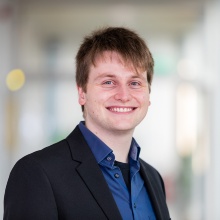
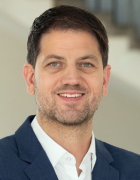
Prof. Tobias Brückmann is a Professor and Course Director of the Business & IT programme at IU University of Applied Sciences. He holds a PhD in Software Technology from the University of Leipzig and previously worked as a researcher at the Ruhr Institute for Software Technology. His research focuses on business information systems, IT-department integration in tech companies, and digital transformation strategies. He has led large-scale IT projects for international firms in insurance, banking, and media sectors, and founded CampusLab GmbH, a startup developing IT training tools. Education: PhD in Software Technology, University of Leipzig MSc in Computer Science (Media Focus), Technical University of Dresden Research interests include agile methodologies, cross-functional team dynamics, and the strategic role of IT in organizational adaptation. His publications (2017) highlight experience in service mashup engineering, agile frameworks, and digital transformation imperatives. No scientific awards are listed. He advises through his academic role and has been involved in founding CampusLab, which focuses on advanced IT training solutions.
Marthe Nordengen Berntzen holds dual affiliations: as a Scientific Assistant at BI Norwegian Business School and a Postdoctoral Fellow in Software Engineering at the University of Oslo’s Department of Informatics. Her research focuses on coordination mechanisms and software product management within large-scale Agile contexts, particularly in FinTech and organizational networks. She has contributed to understanding how social capital and empirical studies inform effective Agile practices in complex environments. Education: PhD in Software Engineering (2023) from BI Norwegian Business School (implied via doctoral thesis). Research interests include Agile methodologies, coordination theory, and scaling Agile frameworks in large-scale systems. Her work bridges theoretical insights with empirical studies, addressing challenges in organizational behavior and software development lifecycle management. Her articles explore coordination challenges in FinTech organizations, large-scale Agile adoption, and product management strategies, highlighting practical applications of Agile principles in complex contexts.
Rashina Hoda is a Professor of Software Engineering at Monash University's Faculty of Information Technology in Australia. She serves as the Associate Dean for Equity, Diversity and Inclusion, where she has introduced an intersectional lens to the EDI portfolio. Recognized as the 2025 Top Researcher in Software Systems in Australia by The Australian, Professor Hoda is an award-winning researcher, educator, and mentor who champions women and girls in STEM. Her research focuses on the human and socio-technical aspects of Software Engineering, Artificial Intelligence, and Digital Health. Professor Hoda developed Socio-Technical Grounded Theory, which she presented in her 2024 Springer book Qualitative Research with Socio-Technical Grounded Theory . Her work bridges the gap between technical systems and human factors in software development, with particular emphasis on agile methodologies, AI collaboration, and ethical considerations in technology. An analysis of her recent publications reveals a consistent focus on human-centered approaches to software engineering. Her research spans agile methodology adaptation, socio-technical grounded theory applications, AI ethics awareness, and the exploration of stereotypes in software engineering through large language models. She has been instrumental in developing frameworks that integrate human factors with technical systems, particularly in agile environments and AI-assisted development. Scientific Awards and Recognition: 2025 Top Researcher in Software Systems in Australia by The Australian Guiding Star Mentorship Award at the 2024 Women of Colour in STEM Awards Superstars of STEM 2021-22 cohort by Science and Technology Australia Professor Hoda actively contributes to the academic community through leadership roles in major conferences including ASE, ICSE, and ESEC/FSE. She has served as SE In Practice Co-Chair, Workshops Co-Chair, Program Chair for CHASE, and General Chair for multiple conference tracks. Her mentoring work, particularly for women in STEM, has been widely recognized, including her selection as a visible role model through the Superstars of STEM program. As an educator, she has developed technical briefings on qualitative research methods and socio-technical grounded theory, contributing significantly to research methodology education in software engineering. Her work on teaching software ethics to future engineers demonstrates her commitment to responsible technology development.
Paris C. Avgeriou is a Professor at the University of Groningen, Netherlands, with a distinguished research career focused on software architecture, technical debt management, and architectural decision making. His work bridges theoretical foundations with practical applications in software engineering, particularly in the areas of software quality, self-adaptive systems, and cyber-physical systems. With over 275 publications and nearly 6,000 citations, his research has significantly influenced the software architecture community. His research interests span multiple critical areas in software engineering: Software Architecture and Architectural Knowledge Management Technical Debt Management across the software lifecycle Architectural Decision Making processes and viewpoints Quality Attributes in Software Systems Self-Adaptive and Cyber-Physical Systems Software Metrics and Measurement Avgeriou's recent work demonstrates a strong focus on practical applications of software architecture principles, with particular attention to technical debt management automation, architectural decision viewpoints, and the intersection of software architecture with emerging technologies like AI. His publications reveal a consistent pattern of empirical research, systematic literature reviews, and case studies that provide both theoretical contributions and practical guidance for industry practitioners. The research shows increasing emphasis on human-centered approaches to software engineering challenges, particularly in understanding practitioner perspectives on technical debt and architectural decisions. Among his notable contributions are systematic studies on technical debt management automation, architectural assumption management, and decision-making processes in software architecture. His work on technical debt has been particularly influential, examining various dimensions including lifecycle analysis, self-fixed debt patterns, and the relationship between technical debt principal and interest. Avgeriou has been actively involved in the software engineering research community, contributing to special issues and editorials that shape research directions in software architecture and technical debt. His recent editorial work demonstrates his commitment to bridging the gap between research and practice in software engineering.
Sandro Speth is a Researcher and Doctoral Researcher at the University of Stuttgart's Institute of Software Engineering, focusing on cross-component issue management in microservice architectures. He contributes to software engineering research and education, particularly in gamified platforms and agile methodologies. University of Stuttgart, Software Quality and Architecture Group Doctoral Researcher in Software Engineering Active in teaching and supervising programming and software architecture courses His research spans software architecture analysis, issue propagation in distributed systems, automated GUI testing, and educational technology innovations like gamification and AI-driven content generation. Publications address challenges in microservice management, deployment model abstraction, and scalable educational tools. Speth's teaching roles include lecturing on data structures, software development, and deploying gamified systems like Gamify-IT and IT-REX. He supervises student projects in cross-component issue management, autoscaling explainability, and microservice design.
Prof. Dr. Ingo Weber is a Full Professor at the Technical University of Munich (TUM) in the Department of Information System Development and Operation within the TUM School of Computation, Information and Technology. He also serves as Director of Digital Transformation and ICT Infrastructure at the Fraunhofer-Gesellschaft. Previously, he held a full professorship at TU Berlin (2019–2022) and spent a decade in Australia researching at CSIRO, NICTA, and UNSW. His research focuses on Business Process Management (BPM), Process Mining, Blockchain technology, Software Architecture, DevOps, and AI Systems Engineering. Weber has authored/co-authored influential books including DevOps: A Software Architect's Perspective (Addison-Wesley, 2015) and Engineering AI Systems: Architecture and DevOps Essentials (2025). Education & Career - PhD in Semantic Methods for Business Process Modeling (University of Karlsruhe, 2009) - SAP Research parallel role during doctoral studies - Tenured Professorships at TU Berlin and TUM Research Interests Weber's work bridges academic theory and industrial applications. Key areas include: - Blockchain-based process execution (Caterpillar framework on Ethereum) - AI-driven DevOps practices - Scalable transaction creation in blockchain systems - Sustainability-oriented process analysis (SOPA framework) - Generative AI for large process models Awards - Two-time BPM Best Blockchain Paper Award (2019/2022) - ISSRE Best Paper (2015) - CSIRO/NICTA Excellence Awards (2015–2018) - EDOC 2023 Best Paper Grants & Labs - Leads Fraunhofer's digital transformation initiatives - Collaborates with industry partners like Commonwealth Bank (Australia) - Active in EU/CSIRO-funded blockchain research projects Key Contributions - Pioneered blockchain-based BPM systems (Caterpillar) - Defined blockchain pattern taxonomies - Developed tools like BLF (Blockchain Logging Framework) - Advocates for responsible AI engineering practices
Ralf Plattfaut is Professor for Information Systems and Transformation Management at the University of Duisburg-Essen since 2023, where he leads the business process innovation and automation lab. Previously, he served as Professor for Business Informatics at South Westphalia University of Applied Sciences (2019-2023) and as Associate Partner at McKinsey & Company (2013-2019). His academic journey includes research positions at the European Research Center for Information Systems at University of Münster and visiting fellowships at Queensland University of Technology and University of Liechtenstein. His educational background includes: Master of Science in Information Systems (MScIS) from WWU Münster (2009), thesis on 'Lean Enterprise Content Management' Bachelor of Science in Information Systems (BScIS) from Hochschule Liechtenstein (2008), thesis on 'IT-Controlling - Investitionsrechnung und Simulation auf Basis des ARIS-Toolset' Studies in Information Systems at WWU Münster (2004-2009) with core subjects in Business Administration, Information Systems, and Finance PhD studies in Information Systems at University of Münster (2009-2013) Plattfaut's research focuses on business process management, digital transformation, and process automation. His work bridges academic theory with practical business applications, particularly examining how organizations implement and govern process innovations. He has made significant contributions to understanding Robotic Process Automation adoption, process mining applications, and the challenges of digital transformation in various sectors including healthcare, utilities, and public administration. His publication portfolio shows a clear trajectory from foundational work on process modeling and IT controlling through to contemporary research on AI-supported process automation and the societal implications of digital transformation. Recent work increasingly addresses the intersection of process management with emerging technologies while maintaining focus on practical implementation challenges faced by organizations. His scientific recognition includes multiple best paper nominations and awards at premier conferences including ICIS, HICSS, and BPM. Notably, he won the MINTchallenge for innovative teaching and received awards for research on public sector process management and RPA implementation challenges. As an active academic leader, Plattfaut serves on editorial boards for Information Systems and e-Business Management and Intelligent Systems in Accounting, Finance and Management journals. He has chaired tracks at major conferences including Wirtschaftsinformatik and Business Process Management conferences. His funded research projects demonstrate strong connections between academic inquiry and practical business needs, with recent grants from DFG, BMBF, and state ministries supporting research on process automation, process mining in utilities, and lightweight IT governance. Plattfaut maintains an active consulting practice supporting organizations on digital transformation journeys, particularly focusing on business process innovation. He also serves on the Advisory Board 'Digitale Region menschlich gestalten' for the Regional Development Programme 'Regionale 2025'.