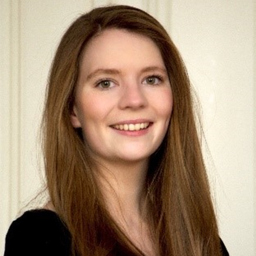
Landerl Karin is a full Professor at the Institute of Psychology , Faculty of Natural Sciences, University of Graz. Her research focuses on reading development , dyslexia , numerical cognition , and cross-linguistic educational psychology , particularly in Germanic languages. She has served as associate editor and editorial board member for prominent journals like Scientific Studies of Reading and Reading and Writing (2008–2021). Her recent work investigates the interplay between reading, arithmetic, and cognitive skills , with genome-wide studies on reading/language-related genetic variation. Email: karin.landerl@uni-graz.at Research Networks: Brain and behavior, BioHealth, Complexity of Life
Claudia Mewald is a Lecturer and Head of the English Department at the University College of Teacher Education Lower Austria (Pädagogische Hochschule Niederösterreich) in Baden. She also serves as Chair of the English Working Group in the North-East Network and as Research Coordinator Z7. With a PhD in Education from the University of East Anglia (UK), Dr. Mewald has been involved in teacher training since 1999, focusing on English as a Foreign Language Methodology for primary and secondary education. Her research interests span language learning and teaching, Foreign Language Teacher Education, Foreign Language Testing and Assessment, Portfolio Assessment, Formative Feedback, CLIL (Content and Language Integrated Learning), and language development in multilingual settings. As a council member of WALS (World Association of Lesson Studies), she has implemented Lesson Study methodology extensively in teacher education contexts. Her professional background includes teaching English, German as a Foreign Language, History, Civics, and Art at primary and secondary schools between 1981 and 1997. Dr. Mewald's recent publication record shows consistent scholarly activity with numerous articles published between 2019-2023, primarily focusing on Lesson Study applications in vocational education, language assessment methods, multilingual education approaches, and CLIL methodology. Her work demonstrates a strong commitment to improving language teaching practices through collaborative research and evidence-based pedagogy. As an active member of the academic community, she serves as a reviewer for the International Journal for Lesson and Learning Studies, Educational Action Research (Routledge), and the Open Online Journal for Research and Education. Her international collaborations include work with the University of East Anglia, University of Vienna, and multiple European partners through ERASMUS+ projects. Dr. Mewald supervises MA theses for the University of Applied Sciences Eisenstadt and evaluates PhD candidates at the University of East Anglia, demonstrating her commitment to graduate education. Her teaching philosophy emphasizes communicative language teaching, learner autonomy, and the integration of digital and analog media in educational contexts.
Professor Christian Stary serves as Head of the Institute for Business Informatics - Communications Engineering at Johannes Kepler University Linz. With over 481 research outputs spanning conference proceedings, journal articles, book chapters, and literature reviews, he is a prominent figure in business informatics research. His research spans several key areas including Business Informatics, Communications Engineering, Knowledge Management, and Design Thinking. Professor Stary has published extensively on human-centric systems, AI applications in business processes, value network analysis, and digital process twins. His recent work focuses on integrating cognitive ergonomics with technological solutions to enhance human-computer interaction in business contexts. With 49 research projects to his name (11 currently active), Professor Stary has secured funding from various sources including EU programs and national research agencies. His current projects include 'KheepU Kommunikationsplattform' (2023-2026), continuing his long-standing research trajectory that began with projects like 'Scholion' in 2000. Professional Activities: Editor of the Journal of Interaction Science (Volumes 1-7 published 2013-2019) Head of Competence Center for Knowledge Management 384 recorded academic activities including invited talks and conference organization Professor Stary teaches doctoral seminars, dissertation colloquia, and master's thesis seminars, emphasizing practical applications of business informatics principles. His teaching approach integrates Design Thinking methodologies with AI applications, preparing students for contemporary challenges in business information systems.
Gabriele Kotsis is a Full Professor at the Institute of Telecooperation, Johannes Kepler University Linz, with extensive contributions to Artificial Intelligence research. Her institutional presence spans multiple departments through interdisciplinary projects while maintaining her primary affiliation with JKU's engineering-focused research units. Her research expertise encompasses: Natural Language Processing and Neural Machine Translation systems Reinforcement Learning applications for Smart Grid optimization Mobile Computing and Multimedia Intelligence frameworks Big Data Analytics and Database Systems innovation Human-centered AI development methodologies Recent publications (2024-2025) reveal a strategic focus on practical AI implementations addressing multilingual communication barriers and energy efficiency challenges. Her work consistently bridges theoretical AI advances with real-world applications across multiple domains. Professor Kotsis maintains an active supervision record with thesis guidance and leads multiple funded research initiatives. Her current portfolio includes: 'Enhancing Neural Machine Translation' project (2025-2026) for Southeast Asian languages 'INTES' regulatory compliance ecosystem (2023-2026) 'Human-centered Artificial Intelligence' initiative (2022-2026) Through her leadership in international conferences (iiWAS, MoMM, DEXA) and editorial roles for major proceedings, she maintains significant influence in the global computer science research community while advancing JKU's research profile.
Michael Schrefl is a Full Professor at Johannes Kepler University Linz, affiliated with the Institute of Business Informatics - Data & Knowledge Engineering. He serves as Principal Investigator on multiple research projects including AWARE (2024-2026) and AISA (2020-2022), and is actively involved in European research collaborations as both PI and researcher on funded projects. His research interests span across several key areas in modern data science and business informatics: Business Informatics and Digital Transformation Data Science and Knowledge Engineering Database Systems and Data Mining Semantic Technologies and Information Systems Predictive and Prescriptive Analytics Enterprise Computing and Information Systems Professor Schrefl's recent publication activity shows a strong focus on reliability assessment in predictive analytics, conceptual modeling for business intelligence, and applications of data science in Industry 4.0 contexts. His work bridges theoretical foundations with practical applications in enterprise information systems, particularly examining data quality and reliability in predictive models. As an active member of the academic community, Professor Schrefl serves on program committees for major conferences including BI-WEEK, EDOC, and DATA. He has supervised 129 students throughout his career and contributes to educational technology through projects like eTutor++. His research spans multiple fields of science including Knowledge Engineering, IT Security, Web Engineering, and Distributed Systems. Professor Schrefl maintains strong engagement with both academic and public discourse, having given invited talks on AI topics in 2024 and scheduled media appearances including an Ö1 interview on autonomous weapons systems for 2025, demonstrating his commitment to science communication and societal impact of technological developments.
Dr. Georg Krammer serves as Deputy Head of Institute and Research Associate at Johannes Kepler University Linz's Institute for Business and Vocational Education since 2022, while also holding an International Visiting Professor (W3) position at Helmut Schmidt University Hamburg's Faculty of Humanities and Social Sciences since 2023. His academic journey includes professorial roles at University College of Teacher Education Styria (2016-2022) and research positions at Karl-Franzens University of Graz. Dr. Krammer's research spans educational science with specialization in psychometrics, teacher education, and open science practices. His work examines personality assessment in educational contexts, measurement invariance in teaching quality assessments, neuromyths in teacher education, and aggregation methods in educational psychology. Recent publications address mathematical procedural knowledge, gender-inclusive language effects, and pandemic-era online teaching. His 15 most recent publications demonstrate consistent output across educational psychology journals, with increasing international collaboration evident in multi-lab studies. The research shows evolution from personality assessment in admissions toward broader educational measurement and methodological issues in teacher education. Springer Nature Author Service Award 2025 Springer Nature Editorial Contribution Award 2025 Dr. Krammer actively contributes to academic service as Co-Editor of Zeitschrift für Bildungsforschung (2019-2025), member of the International Social Science Journal editorial board, and serves as JKU representative for Lifelong Career & Microcredentials through EC 2 U. His extensive peer review activities span over 30 journals including major publications in educational psychology and assessment. As Deputy Head of Institute, Dr. Krammer leads research initiatives within the Institute for Business and Vocational Education while maintaining active research collaborations across European institutions, evidenced by his visiting professorships at Western University (Canada) and Alpen-Adria-University Klagenfurt.
Dr. Abida Malik is a Research Fellow at Johannes Kepler University Linz's Institute for Business and Vocational Education. Her academic journey includes positions at Nazarbayev University (Kazakhstan), Bremen University of the Arts, and Johannes Gutenberg University Mainz. She holds memberships in several philosophical societies including the German Society for Philosophy and The Aristotelian Society. Education includes: Doctoral studies in Philosophy, University of Bonn (2014-2018) MA in Renaissance Studies, Universities of Florence and Bonn (2011-2014) BA in German-Italian Studies, Universities of Bonn and Florence (2008-2011) Her research explores fundamental questions in: Epistemology - especially implicit knowledge and testimony Ancient Philosophy - Platonic and Aristotelian scholarship Philosophy of Language - examining linguistic meaning and communication with extensions into philosophy of mind, education, science, and action theory. Recent publications show strong focus on knowledge theory, with articles examining tacit knowledge acquisition, epistemic decolonization, and Platonic philosophy published in leading philosophy journals between 2023-2025. Scientific recognition includes: Scholarship from German National Academic Foundation She maintains regular student office hours and contributes to academic service through editorial work and conference organization. She is affiliated with the Research Network Implicit Knowledge (FORIM).
Privatdozent Dr. Dr. Ingo Feinerer serves as the Head of Faculty of Engineering at the University of Applied Sciences Wiener Neustadt in Austria. With two doctoral degrees and the Habilitation qualification (indicated by Privatdozent), he holds a senior academic position equivalent to Associate Professor in many systems. His research interests span multiple disciplines: Text Mining and Computer Science (class diagrams, schema mapping, domain constraints) Radiobiology and Ion Therapy for advanced cancer treatment Social Network Analysis and digital media History of Psychology and academic journal evolution Prof. Feinerer's work demonstrates exceptional interdisciplinary breadth, connecting technical computer science with medical physics applications and historical analysis. His current major research initiative is the PAIR project (2022-2026), which focuses on expanding radiobiological understanding of ion beams for cancer treatment. This project recognizes ion therapy using protons and carbon ions as the most advanced radiation-based cancer treatment due to its physical and biological advantages over conventional photon beams. His publication record spans from 2007 to 2025, with 36 publications including 18 journal articles and 15 conference papers. Recent publications show a shift toward medical physics applications while maintaining connections to his computer science expertise, as evidenced by the 2025 paper on an open-source framework for pre-clinical ion-beam research. As Head of Faculty, Prof. Feinerer oversees academic programs and research activities within the Faculty of Engineering, contributing to both educational leadership and active research in his diverse fields of expertise. His ORCID identifier (0000-0001-7656-8338) provides a persistent link to his scholarly work across these interdisciplinary domains.
Dipl.-Ing. David Feilacher, BSc serves as a Junior Researcher at the University of Applied Sciences St. Pölten within the Department of Media and Digital Technologies and the Institute of Creative\Media/Technologies. He is an active member of the Digital Technologies Research Group, focusing on applied artificial intelligence solutions for real-world challenges in healthcare and supply chain systems. His research integrates Artificial Intelligence, Robotics, and Human-Computer Interaction to develop practical technologies. Key areas include AI-driven fall detection for elderly care using domestic robots, voice assistant systems for emergency scenarios, and digital traceability frameworks for food supply chains. His work emphasizes robust system design and seamless transition from laboratory prototypes to everyday environments, particularly addressing user engagement and reliability in critical situations. Recent publications reveal a strong trend toward socially impactful AI applications, with projects like DPP4Food establishing digital product passports for food safety and Smart Companion 2 transforming vacuum cleaning robots into health monitoring platforms. This research demonstrates consistent focus on translating theoretical AI advances into tangible solutions for healthcare accessibility and sustainable supply chain management. As part of the Digital Technologies Research Group, Feilacher collaborates on interdisciplinary projects including DPP4Food (Digital Product Pass for Food) and Smart Companion 2, which bridge technology development with societal needs in health monitoring and food traceability systems.
Sibylle Moser is a Professor at the University of Applied Sciences St. Pölten, where she serves as Head of the Center for Cultural and Creative Industries and Senior Researcher in the Media Creation Research Group at the Institute of Creative\Media/Technologies. Her academic trajectory includes prior positions as Professor of Media Studies & Cultural Management at UAS Kufstein (2017-2023), CEO of Community Radio Orange 94.0 (2011-2017), and visiting professorships at the University of Vienna. Her research employs systemic models and embodied cognition frameworks to investigate: User/visitor experience in museums and gardens Mixed-method designs for empirical art/culture studies Cognitive semiotics of intermodal analogy in multimedia Cross-disciplinary connections between media theory and practice Her publications exhibit strong thematic continuity in analyzing how embodied cognition shapes meaning-making across artistic media, with recent focus on sensory dimensions of cultural experiences. She leads the Center for Cultural and Creative Industries and collaborates within the Media Creation Research Group, developing transdisciplinary approaches to digital culture and creative technologies.
Professor Jutta L. Mueller serves as Head of the working group at the Psycholinguistics Laboratory Babelfisch within the Department of Linguistics at the University of Vienna. Her office is located at Sensengasse 3a, Room 06.08, with consultation hours held Thursdays 2-3 pm by email appointment. Contact: +43 1 4277 41733. Her research focuses on experimental psycholinguistics, particularly language acquisition mechanisms and bilingual cognitive processing. The Babelfisch Laboratory investigates speech perception, developmental trajectories in multilingual environments, and neural correlates of language processing through behavioral and neuroimaging methodologies. Current work emphasizes cross-linguistic transfer phenomena in early bilingual development. Professor Mueller oversees laboratory operations at the Universitätscampus Hof 5.1 facility (Spitalgasse 2, 1090 Wien), coordinating equipment management and experimental protocols. While specific student supervision details aren't published, her departmental role involves graduate teaching in linguistic theory and experimental methods within the University of Vienna's linguistics curriculum.
Jozsef Arato is a Research Fellow at the Vienna Cognitive Science Hub, University of Vienna, where he has worked as a senior scientist for data science since 2019. His research spans multiple interdisciplinary domains within cognitive science, with particular expertise in computational modeling of eye-movement patterns and visual statistical learning. His research interests focus on understanding the principles that guide learning and decision-making through computational modeling approaches. He investigates how eye-movement patterns can reveal learning processes, comparing gaze patterns across different observers. His work spans diverse application areas including art perception, environmental psychology, and animal communication systems. His publication record from 2020-2024 shows a strong focus on eye-tracking methodologies applied to art perception, with significant contributions to understanding how gaze patterns relate to aesthetic experiences. His research also extends to environmental conservation psychology and comparative studies of vocal learning in birds, demonstrating remarkable interdisciplinary breadth. Dr. Arato has been actively involved in academic service, having served as Program Chair of the Pattern Recognition in Neuroimaging Summer School in 2020. He organizes the CogData reading group and contributes to the academic community through collaborative research projects. As an educator, he teaches Scientific Computing in Python (TEWA 1) for the Psychology master's program at the University of Vienna. Previously, he taught Cognitive Modelling at both the University of Vienna and Eötvös University in Budapest, demonstrating his commitment to training the next generation of cognitive scientists and data analysts.
Barbara Soukup is an Associate Professor at the University of Vienna , affiliated with the Faculty of Philology and Cultural Studies and the Institute of German Studies . Her academic career spans institutions including Georgetown University, where she earned a PhD and MSc in Linguistics, and the University of Vienna, where she completed her Mag.phil. in English and French. Education: PhD in Linguistics, Georgetown University (2008) MSc in Linguistics, Georgetown University (2005) Mag.phil. in English and French, University of Vienna (2000) Research Interests focus on sociolinguistics, multilingualism, and construction grammar, with particular emphasis on linguistic landscapes, language attitudes, and cognitive sociolinguistics. She pioneered the Variationist Linguistic Landscape Study (VaLLS) methodology and explores dialect use in Austrian media and public spaces. Recent Publications (2020-2025) analyze quantitative approaches to linguistic landscape research, dialect as metonymic devices, and language attitudes in multilingual urban environments. Articles highlight Vienna's linguistic diversity and methodological innovations in sociolinguistic fieldwork. Awards & Grants: Elise-Richter Grant (2014) Psychology of Language Award (2014) Conference Travel Grants (2002) University of Vienna Achievement Award (2001) Projects include ELLViA (2014-2021) and VisibLL (2022-2025), both examining linguistic landscapes in Vienna through citizen science and interdisciplinary collaboration. She has delivered over 100 lectures and participated in public exhibitions on urban multilingualism.
Mathilde Eveline Keizer is a Professor of English Linguistics: Variation and Cognition at the Department of English and American Studies, Faculty of Philological and Cultural Studies, University of Vienna. She serves as both Vice-Director of Studies for English and American Studies and Deputy Head of the Department of English and American Studies, demonstrating significant leadership within the institution. Professor Keizer's educational background includes: MA in English language and literature, Vrije Universiteit Amsterdam (1987) PhD in English Linguistics, Vrije Universiteit Amsterdam (1992) Her primary research focuses on the theoretical framework of Functional Discourse Grammar, with particular emphasis on the Noun Phrase in English and Dutch, possessive constructions, reference and predication, definiteness, English pronouns, apposition, information structure, linguistic categorization, and semi-fixed constructions. Professor Keizer leads the FunCog research group, which investigates the intersection of functional and cognitive approaches to language structure. Her work demonstrates how linguistic structures emerge from the interaction of cognitive processes and communicative needs, providing insights into the dynamic nature of language organization. Analysis of Professor Keizer's recent publications reveals a consistent focus on English syntax within the framework of Functional Discourse Grammar. Her work spans noun phrase structure, partitive constructions, prepositional phrases, and adverbial modification, demonstrating the versatility of FDG in addressing diverse syntactic phenomena. A notable trend is her increasing attention to cross-linguistic comparisons, particularly between English and Dutch, which enriches our understanding of language universals and specifics. Professor Keizer has made significant contributions to the field through her extensive publication record, including authored and edited books that have shaped contemporary understanding of functional-cognitive approaches to grammar. Her work has appeared in leading linguistics journals and handbooks, establishing her as a prominent voice in theoretical linguistics. As an educator, Professor Keizer teaches courses on Functional Discourse Grammar, Cognitive Grammar, Linguistic Categorization, Fuzzy grammar, Linguistic models and approaches, The English Noun Phrase, English adjectives, English idioms, and English syntax. She has supervised numerous graduate students through thesis seminars and advanced courses in linguistics, contributing significantly to the development of the next generation of linguists. Professor Keizer leads the FunCog research group, which brings together scholars interested in the intersection of functional and cognitive approaches to language. The group focuses on empirical investigations of linguistic structures through the lens of Functional Discourse Grammar, fostering interdisciplinary collaboration and innovative research methodologies that bridge theoretical linguistics with practical applications in language teaching and computational linguistics.
Theresa Madreiter is a Lecturer & Doctoral Student at the Institute of Management Sciences within the Faculty of Mechanical Engineering and Industrial Management at Vienna University of Technology (Technische Universität Wien). Her research focuses on Production and Maintenance Management, where she combines engineering expertise with data science approaches to advance industrial maintenance practices. Her educational background includes: Dipl.-Ing. in Industrial Engineering and Mechanical Engineering from the Faculty of Mechanical Engineering and Industrial Management, Vienna University of Technology BSc. in Industrial Engineering and Mechanical Engineering from the Faculty of Mechanical Engineering and Industrial Management, Vienna University of Technology Madreiter's research interests center on knowledge-intensive approaches to industrial maintenance. She explores how knowledge-based maintenance , predictive and prescriptive maintenance systems , and knowledge discovery from text can transform traditional maintenance practices. Her work leverages semantic technology and Natural Language Processing to extract valuable insights from maintenance documentation, and applies predictive data analysis and machine learning techniques to anticipate equipment failures before they occur. This interdisciplinary approach bridges the gap between industrial engineering and data science, positioning her at the forefront of Maintenance 4.0 research. Her publications demonstrate a strong focus on applying text mining and AI techniques to industrial maintenance challenges. The trend in her work shows increasing sophistication in combining multiple data sources (both structured sensor data and unstructured text documentation) to create comprehensive maintenance solutions. Her research spans both theoretical development of algorithms and practical implementation in manufacturing environments, with a particular emphasis on discrete manufacturing systems. Madreiter's scientific achievements have been recognized with several prestigious awards: Schnieder Prize YOUNG MAKER 2021 from acatech Industrial Management - Thesis Award 2020 from Austrian Association for the Promotion of Business Research and Education Best Paper Award for "Combining process monitoring with text mining for anomaly detection in discrete manufacturing" at the Conference on Learning Factories 2022 As a doctoral student and lecturer, Madreiter is actively involved in academic mentoring and education. Her master's thesis on "Design and Development of a Prototype of a Text Understanding Tool for Maintenance 4.0" has served as the foundation for her current doctoral research and multiple research projects including TU-MARS, True_Usage, DigiMain 4.0, and DigiTS-ME. Beyond her formal academic role, she demonstrates significant commitment to social causes through her work with the Computerclubhouse Vienna (CCV), where she leads technology workshops for children from disadvantaged backgrounds. Madreiter is part of research teams working on the intersection of industrial engineering and data science, particularly focused on how AI and text analytics can transform maintenance practices in manufacturing. Her work connects closely with Industry 4.0 initiatives and represents an important bridge between traditional engineering disciplines and emerging data-driven approaches.