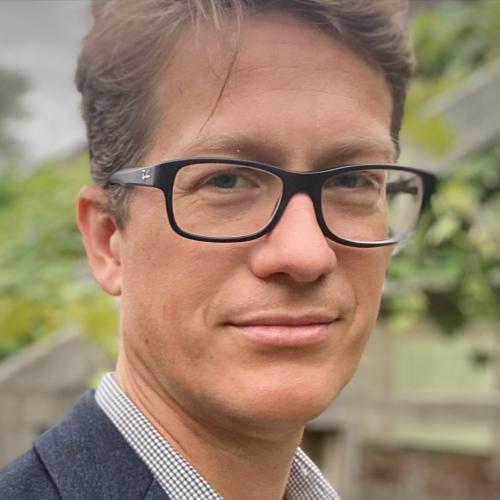
Dr Jonathan Tenney is a University Lecturer in Assyriology at the University of Cambridge and a Fellow at Jesus College. He serves as Curator of Works of Art and Director of Studies in Archaeology at Jesus College. His research focuses on Mesopotamian archaeology, cuneiform studies, and socio-political institutions of ancient Babylonian and Kassite periods. BA, Edinboro University of Pennsylvania PhD, University of Chicago Tenney employs philology and social science methodologies to analyze cuneiform tablets and archaeological evidence from Mesopotamia (modern Iraq, Iran, and Syria). His academic interests include: Cuneiform (Akkadian and Sumerian languages) Historical demography of Mesopotamia Settlement patterns and environmental interactions Comparative slavery systems Religious and political ideologies His publication record (2022–2009) spans topics like: Kassite administrative systems Babylonian population dynamics Cuneiform documentation of servile labor Urban development in Mesopotamian cities Socio-economic structures in ancient Near East Religious-political integration in Babylonia Key research themes include materiality of bureaucratic records and epistemological methodologies in Assyriology. Outstanding Dissertation Prize by The American Academic Research Institute in Iraq (2009) Tenney is currently on sabbatical (2025/26) but remains available for consultancy. His work intersects with the Department of Archaeology’s research themes on Environment, Landscapes and Settlement, Material Culture, and Rethinking Complexity. He contributes to teaching in Assyriology, Mesopotamian Languages, and socio-political archaeology.
Professor Michelle Ellefson is a Professor of Cognitive Science at the University of Cambridge's Faculty of Education, where she serves as Director of CAM-DTP and as Undergraduate Tutor for Gonville and Caius College. She convenes the INSTRUCT Research Group (Implementing New Student Thinking Resources Using Cognitive Theory) and is affiliated with multiple interdisciplinary initiatives including Cambridge Neuroscience, Cambridge Big Data, and Cambridge Language Sciences. Her educational background includes a PhD and MA in Brain and Cognitive Sciences from Southern Illinois University and a BA in Psychology, summa cum laude, from the University of Minnesota. She is a member of several professional organizations including the Psychonomic Society, Cognitive Science Society, Women in Cognitive Science, and SPARK Society. Professor Ellefson's research integrates cognition, neuroscience, child development, and education into a multi-disciplinary program aimed at improving math and science education. Her work focuses on executive functions in school achievement, children's causal reasoning about scientific phenomena, and applying cognitive principles like simplicity and desirable difficulties to classroom learning. Her research spans laboratory-based studies paired with classroom applications to understand cognitive development mechanisms and improve educational practice. Her recent publications reveal strong trends in executive function research across cultural contexts, particularly examining East-West contrasts and the relationship between executive functions and academic achievement. Her work increasingly focuses on developing and validating assessment tools like the Zoo Task for metacognitive problem-solving, and she is committed to open science practices including registered reports and pre-registration of studies. Psychonomic Society Cognitive Science Society (CogSci) Women in Cognitive Science (WiCS) SPARK Society Professor Ellefson actively supervises PhD students through the Psychology, Education & Learning Studies program and teaches cognitive psychology and educational neuroscience in the PGCE program. She emphasizes quantitative methods and R programming for data analysis, requiring doctoral students to develop strong statistical skills. Her lab follows Cambridge's inquiry-based learning model and maintains a commitment to diversity and inclusion, welcoming researchers from varied socioeconomic, national, and cultural backgrounds. The INSTRUCT Lab also focuses on open science practices, sharing data and materials through OSF and publishing preprints in Psych-Archive.
Manon Jones is a Professor in Psychology and Director of Research at Bangor University's School of Psychology and Sport Science. She directs the Miles Dyslexia Centre, a research hub providing assessment services and professional development for practitioners, and leads the RILL project—a bilingual literacy program for primary schools funded by UKRI, Nuffield Foundation, and Welsh Government. Her research explores cognitive and neurocognitive foundations of reading, dyslexia, and bilingualism. Key themes include: Cross-modal learning in dyslexia Orthographic processing across languages Remote literacy instruction efficacy Neurodivergent cognition models Syntax acquisition in bilinguals Analysis of her 15 most recent publications (2014–2025) reveals dominant foci on dyslexia mechanisms (9 papers), bilingual language processing (7 papers), and literacy intervention design (4 papers). Methodologies include eye-tracking, ERP, and randomized controlled trials, with increasing emphasis on computational modeling since 2021. She leads multiple grants including: RILL randomized control trial (Welsh Government, 2022–2026) Welsh literacy scale-up project (2024–2025) Neurodevelopmental disorder screening tool development (2022–2023) COVID-19 remote teaching research (2020–2022) She directs the Reading Brain lab and collaborates with NHS services to translate research into clinical/educational practice.
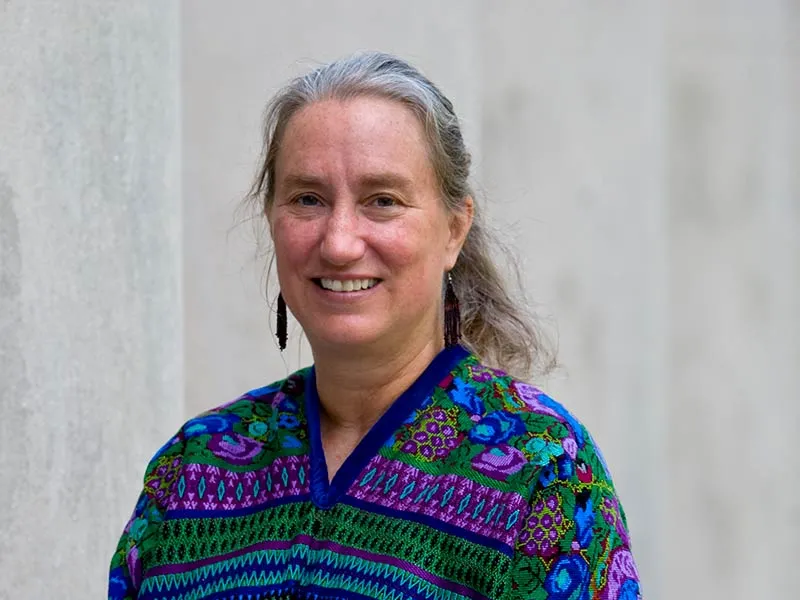
Judith Maxwell is Professor of Anthropology at Tulane University, specializing in linguistic anthropology with primary focus on Mayan languages (Kaqchikel, Chuj, Nahuatl) and discourse analysis. Her work bridges theoretical linguistics and applied language revitalization, particularly through the Tunica-Biloxi language project since 2010. Education PhD in Anthropology, University of Chicago (1982) Research Focus : Maxwell investigates discourse structures in Mayan languages regarding artistry canon, cultural constructs, coherence mechanisms, and societal relationships. Her colonial manuscript analysis explores language change in Kaqchikel/Nahuatl, while contemporary work examines bilingual education, language shift, and gender performance across English and Indigenous varieties. She pioneered the revival of Tunica language through community-academic collaboration. Publication Trends : Recent works (2014-2024) demonstrate consistent focus on Mayan language documentation ( Kaqchikel chronicles , Chuj Narratives ), revitalization pedagogy ( Maja'il Kaqchikel ), and sociopolitical dimensions of language ( Mayan Languages and Guatemala Law ). Key themes include decolonizing methodologies, Indigenous knowledge systems, and practical applications for endangered language communities. Advising & Grants : Maxwell leads the Tunica-Biloxi Language Revitalization Project training Tulane students in documentation techniques. Her collaborative model integrates tribal knowledge with academic research, securing sustained community engagement despite specific grant details being unreported. Research Teams : Directs the Tunica-Biloxi collaborative team comprising Tulane students, tribal scholars, and native speakers, developing e-learning tools like the Q'anil Kaqchikel lessons filmed in Guatemala with native instructors.
Dr. Dave Hicks is a Lecturer in Data Analysis and Assessment in Education at the University of Tasmania's Faculty of Education. His research focuses on education equity, quantitative methodologies, and systemic barriers affecting marginalized student groups. He holds a PhD (2021), Grad Cert (Research) (2021), and Bachelor of Education (Honours) (2014) from the University of Tasmania. Education Background: PhD in Education, University of Tasmania (2021) Graduate Certificate in Research, University of Tasmania (2021) Bachelor of Education (Honours), University of Tasmania (2014) Research Interests: Dr. Hicks applies data-driven approaches to analyze educational policies and practices, particularly addressing inequities in low SES, regional, and Indigenous student populations. His work emphasizes collaboration with schools, governments, and NGOs to drive systemic change. Key areas include: Online engagement strategies for disadvantaged students Teacher retention and wellbeing in secondary education Culturally responsive pedagogies for Indigenous learners VR technology in place-based education Recent Research Trends: His 2023-2025 publications highlight: Quantitative analysis of literacy gender gaps VR-based educational innovations Policy frameworks for Indigenous student success Online pedagogies for diverse student groups Grants & Partnerships: Active grants include: $177,574 DECYP literacy training package (2023-2024) $58,077 Table Cape VR Education Project (2024) $49,997 National Centre for Student Equity grant (2024-2025) Labs/Teams: Collaborates with CALE (College of Arts Law and Education) and interdisciplinary teams on projects like the Table Cape VR initiative and TBRI professional learning programs.
Prof. Dr. Julia Nentwich is an Assistant Professor of Organizational Psychology at the University of St. Gallen (HSG), affiliated with the OPSY-HSG department. Her work focuses on gender dynamics in organizations, qualitative research methods, and discursive psychology. She co-leads the non-tenured faculty group and teaches courses on organizational psychology, gender, and diversity. Nentwich's research explores gender practices in management, resistance to organizational change, and inclusive leadership strategies. She has held visiting researcher positions at the Norwich Business School (UK) and serves on editorial boards for journals like Gender: Zeitschrift für Kultur und Gesellschaft and Gender in Management . Her academic contributions emphasize empirical studies of gender socialization in early childhood education, workplace inclusion initiatives, and the intersection of gender with professional roles. Notable projects include Leaders for Equality and Gender in the nursery , which investigate gender norms in childcare and corporate environments. Nentwich has received the Summa Cum Laude award for her doctoral thesis from the University of Tübingen and actively reviews for leading journals in organizational and gender studies. Teaching activities span undergraduate and graduate levels, covering topics like climate change psychology, gender identity, and qualitative research design. She coordinates HSG's Gender Studies program and collaborates with international research networks such as EGOS Standing Working Group Gender and Diversity. Nentwich's recent work addresses male advocacy in gender equality, resistance to diversity policies, and the discursive construction of leadership roles.
Dr. Lori McKee is an Associate Professor and Graduate Chair in the Department of Curriculum Studies at the University of Saskatchewan's College of Education. With 20 years of elementary teaching experience, her work bridges classroom practice and academic research in literacies, pedagogies, and teacher professional learning. She specializes in multimodal pedagogies, intergenerational learning, and equity-centered literacy instruction. Education: Ph.D. in Multimodal Pedagogies, Western University (2018) M.Ed. in Multiliteracies and Multilingualism, Western University (2013) B.Ed. in Primary-Junior Education, Queen’s University (1997) B.A.Sc. in Child Studies, University of Guelph (1996) Research Interests: Dr. McKee’s research focuses on literacies education across diverse contexts, including: Intergenerational learning programs connecting elders and children Equitable pedagogical strategies for literacy instruction Professional development for teacher educators Integration of digital and multimodal tools in teaching Teaching Contributions: She teaches graduate courses in curriculum research and project design, as well as undergraduate courses in elementary English Language Arts and literacy assessment. Her pedagogy emphasizes reflective practice and adapting instruction to contemporary educational challenges. Collaborations: Engages with schools, elder care facilities, and teacher communities to co-design curricula. Active in national and international research networks, including the Reading Pedagogies of Equity Project.
Aldeida Aleti is a Professor in the Department of Software Systems & Cybersecurity at Monash University. Her research focuses on Automated Software Engineering, leveraging AI and optimization techniques for tasks like software design, testing, and repair. She has held roles including Chief Examiner for units like FIT4002 and FIT5136, and has contributed to teaching FIT3077 and FIT1008. Education: PhD in Software Engineering (Swinburne University of Technology, 2012), Master of Computer Engineering (Polytechnic University of Tirana, 2008), and Bachelor Honours in Computer Engineering (Yildiz Technical University, 2005). Research Interests: Automated software engineering, fitness landscape analysis, optimization, and search-based techniques. She leads projects like RAISE (Responsible AI Software Engineering) and collaborates on quantum computing and healthcare AI initiatives. Awards include the FIT Dean's Award (2016), Best Paper Awards (2015, 2011), and the Heidelberg Laureate Forum invitation (2014). She has been a grant assessor for the Australian Research Council since 2015. Advising: Accepting PhD students in AI-driven software engineering, optimization, and automated testing. Active in committees like the Faculty Research Committee and Early Career Researcher committee.
Aya Matsuda is a Professor of Applied Linguistics at Arizona State University's Department of English, where she directs undergraduate and graduate programs in linguistics and applied linguistics. She holds a Ph.D. in English from Purdue University, along with an M.A. in Linguistics and a B.A. in English from International Christian University in Tokyo. Her research focuses on World Englishes, English as an International Language (EIL), and the implications of globalization for language education. Matsuda has authored and edited influential books including Preparing Teachers to Teach English as an International Language (2017) and Principles and Practices of Teaching English as an International Language (2012). Her work emphasizes rethinking language pedagogy to reflect global English diversity, challenging traditional native-speaker norms. Professional service includes roles as Board Director of TESOL International Association (2014–2017), Treasurer-Secretary of the International Association for World Englishes (2015–2019), and editorial board memberships for journals like TESOL Quarterly and World Englishes . Awards include the NNEST of the Month (2008) and the Walter J. Johnson Award (2000). Her teaching spans courses on Disciplinary Discourses, Global English Contexts, and Second Language Acquisition. She has mentored numerous graduate students, focusing on topics like EIL curriculum design, language policy, and multilingualism.
David R. Kauchak is a Professor of Computer Science at Pomona College, part of The Claremont Colleges. He has been affiliated with the institution since 2014. His academic background includes a Ph.D. (2006) and M.A. (2006) in Computer Science from the University of California, San Diego, and a B.S. (2005) in Computer Science from the University of Utah. His research focuses on Natural Language Processing (NLP) , particularly text simplification , aiming to reduce text complexity while preserving content. Applications include improving health literacy through simplified medical text and enhancing accessibility of technical documents. He has also contributed to machine learning methodologies and information retrieval systems. Key awards include the Distinguished Poster Award at AMIA 2016 and the Best Undergraduate Paper Award at SocalNLP 2018. His work frequently addresses interdisciplinary challenges in healthcare communication, education technology, and software tool development. Teaching highlights include courses in Artificial Intelligence , Algorithms , Natural Language Processing , and foundational computer science modules. He has advised numerous projects in computational linguistics and health informatics, though specific student names are not explicitly listed in the provided materials. His collaborations span academic and medical domains, including joint research with institutions like the University of Utah and projects funded through initiatives like the German Climate Modeling Initiative (though this appears unrelated to his primary work). He maintains an active presence in academic conferences, publishing in venues such as ACL, AMIA, and IEEE journals.
Julie Boland is a Professor at the University of Michigan's College of Literature, Science, and the Arts, affiliated with the Psychology and Linguistics departments. She holds a PhD from the University of Rochester and leads the Psycholinguistics Lab, focusing on interdisciplinary language processing research. Her work explores interfaces between word recognition, syntax, semantics, and sociolinguistic variables, with special attention to bilingual processing and executive function roles. Education: PhD, University of Rochester. She teaches research methods and language psychology, advising numerous PhD candidates. Key research themes include sociolinguistic priming, bilingual ambiguity resolution, and language processing in digital contexts. Her findings highlight how dialect variation, cultural background, and technology impact comprehension and production. Research Interests: Psycholinguistics, sentence processing, lexical access, sociolinguistic influences, bilingualism, and cognitive mechanisms. Labs: Director of the Psycholinguistics Lab, promoting interdisciplinary collaboration across Psychology and Linguistics. Teaching: Courses on language psychology and research methods for Psychology undergraduates/graduates. Recent work addresses conversational dynamics in Zoom interactions, cultural differences in visual attention, and L2 structural priming effects. She emphasizes practical applications of psycholinguistic insights for education and technology design.
Vinay Lal is Professor of History and Asian American Studies at the University of California, Los Angeles (UCLA), where he has been teaching since Fall 1993. He holds a joint appointment in the Department of History and the Asian American Studies Department. Born in Delhi and raised across multiple countries including India, Indonesia, Japan, and the United States, Lal brings a global perspective to his scholarship and teaching. His educational journey began at Johns Hopkins University, where he earned both his B.A. (1982) and M.A. (1982) from the Humanities Center with concentrations in literature, history, and philosophy. He then studied film in Australia and India on a Thomas J. Watson Fellowship before pursuing his Ph.D. at the University of Chicago's Department of South Asian Languages and Civilizations, which he completed with Distinction in 1992. His dissertation, 'Committees of Inquiry and Discourses of 'Law and Order' in Twentieth-Century British India', received the Marc Galler Award for the best dissertation in the Division of the Humanities at the University of Chicago. Lal's research spans an extraordinary breadth of intellectual interests, with primary focus on Indian history, historiography, public and popular culture in India, the Indian diaspora, colonialism, human rights, American politics, the architecture of nonviolence, Gandhi studies, and the global politics of knowledge systems. His work consistently challenges conventional disciplinary boundaries, engaging with topics ranging from the politics of religion and ethnicity in South Asia to the moral and political thought of Mohandas Gandhi, from the partition of India to the intersection of history and popular cinema. His scholarship reflects a deep commitment to decolonizing knowledge systems and exploring alternative epistemologies from the Global South. His publications reveal a scholar deeply engaged with both historical analysis and contemporary political issues. The 15 most recent articles demonstrate his consistent focus on South Asian politics, historical memory, nonviolence, and the politics of knowledge. His writing spans academic journals, major newspapers, and public intellectual platforms, with a distinctive voice that bridges scholarly rigor and public accessibility. His work on Gandhi, colonialism, and contemporary Indian politics forms a particularly strong thread throughout his recent publications. Fellow of the World Academy of Art and Science (elected February 2000) William R. Kenan Fellow, Society of Fellows in the Humanities, Columbia University (1992-93) Senior Fellowship from the American Institute of Indian Studies National Endowment for the Humanities Fellowship for University Teachers Fellowship from the Society for the Promotion of Science/Japan Area Studies Center Listed among the '101 Most Dangerous Professors in America' in David Horowitz's book Fulbright-Nehru Fellowship for Academic and Professional Excellence Fellow at the Stellenbosch Institute for Advanced Study (STIAS), South Africa (2024) Oxford University Press India Academic (Humanities) Delegate (2022-2028) As a dedicated mentor, Lal has supervised numerous PhD students who have gone on to prominent academic careers at institutions including CSU-Sacramento, UNC-Charlotte, O.P. Jindal University, UC Irvine, and the University of Pittsburgh. His teaching portfolio at UCLA is exceptionally broad, encompassing undergraduate courses on Indian Civilization, British India, contemporary South Asia, and world history, along with graduate seminars on Indian politics and religion, historiography of modern India, nationalism and colonialism, Indian cinema, and postcolonial theory. His lecture courses are available in their entirety on his academic YouTube channel, which has garnered over 3 million views and 36,000 subscribers. Lal has also served as University of California's Director of the Education Abroad Program in India and as Professor of History at the University of Delhi during 2010-11. Lal is a founding member of the Backwaters Collective on Metaphysics and Politics (2010-2020), which met annually in Kerala, and was associated with Multiversity, a group of scholars focused on decolonizing Western knowledge systems. His current work includes a four-book project titled 'The Genocide and Hope Quartet: Studies in the Architecture of Oppression and the Redemptive Possibilities of Nonviolence', examining Dandi, Auschwitz, Hiroshima, and Robben Island. He maintains an active public intellectual presence through his blog 'LAL SALAAM' and his academic YouTube channel, making scholarly content accessible to wider audiences.
Meredith A. Martin is a Professor of English at Princeton University and serves as the Faculty Director of the Center for Digital Humanities (CDH), established under her leadership in 2014. She specializes in anglophone poetry, historical prosody, and the intersection of digital humanities with literary studies. Her work bridges traditional literary analysis with computational methodologies, as seen in projects like the Princeton Prosody Archive (1570–1923) and her forthcoming book Poetry’s Data (2025), which explores critical data studies in humanities contexts. Her research interests extend to Victorian literature, modernism, and interdisciplinary approaches to poetry. She holds leadership roles in multiple initiatives, including co-editing the Journal of Cultural Analytics and serving on committees for the Princeton AI Lab and Language and Intelligence Center. Martin is also affiliated with the Center for Statistics and Machine Learning and the Program in Media and Modernity. Recognized for her mentorship, she has received the Princeton University Graduate Mentoring Award (2021) and the Clio Award (2023). She advises graduate students on digital humanities, critical data studies, and comparative poetics, while overseeing collaborative projects like the Nineteenth-Century Data Collective and the Historical Poetics Reading Group. Her publications include The Rise and Fall of Meter (2012), which won multiple awards, and recent contributions to PMLA , Victorian Studies , and Paideuma . She actively promotes interdisciplinary dialogue through teaching courses on digital culture, poetry, and literature’s relationship with other disciplines.
Professor Christian Bokhove holds the position of Professor in Mathematics Education at the Southampton Education School, University of Southampton. His research focuses on mathematics education in classrooms, technology integration in schools, and innovative research methodologies. He specializes in international comparisons of mathematics education, leveraging technology to enhance educational practices. His work includes analyzing school inspection reports using text mining and exploring curriculum design through cross-country studies. Currently, he is accepting PhD applications in his areas of expertise. Research interests include the application of technology in educational settings, methodologies for analyzing large datasets (e.g., Ofsted reports), and the role of 'opportunity to learn' in shaping mathematics curricula. His recent publications highlight contributions to understanding master mathematics teachers in Chinese primary education, analytical variability in data replications, and comparative geometry curriculum studies across six nations. Professor Bokhove's academic contributions span textbook analysis, policy implications of education technology, and methodological innovations. While no specific awards are listed, his active research portfolio and international collaborations reflect a commitment to advancing educational research.
Richard E. Pattis is a Professor of Teaching at the University of California, Irvine , affiliated with both the Department of Computer Science and the Department of Informatics within the Donald Bren School of Information and Computer Sciences . His primary role focuses on undergraduate education, emphasizing innovative teaching methods and curriculum design. He teaches courses such as ICS 33 (Intermediate Programming), ICS 193 (Tutoring in ICS), and has developed educational materials like the EBNF chapter for programming syntax. His work integrates pedagogical approaches with practical programming concepts, prioritizing student engagement and critical thinking. Pattis actively curates education-related video clips and maintains a repository of quotations relevant to learning and programming. His research interests include formal language theory in education, the application of EBNF in introductory courses, and fostering effective debugging practices. He emphasizes the importance of clear communication and problem-solving in computer science education.