Marco Coniglio is a Professor of German Philology/Linguistics at the Department of German Philology, Georg-August-University Göttingen. His research spans historical grammar, syntactic theory, corpus linguistics, and digital humanities, with a focus on modal particles, information structure, and Germanic language interfaces. Key Research Areas: Historical Grammar, Modal Particles, Corpus Linguistics, Digital Humanities Projects: WiN-Korpus (Middle Low German Corpus), HIPKON (Historical Sermons Corpus), DFG Network on Subordinate Clauses Collaborations: Institute for Digital Humanities at Göttingen, Graduiertenkolleg 'Form-Meaning Mismatches' His 15 most recent publications (2021–2025) address Germanic syntax, modal particles, mood marking in subordinate clauses, and corpus-driven language change. Topics span grammaticalization of adverbs, information structure evolution, and comparative analysis across Old High German, Old Saxon, and Old English. Collaborative works include contributions to the 'Wörterbücher zur Sprach- und Kommunikationswissenschaft' project.
Patricia Anthony serves as Associate Professor at Lincoln University's School of Landscape Architecture in New Zealand, where she holds an ORCID identifier 0000-0002-4991-3340. Her academic appointments include Faculty Postgraduate Chair for the Faculty of Environment, Society and Design (2021-2024) and current affiliation with the Centre for Geospatial and Computing Technologies (2025-present). Previously, she served as Head of Department (2016-2017), Department Postgraduate Coordinator (2014-2016), and SHIFT Coordinator (2017-2020). Her educational background comprises a Ph.D. from the University of Southampton, United Kingdom; an M.Sc. from Birkbeck, University of London, United Kingdom; and a BSc (High Honors) from the State University of New York, United States. She is proficient in Malay language, with reading, writing, and speaking capabilities. Dr. Anthony's research centers on agent and multi-agent systems, utilizing artificial intelligence techniques including machine learning, evolutionary computation, and text processing as decision-making strategies for agents. She is recognized as a leading researcher applying intelligent agents across diverse domains such as online auctions, agriculture, education, and social media analysis. Her specialized work in sentiment analysis and emotion identification enables agents to detect emotional states in textual communications, with recent applications in earthquake tweet analysis. Her publication record demonstrates consistent scholarly output with over 130 publications, showing particular strength in applying multi-agent systems to practical challenges. Recent work reveals three major research streams: trust and reputation management in IoT environments (accounting for approximately 30% of recent publications), agricultural technology applications including mastitis detection and water resource management (approximately 40%), and social media analysis focusing on elderly technology adoption and cyber aggression classification (approximately 30%). Adjunct Professor, Hubei University of Technology, Wuhan, China Program Committee/Senior Program Committee member for Pacific Rim International Conferences on Artificial Intelligence (PRICAI) 2016, 2018, 2019 Co-chair for International Carnahan Conference on Security Technology (ICCST) 2014, 2016, 2018, 2020 Member of Institute of Electrical and Electronics Engineers (IEEE) Reviewer for Engineering Applications of Artificial Intelligence, Malaysian Journal of Computer Science, and Adaptive Behaviour Dr. Anthony has supervised numerous postgraduate students across multiple research areas related to multi-agent systems, with completed projects spanning cyber aggression classification, agricultural technology, IoT security, and elderly technology adoption. She serves as an examiner for advanced computing courses including Advanced Database (COMP643), Advanced Programming (COMP642), and Studio Project (COMP639), demonstrating her integration within the university's computing curriculum despite her Landscape Architecture appointment. Her research aligns with Sustainable Development Goal 11 (Sustainable Cities and Communities), reflecting her commitment to applying computational techniques to address real-world challenges in urban and community contexts. She actively collaborates across disciplines through the Centre for Geospatial and Computing Technologies, bridging computational methods with landscape architecture applications.
Ayaka Sugawara serves as Associate Professor at Waseda University's Faculty of Science and Engineering, School of Creative Science and Engineering, with concurrent affiliation at the Global Education Center and Waseda Research Institute for Science and Engineering (2024-2026). Her academic journey includes positions at Mie University (2015-2019) and multiple research appointments. BA (2008) and MA (2010) from The University of Tokyo PhD in Linguistics (2016) from Massachusetts Institute of Technology Dr. Sugawara's research spans formal semantics, pragmatics, and language acquisition with specific focus on quantifier scope interpretation , focus particles , Japanese dialectology , and second language processing . Her experimental work combines cross-linguistic comparison (Japanese/English/German/Persian), neuroimaging techniques (MEG/EEG), and computational approaches to vocabulary assessment. Current investigations examine early English education's impact on first language acquisition and non-literal language processing. Her publication trends reveal consistent interdisciplinary work bridging theoretical linguistics with educational applications, particularly in automated language assessment tools and experimental validation of semantic theories across developmental stages. Recent work demonstrates increasing collaboration with computational linguists and educational technologists. Dr. Sugawara actively contributes to the academic community through: Standing Committee membership in The Linguistics Society of Japan (2021-present) Professional affiliations with Linguistic Society of America and The Japanese Society for Language Studies Her research projects include multiple Japan Society for the Promotion of Science grants examining: Early English education effects on L1 acquisition (2021-2024) Question-under-Discussion mechanisms in ambiguous sentences (2019-2021) Cross-linguistic 'only' comprehension studies (2016-2018) Current internal projects investigate non-literal language processing and pragmatics in L1/L2 acquisition contexts.
Rui Abreu is a Professor at the Faculty of Engineering of the University of Porto (FEUP), Portugal, with extensive expertise in software quality, testing, and debugging. Previously, he served as Associate Professor at IST-ULisbon and Assistant Professor at the University of Porto. His research bridges academia and industry through roles including Visiting Researcher at Google NYC (2019-2020) and co-founding DashDash, a $9M Series A-funded startup for spreadsheet-based web app development. His educational background includes a Ph.D. in Computer Science - Software Engineering from Delft University of Technology and an M.Sc. in Computer and Systems Engineering from the University of Minho. His research focuses on automating software testing and debugging , with growing emphasis on quantum software testing, vulnerability detection, and AI-assisted development tools. Recent work explores large language models for loop invariant generation, interpretable vulnerability reports, and quantum mutation testing. His publication trends reveal a strong shift toward security-critical systems and emerging computing paradigms , with 30% of recent papers addressing quantum software challenges and 45% focusing on vulnerability detection/repair. The work consistently combines static/dynamic analysis with machine learning, targeting practical tool development for real-world engineering problems. 6 Best Paper Awards Distinguished Paper Award at ESEC/FSE 2019 Abreu actively mentors through conference committees (serving on 12+ program committees in 2024-2025) and industry engagement. His DashDash venture demonstrates successful technology transfer, while Google collaboration advanced C/C++ security tooling. Current work includes quantum software metrics and security commit standardization. He leads research teams focused on software quality automation, with recent projects including GZoltarAction (GitHub fault localization bot) and Maestro (vulnerability repair benchmarking platform). Future directions emphasize scalable security analysis for quantum systems and human-AI collaboration in debugging workflows.
R. Drew Griffith is a Professor & Undergraduate Chair in the Department of Classics & Archaeology at Queen's University. His research focuses on Greek literature, comparative literature, and literary criticism with particular attention to ancient texts' intertextual relationships and cultural contexts. He has authored God Made Food, the Devil the Cooks: A Dictionary of Greek And Roman Foods and published widely on topics ranging from Homeric formulae to Aristophanic humor, Virgilian intertextuality, and theological influences in early Christian texts. His scholarly work spans over three decades, with articles examining Greek and Roman poetry, drama, oratory, and philosophy. Notable areas of exploration include mythological reinterpretations, lexical analysis in ancient texts, and the intersection of humor with social norms in classical antiquity. His contributions bridge classical studies with broader literary and cultural analyses, emphasizing the dynamic engagement between ancient texts and their contemporary interpretations. Griffith’s research also intersects with historical and anthropological perspectives, such as exploring the cultural significance of food in antiquity and analyzing the role of ritual in shaping Greek and Roman thought. His advisory roles and institutional contributions reflect his commitment to undergraduate education and the preservation of classical traditions within modern academic frameworks.
Chief Assistant Professor Gloria Hristova, PhD candidate in Data Science, holds a dual academic role at Sofia University's Department of Statistics and Econometrics within the Faculty of Economics and Business Administration. Her research focuses on applying machine learning and NLP techniques to business analytics, digital transformation assessment, and public sentiment analysis. She teaches courses on text analytics, machine learning for finance, and quantitative management methods. Active in open-source contributions, her GitHub repositories showcase projects in data science competitions and Python-based analytical tools development. Education: PhD Studies in Data Science (2019–present), Department of Statistics and Econometrics, Sofia University. Professional memberships include the Data Science Society. Research Interests: Business Applications of Machine Learning Sentiment Analysis in Public Services Automated Analytics Tools Development Text Mining for Customer Insights Published works analyze digital transformation in SMEs, public opinion on e-government services, and banking chat data analytics. Her recent projects employ transformer-based language models and BERTopic for topic modeling in crisis contexts like pandemic education shifts. Professional Affiliations: Representative of FEBA in the Assistant's Club at Sofia University. Collaborates with academic and industry partners on data-driven solutions for enterprise digitalization challenges.
Dr. Andy Jackson is an Associate Professor in Korean Studies at Monash University, specializing in Korean history, cinema, and cultural studies. He previously held roles at the University of Copenhagen and has led the Korean Studies program at Monash (2017–2019). His research focuses on rebellion in Korean history, North/South Korean film, and Chŏlla Province studies. Jackson holds a PhD from SOAS, University of London (2011) and advanced degrees from Edinburgh, Oxford, and Seoul National University. Education: PhD in Korean History (2011), School of Oriental and African Studies, University of London MSt in Korean Studies (2008), University of Oxford MA in Korean Studies (2005), Seoul National University MSc in Comparative Literary Studies (1992), University of Edinburgh BA (Hons) in French Language & Literature (1990), University of Kent Research Interests: Jackson’s work bridges premodern and modern Korean history with contemporary cultural dynamics. His monograph The Musin Rebellion: Politics and Rebellion in Eighteenth-Century Korea (2016) and edited volumes on Korean screen culture highlight his expertise. He explores themes like invented traditions, North Korean cinema, and the impact of rebellion narratives on national identity. Recent Contributions: Jackson has organized 4 international conferences, including the Korean Screen Culture Conference series. He leads major projects such as Monash Korean Studies Beyond Borders (2023–2028) and has secured grants from the Academy of Korean Studies and Korea Foundation. His 2024 award from the South Korean Ministry of Education recognizes contributions to Korean studies. Teaching: In addition to Korean language instruction, Jackson teaches courses on Korean history, cinema, and popular culture. He developed innovative modules like North Korean History, Society & Culture and Korean Cinema: A Critical Survey . Labs/Teams: Jackson collaborates with global scholars through initiatives like the Korean Studies Association of Australasia and contributes to transnational research networks on East Asian cultural flows.
Dr. Anne Lauscher is a Researcher at the Data and Web Science Group, University of Mannheim, School of Business Informatics and Mathematics. Her work focuses on neural methods for natural language understanding, particularly in Argument Mining, Scientific Publication Mining (scitorics), and ethical considerations in NLP. She investigates language representations, bias detection in models, and fair AI. She has been involved in projects like the Linked Open Citation Database (LOC-DB) and contributes to conferences like ACL and EMNLP. She has taught courses on Text Analytics, Machine Learning, and Ethics in NLP, and supervised theses on topics like detecting unfairness in Arabic text representations and hyperpartisan news detection. Her research bridges computational linguistics with societal ethics, aiming to improve fairness and interpretability in AI systems. Her research interests span Argumentation Mining, Scientific Publication Mining, scitorics, Transfer Learning, Representation Learning, and Ethics in NLP. She explores how to inject knowledge into language models and analyze biases in text representations. Her work on 'scitorics' involves analyzing rhetorical aspects of scientific writing to understand argumentation structures. Publications highlight contributions to bias mitigation (e.g., DebIE platform), specialized language models, and multilingual datasets like Multi2WOZ. Her work appears in top venues such as EMNLP, ACL, and COLING. She actively contributes to the academic community through roles like Publication Co-Chair for EurNLP 2020 and PC member for multiple conferences. Her advising includes guiding students on thesis projects addressing fairness, argumentation, and NLP applications. She collaborates with institutions like Stuttgart Media University and the Data and Web Science Group to advance research in ethical AI and NLP.
Leonardo Arias Alvis is a postdoctoral researcher in the Department of Evolutionary Genetics at the Max Planck Institute for Evolutionary Anthropology, Leipzig. He holds a PhD in Evolutionary Genetics (2018, MPI-EVA) and earlier degrees from Universidad del Valle, Colombia. His research focuses on human population history, genetic diversity in Amazonian indigenous groups, and the impact of sociocultural practices on genetic patterns. He has conducted extensive fieldwork in Colombia’s Amazonia, collecting genetic samples from over 30 ethnolinguistic groups. Education: PhD (2012–2018, MPI-EVA), MSc (2007–2012, Universidad del Valle), BSc (2000–2006, Universidad del Valle). He has taught courses on human population history, molecular anthropology, and applied phylogenetics at the University of Leipzig and MPI-EVA. His grants include a COLCIENCIAS scholarship and a DAAD Research Stay Award. Research interests include genomic analysis of demographic history, fine-scale population structure in Amazonia, and interdisciplinary approaches linking genetics with linguistics/anthropology. His work has revealed extensive intergroup interactions facilitated by river networks and historical migration patterns. Key projects include studies on Northwestern Amazonia’s genetic diversity and the demographic history of Colombia’s Bogotá Altiplano. Scientific awards include the COLCIENCIAS Graduate Scholarship and DAAD Research Stay Award. His work has been published in journals like Science Advances , Molecular Biology and Evolution , and Proceedings of the National Academy of Sciences .
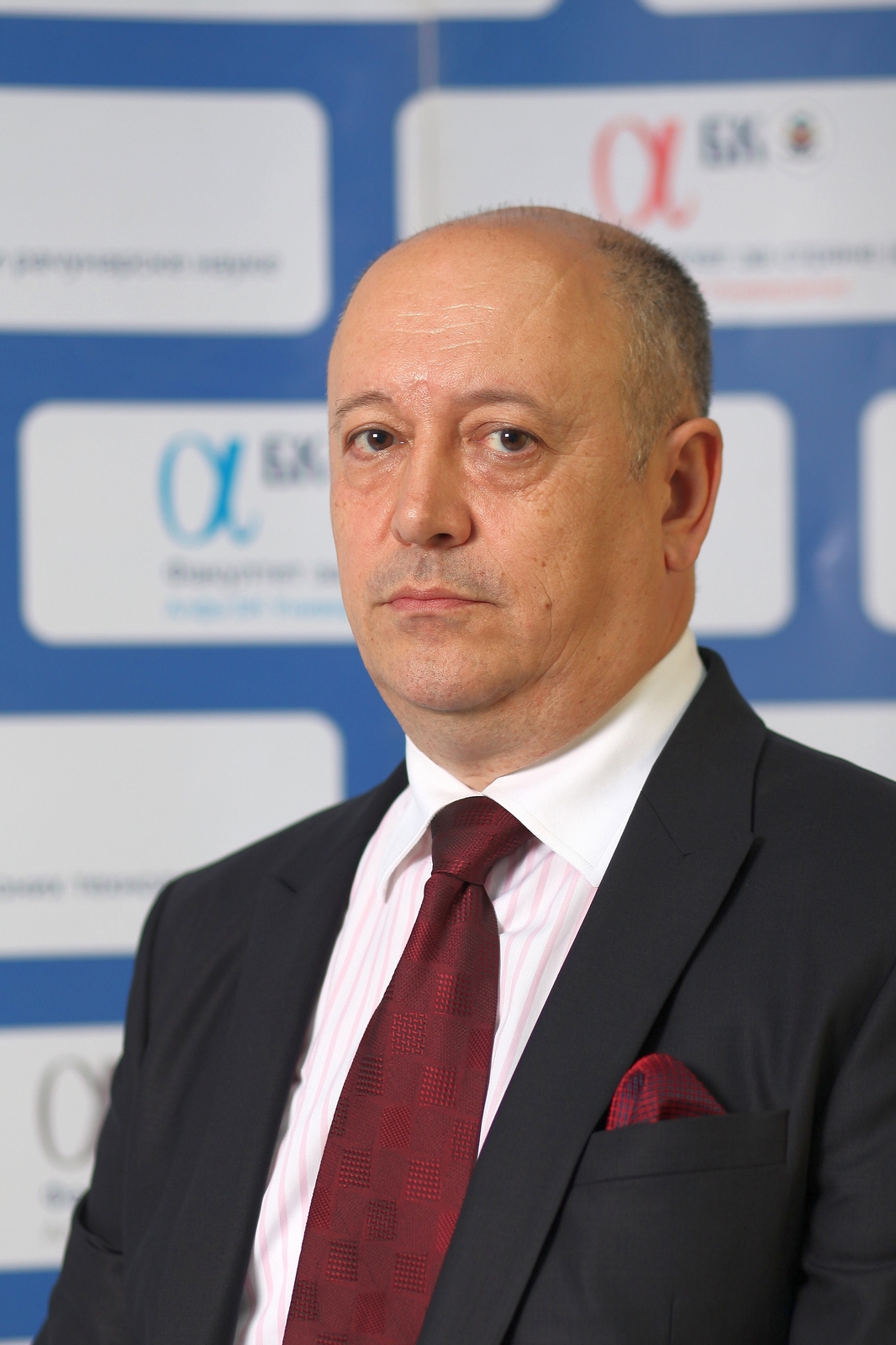
Dragan Živković is an Assistant Professor at Alfa BK University, affiliated with the Faculty of Finance, Banking and Auditing and other faculties including the Faculty of Sports Management and Faculty of Foreign Languages. His research focuses on cybersecurity in hospitality, sustainable tourism, circular economy applications, and strategic management during crises. He has published widely on topics such as post-pandemic tourism recovery, market positioning of Belgrade hotels, and the impact of foreign direct investments on economic growth. His academic work integrates interdisciplinary approaches, addressing challenges in tourism economics, nanotechnology applications in crisis management, and environmental sustainability. Notable contributions include analyzing cybersecurity vulnerabilities in the hotel industry and exploring the role of learning organizations in overcoming sectoral crises. Dragan’s articles highlight trends such as the need for resilient business models in hospitality, leveraging nanotechnology for strategic adaptation, and optimizing public finance management during pandemics. His research underscores the importance of innovation and sustainability in driving economic recovery and competitiveness.
Alan Fernihough is a Senior Lecturer in Economics at Queen's University Belfast's Queen's Business School. He specializes in economic history, particularly Irish economic history, demography, international trade, and applied econometrics. He holds a PhD from University College Dublin. Currently, he serves as Programme Director for the BSc Business Economics and BSc Economics and Accounting programs. His research explores topics such as the impact of railways in post-Famine Ireland, the retreat of the Irish language frontier, and the lessons from historical trade collapses. He has contributed to significant publications on Irish economic history and quantitative methods, including work on the Great Irish Famine and Protestantism's influence on human capital formation. His academic contributions bridge historical data analysis with contemporary policy implications.
Tao Lin is a Tenure-Track Assistant Professor and Principal Investigator of LINs Lab at Westlake University, School of Engineering. He leads cutting-edge research in deep learning optimization, generalization, and robustness, particularly in distributed and federated settings. Prior to this, he was a Ph.D. student at École Polytechnique Fédérale de Lausanne (EPFL), Switzerland, under the supervision of Prof. Martin Jaggi and Prof. Babak Falsafi. Doctor of Science, School of Computer and Communication Sciences, EPFL, Switzerland (2017–2022) Master of Science, School of Computer and Communication Sciences, EPFL, Switzerland (2014–2017) Bachelor of Engineering (with honors), College of Electrical Engineering, Zhejiang University, China (2010–2014) His research focuses on the intersection of optimization and generalization in deep learning, leveraging theoretical and empirical insights into loss landscapes and training dynamics to design efficient and robust learning and inference methods. This includes work on decentralized and federated learning under noisy, heterogeneous, and hardware-constrained environments. His work spans algorithmic innovation, theoretical analysis, and practical system integration. The recent publications from his lab demonstrate a strong trend in advancing federated learning, efficient inference for large language models, multimodal foundation models in pathology, and robust training under distribution shifts. Key themes include communication efficiency, model personalization, gradient tracking, and hardware-aware learning. His group has published at top venues including NeurIPS, ICML, ICLR, CVPR, and ECCV, with several papers receiving oral or spotlight presentations. ECCV Best Paper Candidate, 2024 Top 2% Scientists Worldwide 2024 (Stanford University) Doctoral Program Thesis Distinction Award, EPFL, 2022 Outstanding Performance Bonus, EPFL, 2021–2022 Top Reviewer: NeurIPS, ICML, AISTATS He advises multiple Ph.D. and master’s students, including Yongxin Guo, Futing Wang, Peng Sun, and Yuxuan Sun, whose work has been accepted at premier conferences. He has secured competitive grants as PI and participant, including the National Natural Science Foundation of China for Excellent Young Scientists Fund (Overseas) and the Science and Technology Innovation 2030 – Major Project. He also contributes to the community through service as an area chair (NeurIPS, ICML), reviewer for top journals and conferences, and organizer of workshops and academic events. His open-source contributions, such as Post-local SGD, have been integrated into PyTorch. Tao Lin teaches graduate courses such as Research Methodology of Computer Science and Technology and Deep Learning at Westlake University. He is actively involved in academic governance, serving on committees for student seminars, academic exchange, doctoral studies, and teaching leadership. The LINs Lab runs a regular research seminar on Deep Learning and Optimization, fostering a collaborative and dynamic research environment.
Barbara A. Anderson is the Ronald A. Freedman Collegiate Professor of Sociology and Population Studies at the University of Michigan, affiliated with the College of Literature, Science, and the Arts (LSA). She holds dual roles as Professor of Sociology and Research Professor in the Population Studies Center. Her affiliations include the Center for Russian, East European, & Eurasian Studies (CREES), African Studies Center, and the Weiser Center for Europe and Eurasia. Anderson earned her Ph.D. in Sociology from Princeton University in 1974. Her research focuses on the interplay between social, economic, and demographic changes, with a particular emphasis on the Soviet Union/post-Soviet states, China, and South Africa. Key areas include historical demography, ethnic identity dynamics, and environmental perceptions. She has conducted extensive studies on infant and child survival, adult mortality trends, and the growing African middle class in South Africa. Her work often leverages high-quality data to address critical demographic questions in sub-Saharan Africa. Anderson’s publications span over four decades, addressing topics such as fertility patterns in Russia, environmental health in South Africa, and the unintended consequences of policies on population dynamics. Her book World Population Dynamics: An Introduction to Demography provides a comparative and historical framework for understanding demographic shifts. Her research bridges methodological rigor with interdisciplinary insights, contributing to global debates on inequality, development, and policy.
Lynda Mugglestone is a Professor of the History of English at the University of Oxford and Tutorial Fellow at Pembroke College. She holds additional teaching roles at Trinity College, Oxford. Her research focuses on historical phonology, lexicography, and the works of Samuel Johnson, with recent projects involving Johnson’s lexicographical methods and the language of World War I. She has been awarded a Knowledge Exchange Fellowship (Johnson’s House, London) and a Houghton Library Fellowship (Harvard University). Mugglestone has curated exhibitions on Johnson’s dictionary garret and authored influential books like Lost for Words: The Hidden History of the Oxford English Dictionary . Her current work includes a new book on Samuel Johnson’s lexicographical practices. Research Interests: History of English language Lexicography and lexical history Samuel Johnson’s literary contributions Linguistic analysis of war terminology Awards & Grants: Knowledge Exchange Fellowship (2023–) Houghton Library Fellowship (2024–) Labs/Initiatives: Curating the Samuel Johnson Dictionary Garret exhibition at Johnson’s House, London (opening July 2024).
John Timberman Newcomb is a Professor in the Department of English at the University of Illinois, Urbana-Champaign, within the College of Liberal Arts & Sciences. His research focuses on American poetry, film and visual culture, theories of spatiality and urban modernity, and architecture. He holds a B.A. from Davidson College and M.A. and Ph.D. degrees from Duke University. Key research themes include the evolution of modern American poetry, the intersection of poetry with urban life and architectural spaces, and the historical crises facing literary forms in the modern era. His work interrogates how cultural shifts, technological advancements, and societal changes influenced poetic expression in the 20th century. His publications analyze foundational texts and figures, such as Wallace Stevens, Sylvia Plath, and T.S. Eliot, while addressing broader questions about literary canons, modernist aesthetics, and the role of poetry in mass culture. Recent works include *How Did Poetry Survive?* (2012) and *The City: Modern Poetics and Metropolitan Life* (2017), which explore poetry’s adaptation to modernity and urbanization. While no scientific awards are listed, Newcomb’s contributions to modernist literary studies are widely recognized through his extensive scholarly output and teaching. His work bridges literary analysis with interdisciplinary perspectives on visual culture and spatial theory. No advising or grant information is explicitly provided. His affiliation with the Department of English includes engagement with campus resources and collaborations within the College of Liberal Arts & Sciences, though specific teams or labs are not detailed in the text.