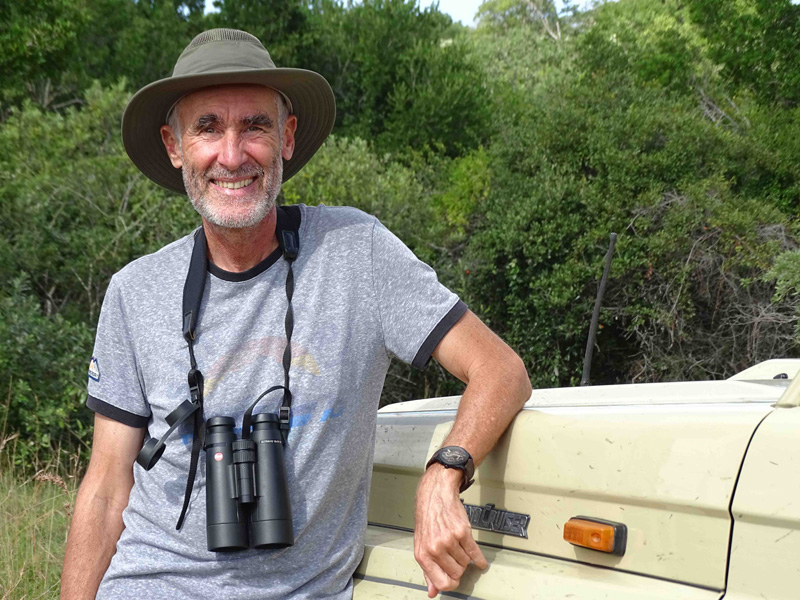
Nicolas Mathevon is a Professor at the University of Saint-Etienne and a Senior Member of the Institut universitaire de France (IUF). His research focuses on bioacoustics and animal communication, spanning from marine mammals to birds. He has held visiting positions at Hunter College (City University of New York) and the University of California, Berkeley. Education Habilitation à diriger les Recherches (2002, University of Saint-Etienne) PhD (1996, University of Lyon 1) Master's Degree (ranked 2nd, University of Lyon 1) Agrégation in Life and Earth Sciences (ranked 8th) Mathevon's research explores how animals use sound for social interactions, mate selection, and environmental adaptation. His work bridges bioacoustics, neuroethology, and behavioral ecology, with a focus on decoding vocal signals' complexity. His publications cover diverse topics including animal soundscapes, vocal memory in seals, and neural encoding of communication calls. The articles highlight interdisciplinary approaches combining neuroscience, behavioral studies, and acoustic signal analysis. Scientific Awards Prose Award for Excellence in Biological and Life Sciences, AAP (2024) Chevalier des Palmes Académiques (2017) IUF Senior Member (2015-present) IUF Junior Member (2005-2010) Mathevon has supervised 17 PhD students, 10 postdocs, and contributed to public outreach through media, documentaries, and public lectures. He leads the International Master of Bioacoustics program and serves as President of the International BioAcoustic Society.
Brenden Lake is an Associate Professor of Computer Science and Psychology at Princeton University, starting Fall 2025. Previously, he was an Associate Professor of Psychology and Data Science at New York University. He is the principal investigator of the lab for Human & Machine Intelligence, which moved from NYU to Princeton in 2025 and is jointly affiliated with the Department of Computer Science and the Department of Psychology. His lab is located in Princeton's Peretsman Scully Hall, rooms 117, 120, and 121. Ph.D., Massachusetts Institute of Technology, 2014 Lake's research focuses on the intersection of human and machine intelligence, specifically examining human cognitive abilities that elude current AI systems. His work centers on few-shot learning of new concepts, learning by generating new goals, learning by asking questions, and learning by producing novel combinations of known components. He employs modern neural network modeling approaches including meta-learning, fine-tuning LLMs, neuro-symbolic modeling, and learning from child headcam videos. His research aims to advance both psychology and computer science by exploring what makes human intelligence unique and using those insights to develop more powerful AI systems. Lake's recent publications demonstrate significant trends in grounded language acquisition through child perspectives, systematic generalization in neural networks, and the intersection of developmental psychology with AI. His work has appeared in top-tier venues including Science (2024) and Nature (2023), with multiple publications exploring how insights from human cognition can improve machine learning systems. His research shows how incorporating human cognitive ingredients can make AI systems more powerful and human-like while addressing longstanding debates about neural network capabilities. Science publication (2024) on Grounded language acquisition through the eyes and ears of a single child Nature publication (2023) on Human-like systematic generalization through a meta-learning neural network Multiple publications covered by major media outlets including New York Times and Washington Post Lake advises Ph.D. students in computer science, psychology, and related fields through his lab. His research is supported by publications in top venues across computer science and cognitive science. He teaches courses including Computational Cognitive Modeling and Advancing AI through Cognitive Science, bridging the theoretical and practical aspects of his research. Lake leads the lab for Human & Machine Intelligence, which studies the ingredients of intelligence in humans and machines. The lab investigates human cognitive abilities that current AI systems cannot replicate, with the dual goal of advancing psychological understanding of human intelligence while developing more capable artificial intelligence systems. Current research focuses on few-shot concept learning, learning through goal generation, and learning by asking questions.
Natalie H. Brito is an Associate Professor of Applied Psychology at New York University (NYU), affiliated with the Steinhardt School of Culture, Education, and Human Development. Her research focuses on how early social and cultural contexts shape neurocognitive development in infants and toddlers, particularly in areas of attention, memory, and socio-emotional skills. Prior to NYU, she completed a postdoctoral fellowship at Columbia University Medical Center and was a Robert Wood Johnson Health and Society Scholar. Dr. Brito’s work bridges developmental psychology, neuroscience, and public policy, emphasizing the need for equitable environments that support healthy child development. She has received prestigious awards such as the APS Rising Star Award and NIH grants, reflecting her impactful contributions to understanding developmental trajectories. Her research also extends to policy implications, such as the effects of paid maternal leave on infant brain function and the role of structural inequities in maternal mental health. Key themes include early life stress, gut microbiome influences, and the neurobiological underpinnings of cognitive development. Dr. Brito has published extensively in journals like Child Development , Developmental Cognitive Neuroscience , and JAMA Psychiatry , with a focus on innovative methodologies (e.g., the OWLET gaze-tracking tool). She teaches courses on developmental psychology and the principles of applied psychology, fostering interdisciplinary approaches to human development. Her scientific accolades include recognition from the International Society of Developmental Psychobiology and the American Psychological Association, underscoring her leadership in advancing developmental science and equity-focused research.
Kristin Bernard, Ph.D. (University of Delaware, 2013), is an Associate Professor of Clinical Psychology at Stony Brook University’s Department of Psychology. Her research focuses on the neurobiological consequences of early adversity, parent-child relationships, and the efficacy of early parenting interventions such as Attachment and Biobehavioral Catch-up (ABC). She collaborates with Power of Two, a NYC-based nonprofit, and leads the Developmental Stress and Prevention Lab. Current grants include studies on epigenomics, maternal attachment representation, and community-based ABC interventions. Dr. Bernard’s work bridges clinical and developmental psychology, emphasizing prevention science and translational research. Education: Ph.D. in Clinical Psychology, University of Delaware, 2013. Research Interests: Child maltreatment, neurobiological impacts of early adversity, parenting interventions, psychobiology of attachment, and intervention efficacy. Her lab investigates mechanisms linking caregiving quality to child outcomes, including cortisol regulation, brain development, and behavioral compliance. Lab & Partnerships: Directs the Developmental Stress and Prevention Lab, focusing on high-risk populations. Collaborations include Power of Two for ABC implementation and NYC agencies like the Administration for Children’s Services. Current projects explore neighborhood influences on parenting (Geography of Parenting Study) and neural correlates of parenting behavior (SNAP study). Grants & Funding: Principal Investigator on NIH-funded projects (R03 HD099372, R01 MH119310) and co-PI on Stony Brook’s seed grants. Projects examine accelerated aging biomarkers and intervention effectiveness in community settings. Publications: Over 50 peer-reviewed articles and a co-authored book on ABC interventions. High-impact journals include Psychoneuroendocrinology , Development and Psychopathology , and Child Development .
Univ-Prof. Dr. med. Malek Bajbouj serves as Director of the Institute for Affective Neuroscience and Emotion Modulation at Charité – University Medicine Berlin's Campus Benjamin Franklin (CBF), operating within the Department of Neurology, Neurosurgery and Psychiatry (CC 15). His position integrates clinical leadership with translational neuroscience research focused on severe mental illnesses. Dr. Bajbouj's research program centers on affective neuroscience and emotion dysregulation mechanisms in psychiatric disorders, particularly schizophrenia spectrum conditions and depression. He pioneers multimodal intervention approaches combining neuromodulation (tDCS), oxytocin augmentation, mindfulness therapies, and digital health tools. His work emphasizes translational biomarker development using neuroimaging, machine learning, and physiological stress parameter analysis to personalize treatment for treatment-resistant populations. Analysis of his 2023-2025 publications reveals three dominant research trajectories: (1) novel treatment combinations for negative symptoms in schizophrenia (oxytocin + mindfulness, yoga therapy); (2) real-world implementation of neuromodulation (at-home tDCS protocols, technical efficacy monitoring); and (3) global mental health responses to crises (pandemic impacts on vulnerable groups, culturally adapted refugee interventions). His methodology consistently employs rigorous randomized controlled trials with embedded biomarker studies. As director of his eponymous institute, Dr. Bajbouj leads a multidisciplinary team conducting neuroimaging studies, clinical trials, and international collaborations focused on emotion modulation pathways. The institute coordinates research across CC 15's clinical infrastructure at CBF Building V, with particular emphasis on bridging laboratory neuroscience with clinical psychiatry through the DepressionDC and OXYMIND trial frameworks.
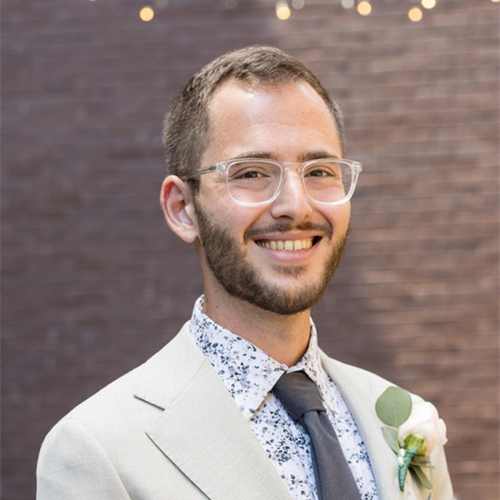
Eli Ben-Michael is an Assistant Professor jointly appointed in the Heinz College of Information Systems and Public Policy and the Department of Statistics & Data Science at Carnegie Mellon University. He is affiliated with the CMU-NIST AI Measurement Science & Engineering Cooperative Research Center (AIMSEC), contributing to cutting-edge research at the intersection of statistics, policy analysis, and artificial intelligence. His educational background includes a PhD in Statistics from U.C. Berkeley and undergraduate studies at Columbia University where he earned a dual degree in Computer Science and Statistics. Prior to his current position, he completed a postdoctoral fellowship at Harvard University's Institute for Quantitative Social Science and Department of Statistics. Ben-Michael's research focuses on developing innovative statistical and computational methods for causal inference and policy evaluation, with particular emphasis on integrating machine learning techniques to address complex problems in public policy and social science. His work bridges theoretical statistics with practical applications in healthcare, criminal justice, education, and social policy. Current research directions include safe policy learning, sensitivity analysis for clustered data, and methodological innovations for the synthetic control method. His publication record shows a strong trajectory in top-tier journals including Journal of the American Statistical Association, Journal of the Royal Statistical Society, and Proceedings of ICML. Recent work demonstrates increasing focus on policy-relevant applications including abortion legislation impacts, pre-trial risk assessment, and healthcare disparities, while maintaining methodological rigor in causal inference frameworks. Ben-Michael has developed open-source software tools including augsynth and multical R packages, which implement his methodological contributions for synthetic controls and multilevel calibration weighting. These packages have been adopted by researchers in multiple disciplines for causal inference applications.
Georgia Zellou is an Associate Professor in the Department of Linguistics at the University of California, Davis, where she co-directs the Phonetics Lab and conducts award-winning research at the intersection of phonetics, speech perception, and human-AI interaction. Her work investigates how phonetic detail is cognitively represented through variations in speech production, with significant contributions to understanding speech alignment with voice assistants, face-masked speech intelligibility, and cross-linguistic perception of synthetic voices. Her academic credentials include a Ph.D. in Linguistics from the University of Colorado at Boulder (2012), an M.A. in Linguistics from Stony Brook University (2007), and a B.A. in Linguistics & Anthropology from the University of Florida (2005, Cum Laude, Phi Beta Kappa). Ph.D., Linguistics, University of Colorado at Boulder (2012) M.A., Linguistics, Stony Brook University (2007) B.A., Linguistics & Anthropology, University of Florida (2005) Professor Zellou's research program centers on laboratory phonology approaches to real-world communication challenges, examining how acoustic-phonetic details influence speech perception across contexts. Her studies span speech alignment with voice-AI systems (e.g., Amazon Alexa), sociophonetic variation in bilingual speech, and the cognitive mechanisms underlying perceptual compensation for coarticulation. She employs experimental methods including eye-tracking, acoustic analysis, and perceptual testing to uncover how phonetic variation functions pragmatically in human communication and human-machine interaction. Analysis of her 15 most recent publications (2023-2025) reveals three dominant research trajectories: (1) human-AI voice interaction dynamics, including prosodic alignment and social evaluation of TTS voices; (2) intelligibility optimization in challenging contexts (face masks, clear speech for diverse listeners); and (3) cross-linguistic phonetic variation in vowelless words and consonant clusters. These works consistently bridge theoretical phonology with applied speech technology, demonstrating how fine-grained phonetic detail influences communication effectiveness in both human-human and human-machine contexts. Her scientific recognition includes: Fulbright Scholar (2022) for research in France Chancellor’s Award for Excellence in Undergraduate Mentoring (2019) Fellow of the Linguistic Society of America (2020) Amazon Faculty Research Award (2019) for Alexa-related speech studies Dean’s Fellow designation at UC Davis (2020-2023) Professor Zellou maintains an active mentoring practice recognized with the Chancellor’s Award, supervising undergraduate researchers in the Phonetics Lab while teaching core linguistics courses from introductory to advanced graduate levels. Her research program is supported by competitive grants including NSF funding, Amazon Research Awards, and UC Davis internal grants (Hellman Foundation, ISS Junior Faculty Grant), reflecting the translational value of her work for speech technology development. She has co-directed major initiatives including the 2019 LSA Linguistic Institute. The Phonetics Lab she co-leads serves as a hub for experimental phonetics research, focusing on speech production-perception relationships through projects investigating vocal accommodation to voice assistants, nasal coarticulation dynamics, and cross-linguistic prosody. Current collaborations with industry partners aim to implement human speech adaptation principles into voice assistant design to enhance naturalness and engagement.
Dr. Naseem Choudhury is a Professor of Psychology and Neuroscience at Ramapo College of New Jersey, affiliated with the School of Social Science and Human Services (SSHS). She holds a Ph.D. in Experimental Psychology from the University of Vermont. Her research focuses on the neural basis of infant information processing, particularly how perceptual abilities influence typical and atypical development, with an emphasis on familial and sociocultural factors. Her work spans auditory processing in infants at risk for developmental language disorders, electrophysiological studies in children with autism, and cross-cultural analyses of artistic perception. She directs the Palestroni Integrated Neuroscience Lab, exploring neural mechanisms underlying cognitive development. Dr. Choudhury has published extensively in journals like Journal of Neuroscience and Developmental Cognitive Neuroscience , with over 50 peer-reviewed articles since 2002. Her studies often involve ERP and EEG methodologies to track developmental milestones and intervention efficacy in high-risk populations. Her research demonstrates that early auditory experiences shape prelinguistic acoustic mapping and that neuroplasticity interventions improve outcomes for language-impaired children. She collaborates internationally on projects linking sensory perception to linguistic outcomes, particularly in Italian and bilingual populations. Dr. Choudhury’s contributions bridge basic neuroscience and clinical applications, emphasizing early screening and preventive strategies for developmental disorders.
Teemu Roos is a Professor at the Department of Computer Science , University of Helsinki , and a Principal Investigator for the Complex Systems Computation Group under the Helsinki Institute for Information Technology. He serves as a Supervisor for the Doctoral Programme in Computer Science and leads multiple research initiatives, including Distributed AI in Supercomputing , AI & Kids , and Generation AI . Dr. Roos also holds a Docent title in Computer Science. His research spans Artificial Intelligence , Machine Learning , and Data Science , with a focus on AI education , graph neural networks , Bayesian modeling , and health informatics . He has pioneered tools like Elements of AI , a free online course now translated into 22 EU languages, and explores the ethical implications of AI-generated content in authorship and inventorship. The 15 most recent publications highlight applications in environmental forecasting (e.g., Mediterranean Sea via graph-based deep learning), healthcare (e.g., skin cancer detection with transfer learning), and social media analysis (e.g., explainable AI platforms for K-12 education). Methodologically, his work advances clustering algorithms , dimensionality reduction , and approximate nearest neighbor search . Scientific Awards: Cor Baayen Award (2009) Nokia Foundation Recognition Award (2019) Best Paper Honorable Mention Award (2013) ICT Influencer of the Year 2019 (Vuoden TiVi-vaikuttaja 2019) World Summit AI's Top-50 Innovators in 2020 Dr. Roos has supervised 2 doctoral students and contributed to 163 academic activities , including invited talks at MIT, University of Cambridge, and the Finnish Institute in Rome. He has secured funding from the Academy of Finland and the Strategic Research Council, focusing on projects like Fast AI-assisted Space Environment Prediction and Urban Exerciser .
Nathaniel D. Daw serves as the Huo Professor in Computational and Theoretical Neuroscience and Professor of Neuroscience and Psychology at Princeton University, based at the Princeton Neuroscience Institute. His research integrates computational modeling with experimental neuroscience to investigate fundamental mechanisms of learning and decision-making. Daw's research focuses on computational and theoretical neuroscience, specializing in reinforcement learning, memory systems, and decision-making processes. He examines how neural circuits represent value, update beliefs through experience, and balance model-based versus model-free control strategies. His work frequently bridges theoretical frameworks with behavioral and neural data to explain phenomena ranging from habitual behavior to flexible cognitive control. Analysis of his 2025 publications reveals dominant themes in neural replay mechanisms, individual differences in learning trajectories, and clinical applications to eating disorders. His work increasingly incorporates large language models for psychological assessment while maintaining core focus on interpretable cognitive architectures and hierarchical planning. Daw maintains active research operations through the Princeton Neuroscience Institute, an interdisciplinary hub fostering collaboration between computational modelers, neuroscientists, and psychologists to advance understanding of neural mechanisms underlying cognition.
Peter Gordon is an Associate Professor of Neuroscience and Education and Cognitive Science in Education at Teachers College, Columbia University. He directs the Language and Cognitive Neuroscience Lab and holds affiliations with Biobehavioral Sciences, Human Development, and other departments. His research focuses on language acquisition, developmental neuroscience, cross-cultural numerical cognition, and MRI-based studies of language processing. Dr. Gordon earned a B.A. (Hons) in Psychology from the University of Stirling (Scotland) and a Ph.D. in Psychology from MIT. His fieldwork includes extensive studies with the Piraha in Amazonia, Brazil, and the Kadiweu in Mato Grosso do Sul, Brazil. His research interests span infant event representations, behavioral genetics of language, and the interplay between language structure and cognitive development. Notable contributions include work on anumeric cultures and the linguistic relativity hypothesis. Publications highlight cross-cultural studies, morphological processing, and cognitive neuroscience of language. He has conducted influential research on numerical cognition in Amazonian cultures and the genetic influences on language acquisition. Contact: pg328@tc.columbia.edu | Office: 1152 Building 528 | Lab: [Link Provided].
Roman Feiman is the Thomas J. and Alice M. Tisch Assistant Professor of Cognitive, Linguistic, and Psychological Sciences and an Assistant Professor of Linguistics at Brown University. He directs the Brown Language and Thought Lab, focusing on how humans combine words into meaningful sentences and develop logical reasoning abilities. His research integrates methods from cognitive developmental psychology, psycholinguistics, and formal semantics. Feiman holds a PhD in Psychology from Harvard University (2015), followed by postdoctoral training at Harvard and UC San Diego. His work explores the cognitive systems underlying language and thought, including negation comprehension, quantifier scope, and the development of exact equality concepts. He teaches courses such as Language Processing in Humans and Machines and Logic in Language and Thought . His research interests span cognitive development, linguistic pragmatics, and the language of thought hypothesis. Notable findings include studies on children’s understanding of negation and how logical principles shape early language acquisition. Feiman has been recognized with the 2023 Henry Merritt Wriston Fellowship. His lab investigates topics like word referencing, semantic development, and the interplay between language and nonverbal reasoning. Recent work examines how neural networks might model human cognitive processes, bridging AI and psychological theory.
Jonathan Santo is a Professor of Psychology at the University of Nebraska at Omaha (UNO), where he serves as Director of the Graduate Developmental Psychology Program and as a faculty member in the Office of Latino/Latin-American Studies. His research explores peer relations, cultural differences in self-esteem, and classroom-level influences on child and adolescent development, with a focus on improving school environments and fostering positive social interactions. ORCA Faculty Fellow His research spans broad areas including Developmental Psychology , Social Support Systems , and Cross-Cultural Peer Dynamics , with specific attention to peer victimization , self-continuity , school climate , and developmental trajectories in Brazilian and Colombian youth . Recent publications analyze topics like hikikomori experiences , friendship security , and HPA axis dysregulation in adolescents. Scientific awards include the ORCA Faculty Fellow recognition. His work often involves longitudinal assessments of peer relationships cross-cultural comparisons (Brazil, Colombia, China, Nigeria, Singapore, U.S.) policy-focused blog posts on family separations and school interventions
Glenn Roisman is a Professor at the Institute of Child Development , University of Minnesota. He holds the Distinguished McKnight University Professor and Robert Holmes Beck Chair of Ideas in Education titles, reflecting his scholarly influence and teaching excellence. Education: PhD (2002), University of Minnesota Roisman’s research examines how early relationship experiences shape lifespan psychological, interpersonal, physical, and cognitive health . His work integrates longitudinal data from birth to adulthood, focusing on normative and atypical caregiving environments. Recent publications analyze the predictive validity of attachment assessments (Strange Situation, Adult Attachment Interview), genetic/environmental contributions to attachment styles, and pathways from early adversity to cardiometabolic health. His projects leverage data from the NICHD Study of Early Child Care and Youth Development , Minnesota Longitudinal Study , and Minnesota Twin Registry . Scientific Awards : Distinguished McKnight University Professor Robert Holmes Beck Chair of Ideas in Education Roisman’s collaborations with institutions like Pennsylvania State University and grants from NHLBI , NICHD , and NIA underscore his leadership in developmental science. He is open to advising new PhD students in 2026, emphasizing multi-method and multi-informant research approaches.
Michael C. Frank is the Benjamin Scott Crocker Professor of Human Biology at Stanford University and Director of the Symbolic Systems Program. He leads the Stanford Language and Cognition Lab and has pioneered large-scale collaborative projects including Wordbank (open vocabulary data), MetaLab (developmental meta-analyses), ManyBabies (replication network), childes-db (language transcripts), and Peekbank (eye-tracking repository). His research examines children's language learning and its interaction with social cognition, utilizing computational modeling, large datasets, and open science frameworks. Key interests include: Mechanisms of early language acquisition Pragmatic inference in social contexts Cross-cultural variability in cognitive development Data-driven approaches to developmental science Reproducibility and meta-scientific innovation Recent publications (2022-2025) demonstrate strong emphases on: 1) Novel methods for measuring language environments and cognitive abilities, 2) Computational models of learning and perception, 3) Cross-cultural investigations of social cognition, and 4) Infrastructure for open developmental science. The majority employ multimodal data, meta-analytic techniques, and large-scale collaborations. He teaches courses including Experimental Methods, Developmental Psychology, and interdisciplinary seminars on language, cognition, and computation. His lab maintains active research teams across multiple continents through initiatives like ManyBabies and LEVANTE.