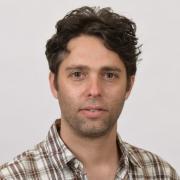
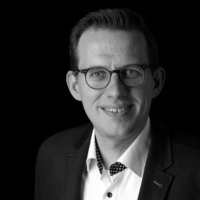
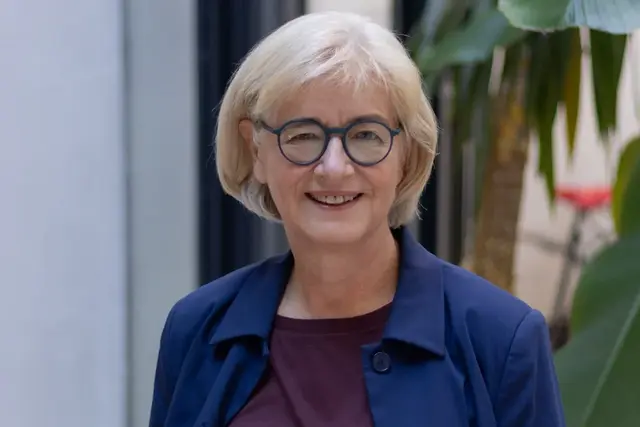
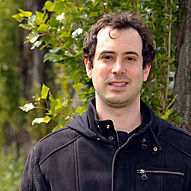
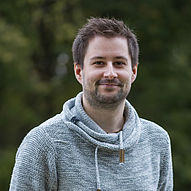
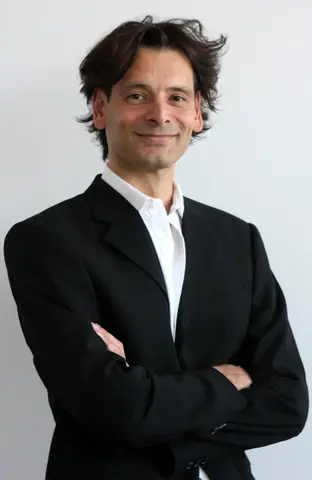
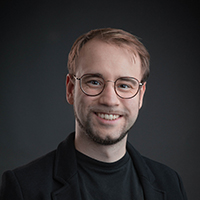
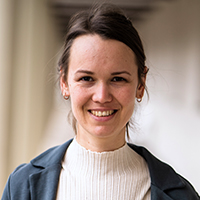
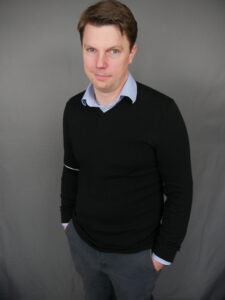
Prof. Noam Koenigstein is a Professor in the Department of Industrial Engineering at Tel Aviv University's Iby and Aladar Fleischman Faculty of Engineering. His research focuses on developing scalable machine learning solutions for real-world recommendation systems, with extensive industry collaborations including Microsoft (Xbox) and Yahoo! Music. His primary research interests include recommender systems, collaborative filtering, and neural approaches to user modeling. He pioneered neural item embedding techniques like Item2Vec and advanced Bayesian methods for diversity-aware recommendations using Determinantal Point Processes. His work consistently bridges theoretical machine learning with industrial-scale deployment challenges. Analysis of his publication record reveals a strong evolution from traditional matrix factorization toward deep learning and attention-based architectures, always emphasizing practical scalability and addressing cold-start problems. His research demonstrates exceptional continuity in solving core recommendation challenges across domains including e-commerce, music, and video services. Scientific recognition includes: Best paper runner up award at TVX 2014 for group viewing pattern analysis Prof. Koenigstein has led multiple industry-academia partnerships that produced deployable recommendation frameworks, notably for Xbox Movies and Windows Store. His invited RecSys 2017 talk highlighted critical gaps between academic research and industrial requirements in recommender systems, establishing him as a leading voice in practical recommendation science.
Dr. Yvonne Drosihn currently serves as a Research Assistant at the Department of Slavic Studies, Faculty of Philosophy II, Martin Luther University Halle-Wittenberg. She earned her doctorate in 2016 with a dissertation on 'Literary Images of Russia,' focusing on self-images and other-images in Russian and Russia-related literature during the transformation period. 1996-2004: Studied Russian and German Literature at Martin Luther University Halle-Wittenberg 2001-2004: Additional Certificate in German as a Foreign Language at Martin Luther University Halle-Wittenberg 2001-2002: Semester abroad at Voronezh State University Her research concentrates on contemporary Russian and Polish literature, East-West discourses, comparative imagology, and transgenerational transmission mechanisms. Key themes include postmemory studies, deconstruction of cultural stereotypes, and comparative analysis of trauma narratives across Eastern European contexts. She co-edited two significant publications: Close Reading - Distant Reading (2021), analyzing methodological tensions in Slavic literary studies Trauma – Generations – Narratives (2020), exploring transgenerational trauma in Eastern, Central, and Southeastern European literature Scientific recognition includes a doctoral scholarship from the Graduate Fund of Saxony-Anhalt (2006-2012). Her teaching areas span literary studies with particular focus on Russian and Polish literature from the early 20th century to the present. She contributes to the Interdisciplinary Research Group Empathy-Tabu-Translation since 2017, focusing on cultural and emotional transmission mechanisms in literature.
Prof. Dr. Romana Weiershausen is a full-time Professor of Francophone German Studies at the Faculty of Humanities, University of Saarland. She has held this position since 2014 and serves as director of the university's France Center. Her affiliations include the Cluster for European Research (CEUS) since 2021, Collegium since 2022, and memberships in CIERA, LOGOS graduate college, CEGIL (Lorraine), and the University of Bremen's Postcolonial Studies Institute. Her research focuses on 18th-century German theater and political drama Intercultural contemporary literature Gender and migration studies Cultural transfer between France/Germany Theater as negotiation space for exile Media-specific literary analysis . She has led collaborative projects like CIERA's "Urgences & frontières" (2023-2025) and contributed to cross-border graduate education. Her publications include monographs on Enlightenment theater, co-edited volumes on migration narratives, and analyses of Lou Andreas-Salomé's works. She has lectured internationally in Ukraine and Russia, and her methodological innovations incorporate digital humanities. Current projects examine European cultural co-presences and transnational theater practices.
Ludger Hiepel is an Academic Councillor at the Institute for Biblical Exegesis and Theology , University of Münster , focusing on Old Testament studies with a specialization in Digital Humanities and Ancient Near Eastern Philology . He has taught courses on topics like Antisemitism in History and Present and AI in Theology , and co-edited volumes on subjects including Wüste als locus theologicus and Jewish Life in Münster . Education: Diplom-Theologe (2012), MA in Ancient Eastern Mediterranean Cultures (2014), Dr. phil. in Ancient Near Eastern Philology (2018) Research Interests combine Biblical Exegesis with Digital Humanities , Jewish-Christian Dialogue , and Antisemitism Studies . His recent publications explore AI's theological implications , institutional history of Assyriology , and reception history of the Old Testament . He collaborates on projects like the Digital Documentation of Münster's Jewish Cemetery and the CRS (Center for Religious Studies) . Academic Leadership includes roles in the Faculty Council , Diversity Commission , and Lehrbeirat des Rektorats . He co-founded bildtheologie.de and participates in initiatives like the Digital Humanities Center and Münster School of Ancient Cultures .
Prof. Dr. Friederike Herrmann is Professor of Journalism and Communication Studies at the Catholic University of Eichstätt-Ingolstadt since November 2012. Previously, she served as Professor of Media Studies at Darmstadt University of Applied Sciences (2006-2012) and worked as a research assistant at Eberhard Karls University of Tübingen (1994-2006), where she also earned her doctorate. She is an active member of the German Communication Association (DGPuK) and has held leadership roles including spokesperson for Journalism at KU and former spokesperson for Media Language-Media Discourses in DGPuK (2013-2018). Her educational background includes studies in history, literature, and European ethnology at the University of Hamburg. Before her academic career, Herrmann worked as an editor for the national weekly newspaper Deutsches Allgemeines Sonntagsblatt in Hamburg and completed internships there. She maintains strong connections to journalistic practice through freelance writing for major media outlets including Die Zeit, Süddeutsche Zeitung, taz, and radio stations NDR and SWR. Herrmann's research focuses on framing analysis, narrative structures in journalism, and the intersection of media with social issues. Her work examines how latent framing shapes media discourse on gender, migration, and political extremism. She has developed the concept of 'szenisches Verstehen' (scene-based understanding) for analyzing implicit messages in journalistic texts. Recent research investigates media coverage during the pandemic, particularly regarding sexuality and diversity. Her publications demonstrate a consistent focus on how media narratives construct social realities, with particular attention to refugee discourse (2015-2016), climate communication (Greta Thunberg framing), and the influence of populism on mainstream media. Her methodological approach combines hermeneutic concepts with reception research, emphasizing the science-practice transfer between academic theory and journalistic application. Herrmann serves on prestigious juries including the German Radio Prize (2018) and previously served on the jury for the Prize for Technical Journalism (2011-2014). She regularly conducts workshops for major media organizations including Südwestdeutscher Rundfunk and Schweizer Rundfunk on topics like stereotypes, diversity, and latent framing. As an educator, Herrmann chairs the board of examiners for the BA Journalism program at KU and has organized significant academic conferences including 'Journalismus auf Augenhöhe' (2017). Her teaching covers journalism research, text and language in journalism (narrativity, writing processes), and media's role in society regarding gender, diversity, and political extremism.
Stefan Engelberg is a Professor of German Linguistics at the University of Mannheim and Honorary Professor of Lexicography at the University of Tübingen. He serves as Head of the Lexicon Department and Head of the Program Area "Lexical Syntagmatics" at the Leibniz Institute for the German Language (IDS), with responsibilities in human resources management and research planning . His affiliations include membership in the Management Board and Extended Management Board of IDS, editorial roles in "Studies on the German Language" and "Colonial and Postcolonial Linguistics" book series, and leadership in projects like the International Association for Colonial and Postcolonial Linguistics .
Dr. Thomas Petraschka is a non-tenured assistant professor at the University of Regensburg's Institute of German Studies since 2022, with a guest professorship at Saarland University (2023-2024). His research bridges literary theory, aesthetics, and cultural history of empathy (Einfühlung) across 19th-21st century literature. Education: M.A. in German Philology/Philosophy (2008), Ph.D. (2013) on Principle of Charity in Literary Hermeneutics, Habilitation (2021) on Empathy's Cultural History Research Focus: Explores empathy's role in understanding texts and persons, literary responses to WWI, and intersections between aesthetics, philosophy, and methodology. Leads DFG network "Fühlen und Verstehen" (2018-2022) and co-edits THEOREMA book series. Publications Trends: Recent works analyze interwar cultural theories, empathy in modern drama, and WWI memory discourses. Collaborates extensively in edited volumes like Empathy's Role in Understanding Persons (Routledge 2024) and Mehrdeutigkeit als Literarisches Thema (transcript 2023). Scientific Awards: Oskar-Seidlin-Preis der Eichendorff-Gesellschaft (2008) Distinguished Visiting Max Kade Professorship (2013, declined) Academic Leadership: Co-organizes the "Forum Literaturtheorie" platform, facilitates international conferences, and contributes to editorial boards. Teaches graduate courses on literary theory, modern drama, and WWI literature.
Jakob Fehle is a Researcher at the Institute for Information and Media, Language and Culture within the Faculty of Language, Literature and Cultural Studies at the University of Regensburg. Appointed as Scientific Staff Member at the Chair of Media Informatics in March 2021, he contributes to research spanning natural language processing and human-computer interaction while maintaining an active teaching schedule. His academic credentials include: Master of Science (M.Sc.) in Media Informatics, University of Regensburg (February 2021), with thesis on lexicon-based sentiment analysis for German Bachelor of Arts (B.A.) in Media Informatics, University of Regensburg (February 2019) Fehle's research centers on Natural Language Processing with specialized expertise in Text Mining and Sentiment Analysis for German-language content. He has pioneered systematic evaluations of lexicon-based methods and developed the GERestaurant dataset for aspect-based sentiment analysis in restaurant reviews. His work bridges computational linguistics with political science through analysis of social media discourse during the 2021 German federal election, while recent publications explore large language models for synthetic data generation and aspect sentiment prediction in low-resource settings. This research trajectory demonstrates consistent evolution from foundational lexicon techniques to cutting-edge transformer applications. Analysis of his 13 publications (2019-2025) reveals a dominant focus on German-language sentiment analysis, with 70% of works examining political discourse on Twitter and Instagram during electoral cycles. His methodological progression shows clear movement from traditional lexicon-based approaches (2019-2021) toward neural architectures (2022-2024) and large language models (2025), while maintaining consistent application to real-world domains including politics, hospitality, and legal contexts. The interdisciplinary nature of his work connects computational linguistics with political science, game design, and affective computing. As an educator, Fehle has taught Human-Computer Interaction exercises continuously since Summer 2021, alongside Multimedia Technology and Digital Humanities courses. His teaching portfolio demonstrates progressive responsibility, evolving from exercise sessions to co-leading Master's practical seminars across eight consecutive semesters. He maintains office hours by appointment in Building PT, Room 3.0.30 at the University of Regensburg. Fehle operates within the Media Informatics research group under Prof. Dr. Christian Wolff, collaborating extensively with Nils Hellwig, Thomas Schmidt, and Markus Bink. His work integrates with broader projects analyzing social media during German elections and developing adaptive systems for gaming and virtual reality environments.
Prof. Dr. Susanne Knaeble is the Chair of Old German Literature at the University of Regensburg since April 2025, succeeding Prof. Dr. Edith Feistner. Previously, she held various academic positions including acting professorships at multiple German universities and served as Privatdozentin at the University of Bayreuth since September 2020. She has established herself as a leading scholar in medieval German literature with a particular focus on narrative structures and historical concepts of time. Her academic background includes: Completed habilitation at University of Bayreuth in 2016 (Venia Legendi for Old German Philology) Doctorate (Dr. phil.) from University of Bayreuth (2009), summa cum laude, with dissertation on 'Courtly Narratives of God: Function and Narrative Development of the Religious in Wolfram's Parzival' (awarded Bayreuth Doctoral Prize) Master's degree (Magistra Artium) from University of Bayreuth (2006), majoring in Early German Philology Prof. Knaeble's research focuses on historical narratology, particularly examining conceptions of the future in early German-language prose novels, religious narratives in medieval literature, gender studies in medieval contexts, and translation cultures of the early modern period. Her work combines literary theory with cultural studies, often exploring how medieval and early modern texts construct gender, power, and temporal concepts. She has made significant contributions to the understanding of works like Wolfram's Parzival, Melusine legends, and the Duke Ernst romance, with particular attention to narrative structures, religious motifs, and gender representations. Her interdisciplinary approach bridges literary studies with gender theory, cultural history, and translation studies. Her recent publications demonstrate a growing interest in intersectional approaches to literary studies, translation theory, and the application of contemporary theoretical frameworks to medieval texts. The articles show a consistent focus on narrative strategies, particularly how medieval literature constructs concepts of time, gender, and cultural identity. Her work often bridges the gap between medieval studies and contemporary theoretical concerns, making historical texts relevant to current scholarly debates. She has increasingly incorporated digital humanities approaches into her research while maintaining rigorous textual analysis. Her notable awards include: Bayreuth Doctoral Prize (2010) Lifelong support from the Alexander von Humboldt Foundation (Humboldtianerin) Prof. Knaeble has secured significant research funding, including a DFG project on 'Conceptions of the Future in Early German-Language Prose Novels' (2014-2016) and a Feodor Lynen Research Fellowship for her work at Stanford University. She has supervised numerous doctoral students and has been actively involved in academic service, including serving on faculty councils and organizing academic conferences. Her teaching focuses on Old German literature, with particular expertise in medieval narrative structures and religious motifs. She has developed innovative teaching methods that incorporate digital tools while maintaining traditional philological approaches. She is associated with the Collaborative Research Center SPP 2130 'Translation Cultures of the Early Modern Period' and has contributed to several interdisciplinary research initiatives focusing on medieval and early modern German literature. Her current research explores the intersection of literary narrative, gender representation, and temporal concepts in early German prose, with a particular emphasis on how these texts construct future possibilities and cultural identities.
Gordian Haas is a Research Assistant in the Department of Philosophy at the University of Erfurt , focusing on formal epistemology and philosophy of science. His work bridges logical empiricism with social choice theory, emphasizing rational belief revision and knowledge dynamics.
Felix Pöppel serves as a Research Associate at the Junior Professorship for Medieval Comparative Literature within the Faculty of Philosophy at the University of Würzburg, Germany, a position held since April 2024 under Prof. Dr. Carlotta Posth. His academic background includes: Bachelor's degree in German Studies and Musicology (October 2017–June 2021) from the University of Würzburg Master's degree in the interdisciplinary program "Middle Ages and Early Modern History" with specialization in "German Language and Literature of the Middle Ages and the Early Modern Period" (October 2020–December 2023) from the University of Würzburg His research centers on Medieval Comparative Literature with emphasis on German linguistic and literary traditions during the Middle Ages and Early Modern Period, integrating Musicology and historical context. This interdisciplinary approach examines cultural transmission, textual evolution, and cross-regional influences in pre-modern European literature, particularly through philological and comparative methodologies. As a Research Associate, he contributes to the professorship's academic operations including research coordination and teaching support within the Institute of Modern Languages. His office is located in the Philosophy Building (Room 5.O.16) at Am Hubland, 97074 Würzburg, with contact via email or phone appointment.
Dr. Carlotta Posth is a Junior Professor for Medieval Comparative Literature at the Institute of Modern Languages, Faculty of Philosophy, Julius-Maximilians-University of Würzburg. She holds a tenure-track W2 position and teaches German-French comparative analysis of medieval performative literature. Previouly worked at Tübingen and Freiburg universities in research roles. PhD in Older German Language and Literature & French Linguistics (2020) Master's in Biology & First State Exam for Gymnasium Teaching (2010-2016) BA in German Philology & Philosophy (2008-2015) Research focuses on medieval death discourse and comparative drama analysis across German and French-speaking regions. Specializes in historical semiotics through multimodal analysis of religious plays, and diachronic narratology of eschatological themes. Currently developing a hybrid digital edition of the 16th-century Antichrist play 'Le Jugement de Dieu'. Recent publications analyze 15th-16th century moral plays , cross-cultural death metaphors , and biblical allusions in Catholic drama . Conference presentations frequently address threat communication through medieval stagecraft, with special attention to antijewish tropes and performative self-legitimation in dramatic texts. Her 2022 monograph 'Persuasionsstrategien im vormodernen Theater' established new semiotic frameworks for analyzing religious stagecraft. Current Altfranzösisch teaching module development expands access to medieval language instruction.
Thora Hagen is a researcher affiliated with the University of Würzburg , specifically within the Faculty of Humanities and the Institute of German Philology . She works within the Chair of Computational Philology and Modern German Literary History, contributing to the intersection of digital humanities and traditional philology. Her contact details include the email thora.hagen@uni-wuerzburg.de . Research Interests Thora's work focuses on computational philology , digital humanities , and historical text analysis . She explores semantic change , knowledge graph construction , and text similarity metrics using advanced natural language processing techniques. Her projects often involve historical German encyclopedias , literary comparisons , and gender representation studies . Scientific Awards No specific awards or fellowships are mentioned in the provided texts. Advising and Grants There is no explicit mention of advising roles or grant funding in the available texts. However, her involvement in collaborative research projects and computational literary studies implies potential participation in funded academic initiatives. Labs and Teams She is part of the Chair of Computational Philology and Modern German Literary History, collaborating with Prof. Dr. Fotis Jannidis and other team members. The group is based at the Hubland campus in Würzburg, focusing on integrating computational methods with philological research.
Leonard Konle is a researcher at the University of Würzburg, affiliated with the Institute of German Philology within the Faculty of Philosophy. He is part of the Chair of Computational Philology and Modern German Literary History, working alongside Prof. Dr. Fotis Jannidis and other researchers including PD Dr. Katrin Dennerlein, Anton Ehrmanntraut, Thora Hagen, Patrick Helling, Agnes Hilger, Dr. Kerstin Jung, Dr. Steffen Pielström, and Thorsten Vitt. His research focuses on the intersection of computational methods and literary analysis, particularly in German literature. His primary fields of interest include: Computational Philology and Digital Humanities Literary Emotion Analysis German Poetry Analysis from Realism to Modernism Corpus Linguistics and Text Mining Machine Learning Applications in Literary Studies Annotation Methods and Inter-annotator Agreement Leonard's scholarly work demonstrates a strong focus on applying computational methods to analyze German literary texts, particularly poetry. His research spans multiple dimensions of digital literary studies, from developing specialized language processing pipelines like LLpro for German narrative texts to analyzing emotional content across literary periods. He has made significant contributions to understanding how literary forms and emotional expressions evolve over time, particularly between 1850 and 1920. His technical expertise extends to modern NLP techniques including BERT-based classification systems and specialized metrics for measuring text similarity in short literary works. He has also contributed methodological frameworks for annotating poetic similarity and emotion markers, showing a commitment to rigorous research practices in computational literary analysis.
Fabian Deus is a Researcher at the University of Siegen, holding positions in the Department of German Studies within the Faculty of Philosophy. His current role is in the Chair of Socio- and Discourse Linguistics since November 2018. Previously, he served as a Research Associate and Lecturer for special assignments at the same institution. Research Interests Discourse linguistics Political communication / Politolinguistics Theory and practice of conceptual history of political-social language Corpus linguistics Historical semantics Strategic communication in social networks Publication Trends His recent publications explore the evolution of political concepts, particularly progress and evolution in neoevolutionism, and the semantics of legal and business terminology in media. His work often employs corpus linguistics and conceptual history methods, revealing how language reflects and influences societal changes and political ideologies. Projects Re-DiSS: Right-wing discourse strategies against left-wing politics in social media Diskursmonitor: Online platform for the investigation and documentation of strategic communication