Dr. Anuj Puri is a Postdoctoral Researcher at Tilburg Law School and TILT (Tilburg Institute for Law, Technology, and Society) at Tilburg University. His work focuses on the social, ethical, and legal aspects of AI and emerging technologies, particularly exploring group privacy rights, trustworthy AI frameworks, and the erosion of trust in the rule of law. He collaborates with Prof. Esther Keymolen to develop self-regulatory strategies for AI systems. Education: Interdisciplinary PhD in Privacy Rights from the University of St Andrews LL.M. from Columbia University School of Law (Harlan Fiske Stone Scholar) Former legal practitioner before the Supreme Court of India and High Courts Research Interests: Group privacy, algorithmic fairness, AI ethics, socio-technical systems, trust in governance, and moral philosophy of technology. He examines how AI impacts individual and collective rights, legal accountability, and societal trust. Recent Publications Trends: Recent work emphasizes AI's ethical challenges, including virtual reality trustworthiness, generative AI's impact on reality perception, and socio-technical forces undermining rule of law. He frequently publishes in interdisciplinary venues like the Cardozo Arts and Entertainment Law Journal and conferences on AI ethics. Awards and Recognition: None explicitly mentioned, though his work has been featured in prominent conferences and media engagements. Grants & Projects: Principal Investigator on the Digital Dignity Initiative (2023-2024), focusing on dignity preservation in food bank contexts and societal support systems. Labs/Teams: Active within TILT's 'Regulating Socio-Technical Change' group, collaborating on AI governance and digital rights projects.
Gonzalo Navarro is a Full Professor at the Department of Computer Science (DCC) , within the Faculty of Physical and Mathematical Sciences at the University of Chile . His academic roles include coordinating the PhD Program , serving as Research Coordinator , and being a member of the Department Council . Co-created the Pizza&Chili site for compressed text indexes Co-authored two books: Compact Data Structures and Flexible Pattern Matching in Strings Research Interests: He focuses on algorithm design , compressed data structures , text/graph databases , and information retrieval . His work bridges theoretical and practical efficiency in problems like approximate pattern matching, regular expression searching, and dynamic data structure optimization. Recent Publications Trends: His 2025-2024 works emphasize space-time optimal data structures , graph database joins , trajectory compression , and regular expression indexing , often combining algorithmic theory with real-world implementation benchmarks. Scientific Awards: 7 Best Paper Awards in conferences 4 Google Research Awards Highest Cited Paper Award (Elsevier) Scopus Chile Award ACM Fellow (2022) Advising: He has advised 8 postdocs, 22 PhD students, 17 MSc students, and 29 undergraduate theses. His Algorithmic Wednesdays Group fosters collaborative research in algorithms. Labs & Projects: He participates in the Milennium Institute for Foundational Research on Data (IMFD) and the Basal Center for Biotechnology and Bioengineering (CeBiB) , advancing compressed data structures for biological and web-scale applications.
Cornelia Hummel is an Associate Professor in the Department of Sociology and a member of the Institute for Sociological Research (IRS) at the University of Geneva. She also serves as an Associate Researcher at the Interfaculty Centre for Gerontology and Vulnerability Studies (CIGEV) and is affiliated with the Urban Hub and Visual Laboratory of the Faculty of Social Sciences. Her research focuses on the sociology of aging, urban aging, visual methodologies, and material culture. Recent work explores aging in urban spaces through visual and sound methods, including studies on elderly confinement during the pandemic, prison aging, and socio-technical objects in domestic environments. Current projects include the SNSF-funded Aging Humans, Changing Homes initiative, examining how technology reconfigures elderly living spaces. Key research trends from her publications include: Visual and sensory ethnography in aging studies Material culture and authenticity in aging contexts Urban sociology and elderly vulnerability Intergenerational relationships and family dynamics Methodological innovations in visual research ethics Hummel has supervised doctoral and master's students on topics like urban aging, material culture, and intergenerational solidarity. She contributes to edited volumes and interdisciplinary collaborations, particularly in French-speaking sociological networks.
Dr Sarah Johnstone is a Research Fellow and Senior Research Officer at Queensland University of Technology's Faculty of Creative Industries, Education & Social Justice , specializing in co-design and design for diversity within the Design Lab research center. Research Focus: Accessible engagement methods, design justice, Indigenous methodologies, and social ecology. Key Projects: Navigating Aged Care Project with FECCA, accessibility manual development for art institutions, and Palliative Care Hospital Experience at St Vincent's Hospital. Teaching: Associate Fellow (Indigenous) of the Higher Education Academy, teaching units like Design Consequences and Impact Lab 2: People. Her recent publications in How Designers Are Transforming Healthcare (Springer, 2024) reveal trends in human-centered healthcare design , cross-cultural medical engagement , and creative service innovation . Scientific Contributions: 2021 Outstanding HDR Student award Lead author on 2021 White Skin, Brown Soil decolonial theory paper Key participant in Clinical Excellence Queensland's Health Excellence Accelerator Lab (HEAL) Dr Johnstone actively coordinates Australian Research Council-funded projects like Amplifying Voices from the Royal Commission into Aged Care , while exploring spiritual ecology through her ancestral connections.
Anita Berge serves as Head of Department at the University of Stavanger's Department of Early Childhood Education within the Faculty of Arts and Education. Her academic leadership spans Norwegian early childhood research and policy implementation, with extensive contributions to international scholarly discourse through publications and conference presentations across Europe. Her research focuses on foundational aspects of early childhood education including learning cultures in kindergartens, materiality's impact on social practices, belonging and inclusion dynamics, and curriculum studies. Berge employs critical discourse analysis and ethnographic methods to examine how spatial arrangements, efficiency discourses, and policy frameworks shape pedagogical practices. Her work consistently addresses tensions between tradition and change in the "big kindergarten" context. Analysis of her recent publications reveals strong emphasis on belonging politics, material pedagogy, and epistemic reflexivity in teacher education. Her scholarship demonstrates methodological sophistication through combinations of critical discourse analysis with ethnographic fieldwork, particularly in examining cloakroom practices, furniture arrangements, and curriculum implementation across European contexts. Berge actively participates in research communities through seminar leadership at the "research kindergarten" and international collaborations like the Politics of Belonging project. Her work frequently addresses practical applications through workshops on supporting children's belonging in play, systematic interventions in kindergarten communities, and open kindergarten models as integration arenas.
Dr Katherine Harrison serves as Course Director for BA (Hons) Media and English within the School of Humanities and Social Sciences at Leeds Beckett University, where she has taught visual culture and media studies since 2017. Her academic leadership extends to undergraduate dissertation coordination and module development including the innovative 'Space Media' course. Harrison's research centers on visual culture with specialized focus on spatial representations across multiple contexts: outer space media, domestic environments, welfare stigma, and craft practices. Her work intersects gender studies, sociology, and cultural geography, employing innovative methodologies like 'knit 'n' natter' focus groups that challenge traditional research paradigms. Notable projects include Fulbright-Smithsonian research at the National Air and Space Museum archives and Leverhulme/British Academy-funded analysis of welfare television. Her publication trajectory reveals evolving research interests from early work on mid-20th century photographic icons (nuclear imagery, Earth views) through feminist craft studies to contemporary analyses of pandemic leisure and spatial stigma. Recent outputs demonstrate strong interdisciplinary engagement across leisure studies, fat studies, and visual sociology, with significant contributions to understanding how media constructs spatial hierarchies and social stigma. Key awards: Fulbright-Smithsonian Scholar Award (2021-22) for space imagery research Leverhulme/British Academy grant for welfare television analysis AHRC funding for doctoral research on iconic photography Harrison actively supervises PhD candidates in visual culture, gender studies, and space representation while contributing to undergraduate and postgraduate media courses. Her current research on the 'new space age' bridges academic inquiry with practical curriculum development, exemplified by the 'Space Media' module derived from National Air and Space Museum archives research. She collaborates extensively with scholars like Jayne Raisborough and Lisa Taylor on spatial stigma projects.
Sabine Schulte im Walde is an Apl. Prof. (Adjunct Professor) at the Institute for Natural Language Processing (IMS) , University of Stuttgart. Her research bridges computational linguistics and cognitive semantics, focusing on noun compounds, semantic change, and multimodal representations. Key research areas: semantic drift, compositionality, German particle verbs Instrumental in creating datasets for semantic change detection (DWUGs, DURel) Recent work explores BERT's limitations in compound semantics and cross-lingual metaphor detection She contributes to major European NLP initiatives, with publications in top venues like ACL. The IMS group specializes in language-technology intersections, managing 6 professorships, 50+ researchers, and 200+ students in NLP programs.
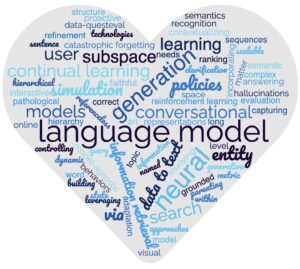
Laure Soulier is a HDR (Habilitation à Diriger des Recherches) Lecturer at Sorbonne University within the MLIA team at the ISIR (Institute for Intelligent Systems and Robotics) laboratory. Her research focuses on the design of language models for Information Retrieval (IR) and Natural Language Processing (NLP) applications, including data-to-text generation , search-oriented conversational systems , language models for robotics , and continual learning with domain adaptation . Recent publications highlight her work on cross-encoders, co-speech gesture generation, and latent space metrics. She supervises an ANR-funded postdoctoral researcher position (SCAI/BnF program) and collaborates on projects involving multimodal techniques, user interaction analysis, and document vectorization. Her scientific contributions include best paper awards at CORIA 2021, SCAI@EMNLP 2019, CORIA 2015, and AIRS 2013. Laure Soulier’s work spans collaborative information retrieval models, entity ranking in heterogeneous networks, and neural approaches for knowledge-based IR. She has contributed to evaluation frameworks for LLMs in IR and co-speech gesture generation, with applications in e-commerce search, medical information retrieval, and social media-based collaboration. Her research integrates user roles, document representations, and reinforcement learning techniques.
Måns Magnusson is an Associate Professor at the Department of Statistics, Uppsala University, with affiliations at the Institute for Analytical Sociology (Linköping University) and the Institute for Future Studies. His work bridges Bayesian statistics, probabilistic machine learning, and textual analysis, focusing on model evaluation, diagnostics, and inference algorithms. He contributes to computational social science and digital humanities through text-as-data methods. Research Themes: Bayesian inference, probabilistic machine learning, statistical inference from textual data Key Applications: Sociology, political science, law, education statistics, public health Current Projects: Improving probabilistic programming generalizability (Swedish Research Council grant), SWERIK research infrastructure (Riksbankens jubileumsfond) His recent publications emphasize text mining, model comparison, and legal data challenges. He has developed tools for national ID number validation, hate crime estimation, and parliamentary corpus construction. Notable awards include the Cramér Prize (2018), Statistician of the Year (2023), and membership in the Swedish Young Academy (2023) and ELLIS (2024). Scientific Contributions: Botten Ada Bayesian election model, 'loo' package for cross-validation Collaborative Work: AI4Research sabbatical (2024), Riksbankens jubileumsfond funding Industry Background: Statistician roles at Swedish Agency for Education, Crime Prevention, and Public Health
Joonki Noh serves as Associate Professor in the Department of Banking & Finance at Case Western Reserve University's Weatherhead School of Management, where he joined in 2015 after completing his finance doctorate at Emory University. His academic journey includes dual doctoral training in finance and electrical engineering, reflecting his interdisciplinary expertise. Education PhD in Finance, Emory University (2015) PhD in Electrical Engineering, University of Michigan (2007) MA in Electrical Engineering, University of Michigan (2007) MS in Electrical Engineering, University of Michigan (2005) BS in Electrical Engineering, Seoul National University (2003) Noh's research integrates quantitative finance with computational methods, focusing on empirical asset pricing , market microstructure , and textual analysis enhanced by machine learning techniques. His work examines how linguistic patterns in corporate disclosures affect market reactions, liquidity dynamics in asset pricing, and information diffusion through industry networks. Teaching responsibilities span Investment Management and Financial Modeling in Big Data for both undergraduate and Master of Finance students. His publication record demonstrates evolving expertise from early biomedical engineering research to contemporary finance applications, with recent work leveraging natural language processing on earnings conference calls and liquidity factor modeling. This trajectory highlights his unique ability to transfer methodological rigor across disciplinary boundaries. Academic Honors Shinhan Finance Investment Best Paper Award (2022) Korea America Finance Association Young Scholar Award (2019) Financial News & KAFA Top-Journal Paper Award (2018, 2022) George J. Benston Scholar Award at Emory University (2014) Outstanding Graduate Student Instructor Award (University of Michigan, 2008) Noh actively contributes to academic governance as seminar organizer for the BAFI Department Research Series and committee member for faculty recruitment. His professional service includes editorial roles for the Asia-Pacific Association of Derivatives and conference reviewing for major finance associations. He maintains strong connections with Korean financial institutions through KAFA partnerships while presenting research at premier venues including the American Finance Association and European Finance Association meetings.
Flavio Giobergia is a Researcher at the Department of Control and Computer Science (DAUIN) within Politecnico di Torino . His work spans applied artificial intelligence , with a focus on deep learning and machine learning applications. Research Interests : Machine learning under limited label availability, LLM-assisted code refactoring, subgroup performance analysis in ASR models, exoplanet atmospheric reconstruction, and predictive maintenance systems. Teaching : Course owner for Data Science and Machine Learning Lab and Large Language Models at Politecnico di Torino. Projects : Scientific head for the MAD – STANDARD BANKING project (2025–2026) and ImEDA (2023–2024), focusing on anomaly detection and model efficiency. Publications : 15+ recent works on topics including machine unlearning benchmarks, synthetic data for hallucination detection, and drift detection limitations, presented at top conferences like KDD, Interspeech, and IEEE AICT. Collaborations : Active in the SmartData@PoliTO center and co-author with Elena Baralis, Alkis Koudounas, and others.
Dr. Alpha Bah is a Senior Research Fellow at the University of Technology Sydney (UTS), School of Electrical and Data Engineering, where he has been employed since 2019. He holds appointments as Senior Research Fellow (March 2022-present), Post Doctoral Research Fellow (December 2019-February 2022), and Research Associate (February-December 2019). He is also a member of the Faculty of Engineering and Information Technology, Global Big Data Technologies Centre (GBDTC), and the School of Electrical and Data Engineering at UTS. Dr. Bah completed his PhD at UTS in 2019, following an MEng from Queensland University of Technology in 2013. His academic journey represents a transition from 17 years of industry experience in telecommunications (1998-2015) at companies including Optus, Telstra, Xstrata, and Thiess, where he gained extensive hands-on experience in network design, installation, and project management. His research focuses on advanced antenna technologies, particularly wideband antenna arrays, metamaterial-enhanced antennas, and RF subsystems. Dr. Bah is recognized as a pioneer in wideband antenna arrays in Australia and a worldwide expert in this field. His work spans theoretical design, fabrication, and extensive measurement of RF subsystems and antennas in both near and far fields, with expertise in electromagnetic simulation software including Ansys HFSS, CST, and ADS. Analysis of Dr. Bah's publication record reveals a consistent focus on enabling wideband operation and wide-angle scanning capabilities in antenna arrays. His research demonstrates innovative approaches to metasurface applications, impedance matching, and feed network design across multiple frequency bands. The publications show a progression from fundamental balun and feed network designs to sophisticated array implementations with exceptional scanning capabilities and bandwidth performance. Multifunction Aperture (MFA) Program funding in collaboration with DSTG Australian Postgraduate Award CSIRO flagship top up scholarship Space Environment Research Centre industry scholarship Reconfigurable Ultrawideband Tightly Coupled Arrays grant CSIRO post graduate top up scholarship Dr. Bah serves as Lead Engineer and Chief Investigator for a highly sensitive multiparty defense project involving 5 universities, 4 industry partners, and the Commonwealth of Australia, which has secured over $3 million in funding for UTS. He is available for Masters/PhD student supervision, collaborative projects, industry projects, advisory committee membership, teaching provision, and career advice. His language capabilities include English (full professional proficiency) and Fulah (full professional proficiency), along with Creoles and pidgins English based.
Patric Jensfelt is a full-time Professor at the Robotics, Perception and Learning (RPL) division within the School of Electrical Engineering and Computer Science (EECS) at KTH Royal Institute of Technology . He contributes to robotics and autonomous systems through research, teaching, and industry collaboration. Academic Rank: Professor Department: Robotics, Perception and Learning (RPL) School: School of Electrical Engineering and Computer Science (EECS) University: KTH Royal Institute of Technology His research focuses on robotics and autonomous systems , particularly spatial cognition for enabling robots to understand and model their environments. He integrates sensor data with high-level symbolic reasoning to advance navigation, mapping, and system integration. Recent work includes applications in service robotics, 3D foot scanning (via the company Volumental ), and drone-based perception. The 15 most recent articles highlight advancements in scene flow estimation, autonomous driving, LiDAR processing, and domain adaptation. They emphasize self-supervised learning , dynamic environment modeling , and robust spatial representations for autonomous systems. Patric supervises Master’s and PhD students, particularly in project courses like DD2410 Introduction to Robotics , DD2419 Project Course in Robotics and Autonomous Systems , and the doctoral course FDD3356 System Integration for Robotics . He is actively involved in the WASP Graduate School , teaching Autonomous Systems annually. He leads the Robotics, Perception and Learning (RPL) division, which fosters innovation in robotics through experimental projects and industry partnerships like Intelligent Machines . The division supports internships (unpaid) and encourages applicants to demonstrate prior engagement with his research.
Professor Verena Wagner is a Full Professor in the Department of Philosophy at Humboldt University of Berlin and serves as the Executive Academic Director of the Berlin School of Mind and Brain. She leads the Philosophy of Mind research group and holds multiple leadership positions within the university, including membership on the Managing Committee and Steering Committee of the Berlin School of Mind and Brain. As of October 2025, she will also serve as a Fellow at the Max Planck School of Cognition. Additionally, she is a Member of the Akademie-Kolleg at the Heidelberg Academy of Sciences and Humanities. Professor Wagner's research focuses on the intersection of epistemology and philosophy of mind, with particular emphasis on cognitive neutrality, suspension of judgment, and related mental states. Her work explores how mental attitudes and activities relate to inquiry and deliberation (the "zetetic turn" in epistemology), advocating for a pluralist view on cognitive neutrality. She examines the nature of mental states before considering their normative profiles, noting that some forms of cognitive neutrality have agential components with implications for rationality. Her research also extends to deception (both self and other) and disinformation, with a specific focus on bullshitting as the provision of fake answers to questions under discussion. She has developed outreach projects to make philosophical work on fake answers accessible to broader audiences. Previously, she worked on free will debates, proposing a theory of freedom of action compatible with both determinism and indeterminism, and later applying compatibilist frameworks to the doxastic realm. Professor Wagner leads several significant research projects, including the DFG-Priority Programme "Rethinking Disinformation (Re:DIS)," the Heidelberg Academy-funded project "Neutral by Choice: Cognitive Neuroscience meets Philosophy of Mind," and the DFG-funded "Thinking about Suspension" research network. Her work demonstrates a consistent trajectory toward understanding cognitive states that exist between belief and disbelief, with increasing attention to practical applications in the context of disinformation and AI systems. She collaborates extensively with cognitive neuroscientists, psychologists, and philosophers across multiple German institutions. Konstanz University Science Prize 2023 (Messmer Foundation) for her work on "Heiße Luft und leeres Gerede: Wie Sprache zu Bullshit wird. Interventionsversuche an Schule und Universität" (Hot Air and Empty Talk: How Language Becomes Bullshit. Intervention Attempts at School and University) Professor Wagner actively mentors doctoral candidates and has supervised PhD projects such as Daniela Schuster's "Suspension of Judgment in Artificial Intelligence: Uncovering Uncertainty in Data-Based and Logic-Based Systems." She leads a research group comprising student assistants and collaborates with international scholars including Christoph Korn (Cognitive Neuroscience, Heidelberg), Hansjörg Neth (Social Psychology, Konstanz), Yulia Oganian (Cognitive Neuroscience, Tübingen), and Alexandra Zinke (Philosophy, Frankfurt). Her research is supported by substantial grants from the German Research Foundation (DFG), the Heidelberg Academy of Sciences and Humanities, and the Baden-Württemberg Foundation. Professor Wagner directs the Philosophy of Mind research group at Humboldt University, which includes student research assistants and an office manager. Her research environment fosters interdisciplinary collaboration between philosophy, cognitive neuroscience, and psychology, creating a unique space where theoretical philosophical work directly informs empirical research and vice versa. The group's work on cognitive neutrality and disinformation has particular relevance in today's information landscape, addressing fundamental questions about how we should navigate uncertainty and deception in both personal cognition and artificial systems.
Amine Mhedhbi is an Assistant Professor at Polytechnique Montréal in the Department of Computer Engineering and Software Engineering. He is affiliated with the Institute for Data Valorization (IVADO) and the Software Engineering for Machine Learning Applications (SEMLA) group. His research focuses on data management systems, particularly graph-structured databases, multimodal data engineering, and AI-driven query optimization. Ph.D. in Computer Science from University of Waterloo Former technical advisor to enterprise companies Prior applied research leadership at Distyl AI and internships at Microsoft Research His recent work explores integrating large language models (LLMs) into database systems, optimizing SQL generation, and advancing graph database architectures. Key projects include GraphflowDB and FlockMTL , addressing scalability and declarative semantic applications. Scientific awards include: NSERC Discovery Grant with Discovery Launch Supplement (2025) Cheriton School Distinguished Dissertation Award (2024) Microsoft Research Ph.D. Fellowship (2020) VLDB Best Paper Award (2018) He supervises graduate students in database systems and machine learning applications and serves on program committees for top-tier conferences like VLDB and SIGMOD.