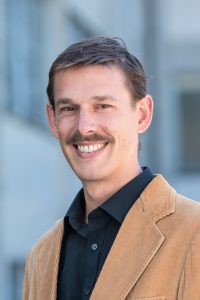
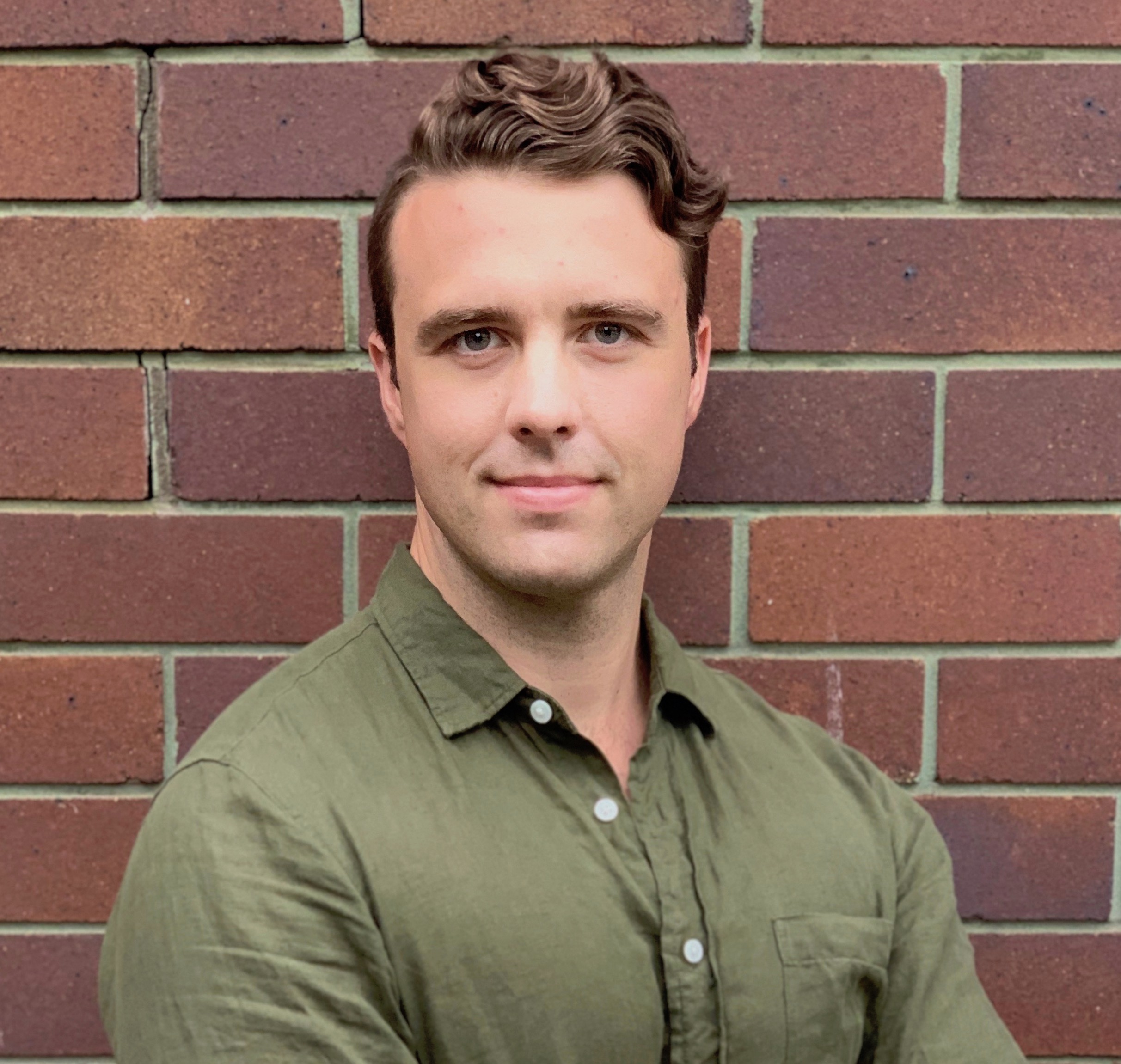
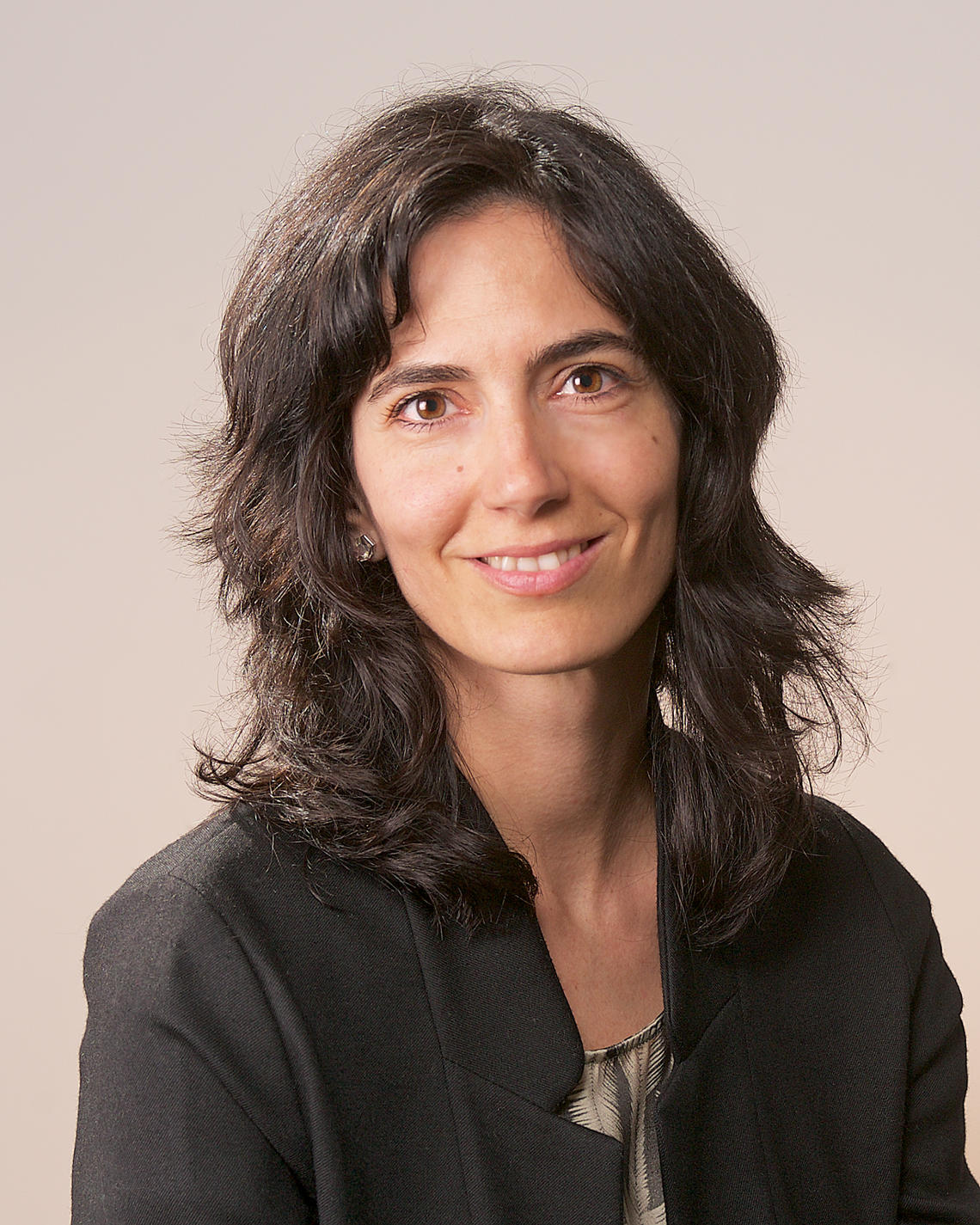
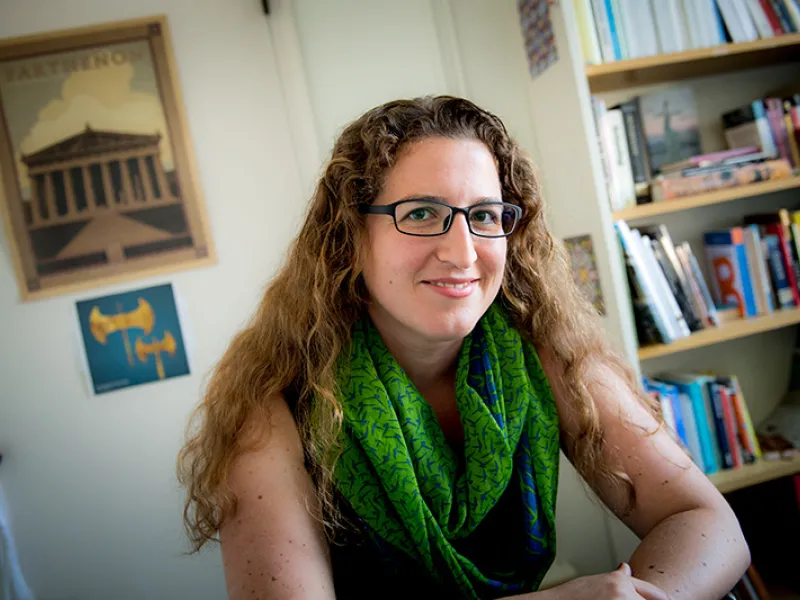
Dr. Corey T. Callaghan is an Assistant Professor in the Department of Wildlife Ecology and Conservation at the University of Florida . Based at the Fort Lauderdale Research and Education Center , his research focuses on global change ecology using big data from citizen science platforms like eBird and iNaturalist, combined with geospatial analyses and macroecological theory . Ph.D. (2019) from UNSW Sydney M.S. (2015) from Florida Atlantic University B.S. + B.S. (2013) from Canisius College His work examines urban ecology , including how species traits influence urban tolerance across birds, amphibians, and butterflies. He develops adaptive sampling frameworks to optimize citizen science data collection while addressing biases. Current projects analyze human-nature interactions through citizen science participation, secondary data in photographs, and machine learning for biodiversity monitoring. He actively contributes to conservation strategies for urban biodiversity and data-driven restoration efforts . Recent publications highlight his expertise in cross-taxa comparisons , continental-scale analyses , and ecosystem service quantification . He leads the Global Ecology Research Group at the University of Florida, emphasizing collaborative science and open-source methodologies .
Claire Bowern is Professor of Linguistics at Yale University specializing in historical linguistics, language documentation, and Australian Indigenous languages. Her research employs computational phylogenetics to study language evolution and supports language revitalization through digital archives and fieldwork methodologies. Recent publications address: Phylogenetic signal in lexical evolution across language families Digital infrastructure for endangered language documentation (FLEx software analysis) Decolonizing linguistics pedagogy and research practices Her work consistently integrates linguistic, anthropological, and computational approaches to analyze language diversity and change. She contributes to global databases including Grambank and D-PLACE, examining links between linguistic, cultural, and environmental patterns.
Mark Lloyd serves as a Clinical Professor at the Annenberg School for Communication and Journalism, University of Southern California. His career uniquely bridges legal advocacy, civil rights leadership, and broadcast journalism, with pivotal roles including Associate General Counsel at the Federal Communications Commission (2009-2012) where he advised on inclusion and localism policies, and Vice President at the Leadership Conference on Civil Rights. His research critically examines the intersection of media systems and democratic governance, focusing on structural inequities in communication infrastructure. Key interests include: Regulatory frameworks for equitable media access Civil rights implications of digital and broadcast platforms Historical analysis of communication policy failures Public interest advocacy in telecommunications Journalistic ethics in commercial media ecosystems Constitutional challenges in modern media landscapes Lloyd received an Emmy Award for his broadcast journalism work spanning public and commercial radio/television networks including NBC and CNN. His scholarly contributions include the book Prologue to a Farce: Communication and Democracy in America (University of Illinois Press, 2007) and co-editing The Communication Crisis in America and How to Fix It (Palgrave MacMillan, 2016). No information regarding student advising, research grants, or laboratory affiliations is documented in available sources. His professional trajectory emphasizes policy intervention over traditional academic mentorship structures.
Darryl Jones is Professor at Griffith University's Centre for Planetary Health and Food Security, specializing in behavioral ecology and human-wildlife interactions. His research examines urban ecosystems, wildlife conflict resolution, and conservation strategies, with particular emphasis on bird ecology and road infrastructure impacts. Professor Jones has authored influential books including 'Feeding the Birds at Your Table' and 'A Clouded Leopard in the Middle of the Road' that bridge scientific research and public engagement. His work explores: Wildlife responses to urbanization Bird feeding practices and consequences Road ecology and mitigation design Human dimensions of conservation Koala-vehicle collision patterns Recent publications document COVID-19's impact on global bird feeding behaviors, analyze 20-year trends in koala road mortality, and evaluate LED streetlight effects on urban wildlife. He leads research on dingo population viability in Fraser Island and develops innovative wildlife monitoring technologies like the open-source WildWID RFID system. Professor Jones collaborates extensively with government agencies on conservation policy and has secured funding for projects examining wildlife crossing infrastructure effectiveness. His research informs evidence-based approaches to human-wildlife coexistence in rapidly changing landscapes.
Dr. Alex Bigazzi is an Associate Professor and Associate Head (Undergraduate Program) in the Department of Civil Engineering at the University of British Columbia (UBC), with a joint appointment in the School of Community and Regional Planning. He leads the REACT Lab, focusing on active transportation, micromobility, and sustainable infrastructure design. His research emphasizes the intersection of physics, physiology, and behavior in active travel, particularly for pedestrians and cyclists, and addresses emissions reduction and equitable urban mobility. Bigazzi holds a B.M. in Jazz Saxophone from the University of Miami and a Ph.D. in Civil Engineering from Portland State University. His career includes academic and practical contributions, such as founding the REACT Lab and leading projects on e-bike incentives, air pollution exposure, and infrastructure design. His work has earned awards like the 2024 Wall Legacy Award for inclusive transport design and the 2023 Climate Action Award. He teaches courses on pedestrian/bicycle facility design and capstone projects, mentoring students through UBC’s Civil Engineering programs.
Jarrod Ray Hore is a Scientia Lecturer in the School of Humanities & Languages at the University of New South Wales (UNSW), Sydney, and Co-Director of the New Earth Histories Research Program. His work explores environmental history, settler colonialism, and the intersections of science, geology, and cultural landscapes. Hore’s research focuses on landscape photography’s role in shaping colonial projects, earthquake geology, and the logistics of the natural history trade. He has published widely in journals like the Pacific Historical Review and Australian Historical Studies, and his award-winning book *Visions of Nature* (2022) examines how photography reinforced settler territoriality. His research interests span environmental history, transnational history, the history of science, and colonial studies. Key areas include the history of settler colonialism in Australia, New Zealand, and North America, as well as the cultural and scientific dimensions of geological exploration. Hore actively supervises HDR and honours students in environmental history, colonial history, and the history of photography. His awards include the Marilyn Lake Prize (2023) and Donna Coates Prize (2022), with shortlist recognitions for prestigious history awards. Beyond academia, he teaches courses like *A House Divided: The Making of Modern America* (ARTS2150), emphasizing U.S. histories of race, class, and global engagement. Hore’s work bridges environmental humanities and colonial studies, analyzing how visual and scientific practices reinforced imperial and settler agendas. His current projects explore the material and logistical networks underpinning natural history collections and the epistemologies of colonial geology.
Professor Stephen Graham at Newcastle University is a leading scholar in critical urban studies, focusing on the intersections of militarism, surveillance, and urban infrastructure. His work explores how cities are shaped by and become sites of geopolitical conflict, technological control, and social inequality. Research spans urban verticality , military urbanism , and digital surveillance . Key themes include infrastructure disruption , elite spatial practices , and post-conflict urbanism . Recent publications analyze the militarization of urban space , robotic imperialism , and surveillance societies . His "Splintering Urbanism" framework remains foundational for understanding fragmented urban networks. Current work investigates vertical geopolitics , elite bunkering , and smart city security , with a focus on planetary-scale urban systems and their vulnerabilities.
Peter A. Raymond is the Oastler Professor of Biogeochemistry at Yale University's School of the Environment and Department of Geology and Geophysics. He serves as Senior Associate Dean of Research & Director of Doctoral Studies and is Co-Director of the Yale Center for Natural Carbon Capture. Raymond leads the Raymond Biogeochemistry Lab, which investigates the biogeochemistry of inland waters, enhanced weathering, methane cycling, and blue carbon systems through cutting-edge field, laboratory, and modeling approaches. Education B.S., Marist College Ph.D., College of William and Mary/Virginia Institute of Marine Science Research Focus Raymond's research fundamentally reshapes our understanding of carbon cycling in aquatic systems, demonstrating that rivers serve as dynamic conduits rather than passive pipes in the global carbon cycle. His work examines how biology and watershed variables alter carbon chemistry in streams, rivers, and estuaries, with particular emphasis on understanding global carbon cycles in relation to climate change. Raymond employs radiocarbon measurements to explore the age and turnover of carbon in aquatic ecosystems, revealing that rivers are variable sources of both old and young terrestrial dissolved organic carbon to oceans. The Raymond Lab is particularly known for developing the Pulse-Shunt Concept, which challenges traditional views of riverine biogeochemistry by emphasizing the episodic and dynamic nature of elemental fluxes. Current research directions include enhanced weathering and alkalinity studies for carbon removal, global greenhouse gas budgets through projects like RECCAP 2, natural methane cycling in aquatic systems, and blue carbon ecosystems such as mangroves and salt marshes. Publication Trends Raymond's recent publications (2023-2025) demonstrate a strong focus on global carbon and methane cycling, with particular attention to inland water systems' role in the Earth's climate system. His work increasingly integrates large-scale datasets with field measurements to understand how climate change and human activities affect greenhouse gas emissions from rivers and streams. A significant portion of his recent work contributes to international efforts like the Global Carbon Project, aiming to refine estimates of global carbon and methane fluxes. His research also shows growing emphasis on carbon removal strategies, particularly enhanced rock weathering through the Earthshot-funded GOAL-A project, and their potential for climate mitigation. Scientific Recognition Fellow of the American Association for the Advancement of Science Member of the Connecticut Academy of Science and Engineering Coastal and Estuarine Research Federations Cronin Award for Young Scientists ISI highly cited author Past Editor and Chief of the American Geophysical Union's journal Global Biogeochemical Cycles Mentorship and Funding Professor Raymond currently mentors four doctoral students (Jon Gewirtzman, Shou-En "Samuel" Tsao, Benjamin Saalidong, and Mingyu Zhang) and masters student Bella Garrioch. His research is supported by multiple grants from the National Science Foundation (NSF), including CAREER awards, and participation in the Earthshot-funded GOAL-A (Global Ocean And Land Alkalinization) project. Raymond has also been involved in significant collaborative projects with USGS data to research how climate and land use change alter carbon export from US watersheds, and with Lamont Doherty to develop methods for measuring air-sea gas exchange of CO2 in rivers and estuaries. Research Infrastructure The Raymond Biogeochemistry Lab at Yale is a dynamic research group comprising research scientists, postdocs, doctoral and masters students, and postgraduate researchers. The lab recently acquired a Mini Carbon Dating System (MICADAS) at Yale, significantly expanding their research capabilities in ecosystem carbon turnover and verification of natural climate solutions. The lab collaborates globally on projects in the Arctic, Hudson River, and middle Atlantic Bight, and is actively involved in the NASA Carbon Monitoring System BlueFlux field campaign to assess carbon exchange in coastal wetlands.
Malcolm McCulloch serves as Professor of Energy Systems and Group Leader of the Energy and Power Group within the Department of Engineering Science at the University of Oxford. He also holds the position of Co-Director for the Oxford Martin Programme on Integrating Renewable Energy and maintains affiliation with Christ Church college. His research spans four primary domains: domestic energy systems, electric vehicle technology, renewable generation, and energy solutions for developing regions. McCulloch's research focuses on practical energy transition challenges. His domestic energy work develops user-centric demand side management technologies and behavior change interventions, leading to the spin-out Intelligent Sustainable Energy (now Navetas Energy Management). In transportation, he pioneered the Morgan LifeCar hydrogen sports car project, resulting in high-efficiency motors and the Oxford Yasa Motors spin-out. His renewable generation research includes lightweight tidal turbines through Kepler Energy, while his Energy for Development work creates nano/micro grid solutions for distributed electrification. Analysis of his recent publications reveals a strong emphasis on integrating variable renewables through innovative market mechanisms, grid flexibility solutions, and electric vehicle integration. His work consistently addresses the technical and economic barriers to decarbonization, with increasing focus on peer-to-peer energy trading, thermal storage, and climate-resilient cooling solutions since 2020. McCulloch previously served as Co-Director of the Institute for Carbon and Energy Reduction in Transport (2008-2013) under the Oxford Martin School. His leadership extends to creating the Integrated Transport Network for Oxford and developing practical applications through multiple successful spin-out companies that bridge academic research and commercial implementation.
Craig Davis is a Professor and holds the Bollenbach Chair in Wildlife Management at Oklahoma State University's Department of Natural Resource Ecology & Management. He has been a faculty member since 2001, advancing from Assistant Professor (2001-2007) to Associate Professor (2007-2012), and has served as Bollenbach Chair since 2014. Davis earned his PhD in Wildlife Science from Texas Tech University (1996), an MS from Iowa State University (1991), and a BS from Ohio State University (1988). He is also a Certified Wildlife Biologist through The Wildlife Society. His research focuses on avian ecology, wetland restoration, and gamebird management, with specific interests in fire-grazing interactions, invertebrate communities, and climate change impacts on ecosystems. Key areas include grassland bird survival, wetland classification systems, and the effects of anthropogenic development on wildlife habitats. Davis actively collaborates with conservation organizations and agencies, addressing challenges like invasive species management and water infrastructure resilience. Teaching responsibilities include undergraduate courses on Wildlife Management Techniques and Wetland Ecology, as well as graduate courses like Advanced Wetland Ecology. His grants emphasize wetland restoration outreach, climate adaptation strategies, and studies on northern bobwhite and wild turkey populations. Notable projects include evaluating cellular transmission technology in wildlife monitoring and assessing the impact of extreme weather on gamebird survival. Grants (Selected): Expansion of potential wetland restoration opportunities in Oklahoma (2024-2027) Linking Research and Stakeholder Engagement for Wetland Conservation (2024-2026) Effects of Extreme Weather and Hunting on Northern Bobwhite (2023-2025) Research Themes: Aligns with UN Sustainable Development Goals 15 (Life on Land), 13 (Climate Action), 6 (Clean Water), 11 (Sustainable Cities), 14 (Life Below Water), and 9 (Industry/Infrastructure).
Dr. Enrica Dall'Ara serves as the Associate Dean of Planning and Landscape Architecture and an Associate Professor at the University of Calgary's School of Architecture, Planning and Landscape. Her work bridges academic research and professional practice, exemplified through her firm PARC, which specializes in public space design, urban renewal, and the rehabilitation of industrial sites. She emphasizes interdisciplinary collaboration, integrating fields like environmental engineering and biology into landscape architecture. Education: Laurea in Architettura (Master Degree equivalent in Architecture), University of Ferrara, Italy Master in Landscape Architecture, ETSAB, Polytechnic University of Catalonia, Spain PhD in Landscape Design, University of Florence, Italy Research Interests: Dr. Dall'Ara focuses on practice-based research, public space design, service landscapes, and the integration of cultural advocacy into landscape architecture. Her work explores site-specific design solutions, the role of agriculture in urban-rural dynamics, and the preservation of traditional rural landscapes. She advocates for designs that serve life through poetic, functional, and culturally sensitive approaches. Contributions: Through her teaching, Dall'Ara encourages students to view design as research, fostering critical thinking and interdisciplinary dialogue. Her firm’s projects, such as the roundabout gardens in Imola, Italy, demonstrate her commitment to merging ecological, functional, and aesthetic considerations in landscape interventions. Professional Affiliations: Canadian Society of Landscape Architects (CSLA) Alberta Association of Landscape Architects (AALA) Associazione Italiana di Architettura del Paesaggio (AIAPP) Ordine degli Architetti, Pianificatori, Paesaggisti e Conservatori (Province of Forlì-Cesena, Italy)
Nancy M. Wells is a Professor in the Department of Human Centered Design and serves as the Senior Associate Dean for Research and Graduate Education in the College of Human Ecology at Cornell University. Her work bridges environmental psychology and public health, examining how built and natural environments impact human health and behavior across the lifespan. Dr. Wells received a joint PhD in Psychology and Architecture from the University of Michigan and completed National Institute of Mental Health (NIMH) post-doctoral training at the University of California, Irvine. Her educational background uniquely positions her to investigate the intersection of physical environments and human wellbeing through both psychological and architectural lenses. Her research focuses on how environmental contexts—from homes to neighborhoods to schools—affect health outcomes, cognitive functioning, and resilience. A central theme examines nature's role in human resilience, particularly how natural environments buffer against adversity and challenge. She has conducted influential work on school gardens and their effects on children's physical activity, dietary habits, and learning. More recently, she has pioneered research on nature and autism, conducting a randomized controlled trial examining natural environments' effects on autistic youth wellbeing. Analysis of Dr. Wells' recent publications reveals consistent focus on nature's health benefits, with strong emphasis on experimental methodologies including randomized controlled trials and natural experiments. Her work spans environmental psychology, public health, and education, with particular attention to vulnerable populations including low-income communities and children of color. NSF Funding for environmental health research USDA Funding for school garden studies Robert Wood Johnson Foundation Funding MacArthur Foundation Funding Senior Associate Editor of Environment and Behavior (4 years) Research Advisory Board of Children and Nature Network Board of Directors for reDirect Dr. Wells actively mentors undergraduate and graduate students through the Wells Lab, involving them in all research stages from data collection to publication. Her research has been supported by multiple significant grants examining housing quality effects on mental health, neighborhood design impacts on physical activity, and school garden interventions. She leads interdisciplinary research teams that integrate perspectives from environmental psychology, public health, landscape architecture, and education. The Wells Lab operates as an integrated research-teaching-outreach unit that develops practical yet rigorous studies to assess causal relations between environment and health, creates valid measurement tools, and identifies causal pathways. Current projects include examining nature's effects on autistic youth wellbeing in partnership with The Center for Discovery in New York, and investigating multi-sensory design in urban public spaces.
Emilia Oddo is an Associate Professor of Greek Archaeology in the Department of Classical Studies at Tulane University. She holds a Ph.D. in Classics from the University of Cincinnati (2016), an M.A. in Classics from the University of Cincinnati (2010), and an M.A. from Katholieke Universiteit Leuven, Belgium (2007). Her research focuses on the archaeology of Bronze Age Crete, particularly the Late Bronze Age (Neopalatial period), with a specialization in pottery styles and their social implications. She leads excavations at Knossos, analyzing pottery from Sir Arthur Evans’ early 20th-century excavations to understand ritual practices and architectural functions. In 2024, she will lead a student field trip through the Greek Islands organized by the American School of Classical Studies at Athens. Her publications include Knossos: The House of the Frescoes (2022) and South by Southeast: The History and Archaeology of Southeast Crete (2022), which explore Minoan social dynamics and regional identity. Her work highlights how pottery styles reflect communal identity and ritual behaviors. Recent research reinterprets Evans’ archival materials to reveal new insights into Knossos’ urban context and ritual spaces. Teaching courses like CLAS-2320 (Greek Religion) and CLAS-3170 (Greek Art and Archaeology), Oddo bridges academic scholarship and pedagogy. Her field projects emphasize interdisciplinary methods, such as ceramic regionalism and contextual analysis, to reconstruct Bronze Age Cretan society. She actively contributes to archaeological discourse through edited volumes and peer-reviewed articles.
Dr Olga Petri is an Assistant Professor in Human Geography at the Department of Geography, University of Cambridge. She is a Bye-Fellow and Director of Studies in Geography (Part II) at Jesus College, and a Leverhulme/Newton Trust Early Career Research Fellow. Her research bridges cultural and historical geography, queer studies, and more-than-human geographies, with a focus on urban modernity in non-Western contexts. Born in St Petersburg, Olga holds a BA and MA in Geography from Saint-Petersburg State University, an MSc in Urban Studies from University College London (merit), and a PhD in Geography from the University of Cambridge. Olga's research explores four key areas: Queer Geographies in authoritarian urban spaces, More-than-Human Geographies analyzing human-animal relationships, Russian Arctic Studies examining environmental and geopolitical transformations, and Migration Urbanism studying cities as hubs for political refugees. Her work on Beastly St Petersburg and Winged Worlds reconfigures urban history through animal and queer lenses. Scientific awards include the Leverhulme/Newton Trust Early Career Research Fellowship and a 2020 shortlisting for Student-Led Teaching Award . She is a Junior Research Fellow at Wolfson College since 2018. Olga leads postdoctoral research on human-animal dynamics in imperial Russia. She supervises graduate students in cultural/historical geography and urban studies. Her work features in Vital Geographies research group at Cambridge.
Tengyu Ma is an Assistant Professor of Computer Science at Stanford University. His research focuses on machine learning, deep learning, optimization, and theoretical computer science. He is particularly known for work on neural networks, reinforcement learning, and algorithmic guarantees in AI systems. His email is tengyuma@stanford.edu . Ma's research interests span foundational aspects of machine learning, including generalization theory, optimization algorithms, and the theoretical underpinnings of deep learning. He has contributed to areas such as self-play theorem provers, learning rate schedules, and robustness in low-light vision tasks. His work often bridges theoretical insights with practical algorithm design. His recent publications emphasize advancements in large language models (LLMs), theorem proving via self-play, and understanding training dynamics in deep networks. Despite prolific output, no specific scientific awards are explicitly mentioned in the provided texts. Ongoing work includes exploring in-context learning mechanisms, formal verification of AI systems, and efficient pretraining techniques. His research has implications for both theoretical understanding and real-world applications of AI.