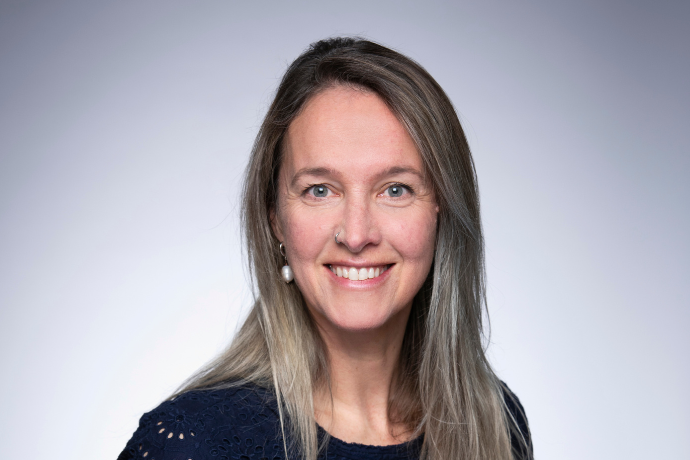
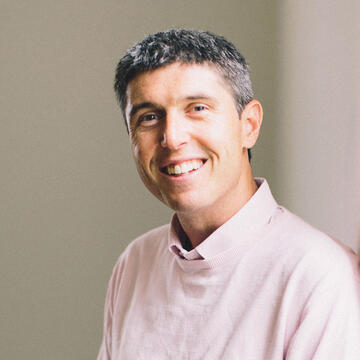
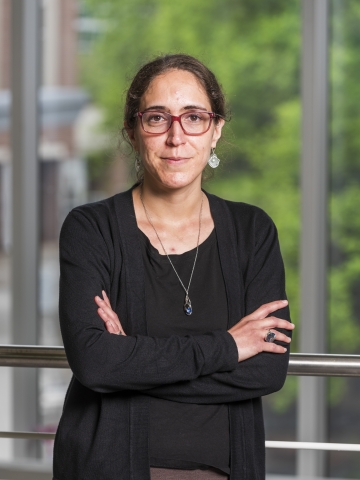
Eunhee Kim is a Professor in the Department of Defense Systems Engineering at Sejong University. She holds a Ph.D. in Mechanical Engineering from KAIST and has extensive industry experience in radar systems development. 1995 B.S. in Precision Engineering, KAIST 1997 M.S. in Mechanical Engineering, KAIST 2004 Ph.D. in Mechanical Engineering, KAIST Her research focuses on Radar Systems , Waveform Design , and MIMO Radar signal processing. She has contributed to projects involving space object tracking, airborne radar systems, and automotive radar optimization. Recent publications highlight her work on Machine Learning integration for Energy Forecasting and advanced MIMO Array Designs for improved radar resolution. She leads the Defense Radar Technology Laboratory, specializing in Phased Array Radar and Broadband Noise Radar systems. Patents include vehicle camouflage netting and RF-based positioning systems. Collaborations with agencies like Agency for Defense Development and companies such as LIG Nex1 and Hanwha Systems are prominent in her career.
Dmitry Alexandrovich Veselov serves as Deputy Dean for Research at the Faculty of Economic Sciences of the National Research University Higher School of Economics (HSE), where he also holds the position of Associate Professor in the Department of Theoretical Economics. Additionally, he is a Senior Research Fellow at the International Laboratory of Macroeconomic Analysis. He began his career at HSE in 2008 and has accumulated 17 years of scientific and teaching experience. His educational background includes a PhD from University Paris 1 Pantheon-Sorbonne (2014) in Natural Sciences with a dissertation on "Private Interests, Endogenous Institutions and Schumpeterian Growth," a Candidate of Economic Sciences degree (2012) from HSE on "Transition from stagnation to development in the theory of economic growth with human capital," and multiple degrees from HSE including Master's (2008) and Bachelor's (2006) in Economics. He has participated in numerous scientific internships at prestigious institutions including Brown University, Free University of Berlin, and Warwick University. Veselov's research focuses primarily on the theory of economic growth, political economy of development, and macroeconomics. His work examines institutional changes, social mobility, wealth distribution, and the dynamics of economic transitions from stagnation to growth. He has made significant contributions to understanding how political institutions interact with economic development processes, particularly in transition economies and resource-rich countries. His approach combines theoretical modeling with empirical analysis, often examining historical patterns of economic development across different institutional settings. His publication record shows consistent output across multiple high-impact journals and working paper series, with a clear trajectory from theoretical growth models toward more applied research on institutional change and development. Recent work has increasingly focused on welfare convergence in transition economies, the political economy of industrialization, and social mobility dynamics. His research demonstrates strong interdisciplinary connections between economics, political science, and sociology. Medal "Recognition - 15 years of successful work" HSE (December 2023) Appreciation from Faculty of Economic Sciences HSE (January 2023) Letter of thanks from Rector of HSE (March 2021) Best teacher award - 2024, 2017, 2015, 2011 Category "Future Professors" (2015-2016) Veselov actively mentors PhD students and serves as Deputy Editor-in-Chief of the "Journal of the New Economic Association" since 2017. His teaching portfolio includes advanced courses on macroeconomics and the historical origins of economic growth, reflecting his research expertise. He has participated in numerous international conferences and research projects examining economic growth, institutional change, and development patterns across different economic systems. His work demonstrates strong connections between theoretical economic modeling and empirical analysis of real-world economic phenomena. As a Senior Research Fellow at the International Laboratory of Macroeconomic Analysis, Veselov contributes to collaborative research projects examining long-term economic development patterns, particularly focusing on institutional factors that influence economic growth trajectories. His work connects with broader research initiatives at HSE that investigate the interplay between political institutions, economic policy, and development outcomes.
Jess Whitley is a Full Professor and Vice-Dean for Research and Professional Development at the University of Ottawa's Faculty of Education, where she holds a University Research Chair on Inclusion, Mental Health and School Attendance in partnership with Crossroads Children's Mental Health Centre. Her work focuses on improving educational experiences for students with special needs through research, teaching, and policy engagement. Dr. Whitley earned her educational qualifications from prestigious Canadian institutions: Ph.D. in Educational Psychology – Special Education, University of Alberta (2006) M.A. in Educational Psychology – Inclusive Education, McGill University (2003) B.A. in Education (Primary/Junior), University of Ottawa (2001) H.B.A. in Psychology, University of Ottawa (2000) Her research centers on school attendance and absenteeism, inclusive education policy, mental health literacy in schools, and teacher preparation for inclusive classrooms. She employs diverse methodologies including longitudinal surveys, focus groups, and community-based participatory research to examine psychosocial functioning and mental health of students with special needs. Her work has gained significant media attention through outlets like The Globe and Mail, CBC, and The Conversation. Analysis of her recent publications reveals a consistent focus on pandemic impacts on vulnerable students, school attendance challenges, and inclusive education policy implementation. Her research spans educational psychology, mental health promotion, and special education policy with particular emphasis on collaborative approaches between schools, families, and community organizations. Her notable recognitions include: Prix commémoratif Carol Crealock (2022) Prix du nouveau chercheur from the University of Ottawa (2011) Dr. Whitley actively supervises numerous graduate students and leads major research initiatives including the Canadian School Attendance Partnership, developmental evaluation of Nova Scotia's Inclusive Education Policy, and the Ontario School Inclusion Survey. She has secured significant funding from SSHRC and other agencies to support her collaborative research with community organizations and school boards across Canada. Her laboratory work centers on the Canadian School Attendance Partnership and the CCMHC-uOttawa Partnership, focusing on data-driven approaches to understanding school attendance problems and developing evidence-based interventions for students with mental health challenges and special educational needs.
Michael M. Goldman is Professor of Sport Management and Associate Dean of Graduate Programs and Strategic Initiatives at the University of San Francisco’s College of Arts & Sciences. He is a full-time faculty member who also serves as adjunct faculty at the Gordon Institute of Business Science (GIBS) in Johannesburg and sits on the board of the Case Research Foundation. Education & Prior Roles DBA, Gordon Institute of Business Science (GIBS), 2014 MBA, Gordon Institute of Business Science (GIBS), 2005 Former Senior Lecturer in Marketing, University of Pretoria (GIBS) Advisor to the 2018 Rugby World Cup Sevens Host Committee Advisor, Rumble Ventures Sports Innovation Fund Research & Applied Expertise Goldman’s scholarship lies at the intersection of sport marketing, sponsorship analytics, and consumer psychology. He studies how fans form identities with teams, how brands leverage sport partnerships, and how organizations can translate these insights into revenue growth. His work spans professional sport franchises (San Francisco Giants, LA Clippers), global sponsors (MTN Group), and governing bodies such as CONCACAF and Cricket South Africa. Across more than fifteen recent publications, Goldman’s research trajectory reveals a consistent focus on three themes: fan engagement and disengagement , sponsorship ROI and brand building , and innovative case-based pedagogy . He employs mixed methods—qualitative case studies, quantitative market analyses, and experimental designs—to tackle questions ranging from esports broadcasting during COVID-19 to the financial impact of team rebranding. Honours & Awards Visiting Professorship, Universidad Peruana de Ciencias Aplicadas (2020) North American Case Research Association – Silver Best Case Award (2019) Sarlo Prize for Excellence in Teaching, USF (2017) NACRA – Bronze Best Case Award (2017) Paul R. Lawrence Fellowship, Case Research Foundation (2015) Consulting, Grants & Labs Goldman maintains an active portfolio of industry partnerships that function as living laboratories for his research and teaching. Recent collaborations include designing sales-skills workshops with the Los Angeles Clippers, advising MTN on FIFA World Cup activation, and assessing brand equity for the San Francisco Giants’ season-ticket retention campaigns. While specific grant amounts are not disclosed, his ongoing work with teams and federations provides continuous funding for case development and experiential-learning initiatives.
Gérard Berry (born December 25, 1948) is a distinguished French computer scientist currently serving as Professor at the Collège de France, holding the permanent chair Algorithmes, machines et langages (Algorithms, Machines, and Languages) since 2012. He previously held the Informatique et sciences numériques chair (2009-2010) and the Technological Innovation Liliane Bettencourt chair (2007-2008) at the same institution. Before joining Collège de France full-time, he served as Director of Research at INRIA Sophia Antipolis (2009-2012) and at École des Mines de Paris (1977-2001). His research spans over 30 years in three main fields: lambda calculus and functional programming, parallel and real-time programming languages, and design automation for synchronous digital circuits. He is particularly renowned for developing the Esterel programming language. His work bridges theoretical computer science with practical industrial applications. Berry's research has evolved to include current work in Hop and HipHop for Web programming, formal verification of compilers, and languages for computer music. His publications demonstrate consistent contributions to programming language theory, formal methods, and their applications in hardware and software systems. Gold Medal of CNRS (2014) Chevalier de l'Ordre de la Légion d'Honneur (2012) Member of French Academy of Sciences (2002) Member of Academia Europaea (1993) Monpetit Prize of Académie des sciences (1990) Berry has advised 17 PhD students and reviewed numerous theses. His industrial experience includes serving as Chief Scientist Officer of Esterel Technologies (2000-2009), where he directed the implementation of the Esterel v7 compiler. He has also held significant leadership roles including President of the Scientific Council of IRCAM and membership on the Scientific Council of the National Education. His teaching at Collège de France has covered topics ranging from the foundations of computation to the societal impact of digital technology, with courses including The Informatics of Time and Events and Proving Programs: Why? When? How? His laboratory work has focused on developing practical applications of theoretical computer science concepts.
Dr. hab. Magdalena Skurzok is an Associate Professor at Jagiellonian University in Krakow, Poland, affiliated with the Faculty of Physics, Astronomy and Applied Computer Science. She conducts research in nuclear physics with a focus on exotic nuclear matter, particularly mesic nuclei and mesonic atoms. Her work bridges fundamental particle physics with practical medical applications through advanced detector systems including the J-PET scanner and SIDDHARTA-2 apparatus. Her educational background includes: Habilitation thesis: "Investigation of exotic nuclear matter in the form of mesic nuclei and mesonic atoms" (2024) Doctoral thesis: "Search for eta-mesic helium via dd -> 3Henpi0 reaction by means of the WASA-at-COSY facility" (2016) Diploma thesis: "Feasibility study of eta-mesic nuclei production by means of the WASA-at-COSY and COSY-TOF facilities" (2010) Dr. Skurzok's research primarily focuses on nuclear physics, particularly the investigation of exotic nuclear matter in the form of mesic nuclei and mesonic atoms. Her work explores the bound states of the eta meson with light atomic nuclei and kaon atoms, contributing to our understanding of strong interactions in nuclear systems. She is also involved in PET tomography research, developing novel imaging techniques with applications in medical diagnostics. Her experimental work utilizes advanced detector systems including the J-PET scanner and the SIDDHARTA-2 apparatus at the DAFNE collider. Analysis of Dr. Skurzok's recent publications reveals a strong focus on kaonic atoms research, precision X-ray spectroscopy, and PET imaging technology development. Her work bridges fundamental nuclear physics with practical medical applications, particularly in brain imaging and cancer diagnostics. The interdisciplinary nature of her research connects particle physics, nuclear spectroscopy, and medical imaging technologies. Dr. Skurzok is actively involved in several major research collaborations: SIDDHARTA-2 experiment at DAFNE collider for kaonic atoms research J-PET collaboration developing novel PET imaging technology AMADEUS experiment investigating low-energy K- interactions with nuclei WASA-at-COSY facility for mesic nuclei research Her laboratory work primarily involves the SIDDHARTA-2 apparatus for X-ray spectroscopy of kaonic atoms and the J-PET scanner for positron emission tomography. These advanced detector systems enable precision measurements of exotic nuclear phenomena and innovative medical imaging applications. Dr. Skurzok's research group collaborates extensively with international institutions including CERN, GSI, and various European research centers.
Simone Browne is Associate Professor in the Department of African and African Diaspora Studies at the University of Texas at Austin and Research Director of Critical Surveillance Inquiry (CSI) with Good Systems, a research collaborative examining the social and ethical implications of surveillance technologies. She holds a Ph.D. in Sociology and Equity Studies in Education from the University of Toronto. Her research focuses on surveillance studies through the lens of Black studies, examining how contemporary surveillance technologies are informed by the historical practices of racial formation and policing of Black life. Browne's work spans historical analysis of slavery-era surveillance practices to contemporary algorithmic bias and AI ethics, with a particular emphasis on how Black communities experience and resist surveillance. Browne's publications reveal a consistent focus on the intersection of race, technology, and power. Her work traces historical continuities between practices like slave branding and modern biometric identification systems, while also examining contemporary manifestations in airport security, facial recognition technology, and algorithmic decision-making. Her research demonstrates how surveillance has long been racialized, with Black bodies serving as sites for the development and testing of surveillance technologies. 2016 Lora Romero First Book Publication Prize by the American Studies Association 2016 Surveillance Studies Book Prize by the Surveillance Studies Network 2015 Donald McGannon Award for Social and Ethical Relevance in Communications Technology Research 2021 Matakyev Research Fellow at the Center for Imagination in the Borderlands Gerald LeBoff Visiting Scholar at New York University Browne actively engages with multiple research communities, serving on the Academic Council of AI NOW Institute, Executive Board of HASTAC, Board Member of The Dark Laboratory, and Community Advisory Board of the US Covid Atlas Project. Her teaching includes courses on Race/Gender/Surveillance and Surveillance: An Introduction, reflecting her interdisciplinary approach that bridges African diaspora studies, sociology, and technology studies. As Research Director of Critical Surveillance Inquiry, Browne leads collaborative efforts with scholars, organizations, and communities to develop frameworks for understanding and addressing algorithmic harm. She is currently working on her second book manuscript, which examines artistic interventions in the surveillance of Black life across multiple domains including policing, privacy, smart dust, COINTELPRO, encryption, electronic waste, and artificial intelligence.
Lynn Kamerlin is a Professor at the Georgia Institute of Technology and co-leads the Kamerlin Laboratory, which operates across Georgia Tech and Lund University. Her work integrates computational chemistry and biophysics to address fundamental questions in enzyme evolution, catalysis, and protein design. Education MNatSc in Chemistry, University of Birmingham (UK) PhD in Chemistry, University of Birmingham (UK) Her research spans computational biophysics , focusing on mechanistic biochemistry , protein evolution , and enzyme engineering . Key methodologies include machine learning , molecular dynamics simulations , EVB/QM/MM modeling , and natural language models for protein structure prediction. Recent publications highlight trends in AI-driven enzyme design , conformational dynamics , and mechanistic studies of phosphoryl transfer reactions . Tools like WatCon and Q-RepEx demonstrate her commitment to method development in computational biology. Scientific Awards Georgia Research Alliance Eminent Scholar (2022-Present) Wallenberg Scholar (2020-2024) ERC Starting Grant (2012-2017) Wallenberg Academy Fellowship (2014-2019, prolonged 2019-2024) Young Academy of Europe Chair (2014-2015) Fellow of the Royal Society of Chemistry (2017) Her lab collaborates with experimental groups worldwide, leveraging enhanced sampling techniques and structural bioinformatics to engineer enzymes with tailored properties. Grants from the Swedish Research Council and European Research Council underpin her research on enzyme evolution and catalytic mechanisms. Current projects include computational design of thermostable enzymes , allosteric modulators for biomedical targets, and modular protein scaffolds . The lab also investigates non-canonical amino acid incorporation and FAIR data principles in biomolecular simulations.
Steven Semken is a President's Professor of Geology and Education in the School of Earth and Space Exploration at Arizona State University. He holds additional affiliations as an Affiliated Faculty member with the Humanities for the Environment Global Network, the Global Drylands Center, the Osher Lifelong Learning Institute, the Global Futures Scientists and Scholars program, and the Division of Teacher Preparation at the Mary Lou Fulton College for Teaching and Learning Innovation. Dr. Semken earned his educational credentials from prestigious institutions: Certificate in Diné (Navajo) Educational Philosophy, Diné College, 1991 Ph.D., Materials Science (Ceramics), Massachusetts Institute of Technology, 1989 M.S., Geochemistry, University of California, Los Angeles, 1984 S.B., Earth and Planetary Science, Massachusetts Institute of Technology, 1980 As an ethnogeologist and geoscience-education researcher , Dr. Semken's work spans multiple interconnected domains that bridge scientific inquiry with cultural understanding. His primary research focuses on place-based and culturally responsive geoscience teaching methods, which he has developed through extensive fieldwork in geologically and culturally diverse regions of southwestern North America and Latin America. His research specifically investigates how sense of place influences geoscience learning, particularly among Indigenous and Latina/o communities, and how teaching approaches can be modified to honor cultural connections to land. This work extends to studying geological heritage and developing virtual field geology education experiences that maintain the pedagogical value of traditional fieldwork while increasing accessibility. His scholarship also encompasses the geological evolution of southwestern North America , which informs both his research and teaching practices. Analysis of Dr. Semken's recent publications reveals several key trends in his scholarly work. His research increasingly focuses on the integration of virtual and immersive technologies in geoscience education, particularly examining how virtual field experiences compare with traditional in-person fieldwork. There is also a strong emphasis on culturally responsive pedagogy , with numerous studies exploring how Indigenous knowledge systems can inform and enhance geoscience teaching. His work consistently bridges cognitive and affective domains of learning, recognizing that emotional connections to place are as important as intellectual understanding in geoscience education. Additionally, his scholarship demonstrates growing attention to issues of accessibility and inclusion in geoscience field education, developing methods to make geological field experiences available to students with diverse abilities. Dr. Semken's scientific achievements have been recognized with numerous prestigious awards: Fellow of the Geological Society of America Past-President and former Distinguished Speaker of the National Association of Geoscience Teachers ASU President's Professor (2025) 2014-2015 Zebulon Pearce Distinguished Teaching Award in Natural Sciences Highest awards for science teaching at Diné College in 1990, 1991, 1992, and 1995 Goodwin Medal (highest award for graduate teaching assistants at MIT) in 1985 Winner of the 2020 JGE Outstanding Paper Award from the National Association of Geoscience Teachers Winner of the 2015 Best Geologic Guidebook Award from the Geoscience Information Society Dr. Semken has been deeply involved in mentoring graduate students and early-career educators through numerous professional development workshops and research collaborations. He has co-organized and led over 20 educator professional-development workshops since 2009, focusing on place-based teaching, cultural context in geoscience education, and virtual field experiences. His grant-funded work includes collaborations with NASA, the American Geosciences Institute, and the EarthScope National Office, particularly supporting teacher leadership academies and workshops for Native American science educators. As a Principal Investigator and Co-PI on multiple NSF-funded projects, he has secured significant resources to advance research on the affective domain in geoscience education, place-based learning methodologies, and culturally responsive teaching approaches. Dr. Semken's research activities are supported by multiple collaborative teams and initiatives. He is associated with the Julie Ann Wrigley Global Futures Laboratory and is a Community Member of the Science Education Resource Center (SERC). His work on the "Trail of Time" at Grand Canyon National Park represents a significant public-facing educational initiative that combines geological time education with place-based interpretation. He has also developed the "Regional Geology of the Southwest" course as a living laboratory for place-based education research. His current research group includes graduate students working on projects related to virtual field experiences, ethnogeological knowledge systems, and cross-cultural science education. Through his leadership in the Earth Educators' Rendezvous and other professional networks, he has helped establish communities of practice focused on innovative geoscience teaching methods.
Juliana Pacheco Duarte serves as an Associate Professor in the Department of Nuclear Engineering & Engineering Physics at the University of Wisconsin-Madison, where she leads research in nuclear safety analysis, thermal-hydraulics, and risk assessment of advanced nuclear systems. Her expertise spans experimental design for high-pressure two-phase heat transfer phenomena and computational thermal-hydraulic analysis using industry-standard codes including COBRA, CTF, TRACE, and MELCOR. Her educational background includes a PhD in Nuclear Engineering from the University of Wisconsin-Madison (2018), an MS from the University of São Paulo (2014), a BS from State University of Campinas (2016), and a BS from the Federal University of Rio de Janeiro (2013). Prior to her doctoral studies, she contributed to critical heat flux experiments for nuclear propulsion reactors at the Brazilian Navy’s thermal-hydraulics division. Dr. Duarte's research program integrates traditional nuclear engineering methodologies with cutting-edge machine learning techniques, focusing on accident-tolerant fuels, severe accident progression in small modular reactors, and fire safety analysis in electrical enclosures. Her work addresses critical challenges in post-critical heat flux phenomena, density wave instabilities, quenching behavior, and uncertainty quantification for nuclear safety applications. Analysis of her 15 most recent publications (2023-2025) reveals a pronounced trend toward machine learning integration in nuclear safety analysis, with 60% of articles applying AI/ML methods to thermal-hydraulic challenges, accident progression modeling, and fire risk assessment. Her research bridges experimental validation with computational modeling, particularly in chromium-coated cladding performance, electrical fire dynamics, and natural circulation stability. Her scientific contributions have been recognized through prestigious awards including: 2023 DOE Nuclear Energy University Program Distinguished Early Career Program Award 2022 American Nuclear Society ATH’22 Best Paper Award 2019 US NRC Nuclear Education Program Faculty Development award 2014 CREA/RJ IV Oscar Niemeyer Award for Scientific Projects CAPES Science without Borders Fellowship (2014) Dr. Duarte actively mentors graduate students through thesis research courses (NE 790/890/990) and teaches advanced courses including Methods for Probabilistic Risk Analysis of Nuclear Power Plants. Her research is supported by grants from the Department of Energy (NEUP program), Nuclear Regulatory Commission, and Brazilian funding agencies including CAPES and CNPq. Her experimental work leverages high-pressure thermal-hydraulic facilities at UW-Madison, with collaborations extending to national laboratories and industry partners in nuclear safety validation studies. Current projects focus on fusion machine design applications and next-generation accident-tolerant fuel performance under extreme conditions.
Stephen C. Ekker, Ph.D., serves as Professor of Pediatrics at Dell Medical School and Professor in the Department of Molecular Biosciences at the College of Natural Sciences, The University of Texas at Austin. He holds dual leadership roles as Associate Dean of Innovation & Entrepreneurship at Dell Medical School and Associate Vice President of Research Translation for the university. A pioneering genome engineer with 30+ years of experience, Dr. Ekker develops molecular DNA editing tools using zebrafish in vivo and human cells in vitro to decode genomic functions and create novel therapeutics. His research embodies the bench-to-business-to-bedside translation model, emphasizing entrepreneurial pathways for scientific discovery. Key focus areas include mitochondrial disease therapies and companion animal gene editing through ventures like LifEngine Animal Health Laboratories. His work has received continuous National Institutes of Health funding for over two decades, supporting more than 170 scientific publications. As a serial entrepreneur, he co-founded Discovery Genomics Inc. (acquired by Immusoft in 2016), served as scientific advisor for Opentrons Labworks during its unicorn growth, and established Primera Therapeutics and LifEngine Technologies Inc. He previously served as President of the Genome Writers Guild (2017-2019) and Zebrafish Disease Models Society (2016-2017). Dr. Ekker leverages his experience as former Dean of Mayo Clinic Graduate School of Biomedical Sciences to shape innovation education at UT Austin. He directs the development of university-wide entrepreneurship programs while maintaining active research in genome editing, with current initiatives focusing on programmed B-cell therapies and mitochondrial disease treatments through his scientific founding roles.
Dr. Krystian Barzykowski is a Professor at the Department of General Psychology within the Faculty of Philosophy at Jagiellonian University in Kraków, Poland. He currently serves as Head of the Applied Memory Research Laboratory and is a Member of the Research Ethics Committee. He also holds the position of Proxy of the Dean of the Faculty of Philosophy for quality assessment and is a Member of the Board of the Krakow Branch of the Polish Psychological Society. Barzykowski obtained his doctorate in 2014 from Jagiellonian University and has since established himself as a leading researcher in cognitive experimental psychology with a focus on memory processes. His research spans multiple areas of cognitive psychology, particularly examining the mechanisms of autobiographical and episodic memory, involuntary cognitive processes, and the intriguing phenomenon of déjà vu. His work uniquely integrates cross-cultural perspectives with experimental cognitive psychology, exploring how multiculturalism and multilingualism affect psychological assessment and memory processes. His research program demonstrates a sophisticated approach to understanding the cognitive mechanisms behind memory retrieval, particularly focusing on how working memory influences involuntary autobiographical memories. Barzykowski's work on mind-wandering and thoughts detached from tasks represents a significant contribution to understanding spontaneous cognition. His recent Marie Skłodowska-Curie Postdoctoral Fellowship project 'SpontaneousPAST' specifically investigates how déjà vu can illuminate spontaneous memory retrieval processes. Barzykowski's extensive publication record shows a consistent focus on memory mechanisms while increasingly incorporating cross-cultural dimensions. His recent work has expanded to address timely societal issues including the psychological impact of the pandemic, refugee integration in educational settings, and the development of cultural intelligence among healthcare professionals. The interdisciplinary nature of his research connects cognitive psychology with educational, clinical, and social applications. Marie Skłodowska-Curie Postdoctoral Fellowship (2023) Andrzej Malewski Award from the Polish Academy of Sciences (2020) Mieczysław Bekker Scholarship from the National Agency for Academic Exchange (2020) Ministry of Science and Higher Education Scholarship for Outstanding Young Researchers (2018-2020) Multiple French Government Scholarships (2019-2021) International European Roma Spirit Award Finalist (2016) Barzykowski has successfully led multiple significant research projects funded by prestigious organizations including the National Science Centre, the Ministry of Science and Higher Education, the Stefan Batory Foundation, and the European Commission. His project portfolio includes 'Analysis of the role of working memory in the formation of involuntary autobiographical memories' (2020-2025), 'Wandering-mind: Advances in involuntary past and future thinking research' (2020), and 'The Role of Cognitive Inhibition in Involuntary Thinking about the Past and Future' (2016-2019). He is particularly noted for originating and co-authoring the first Polish textbook on psychological assessment in multicultural and multilingual contexts, which received a recommendation from the Council of Europe. At Jagiellonian University, Barzykowski leads the Applied Memory Research Laboratory, which focuses on experimental investigations of memory processes, particularly examining involuntary and voluntary memory retrieval mechanisms. His laboratory work integrates sophisticated experimental designs with cross-cultural perspectives, creating a unique research environment that bridges cognitive psychology with multicultural considerations. The laboratory has become a significant center for memory research in Poland, attracting international collaborators and contributing to major multinational research initiatives.
Olin Hartin serves as a Professor of Practice in Arizona State University's School of Electrical, Computer and Energy Engineering, leveraging over 30 years of Fortune 500 industry experience in science and technology. Based at the Tempe campus (GWC 340, Mailcode 5706), he maintains an active research profile with 25 patents and more than 60 scholarly publications. His academic credentials include: Ph.D. in Electrical Engineering M.S. in Electrical Engineering M.S. in Physics B.S. in Physics Hartin's research centers on advanced device technologies and materials, with demonstrated expertise in nanoengineering, RF circuit design, and semiconductor physics. His work bridges theoretical modeling with practical fabrication challenges, particularly in gallium nitride transistor development and electromagnetic compatibility. Recent projects address thermal management in high-power devices and noise isolation techniques for mixed-signal integrated circuits, driven by industry applications in wireless infrastructure. Analysis of his publication history reveals sustained focus on GaN HEMTs since 2010, with increasing emphasis on machine learning applications for FPGA deployment. His work consistently targets real-world implementation challenges, reflecting his industry background through patents in antenna design, ESD protection, and RF component optimization. Professional recognition includes: Senior Member of IEEE In teaching, Hartin supervises senior design laboratories (EEE 488/489) and instructs core courses including Hardware Design Language/Programming Logic (EEE 333), Circuits II (EEE 334), and Machine Learning with FPGA Deployment (EEE 405). His industry perspective enriches curriculum development, though specific grant funding details are not publicly documented. While no dedicated research lab is specified, his patent portfolio indicates ongoing collaboration with semiconductor industry partners.
Tara Zirakbash serves as a Lecturer at Murdoch University's School of Engineering and Energy, leveraging extensive cross-sector experience from consulting, government, and academia in hydrological analysis, urban water management, and GIS applications for sustainable engineering solutions. Her work directly addresses critical global challenges including water scarcity, climate change impacts, and water safety through interdisciplinary approaches. Her academic credentials include: Doctor of Philosophy in Environmental Engineering from Murdoch University, Western Australia Research focuses on environmental modelling optimisation, sustainable water systems, spatial/time series analysis, and uncertainty-informed planning. She champions systems thinking integrated with practical field applications and multi-stakeholder collaboration to develop innovative solutions for complex environmental challenges, emphasizing real-world relevance in all scholarly work. Scientific Awards: No scientific awards documented in source materials Advising and grants information is not specified in available documentation, though her teaching methodology emphasizes workshop-based learning connecting theoretical concepts to practical implementation. Professional networks reflect strong industry-academia linkages developed through diverse sector engagements. Laboratory facilities and research team structures are not described in the provided institutional profile.
Marcus Hedblom is a Professor in Landscape Management at the Swedish University of Agricultural Sciences (SLU) in Uppsala, Sweden. His academic career focuses on the intersection of urban ecology, landscape management, and human well-being, with extensive research on how people interact with and benefit from urban green spaces. Professor Hedblom's research interests span several interconnected domains related to urban environments and human-nature interactions. His primary focus areas include urban ecology and biodiversity conservation in cities, landscape management for recreational purposes, and the psychological benefits of nature exposure. He has made significant contributions to understanding soundscape perception in urban forests, children's interactions with natural environments, and the development of nature-based interventions for health and well-being. His work often employs multisensory approaches to studying how visual and auditory elements of landscapes affect human experiences and stress recovery. The trends in Professor Hedblom's recent publications (2023-2025) reveal a strong emphasis on practical applications of landscape research. His work increasingly focuses on design frameworks for multifunctional green spaces, particularly those serving children's developmental needs through nature-based play environments. He has developed innovative approaches like the Contemplative Landscape Model for assessing therapeutic outdoor settings and has conducted cross-continental studies on urban wildlife adaptation. His research consistently bridges ecological science with social science perspectives, examining how landscape characteristics correlate with human perceptions and behaviors in urban settings across different cultural contexts. Professor Hedblom has contributed extensively to the understanding of urban bird ecology, particularly how species like house sparrows adapt their vocalizations to urban noise environments. His work on "play biotopes" represents a significant practical application of ecological principles to landscape design, creating synergistic environments where children's development and ecological functions reinforce each other. Recent publications also address the challenges of balancing traditional lawn maintenance with more sustainable alternatives in the face of climate change.