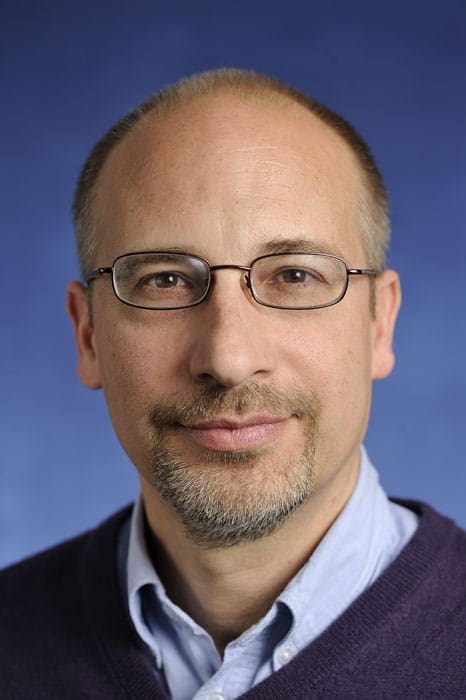
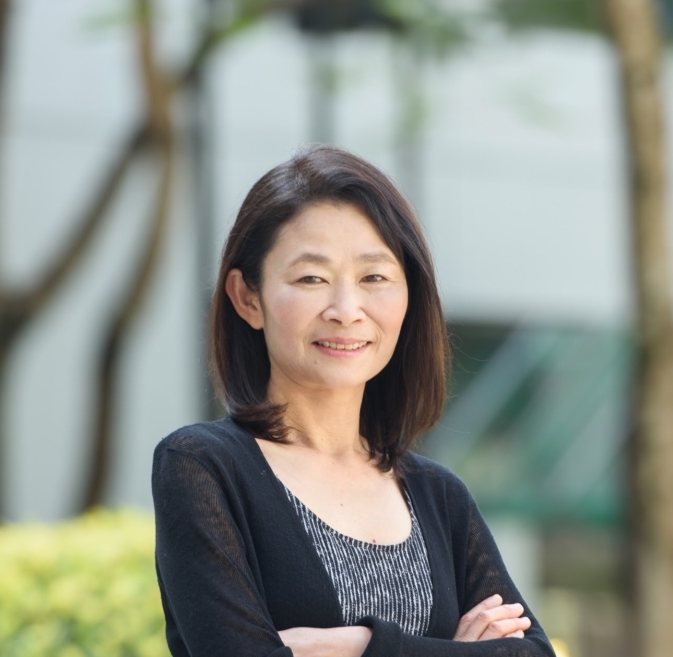
Joel Andreas is a Professor of Sociology at Johns Hopkins University since 2003, serving as Program Director of the East Asian Studies Program. His research focuses on political contention, social inequality, and social change in contemporary China. He holds a PhD in Sociology from UCLA and teaches social theory, political sociology, and courses on Chinese society. He has held visiting positions at universities including the University of Sydney, Hong Kong University, and Ningxia University. His work examines labor movements, rural land policies, and class dynamics in China. Recent research includes analyses of staff-worker congresses, rural land dispossession, and the persistence of militarism in U.S. policy. He critiques market reforms and explores the legacy of the Cultural Revolution. Andreas has contributed to debates on China’s transition to capitalism and the decline of socialist systems. His publications span topics from urbanization to state coercion in rural development. He maintains an active role in academic exchanges and policy-relevant research on China’s socio-political landscape.
Professor David A Palmer is a distinguished academic jointly appointed by the Hong Kong Institute for the Humanities and Social Sciences and the Department of Sociology at the University of Hong Kong, where he has been teaching since 2008. His interdisciplinary work bridges anthropology, sociology, religious studies, and Sinology, establishing him as a leading scholar in Chinese religious studies and transnational religious movements. Palmer's educational background includes a PhD in Anthropology of Religion from Ecole Pratique des Hautes Etudes (Sorbonne, Paris), an MPhil in Clinical Psychology/Medical Anthropology from University of Paris-VIII, and a BA in Anthropology and East Asian Studies from McGill University. His scholarly contributions span multiple disciplines with particular emphasis on Chinese religious traditions and their global manifestations. His research interests focus on the anthropology and sociology of spirituality and religion, especially Daoism and Chinese religion; religion in modern and contemporary China; inter-Asian and transnational religious circulations; Baháʼí Faith; civil society, volunteering, philanthropy, community engagement; and cultural and religious interactions on the Belt and Road. His work examines how religious traditions navigate modernity, state power, and globalization, with particular attention to the Belt and Road Initiative's cultural dimensions. Palmer's publications reveal a consistent focus on understanding Chinese religious traditions within broader theoretical frameworks of social theory, civil society, and transnational religious networks. His articles demonstrate how Chinese religious practices and institutions both adapt to and shape contemporary social and political contexts, with particular attention to the intersections of spirituality, modernity, and state-society relations. Joseph Levenson Award of the Association for Asian Studies PROSE award of the American Publishers' Association Francis L.K. Hsu Award of the Society for East Asian Anthropology Edward Bruner Prize for the best book in Anthropology of Tourism HK Research Grants Council RGC Research Fellowship (2021-2025) HK Research Grants Council Humanities and Social Sciences Prestigious Fellowship (2019) Palmer currently leads multiple significant research projects including 'Global China, Local Cultures: Chinese Modernity and Soft Power on the Belt and Road' (RGC Research Fellowship, 2021-2025), 'Infrastructures of Faith: Religious Mobilities on the Belt and Road' (CRF, 2019-2023), 'Rituals and Manuscripts of the Lanten Yao (Laos)' (GRF, 2021-2024), and 'Religious Cosmopolitanism in China, 1895-1927' (GRF, 2021-2024). He leads the 'Asian Religious Connections' research cluster at HKIHSS, co-convenes the 'Culture, Community and Social Equity' research cluster in the HKU Faculty of Social Sciences, and serves as co-convenor of the HKU Anthropology Research Network. As President of the East Asian Society for the Scientific Study of Religion, he plays a key role in advancing scholarly understanding of religion in the region.
Ching Kwan Lee is a Professor of Sociology at the University of California, Los Angeles (UCLA). Her work focuses on global and comparative issues, including labor politics, political sociology, decolonization, and the dynamics of Chinese capitalism. She is renowned for her trilogy on Chinese labor and global expansion, including Gender and the South China Miracle , Against the Law , and The Specter of Global China . Lee has also authored groundbreaking studies on Hong Kong’s decolonization struggles and African-China relations. Education: PhD in Sociology from the University of California, Berkeley. Research Interests : Globalization and its social impacts Comparative labor movements and protest dynamics Decolonization and postcolonial state formations Sino-African economic and labor relations Hong Kong’s political trajectory and transnational activism Her recent work explores resistance to 'global China,' including mass mobilizations in Hong Kong documented in Forever Hong Kong: A Global City’s Decolonization Struggle (2025). She co-edits the Cambridge Elements in Global China and leads the Global Hong Kong Studies @UC initiative. Awards & Recognition : 2024 Distinguished Career in Political Sociology Award Multiple book prizes for The Specter of Global China Fellowships at Stanford’s Center for Advanced Study and Princeton’s Institute for Advanced Study Grants & Initiatives : Lead researcher on NSF grants studying platform capitalism and labor in China Initiated comparative projects on Brazil, India, China, and South Africa ( Southern Interregnum ) Co-editor of volumes on Hong Kong’s Umbrella Movement and global labor studies
Robert Kaufman is a Professor of Comparative Literature at the University of California, Berkeley. He holds a B.A. (1979), J.D. (1982), and Ph.D. (1995) from UC Berkeley. Prior to academia, he practiced labor and employment law. His career includes positions at McGill University, Stanford University (where he was an Assistant Professor of English and affiliated with German Studies and Modern Thought & Literature), and visiting roles at the University of Chicago and UC Berkeley. He has held fellowships including Stanford Humanities Center, Hellman Family, and Institute of International Studies. He co-chairs Berkeley's Program in Critical Theory. His research focuses on 20th-21st century American poetry, Latin American poetry, Romantic-era poetics, Frankfurt School Critical Theory, and aesthetic philosophy. Key projects include Negative Romanticism: Adornian Aesthetics in Keats, Shelley, and Modern Poetry , and studies on César Vallejo, Paul Celan, and Robert Duncan. His work bridges Marxist theory, lyric form, and sociopolitical critique. Kaufman's essays analyze Adorno's influence on modern poetry, the ethics of lyric form, and intersections between poetry and democracy. His recent work engages postmodernism's aftermath and contemporary political crises. He frequently collaborates on translation projects and public humanities initiatives, including events on Paul Celan's centenary.
Matthew Potolsky is Professor of English at the University of Utah, specializing in nineteenth-century literature and literary theory. His career spans from 1998 Lecturer at Harvard University to current University Professorship. He earned a BA in Comparative Literature and Philosophy (1990), followed by MA and PhD in Comparative Literature (1992, 1997) from UC Irvine. Chair of English Department (2013-2016) University Professor (2014-2016) Research focuses on Decadence , Mimesis , Finance-Aesthetics intersections , and Government Secrecy . His work traces connections between financialization and decadent aesthetics, revealing how economic cycles influence artistic production. Key themes include: Decadent anti-realist literary movements Finance capital's cultural impact Decadent counterpublic formations Victorian aesthetic education debates Sublime aesthetics in national security Cosmopolitanism in literary communities Recent publications analyze: Decadent style as financialization rhetoric Reintroduction of verisimilitude theory Decadent responses to financial crises Mimetic labor in artistic production Decadent cosmopolitan counterpublics Historical parallels between financialization and literary decadence
Ramsey McGlazer is an Associate Professor specializing in twentieth-century European and Latin American literature, film, and critical theory. His research engages with poetry, politics-aesthetics intersections, critical carceral studies, and feminist/queer/psychoanalytic frameworks. He holds a Ph.D. in Comparative Literature and Critical Theory from UC Berkeley (2015) and previously taught at the University of St Andrews and Brown University’s Pembroke Center. McGlazer’s work interrogates modernist critiques of progress, radical psychiatry movements, and the interplay between aesthetic practices and institutional critique. His acclaimed monograph Old Schools: Modernism, Education, and the Critique of Progress (2020) won the American Association for Italian Studies First Book Prize. Current projects include The Clinic and its Double , exploring mid-century radical psychiatry and avant-garde art. He serves as Senior Editor of Critical Times and Coeditor of Italian Culture , and has translated key works like Rita Segato’s The War Against Women . McGlazer’s writing appears in venues such as Los Angeles Review of Books and n+1 . Research interests span Surrealist provocations, Brazilian artist Lygia Clark’s propositions, and transnational feminist solidarities. His scholarship bridges literary analysis with critical engagements in carceral studies, postcolonial theory, and decolonial thought.
Wim VAN LENT is a Full Professor of Management at IÉSEG School of Management , France. He holds an HDR in Management from IAE Paris Sorbonne and a Ph.D. in Business Administration from ESSEC Business School. His academic career includes roles as Visiting Professor at Curtin University (Australia), Griffith University (Australia), and Researcher at the University of Paris I Panthéon-Sorbonne. He coordinates the 'Strategy and Sustainability' track and is a member of the LEM research group. His research focuses on Management Strategy , Business Ethics , Innovation and Entrepreneurship , and Historical Methodology . Notable areas include corporate archives' strategic use, temporal dynamics in organizations, and ethical repair mechanisms. His work often employs historical case studies, such as the Dutch East India Company (VOC) and colonial-era corporations, to analyze organizational adaptation and institutional contradictions. Van Lent's publications span top journals like Academy of Management Review , Small Business Economics , and Business Ethics Quarterly . His recent studies explore periodization practices in organizations, entrepreneurial time narratives, and moral repair frameworks. Teaching includes international strategy and corporate social responsibility at the MSc level. His research bridges historical analysis with contemporary management challenges, emphasizing how understanding past institutional dynamics informs modern organizational behavior and ethical decision-making.
Norman M. Naimark serves as the Robert & Florence McDonnell Professor of East European Studies and Professor of History at Stanford University, with courtesy appointments in German Studies. He holds senior fellowships at both the Hoover Institution and Freeman Spogli Institute for International Studies, and is affiliated with The Europe Center and the Center on Democracy, Development and the Rule of Law. Education: Ph.D. in History, Stanford University (1972) Naimark specializes in Soviet-era Eastern European history, with dual research pillars: Soviet policies in post-WWII Europe and 20th-century genocide/ethnic cleansing phenomena. His work bridges historical analysis with contemporary human rights discourse, emphasizing geopolitical power dynamics and systematic violence against civilian populations. Methodologically, he combines archival rigor with comparative frameworks across national contexts. His publication trajectory from 1979–2019 reveals evolving focus from Marxist movements in partitioned Poland to Soviet occupation mechanics, culminating in comprehensive genocide studies. The 2019 monograph on Stalin's postwar European sovereignty struggles synthesizes decades of research into Soviet imperial practices. Scientific awards: Officer's Cross of the Order of Merit of the Federal Republic of Germany (1996) Richard W. Lyman Award for outstanding faculty volunteer service (1995) Stanford Dean's Teaching Award (1991-92, 2002-3) Naimark's academic leadership includes directing Stanford's Global Studies Division, Bing Overseas Studies Program, and Center for Russian, East European, and Eurasian Studies. His research informs current policy discussions on authoritarianism and democratic resilience, as evidenced by recent engagements with Belarusian democracy movements and U.S.-Russia relations. He collaborates extensively through Stanford's interdisciplinary centers, particularly contributing historical perspectives to The Europe Center's sovereignty research and the Center on Democracy, Development and the Rule of Law's governance initiatives.
Dr. Kyla Walters is an Associate Professor in the Department of Sociology at Sonoma State University. Her research focuses on gender, labor, and education policy, particularly exploring issues of inequality in retail work, sexual harassment in industries, and resistance to charter school expansion. She holds a Ph.D. from the University of Massachusetts-Amherst. Current research includes an interview-based study on beauty appraisals during pregnancy and childbirth, conducted with Sonoma State sociology students. Her work has been published in journals like Sociology of Race and Ethnicity and Hospitality & Society , as well as in the book Walking Mannequins (University of California Press, 2022). She has also contributed to policy analyses on teacher union resistance to educational reforms.
Dr. Joshua Savala is an Associate Professor of History at the University of Texas at El Paso (UTEP), part of the College of Liberal Arts. He holds a PhD from Cornell University (2019) and previously taught at Rollins College in Florida. His research focuses on Latin American social movements, transnational histories of the Pacific, and labor solidarity in the Andean and Southern Cone regions. Key areas of expertise include maritime workers, anarchism, public health epidemics, and border studies. Education: PhD in History, Cornell University (2019) MA in History, Cornell University (2015) MA in History, Tufts University (2012) BA in History and Sociology, University of California, Davis (2007) Research Interests: His groundbreaking work examines collaborative relationships between Peruvians and Chileans in the 19th and early 20th centuries, including studies on cholera epidemics, anarchist networks, and cross-border solidarity. Recent projects investigate cooperative urban planning on the U.S.-Mexico border and disaster responses in Valparaíso. Publications: Includes the award-winning book Beyond Patriotic Phobias (2022) and articles in Hispanic American Historical Review and Journal of Social History . His Spanish translation Más allá de la guerra (2024) is a binational publication with universities in Peru and Chile. Awards: Best Book (Social Sciences) on the Southern Cone (Honorable Mention), 2023 Flora Tristán Book Prize (Honorable Mention), 2023 José María Arguedas Prize, 2020 Teaching: Teaches courses on Modern Latin America, Pacific World histories, and borderland studies. Recent courses include Studies in Latin American History and South America Since 1810 . Labs/Teams: Engaged with UTEP's Borderlands Digital Humanities Center and the Institute of Oral History, emphasizing collaborative interdisciplinary projects.
Amy Bruckman is a Regents’ Professor and Senior Associate Chair in the School of Interactive Computing at Georgia Institute of Technology. As a Fellow of The ACM and member of the SIGCHI Academy , she contributes to social computing research focusing on online collaboration, cross-cultural understanding, and content moderation. Her 2022 book "Should You Believe Wikipedia? Online Communities and the Construction of Knowledge" explores digital knowledge creation. Education: Ph.D. from MIT Media Lab (1997), B.A. in Physics from Harvard (1987) Research Affiliations: GVU Center, IRI People and Technology Her work addresses social computing challenges including: AI ethics in human-AI interaction Algorithmic bias in content moderation Epistemic justice in online communities Comparative platform analysis (Reddit, Discord, TikTok) Grassroots technology movements Recent publications examine: AI support tools for online counseling Community-driven research frameworks Racial bias mitigation in toxic language detection Designing teachable social media experiences Human trafficking intervention ethics Scientific recognition includes: ACM Fellowship SIGCHI Academy membership She has contributed to: Georgia Tech's Computing Education initiatives Research ethics frameworks for Human-Computer Interaction
Professor Siân Bayne is a leading academic in digital education at the University of Edinburgh , where she serves as Assistant Principal for Education Futures and directs the Centre for Research in Digital Education . Her work bridges critical theory and practical innovation in higher education. Interdisciplinary research on digital education and futures studies Leadership in the Edinburgh Futures Institute and Moray House School of Education and Sport Global impact through UNESCO collaborations and UKRI GCRF projects Bayne’s research explores higher education futures , utopian theory , and digital enhancement , with a focus on: AI’s role in teaching and learning Ethical implications of educational technologies Anonymous social media in academic spaces Speculative scenarios for educational systems Global South digital education models Augmented reality applications in assessment Her 15 most recent publications span 2017-2025 , covering critical perspectives on: Generative AI and educational innovation Utopian design in universities Data governance in learning analytics Augmented reality pedagogy Digital cultural heritage Scientific recognition includes: IASH Sabbatical Fellowship (2023) Bayne leads Higher Education Futures initiatives and partners with institutions worldwide, including: UNESCO Global Education and Technology Report World Bank collaborations European university leadership programs She also drives major research centers like: Centre for Research in Digital Education UKRI GCRF Urban Disaster Risk Hub
Dr. Soohyun Lee is a Senior Lecturer in Korean and East Asian Political Economy at King's College London, based in the Department of European & International Studies within the School of Politics & Economics. She holds a BSc from Ewha Womans University (South Korea), an MSc from the London School of Economics, and a DPhil from the University of Oxford. Affiliations: European Politics and Society Research Group King’s Korea Initiative Her research focuses on the comparative political economy of welfare states, particularly in East Asia and Europe, with an emphasis on labor market dualization, social policy reforms, and family policies. She has explored how countries address welfare challenges and the conditions for successful welfare state reforms. Her work has been published in leading journals such as World Politics , Comparative Political Studies , and Journal of Contemporary Asia . Dr. Lee teaches courses on the political economy of East Asian development, welfare state models, and capitalism. She supervises PhD students on topics related to welfare states, labor markets, and East Asian political economy. Grants & Projects: Learning to Reform the Welfare State and Labour Market: Korean Labour Market and Social Policy-Making in Comparative Perspective (Korea Foundation, 2020–2022) Welfare Reform and Social Progress in South Korea: Effective Social Policies for a Low-Fertility and Ageing Society (Korea Foundation, 2019–2020) Welfare States in Transition: International Policy Lessons for South Korea (Korea Foundation, 2018–2019) Recent News & Events: Her work on economic insecurity and right-wing populism was highlighted in news outlets (2024). Contributed to discussions on fertility and job security (2023). Presented at the SASE Annual Conference (2022).
Professor Lizelle Bisschoff is a Professor of Film Studies at the University of Glasgow’s School of Culture & Creative Arts. She specializes in African cinema with particular focus on gender representation, digital technologies, and film festival curation. Her research bridges academic scholarship and practical initiatives, such as co-founding the Africa in Motion Film Festival (AiM). She holds a PhD from the University of Stirling and has held prestigious fellowships including the Leverhulme Trust (2010-2012) and Lord Kelvin Adam Smith (2012-2015). Education: PhD in African Cinema (University of Stirling, 2009) MSc in Cultural Studies (University of Edinburgh, 2005) Research Interests: Gender dynamics in African filmmaking Emerging digital film industries across sub-Saharan Africa Postcolonial cinema and modernist aesthetics Her work emphasizes decolonizing film studies through projects like AiM Festival and edited volumes such as Women in African Cinema . Recent research explores African science fiction and feminist archives. She has secured £115k in grants for film restoration and educational outreach programs. Awards: Leverhulme Trust Postdoctoral Fellowship AHRC Follow-on Funding for Impact (£90k) British Federation of Women Graduates Scholarship Teaching: Convenes MSc Film Curation program Teaches Introduction to African Cinemas and Race on Screen Key Projects: Lead curator for Africa’s Lost Classics restoration initiative Organized international symposia on African art and activism
Professor Martin Doevenspeck is a distinguished scholar of Political Geography at the University of Bayreuth, where he holds a professorship in the Department of Political Geography within the Faculty of Biology, Chemistry & Earth Sciences. Since 2019, he has served as a Principal Investigator in the Cluster of Excellence "Africa Multiple" and as Spokesperson of the Research Section Mobilities. Previously, he was Managing Director of the Institute of Geography at the University of Bayreuth (2018-2022) and a member of the Executive Board of the Institute of African Studies Bayreuth. Professor Doevenspeck earned his "Diplom" in Geography from the University of Bonn and completed his PhD thesis entitled "Migration in rural Benin – Studies in social geography at an African border" at the University of Bayreuth in 2004. His academic journey includes positions as a Teaching and Research Assistant at the University of Bayreuth (2005-2011), Post-doc at the University of Bonn (2004), and various research and teaching roles focused on African geography and development. At the intersection of migration studies and political geography, Professor Doevenspeck's research focuses on (forced) im/mobilities, conflict, and border studies, with particular emphasis on African contexts. His current work centers on the project "Oil movements: the production and government of petro-(im)mobilities in East Africa" within the Bayreuth Cluster of Excellence "Africa Multiple," where he serves as Spokesperson of the Research Section Mobilities. His research spans West Africa (particularly Benin), Central Africa (Democratic Republic of Congo, Rwanda), and East Africa, examining how borders, conflicts, and resource extraction shape human mobility and territorial control. Analysis of Professor Doevenspeck's recent publications reveals a consistent focus on migration, borders, and conflict in African contexts, with increasing attention to environmental factors and resource extraction. His work demonstrates interdisciplinary approaches combining political geography, migration studies, and African studies. Recent publications particularly emphasize petro-mobilities, terrorism impacts on education, and migration control in West African borderlands, reflecting evolving research interests in the interplay between infrastructure development, security concerns, and human mobility. Professor Doevenspeck has supervised numerous doctoral and master's students, including Jaana M. Janßen, Fabian Liedl, Clemens Romankiewicz, Morgane Anziani-Vente, Muhire Blaise Mwanga, and Daniela Boß. His academic leadership extends to serving as Vice Dean of the Bayreuth International Graduate School of African Studies (BIGSAS) from 2012-2021, where he played a significant role in shaping graduate education in African studies. As a Principal Investigator in the Cluster of Excellence "Africa Multiple," Professor Doevenspeck leads research initiatives examining diverse manifestations of "Africa" across the continent and diaspora. His work involves collaboration with researchers from multiple disciplines and institutions, focusing particularly on mobilities as a key research section within the cluster. This collaborative research environment has produced significant insights into migration patterns, border dynamics, and conflict resolution in African contexts.