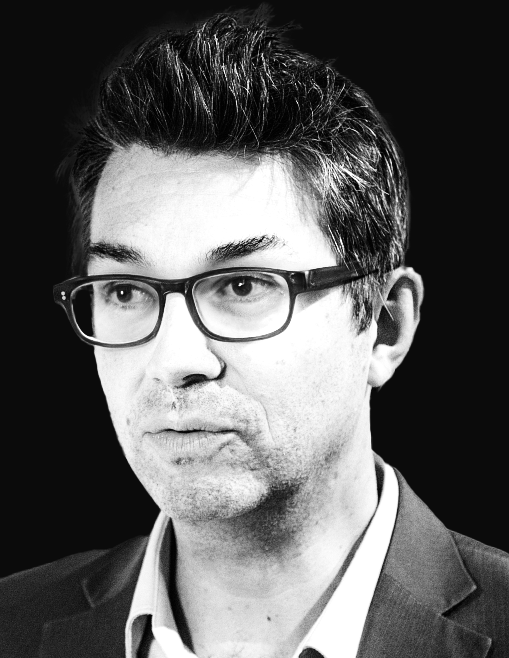
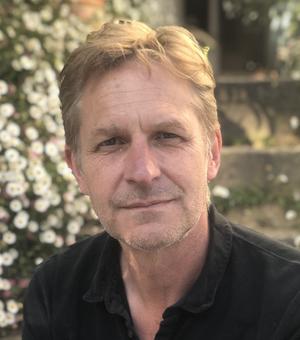
Matthew Potolsky is Professor of English at the University of Utah, specializing in nineteenth-century literature and literary theory. His career spans from 1998 Lecturer at Harvard University to current University Professorship. He earned a BA in Comparative Literature and Philosophy (1990), followed by MA and PhD in Comparative Literature (1992, 1997) from UC Irvine. Chair of English Department (2013-2016) University Professor (2014-2016) Research focuses on Decadence , Mimesis , Finance-Aesthetics intersections , and Government Secrecy . His work traces connections between financialization and decadent aesthetics, revealing how economic cycles influence artistic production. Key themes include: Decadent anti-realist literary movements Finance capital's cultural impact Decadent counterpublic formations Victorian aesthetic education debates Sublime aesthetics in national security Cosmopolitanism in literary communities Recent publications analyze: Decadent style as financialization rhetoric Reintroduction of verisimilitude theory Decadent responses to financial crises Mimetic labor in artistic production Decadent cosmopolitan counterpublics Historical parallels between financialization and literary decadence
Jan Alber is a Professor of Modern English and American Literature at the Department of English and American Literature and Culture, Justus Liebig University Giessen . He previously held positions at RWTH Aachen, Aarhus University, TU Darmstadt, and the University of Freiburg. His work bridges narrative theory, cognitive studies, and postcolonial literature, with a focus on unnatural narratives and empirical approaches to literary analysis. Fields of Interest: Unnatural Narratology, Cognitive Literary Studies, Climate Fiction, Postcolonial Literature Key Themes: Storyworlds, Ideology, Empirical Methods, Narrative Beginnings Alber's recent publications explore narrative theory's intersections with cognition and ideology, including analyses of digital post-postmodernist novels and climate change narratives. His empirical studies examine how readers process experimental narratives, particularly unnatural narrators and metaleptic structures. He has received prestigious awards such as the Habilitation Prize from the German Association of Anglists (2013) and the FRIAS junior group competition (2008). His research is funded by the AHRC, DFG, and Alexander von Humboldt Foundation, notably supporting interdisciplinary work on post-truth political narratives and Ukrainian scholars. Alber co-founded the Aachen Center for Cognitive and Empirical Literary Studies and serves as President of the International Society for the Study of Narrative. He organizes international workshops on cognitive narratology and teaches courses spanning literary history, theory, and postmodern fiction.
Victoria Kahn is a Professor and Katharine Bixby Hotchkis Chair in English at the University of California, Berkeley. She specializes in Renaissance and Early Modern literature, Critical Theory, and political thought. Her research explores the intersections of literature, philosophy, and political theology, with a focus on figures like Machiavelli, Hobbes, and Milton. She has held academic roles at Princeton University and UC Irvine before joining Berkeley in 1997. Her key publications include The Trouble with Literature (2020), The Future of Illusion (2014), and Wayward Contracts (2004). These works analyze early modern texts and their impact on modern political and philosophical discourse. She also contributes to comparative literature, examining continental Renaissance texts and literary theory. Education: Ph.D. in English Literature (implied by career path but not explicitly stated) Research Interests: Contract theory, political obligation, Machiavelli’s legacy, and the role of literature in shaping political thought. Her scholarly contributions include interdisciplinary analyses of early modern political theology, rhetoric, and aesthetics. Kahn’s work bridges literary studies with political philosophy, emphasizing the enduring relevance of Renaissance texts. Grants and advising details are not explicitly mentioned, but her extensive publication record reflects sustained academic engagement. She is affiliated with the Department of English and Comparative Literature programs at Berkeley.
Irene Albers is a full Professor at Free University of Berlin's Department of Philosophy and Humanities, holding dual appointments at the Peter Szondi Institute for General and Comparative Literature and Institute for Romance Philology since 2004. She chairs both the Examination Board and Doctoral Committee for General and Comparative Literature, serves as Trustee of Studienstiftung des deutschen Volkes since 2004/05, and has been Principal Investigator for the Friedrich-Schlegel Graduate School for Literary Studies and Cluster Languages of Emotion since 2007. Her research bridges comparative literature, anthropology, and visual culture with institutional leadership spanning editorial projects and international conferences. Her educational background includes: Born in Bremen (1967) Romance Studies, Philosophy, and German Studies at Universities of Tübingen, Tours, and Konstanz M.A. from University of Konstanz (1993) Ph.D. from University of Konstanz (1999) on literature and photography in Émile Zola, Proust, and Claude Simon Albers' core research examines literary anthropology through colonial/postcolonial lenses, focusing on French literary engagement with Africa, surrealism, and literature-photography intersections. She pioneered studies on Michel Leiris' ethnological poetics and Claude Simon's photographic techniques, extending to historical emotion research (anatomy of affects, body language) and romance novella traditions. Her work consistently challenges Eurocentric literary canons through primitivism critique and heteronomy aesthetics, emphasizing textual restitution and cultural reclamation. Recent publications (2018-2025) reveal a sharp turn toward colonial restitution ethics, particularly in oral literature provenance. Articles increasingly analyze literature as colonial loot, connecting French modernism with African/Caribbean contexts through collaborative projects with anthropologists like Eléonore Devevey. This trajectory builds from earlier surrealist studies to concrete frameworks for decolonizing literary scholarship, spotlighting institutional complicity in cultural appropriation while advancing symmetrized modernity revisions. Scientific awards include: Senior Fellow and Prize Winner of the Zukunftskolleg, University of Konstanz (2009) Albers supervises master's and doctoral students through dedicated AVL colloquia while securing major research funding as Principal Investigator for Friedrich-Schlegel Graduate School (2007-present) and Cluster Languages of Emotion (2007-2012). Her current DFG-funded project 'Literature as Colonial Loot?' with Andreas Schmid pioneers philological provenance research. Earlier, she contributed to Collaborative Research Center 511 'Literature and Anthropology' (Konstanz, 1999-2002) and DFG-funded conferences on Claude Simon. She leads the DramaNet research project and co-edits the 'machina' series at transcript Verlag since 2010. As board member (2007-2009) and deputy (2008-2012) of Cluster Languages of Emotion, she coordinates Area D 'Cultural Codings of Emotions'. Her Zukunftskolleg fellowship (2012-2013) and Marcel Proust Society collaborations underscore sustained engagement with literary anthropology networks.
Erika Naginski is the Robert P. Hubbard Professor of Architectural History at Harvard University’s Graduate School of Design (GSD), Department of Architecture. She is affiliated with the Aga Khan Program for Islamic Architecture. Prior to joining the GSD, she taught at MIT and the University of Michigan, and held fellowships at Harvard’s Society of Fellows, the Radcliffe Institute, and the Clark Art Institute. Her research explores Baroque/Enlightenment architecture, early modern aesthetic philosophy, and public space theories. Key projects include analyzing the intersection of architecture with art history, the philosophical foundations of medium studies, and the socio-political dimensions of public art during revolutionary periods. Recent work focuses on eighteenth-century conceptions of history and archaeology. Naginski’s courses include Architecture and its Texts (1650-1800) , The Shapes of Utopia , and The Ruin Aesthetic , emphasizing critical discourse and historical methodologies. She has published extensively on topics such as Piranesi’s influence, utopian spatial concepts, and the role of ruins in architectural thought. Awards: Guggenheim Fellowship (2007) for her study on architecture, archaeology, and historical conception. Editorial Roles: Serves on the editorial board of Res . Labs/Teams: Active in the Aga Khan Program’s interdisciplinary initiatives on Islamic architecture.
Finbarr Barry Flood is the William R. Kenan, Jr., Professor of the Humanities and Founder-Director of the Silsila: Center for Material Histories at NYU's Institute of Fine Arts. He holds a Ph.D. in Islamic Art History from the University of Edinburgh (1993) and a B.A. in Archaeology from Trinity College Dublin (1988). His research focuses on Islamic art and architecture, cross-cultural material culture, and art historical methodologies. Notably, he has held prestigious fellowships such as the Slade Professorship at Oxford and ACLS Collaborative Research Fellowship. His work bridges global art histories, examining topics like medieval Hindu-Muslim encounters, iconoclasm, and the materiality of religious artifacts. Flood’s scholarly contributions include seminal books like Objects of Translation and The Great Mosque of Damascus . His awards reflect both academic excellence and teaching prowess, including NYU's Golden Dozen Award. As director of Silsila, he leads interdisciplinary research into material histories, fostering collaborations across disciplines and regions. His publications span 40+ years, addressing themes from medieval art technologies to modern reinterpretations of Islamic aesthetics.
Stephane Cotin is a Research Director at Inria and leader of the MIMESIS team, specializing in real-time physics-based medical simulations. His work focuses on surgical training, planning, and image-guided therapy, with over 200 scientific articles and the development of the open-source SOFA framework. He co-founded InSimo, Twinical, and EVE, and previously held roles at Harvard Medical School and Mitsubishi Electric Research Lab. Cotin’s research bridges imaging, robotics, and medicine to improve healthcare outcomes, emphasizing patient-specific biophysical modeling and real-time computation. His awards include the Academy of Sciences Award (2018) and Dirk Bartz Medical Prize (2015). He has advised numerous PhD students and led projects like MediTwin and PREMYOM, advancing digital twin technologies for precision medicine.
Professor Peter Boxall is the Goldsmiths' Professor of English Literature at the University of Oxford, affiliated with New College and the Faculty of English Language & Literature. His research explores the political role of literature in shaping modern realities, with a focus on modernism, postmodernism, and the novel's evolving form. He has authored influential works such as The Prosthetic Imagination (2020) and The Value of the Novel (2015), and is currently co-authoring books on Samuel Beckett and Giacomo Leopardi, as well as a monograph on geopolitical fictions of the 'West.' His research interests span the interplay between literature and political structures, with recent projects addressing contemporary crises in cultural narratives and ecological geopolitics. Publications include journal articles analyzing narrative techniques and the evolving role of fiction in societal discourse. Boxall’s work integrates historical analysis with contemporary theory, offering critical frameworks for understanding how literature constructs and challenges cultural realities. His forthcoming The Possibility of Literature (2024) synthesizes decades of scholarship on literary form and political imagination.
Julian Millie is a Professor in Indonesian Studies at Monash University, Faculty of Arts, where he coordinates and teaches in the Indonesian Studies program. His academic work bridges anthropology, religious studies, and Southeast Asian studies, with a focus on the social and political dimensions of Islamic practice in Indonesia. His research centers on embodied Islamic routines, including preaching, ritual, and commemoration of regional Islamic figures. He has led major ARC-funded projects such as Preaching Islam: politics, performers and publics and Glocalisation and sub-national Islams , and currently leads the international project Islamic Bureaucracies and Pious Publics in Turkey and Indonesia . Anthropology of Indonesia Islamic Culture and Society Ritual and Religion Public Islam and Preaching Social Change in Muslim Societies Political Anthropology His recent publications (2023–2024) reveal a continued focus on Islamic consumerism, reformist critiques of consumption, ritual embodiment, and the politics of Islamic education. These works span journals like Asian Studies Review and edited volumes on preaching and Malay-Indonesian Islamic studies, showing strong interdisciplinary reach into sociology, cultural studies, and education policy. Julian Millie has contributed to scholarly discourse through editorial roles, including guest editorships for Asian Studies Review (2023) and International Journal of Cultural Studies (2013). His media engagements highlight his commitment to public anthropology, commenting on the state of Indonesian studies in Australia and Islamic education policy. He is actively involved in research grants, including current funding from 2020 to 2025, and has collaborated with scholars across Australia, Indonesia, and Turkey. While no formal advisees are listed, his leadership in research projects suggests mentorship and team coordination. He is a central figure in the study of contemporary Indonesian Islam, contributing to both academic and public understanding.
Brian Larkin is Professor of Anthropology at Barnard College, Columbia University, and Codirector of Columbia's Center for Comparative Media. He holds a PhD from NYU (1998) and studies media technologies through anthropological frameworks. Research examines media infrastructures in Nigeria: Religious media in Islamic and Christian contexts Nigerian film (Nollywood) circulation Urban soundscapes and loudspeaker culture Infrastructure politics and colonial legacies Authored Signal and Noise: Media, Infrastructure, and Urban Culture in Nigeria (Duke, 2008) and co-edited Media Worlds: Anthropology on New Terrain (California, 2002). Current work explores the relationship between media forms, religious transformations, and urban experience in postcolonial contexts.
Massachusetts Institute of TechnologyUnited States
Benjamin Mangrum is Associate Professor of Literature at MIT's School of Humanities, Arts, and Social Sciences, specializing in 20th/21st-century literature, digital humanities, and environmental humanities. His scholarship examines literature's engagement with technology, environmental crisis, and political liberalism. Dr. Mangrum's research analyzes computational obsolescence, environmental rights discourse, and the intersections of literary form with political thought. His publications demonstrate interdisciplinary approaches combining literary criticism with philosophy, digital studies, and environmental theory. Recent publications show growing engagement with energy humanities, data visualization ecologies, and artificial intelligence's cultural implications. His work consistently examines how literary forms mediate technological change and environmental consciousness. Awards: Levitan Prize (2023) Fellowships: Michigan Society of Fellows Professor Mangrum teaches courses on comedy, science fiction, environmental literature, and AI at both undergraduate and graduate levels.
Julia Hell is a Professor in the Department of Germanic Languages and Literatures at the University of Michigan. She holds affiliations with the Center for European Studies and the Weiser Center for Europe and Eurasia. Her research focuses on German culture, particularly post-fascist and post-communist literature and visual arts, imperial studies, and the aesthetics of ruins. She has authored influential works such as Post-Fascist Fantasies (1997) and The Conquest of Ruins (2019), and co-edited Ruins of Modernity (2010). Hell has organized international conferences on topics like 'Ruins of Modernity' and has been a visiting scholar at the Institute for Advanced Study (Princeton). Education : Ph.D., German Literature, University of Wisconsin-Madison (1989) Her research interests span ruin studies, imperium studies, and political theory, with a focus on the intersections of art, politics, and history. Recent projects include analyses of Las Vegas as a 'ruinopolis' and the ethics of scenes of execution in Peter Weiss’s works. Hell has received awards including the MLA’s Scaglione Prize and ACLS Fellowship. Her articles explore themes like imperial decline, post-Communist subjectivity, and the Holocaust’s cultural legacy. She teaches courses on German literature, philosophy, and colonialism.
Jonathan E. Abel is a Professor of Comparative Literature and Asian Studies at Pennsylvania State University, specializing in Japanese media, film, and literature. He currently serves as Associate Director of the Center for Humanities and Information. His research focuses on global modernism, translation studies, and media theory, with notable works like *The New Real* (2023) and *Redacted* (2012). Abel has held leadership roles, including Director of Penn State’s Global and International Studies Program (2016-2022). He is a co-translator of Karatani Kōjin’s *Nation and Aesthetics* and Azuma Hiroki’s *Otaku*. Awards include the Weatherhead East Asia Institute First Book Award and the Erasmus Award for Excellence in Mentoring. Education: PhD in Comparative Literature (Princeton University, 2005); MA (Columbia University, 1997); BA (University of Pennsylvania, 1993). Research interests include media studies, cultural theory, and digital humanities. Projects like CINEmap visualize film locations to explore spatial narratives. Current work examines social media fiction and fake news policies. Abel has authored/co-edited over 50 articles, books, and special journal issues, including work on emoji, Meiji print culture, and post-disaster media.
State University of New York at BuffaloUnited States
Tanya Shilina-Conte is an Assistant Professor in the Department of English at the University at Buffalo, College of Arts and Sciences. Her research focuses on global/transnational cinema, film-philosophy, Deleuze Studies, and sensory media practices. She explores themes such as remix culture, media archaeology, and the ontological implications of black screens in film. She has authored Black Screens, White Frames: Gilles Deleuze and The Filmmaking Machine (Oxford UP, 2024) and co-authored Yevtushenko in Buffalo (2020). Her work examines Iranian women’s cinema, postcolonial aesthetics, and experimental film practices. Recent articles include analyses of Abbas Kiarostami’s Lessons of Darkness and Ana Nyma’s Fragments of a Revolution . Awards: Multiple grants from UB’s Gender Institute, Humanities Institute, and international fellowships including the Baldy Center, Lisbon Consortium, and Princeton-Weimar programs. Film Work: Includes essay films like This Video Does Not Exist (2015/2024) and video installations addressing media archaeology. Her current projects include Anonymous Cinema in the Global Age , exploring social media imagery and elective mutism in minoritarian film practices.
Dr. Daniela Pirani is a Senior Lecturer in Marketing at the University of Liverpool Management School. Her research focuses on consumer culture, gender studies, and sustainability, with a particular emphasis on queer and feminist theory. She leads modules in Integrated Marketing Communications and Consumer Behaviour for postgraduate programs, reflecting her expertise in marketing pedagogy. Her research explores topics such as gendered consumption practices, the historical marketing of Italian breakfast traditions, and the intersection of sexuality with consumer behavior. Notable projects include a British Academy-funded study on the invention of commercial traditions and collaborative work on gender equality in marital rituals. She chairs the Feminist Reading Group, an interdisciplinary initiative fostering global scholarly dialogue. Dr. Pirani’s work has been published in journals like Business History , European Journal of Marketing , and Sociology , alongside contributions to edited volumes such as The SAGE Handbook of Consumer Culture . Her methodologies include archival research and critical qualitative approaches, addressing ethical dimensions of studying family consumption. She has reviewed for journals like Enterprise and Society and contributed to grant assessments for the AHRC.